
Episode 188 · December 15, 2024 · 49 min
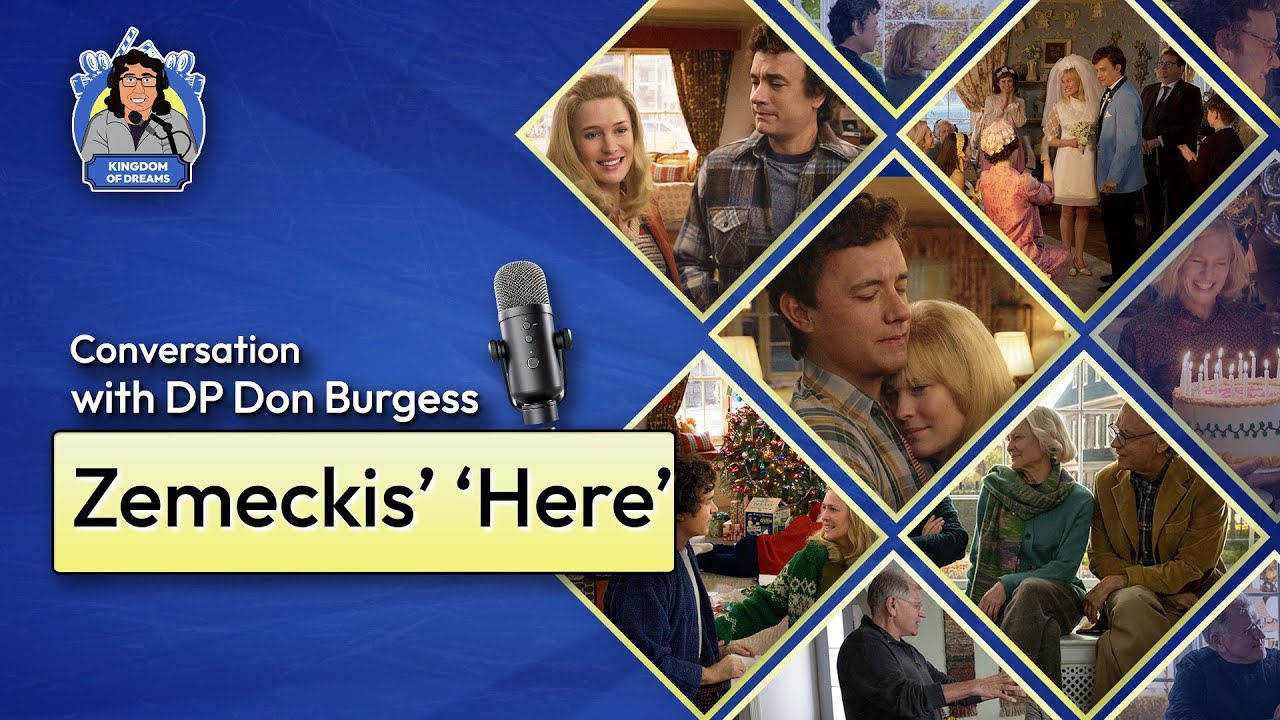
'Here', Cinematographer, Don Burgess
Clips and Shorts from this episode
About this episode
Get an exclusive behind-the-scenes look at the groundbreaking de-aging technology used to transform Tom Hanks and Robin Wright in real-time on set.
Cinematographer Don Burgess reveals the innovative techniques and challenges behind filming "Here" with Robert Zemeckis, sharing unprecedented details about how they achieved seamless age transformations throughout different time periods.
Don Burgess is an acclaimed American cinematographer best known for his visually stunning and emotionally resonant work in Hollywood. A frequent collaborator with director Robert Zemeckis, Burgess gained widespread recognition for his work on Forrest Gump (1994), which earned him an Academy Award nomination for Best Cinematography. His extensive filmography includes visually dynamic films like Cast Away (2000), Spider-Man (2002), and Aquaman (2018).
Burgess is celebrated for his ability to seamlessly blend technical expertise with storytelling, crafting visuals that enhance the narrative. His career spans multiple genres, from action blockbusters to heartfelt dramas, consistently showcasing his versatility and mastery of light, composition, and camera movement.
#cinematiclighting #visualstorytelling #videoessay #directorofphotography #practicallighting
Full transcript
Automatically generated from the episode audio, so expect the odd misheard word or name. Speakers were labelled automatically. About 8,300 words. Tap a timestamp to play from that moment.
0:08Jawad MirGood afternoon, everyone. This is your host, Jawad Mir at Kingdom of Dreams podcast. Welcome back. I wanted to talk to you about one week of no episodes before we dive into today's guest. I had been traveling to Geneva, for a screening of my film, In Search of My Sister, and, just had been able… hadn't… and just hadn't been able to plan ahead of time to get the episodes. Plus, with Christmas coming, you've seen the new logo. The lighting kind of reflects that new logo. I'm gonna be moving around things, changing them, changing up some stuff. But for now, here is my conversation with cinematographer Don Burgess, who spoke about the most recent film of his with Robert Zemeckis, Tom Hanks, Robin Wright, and screenwriter Eric Roth, Here. Don Burgess has been on this, podcast about six, seven times talking about different films, and this time we not only talked about the film, but we kinda dove into a little bit of a personal element in his life, just on the surface, which is something I'm gonna try doing more now, depending on who I'm talking to, depending on what the theme of the film is.
1:15Jawad MirBut without further ado, here is my conversation with Don Burgess. It's been a while.
1:20Don BurgessIt has.
1:22Jawad MirHow have you been?
1:22Don BurgessLooks like you've grown your hair a little bit. Your hair's got a little longer.
1:26Jawad MirYeah, I think you inspired me, Don. How have you been? What have you been up to? Keeping yourself busy?
1:36Don BurgessYes. So over the, over the summer and the fall, I was in London doing Thursday Murder Club with Chris Columbus.
1:43Jawad MirRight.
1:44Don BurgessYou know, which was great. Which was great. We had a lot of fun making it. A-amazing cast. Helen Mirren, Pierce Brosnan, Ben Kingsley, Sheila Henry.
1:56Jawad MirOh, wow. Oh, wow.
1:57Don BurgessSo, yeah
1:58Jawad MirThat's exciting
1:59Don BurgessAll-star English cast. And the book was written… it is a series of books, the Thursday Murder Club, by an English writer. So it's an Amblin project, Spielberg producing, for Netflix ultimately.
2:15Jawad MirThat's awesome. It's good to see Chris Columbus reconnect with Spielberg again after Goonies. I think… I don't think they ever worked after that, since The Goonies, if I'm not mistaken, or Gremlins maybe. Gremlins maybe.
2:29Don BurgessI… Yeah, I don't know what the last one was, but it was great to see them together again. And he came to visit the set in England while we were shooting and, you know, a lot of old stories, a lot of great stuff. And you know, a lot of those guys, like Zemeckis also, you know, worked for Steven earlier in their careers, you know?
2:54Jawad MirYeah.
2:54Don BurgessAnd I think Steven might have been the first guy to buy a screenplay from Chris.
3:00Jawad MirHe was. He was.
3:02Don BurgessYeah.
3:02Jawad MirYeah.
3:03Don BurgessAnd then
3:04Jawad MirThat's amazing
3:05Don BurgessYeah. And then Jack Rapke be-became his agent, so he and Bob. So Jack, you know, ended up a lot of g… a lot of those young guys that did extremely well.
3:17Jawad MirYou know, it's so crazy. I was watching Bob's interview, just recently. He came on, Bill Maher's podcast, Random Club, I think it's called.
3:27Don BurgessOh.
3:27Jawad MirYeah, this was, like, a week after or before the film release Here, and it was a great conversation. It was not just about the film. It was just about a whole bunch of this stuff, politics and life in general. And I was just surprised to see… 'cause he really does very few press interviews aside from, like, you know, media junket and all that stuff.
3:48Don BurgessRight.
3:49Jawad MirTime has passed, you know, that it's just, crazy that how it's been thirty, forty years since all those big eighty movies and nineties. We all know that, but when you see it in retrospect, it's…
3:59Don BurgessRight
4:00Jawad Mir... You know, very interesting to see and feel that.
4:03Don BurgessYeah. Yeah, and w-with Bob, he's still as enthusiastic and exciting, and excited, when he's directing, you know, Here, as he was when I first met him on the Back to the Future movies.
4:19Jawad MirYeah
4:19Don Burgess... He still has that enthusiasm. It's great. And I think that he keeps it interesting by coming up with new ways to tell stories and kind of reinventing cinema every time he goes out and makes a movie.
4:33Jawad MirHundred percent. I was actually trying to get him on the podcast. I spoke to his manager, but I think it was a little too late in terms of press work, but probably for the next project. But speaking of Here, I first learned about this project from you around last year or maybe even a year and a half ago.
4:49Jawad MirAnd at that time you just told me about it, that how it's just like, you know, one frame and one room, Tom Hanks, Robin Wright, Eric Roth, Robert Zemeckis, and yourself involved in it. And then obviously I saw the trailer, and I went to see it, right? And, first eight minutes, the gimmick was there. You know, the one frame that you can… because it keeps flipping, introdu-introducing the story and the characters. But after that, Don, I can't tell you how much involved I was into the characters, and I totally forgot about that locked camera completely. And it's such… I was so heartbroken when I s… found out that it didn't really do well at the box office because it's one heck of a film. It is a beautifully shot film, acted film, written film, directed film. I absolutely loved it, and I've seen it three times already.
5:47Don BurgessOh, wow.
5:47Jawad MirYeah.
5:48Don BurgessFantastic.
5:49Jawad MirAbsolutely loved it, so really enjoyed it. Very moving film.
5:54Don BurgessYou know, I, you just never know. I thoroughly enjoyed making the movie. It was quite challenging, where at first I thought it wasn't gonna be challenging just because of the concept of it.
6:06Jawad MirYeah.
6:06Don BurgessBut then once got into it and figured out what that really meant and how we were actually gonna execute it, then it became very challenging. But putting that aside, You know, I took my, youngest daughter, Brit, to the, to the premiere at AFI Fest
6:24Don BurgessAnd so it was at the Grauman's Chinese, and it was a full house. And, you know, it was a wonderful screening. And, very emotional. A lot of people were literally, you know, had their handkerchiefs out by the end, you know?
6:41Don BurgessAnd it really connected with the audience. And so... And my daughter just loved the film, and, you know, kept talking about it for days afterwards. And she's, in her mid-30s, I'll say. I guess that's polite to say.
6:58Jawad MirHi, guys.
7:00Don BurgessAnd so anyway, you know, with the audience response and all of that, I thought, you know, people of that age group, will hopefully will show up and see the movie, and the word of mouth will be good, and, you know, we'll see what happens. But I was... Unfortunately, you know, it just... I… it isn't talking to people the way I thought it would. But I love the film and, you know, I think it may be one of those things that will show up down the road, people going, "You know, that Zemeckis film…"
7:37Jawad MirYeah
7:38Don Burgess"... Was I had no idea, you know. I wish I'd seen it." We'll see, you know.
7:43Jawad MirYeah. No, I was thinking about that because when I went to see it in the theater, it was the second day after the release, and there was, like, five people in there, which was shocking.
7:53Don BurgessRight. Shocking.
7:53Jawad MirAnd I thought, and I thought about the fact that, you know, when people in my age group, in our 40s and 30s, when we get to that age, you know, late 60s, early 70s, I think it would resonate way more with some people than it did right now.
8:10Don BurgessRight.
8:10Jawad MirI truly believe that.
8:12Don BurgessYeah
8:12Jawad Mir... But yeah, you know, technically, I was reading somewhere that you guys had... Please correct me if I'm wrong. I just read this online, on some media outlet, that people, the crew kept running into the tripod and the camera kept moving, and you guys had to reposition all the time. Is that accurate?
8:32Don BurgessYou know, it happened a few times, but…
8:34Jawad MirOkay. Somebody exaggerated
8:36Don Burgess... But it was, you know, it was something that, you know, one person was... My first AC, Julian, it was his responsibility to make sure every morning that camera was in the exact same place, and it took time with lasers and everything else to make sure we had it right, especially 'cause we had a couple of those sets that we would go back and forth, right? So that we had two interior sets that we would move back and forth depending upon, you know, we finished the work in that particular era, on that particular day, now what do we do? So we always had to be ready, you know, to go to another scene. And so making two sets perfect, I said, "Oh my God, what are the chances of this happening?" But they did it, you know. They did it. And every day we would... You know, I had a bracket made that was bolted to the stage floor, not to the set. And so we did... And Bob wanted the camera underslung so that if he wanted to move something under the camera, like one of the kids comes in and out perhaps or something, he could do that.
9:39Don BurgessAnd he wanted the camera to be, you know... He didn't wanna feel the camera, right? He didn't wanna bring too much attention to the camera. And so that was, that was kind of what the depth of field part of it was, and choosing the right lens so that, so there weren't any drastic focus pulls that brought your attention to the camera. And so, you know, we ki… we had to balance, and you, we had an LED screen out the window that was the, you know, the main source of the images out the window. And so, you know, exposure-wise, we had to, we had to figure out how to get to as much depth of field that would help us sell this idea of, you know, m… you know, since Bob would explain it, too, at the very beginning, in the very f… early stages of what he was, in his mind what he was seeing was it's like an iPhone. Everything's in focus. And so, s… so I had to kind of, you know, figure out what that really meant, you know.
10:41Don BurgessAnd so we, you know, we came up with this, the stop eventually, which was a 5.6, and the lens ultimately became a 35 millimeter lens. We were shooting 8K with the Red Raptor. And the format ended up being just 16 by 9. So there was a, there was, you know, we started back in June of '22 shooting tests to figure, start figuring out what it all meant, where we, where we ended up. I probably tested five cameras. I even tested the iPhone, you know, just to kinda look at those images, say, "But, so Bob, what is this really saying to you?" You know? And so, but ultimately, that's where we ended up, you know. And so there, so there is some focus pulling going on, but it's very subtle, and you don't really notice it. And so I think that was part of his, you know, putting the, putting the person and, you know, the people, the audience into that point of view, that they are a fly on a wall in essence in all this, everything that's happened on this spot on the planet since the dinosaurs, you know, is right here.
11:49Don BurgessSo…
11:49Jawad MirYeah
11:50Don Burgess... So yeah. So, you know, it became... And a… and also the fun part about it was that we picked a spot on the planet, which was in New Jersey, and we, and we based all of the math off of, well, what day is it actually in March? And…
12:12Jawad MirOh
12:13Don Burgess... And where would the sun be, and which way is the house actually facing? And so all of that is put into the lighting design of the film
12:24Jawad MirThat's amazing. You know, when the time keeps... Sorry. When the time keeps shifting back and forth, especially in the beginning, I was just sort of taken back to Back to the Future, you know, with the whole time concept.
12:35Don BurgessRight.
12:35Jawad MirWhich is kinda cool. I don't, I don't think the intention was there, but I…
12:38Don BurgessRight
12:38Jawad Mir... I probably felt myself that it was there. I told myself that. The great thing about w… the technology that you guys used, I was watching some behind the scenes stuff. Literally this morning it popped up on my LinkedIn too. Is that how you guys were able to see the younger version of Hanks and Robin Wright, you know…
12:57Don BurgessYeah
12:57Jawad Mir... Live on the set. Talk about that. What was that like?
13:03Don BurgessRight. So that's the f… the first time that I've, I've worked, with aging actors or de-aging actors in this case, in that way. And so what we found was that, first of all, it was a tremendous help to the actors to see themselves, in essence, and we're watching it live, and then they would watch the playback of it, in a, in a pretty good image to, you know, to see on one screen, you know, Tom Hanks and Robin Wright as they look today, and then see the screen with the de-aging process done through all the imagery that existed prior to that, you know, to the, from, p… probably from Bosom Buddies on, I guess, you know? A… and then, and then look at the two images and it was just fascinating to see it live. And I think it turned out to be a very good tool for the actors to see that because a lot of the, you know, a lot of the trick is to, is for them to act the age, right? And e… and every mannerism, getting up out of a chair, you know, is just different when you're, you know, when you're 70 versus 17, you know?
14:24Don BurgessAnd so I think all that helped them in their mindset of getting back into their own youth and the, and playing it into the character. So that part I thought worked out really well for, in essence, for all of us, you know. You know, you could see what the wardrobe was gonna look like, and you could see... You could look, they could look back at their performances and perhaps put more energy into them or whatever they were doing to feel that, you know, what it was like again to be bringing the girlfriend home for the first time from, in essence, high school.
15:00Jawad MirYeah.
15:01Don BurgessAnd so yeah, so I think that technology allowed Bob to tell the story at this point and use the same actors to play the parts all the way from high school to, you know, to, somewhere in their 70s, I think.
15:21Jawad MirYeah. No, it's... One of the things I wanted to ask you, do you remember... 'Cause no matter what age you're in, like, if you're, if you're in 40s or 30s and if you look at your teen years… ... Or when you're 70s and you look in your 40s or 30s, there's always that e… emotional feeling that kinda kicks in, like, "Oh, you know, I remember my early years." Do you remember seeing that with the actors, and did you and Bob actually try to be in front of the camera and just kinda see your younger versions?
15:49Don BurgessNo, because it wouldn't show our younger version. It... I would turn into Tom Hanks.
15:52Jawad MirOh, because it was already programmed.
15:53Don BurgessYeah.
15:54Jawad MirRight.
15:54Don BurgessI would turn into Tom Hanks, his younger version. So that was, you know, it was a little odd. So yeah, so that's what's happening there. It's just, it's trying to take the faces in front of the camera and make it whatever, you know, year we decide or whatever stage. So every scene had a stage, you know, defined before we started shooting the movie. So here's, here's Tom in phase one, phase two, phase three, phase four.
16:22Don BurgessSo all the scenes had kind of been pre-designed prior to the movie, and so the imagery was already, you know, put into the computer bank to, you know, make that work.
16:34Jawad MirRight. Yeah, there are some apps out there that do that, but they're probably not as powerful as obviously what you guys utilized. With this film, you know, being in one room, blocking is very different, yet maybe not that difficult, maybe it is. And a lot of the spots were very consistent more or less throughout the t… different time periods where action was happening. How is this different for you and Bob, specifically for you, versus, you know, other stuff that you guys have done? Was it easier? Was it more challenging in terms of blocking strictly?
17:14Don BurgessWell, I think at one point I turned to Bob, I said, "Bob, this might be the most complicated thing we've ever done." And, you know, with Bob, generally speaking, the camera never stops moving.
17:26Jawad MirYeah.
17:26Don BurgessThe camera becomes a character in the film in a different way. Michelle Pfeiffer said to him once in What Lies Beneath, you know, "Well, Bob, you want me to dance with the camera." And i… and a lot of times it is a dance with the actor and the camera, you know, to kind of heighten the drama of a scene and how the scene is blocked. So with this, the different challenge was, well, we can move the camera, right? So we've gotta talk this through and figure out where that camera needs to be because, you know, ultimately the cheat is this. The cheat is all the main characters walk into a close-up at some point, or most of the characters…
18:10Jawad MirYeah
18:10Don Burgess... Probably walk into a close-up. Now, if you think about it, that's impossible because they're all different heights. So well, the way we solved the problem was that the camera was set at the perfect height and lens tilt angle for Tom Hanks. And then everybody else either was lifted or lowered. So Paul Bettany being the tallest, we called it the Bettany box, right? So we had a section that would come out, so when he walked into a close-up, he would be in the right place. And then with the ladies, we had ramps so that they, as they got closer to the camera, were actually walking up a ramp. So when they walked into their close-up, it was actually perfect. For this movie, shall I say, when I say perfect. So, you know, you're still doing the movie tricks that we've always done with apple boxes and different things to keep actors at the heights that you want them.
19:11Don BurgessBut normally when somebody would walk into a close-up, you may boom up the camera or you may, you know, boom down on the camera. So depending upon the shot, so that when they land and you push into that close-up, you're at the perfect height for that close-up. So those were challenges that we, you know, we figured out how to solve those problems to actually make that work also. So that's, you know, the fun of making movies, right? To create the illusion of reality in a situation. And it's a little bit, you know, a lot of these little magic tricks you call them that kind of, that you don't notice as an audience watching. And I think, you know, what you said earlier is what ultimately we were trying to do is that you, unless you know, you being a filmmaker, you're looking for that camera at the beginning of the film, and then the fact that it's not moving. And then the technique, you know, drifts away because you're captivated by the story.
20:16Jawad MirYeah.
20:16Don BurgessAnd that means we did our job right, I think.
20:19Jawad MirYeah. No, I agree.
20:21Don BurgessThe camera becomes seamless and you, and you gotta think about it later and go, "Oh, wait a minute. How did they do that? Now that I think about that."
20:30Jawad MirI will tell you, I'm not gonna reveal what happens at the end, but I think you know where I'm going with this. I figured out... The first eight minutes, I figured it was, you know, like I knew, okay, well, the camera's not moving. Then I was all in. And then when the ending came, that's when it registered, oh, that was the case for the entire film, and I totally forgot about it. You know what I'm talking about, right?
20:55Don BurgessYeah. Right. Yeah, absolutely.
20:56Jawad MirYeah. Yeah.
20:57Don BurgessYeah.
20:57Jawad MirS…
20:58Don BurgessIt makes it that much…
20:59Jawad MirAnd…
20:59Don Burgess... Powerful, I think.
21:01Jawad MirI thought that the way it wrapped up, oh man, like I can't tell you, Don, like, you know, my parents are old and then obviously we all get old. And just that moment of, you know, that thing that you live with, the memor… you know, regret and all those other emotions is very powerful. And Robin and Tom, man, and ob… just did a phenomenal job like delivering that. I was like really engrossed in their story so well. It was like Forrest, you know, what's his name, Forrest and Jenny back again and just…
21:34Don BurgessRight
21:34Jawad Mir... Reliving through all those experiences and emotions.
21:37Don BurgessYes. Yeah. Absolutely. Yeah, I mean, I mean, look, if we get the audience that has seen the movie, and hopefully more and more will see it as the years go on, if no other message, it's Robin's message when they throw her the surprise birthday party and she says all the things that she didn't get to do.
21:55Jawad MirYeah.
21:55Don BurgessThat she wanted to do. You know, it's, it's... And I hope that the younger audience that see it get that part of it. It's like this is no dress rehearsal. This is the real thing. This is all we get.
22:08Jawad MirYeah.
22:08Don BurgessYou know, make the most out of it.
22:11Jawad MirYeah. My rule of life in the last 15 years is I literally think about taking an action, and I think about when I'm 85 and if I have to look back at this moment and I didn't do it, I don't wanna have that feeling. Even if I miserably fail at it right now…
22:28Don BurgessRight
22:28Jawad Mir... It's okay. Just do it. Do you look back at anything in your own life, I'm sorry if I'm asking something personal, that you wish you had done?
22:38Don BurgessWell, I've had a very adventurous life.
22:43Jawad MirOf course.
22:45Don BurgessAnd so the way I'll answer that question is this. My father died at age 61.
22:52Jawad MirRight.
22:53Don BurgessRight? And that was before Forrest Gump came out, right? That was before, a lot of things that I've done in life he didn't get to see. And there's a lot of questions that I'd like to ask him that I never got around to asking him. And so those are those things I regret are the, are the why didn't I ask him that question? Why didn't I ask my mother that question? And they're the only ones that can answer it. So I was given a gift for Christmas from my youngest daughter.
23:38Don BurgessAnd the gift was this. The gift was, "I've signed you up for this story company, and every week they're gonna send you a question, and you're gonna have to answer the question. And so at the end of the year, then we'll make the book out of that." And so I did that. And, it became a wonderful tool to... You know, I made up enough copies for all the grandkids to have. So at some point, you know, they'll read it I hope.
24:10Don BurgessBut it's a lot of, a lot of like things about my life that you never get around to having those conversations with them. And by the time they're ready to have the conversations, you might not be around. So that's, that's my why didn't I ask those questions. You know?
24:33Jawad MirYeah.
24:33Don BurgessAnd maybe some of them I know the answers to, but I don't really. I, you know, I'm, I'm assuming that's the answer to that question.
24:42Jawad MirAgain, I, and please just stop me if I'm going a little too deep here, because this is an interesting convers… topic for me too, because, you know, just my relationship with my parents is amazing, but there's always certain things that you just, at least for me, you want to say it, you want to ask, but you just don't know how to ask or how to say it.
25:02Don BurgessSure.
25:04Jawad MirW… was there, you know, s… whether it's with your s… with your kids or with your parents, was it more so just an awkward topic, or was it just not having the, you know, the strength to ask the question, or just n… something else completely?
25:23Don BurgessI think it's probably all of those things. I think that… ... The family that my father grew up in, he was Mormon. And he left the church in, you know, in high school and…
25:36Jawad MirRight
25:37Don Burgess... Met my mom. And so we weren't, we weren't raised Mormon. But he, but a lot of that influence, I think, developed a relationship between the father and the son that was... In that family, they never talked about themselves whatsoever. Now, as it turns out, you know, two of the brothers were architects, and one of them, like we found out, designed the Canyon Springs Hotel in Palm Springs and about, you know, 40 mid-century homes that are there that are, you know, in books, you know, to this day.
26:18Jawad MirRight.
26:18Don BurgessAnd I've asked everybody in the family, all my older cousins, and a lot of them are in the construction business. I said, "Did you guys know that Ken designed the Canyon Springs Hotel," which was a famous iconic hotel in the '60s in Palm Springs? No. Nobody in their family knew until the guy that's writing the book about mid-century architecture found me, and I ended up having a conversation and learning about my uncle, who by the way was w… prob… my, you know, he was a wonderful guy, and we always enjoyed Uncle Ken, you know, when he came by. My dad and him had a great relationship. But it was because of the way that they were raised, they just didn't talk about their, what they had done. You know, they were never patting themselves on the back for anything. Now, I had a very good relationship with my dad. We actually lived together after my parents got divorced after 30 years and we ended up living together for a few years. And I worked for him. He was a designer and builder of, rock swimming pools in Southern California, and built a lot of other things too.
27:22Don BurgessAnd, you know, so there wasn't, it wasn't like he went one way and I went the other, and I left the house when I was out of high school. It wasn't that way at all. W… we were actually close, I think, for a father-son relationship. But there were certain things that I was n… I didn't feel comfortable, I guess, asking him at the time a… about his life and it was... I think some of it had to, that I was insecure about it, I guess. Or, you know, there was some politeness involved of things you didn't talk about.
28:01Don BurgessYou know, 'cause it was, it was different in that era, I think. But I, you know, fortunately for me, he was very engaged and involved in all the things that we did growing up, from coaching Little League to…
28:16Jawad MirYeah
28:16Don Burgess... If you saw the skateboard documentary, all the stuff he did, you know. He was always doing things for the kids in the Palisades. You know, he was very involved in that.
28:28Jawad MirYeah
28:28Don Burgess... And so in that way we had a very close relationship. But then again, there are certain things that I'd sure like to know that I never got around to asking him.
28:38Jawad MirYeah. It's, it's interesting you mentioned that how the pat on the back, right? Like I've learned about things of my dad, the titles that he ha… held back home. I'm not gonna get into that on, but it was just crazy that I never knew that he was actually running a city, an entire city, and he never told me about it, asked about it.
29:00Don BurgessRight.
29:00Jawad MirAnd I think I'm like that with my son too, where I don't really talk about what I do. I don't know if it's a father-son thing. Like I'll say what I do, but I won't say, "Oh, look what I did, such an amazing thing." You know, w… it's never like that. I don't know if it's a father-son thing or what it is, but…
29:16Don BurgessYou know, I can tell you with my own son that he would never let me really teach him how to do anything.
29:25Jawad MirYeah, he told me about that.
29:27Don BurgessAnd that he would... You know, it's like even riding a bike he would just want, you know, "No." And then one day, "Hey, Dad, I wanna show you something." And I'd go outside and he, there he is riding a two-wheel bike. I'm like, "Okay. That's the way this is gonna be?" And even when I coached him in Little League it was the same thing. I couldn't really coach him. I could coach the rest of the kids, but I had to leave him be, in essence.
29:47Jawad MirYeah.
29:48Don BurgessAnd he probably knew more about baseball than I did anyway, so it didn't matter much. But yeah. But I don't... And where did that come from? I don't know. Something in our, in our breeding perhaps.
30:01Jawad MirYeah. Yeah. Well, you know, thank you for taking the time to talk about something…
30:05Don BurgessSure
30:05Jawad Mir... Totally different. I appreciate that. Going back to here, there was a s… a sh… well, I shouldn't say a shot because everything was more or less one shot.
30:14Don BurgessRight.
30:14Jawad MirBut that scene, where there's a painting by the window and, you know, Tom Hanks is standing there. And the lighting there is so amazing that even before the painting is talked about, the light, it's way far at the end of the room…
30:32Jawad Mir... And you are still able to see what it is and the attention that it pulls you in. Lighting the entire film, especially the indoor parts, you know, keeping it cons… consistent throughout, obviously at least in one time period… Again, challenging, I'm sure. If you can talk about that, how you overcame all those obstacles in that sense.
30:56Don BurgessI think what terrified me about the idea of it from the beginning from a lighting standpoint was being redundant. Like, how many different ways can I light this room, right? So, but ultimately, when we break it down from a storytelling standpoint, number one, like, what does the audience need to know? Well, it's December, it's snowing, you know, that sort of thing. It's Christmas time, and this scene needs to take place. The kids are in their pajamas. Is it dark out? Can it, can it... It's, you know, yeah. They're in their pajamas and it gets dark at 4:30 at this particular... Yes. So you, so you break it all down that way first, logically. Then once you have that basis to work off of what it is, then you push the dramatic side of light and shadow. And so then what I mean by that is, where do we want the audience looking in the frame?
32:00Don BurgessNow, granted, if Tom Hanks is in the frame, everybody's gonna look at Tom Hanks.
32:04Jawad MirYeah.
32:04Don BurgessBut the picture in the background is a great example of, well, what does the audience really need to see here? What's the important element of the, what's the red dot, as Bob calls it, of the scene? And then you use, you know, normally you would use lenses and depth of field and a lot of things to force the audience to look someplace in the frame.
32:23Jawad MirRight.
32:24Don BurgessAnd so, you know, without the depth of field necessary and the wide lens, you have to use a lot more lighting perhaps to break up the frame into where you want the person to look in the frame. You know, what's the, what's that dramatic beat that you gotta sell? And so then that's where you know, you're fine-tuning to kind of, you know, do the best you can to kind of sell the idea. And…
32:56Jawad MirYeah
32:56Don Burgess... So it became, you know, less about how we're gonna do it differently of let's start with the reality of it's, it's 8:30 in the morning. Let's just start there, 'cause that's, that's what we gotta s… the audience needs to know it's 8:30 in the morning. And what's, what's it gonna look like here at 8:30 in the morning in April? You know, 'cause it's gonna look a lot different in August than it is in April.
33:20Jawad MirSure.
33:20Don BurgessAnd that sort of thing. So you, so you start with logic, or at least I do, and you go from there. And so what I think it ultimately it gave us, you know, what ultimately you want is you want all those different looks to happen in the same place. And so you take the characters, you take the set design and the set dressing of the time period. And so, you know, that creates a lot of it, and then, you know, you kind of highlight, you know, the better parts of it or the, try to make the image interesting to the audience of what they're looking at. And then you kind of heighten that reality, and then hopefully you get them to look where you want them to look. Or, you know, it, like the magic is get them to not look in a certain place you know?
34:14Jawad MirYeah.
34:15Don BurgessYou know? And then, you know, it's, it's, it's taking dramatic license. And so one of the scenes that I found real interesting is that when it came to showing the movie, the family's sitting and watching the home movies, right? So Bob says, "I wanna be able to see the image through the back of the screen."
34:40Don BurgessRight? Now, most home projection screens, you wouldn't see the image through the back of the screen re…
34:50Jawad MirYeah
34:51Don Burgess... In reality. However, those are those images that Bob comes up with that people buy instantly. Nobody's thinking, "Well, you'd never see the image through the back of the screen," right? Because they've s… and by the way, a lot of people aren't old enough to even have, you know…
35:10Jawad MirYeah
35:10Don Burgess... Been raised around home movies where you used to pull out the screen and then, you know, and then show the movie on the screen. But it works in the movie. You don't even question it what, you know, at all, that you could actually see that image through the back of the screen. And it, and so it, you know, that's a problem that needed to be solved. How are we gonna make this work in this frame, and this is where the camera is, period. And so, you know, I see that scene and I just love it because it's the, it's, it's Zemeckis, you know, with his, you know, his gifted wisdom of how to sell an idea and tell a story in cinema with imagery.
35:56Jawad MirYeah.
35:56Don BurgessAnd it just…
35:56Jawad MirOh, you're s…
35:57Don Burgess... Up, you know, and then, and then you put it all together and you go, "Yeah, that works." You know?
36:02Jawad MirYeah. Yeah. Well, you're so engrossed into the whole scene of them watching their family videos, right? Like, which we…
36:08Don BurgessYeah
36:08Jawad Mir... All can relate to, so you don't even think about…
36:11Don BurgessWhat are you gonna think about
36:11Jawad Mir... Is it even possible or not.
36:13Don BurgessRight.
36:13Jawad MirThe, again, when the film began, I didn't realize until the first set of dissolves that came in, you know, like the blocks… ... If you wanna call them dissolves.
36:27Don BurgessRight.
36:27Jawad MirI, it didn't, it didn't occur to me that, you know, I didn't question myself, how are they going to go from shot to shot without jump cut if the camera is not moving, right?
36:35Don BurgessRight.
36:35Jawad MirBut obviously there, it was not like a cross dissolve, it was not like a morph or anything. It was just a very creative way of changing scenes. Was that something that for as far as you know, was something that Zemeckis knew before the production began? Like was that all tested out, or was that more of a post-production thing, just to have that creative transition?
36:56Don BurgessRight. So the boxes exist in the graphic novel.
37:02Jawad MirAh.
37:03Don BurgessSo that's, that was always the intent of doing that to some degree. Like that was w… you know, 'cause, you know, you gotta keep finding a lot of ways to do this, right? And so, you know, the dissolves of the movie were a lot of things, but the boxes gave Bob, like it is in the, in the book, the opportunity to... Well, the first thing the audience is gonna see of the new scene is the radio that's in the box, and then that eventually…
37:34Jawad MirYeah
37:34Don Burgess... Will grow into the whole frame, and that'll be the transition in the next scene. So he had a lot of sleight of hand of, for instance, when, Robin has been to town and she's walked back from town and it's a snowstorm and it's at Christmas time. And you actually see her in the snowstorm first without the house, and then the house dissolves in around the window, then you see her out the window. And then you see the Christmas tree and, you know, the inside of the room. And eventually Robin walks into the room, takes the coat off, and discovers, Kelly Reilly, you know, is passed out on the floor, and ultimately has had a stroke. So…
38:17Jawad MirYeah
38:18Don Burgess... That was another way of making transitions from scene to scene to scene. And a lot of times you'll, you won't stop. It won't just go from one scene to another. You'll go one scene i… into another time period, another scene for a brief moment, and then finish on the scene, on another scene that where the, next real scene's gonna take place. So that sort of thing was trial and error in the editing room for Bob to kind of make the movie flow, right, and not be distracting, and yet be interesting and, you know, all those things that you need to do to make something, this crazy idea actually work.
38:55Jawad MirYeah. Yeah, no, it, yeah, I, again, like I said earlier, it worked for me on every level. And the idea, it was kinda like, I mean, I hate to s… use this as an example, but it was like Forrest Gump meets Back to the Future you know, essentially. It was like you're going back…
39:13Don BurgessRight
39:13Jawad Mir... And forth in time and the…
39:15Don BurgessRight
39:15Jawad Mir... The arc of this, the characters, and just a marriage story, like a family story, how it evolves over time. And that's what's ticks me off so much as a, as a movie lover, as an audience, that it's such a relatable story. I mean, who cannot relate to it? And yet…
39:32Don BurgessRight
39:33Jawad Mir... People didn't go to see it. But, you know…
39:35Don BurgessRight
39:35Jawad Mir... Again, that's just the way movie business is.
39:39Don BurgessYeah. I mean, it was a little unlucky that we had a major election in America, you know, within a week…
39:47Jawad MirYeah
39:48Don Burgess... Of that. A very kind of crazy election that had everybody up in arms, in one way or another.
39:57Jawad MirYeah
39:57Don Burgess... And so that probably didn't help the situation. But then again, you know, if we knew how to make hits every time, we'd make hits every time, right? But, you know, Bob, has had the opportunity to make these movies and of course, you know, it's, it's nice when he can... You know, his fr… friend Eric Roth calls and say, "What are you doing, Bob?" He says, "Well, I got this idea," and everything else. And he goes, "You want some help?" You know, I mean, that's ultimately how they, how this thing came together. And then, you know, they, Tom read it and loved it and, they were off to the races, you know. But, you know, you wouldn't think that, you know, how things have changed to have…
40:47Jawad MirYeah
40:47Don Burgess... Bob Zemeckis, Eric Roth, Tom Hanks, and Robin Wright, you know, in a movie and, so few people went to actually see it, you know? It's just…
40:58Jawad MirYeah. Yeah. I would disagree with you that it had to do with elections at all because I think it's just the audience mindset is completely different, you know. I mean, you…
41:08Don BurgessYeah. I mean, there was a... I just at the time I was like, you're battling…
41:12Jawad MirYeah
41:12Don Burgess... Every dollars against advertising election. But, you know, it wasn't long after that other movies did extremely well. So you know, maybe… ... It had nothing to do with it, like you said.
41:26Jawad MirYeah. Yeah. No, it's, listen, if you talk, I'm sure you will talk to Bob, just tell him I absolutely love the film. It's, it's one of his best works in my view. It's totally one of his best works. Very underrated, but it will become timely with time, for sure.
41:41Don BurgessI think so. You know, he c… because it's like this hybrid between cinema and theater in a lot of ways, right? So he, it's the first time that he ever rehearsed a movie like this. So he rehearsed the whole movie w… with the actors long before we did it, in essence, probably his own proof of concept that he could actually make all this work. So they did an extensive amount of rehearsing, which, I think is more of a theatrical way to approach it than a cinematic way to do it.
42:15Jawad MirYeah.
42:15Don BurgessSo that to kind of... Because, you know, you had to, you had to have some concept of the blocking and what everybody was gonna do and how they were gonna do it, and where the furniture was gonna be. You know, how the... 'Cause once we s… once you set it up, you know, you gotta have a lot of confidence that you can make every scene in the movie work.
42:34Jawad MirYeah. Yeah, halfway through the film, "Oh, that couch was not the right spot at True Street."
42:40Don BurgessYeah. Yeah, I can't... What am I gonna do? I can't… I gotta f… we gotta find a ribbon, you know, it's stuffed in the couch. The couch has gotta be there. Yeah. So…
42:48Jawad MirW… which brings me to continuity. That must have been interesting co… challenge too.
42:55Don BurgessYes. Because you… You know, every scene is in a different time period…
43:04Jawad MirYeah
43:05Don Burgess... Basically. And so, you know, what kind of phone was it? Did they have television sets yet? Is it, there's the radio. You know, is it, would they have, is it a push button phone yet or is it the one with the antenna or is it, is it on a cord? You know, all that stuff you have…
43:21Jawad MirYeah
43:21Don Burgess... To figure out for every scene. And so the continuity, sheet that was made up by our continuity person, you know, every department, even myself, would sit down and go through it with her, you know, so that I'd say, yeah, no, it's, it's, it's 10:30, you know, on Tuesday and it's, you know, June 12th and the sun sets at, and the sun rises at, and the apex of the sun is here. So all of that is in the notes, you know, in the continuity notes. And then, 'cause we would go back with Bob and we'd re-talk it and say things like, "You know, it's 8:00 but it's, you know, it's August in, New Jersey. So it's, you know, it's still light out, Bob." You know, that, and we'd have to kind of remind him of that, you know? And then can we shift that? If you don't like it, if you want it dark out, can this scene take place at 9:00?
44:23Don Burgess"Well, he's just coming home from work, so it's gotta be, he's coming in with his briefcase, so it's gotta be this time." So you have to talk through that in more detail than you normally would, I think, in most films. And so…
44:34Jawad MirRight
44:35Don Burgess... She made a very comprehensive continuity sheet up about all that because, you know, not only is it the wardrobe or the hair or the makeup and all the phases of the a… all the normal stuff that we do, right? But it was a little more detailed than usual. And also every piece of set dressing had to be figured out before you get started. I mean, that's a lot of work. Think about that in itself, you know…
44:57Don Burgess... Every piece of set dressing.
44:59Jawad MirYeah
44:59Don Burgess... And to make sure that the writing worked with the reality of, well, no, it's a black and white TV set. They didn't have color yet. You know, s… thing, just things like that you'd see.
45:11Jawad MirYeah.
45:12Don BurgessIt's endless. But it's…
45:14Jawad MirYeah, no, the detailing was great.
45:16Don BurgessYeah. And it's like, that's kind of the f… the fun of, like, the different characters and the different way that room could look with the different types of people that lived in the room, what they made out of it. So that was…
45:29Jawad MirYeah
45:29Don Burgess... That was fun to see all the different ideas and... 'Cause even, you know, even at a certain point, actors get involved in those discussions of carpets, couches, paint colors, all that stuff. 'Cause everybody gets vested into who they are, and so it has to make sense to them in a lot of ways.
45:50Jawad MirYeah.
45:50Don BurgessAnd sometimes they're like, "Yeah, great. That's perfect." And other times, "Well, yeah."
45:57Jawad MirYeah. No, that's great.
45:58Don BurgessI think my character would be like, "Listen, I need a bookshelf here," or, you know, something.
46:01Jawad MirYeah. No, that's so cool. That's awesome. This has been great. You know, thank you for, I know you're busy and everything, but taking the time and chatting about it. Looking forward to Thursday Club, you said it was, right? It comes out next year.
46:16Don BurgessThursday Murder Club. Yeah.
46:17Jawad MirOkay.
46:17Don BurgessThursday Murder Club.
46:17Jawad MirAnd then, Thursday Murder Club, right. And then are you working on that you're able to reveal, or is there a Zemeckis product, a project down the road, that we can expect that... I'm sure there is, but that you are aware of it?
46:32Don BurgessYeah. There's a, there are a couple brewing, not sure which way it's gonna go.
46:37Jawad MirAwesome.
46:38Don BurgessYeah.
46:38Jawad MirLooking forward to that.
46:40Don BurgessYeah. And I wouldn't be surprised in the Spielberg-Columbus world if there isn't another Goonies down the road.
46:52Jawad MirWell, that would be interesting. That's all I will say. That's awesome. That's really cool. I also think Thursday Murder Club, I mean, it's like, you know, with Knives Out and the, A… Agatha Christie movies with Kenneth Branagh…
47:06Jawad Mir... And everything.
47:06Don BurgessRight.
47:07Jawad MirIt could be like a whole series down the road, right? So…
47:10Don BurgessYeah
47:10Jawad Mir... Depending how it, well it does and everything, but that would be exciting. That's awesome. Super cool.
47:14Don BurgessYeah.
47:14Jawad MirAnything exciting for you that you're packing your bags after Christmas to go and shoot?
47:20Don BurgessNo, nothing yet. I just got back from, Vancouver. I was up in Canada for a little while.
47:26Jawad MirOh.
47:26Don BurgessBut, you know, just doing commercials and things and, you know, looking for... You know, it's gets a little tricky. I've gotta allow some time for the Zemeckis thing to pan out to see when that, when that would go, you know, before I jump on something…
47:44Jawad MirCommit
47:44Don Burgess... When I commit to something else.
47:46Jawad MirYeah.
47:47Don BurgessYeah. Yeah. Oh, you know what? I made a mistake earlier talking about Goonies. It's not Goonies that they're talking about doing. It's…
47:55Jawad MirGremlins?
47:57Don BurgessYeah, it's Gremlins. Thank you.
47:58Jawad MirOkay.
48:00Don BurgessIt's one of those G movies.
48:02Jawad MirI was g… I was gonna, because they talk about Goonies sequel on… online all the time, and I'm like, do we really need to see a Goonies sequel?
48:08Don BurgessWell…
48:08Jawad MirWhen you said that, I was like, oh, no
48:09Don Burgess... Oh, no. Yeah, no, it's, it's Grem… it's Gremlins. I, they, I think they're working on Gremlins ideas at the moment.
48:17Jawad MirWell, that makes sense because they've made, like, the animated series too, season, Mogwai, on HBO Max, so it's…
48:23Don BurgessOh, yeah
48:23Jawad Mir... Probably prepping up for that, so.
48:26Don BurgessYeah.
48:27Jawad MirCool.
48:27Don BurgessAll right. Stay tuned.
48:28Jawad MirAwesome.
48:29Don BurgessWe'll talk again.
48:29Jawad MirThank you so much, Don.
48:30Don BurgessAll right. Take care.
48:32Jawad MirPleasure. You too. Have a good, happy holidays, merry Christmas and happy New Year.
48:35Don BurgessThank you. Same to you.