
Episode 197 · January 23, 2025 · 57 min
'The Roshans', Director & Producer, Rakesh Roshan
Clips and Shorts from this episode
About this episode
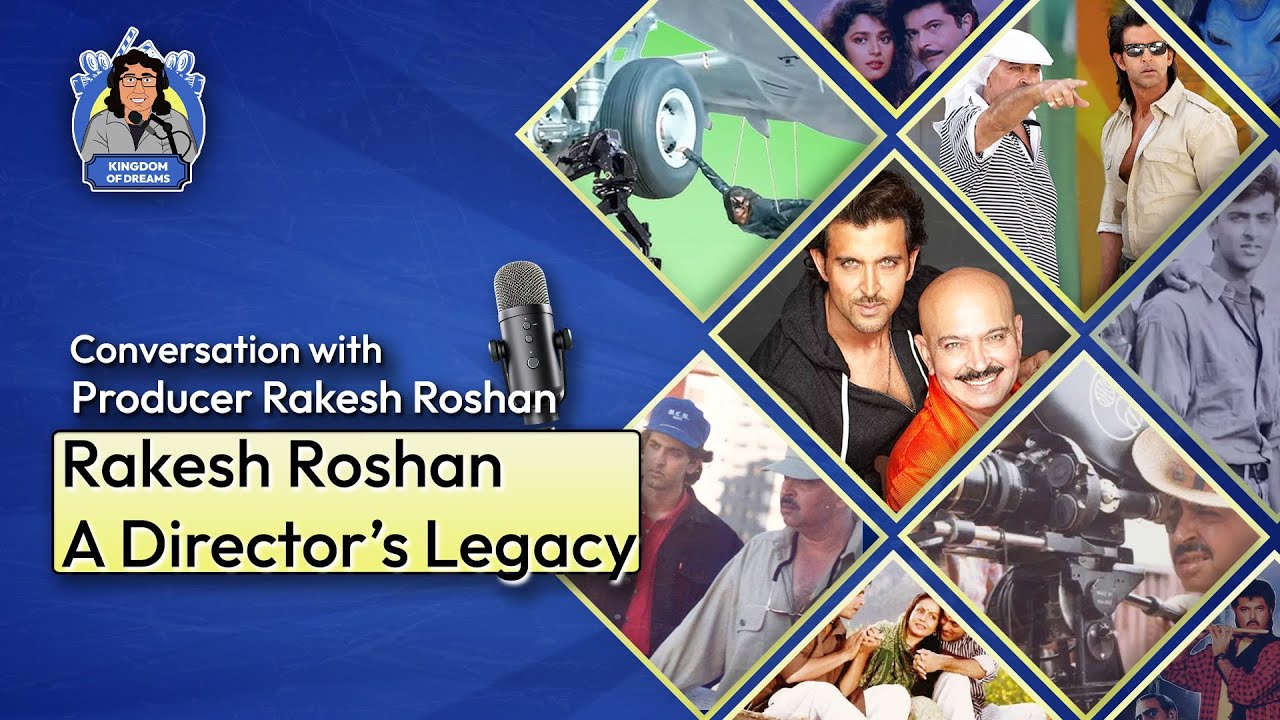
It's an absolute honor to welcome the legendary director and producer Rakesh Roshan, a true icon of Indian Cinema, to the podcast. We'll be discussing his produced Netflix series, The Roshans, where he also makes an appearance.
Rakesh Roshan (born 6 September 1949) is an Indian film producer, director, screenwriter and actor who works in Hindi films. He had appeared in 84 films throughout the 1970s and 1980s. As an actor, he was mostly known for his supporting roles in big-budget films. Later, his prominence increased, and he achieved fame for directing films with titles beginning with the letter "K" since 1987.
As a filmmaker, his work includes the action drama Khudgarz (1987), the revenge drama thriller Khoon Bhari Maang (1988), the action comedy Kishen Kanhaiya (1990), the melodramatic thriller Karan Arjun (1995), the musical romantic thriller Kaho Naa... Pyaar Hai (2000), the science fiction film Koi... Mil Gaya (2003) and its sequels, the superhero Krrish film series (2006 to 13). All of the films he has directed have been commercially successful. He also won the Filmfare Award for Best Film and Best Director for Kaho Naa... Pyaar Hai and Koi... Mil Gaya.
#krrish4 #bollywoodmovies #kahonaapyaarhai #rakeshroshan #oldhindisongs
Full transcript
Automatically generated from the episode audio, so expect the odd misheard word or name. Speakers were labelled automatically. About 8,400 words. Tap a timestamp to play from that moment.
0:09Jawad MirWelcome back everyone to another episode of Kingdom of Dreams Podcast, the Making of Stories. I'm your host Jawad Mir. Today, my guest is none other than producer, director of the Indian cinema, Rakesh Roshan. I've grown up watching his films from the '80s and the '90s, as well as early 2000s. And today he is here to talk about the Netflix series, The Roshans, in which he's featured and he's also produced it. I had a great time talking to him. It was truly a fun conversation between us. And without further ado, here's my conversation with Rakesh Roshan for Netflix, The Roshans, now streaming. Really a pleasure to have you on. I have been watching your work from the '80s. One of my biggest fondest memories, if you wanna call it fondest memories, of watching Khoon Bhari Maang with my mother…
0:58Rakesh RoshanOkay, Khoon Bhari Maang
0:59Jawad Mir... In the '80s and that scene of, you know, the most amazing shot probably in that film was when you unexpectedly see Rekha being pushed into the crocodile. And obviously your other work, Khel, is one of my favorite comedies, especially that song, "Zindagi ke khel mein kaun ye jaane kya hona hai kya." So really a pleasure having you and been watching your work, you know, from then.
1:25Rakesh RoshanThank you.
1:25Jawad MirThere are some films, there are some films that I wasn't too crazy about, but majority of the work I was really fan of.
1:31Rakesh RoshanThank you. Thank you, Jawad. Thank you.
1:33Jawad MirAnd, it was really cool…
1:35Rakesh RoshanYou also make, you also make a lot of films and documentaries, I believe.
1:38Jawad MirYes, I do. I am a director and, I've made, three feature documentaries and now I'm working on a narrative, that sets in Middle East with the current situation. I'm just in the pre-production stage of that.
1:50Rakesh RoshanOkay. Okay.
1:52Jawad MirYeah. Yeah. But yeah, I saw the series with my wife. We started watching it. I had actually Geeta on last night. I was talking to Geeta, about the series and my wife and I started watching it with a plan of watching two episodes, but we ended up finishing it in one go.
2:10Rakesh RoshanOkay.
2:10Jawad MirAnd, really liked it. So thank you so much for inviting us to your family story.
2:16Rakesh RoshanNo, my pleasure. It all started in a long time back, about two and a half years back, and, it was a very tough job. I thought it'd be very easy to make a documentary.
2:32Jawad MirNo, it's not.
2:34Rakesh RoshanIt's easier than making films but then I saw that no, it is much more difficult than making a film. It's a… absolutely a different ball game.
2:43Jawad MirYeah. Yeah. And…
2:45Rakesh RoshanYou're only taking interviews of everybody and then to connect them and make it to a storyline is all... Credit goes to Geeta and the director Shashi who did a brilliant job. And I must say Geeta has done a very brilliant job. There was a 400 of, hun… hundred hours of shooting to get it down to four hours because N… Netflix wanted us to be, not more than four episodes.
3:15Jawad MirYeah.
3:15Rakesh RoshanAnd there was much more material that if they want I can make part two also.
3:22Jawad MirInteresting. No that's, that's, that's really cool. W… do you remember the moment where you made that decision that, "I need to tell my family story"?
3:36Rakesh RoshanYeah. You see, there was a transistor which came out here… ... Many years back and about three or three and a half years back I was listening to the transistor. I won't name that tran… transistor was from which company.
3:54Jawad MirSure.
3:56Rakesh RoshanAnd I saw everybody's name on, all the actors name, all their songs and all the music directors names, Khayyam sir. All my father's contemporary, music directors name. My father's name was not there. And I felt very bad. I said, "He's done just tremendous job and his name is not there." Just everybody's name was there. So I thought, "What should I do? What should I do?" And then I was talking the same thing with my friend Shashi, who's the director.
4:29Rakesh RoshanHe told me, "Why don't you make a documentary on him?" I said, "Let me give a thought. It's a good thought." So then I slept over it and then the next day and I met him, he was sitting at my farmhouse. So next morning when I said, met him, I told him that, "Shashi, I think, my father's music will be there but as the f… all the generations will not able to connect so why not make on the Roshans? On my father, on myself, my younger brother and, Hrithik."
5:09Rakesh RoshanSo everybody, every, we'll cater to every age and that clicked and that's how we started thinking and started, searching things, you know, how to go ahead about it and then we planned that yes, we'll make four episodes or five episodes. One on, one on each, you know, my father and then on me, one on my Rajesh Roshan work too, on me and one on Hrithik. But we were,... By that time Netflix had come in and she, they said we, documentary should not be very long and, it should be only four episodes. That's more than enough. And then we had to go with four episodes.
5:58Jawad MirGotcha. You know, one interesting thing, about your father… obviously I didn't know anything about him either. Like, I think a lot of people, even Gita was talking to, a lot of people know that his songs, but they didn't know who he was, like, as you would know, like, you know, Bappi Lahiri, RD Burman, Laxmikant-Pyarelal, Kalyanji-Anandji and all that, and Khayyam. But one f… I was actually born where your father was born, Gujranwala. And, when I saw... I've never been to Gujranwala, obviously, after the birth. I've never gone back ever. I don't even know what it looks like. I've never had the even the interest of looking at how it looks like. But I saw Gujranwala for the first time in your series with some shots. So that was really cool to see.
6:42Rakesh RoshanYeah.
6:43Jawad MirYeah.
6:43Rakesh RoshanWell, our friend stays over there, and so we asked him to shoot some portions, centers, even the railway station that he shot in centers, so.
6:55Jawad MirYeah. No, it's, phenomenal. And one thing I truly appreciated, so I saw Angry Young Men, which is on Salim-Javed, and I knew a lot of their story beforehand, which a lot of us did anyways. But with your family story, I had no clue. Like, you know, aside from the movies that you and your brother done… has done and your son has done, no clue about the backstories and all that.
7:18Rakesh RoshanYeah.
7:18Jawad MirBut one thing that really came through beautifully on the camera was just the authenticity and the humbleness and the rawness of your family. It was really beautiful to see that, and it really pulls you in and just never lets you go.
7:33Rakesh RoshanThat's so nice of you. Thank you. Thank you. You know, we never did many podcasts. For last two and a half years, I didn't give any interviews also. When I knew that I'm making a documentary, I told Ritesh, I told my brother Rajesh Roshan, "Don't give any interviews anywhere."
7:53Jawad MirYeah.
7:54Rakesh RoshanAnd let's just be quiet about it. Let them learn more about us through the documentary. So I didn't do any publicity. I didn't do any, interviews. I didn't do any podcasts even because the podcast has just come up now in India.
8:11Rakesh RoshanEvery third person or fourth person, they want to do a podcast.
8:15Jawad MirRight.
8:16Rakesh RoshanThey're all our friends, and they all wanted me to do. I said... "No, we'll ask you some different questions." I said, "No." "Not, there's no different questions, you know? They're talking about me. I have to talk about myself."
8:29Jawad MirYeah.
8:29Rakesh RoshanSo, and I didn't do it.
8:33Jawad MirNo, it's, it's a smart, it's a smart decision because you want the audience to be, you know, waiting for your story and everything. And for me, I, if, a… and I'm, I... This podcast is not in any way about personal stuff. I… it's not my business. But because of what you talked about in the series…
8:51Rakesh RoshanYes
8:51Jawad Mir... What, was there, was there any... Because you're talking about each other, like your brother, your son. He's talking about you and, you know, there's a lot of, like, a family dynamic even though you guys are, like, tight and close. Was there a moment where something came out? And I find it w… with documentaries, including with podcast, it's like a therapeutic moment. Like, even for me when I'm talking to people, like, it's a thera… self therapeutic moment. Was there something that came out that you were not expecting to come out, about anybody or anyone, or even yourself, like how you sort of looked at yourself as a human being?
9:28Rakesh RoshanYes, it did come out because, you know, Shashi Ranjan, who's a good friend of mine, he knew the family very well. And since he was going to direct me, he came closer and closer to the family. So when we started talking to him, you know, then my childhood was like this and this thing, and this happened. He made all the notes. So when we were shooting, he used to ask, "Oh, what happened about that? What happened about that?" And so it came out, you know. There were so many things which is not there in the documentary series now.
10:06Jawad MirRight.
10:06Rakesh RoshanBut there are many more things which really came out. And, you know, sometimes, you know, where I had tears in my eyes, sometimes Shashi, you know, he has tears in his eyes and then has to cut. "No, Shashi, you have a glass of water." So this is how it went on.
10:29Jawad MirWould you like to share a story or two that didn't make it to the series, or you wanna keep it to your… keep it off?
10:35Rakesh RoshanNo, I think, I don't know. Offhand I won't remember now.
10:38Jawad MirOkay.
10:39Rakesh Roshan'Cause there are many.
10:41Jawad MirSure.
10:41Rakesh RoshanBecause, you know, because with me at least, we, I shot for at least five to six hours.
10:48Jawad MirOf course, yeah. There was different setups.
10:50Rakesh RoshanWith this…
10:51Jawad MirThere were different setups
10:51Rakesh Roshan... With this, with this location.
10:53Jawad MirYeah.
10:53Rakesh RoshanSo we don't... And from there we have just kept about no more than half an hour or 45 minutes and all the proceedings.
11:04Jawad MirSure.
11:04Rakesh RoshanSo how much we spoke about, what we spoke about, we all also don't remember now.
11:09Jawad MirNo worries. Is there something that you learned about your brother or your son or your father that you did not know before? If so, can you tell me one little thing, that came in the interview?
11:24Rakesh RoshanYeah. I did learn, I did realize that all the seniors who were there talking about my father, like Asha ji and… ... Kalyanji and Sudama also belonging to, his days, they had so much appreciation and respect for him that on my one phone call that, "Suman ji, And they all agreed in, at once and they came. And the way they spoke, though we couldn't hear everything, but I could see the, what admiration they had for my father. The way they spoke, and they all said the same thing, "He didn't get what he wanted." He had to... He didn't perform or offer himself.
12:34Rakesh RoshanHe was a very low-key man and a very soft person. Though I met him, I wasn't... When he expired I was 16 years old, and I did, see him a lot, though I was in a boarding school. And, he was, very much against me that I shouldn't be in films, I should study, educate myself, and then join films.
13:02Jawad MirSure.
13:04Rakesh RoshanBut then I was completely all the time in films. He put me in a boarding school over there also. I used to go and see movies, bunk the boarding school, you know. And used to get punished every time. I was so used to punishment. I said, "Chalo, punishment."
13:26Jawad MirThat's awesome.
13:26Rakesh RoshanBut you know, on the day he expired, I had come from Pune to Bombay for a holiday, and I was leaving that day. So we were having breakfast and I was leaving for Pune. I studied in Pune, Wadya College. So he asked me then, "So what have you decided now?" I said, "Papa, whatever you said. You told me to study, I'm studying. But eventually I'm going to come into the films." He said, "Okay, you finish your college for four years, and then I will put you with my friend Ashutosh, who directed Mamta. And, you can assist him, and then they take on from there." But, that was the last meeting we had. And when I went to Pune that night, 12:00, 12:30, I got a call that my father's not well. But then I realized this is just, they are trying to tell me that I don't break down.
14:27Rakesh RoshanI knew that something was wrong because he was a heart patient. He was only 49 when he expired, and I was 16, and my brother was 12.
14:41Jawad MirWow. Yeah, that must have been... I mean, yeah, that really, like in the series you talk about the, how you had to become the man of the house…
14:51Rakesh RoshanYeah.
14:51Jawad Mir... At a very young age. Yeah. At a very young age. For me, I'll, I'll talk about a film of yours. Well, there's so many, right? There's... But one particular one which talk… which is talked about in the, in the series, Karan Arjun. I remember, that song, the mother and the two sons song. It's something that I listen to almost to this day very occasionally. Like, it's very…
15:17Rakesh RoshanWhich one are we talking?
15:18Jawad MirSuraj Khub Tu Aur Gagan Se, right?
15:20Rakesh RoshanOh, yeah.
15:20Jawad MirThat is, that's, right, that, the opening song. I was so invested in that film, even with the concept, because I knew what the story was, beforehand. And then af… once the two protagonists die, and then I just sort of lo… This is like way back in the '90s when it came out, right? I lost interest, so I never probably finished it. But it was interesting that y… they talked about that, how they gave you a hard time, Shah Rukh and Salman, and then how it just kinda tapped with the audience even though it was one of the most unbelievable concepts, and it worked. Did you feel that inside you as a director that this is going to really work with the audience, or were you taken by surprise of how it was well-received by the audience abroad, everywhere?
16:09Rakesh RoshanWhen I conceived the story, it was long time back when I directed this to Hrithik when he was young.
16:20Jawad MirRight.
16:20Rakesh Roshan"This is an idea I have." He said, "Very interesting." So after, when I made, Khel Game, I didn't know what to make. So, Hrithik told me, "You narrated me one idea for reincarnation. Why don't you make that up?" Yes, I remember, yeah. That is, that is a story which I want to make now. And wh… when I made the whole story, m… my writers and all were not 100% convinced that this might work. This will… might not work also because pe… people might not believe. But I had some instinct in me that, "No, a mother's emotion will never go wrong." When she goes and says to him, " Two pe… boys are born somewhere," and she could hear the voice of a, newly born child.
17:31Rakesh RoshanSo I thought, "No, this cannot go wrong with the Indian audience." So when I made the film, I took Shah Rukh and Salman and... So Shah Rukh didn't believe in it. He said, " "I said, "Really? What's the point? But still I'll work with you because I worked with you in Khel Game. You brought me into this industry."
17:58Jawad MirRight.
17:59Rakesh RoshanSo they were working with me, and I did go through a hard time, but I used to pray in the morning and go. And I used to just pray to God that, "Just give me strength that I should not lose my cool." I should be very cool because they are behaving like, you know, immature, boys. So I should not be, I should not lose my cool. I should be very silent and just complete the film. So I just completed the film in the dates I had taken. And when Salman saw the film with his family, he came up to me and he hugged me and he said, "I'm sorry for what I did. You have made a brilliant film. I can't even imagine that I could be presented in such a manner." The locations are so beautiful.
19:01Rakesh RoshanThe music is so beautiful. The mixing is so good, of the sound mixing is so good, because I had done a stereo at that time. And same thing Shah Rukh also, when he saw the film and when he saw the response of the audience, he said to me that, "Lagesh ji, how did you think that people are going to clap in this scene?" And I thought it's a weird scene. I said, "No, you have come from an, English atmosphere. I have grown up in India." Because India means, the common man.
19:37Jawad MirThe masses, right? Yeah.
19:39Rakesh RoshanYeah, I've grown up with them and I know, what's the pulses. So this is inherent. It's not that I have been done it, calculatedly. This is inhe… inherent. Sometimes, you know, you, don't plan anything, it comes out. Now also when I take a subject, I will, I see a subject where there are emotions in it, or where I see that I can put emotions in it. So that's an in… inherent, what you have with you.
20:22Jawad MirYeah. No, it's all about instincts, right? Like, even when you're writing, like, y… you're, you're sitting in your room and, you know, thinking about the script or the production, all... You know, for me personally, and I'm sure for you and almost every director, it's like 99% of the time, the very first thought that comes to mind is the one that you should go for because it came from deep down from you. Like, it, the inner soul of you, and it's the, it's the right choice no matter what anybody says, I feel. Would you attest to that, too?
20:53Rakesh RoshanNo, same thing.
20:54Jawad MirYeah.
20:54Rakesh RoshanAnd I have seen so many films. Till today I see every film. There is something like masses in me, you know? I think from a common man's mind, not deliberately.
21:10Jawad MirYeah.
21:10Rakesh RoshanIt is in… that's what I'm saying, you know? That because I…
21:13Jawad MirInstinct
21:13Rakesh Roshan... Studied all the films, why this film is done well, why this good film is not done well. Though I like that film, but this commercially is not done well. Why this film is done well? So there is, let's say, inbuilt, what do you call? That pulses are there, you know, that you know…
21:39Jawad MirRight
21:39Rakesh Roshan... What will work and what is not going to work with the masses.
21:43Jawad MirYeah.
21:43Rakesh RoshanSo what I did was that I always took a different kind of a subject, not repeating my previous film, because I never competed with other filmmakers. I appreciate everybody's film because I feel that one should appreciate, then only you can learn. So I used to app… I appreciate everybody's films. Not everybody, whichever films I like. I call them up and I tell them that, "You made a good film." But then it gives me a challenge that even I should think of something different. And so I always made direct opposite films only. Like, when I made Khuddars, friends, of two friends, and then it became a very successful film. And then any other filmmaker would have made the same kind of a film. But I made a heroine-oriented film, Khoon Bhari Maang, directly opposite, which challenged me to make.
22:49Rakesh RoshanThen after Khoon Bhari Maang, I used to see, Ram Aur Shyam, and I love that film with Dilip Kumar.
22:55Jawad MirYep.
22:56Rakesh RoshanSo then I made Kashish Kanhaiya. And then I made King Uncle with, Ja… Jackie and the young girl.
23:04Jawad MirYeah.
23:05Rakesh RoshanThen I made Reincarnation. Then I made Koyla. Then I didn't make a romantic film, so I said, "Let me make a romantic film." So I made Kaho Naa Pyaar... And then after Kaho Naa Pyaar Hai, what to do with Hrithik now? Everybody, all the other films what he has signed, eight film, nine film what he's working outside, they are all projecting him in the same way. I said, "I can't, shouldn't do that." So I made Koi Mil Gaya.
23:34Jawad MirYeah.
23:34Rakesh RoshanAnd then same boy who was not a hero, he was a childlike boy in Koi Mil Gaya, I made him a Superman in Krrish.
23:49Jawad MirYeah.
23:49Rakesh RoshanAnd these are risks I took, you know, because these are not risks. Actually, I pick up subjects which challenges me. So people have seen these films, but to still, to take a plot of a different kind. Then I decorate it with good songs and a good love story and, a musical film. So that's,.. Because that's because again, there's some masses pulses there in me
24:20Jawad MirYeah, no, I couldn't agree more, and I feel that, you know, as Hrithik said in the series that how each of your film is like, is like almost like Karan Arjun or Khoon Bhari Maang. It was like the re… the reinvention of a character. Like, y… because you went through as an actor and producer, and then you became a director. And it shows that in your films, in all of your films. One interesting thing about, Krrish,.. So I think Krrish, and please correct me if I'm wrong, was the first film from India, which I… I'm a huge fan of background score. I've been listening to background score for the last 35 years, anything you can imagine, and Krrish was the first film from India that had its original background score, well, from Salim Merchant. And I remember my f… my very first demo reel that I made as an editor, I used the gliding, track…
25:17Rakesh RoshanOkay
25:17Jawad Mir... Just, you know. Yeah, because it... I was still listening to it, like, few weeks ago. It, like, the 23-minute track that, the album that is on YouTube. It's, it's so original, but it has so much the Western and the South Asian element to it.
25:31Jawad MirAnd Kang Uncle, that was my childhood among the, many other films that I'd seen, like The Goonies, Gremlins, Home Alone. Like, you know, from… coming from India, that part of the world, it was an amazing film, and just to see those two opposite characters and one trying to mold the other one over and win the other one over, beautifully crafted. And your filmography clearly showcases that, and I really…
25:57Rakesh RoshanThank you
25:58Jawad Mir... Enjoy it. I really enjoy it. What projects... So we talked about your projects and everything, but if there was something that you could do, was there a project that you were working on that didn't really materialize, or have you had, like, sort of like a 100% track record of being able to make whatever you have conceived?
26:24Rakesh RoshanYeah. See, I wanted to crossover, make a crossover film, and I made Kites.
26:32Jawad MirI love that film.
26:33Rakesh RoshanYeah. But, somewhere, I went wrong with it.
26:40Jawad MirReally?
26:41Rakesh RoshanYeah, because, you know, the film's pace was very slow, and I kept telling the director that the pace is very slow, you know? But that director didn't, didn't understand what I was saying. And though it was shot very beautifully, a very well-made film, but when I saw the first, copy, I told Hrithik that this is not gonna work with the audience because the pace is very slow of the film. And, that was one film where I thought that I could crossover, and make films, you know, with... I went a little ahead of times.
27:30Jawad MirAbsolutely.
27:31Rakesh RoshanI could, but I couldn't. But now I was just talking to my wife. She and my, and my daughter, we were just sitting just half an hour before. So my daughter asked me, "Now what? You made a documentary also." So I said, "Nah, yeah, it's a big question." Said, "I made films and, one after another, different kind of subjects." Then I said, "Okay, let me make a documentary." Made a documentary. "Now what?" So I said, "That's, that's a good question you have asked me, and that's what I'm thinking also, what to make."
28:14Jawad MirMaybe a, maybe a TV series? Min… mini series?
28:19Rakesh RoshanMaybe, I don't know. I don't know. Maybe something challenging.
28:22Jawad MirI, yeah, challenging, right?
28:23Rakesh RoshanIt should be challenging.
28:25Jawad MirWhat do you think about... I mean, you've talked about challenging. You know the motion capture technology, right? Like, that James Cameron uses for Avatar and…
28:32Rakesh RoshanYeah.
28:32Jawad MirHa… have you... I mean, I know that's, it's a completely different world, but have you thought about that ever doing, when the time is right?
28:41Rakesh RoshanI think Krrish 4 will have that. Mostly I may not be directing it, but I'll be producing it, and I'll be behind, looking over the screenplay and everything else. But I want, Hrithik and some young director to take over and, experiment, and they should... They would, learn and then start making more, sequels, 'cause I will not be able to make more than one sequel. So I, this is the time I thought if I being there I can hand over, this big franchise to, in his hand to carry on further.
29:36Jawad MirRight. So what are... So you talked about the... Going back to you, it's one thing that you said about the masses, like, you know, knowing the common man. It's, it's interesting you mention that because on this podcast I've talked to a few people about this. We... Like, for example, James Cameron, right? Like, he's done Terminator, Abyss, Titanic, Avatar, and Michael Bay, The Rock, Bad Boys. Their films are not necessarily thought-provoking from a dialag… dialogue standpoint, right? But I always used to wonder, "Why do their films do so well?" Especially James Cameron has almost got, like, 100% track record. And it hit me that how if you think about, if you look at his films, and you're so right about that… You know, The Abyss was about the, oil drillers. Titanic was about this, you know, guy without any money, like an ordinary kid. Same thing with, Terminator. It was sh… she was a waitress…
30:37Jawad Mir... In the first Terminator. So yeah, that part I really wanted to... I'm glad you mentioned that because I wanted to say that how if you make a film about the common man, even if it's not the most 100% amazing film, it just somehow taps into their emotion and they're hooked, and they come right into it.
30:55Rakesh RoshanAnd if you see James Cameron's older films, it has 100% emotions in it.
31:01Jawad MirYep, 100%. And people love emotions, even if they're…
31:07Rakesh RoshanYes
31:07Jawad Mir... Yeah.
31:08Rakesh RoshanThe common man's emotion is there. It's not necessary that you have to cry…
31:13Jawad MirYeah
31:13Rakesh Roshan... Or you have tears in your eyes. No. Emotions is that when you get attached to the film, and you get attached only when there's a emotional line in the… of the film. When you narrate a film, in one line the story, you should get attached.
31:33Jawad MirYeah, and how does…
31:33Rakesh RoshanSo in the first 10 minutes of the film, that's what I have, been seeing in all these, big films. In the first 10, 15 minutes, they pull you inside the film, the audience. They pull the audience in the film, and then you see only the director and the actors, and the director has to be s… seen in the film. If you can't see the director, that movie is not a good film.
32:04Jawad MirYep. Yeah, it, like Javed Akhtar said in your series, that when you see a film, you're probably seeing something about the director and the writer in there without knowing that it's about them, because it's coming from their inner selves in a way…
32:25Rakesh RoshanYeah
32:25Jawad Mir... Directly or indirectly, right? Have you ever thought about directing something in this part of the world with Hollywood actors and... Or you wanna stay in tradition?
32:38Rakesh RoshanNo, I was trying, I was trying for, with Kaiz too. You know, if Kaiz would have done well…
32:42Jawad MirRight
32:43Rakesh Roshan... I would have gone the other way and made films over there, with their star cast and our star cast here. But somehow it didn't work, but you never know.
32:56Jawad MirYeah.
32:56Rakesh RoshanYou know, next what may… what is there in the, on the cards? Don't know.
33:03Jawad MirHow do you see... I mean, you've seen the film industry from the '60s, '70s, up all the way to today, right? Like, you've seen the evolution of it. Obviously, technologically, it has advanced. You know, things have become different even from a promotion and publicity standpoint. But in terms of the actual story, right? At the end of the day, it's all about the story and the characters that are in the story. What is something that you have seen that has improved, and what is something that you have seen that has gone the other way? Not necessarily about anything that you have done or anybody else has done, but just in general in terms of the industry.
33:44Rakesh RoshanSee, technically we have gone far ahead than what we were. But, story-wise, we are falling. We have not moved ahead. And why we have not moved ahead is because the young… younger generation has less emotions than what emotions we had at our time. Today, I see younger generations, they're very intelligent. They know filmmaking much better than, what we have, we know. But it's all from here, it's nothing from the heart.
34:36Rakesh RoshanBecause they have, they are, they are not... See, we, when we were young... I'll be just giving examples, you know…
34:43Jawad MirSure
34:43Rakesh Roshan... We would touch my mother's feet or my father's feet. We can't nowadays. There's nothing like this. "Bye Mom, bye Dad. Bye Dad, bye." So you know, the world is, the generation is changing, so they have lesser emotions. But, and the films they are being made with this generation who makes films are from a very, a well-lived family. They are not from the mass. Producer ka beta hai, aur director ka beta hai, somebody, hero's daughter, son who speaks only in English. They don't know Hindi very well. They can't write a subject. When I go and relate an act… I, as actor, a subject to an actor, I don't refer to my book at all.
35:47Rakesh RoshanI know it by heart, everything, my dialogues and everything. I just narrate them. Now they'll open the computer, they'll read, "Oh, sorry, not this." So i… it is, it is they are not inheriting what they're making. They are just to make a film, they make a film. And when they make a good film... But then they make a very niche film. It is not for all the audience.
36:21Rakesh RoshanBecause they don't know what commercial cinema is. They laugh at commercial cinema, but I'll tell you one thing, it is the most difficult thing to make a commercial film.
36:33Jawad MirI…
36:33Rakesh RoshanWhere people from the smallest village to Australia or to LA, everybody can see and enjoy the film. And that can only be happen when there are emotions in it, 'cause emotionally everybody connects. I have made 17 or 18 films up till now. In last three days, after The Roshians have released…
36:56Rakesh Roshan... I'm getting nonstop messages and nonstop calls from all over the world even. From people who, I must have met 30 years back, 35 years back, 40 years back, 50 years back. They are calling me up and they're saying, "We saw The Roshians, and we saw it in one go. We saw it in one go." Everybody's saying, "We saw it in one go." All the four episodes. And why? This is only because of there are some emotional values in it. You connect.
37:29Jawad MirYep. No, I agree. I agree. And I think one has to wonder is it because of social media that the emotion has sort of gone out and it's just about like, you know, quick…
37:40Rakesh RoshanSomewhere something is missing.
37:41Jawad MirYeah. I saw this behind-the-scene, clip. You know David Lynch, right? The director who just passed away recently.
37:49Rakesh RoshanYeah.
37:49Jawad MirHe... There's a, there's a, there's a clip that I saw, online. He was directing a scene, and there was a woman right beside him, and somebody was filming this. And she said to him, "You know, this scene is too long." And he took his headphones off and he started cursing left, right. And so he's like, "What the hell does that supposed to mean the scene is too long?" Because she was looking at it from the standpoint of the audience attention span, right? And I think that's where we have become, like, everything has to be... I get it. Like, you have to have pacing. I completely understand that. But if there is an emotion in there and if you wanna hold onto that emotion and that shot for a longer period of time instead of cutting, then that's the way it has to be because people need to be sucked in and pulled into it.
38:35Rakesh RoshanYeah, absolutely.
38:36Jawad MirYeah.
38:37Rakesh RoshanThere was a actor friend of mine who said once to me that, "You know, I'm such a good actor that I can make people cry any time I want." I said, "You're wrong." "But how else?" he said. "Tell me, prove me." I said, "I open the film, your mother is, has expired, and her body's there, and you're crying. But m… I bet you no audience is gonna cry with you till you don't show your relation with your mother, and that can only happen after 10 scenes or five scenes when you see the relation with your mother." And he thought over and he said, "Yeah, you're right." And I told him, "It's a screenplay which makes you cry. An actor enhances it."
39:18Jawad MirYeah. No, it's, it's so true. It's all about emp… you know, creating the empathy for the characters, i… in the audience's eyes, and hook them on, and take them on a journey. And the most incredible thing about any series, any film, any even documentary is when you are able to create a world, like even like a disaster movie, I'll just take an example. Like, you know, the end of the world is happening. There's a really good movie called Greenland, which was probably one of the most tight, well-crafted disaster movies I have seen. It was just about this one family, and that's it. And when you are able to pull that off with such strength that the audience feels that this is it, this is the world that exists regardless of what else is going on, that's when you've h… hit a home run.
40:09Rakesh RoshanYeah.
40:09Jawad MirAnd that's a very difficult thing to do.
40:11Rakesh RoshanVery difficult.
40:15Jawad MirYeah. In terms of your favorite films, whether they're from Hollywood or India, I know it's a very difficult question to ask, but just something that comes to mind, and yeah. Or even filmmakers.
40:31Rakesh RoshanI'll say that, I've seen, Raj Kapoor's Shree 420. I think must have seen more than 400 times. And till today when I start a new film, I'll watch that film just to inspire me because I feel that was a totally, a film which was a complete film, which had good dialogues, which had good music, which had got good screenplay, and it was ahead of its time playing. I don't know if you have seen it or not, Shree 420.
41:13Jawad MirI have.
41:15Rakesh RoshanYeah.
41:15Jawad MirLong time ago, but I have.
41:16Rakesh RoshanThey had share market in that, Raj Kapoor. At that time he explained what share market was to the common man. So it was a complete film, and I see that film as a, as a Bible all the time when… whenever I have to start a film. In English film, of course, there are many. Th… this is a film where in, from India I love.
41:47Jawad MirGoing back to The Roshians, was there ever a moment where... And you know, it's a natural emotion where you feel like you don't want a certain... Because everybody has their privacy, right? In India especially, I mean, you have to have super privacy because everybody's looking for a story. But to be able to take that, was there any resi… reluctancy, like, "Should I say this? How is this gonna be taken?" Or you're way past that in your life?
42:16Rakesh RoshanNo, you know, it all depends, Javed, that who's asking you what questions.
42:23Jawad MirRight.
42:25Rakesh RoshanSee, we are only answering. We are not talking. So when Shashi used to ask questions, we used to answer him. So we used to make the questions and he used to prepare himself and come and says that, "Tell us that these are the questions I want to ask." So sometimes we'll say, "You can ask this also, you can ask this also. Don't ask me this because I've been,.. It's a require… a repetition. I've said these things before…
42:52Jawad MirSure. Yeah
42:54Rakesh Roshan... Also." So it all depends on how you,.. Ask me some question where I have to say, come up with a bitter truth.
43:14Jawad MirUnderstood. What was the genesis of King Uncle? I'm just curious, where did that come from? I know you were trying to do something different, but was there some personal element in there?
43:28Rakesh RoshanNo. I, just the idea came that a very strict man, a very disciplined man, how a young girl meets... He meets in an orphanage and how she changes him to into a normal human being. So that was a germ, you know, that idea I had when we worked on the script. Actually, I had made that film. I designed that film for Amitabh Bachchan. And I went and narrated to him also, and he said yes for that. So I conceived all my scenes according to his, what he would do with the film, how he would play this role. But you know what happened was that, in those days he was
44:24Jawad MirYeah
44:24Rakesh Roshan... Struggling. He wanted to, he wanted to leave, the film and take a break. So he was completing his all his previous films and he said, "Yours will be the last film. I will… we'll start and we'll finish it in two or three months time." But then I had to wait for a long time. You know, whenever I used to go, Shashi used to tell me another two months, another two months. And I then... I didn't, I don't do many films, so I was sitting at home for one and a half year. So I told Amitabh that I cannot wait any further because I have to run my house also. And then it took place.
45:02Jawad MirGot it. Got it. Are you a disciplined and strict man?
45:07Rakesh RoshanYes, I am. Not dis… so a strict man, but I'm a very disciplined man. I'm a very punctual man and a very disciplined man. I love people who are very punctual.
45:19Jawad MirYeah.
45:20Rakesh RoshanAnd that's first thing in the contract I write with all my actors that you have to be on time and with your phone.
45:28Jawad MirYeah. Yeah. It's,.. I pretty much talk to my kids about the exact same thing. It's like even if you... As long as you arrive on time and if you are not able to do the task that you're supposed to do to 100% of your abilities, which you should, it's the punctuality that matters the most.
45:47Rakesh RoshanI agree.
45:47Jawad MirBecause at least, at least you're there. You're valuing everyone's time, including your own. Including your own, right? So it's... And I saw you when I, when you joined in, I saw you joined on the, on the Zoom, five, six minutes before, which was great to see. So I complet… you know, just basically made sure that we got on time. That's awesome. In terms of your relationship with your son, Hrithik, you know, he was an as… I think an assistant cameraman or assistant director for you when you were working on... How has he... And he, by the way, you know, I, some of my favorite films of his, are, Fiza, Koi Mil Gaya, and, Kaho Na Pyar Hai and Mission Kashmir. Like, those are f… my four favorite of his in terms of performance, in terms of character development and everything. And he has, being a s… co… coming from a family like yourself, you know, sometimes that can take you to a different direction.
46:48Jawad MirBut he, even in the interviews, in the Roshans, you could see in his eyes he's just so full of life and soul. He has such a deep soul. I was watching his interview with Anupama Chopra. I don't know how old it is. It was just something I saw on YouTube where she said to him that, "How are you able to take criticism so, easily? That if I say your film that you did was terrible, but you're still able to talk to me." And he very genuinely responded that, "That has nothing to do with my relationship with you. That's just a film." And he is a very deep individual, at least from what I gathered. Obviously, you know him, to the, to the core. So how have you seen him evolve?
47:33Rakesh RoshanSee, he joined me as an assistant director for four years. Though we used to have breakfast on the same table, but he'd never just sit with me in my car and come to the shoot. He had to take a bus or a auto or travel on his own. And whenever he could go out for shooting outdoors, he used to stay in that hotel, sharing a room with two, three people or two people. So I wanted him to learn all what goes behind the camera, what people talk when you're not punctual, when actors come late, how disturbed they are, how a film suffers. Because if I had to take 10 shots today, and if I'm able to take only six, I'm suffering. Because I ha… I have a different way of shooting. I shoot in one zone only If I light up one zone, one corner, I will shoot all my shots in that zone.
48:40Rakesh RoshanIn the other day, I shoot the other zone. But I enact the whole sequence to the actors when they come in the morning, that this is going to be our movement. So they are absolutely very clear. So he learned a lot. I didn't teach him anything. And that made him grounded also. Till today, I have to tell him, "You're a star." "Why do you roam like that with chappals and all that?" "Arre Papa, what for? A cab driver for that. Yahi toh ja raha hoon." I say, "No, people look on at... L… l… look at you, and they want to see you as a star." But he is in his own world. So I get upset. Sometimes I feel good also a… as a father, but then as an audience, I feel, no, he... P… people want to see him, what, who Hrithik Roshan is. You won't believe when, Kaho Naa Pyaar Hai re… released, he went to some functions.
49:47Rakesh RoshanPeople were telling me, "Are you sure he's Hrithik Roshan? He's so skinny. And in the movie we saw him, he's got a big, physique." I said, "No, his body's like that. When he wears a shirt, he looks very thin. When he removes the shirt, he's got all, he's all muscle inside."
50:09Jawad MirYeah. Yeah, no, it's, it's incredible. And I think going back to what you said about him wearing, you know, slippers and going outside, and you're telling him that you're a star, I'm… I'm assuming, obviously he has kids too, so he's probably trying to do the similar thing that you did with him, is just trying to set an example that you have to be somewhat grounded in who you are, but also who he is himself as an individual.
50:32Rakesh RoshanYes.
50:34Jawad MirJust so as we wrap up, what is one thing that you want people to remember about…
50:46Rakesh RoshanWhat is…
50:47Jawad MirWhat is one thing that you want people to remember about who you are or who have you been?
50:55Rakesh RoshanI, just want that, the respect what they give me, they give my family also later on, because that is what my father left for me when he expired and when I was an assistant director. Whoever, whichever big filmmakers would meet me, when they knew, "Arre, he's Roshan ji ka beta. He's Roshan ji's son," they would come and meet me. I would, I would go to their office and they would stand and meet me. So that is what I want, that people should have the same respect for my family, for my ch… grandchildren and my children. As a filmm…
51:47Jawad MirGot it
51:47Rakesh Roshan... As a filmmaker, as this thing, woh toh, your films are going to speak. Some are going to like, some are not gonna like. But, respect is one thing which you can only earn by you, by yourself, and leave that impression forever. I'm so happy today when people call me up and say to me, "We never knew that your father made this song also and this song also and this song also."
52:17Rakesh RoshanSo I feel somewhere ki I have done something for my father today.
52:22Jawad MirYeah.
52:22Rakesh RoshanI don't always know that transition will come back my father's name in that. I've put, I've put his name worldwide now.
52:29Jawad MirAmazing.
52:31Rakesh RoshanSo I'm feeling so proud. I'm feeling so happy for him. Wherever he is, if he's there, if he's can see, if he can hear, I'm, I'm so blessed that, I could do such a thing for him.
52:46Jawad MirDo you feel that you... So, you know, talking about your dad, how he had done, you know, Jawani Diwani and Nibhana, I mean, that's such a classic song, right? Like, and there's so many of them. Do you feel that your life, people know you and recognize your life and your career as you would like them to as an individual compared to maybe your dad?
53:13Rakesh RoshanNo. What I'm trying to say is that, see, in today's world, in today's social media and everything, in my father's days, it... Nothing of these sorts were there.
53:25Jawad MirRight. Right.
53:26Rakesh RoshanToday, you know, well, we have made such films and we have made so many films, people will know me, Rakesh Roshan's high director, producer. But ek hota nahi ki yaar, where if Hrithik's grandch… ch… children, my grandchildren, if they go somewhere and say, "Actually, you are Rakesh Roshan's grandson. Oh." So that's, that is the impression if you leave.
53:54Jawad MirRight.
53:56Rakesh RoshanThat's a legacy you're leaving.
54:00Jawad MirNo, makes sense. And, I think what I was trying to ask was, you know, like this generation, do they know Rakesh Roshan? You know, the Rakesh Roshan from the '70s, '80s, and the '90s and the early 2000s. Like, the new generation that's coming about. That's…
54:16Rakesh RoshanFor sure, I know that…
54:16Jawad MirThat's…
54:17Rakesh Roshan... Rakesh Roshan is Hrithik Roshan's father today.
54:21Jawad MirYeah. Yeah. No, I think it's just with time, right?
54:24Rakesh RoshanThey tell me. Yeah, when they write about me also, they write Hrithik Ro… Hrithik was with his father, Rakesh Roshan. Hrithik's father, Rakesh Roshan. Somewhere in the airport I was, there and some fans came to me and looked at me and said, "My God, you have Hrithik's eyes."
54:49Jawad MirOh, that's amazing. That's super cool. I'm, I'm sure that's gonna happen too. You know, it's, it's funny, we live in a world now, you know... W… again, the theme of this whole s… Roshan series is, like, how your dad was never recognized for the work that he did. But we live in a completely opposite timeline now. And in about 50, 60, 70 or 100 years, pending the world is still the way it is, all this stuff, like, you know, your, the films that we make, the podcasts, the interviews, they will be at... Th… they'll be left behind all of us.
55:24Jawad MirAnd, you know, for the world to see that how many, how stories were crafted and how who, how who was, essentially. And it's, for me personally, it's such a great feeling that, you know, you're leaving history behind, in a way that's never been done before.
55:40Rakesh RoshanThat's the main reason I made the documentary.
55:43Jawad MirYeah. It's not…
55:44Rakesh RoshanPeople make documentary when people are not there.
55:47Jawad MirYeah.
55:47Rakesh RoshanThey can't share their experiences. See, I can speak about my father, but what Rajesh Roshan can speak about himself, or Rakesh Roshan can speak about himself, or Hrithik Roshan can speak about himself.
56:02Jawad MirYeah.
56:02Rakesh RoshanI don't think so. So this is what I thought, that let me make a documentary and leave it behind so for life long it'll be there.
56:12Jawad Mir100%. And it's, it's, again, as I said earlier, it's a rec… remarkable series and I think everybody should watch it. Even if they don't understand the language, or don't know you guys, that's the whole point, of course, because it's such a beautiful story.
56:26Rakesh RoshanThank you. Thanks.