
Episode 305 · July 10, 2026 · 1h 20m
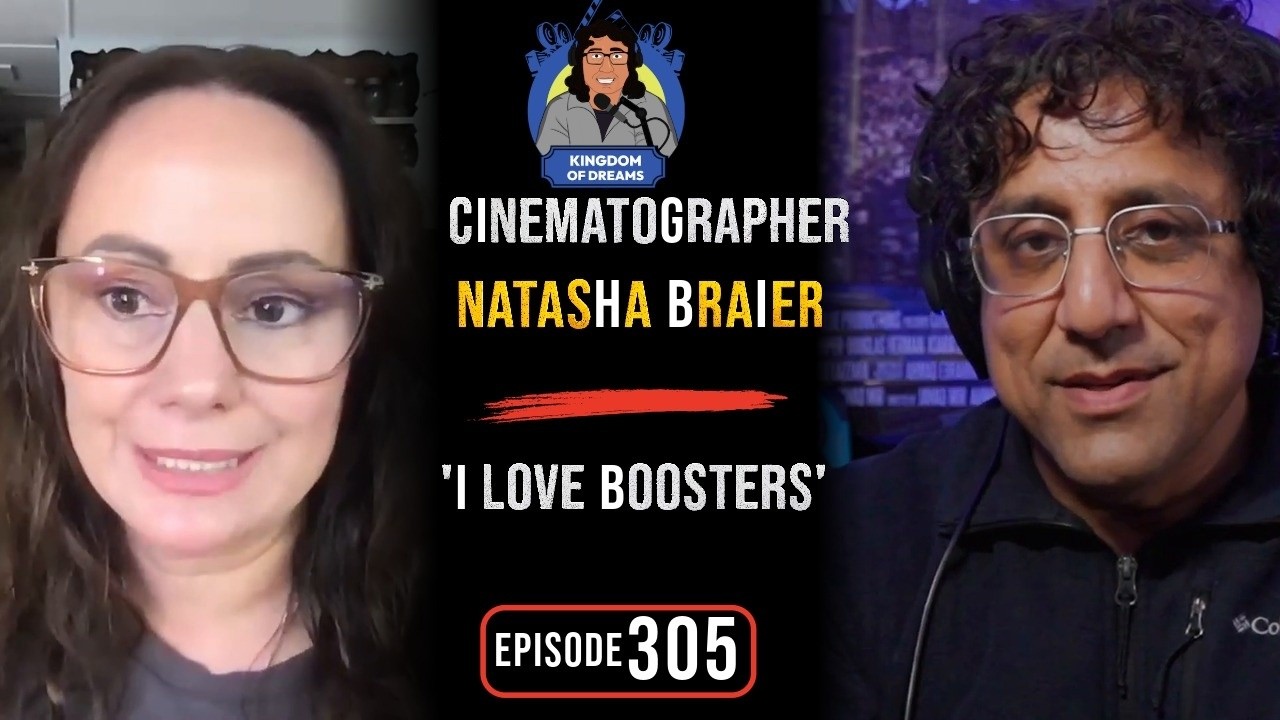
'I Love Boosters', Cinematographer Natasha Braier
Clips and Shorts from this episode
About this episode
🎙️ On this episode of the Kingdom of Dreams Podcast, I sit down with acclaimed cinematographer Natasha Braier, ASC, whose remarkable body of work includes The Neon Demon, Honey Boy, Gloria Bell, and the upcoming feature I Love Boosters.
Natasha takes us behind the visual language of I Love Boosters, discussing how she worked with the director to translate the film’s unique vision into striking imagery. We explore the creative conversations that shaped the look of the film, the decision to build scenes around a slanted floor, the visual references that inspired the cinematography, and how camera movement, lighting, and composition came together to create its distinctive world.
We also dive into Natasha’s journey as a cinematographer, her collaborative process with directors, the importance of visual storytelling, and the craft of creating images that serve both character and emotion. It’s a fascinating conversation about cinematography, creativity, and the artistry behind bringing bold cinematic visions to life.
Natasha Braier, ASC, ADF is an acclaimed cinematographer known for her bold visual style and emotionally driven storytelling across feature films, television, and commercials. Born in Argentina, she has built an international career collaborating with acclaimed directors on projects including The Neon Demon, Honey Boy, Gloria Bell, and I Love Boosters. Her work is recognized for its expressive use of light, color, and camera movement, earning her a reputation as one of the industry’s most distinctive contemporary cinematographers.
#iloveboosters #demimoore #comedy #cinematography #inspiration #art
Full transcript
Automatically generated from the episode audio, so expect the odd misheard word or name. Speakers were labelled automatically. About 13,400 words. Tap a timestamp to play from that moment.
0:00Jawad MirWhen you got on board, you know, what was the conversation you had with the director of how the film should look versus how should it feel?
0:08Natasha BraierThis is a very good question. He wanted it to look like a carnival, like a fair, like a fireworks, like a visual rollercoaster.
0:20Jawad MirDo you avoid references altogether so you have a unique approach?
0:24Natasha BraierWhen I was in film school, there was almost no internet. To acquire your culture and your references, you had to actually go to the cinema to watch movies. You had to read books. You had to buy a DVD that was hard to get, or even a VHS.
0:40Jawad MirThere was a lot of great visuals, but the one that stood out was a slanted office.
0:45Natasha BraierOriginally, we wanted a bigger angle, so then we ended up, I think, on 17 degrees. We were told that if we had bigger incline, all the crew, everyone were gonna have to be harnessed.
1:04Jawad MirHow have you been?
1:06Natasha BraierGood. Good. And you?
1:08Jawad MirAwesome. Great. Thank you for asking. Are you in LA?
1:12Natasha BraierYes, I am at the moment. I'm going back and forwards, between LA and the desert because I'm moving to the desert, but the next two days…
1:21Jawad MirOh, you have a pro… project in the desert?
1:24Natasha BraierNo, I'm just moving there.
1:26Jawad MirOh, you're moving.
1:27Natasha BraierI'm done. Yeah, I'm done with the city. It's so contaminated. I don't wanna be in the city anymore. So it's just, it's two hours away, just before Joshua Tree.
1:37Jawad MirOh, I love that place.
1:39Natasha BraierYeah.
1:39Jawad MirI know exactly where you're talking about. There's a small town just before you enter into the whole…
1:44Natasha BraierYeah
1:44Jawad Mir... This spot
1:44Natasha Braier... Before the, before the town. It's in…
1:46Jawad MirYeah
1:47Natasha Braier... Morongo Valley, so it's kind of pretty much nature in the mountains. But then I'm, yeah, I'm 10 minutes to Yucca Valley, which is the first town and where you can, you know, buy everything.
1:58Jawad MirYeah.
1:58Natasha BraierYeah.
1:58Jawad MirAnd it's probably, it's probably economical to buy a place there than in the city, right?
2:04Natasha BraierOh, yeah.
2:04Jawad MirOr it's…
2:05Natasha BraierI got an amazing house, yeah, for probably a third of what it would cost, in LA. Yeah. Yeah.
2:14Jawad MirYeah.
2:14Natasha BraierFor sure. Yeah.
2:15Jawad MirNo, that's, that's good. And which part of LA are you in right now? Westwood or Hollywood, or…
2:19Natasha BraierNo, I always lived in Topanga Canyon.
2:22Jawad MirOkay. Okay.
2:23Natasha BraierYeah. So yeah, here it's, like, super expensive, and also nobody insures you anymore for
2:32Jawad MirOh, because fire
2:33Natasha Braier... For fire. Yeah. So it doesn't really make any sense to stay here. So yeah, I'm very excited.
2:43Jawad MirWell, good. Well, congratulations. You're moving in two weeks, you said?
2:47Natasha BraierYeah, kind of. I slowly been moving in the…
2:50Jawad MirYeah
2:50Natasha Braier... In the last month, so yeah.
2:53Jawad MirThat's good. I think you and I are in the same boat. We're moving slowly starting tomorrow, and then we're moving Monday, Tuesday next week, just literally five minutes away from here, so our move is not that far.
3:03Natasha BraierOh, wow. And where are you?
3:05Jawad MirI'm in, the west end of Toronto.
3:08Natasha BraierOh, nice.
3:09Jawad MirYeah. But I come to LA quite often. This year has been a little s… hasn't happened that much, just because industry is, as you know…
3:19Natasha BraierYeah
3:19Jawad Mir... Things are super slow.
3:21Natasha BraierYeah.
3:21Jawad MirAnd, but yeah, no, I've, I've met so many people over the podcast. Like, this is like 305th episode that we're doing.
3:29Natasha BraierWow.
3:30Jawad MirAnd so I've made some great connections, great friends that I literally come to LA just to meet, dine with them, and then leave, and I enjoy it. I mean, I know LA is a crazy city. I don't know if I would ever live there.
3:43Natasha BraierYeah.
3:43Jawad MirBut I think in order to get your f… feet in the ground, you probably do need to spend some time there first, and then, you know, you can move on the outskirts, or at least the way you're doing. And Joshua National Tree Park, I took my family there last week, last year around Christmas. It was, it was fantastic. We saw stars like we've never seen before, so it was, it was really cool.
4:04Natasha BraierYeah, I actually, I saw a UFO two days ago, like for…
4:08Jawad MirOh, did you?
4:09Natasha BraierYeah. Yeah, it was…
4:11Jawad MirDang
4:12Natasha Braier... Strangest thing I saw in my life, yeah.
4:15Jawad MirWhat... Could you tell the shape of it?
4:17Natasha BraierYeah, it was a straight line, like this.
4:20Jawad MirIt was like a disc?
4:22Natasha BraierNo, it was like a straight line.
4:25Jawad MirOkay.
4:25Natasha BraierAnd it was... So we were looking at the stars for, like, half an hour. Was getting dark, so it was, like, the first five minutes that it felt like, okay, now it's deep night, and then as where eyes, I guess, are getting used to it or it gets a bit darker, we see this line, ve… very big line in terms of the scale, you know? And very s… very straight, and it was less shiny than the stars. Like, it was very diffused. You know, like, if you see, like, a jellyfish in the water, that it's kind of trans…
4:59Jawad MirOh
4:59Natasha Braier... Parent? You're like, "Wait, is there, like, a layer of something transparent here?" So it was something like that, but, like, a small... Well, not small. Like, it was quite big in scale, but, like, a line, and then we're like, "Oh, my God." And then the line was, like, moving very slowly, and it crossed…
5:18Jawad MirCrazy
5:18Natasha Braier... By, like, in maybe five minutes. But, like, if y… if the line was like this, let's say, right? It was moving like that, you know, or like that.
5:27Jawad MirSo it's, it was elevating and moving.
5:29Natasha BraierBut it wasn't a tra… it wasn't a chemtrail, you know? It wasn't like, oh, this is some optical illusion. Something is going from A to B and you're seeing a line. Was like, no. Physics here, it's different. The way, you know, the direction of the line and the direction where it's moving is not the same.
5:47Jawad MirWow, that must have been a cool ex… I'm a big UFO believer, right? And, I always have been for the longest time, so it's cool that you got to see that. I would love to, I would love to experience that just to, you know…
6:01Natasha BraierYeah
6:01Jawad Mir... See with the naked eye, yeah.
6:03Natasha BraierYeah, I mean, I always thought there's, there has to be something, like the universe…
6:06Jawad MirFor sure
6:06Natasha Braier... Is so big, you know? And also we've been through so many civilizations that we don't even know on Earth, you know? Like, that were probably more advanced and whatever. And so, yeah, I always thought it doesn't make any sense that we're the only ones. But now that I moved to the desert, I'm kind of like, "I wanna see a UFO," you know, "I wanna see a UFO." And it just happened, like, the first night that we spent, like, you know, some time looking at the stars. I'm like, "Wow."
6:31Jawad MirWell, amazing. That's awesome.
6:33Natasha BraierVery exciting, yeah.
6:33Jawad MirThat's really cool. Well, it's good to have you. Thank you so much again. I had the pleasure of watching I Love Boosters. I didn't know anything about it other than I think a trailer that I randomly saw maybe a month ago whenever it came out, the trailer.
6:49Jawad MirAnd the visuals really struck me. I wasn't too, you know, based on the trailer, I wasn't really attracted to the plot line that much, but the visuals were really something that pulled me in, and I really enjoyed the film. I really did. I thought it was very well done, you know, from lighting to editing to performance to story to cinematography, all of the above, and it's a kinda shame that it didn't get that kind of attention that it should. Now it seems…
7:18Natasha BraierYeah
7:18Jawad Mir... To be the case for a lot of movies unfortunately. But yeah, no, well done, you know, f… to start off with. It was, it was fabulous. It was really fabulous.
7:30Natasha BraierThank you. Thank you. Yeah, it was a great, wild, ride, and I'm, I'm very happy with the result. I think it's my favorite movie I've ever done.
7:42Jawad MirOh, that's good
7:42Natasha Braier... Yeah, and yeah, I think we were a bit unlucky with the timing in the box office, you know, with these horror hits coming out at the same time.
7:52Jawad MirYeah. Yeah.
7:53Natasha BraierAnd making three. But still, I think for a small independent movie, we actually did quite well, and I think, you know, the critics are so good, and I feel like it's one of those movies that anyway you have to watch a few times, and I think it's just gonna keep, like now that it's on streaming, like people are gonna, you know, keep arriving to it, and I feel like it's, with time it's gonna get seen by everyone that needs to see it, you know?
8:20Jawad MirI was gonna say the exact same thing there. Sometimes there are films that don't really get the recognition and don't have box office legs, you know, when they come out. But a lot of films, I mean, look at Bl… Blade Runner, right? Like, I mean, look at, so many films from the '90s that were, Dark City, The Crow, you know? Not, they didn't really do well when they came out, and, Apocalypse Now, and now they're considered a classic, right? So I think, I think it will definitely have a place, in the realm of the cults, you know, cult classics down the road. So that's, that would be something that I'm sure you'll appreciate, and it's always reward... 'Cause we, one of the reasons we create what we create when whatever job we have in the film is, you know, you're obviously creating, but at the end of the day once you're done, you know, you wanna hear what people think, right? Like it's something that we seek as creative people, and, a little bit of a praise or even criticism, whatever that is, it's, it's good to do that.
9:18Natasha BraierOf course, of course. At the end it's, it's about sharing ideas, right? With…
9:23Jawad MirYeah
9:23Natasha Braier... With other people and sharing experiences and sharing different points of view. And in the case of I Love Boosters, I think it's very big ideas, that, you know, votes as a, you know, as a, how you say in English? Activist…
9:43Jawad MirYeah
9:43Natasha Braier... Has been, you know, trying to communicate for a long time, and a lot of people have been trying to communicate for a long time, and now it's a moment where everyone is kind of so alienated by the state of how far things got in the system, that it's, you know, it's a, it's a very good time to put this kind of enlarger glass, you know, and see things that were before maybe not so evident and just make them bigger and bring them to the surface. And also bring a tone at the end that, you know, that gives you a solution, that gives you some hope of, you know, that there are things that we can do, and we don't just have to, you know, sit, you know, crying about, like, how far everything's gone and now we're so fucked and there's nothing to be done. So I, yeah, I think it's, it's the right moment for the movie. It's a lot more people that can really, you know, make that click and see what the movie's trying to show, and I feel very proud of being part of that.
10:50Natasha BraierAnd, you know, all the movies that I, normally join to do, you know, that I'm excited about shooting, I'm never expecting them to be box office hits because they are never movies that are produced by the system, by the studios, you know, by the…
11:07Jawad MirRight
11:08Natasha Braier... By the big corporations that have all the money to get these movies to be box office or to even get them to the cinemas. So I've always been a, you know, an indie artist, and I wanna always keep it that way. And you know, I think the, i… if the movie's good and it's got a good message, it's gonna eventually arrive to everyone, whether it does it in the first two weekends in the cinemas or it does it, you know, through the time, on cinemas, in the cinemas and streaming. I think, you know, I'm, I'm kind of like expecting that kind of distribution, you know? I'm n… I'm never really expecting we're gonna blow it in the box office because I just don't do those movies. And we know…
11:53Jawad MirIt'd be nice…
11:53Natasha Braier... You know, we know what it takes, right? To have that kind of... It's not really like a fair game here, you know? Where like, oh, you have a great movie, and everyone is gonna go to the cinema. There's so much money behind making people going to the cinema. Way more money than the money that is invested in making some of the movies, right?
12:13Jawad MirYeah. I mean, I agree to you, agree with you to some degree, but I think when you look at films like Blair Witch Project, I mean, yeah, it had some marketing stuff, but that was in the '90s. You look at pos… Obsession and, you know. I wouldn't wanna talk about Backrooms because that kinda started, like, a viral sensation m… back in 2019, so that doesn't really count for me. But sometimes it's not just even about the money spent, right? Like for example, there was this film called The Island that Michael Bay directed…
12:41Jawad Mir... In early 2000s from DreamWorks, which is, like, owned by Spielberg and Geffen and Katzenberg at the time. And you're talking Michael Bay, Scarlett Johansson, Ewan McGregor, you know, Djimon Hounsou, such a big cast, and it wasn't marketed properly. And the amount of money it made, imagine a Michael Bay movie after the success of Armageddon and The Rock, 15 million in total. That's it. So sometimes that fails too because you don't tap into the right audience or the timing of the film is wrong and all that too, right? So I think it's, it's, it's hand-in-hand c… c… couple of different things. But I agree with you. I'm more about the independent thing too because I think when you make big films, you're not really making big films because then everybody else interferes and it just kills the art.
13:33Natasha BraierBut also, like, who are you working for and what message are you know…
13:36Jawad MirYeah. Yeah
13:37Natasha Braier... Are you being responsible for bringing, you know, into the world? And yeah, as you say, I think it's all about marketing and of course there's also timing and there's always these phenomenas, you know, like Blair Witch Project could be in a way equivalent to what Obsession and Backrooms were, you know, at the same time that we launched. And then that's a whole other conversation on horror movies…
13:58Jawad MirYeah
13:58Natasha Braier... And why people loves going to the cinema to see that stuff, you know? Instead of, you know, seeing something like I Love Boosters which to me is much more enriching…
14:06Jawad MirYeah, of course
14:07Natasha Braier... Enrich you as a human and much m… much more necessary for society to watch and engage in conversation about. But, you know, we are, as a society, we're kind of quite primitive animals, so maybe that's why people prefer to go to the horror movies and as they used to like going to the Colosseum, you know, in the Roman Empire.
14:30Jawad MirYeah.
14:31Natasha BraierSo…
14:31Jawad MirI mean…
14:31Natasha Braier... It's definitely, yeah, not high, not high-end culture stuff, the stuff that makes it to the box office.
14:38Jawad MirNo, I agree. I agree there. And I think you look at horror movies and even, like, for example, Netflix at the time if you're trying to pitch something to them in a documentary department, the only thing they're looking for is celebrity docs or true crime. There's just something about crime and horror and fear that really instigates audiences to a certain degree. But I don't know many horror films that I remember throughout my life other than maybe the Blair Witch Project and The Ring with Naomi Watts and, you know, Obsession and maybe one or two that I... Poltergeist, that's about it. But films like that, I Love Boosters, you remember over time and I think that's, not to take away anything from other people what they've done, but these films are more ti… you know, timeless and that's what's important at the end of the day for an artist no matter what capacity he or she's working.
15:29Natasha BraierYeah. I think also what is important about films is just the conversation that they bring to us afterwards, right? Is the experience of hopefully watching it with other people in the theater or if you're watching, I don't know, with family and friends at home. But yeah, just like engui… engaging in conversation, engaging in asking yourself new questions and open new perspectives and thinking about things that you hadn't thought before and hopefully bringing some value to society through that. I mean, I don't know, that's the cinema I've always been interested on. Of course there's a lot of other cinemas. There's like mainstream Hollywood and there is horror. I'm just not really interested in those. I don't see…
16:11Jawad MirYeah
16:11Natasha Braier... They really contribute to society and a lot of those actually kind of work for the enemy in a way.
16:18Jawad MirIt works against the society's growth, yeah. So I agree.
16:21Natasha BraierYeah.
16:22Jawad MirA… and I, and I'm with you on that about conversation because the films that I make somehow they're always, not intentionally but subconsciously, it's all about creating a conversation. And I, you know, it, to me even if it tanks, as obviously that's not the goal, right? It needs to be seen by as many people as possible. At least my conscience is clear that I've done the right thing, right?
16:48Natasha BraierYeah.
16:48Jawad MirAnd that's, that I think in itself is very important. Like for example, this film right here is one of my films, In Search of My Sister. It's a doc and, it's basically about, I don't know if you've heard of Uyghur Muslims in China?
17:02Natasha BraierNo. In China, no.
17:04Jawad MirOkay. So there's a group of people who are, who have been detained in mass numbers, like 1.8 to 3 million Uyghurs were put in camps from 2013 to 2022 or '21 and this is more of an individual story of a Uyghur activist whose sister…
17:19Jawad Mir... Is taken by the CCP. Now if I wanted to, I could have had ridiculous amount of funding through certain government entities because it fits their narrative. But then I'll be at their disposal, right?
17:34Jawad MirDidn't do that. We made the film very tight, you know, in terms of the budget but I had the full freedom to do whatever the hell I wanted and, it didn't do amazing but it did well enough to, you know, break even and make a, make a little bit profit but at the same time create massive awareness which is at the end of the day what we like.
17:54Natasha BraierYeah. Well, I think that's, that s… says everything a… about independent cinema. For me, like that's, these are the movies that I'm always choosing to be part of because of that, you know?
18:04Jawad MirYeah.
18:04Natasha BraierLike, you know, I mean, of course I Love Boosters is supported by NEON who, which is now a big studio but they still have, you know, a philosophy that is very independent and is very ti… A… author driven, so, you know, Boots had complete creative freedom, to do the movie. And when I did Neon Demon with Nick Refn, you know, he specifically did it with a small budget so that he could have complete freedom as well.
18:31Jawad MirFreedom.
18:32Natasha BraierAnd e… every movie almost I've done, maybe not all of them, but most of them, ha… have been like that. And some that had, you know, slightly, or considerably bigger budgets were also production companies that are, you know, maybe more, bigger now with more resources. But they are still, you know, very independent in their, in their philosophy and in their ideology in a way. And yeah, and I'm, I'm hoping that all this transformation that is happening now in the industry with everything that is changing, I'm really hoping and I, and I think it is the case that it's really gonna empower, independent filmmaking and that hopefully we'll have a lot more small independent movies that have something to contribute to the world and less huge budget blockbusters which are just entertainment to keep people distracted and don't really contribute to society.
19:30Jawad MirRight. I have been saying this for the last year and a half o… on this podcast and to people. I've been getting this feeling, and I think now it's more evident than ever, is that we're entering into the realms of the early '90s when companies like Miramax, right? And now with the success of Obsession, that seems way more evident, and I think we're gonna go in that phase for the next maybe a decade or decade and a half. And you know, with the advent of AI, with big superhero movies tanking now at the box office, not necessarily because they're superhero movies but for whatever reason, it seems like the audience wants different things. They're, they're…
20:11Natasha BraierYeah
20:11Jawad Mir... Sick and tired of the same old, same old rehash of every single franchise and they want unique stuff. And I think we're at the right time in the history, so looking forward to that.
20:23Natasha BraierYeah, no, absolutely. I think, yeah, I think the same a… and I think it's exciting. Hopefully the means of production can be a little bit more fair than Obsession…
20:33Jawad MirI agree
20:33Natasha Braier... The way that they pay the crew. But definitely with the, with the correct business model that is fair for all the workers, that would be amazing.
20:44Jawad MirAbsolutely. Let's talk about I Love Boosters. We've been talking about industry for the last 20 minutes, which is still awesome. You know, I Love Boosters has this unique visual identity. It's like watching 2001: Space Odyssey, a frame from that movie, and you can tell it's 2001: Space Odyssey, right? With that, when you got on board the film, you know, what was the conversation you had with the director of how the film should look versus how should it feel?
21:19Natasha BraierWell, this is a very good question. He wanted it to look like a feast, like a, how you say in English, smorgasbord, you know? Like a, like a carnival, like a fair, like a fireworks, like a visual rollercoaster. Because he felt like that's the way to engage the audience to talk about these issues that, you know, you can talk about them in a community meeting or whatever, but people are just bored and insensitive. So it was the how do we capture people, to really go through this journey, right, and really absorb these, ideas in a different way. So the visuals were kind of like the hook, but at the same time, what was the most important thing for Boots, being an activist for so many years, a few decades, right? And also having been, having tried to, express these ideas through art, especially through music but also, you know, with movie and a TV show before this and kind of observing, you know, when does the audience engage and when does, do they disengage and what are they desensit… desens… desensitized about.
22:46Natasha BraierIt was, it was very clear to him that in order for people to engage, they really had to connect emotionally with the characters and they had to go in an emotional journey. So that re… brought the very specific challenge of the movie, which is basically can you go as crazy as you can with the colors, with the cinematography, with the lighting, with the camera moves, but at the same time keep me engaged, keep me connected to the characters. Don't just do like a… acrobatics of cinematography for the sake of acrobatics of cinematography. So I always in general, I am always as a cinematographer very grounded on character psychology and emotion. It's kind of like my thing. You know? My parents are both Freudian shrinks, and I do think about script and dramaturgy and character from a very emotionally connected place. So I can only really move the camera or start to imagine what the lighting is gonna be if I really understand character and journey and emotion and psychology.
23:56Natasha BraierSo I normally as a cinematographer I ask all the same questions that they ask, actors ask, you know, to my directors before I can, I can start to translate the script into images. So in that way it wasn't, a difficult, assignment to me. But of course… Because as the film heightens everything, the wardrobes are heightened, the set production design is heightened, the sound design is heightened. The performances are not heightened, right? The performances are right, like, in a naturalistic place, where we can connect with the actors. They're real. They're grounded. And so I had to also be grounded, but at the same time give him the color, the camera moves, the firework. And the, yeah, the delicate dance was to put that enlarger, you know, the maximalist enlarger, optics to everything so that we are pushing visually all the time, but also making sure that every little acrobatics that I do with cinematography is always really deep inside grounded on a concept, on an essence that responds to the ideas and to the emotions of the characters.
25:23Jawad MirGreat answer. No, that's, that's, that's really good. And I'm so glad you talked about psychology because whether you're making a narrative feature or whether you're making a doc feature, filmmaking is nothing but psychology. You know, you have to understand the characters in, like, you know, four dimensions if I may, say, and to be able to put them out in that way, so bravo on that because that's, that's what storytelling is. It's all psychology. And then when you have, like, one-dimensional characters or, you know, like, one-sided story, it's not... There's only a protagonist. The antagonist is just, like, an evil person, and that's it, you know, with no backstory. That doesn't something that's left with audiences, and psychology is something that's missing in there, so bravo on that. You know, the film had all these different tones, humor, character, and the style. How did your cinematography evolve to support those different to… tones? Like, you know, to m… m… make sure that there's a right balance, which for me there was, but what was the process for you to do that?
26:30Natasha BraierWell, it starts at the beginning because it's really about, distilling the script and having lots of conversations with the director to really understand what's the core essence of every scene. And once I'm very clear about that and what's Wood's specific point of view that he wants to position himself in, then the answer of where the camera goes comes quite easily, you know, because it's grounded on that. So I think the, yeah, the real work is just, like, going deep into the script analysis, you know, and really being clear about the text and the subtext and all the layers of meaning, that are intended in every scene, and then, you know, kind of bring, yeah, bring your tools to translate that into images. And then another thing is, you know, because the costume designer and the production designer have this brief of going insane with colors and with design, there's also an element of playing jazz with whatever I have in front of the camera.
27:47Natasha BraierAnd sometimes what I have to in front of the camera is so crazy already… ... That I feel as a cinematographer that I need to ground it so that it's still in an emotional level that I, that I'm still inside the movie. You know what I mean? And I'm not suddenly like, "Oh my God, what happened? This set is all like, you know, 45 degrees." like, I'm kind of sewing, you know, what everyone is bringing because they're... I'm kind of like, the last... Of course, we all have prep, right? But on the moment, my camera is capturing something that they've created just beforehand, right? So I'm kind of like the last musician that comes to the party. And so sometimes I have to see, and I'm like, "Okay, now, wow, you know, these costumes are incredible designs, crazy colors. You know, the production design is quite crazy." Like, it doesn't almost doesn't feel realistic. But I wanna ground. I don't wanna, you know, detach from the characters at this point and feel, "Oh, okay, this is all created," or whatever.
28:54Natasha BraierI wanna keep that engagement. So in those moments, you know, maybe I get more naturalistic with my camera, with my lighting. And then there's other moments where there's more room because the locations are mar… more normal or the clothes are more normal, and then I can go more crazy with the color. But I'm kind of always, you know, trying to keep this balance so that we can have a movie that is this circus, this feast, this crazy journey that you... You know, I get so many texts almost every day from people like, "You know, I've just seen the movie. I don't know what the fuck I saw. It was crazy, but I loved it," you know? And it's like it's, it's people just going to this experience. It's an overwhelming experience. And m… and many times my job with the cinematography was to try to keep it all together so that you don't get lost in the craziness of the visuals, but you still enjoy and you go on this craziness of the visuals, but you also stay engaged throughout, you know.
29:58Jawad MirYeah. Which as an audience I most certainly did and which brings me to my next point/question. My favorite part in the entire film, although there was a lot of great visuals, but the one that stood out was a slanted office, right?
30:15Jawad MirAnd, you've seen The Substance with Demi Moore… ... I'm assuming, right? And her apartment played a huge role in the film Right where she was. I'm not talking about the bathroom, I'm not talking about the hallways. I'm just talking about that big living room with the glass and you see the…
30:31Natasha BraierYeah
30:31Jawad Mir... Billboard outside. And to me, that slanted r… office played a huge role in the character development, in the story development and all that. What was behind, what was the behind, the reason from a story standpoint, but also from the standpoint of technicality and to be able to achieve that, you know, with the movement of the characters sliding and the, and the trolleys and the camera itself? Talk to me about that.
31:03Natasha BraierWell, in terms of, the reason for it to be slanted, it's funny, it's actually based in a, in a building in San Francisco. I think it's called the Millennium Building.
31:14Jawad MirYes.
31:14Natasha BraierWhich was built wrong and it's actually, obviously it's not like, 20 degrees, but it's, one degree or something. I think it sinks, like, one inch every year or something. And still, you know, multimillionaires live there and wanna live there, right? So which is a bit absurd. So in a way, like, everything in the movie, it's kind of put in that enlarger, right, object so that you can see something that like, you know, that is like this. Now you see it like that, right? Like, with everything in the movie. I guess it's exaggerating the angle.
31:57Jawad MirYeah.
31:57Natasha BraierBut, yeah, but of course it's also saying about, you know, so many things about, you know, art or, you know, what is, what is valuable, right? What's, how, like, billionaires can spend money on stupid stuff, you know? Or decide that some…
32:14Jawad MirBecause they run out of things to spend money on, so they have to.
32:17Natasha BraierYeah. Yeah. And, yeah. And of course you can go in so many other levels, you know, about whatever is, you know, the verticality of things, the people above, people below, like, not being, you know, straight and grounded. And maybe that's…
32:35Jawad MirRight
32:35Natasha Braier... That's more a conversation to have with Boots, but it's also, like, you can of course, you know... Even after his idea came out, and it could have come out for something as simple as, like, let's exaggerate the Millennium Building in San Francisco, then of course, you know, everyone can analyze it and find another 100 meanings, and go deeper, and they will, you know. They're all, like, valid opinions and points of view, right? The shooting there, was quite challenging. We actually, originally we wanted a bigger angle, but it was hard, it was hard to, for Boots to say a number to the production designer. And also we couldn't really test it. I mean, he would make drawings and stuff, but it's in the drawings you want, you want to be more of a, of an angle, of course. And so he built us, like, a ramp, but it was, like, maybe six feet long to try different angles. And again, it's like, that's so small and it's so, it's, you cannot really imagine it and project it, right?
33:41Natasha BraierSo then we ended up, I think, on 17 degrees or 18 degrees, which at the time it felt a little bit of a compromise, but it was basically what we could afford. And also we were told that if we had a bigger incline, everyone, all the crew, everyone will, gonna have to be harnessed. So it was gonna be incredibly difficult to shoot.
34:07Jawad MirYeah.
34:07Natasha BraierThis was kind of like the limit of the incline that we could safely work on for a few days. And then of course once we built the set and we saw it was, like, a lot of incline. You know? It was more than enough. In theory, we had to be harnessed, but then of course you know how it is. Like, then you just go there with some shoes with good grip, and then everyone after five minutes were like, "I don't need to be harnessed," you know?
34:37Jawad MirYeah.
34:37Natasha BraierIt's whatever. But yeah, but we did have a Technocrane so that we could get inside the set of, you know, through the windows. Luckily there's a lot of windows in two sides. And so we didn't have to, like, walk in the set and stuff. You know, the knee is always wearing sneakers there, no high heels. And, yeah. And so the moment where Kiki is trying to escape and is kind of doing the Roadrunner thing and all that stuff, she's harnessed there because she just had to do the stunt of falling and sliding down.
35:13Jawad MirYeah.
35:14Natasha BraierBut yeah, but every… everything else we just had, you know, people walking there for real and we were... And there's, there's a couple of scenes, that we actually shot handheld or Steadicam. We got out of the Technocrane. I think after the first, I think we shot two days in that set. And I think after the first day we got a lot more confident that we could walk there, and be safe, and then we just needed to be faster, so. And also there was one scene where she's, like, losing it and so that needed to be handheld anyway. But yeah, so we did a combination of Techno, Steadicam, and handheld.
35:58Jawad MirAmazing. That's awesome. Now the contrary question. It, things that may look to an audience as an easy thing for the, your team and yourself and your director… ... And everybody to achieve but was really completely difficult to achieve. So was there a specific sequence that you can talk about that looked easy for us and an audience, as opposed to the slanted floor, but was darn hard behind the scenes?
36:25Natasha BraierI mean, to be honest, every day was very hard. Nothing of what we've done is like, "Oh my God, this is the most challenging thing I've done in my career," you know?
36:35Jawad MirRight.
36:35Natasha BraierThere's nothing that is, like, huge in that way. But everything is tricky, and everything needs a special rig or, you know, just time to prep it, test it, rehearse it. And we had such a tight schedule because the budget of the movie. So the main challenge was really not, like, one specific thing, but just, like, getting everything in the can every day. Like, every day of shooting we had something. If you didn't have an inclined set where you have stunts, you know, or you have to, like, do overimpose, like the, you know, the legs wheel and all that stuff. Then you have, you know, the dolly shots where we had to build, like, a whole platform, you know, that can move as a dolly, that has inside another dolly or a slider with the actor. And so it's like a movement inside a movement, you know, like a dolly that is traveling in the space. Ev… ev… every day, had something. Had either a rig, a camera rig, or lighting change or, you know, a specific, a special effect, you know?
37:46Natasha BraierE… ei… either coming from the production design or from an explosion or, you know, like somebody turning, you know, getting a backpack with a boss. Or like every day, you have, you know, a couple of those shots that are like, this doesn't take half an hour, you know. It takes like two hours to prep and shoot and so on. And most of those we really hadn't had the time to properly test beforehand, so the kind of the shooting day is also the test day and, you know, we really had to nail it and very quickly so we could make our day. So that was the hardest thing in this job, in this movie.
38:25Jawad MirRight. That's amazing. Before in any film and/or this film specifically, as a DP, what's your source of information? Like, is it going through, you know, certain paintings, photography, fashion magazines? Or do you avoid references altogether so you have a unique approach?
38:51Natasha BraierYou know, I'm old school. When I was in film school, there was almost no internet in the nine… late '90s, beginning 2000s. To acquire your culture and your references, you had to actually go to the cinema to watch movies. You had to read books. You had to buy a DVD that was hard to get or even a VHS to find these movies. And sometimes you were watching these movies or watching them on the cinema, whatever, and you didn't have a way of like immediately after capturing those references, right? Getting all the frames like you have now with ShotDeck, which is amazing, or, you know, going online and getting like 20 articles and how they did everything and all of that stuff. And I think a lot of your, quote unquote references were a mix of the pieces of art themselves, whether it was paintings, photography books, or movies that you watch.
39:52Natasha BraierBut also mixed with whatever was your memory of them, right? Your feeling of them, like the experience. And so I really love that approach and I guess just because of being that generation, like that continues to be my approach. And for example, when we work in Boosters with Boots, it was really nice because we're, you know, he's a bit older than me, but we kind of shared the same generation in a way. And it was just really nice to talk in those terms, you know? Because he will say like, "Yeah, you know, Emir Kusturica, Black Cat, White Cat energy."
40:27Natasha BraierAnd I was like, "You know, the last time I saw that movie was maybe in the year 2000." but I saw that movie many times and I used to be a big fan of Kusturica, and I've seen other of his movies like dozens of times, like Time of the Gypsies or, you know, Arizona Dreams, where like I even did like thesis about those movies. So even though I didn't really remember exactly scenes on Black Cat, White Cat when he mentioned it, I immediately can tune in into that frequency. What's that gonna be visually? You know, what's gonna be the visceral thing and the music and how everything is gonna blend together. So immediately gives me like a resonance, you know, with what he's trying to say. And I think that's probably more interesting than if I haven't seen the movie and we talk about it, and then I just go and look at all the images, and then I'm just seeing like a one dimension of something that is multi-dimensional, right?
41:29Jawad MirYeah.
41:29Natasha BraierSo I'm, I'm, I'm kind of still, you know, trying to create from those places that I feel are deeper than,.. I mean, it's great nowadays all the resources we have with internet, but I feel like there are a lot of resources that are just like the tip of the iceberg, and they're good for some things, but I don't really, I don't really operate in that way, where I will just go and look at images of a movie and be like, "Okay, my… this is my reference, this is my reference, this is my refer..." I also feel…
42:01Jawad MirYeah
42:01Natasha Braier... It's, yeah, it's kind of like recycling something instead of creating. And when that didn't existed, you, of course you were very inspired by a movie you saw and you know, and when you're starting and you don't really have a voice yet, you are looking for your voice by trying to…
42:23Jawad MirImitating others. Yeah
42:24Natasha Braier... Your heroes, right? It's normal. Like the babies learn to speak like... Imitating their parents, right? But it was always your interpretation. It was like, okay, whatever. I saw Happy Together in a film festival in Mar del Plata, you know, in '98. And then I went to film school, and I just had memories of what they've done and ideas of what I wanted to do. But I wasn't, like, looking this frame, this is like s… you know, three frames per second, and this is what they do, and I have all the information because I can read it in all these places, and I'm gonna do the same. It was more like, "Wow, I saw this. I felt this." And now I have an idea of maybe how to create something similar. And so it was maybe more room for the subjective experience and for your interpretation of that, you know? And, so yeah, I still create more for them from that space. Of course, there's a lot of directors that like to show you a lot of references and that's okay to me as well.
43:26Natasha BraierI think anything that is part of... Any… anything that creates a conversation when you're getting to know each other, when you're talking about the script and when you're starting to prep, everything that builds a common language is very useful. Because at the end of the day, what you're trying to do is you're trying to get in the director's head and understand as much as you can what's their cosmovision, so that then you can become their best ally to really, like, extract it from their brains and their hearts and put it into the screen with your tools, right?
43:58Jawad MirYeah.
43:58Natasha BraierSo whatever is their best way to communicate with you, it's fine by me. But yeah, I personally am not the person that is gonna go and, you know, make a look book with references and things like that.
44:17Jawad MirYeah.
44:17Natasha BraierLike, I f… I feel it's a lot more interesting to talk for hours about character and essence and meaning and get to some very clear concepts and then create from there, you know, from those conversations.
44:30Jawad MirYeah. You know, the thing with look book and decks are, is that, you know, I have created so many of them, always working on new ones, you know, 'cause there's so many projects. Y… Sometimes I don't like doing it, but for the sake of pitch and, you know, for the sake of referencing certain movies in my head, okay, now if I, if I'm making a movie on Holocaust, let's say, right? Okay, the movies that come to my mind is The Pianist and Schindler's List, right? With Adrien Brody and then Steven Spielberg movie.
45:01Jawad MirRoman Polanski and Steven Spielberg movie. But then of course, you wanna translate your own interpretation of it, like, you know, how you do it. So I do think... And then when you're pitching the studios or anything like that, they wanna see something that way too. But sometimes that can become too much, so you don't know what's the right balance. Like, do you create a deck that's 20 pages long, that's 10 pages long, that's 35 pages long, or is it just like a one-pager, right? So it's just one of those things. I'll tell you a funny story. I forget the name of the gentleman. He... You know the series on Netflix, The Movies That Made Us? Have you seen that?
45:39Natasha BraierNo, I don't really watch Netflix.
45:41Jawad MirOh. It's, it's a good doc series. It's about, it's an… about our industry. So they do an episode in a very quirky way on some of the most popular films like Cast Away, you know, RoboCop, Predator, Forrest Gump, and all that stuff, and Jurassic Park.
45:57Natasha BraierThose movies didn't make me, but yeah, sure.
46:00Jawad MirNo, I'm just, I'm just, I'm just talking out loud.
46:03Natasha BraierYeah.
46:03Jawad MirI'm telling you a story about the pitching is that… ... This gentleman, he went to Netflix to pitch for a series called The Toys That Made Us, so the toys that we grew up with, right, our generation. And they're like, "we're not really interested." So this is his story he told me, and they're like, you know, "Do you have, anything else?" So he had made a, an hour before the, meeting, a little sketch, like a poster of a series called The Movies That Made Us, and he didn't really have anything else than just, like, a little sketch. And he showed them that, and he talked about it for five minutes. They're like, "Okay, we'll do that." So sometimes, you know, to kinda k… talk about references, that may not even be needed. It was just about the timing of things. But like you said, to get into director's head, it is important to do that.
46:52Natasha BraierI think it's very different what you're talking about, making a deck to get money for a project, you know, to pitch to Net…
46:59Jawad MirNo, even e… even for a DP, you need to show him something, right? What's in your head, what you're trying to show.
47:06Natasha BraierSo who?
47:07Jawad MirThe d… director of photography. Like if the director, if I'm a director…
47:11Natasha BraierYeah
47:11Jawad Mir... If I'm taking the cinematographer, this is the vision that I have. This is the script. These are some of the things that, the images that I like in order to…
47:17Natasha BraierNot always. I done a lot of movies with directors that didn't show me a deck, you know? Like maybe just told me, "Watch these movies," or gave me a tape, you know? S…
47:28Jawad MirIt's the same thing. You're showing references of images versus visual…
47:31Natasha BraierNot the same. It's not the same to make a deck with references of still images…
47:36Jawad MirYou're…
47:36Natasha Braier... That are just a two-dimensional image than to say, "Go and watch this movie," which is like a sculpture in time that is just more than a frozen frame. It's like thousands of frames, you know?
47:48Jawad MirNo, I know. I know.
47:50Natasha BraierSo I don't need, I don't need a deck, you know? I think a deck is... You need a deck if you're gonna go to pitch to financiers, if you're gonna go to pitch to Netflix. And then Netflix…
48:02Jawad MirSure
48:02Natasha Braier... Is gonna react to that deck depending on what they want their, you know, in their stupid algorithm or what is selling that week. So if that's the filmmaking you want to do, sure, you know? And probably they want the, they, Netflix saw that they were gonna sell more a series that is about the movies that made us because eventually they sell movies, and they don't sell toys, right? But I think it's very d… the relationship with a cinematographer and what we want… From directors, it's very different. I d… I don't want you to sell me anything and I want to have conversations that are way deeper than the best deck that you can make. And in a way, I'm more interested in getting all that information through conversations, than through a deck, you know? And of course, in those conversations you can show me everything that, you know, y… you would have put in the deck. But I just feel it's, it's in this thing, you know, that where things happen, you know? Is in, is in the back and forth, is in the whys, and if you really have to put all that information in a deck, you will have to write like a, you know, 100 pages essay, right?
49:12Natasha BraierI think it's easier just to have a few coffees, you know, and s… and spend, you know, a fair amount of hours talking about it and going through the script together. And, there's also, you know, there's also something very interesting about a director having ideas and having a clear vision of what they want, but also being very open to finding what's the... Not just the cinematographer's input, but like how those ideas really materialize when you are out in the real world, because there isn't a movie that is exactly like a storyboard that was done, you know, six months before. And if there is, it's probably not a great movie. I think what is exciting about the filmmaking process and making movies with other people is that everyone is bringing something.
50:06Jawad MirYes.
50:06Natasha BraierAnd then the location is bringing something, and the weather of that day is bringing something, and the emotion of the…
50:11Jawad MirYes
50:12Natasha Braier... Actor is bringing something. So everything mutates, so you're just kind of like not in so much control. And if you are creating from a place that you have so much control from like six months before, and then you're just executing in the day, the thing is not really alive. It's not responding to the, to what's happening, right, in the air. So I think I'm also... You know, I'm, I'm, I'm drawn to directors that have a very strong vision, that mainly they ha… they ha… they have a clarity o… on what they wanna say first, right? And then they have a very strong vision of how to do that with film language. But they also have a lot of room for me to have these conversations with them and collaborate and find the language of the movie together, you know? If everything is like so solved beforehand, there's not a lot, a lot of room for me, then I'm just like a kind of a DP for hire coming to execute something, you know?
51:17Natasha BraierAnd, I don't know if that's so interesting to me.
51:20Jawad MirNo, it, you're right, and I think what's important to me is collaboration more than anything else. And when I was kinda talking about the deck, I wasn't really talking about the deck and showing it to the DP. I've, I've never, ever done that.
51:35Jawad MirIt was more so from a references of the imagery that this is the image that I'm trying to create, and if there's, if they're, if they haven't watched the movie yet, or if he or she hasn't watched the movie yet, okay, this is a f… a frame that I really like or that's a tone, the color, the setup and everything, is that something that attracts to me? I don't know if that's something I want. I have no fricking clue.
51:58Jawad MirRight? I'm just trying to figure out myself what it is that I want. There's just this image in my head or a movie in my head. This is what I think it should be. Chances are, if anything, 99.9% of the time, the final result of what we create as a team, all of us, will not even be close to what the vision that you have. But you need some sort of a starting point, at least for me. I, that's how I sort of…
52:19Natasha BraierYeah. It's, it's a, it's a valid element of a stan… of a starting point, but it's just like it can only be like one little piece of a starting point. Because…
52:27Jawad MirYeah, of course. Of course
52:28Natasha Braier... Cinema is not images. It's not photography, you know? So like for me, camera movement is very important, so you won't be able to show me that with an image. You might be able to show me this is the mood that I want in the lighting.
52:40Natasha BraierOkay, great. I still don't know how the camera is gonna move in this movie. I still don't know how the sound is gonna support it or not.
52:46Jawad MirNo, yeah.
52:48Natasha BraierYou know?
52:48Jawad MirI think we're talking about, I think we're talking about two different things. So I m… know a lot of DPs who look at a lot of art from Picasso, Michelangelo, and, you know, images in art galleries to get inspired about certain projects or maybe some, not, no project. But that, I think you do need an image, at least... I'm not a DP, right? You are.
53:09Jawad MirYou know more than I do. But I'd still think you need... An image, I think, is a first step if it's not the movie. Then it's the movie after that. But everybody works differently. I have... You know, you operate completely different. Some other DP may operate differently. But I do know at least three DPs that's the way they function, that they just go to art galleries and, you know, whenever they're in Europe or, you know, go to different shows just to get inspired. And that I think is necessary too, to a certain extent.
53:39Natasha BraierYeah. But we... I mean, I think ev… ev… every artist that is interested in culture…
53:43Jawad MirYeah
53:44Natasha Braier... Would go to s… to see museums and exhibitions to get inspired. You will also watch movies to get inspired, and you will read poetry, and, you know, you go and walk…
53:54Jawad MirExactly
53:54Natasha Braier... In the desert to get inspired. That, to me, that's part of life. But if I, you know, if you and I start talking today about your script and to make a movie, I don't need to go to a museum tomorrow to find inspiration. I have…
54:06Jawad MirYeah, of course.
54:07Natasha BraierNo? I have, you know, images in my eyes every day. And all the museums and the things that I've seen or the books that I collect or whatever, they're, they're inside me now. Like, they're part of all the, that data…... That you do, you draw from, you know? So I think, listen, I, of course, I think, like, looking at images is a really good starting point, and it's a good communication tool because you can point at something precisely, you know, and I can say, you know, "This warm white," right? Instead of…
54:42Jawad MirYes
54:42Natasha Braier... And so we're…
54:43Jawad MirExactly
54:44Natasha Braier... Clear that we're talking about the same thing. I just feel today, in today's culture where everything is so superficial, it's also very dangerous, this culture of references. You know, I do a lot of commercials for a living because I like to keep my integrity with the movies.
55:00Jawad MirSure
55:01Natasha Braier... That's, that's the world of references, you know, and you just have references, and you just have to copy a reference, and I just feel that's really very, you know, it's okay for commercials. But in a movie, I find it a completely superficial approach, and I wanna hear, from a director way more than, "I like this picture, I like this lighting," you know? I need to hear if they're a true filmmaker, you know, how the image is gonna interact with the sound, with the camera move, with the editing. So I much rather watch movies together or get a list of movies to watch, and then we talk about…
55:32Jawad Mir100%
55:33Natasha Braier... And we talk about film language, which involves all these other layers, not just one beautifully composed and lit frame, you know?
55:42Jawad MirYeah. No, fair enough. That's, that's... I think you and I are talking about the same thing, more or less.
55:46Natasha BraierYeah.
55:46Jawad MirIn terms of focal lengths, just personally, and I know every movie is different…
55:52Natasha BraierYeah
55:52Jawad Mir... Every scene is different based on the character development. What lens do you prefer to use the most, or you end up using the most, you know, in terms of trying to convey the character's journey and the evolution of story?
56:12Natasha BraierYou know, I think every movie, asks you for the specific tools that are right for that movie, so that also happens with lenses. In the last 10 years maybe, because I started to shoot a lot more movies on digital, I ended up gravitating a lot towards anamorphic, which is a format I always loved and I also used a lot on film, but I found, like, in digital it also helps fight the digital-ness of things and gives you a little more of an organic feel.
56:50Jawad MirI agree.
56:52Natasha BraierYeah, so that's kind of, that's been a bit of a to go. Of course, sometimes if it's not right for the movie, I'm not gonna push it and force it, but most of the time, yeah, the benefits of getting this much more organic look are the right thing for the movie.
57:11Jawad MirYeah. You know, just kind of wrapping things up, kind of talking about focal length, films like Lawrence of Arabia, for example, right, or 2001: Space Odyssey, or a lot of older cinema. Like, I'm more of a fan of, like, you know, '40s, '50s, '60s, '70s, '80s and '90s cinema than anything else. I'll watch early 2000s. Like, the current state of films, I barely watch anything, and even if I do, I don't remember it, I forget it because it's not…
57:37Jawad Mir... It doesn't speak to me, right?
57:39Natasha BraierYeah.
57:39Jawad MirMaybe it's the age thing. Who knows, right? God knows. But I, over the last decade or so, I have come to realize the importance of wider frame because a wider frame tells so much story, in my view, than a tight shot would. Now, a tight shot is necessary if the character's trying to convey an emotion, right? But I just find that I'm personally pulled into more of a wider frame because you feel the character and the character's environment he or she is in literally right in front of you. It doesn't matter what genre the film is. What, as an audience member, not necessarily the cinematographer, do you have a preference, or you just kind of not even look into those things?
58:23Natasha BraierI think, again, for me, it really responds at, you know, the lens, the angle of the len… the focal length and the position of the lens is right if it's, if it's in the right place at the right time, right? If it's, if it's really what's supporting what I'm supposed to be
58:48Jawad MirNo, I'm not, I'm not talking about you as a DP. I'm talking about as an audience member. Like, what do you…
58:51Natasha BraierYes, as an audience. Yeah, like…
58:52Jawad MirRight
58:52Natasha Braier... You know, sometimes the right lens for that story, for that m… scene and for what the character is going through, it's a very wide-angle lens, and sometimes the right thing is not to see the, you know, the context. So I don't, I don't think I can generalize that too much, but I do like the idea of a wide, a wide lens or a wide, shot in which, in America they call it oner. In, you know…
59:29Jawad MirYeah
59:29Natasha Braier... In the f… tradition where I've, I've been more educated, of its, plan sequence shot. And you know, there's a lot of books, you know, old-school books from André Bazin and philosophers, you know, cinema philosophers about, you know, this. And so I, my personal preference is it is more important where, more interesting to me when there's a frame that is wider and there's an organization in the frame where as an audience I can have a journey and I can, or at least feel, it's always gonna be manipulated, but I kind of feel that I'm deciding, you know, what I'm looking at. Instead of a, you know, a cover… a conventional, mainstream coverage in which I'm getting tighter shots and editing that is telling me, "This is what you have to look at and this is what you have to think." I'm much more interested always on creating windows to people and creating questions to people, that invite to the participation of the audience and the reflection rather than, yeah, giving somebody something, like, completely, you know, cooked by us, the filmmakers, telling them how they have to think, right?
1:00:46Jawad MirYeah. No, I agree. And I, and I think one of the most finest examples, in today's cinema, for me, has been Steven Spielberg because the way he does blocking and, you know, he would have a wider frame or a medium shot and then he would push in or pull out and, you know, without changing the focal length or without doing anything like that, and it just kind of organically flows, at least for me. And that's something I really enjoy. And same thing with Francis Ford Coppola and Martin Scorsese and, you know, big names that have inspired us to be who we are, at least for myself.
1:01:23Jawad MirFantastic. What's, cooking for you now? Any projects that you're working on or taking a break or anything that you can chat about?
1:01:30Natasha BraierI was actually, in prep of a movie that had to push because some actors availability issue. And I'm waiting to hear very soon what's happening. But for superstition I w… shouldn't really say anything. So, you know.
1:01:48Jawad MirNo, that's fine. I don't need to know.
1:01:50Natasha BraierYeah.
1:01:51Jawad MirYeah. No, I wish you, I wish you all the best with that and hopefully things pan out the way they're supposed to for the better of cinema, for the work that you do and…
1:02:00Natasha BraierYeah
1:02:00Jawad Mir... The film itself then maybe.
1:02:02Natasha BraierYeah, it's always the film gods know what they're doing. Sometimes you just have to be like, "Oh fuck, I thought we were shooting in two months." You just have to be patient. But I think whenever those things happen, it's, it's always for the best. And you can always…
1:02:16Jawad MirYeah
1:02:16Natasha Braier... Prep, you know?
1:02:18Jawad MirYeah, that's true. What's, what's, what's some of the films that you really look back at, you know, that you, that you think about most of the time? Not, again, something that stayed with you know, or something that inspired you to be a DP.
1:02:36Natasha BraierI think my early inspirations where I really discover what even cinematography was probably Slawomir Idziak, and his movies with Krzysztof Kieslowski. ... The Life of Veronica, a short film about killing, and Three Colors Blue. Also very early on Tarkovsky, Fassbinder, Antonioni, and then a bit later, falling completely in love with Godard from the '60s and the nouvelle vague and all that energy. Indepen… American independent movies, you know, from the '90s. Gus Van Sant, Hal Hartley, were super inspirational to me. And then, you know, Jean-Yves Escoffier with Mauvais Sang, Boy Meets Girl and Les Amants du Pont-Neuf, which he did with Leos Carax. And then Gamo, you know, he did also with Harmony. Those were cinematographers that really shaped me. Chris Doyle, you know, later when I saw him in Chungking Express and then Happy Together, which he shot in Argentina and stuff.
1:03:53Natasha BraierYeah, I think, like, very much author, cinema author directors working very closely with cinematographers and creating a very bold visual language, right? Kusturica as well.
1:04:12Jawad MirRight. No, that's, that's awesome. That's great. Awesome. Thank you so much, Natacha. I really appreciate your time. And, thank you for, you know, for me, these podcasts, aside from having conversations, are educational and I've learned so much over the last three and a half years from so many different peoples with their point of views and just how they see the world, and I always sort of look back at it and I try to learn as much as possible from it. So thank you so much.
1:04:43Natasha BraierYeah, no, thank you for having me. And I think that's the most interesting thing obviously about podcasts, but also about filmmaking, you know, that we all have unique point of views, the cinematographers, the directors and, you know, everyone. E… every time we're, creating a movie it's hopefully to share a different point of view, a different perspective to the world that is shaped by your own unique experience. And, you know, to share it with others so that we can all expand our horizons, our empathy for others, our understanding for others and make us better people and a better society. I think that's the whole point. So it's super, interesting to also have this podcast where you hear from a lot of different people and how we all approach this crazy life, differently. No, that's, that's why I created, I don't know if you are familiar with Deep Light, which is a platform that I've created for cinematographers.
1:05:45Jawad MirOkay.
1:05:45Natasha BraierAnd we basically it's like a community that also has mentorship programs and workshops and online courses and in-person ones.
1:05:53Jawad MirThat's awesome.
1:05:55Natasha BraierYeah. And the whole idea is for people, you know, we, like, I have my mentorship program there, but we also have workshops. We have one just with Bradford Young and we, you know, we've, we've done like interviews and lighting demos with Autumn Dural, with Mike Bauman, with Lorene Scafaria, with Drew Daniels and the whole point is really for me to create a place where you can see everyone's different point of view, everyone's different way of doing things, that there isn't, like, a ri… right way or a wrong way. It's just each person's unique way, right? Unique perspective. And that's, that's very valid, not just for the stories that each of us will tell and having access to different stories which are res… basically portraits of different life experiences of humans that maybe you don't encounter in your daily life, and getting to understand, right, those other experiences of the world.
1:06:56Natasha BraierBut also as filmmakers, you know, we all have different, upbringings and stories, that shaped us from the day fr… until the moment the camera rolls. And w… so we do... We all do things in a different way. And I feel like it's also, really great to hear about how other people do things or approach things or think about things because it first, can validate you on your own way of doing things, which we all need validation because this is a very lonely
1:07:31Jawad MirIt is
1:07:31Natasha Braier... Path, cinematography, right? You don't have a lot of peers to be, you know, discussing with and talking to. You find your own way kind of in the darkness, by yourself. And so to be able to share with peers and get, you know, validation or just a mirror where you're like, "This is valid for this person, but this is actually helping me see that this is exactly what I'm not," right? I think it's, you know, it's, it's a great part of filmmaking as well and why we do these things with other humans, right? And, so yeah. So in a, in a different way I'm also very committed, you know, to the same, to the same thing, and to creating community so that cinematographers can, you know, also support each other, you know, with resources, with inspiration, and with these conversations sometimes about the difficult part of the job that nobody talks about and that you don't know if everyone is going through the same shit or it's just you or you don't know how to handle and all that stuff.
1:08:34Natasha BraierSo yeah. We're called Deep Light, and we are about to... Next week, I think, we're gonna be one year old.
1:08:43Jawad MirOh, congratulations.
1:08:44Natasha BraierYeah. And so it's, it's something I'm, I'm very excited about. And we have a, we have a Discord community…
1:08:53Jawad MirOkay
1:08:53Natasha Braier... With more than 1,000 DPs from all over the world that are now talking to each other and sharing different perspectives on how they do things differently and stuff. And it's, yeah. I j… I just think that type of conversation of what you're doing, it's, it's, super necessary, you know, so that we're... We can all kind of keep building these different perspectives. That is, they are not only about, the diversity on the people that get to make the films and telling diverse stories, but also in hearing the diversity behind the camera, right? And how we all approach, what we do in very diverse ways.
1:09:37Jawad MirI agree. And aiming to empathy and perspective, and that's something that I am always trying to aim for. And one of my most recent projects that I'm, pitching and, you know, getting financiers on deals with a very hot topic, Palestine-Israel. And, it's, it's been a very interesting last year and a half of struggling within, but at the same time trying to get people to understand. But…
1:10:04Jawad Mir... That's what we do. That's why we do what we do because it's the process…
1:10:07Natasha BraierYeah
1:10:07Jawad Mir... That matters, right, at the end of the day more than anything else.
1:10:09Natasha BraierYeah. I mean, why h… has civilization been telling stories around the fire for…
1:10:17Jawad MirYeah
1:10:17Natasha Braier... Thousands of years, right?
1:10:18Jawad MirThousands of years, 100%.
1:10:19Natasha BraierWe were getting something out of these stories. These stories were passing ancestral knowledge and experience and, you know, creating some sort of, empathy and perspective or whatever, societal... I don't know. So yeah. I think as storytellers we have a huge responsibility…
1:10:42Jawad MirResponsibility
1:10:43Natasha Braier... On the stories we tell. That's why I'm not very interested in, you know, a horror movie, unless it's something like Neon Demon, which I believe it's speaking about, you know, a world that I'm in, you know, living in Los Angeles for 14 years, you know? It's…
1:11:00Jawad MirYeah.
1:11:01Natasha BraierBut I think... I mean, to me I feel like every movie I do has to have purpose, you know? Has to somehow talk about the things that I feel are necessary to talk and contribute in some way. Sometimes it's more direct and obvious than others, right? And sometimes it's more metaphorical or poetical or whatever. But, my goal is that it's always just inviting people to ask themself the important questions and to see the world through the skin of other people that maybe they wouldn't have before. And as you said, the empathy, and the open the horizons to different perspectives. Or to put in the enlar… enlarging glass to see something that maybe is not so evident and it needs to be…
1:11:57Jawad MirYeah
1:11:57Natasha Braier... Brought up to the surface so that we can all see it on time to do something about it, right?
1:12:03Jawad Mir100%.
1:12:04Natasha BraierYeah.
1:12:06Jawad MirAmazing. No, this has been great. And so people can find Deep Light on Discord, or is there a website too, or...?
1:12:12Natasha BraierThere's an Instagram page.
1:12:15Jawad MirOkay
1:12:15Natasha Braier... It's called deeplightcine.
1:12:17Jawad MirOkay
1:12:17Natasha Braier... There's a website at deeplight.com.
1:12:21Jawad MirOkay.
1:12:22Natasha BraierIt's Deep with a line. How do you say the line? I never know how to say it.
1:12:25Jawad MirOh, dash…
1:12:26Natasha BraierYeah, deep-light.com.
1:12:29Jawad MirOkay.
1:12:31Natasha BraierYeah, without the dash was too expensive to buy the domain…... So it's go with the dash. And yeah, and on, and on Discord it's, Deep Light I think. Yeah. So.
1:12:42Jawad MirAmazing.
1:12:43Natasha BraierYeah.
1:12:43Jawad MirIt…
1:12:44Natasha BraierIt's cool.
1:12:45Jawad MirIt's been a pleasure, and I really wanna reiterate the fact that I really appreciate your candidness, your openness, and you not being afraid to say what you feel. Because sometimes people, you know, don't wanna get into an argument or a discussion and whatnot, and I am one of those individuals that I'm, I don't have a filter unfortunately. And I like to hear people say what's on their mind, and it's a, it's a very rare thing that happens on this podcast. So I really appreciate you being like that. Despite the fact, you know, we disagree and/or agree, doesn't matter, but it's, it starts a conversation.
1:13:24Natasha BraierWell, of course, right? It's all about the conversation. I mean, nobody agrees on everything. The, but the…
1:13:30Jawad MirYeah
1:13:30Natasha Braier... But there's no conversation if we don't, if we're not open. And that's why I like to be in your podcast because I know what you're about, you know? And yeah, I mean, what's the point? You know? I'm, I'm not really interested in doing a press tour and just talk about how great everything was, you know, and shooting my movie.
1:13:48Jawad MirYeah.
1:13:48Natasha BraierLike, that's not gonna help anyone. It's just what I would, you know, what I w… I would be doing it for. I think, I think honest and candid conversations are what is needed, not just in the film industry, but in the world. And…
1:14:01Jawad MirIn the world, 100%.
1:14:02Natasha BraierYeah. And also we need to... It's like a sport, like a muscle, like going to the gym. We need to be okay about not agreeing on things and still having a conversation. And it's not like you and I have disagreed on, like, extreme things.
1:14:15Jawad MirNo, I know. Just little things.
1:14:17Natasha BraierBut, you know, like, yeah, just to be able to say, "Well, you know, I don't really, like, relate to that." people are just so scared of conflict nowadays because everything is so polarized. I guess everyone is traumatized. I don't know. But that's also something that we have to reclaim, you know? The right to have these conversations, the right to have different opinions and sit on a table with your family or with your friends that might be voting the opposite party and, you know, like, we sh… should still be able to talk about it, you know? It's, it's, it's a big problem nowadays, I think, the extreme po… polarization. And that's what I was so, hard with the references, you know? Because it's all, like, for me, a little bit part of the same thing and it's like…
1:15:03Jawad MirYeah
1:15:04Natasha Braier... In a way to finish. But the polarization, especially in America, but I think it's everywhere.
1:15:10Jawad MirEverywhere
1:15:11Natasha Braier... Yeah. It's, it's just coming from an oversimplification of things where everything is black or white.
1:15:19Jawad MirYeah.
1:15:19Natasha BraierRight or left, you know? And it's, it's way more sophisticated than that. And we should…
1:15:25Jawad MirIt is
1:15:25Natasha Braier... Be more sophisticated than that. And we should also be looking up and down instead of left and right, and we're so, we're, we're so distracted with the wrong, with the wrong conflicts with each other, right? And we're not talking about the things that we need to talk. And that's what I love Isla Boosters and what Isla Boosters talks about because it's kind of challenging, you know, all these very easy preconceptions and very easy, be politically correct position. And it's telling, no, it's more complicated than that. And we really need to look up and down and not right and left on all these things. So yeah, I think it's, for me it's really important to, I think again, you know, I'm from Argentina, so I'm, I am very straightforward. I don't even... Even if I try to, not to be and do a little bit the polite thing, it would just never happen, and you will also…
1:16:17Jawad MirYeah
1:16:17Natasha Braier... Read it in my face. But I think it's, I'm, I'm also really stand for that, you know? And I think it's really important that we have candid conversations. And this is... Sorry, I don't wanna make, like, a Deep Light promotion. But…
1:16:31Jawad MirNo, that's fine.
1:16:31Natasha BraierYeah. And it's a fl… free platform by the way. Like, everyone can subscribe for free and be part of the Discord, and there's a lot of other free things. But, I think it's, you know, I think it's really important to have a place where people can be candid and can have unfiltered conversations and talk about the shit that nobody talks about in the podcast and in the press tours because everyone just wanna look great
1:16:57Jawad MirYeah
1:16:57Natasha Braier... For awards season, you know? So I don't care, you know. I'm, I'm doing a Boots Riley movie, so I'm already gonna kind of be blacklisted from all the powerful people. But I do care about, continuing to be a responsible hum… filmmaker and human and helping the new generations to be responsible filmmakers. So for that, I think these conversations are important. And in Deep Light, we're all about these conversations. So you hear, you know, we have long interviews that are two hours, and they go deep. And we talk, you know, with Bradford Young, with Autumn, with Lowell Crawley. And, you know, we talk about the shit that people don't talk about being a DP, you know? And all the big things that come with it. We don't talk about filters or lenses or lighting setups, you know? We talk about the power dynamics and the struggles and the relationships between…
1:17:52Jawad MirThe relationships, yeah
1:17:53Natasha Braier... Directors, you know? And the leadership and authority and, you know, like, all these things that are so hard to navigate on your own and that it re… I feel like it really helps to hear how other people do it, you know? And we all had to find our own way. I mean, at least everyone in my generation because there wasn't even podcasts or anything, so you were really alone.
1:18:17Jawad MirYeah.
1:18:17Natasha BraierAnd the fact that now you can maybe listen to your, all your heroes in, like, a few different podcasts talking about these things if somebody like you is daring to go there with the conversation. And of course, the inter… interviewed people also are daring to go there. It's invaluable. It's invaluable because it can save you years of, learning through your mistakes, right? To sweat and tears. And it can give you so much reassurance and support, and also a compass to stay in tune with what matters, you know? So yeah. So that's what I'm, I'm, I'm really trying to do with Deep Light, like inviting this type of conversation. So I'm very happy that you appreciate these type of conversations because I do really believe that are seriously needed, more and more in this culture of, like, three seconds attention span and superficiality of just looking at a still image instead of everything that should go behind it.
1:19:30Jawad MirAgreed. Awesome. Thank you so much, Natacha. I w…
1:19:33Natasha BraierAnd thank you
1:19:33Jawad Mir... Will be in touch for sure, and I appreciate it.
1:19:36Natasha BraierThank you. Thank you so much.
1:19:37Jawad MirTake care. Have a great day.
1:19:38Natasha BraierBye.
1:19:39Jawad MirBye-bye.