
Episode 50 · February 25, 2024 · 58 min
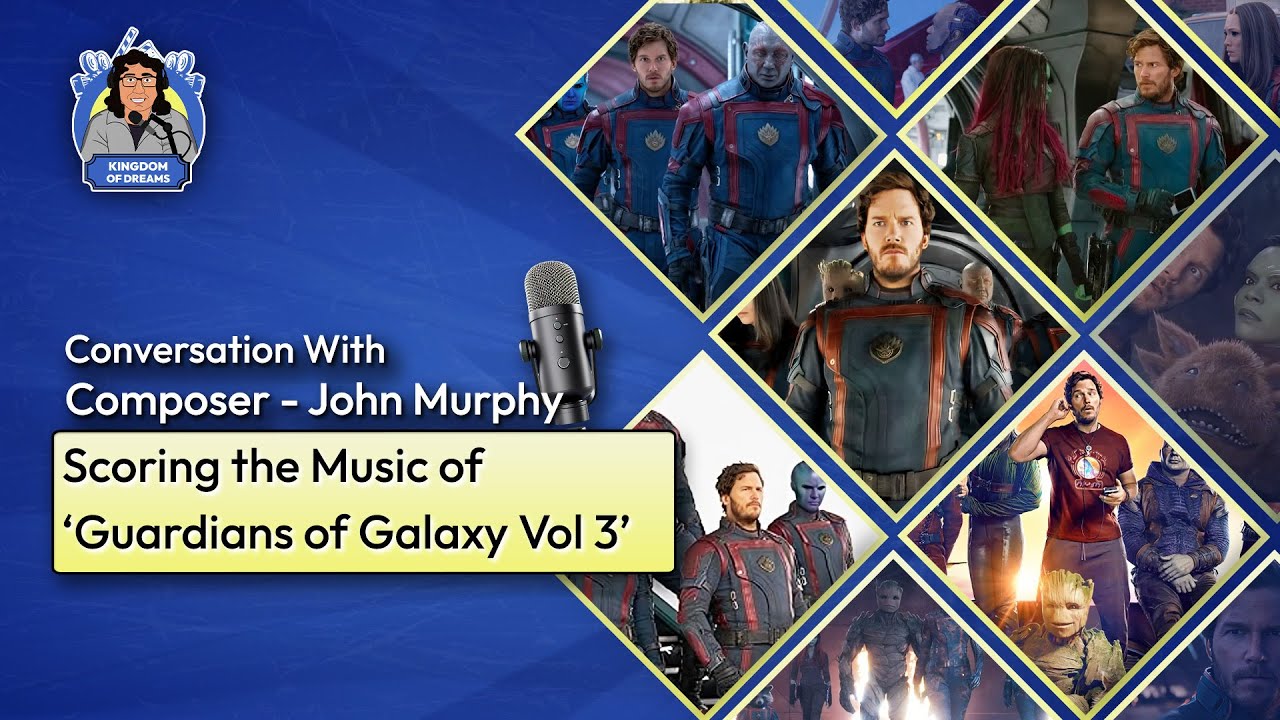
'Guardians of the Galaxy Vol. 3', Composer, John Murphy
Clips and Shorts from this episode
About this episode
Go behind the scenes of Guardians of the Galaxy Vol. 3 as acclaimed composer John Murphy reveals the inspiration and creative process behind the epic score that brings this cosmic adventure to life.
John Murphy is a British film composer known for his powerful, atmospheric scores. He gained acclaim for his work on 28 Days Later, Sunshine, and Kick-Ass, with tracks like “In the House, In a Heartbeat” becoming iconic. More recently, he’s collaborated with James Gunn on The Suicide Squad and Guardians of the Galaxy Vol. 3, and is scoring the upcoming Superman (2025). Murphy is a self-taught musician whose work blends emotional depth with cinematic intensity.
#guardians #jamesgunn #music #filmscoring #howtobecomeafilmcomposer
Full transcript
Automatically generated from the episode audio, so expect the odd misheard word or name. Speakers were labelled automatically. About 10,500 words. Tap a timestamp to play from that moment.
0:06Jawad MirJohn, I just wanna start off with, your career and your, how did you get the music bug?
0:13John MurphyIt really started with, I guess it must have started with my dad. You know, I grew up in Liverpool, on a road just overlooking the docks. And my dad was a singer, and he used to play all the pubs and the clubs i… in our area.
0:36Jawad MirWow.
0:36John MurphyYou know, just for beer money really, you know, but he had this unbelievable voice, which sadly I didn't inherit. But he was an amazing singer, and he played guitar. So there was always equipment lying around our house, you know, just cheap guitars and amplifiers.
0:55Jawad MirYeah.
0:55John MurphyIt was always there, but I never really paid attention to it. And then I think I was about 9 or 10, and I think it was my granddad who gave me a, an LP, you know, the days of LPs.
1:08Jawad MirOh, yeah.
1:08John MurphyAnd it was Beatles at the Hollywood Bowl. And so I remember, I actually remember the, this day. I remember sitting down with my little Tandy record player and, you know, those horrible sweaty plastic headphones that were the cheapest headphones you could ever buy.
1:23Jawad MirRight.
1:24John MurphyAnd I remember putting this record on, and it was a live one, so it started with all, you know, screaming crowds, and I didn't really know who The Beatles were, you know, even though it was Liverpool.
1:33Jawad MirRight.
1:33John MurphyIt just wasn't on my radar. I was just soccer mad, you know. I didn't care about anything but playing soccer. And I remember putting this record on, and I remember the first song was Twist and Shout, and I just remember feeling this electricity, th… th… this crazy feeling of being almost dumbstruck with this sound in my cheap little plastic headphones, you know, this raw electrifying sound. And, you know, it got to the end of the first side, and then I put it on again. I think I must have played that first side of the LP probably about 50 times over and over again before I even turned it over. And the, these tunes and this energy and this vibe, and when I finally took the headphones off, I remember sitting down, you know, I'm just a kid, and thinking, you know, "That was the most amazing thing I've ever heard."
2:37John MurphyAnd it clicked with me that, you know, they were, they were this band, and they played guitars, and I mean, look, you know, I went downstairs from my room, and I went into the kitchen. Me dad used to leave his amplifier and guitar in the kitchen for some reason, 'cause it was easier to get out and put in his car and go to a pub. I remember looking at this thing, so for the first time I actually put the plug of the amplifier in, and I picked up one of his guitars, and I couldn't play it. And I found the chord, and I plugged it in, and I turned the amp up, and I just sat there with my dad's guitar, and I just smashed the strings, you know. And this sound came out at me, this big, loud, insane sound, and it was just magic. And that moment of feeling that power of hitting this electric guitar, that was it. You know? That was it. So literally from that moment on I thought, "You know, I've gotta be, I've gotta be in a band. I've gotta see if any of the kids at school play any instruments, and we gotta form a band."
3:41John MurphyAnd it was literally, it all happened that quick. It all happened in that moment, and it just changed my life forever.
3:50Jawad MirWhat a fantastic little story. I mean, as you were, as you were narrating it, I was literally envisioning, like, an opening of a character in a film…... Who, he's trying to find his place, and then all of a sudden that moment, you know, he discovers who he is. That's, that's beautiful. Thank you for sharing that.
4:05John MurphyIt really was that moment. No, it was, and I'm just glad I can remember it. But yeah, that was it. That was definitely the, you know, the power being turned on, the switch being clicked. That was absolutely the moment.
4:19Jawad MirSuper. And did you, any time, I mean, you said your dad had an incredible voice. Did you work with your dad at any point, whether after establishing your career or before?
4:31John MurphyWell, here's the beautiful thing, is, you know, yeah, I d… from that moment, you know, I d… I found some guys in my school who were into music, a… and, you know, I convinced a couple of them to just learn to play an instrument, you know? Just I was so desperate to have a band. But the very first gigs I ever did, and it was probably about six months later, 'cause I'd, once I'd r… decided I wanted to play guitar, I just, I'd, I'd, I'd practice in the bathroom till literally my fingers would bleed till I could figure these chords out. So my first gigs were actually with my dad. So as soon as he realized that I could play a bit, you know, he'd say, "Come with me. We're playing this pub." And, you know, I knew all the pubs and clubs 'cause, you know, there were so many of them, and he never really traveled more than a few miles from our house. So I would go with Dad, and he'd, he'd play these pubs, and I'd kind of stand behind him and try to play the leads along with whatever he was playing. And I had no idea what he was gonna play next, but it was always three or four chords.
5:33John MurphySo that was, you know, kinda how I learned to improvise and, you know, figure music out by ear, was really playing alongside my dad, you know. And to be doing that at, I think I prob… was probably 11 by then, was, you know, I, again, it's just that experience, the, you know, the things that stay with you. Just, you know, having to catch up with whatever he was singing and looking around to see where his hands were to figure the chords out. But, you know, you know, that year of doing that three or four nights a week was, that was my Juilliard, you know? That was my Berkeley. That was how I learned to figure out songs by ear and improvise and play a little. And I learnt how to play country music, 'cause, you know, half of the songs were country songs. So, you know, I learned all this amazing Hank Williams stuff and Johnny Cash and, Willie Nelson, you know. I… that's where my love for real country music, not the stuff in Nashville now, but real country music, that's where that love came from, you know.
6:38John MurphyYou know, and he would do loads of doo-wop stuff, and he'd sing The Platters and, you know, I learnt all these chord sequences by kind of peering round his guitar as we were playing. And, yeah, another big rite of passage for me musically was actually with my dad.
6:55Jawad MirBeautiful. That's lovely. It makes it such an interesting story. I definitely think you should work on some sort of a script about your... Story with your dad, because there's definitely something there. I mean, I can feel…
7:10John MurphyWell, my dad's story was a thousand times more interesting. I mean, sadly he passed away a couple of years ago.
7:15Jawad MirOh.
7:15John MurphyBut, you know, he got to live long enough to see me, you know, moving to Hollywood and having success and, you know. But, you know, he was always proud of me, my dad. It wouldn't really have mattered. But I'm, I'm thankful that he did get to see all that happen. So that's, that's one of the nice things. 'Cause some people, you know, don't have that privilege, you know. But he saw all that happen, so that must have made him happy.
7:44Jawad MirYeah. That I think is very important, and sometimes I feel that for the person who wishes that to happen, like, you know, in your case or my case or somebody else's case, I wonder if that's a selfish thought, that you're thinking about your success and being witnessed by your parents. But at the end of the day, I mean, like you said, in your parents' eyes you're always, you know, the same. You know, yeah, they will be happy…
8:10John MurphyYeah
8:10Jawad Mir... Of course you move up, but they'll always be happy, with whatever small or big achievements you have made.
8:16John MurphyYeah, I mean that's, that's, I mean, you know, that's totally true. I mean, I remember, you know, 'cause I'm a dad now. I, you know, I have a 19-year-old son and a 16-year-old daughter. And there's nothing they could do that would make me still proud of them, you know. I understand that now, because you know more about them, and success doesn't mean anything really. I mean, it doesn't make you the, it doesn't make you a good person or a great person. But, you know, when you're a father you can see the greatness and the goodness in your kids.
8:45Jawad MirYeah.
8:45John MurphyBut, you know, at the time when I was trying to make it and I was working hard, you know, you know, whenever, when I recorded my first, when I got my first movie or when I recorded my first film, you know…
8:57Jawad MirYeah
8:57John Murphy... The thing that was always in my head was, "You know, I wish my mom and dad were here to see this." So I think all guys have that feeling. I mean, that, everybody really does, yeah.
9:06Jawad MirEverybody does.
9:07John MurphyYou just wanna…
9:08Jawad MirEverybody
9:08John Murphy... You know, you want, you know, you wanna impress your parents first, you know? I mean, that's the most important thing. 'Cause they're the ones that deserve to enjoy it more than anybody.
9:17Jawad MirYeah. You, our conversation reminded me of a story. There is, I don't know if she's still, the CEO. She was, CEO of PepsiCo in India.
9:28John MurphyYeah.
9:28Jawad MirAnd this is a more of a cultural story, but still, you know, she came, she found out that she had been promoted to CEO, and she came home, and her mom lived with her and her husband and her kids and her dad. And as soon as she walked in she was like, "Mom, I have a great story to, you know, something big to tell you." And her mom is like, "The eggs are finished. Go get them."
9:51John MurphyYeah.
9:51Jawad MirAnd she's like, you know, she got really upset and she went to get the, eggs. The father wasn't home. And so she came back. She was so upset. She was like, "Here I am trying to tell you that what I've achieved, and you send me to get eggs." And her mom goes, "I don't care what you are outside. At home, you are a mother, you're a daughter, you're a daughter-in-law." You know?
10:13John MurphyThat's a good parent.
10:15Jawad MirYeah, that is such an incredible story. Like, she just literally set her in her place, even at the age of, like, 46, 50-something.
10:23John MurphyShe's a good mom, you know what I mean?
10:25Jawad MirYeah.
10:25John Murphy'Cause we always need to be reminded of who we really are as well, not what…
10:29Jawad MirYeah
10:29John Murphy... Everybody else thinks we are. So, no, I mean, that was a wise, that was wise parenting, I think. And you never stop parenting. You know, you do…
10:37Jawad MirNo
10:38John Murphy... You do.
10:38Jawad MirMy dad still parents me, my mom still parents me.
10:40John MurphyYeah, and…
10:41Jawad MirI mean, it's never stopping
10:42John Murphy... You know, and we always have things to learn from them. So yeah, I mean, that's, that's a nice story, but I to… and I totally get that.
10:50Jawad MirYeah. And how did you get the... I mean, you have the music bug and you're playing guitar, and I've heard in your work there's a lot of guitar, back and forth here and there. But how did the interest in getting into film take place, and how did you get in?
11:10John MurphyWell, that was really by accident really. Once I'd kind of got into my teenage years, you know, I was very serious about, not about becoming a professional musician, 'cause I never thought that was on the cards. I was just serious about this is what I wanted to do. So I, you know, I used to practice in those... I mean, I haven't practiced for 20 years I don't think, but in those days I used to really try to be better as a guitarist.
11:38John MurphyAnd I ended up, by the age of about 15, I was playing on records of some of the local bands in Liverpool that were getting signed at the time.
11:49Jawad MirRight.
11:49John MurphySo I became a session player even while I was still at school. And then when I left school, I got, offered to play with a band called the Lotus Eaters, who had just had a huge hit in England. And I was also working with a singer called Thomas Lang, who had just been signed to CBS, which is now Sony. So I was already kind of in the mix of being paid for work, so I ended up touring with these bands and a few other bands and playing on records right up until I was 25, I think. And it was amazing, 'cause, you know, I got to tour Japan and all over Europe and Scandinavia. But while I was working with these bands, I ended up writing songs with some of them. So I was evolving into more of a songwriter at that point, you know. I was more interested in writing material. And I think I was 25 or 26 and through writing songs for these bands, along with my partner at the time, David Hughes, w… we somehow got offered the chance to write some songs on a tiny little no-budget film called Leon the Pig Farmer.
12:59John MurphySo we sort of pitched for that. We, you know, the songs ended up in the film, but the movie was still being made, and it was so low budget, the director and the producer met with us one day and said, "We can't afford to hire a composer to write the score. Do you think you two boys could write a film score?" You know. And, you know, coming from Liverpool, we're like, "Yeah, course we can." You know, "How hard can that be?" You know? So we just lied and said we could, of course we could do it. And you know, I've, I've told this story many times, but it's, it's completely true. W… we had the meeting with the producer and the director in London, and as soon as they left the cafe, we were on Old Compton Street, and Dave and I walked out of the cafe thinking, you know, "How the hell are we gonna figure out how to write a film score in, like, a week?" But where we were in London, Charing Cross Road was just around the corner, and there was l… a lot of bookshops there and a lot of film shops.
14:02John MurphyWe thought, "We'll go and find a book on how to write a film score." And we walked in the first film bookshop there, 'cause it's famous, that little street, for very art stuff. And we walked to the first... We walked in and almost like jumping off the shelves like some kind of, mythical thing was a book called How to Write a Film Score. This old book. We thought, "Destiny." So we bought the book, I think it was, like, £2 or something, and we got on the train back to Liverpool, and we thought, "Well, we'll read the book on the train, and when we get back to Liverpool, we'll know how to write a film score." W… being from Liverpool, instead of reading the book, we just... 'Cause in those days you could get alcohol on the trains to Liverpool. We…
14:47Jawad MirOh, really?
14:48John MurphyYeah, no. You could just go to there and just buy some beer from the little bit of the middle of the train that... So I think they sold a few newspapers, some potato chips, and then beers and Cokes. So w… we ended up just getting drunk on the train celebrating, and to this day we've still ne… we still never read the book. Maybe we would've, maybe I would've been a better composer, I don't know, but we never, ever read the book. So when we got back to Liverpool, we, you know, I... My little bit of education was to j… I spent a week watching all my favorite movies on…
15:20John Murphy... On VHS, 'cause we had VHS then.
15:22Jawad MirYeah.
15:23John MurphyAnd I would just make notes, you know. So I'd, I'd watch King Kong, The Godfather, you know, Ben-Hur, all these brilliant movies.
15:30Jawad MirThat's amazing.
15:30John MurphyPsycho. And I was just sitting there with a little school pad making notes of, like, where music came in, where it didn't come in, what happened here. Oh, it was a scary bit, the scary... So I just did that for a week, and I must have watched about 30 or 40 of my favorite movies and I, then I was o… like, "Oh, okay, let's write the score." And that was it. But the funny thing was when the, this tiny movie came out, it got a huge amount of publicity in England, and it won awards at the Venice Film Festival, and it…
15:58Jawad MirOh, wow
15:59John Murphy... Was big in Europe. So this tiny little movie that we didn't even think was gonna come out, that had hired these two clueless songwriters to write this clueless score, got a bit of traction and of course, because everyone was a first time, you know, first time director, first time composer, first…
16:18Jawad MirYeah
16:18John Murphy... We all kind of stuck together. So they went on to make another movie. The writer went on to make another movie, the director a… and then the producer. And they all came to me and Dave and said, you know, "Do you wanna write the music for our next movie?" And suddenly we were film composers.... Completely by default, completely undeserved, no training, no anything. But we worked so hard, 'cause we both had that thing…
16:45Jawad MirYeah
16:45John Murphy... We didn't wanna let people down, and, you know, we worked our asses off and we learnt as we went along. So it was a, it's a strange... It's not the way you're supposed to, train to be a film composer, but that's, that's how it happened for me. And you know, you learn by your mistakes, and you never forget your mistakes.
17:07Jawad MirWell…
17:07John MurphySo
17:07Jawad Mir... I think it's the right way because, you know, when you go to film school or music school, not taking away from what you will learn at UCLA or any other, you know, amazing, incredible school, but sometimes, if not most of the times, you have to, you know, be on the set. I mean, that's where you learn the most, to be in that situation. I mean, Spielberg was, you know, he... I think he dropped out from school or college, I don't remember.
17:35John MurphyYeah.
17:35Jawad MirSo it's just being on the set just teaches you so much, or being on the verge of... Like, you know, I was, I was listening to this speech the other day. I don't, I'm not sure who it was. Like, when the only way as humans we are able to find out our limitations are not limited is when we are f… put up against resistance.
17:55John MurphyAbsolutely.
17:55Jawad MirLike, that's when the best, that's when the best... We just don't know how capable we are until we're put to the test.
18:02John MurphyThat's so... It's so true, because it's only when you're put in situations where, you know, you've, you've never been before that you find out what you actually can do when you're up against it. And that was, you know, not being musically trained in any way and being put in these positions, it forced us… It forced us to learn. There was no, "Oh, you know, let's see what the lecture is next week." It was, it forced us to learn out of fear because we needed to know, you know, how to suddenly use strings and suddenly. But you know, thankfully at least, you know, I'm a firm believer that as amazing as it is to have a great musical education, with film, because really, you know, for me the most important thing in film music is actually understanding story.
19:00Jawad MirSure.
19:01John MurphyAnd being able to understand why the characters feel that way, yeah, and why this would be important to this character or why the theme of this movie is important to people, you know? Only when you understand that can you really, in my opinion, really deliver a great score.
19:23Jawad MirYeah
19:23John Murphy... Without that understanding, you're really just working by, not really by rote memory, but you're really working to…... A point that, you know, has been set up for you by somebody else. So I, you know, I do think that is at least as important as a great musical education. And at the time, that was all we had to g… go with. And the rest of it, the nuts and bolts, we just learnt along the way. You know, oh now w… we've got brass, you know, how do you write music for brass? Oh, okay, so bass trombones are like, they're the low guys, and the trumpets are the high guys, you know? And you just learn and you learn by ear. And you know, I'm convinced that what helped me sort of break out of the mold, if you like, was not so much what I knew, but a lot to do with what I didn't know. Because I was doing things in a way that certainly they wouldn't have taught at Berklee.
20:28John MurphyBut when you know, it's that thing y… that beautiful Robert Frost poem. You know, sometimes when you choose the less trodden path, you end up in a place that ends up being unique to you. So, you know, I'm thankful that I came from Liverpool and I didn't go to music school and I didn't have any of that stuff. Because I ended up just being a better version of me instead of a poorer version of John Williams or Hans Zimmer. Because, and in the end that helped me more than anything, because I just ended up, you know, having my own sound that worked for me. So I'm thankful for that. But you know, yeah, for sure there was 1,000 moments when I, especially when I first come to Hollywood that I would have loved to have had some kind of musical training, you know? I remember the very first time I could hear something was wrong with the orchestra, and it was, I think it was like '98 or something.
21:28John MurphyI knew what ins… I knew what was, what the problem was, 'cause I could hear it. It was, but I didn't know what the instrument was called.
21:37Jawad MirYeah.
21:37John MurphyIt was something with the brass, and it was, it was big and it was, you know, I just didn't know what it was called. So I'm trying to explain to the conductor that it's, it's that guy. And you know, and the funny thing is, I still don't know what the instrument was. I've got a feeling it was a tumbao. But you know, so moments like that y… it just hit you with fear, 'cause you know, you're trying to explain and it becomes obvious to this orchestra of amazing musicians that, you know, "Who the, who the hell is this guy?" "He doesn't even know what we're playing." so yeah, there was a lot of moments like that early on. But it's like everything, you know. You just, you learn what you need at the time, and you try to not forget it. So it was the whole thing. E… even now, even now doing Guardians, I learn so much about how to write oral music. You never stop learning in this job, and nobody has all the answers, and nobody knows it.
22:33Jawad MirNo.
22:33John MurphyEven John Williams, there will be things that he will learn on every film, and I say that with the biggest respect.
22:40Jawad MirYeah.
22:40John MurphyIt's just the nature of this job that you learn new ways of doing things. And that's great. That keeps you fresh, and it keeps you know, excited, and it keeps you passionate about your job.
22:54Jawad MirYeah, you're not, you're, at least you're not being repetitive, because once you start being repetitive, even if it's something you love, you're gonna end up procrastinating and like, you know, and complacent and all that stuff.
23:03John MurphyWell, yeah.
23:07Jawad MirAnd, sorry, go ahead.
23:07John MurphyYou know, so, I mean, it, I d… I think that happens to a lot of composers because whatever you, especially in Hollywood, whatever film it is that you kind of get noticed for originally, then…
23:26Jawad MirTypecast
23:27John Murphy... Those films gravitate towards you. You know, for me it was, I'd, I'd done the two Guy Ritchie m… movies, Lock, Stock…
23:34Jawad MirYeah
23:34John Murphy... And Snatch. And so suddenly I was offered every kind of, you know, hardcore gangster movie and that kind of thing. And then I did 28 Days Later, and then I was zombie boy, you know? It was like, "Do you wanna do this?" And then, you know, a couple years later I did Sunshine and, you know, which for me is one of my best scores. And then I, it was, you know, I started getting offered sci-fi stuff. So that happens to everybody.
24:03Jawad MirIt does
24:04John Murphy... But I, you know, I think the trick is you've gotta say to yourself, "Is this as good as I can do on this type of movie? If it is, I need to be doing something else next time." And eventually, once you've got enough different genres under your belt, people stop pigeonholing you.
24:19Jawad MirYeah.
24:19John MurphyAnd you become, you know, a guy who can do a few things., But it certainly keeps you fresh when you don't stay in one genre. Because again, same thing, you're learning more from moving about a little bit. And it's, that certainly wouldn't have happened if all I'd done was zombie films for 10 years. So I'm, I'm glad I kind of broke out a little bit.
24:44Jawad MirNo, that's, that's very true, because I fell into the similar trap. I incidentally, I shouldn't say incidentally, but semi-incidentally directed two feature narrative documentaries. You see the posters in the back.
24:57John MurphyOh, right.
24:57Jawad MirAnd they bo… they both ended up being about a protagonist and the human rights situation.
25:02John MurphyYeah.
25:02Jawad MirAnd, you know, both did, you know, really well and everything, and now every time I'm talking to a friend or somebody in the family and they're sending me these links to these human rights stories…... I'm like, I am done. I mean, not that I have anything against that. It's such a heavy subject.
25:21John MurphyYeah
25:21Jawad Mir... And working on them before and during COVID, especially in post with the editor…
25:26John MurphyYeah
25:26Jawad Mir... It just takes such a toll on you, and you need a... Maybe I would love to do it down the road, but for now…
25:32John MurphyYeah
25:32Jawad Mir... You know, you need a break from all of it.
25:32John MurphyYou need a break. It's, yeah, I mean, you know, the more passionate you are about something, the more it kind of leaves a wound on you…
25:38Jawad MirYeah
25:38John Murphy... As well, because you become so immersed in that. I totally understand that, yeah. So you need to just take a break a little bit from that.
25:47Jawad MirYeah.
25:47John Murphy'Cause that would be a hard thing to immerse yourself. At least I'm just dealing with movies, you know? But when you're dealing with... You know, one of my best friends is a documentary filmmaker, Dan Reed, who, did the Michael Jackson documentary, and he did some amazing documentaries…
26:03Jawad MirOkay
26:03John Murphy... In Europe. You know, a very brave and, very good man, you know? And he's, he spent his life throwing himself into dangerous situations for, you know, for things that matter to the world. ... But, you know, I see him sometimes after he's finished something, and he looks shell-shocked, you know, when he comes back from... He, you know, he d… he's been to Russia. He, you know, he went to, when the big nuclear thing happened, you know, he went back to Chernobyl. He went, you know, he's... That's kind of where he is, just a danger zone.
26:41Jawad MirYeah, I get it.
26:42John MurphyYeah.
26:42Jawad MirI get it.
26:43John MurphyI'm like, "Oh no"…
26:43Jawad MirYou have to
26:44John Murphy... Dan's on his way over there, you know? But it does take it out of him, so I totally understand that, you know? He lives and breathes it, and when it's over you can see he's like... So, yeah, I get that.
26:56Jawad MirYeah. You were talking about Guardians of the Galaxy. Let's talk about that. So, this is this your first Mar… a superhero film, if I'm not mistaken, Cor… no, it's not. You did Suicide Squad, right?
27:08John MurphyI did Suicide Squad, yeah.
27:10Jawad MirOkay. Sorry, go on.
27:12John MurphyNo, I was just gonna say it's, it's the first film, for Marvel. I'd done three things…
27:18Jawad MirMarvel
27:18John Murphy... But it's the first movie with Marvel.
27:19Jawad MirThree movies. Okay. And how did you come on board working with someone like James Gunn and, you know, on a film like Guardians of the Galaxy, which, you know, has done really well in terms of critics, in terms of box office, in terms of audience?
27:36John MurphyYeah. Well, it really started, again, it's like such a strange way of getting there. I kind of messed with the whole superhero thing with Kick-Ass. And you know, I grew up with all of these comic books. Even though I grew up in Liverpool, there was a little shop that had…
28:01John Murphy... You know, you know, it would always have four or five of these American comic books. And to me at the time, you know, the, it, the, they just seemed so exotic, you know? You know, in England we had the Dandy and the Beano, which was this, like, strange, bizarre, incredibly English sort of, you know, sort of homegrown comics. But this other stuff, the, you know, the Marvel stuff and the DC stuff, they always seemed more exotic to me. It was, and the colors, and so I grew up with g… with reading that stuff. But I did Kick-Ass in 2000, and I'd already decided before I even did that movie that I was gonna take a long break. I need, you know, the kids were still small. I need, you know, I just wanted time to be with them, and I was just gonna take a few years off. And, I'd been doing, like, two or three movies a year and back to back. I'd, you know, I felt…
28:57Jawad MirRight
28:57John Murphy... I'm feeling worse and worse about myself, not being with the kids, and my wife, who was basically manning the fort while I just…
29:06Jawad MirYeah
29:06John Murphy... Piddled around in the studio. So the, they all deserved me to stop for a bit. So you know, I took a break for a couple of years, and when I realized the effect it had on my family, and especially on the kids as well, I decided to extend that break a little bit, and I set up my own record label. Yeah, I was doing commercials at the time, but commercials are much easier. You know, they're done in…
29:30Jawad MirYeah
29:31John Murphy... You know, three or four weeks. So you know, I did stuff for Nike, and Microsoft, and Apple. I did some commercials for Apple. So I was working. I just wasn't doing the big slog that a movie is. So I had a lot of time with my family, and it w… it was the best part of my life. In fact, I even got to homeschool one of my kids for a couple of years, which was just amazing. And then I'd sort of realized, you know, they were getting a bit older, and I thought, "Okay, I really should go back to work at some point." You know? I can't just play Legos and watch soccer…
30:03Jawad MirYeah
30:03John Murphy... And, you know, I need to sort of be a grownup again and go back to work. But we were moving house, so I knew we'd have to build another studio. So that put it back, and then suddenly I was, that two-year hiatus I'd planned was seven or eight years. So thought, "Right, what I'll do is I'll come back. I'll do a little bit of television first, just to blow the cobwebs away, and then, So I got the chance to do Les Mis, for the BBC. I've never seen the musical, but I love Victor Hugo, and I loved that book so much. So I thought that's perfect, you know, and it was eight episodes, I think so. I thought that'll really blow the cobwebs away. And then, and then the plan was to do a little indie film and then just kind of edge my way back into the whole Hollywood system. So as soon as Les Mis was done, I thought, okay. Spoke to my agent, Catherine Greaves, and I thought, look, let's find a little indie movie, and I'll sneak back in without anyone realizing, you know, I'd been away.
31:07John MurphyAnd I thought no one's gonna remember me now, you know? It's all different heads of music. It's all different people. But I th… that's okay. I'll just do a few indie movies. And then just while we were looking for this little indie movie for me to work on, I got a call, and it was James Gunn, and he said, "Look, I've, I've always loved your stuff. I play your tracks when I'm writing scripts, and, you know, are you interested in working on the Suicide Squad?" And I was just like, you know, dumbstruck. I said, "I love your stuff. I love all of your stuff, not just the Guardians," you know, 'cause he was one of my favorite directors. And he said, "Great. Can you come to Atlanta tomorrow?" So I flew to Atlanta the next day, and, I met up with him, and it was just one of those meetings. I mean, the guy is so passionate about this genre, that it's hard not to sort of be drawn to that. I can see why all the actors love him and everyone because he's just has that pure passion.
32:12John MurphyThere's nothing cynical about him. He just wants to make great movies that he would love to see. So, you know, I d… I just said straight away, I said, "If you want me, you've got me, and I can start whenever." And he went, "Great," because I think he was actually y… you know, halfway through shooting the Suicide Squad when I flew over to meet him, and he said, you know, "I really wanna shoot to some scenes. Can you go back and write these scenes…"
32:39Jawad MirYeah
32:39John Murphy... "for me to shoot to 'cause they're coming up in a few weeks?" And I thought, "Wow, that's different, but let's do that." So I went back, wrote some stuff, and was just sending him ideas and tunes f… like from the script, and the scripts are very vivid, you know? I mean, he's a great storyteller, so the scripts were easy to write to. And we just had the best experience on Suicide Squad. It was just a dream project, and everything was fun. It felt like working... I mean, it actually felt like working on an indie movie. That's the kind of vibe he gives off, you know, where, you know, "Can we get away with this? Oh, let's just do it anyway," or, "Do you think we can..." You know, he was always, you know, he's a rebel, so he was always breaking the rules, and let's just try this. So it felt like working on an indie movie. And towards the end of that project, he'd, he rang me up one day and said, "I really want you to do the next Guardians." And, you know, I wasn't expecting that. I w… was just enjoying doing the Suicide Squad.
33:39John MurphyAnd I went, "Well, you know what my answer is, so of course." You know?
33:44Jawad MirOkay.
33:44John MurphySo, and that's how that worked about. So as soon as Suicide Squad finished, I took a little break with the family again.
33:51Jawad MirYeah.
33:51John MurphyAnd he went off to do Peacemaker. So I had my break with the family, and, when the time was right, I d… I, you know, I looked at the script for Guardians. And same thing, I wrote most of the themes before he shot them, so I wrote all of these themes, and I'd be sending them to him. He'd be coming back with ideas. I'd, like, "Love that one. Not sure about that one. Use a bit of that one." You know, so it was a very collaborative process. You know, there's not a single piece of music on any of, you know, either Guardians or Suicide Squad that didn't come back and forth between us. You know, and he's a musician too. He, you know, he knows what he's talking about. He's very musically savvy, so, you know, that was kinda how it worked. A… and yeah, I mean, it was, it was just, you know, he's a joy to work with, and it's, it's very intense 'cause, you know, he's, he's got a very high bar.
34:46Jawad MirYeah.
34:46John MurphyYou know? Just, you know, if he doesn't think something's as good as it can be, then we'll just do it again until it is, so. But that was how it all came about. You know, from me looking for a little indie movie to working on this huge DC monster and then working on a huge Marvel monster. So it's, it's just how things worked out really. Someone's looking out for me.
35:11Jawad MirThat's sweet. That's really sweet. And how long did it take you, to sort of complete the final score, starting from the time when you're sending samples and that? Like, what's the, how long is the process?
35:26John MurphyWell, it's kind of in two s…
35:29Jawad MirStages
35:30John Murphy... Sections with James. Yeah, because, you know, I wrote all of these themes and pieces for him to shoot to, and then, you know, I gotta wait then till he shoots the movie. So, you know, I had this big period of waiting for the next bit. But I got the chance to score the holiday special, which was fun. I've always wanted to do a, do a Christmas thing. So soon as that was shot, I'd, I worked on that. And then soon as that was done and it came out, oh, and actually there was a little gap I think. And then, four or five months ago, it, I'd, I started to get picture and then I was able to work on Guardians. So…
36:19John Murphy... You know, you kinda do it in two bits with a big gap in the middle with James.
36:23Jawad MirRight.
36:23John MurphyAnd then it's the usual intense, you know, big ramp up to the end, so. But it's a good way to work because in that middle you get a ti… you get time to think about what you're gonna do You get a break. You get a break. No, and you get to res… get to do the things that you need to do to keep you human, you know, before the pressure comes on. Yeah. So, but it's a good way to work. You know, I love writing from the script, you know. And with this script, it's, it's all there on the page. You know, the things I cried about reading Guardians was the same thing that I had a tear in my eye when I watched the finished film at the premiere. It's all there in the script with him. It's, it's all in there, you know?
37:11Jawad MirDo you… So everybody's different, you know, whether you're a director, writer, composer, cinematographer.
37:19John MurphyYeah.
37:19Jawad MirYou know, sometimes people watch or listen to different things before they get on to start working on something.
37:26John MurphyYeah.
37:26Jawad MirHow do you, do you stay away from the, any kind of music when you're writing a score like Galaxy? Or are you, just so that it doesn't, you know, subconsciously come into the film that you're working on?
37:40John MurphyYeah, you have to really, because you know, you wanna really start from a, you know, you wanna start from a blank page. If I'd never watched, you know, if I'd never seen the first two Guardians films, then I would have had to have watched them because, you know, I have to, there's gotta be some connective tissue.
38:03Jawad MirSure. Yeah.
38:03John MurphySo certainly I would have watched the first two films probably a couple of times just to get a feel for the tone and the attitude of the score. But I'd already seen the first two. In fact, I'd, I'd, I'd seen both of the previous Guardians films several times over, 'cause I've got kids. So, you know, you take them to the cinema the first time, and you watch it with them, and you experience it in a theater. And then, like, you know the way kids are, they'll be like, "Let's watch..." You know how kids, you know, kids will just watch the same movie over and over again. So, you know, I must have watched both films two or three times even after we saw them, you know, at the movies. So I knew what they were about, you know, and I loved them. And I actually loved the scores that Tyler Bates did on the first two movies. Tyler's…
38:52Jawad MirYeah
38:52John Murphy... I've known Tyler for 10 years, and, you know, I think he's a brilliant composer and a, and a seriously nice guy as well. And so I was, you know, I was, I knew what they were about. So I didn't have to go back and watch the movies again. You know, I felt I was in a place where I could just... You know, what was important was really having conversations with James about how this one was gonna be, because, you know, it's, it's a darker movie than the first two.
39:27John MurphyAnd be… because so many things had to be tied up, and explained, and we had to, obviously this was Rocket's story. You know, and without giving the game away, it's a very traumatic story. So by nature of the content within the story, it was always gonna be a more serious film.
39:54John MurphySo we knew the tone would be different, and
39:58Jawad MirYeah
39:58John Murphy... So it had to be its own score. But we also knew that we were gonna, you know, use the original theme in a few places, because that's what we wanted. We wanted to be able to remind the audience and keep that connective tissues. But we just, you know, we picked the right moments, I think. And that was fun to work on too. So, you know, I think we got it right. But, you know, it, the worst thing you can do when you're trying to write a score is to be listening to other stuff, because, you know, by nature things can get stuck in your head, and…
40:35Jawad MirYeah, for sure
40:35John Murphy... You know, it's better to have, it's better to just pull from the well of the story and the characters, 'cause it will always come. The second you start listening to what other people are doing, it's, it just muddies the waters, I think, for me.
40:50Jawad MirWas there ever a, for the lack of a better word, a eureka moment when you were doing the score of Guardian where you were kind of stuck with something and you couldn't figure out the next step, and I don't know whether you went on a hike or, you know, taking a shower or just chilling, and something just came in the middle of the night? Was there ev… anything ever like that?
41:13John MurphyYeah, I mean, there's always moments like that. Because I realized, at a point that the more original stuff I tend to write, tends to come from just writing in my head. You know? 'Cause I think every composer has that thing where, you know, you, if you sit at a piano that you, your hands tend to hit the same chords, or you play guitar, you'll, you'll tend to, you know that lizard brain instinctive muscle memory thing. And I realized that, you know, the b… the more original stuff was what was kind of would just pop into my head. So I, yeah, I went for walks around the house and sometimes you wake up and there's the tune that you were trying to figure out the night before when you're sitting at the piano is just playing on loop in your head. That was the case w… certainly with the, with the alien opera, you know, the, there's a very important piece in the middle of the movie where the High Evolutionary explains, why he is the way he is, what's driving him, what his motivation is. And this song was very much tied up with, you know, 'cause he's actually playing the song at, in this scene, so he's talking to Rocket while this song, while they're both listening to the song.
42:38John MurphySo it was an incredibly im… important piece of music and I think it took me six or seven goes… And again, I was writing it from the script, so that took a long time. And that was one of those things where I woke up one morning and it was just playing. This melody was just playing in my head. So yeah, I mean, that happens, and sometimes you just gotta wake up and sing it into your phone or something, 'cause you always think you're gonna remember these things, and yet…
43:07Jawad MirYeah
43:07John Murphy... That's the problem with writing in your head, is you think, "It's so good, I'm never gonna forget it." And you walk around the corner, one of the kids shouts up in my ear, and it's gone, you know? So I've learnt now to just sing it into me phone straight away. So yeah, there's, there's, you know, there were a lot of moments like that, but that was probably the most important given the nature…
43:25Jawad MirRight
43:25John Murphy... Of how it was within the story.
43:28Jawad MirHas there ever been a mo… a time without, I don't want any names because I'm not looking for controversy, has there been any time when you composed a track or a theme that you felt strongly about in the last 25 years of your career, but it, you know, the director didn't agree with you, and you still felt even after the film came out that track that you thought was good would've been better? Has that ever happened?
44:01John MurphyI think that happens on every movie I ever do.
44:03Jawad MirOkay. That's…
44:05John MurphyYeah, that happens on everything. I c… you know, I don't remember thinking, you know, I mean, look, every film I've ever done, you know, you're never gonna agree with the director on everything. And I always…
44:16Jawad MirOh
44:16John Murphy... Like to…
44:17Jawad MirYeah
44:18John Murphy... You know, to give the director more than one option. You know, 'cause I'm hedging me bets too, 'cause I'm not sure, you know? You know, I might be sure that something's a better piece of music, but I'm never sure that it's the best thing for the movie, that, you know, the director has a better idea than me. But yeah, there's been moments when I've tore my hair out because, you know, they've just gone for the wrong version. But as my wife always says, "Why don't you just do the one version that you think is the best?" And I think there's a…
44:50Jawad MirWell, give them an option.
44:51John MurphyYeah. And she says, "Well, why did you give him three versions?" You know, it's
44:57Jawad MirI think she's right. When you give choices to people, they…
44:59John MurphyI think, yeah, of course she's right, yeah. And she still says that to me now. But yeah, there's always th… you know, there's always things that you don't agree with, but you've, you know, you…
45:15Jawad MirYeah
45:15John Murphy... You're there to help make his film, not the other way around.
45:20Jawad MirRight.
45:20John MurphySo you just have to, in the old days, I used to get, God, I took it so seriously. I used to get really angry. I'd have arguments with direct… standup arguments, directors. I was, I mean, I, to, I mean, believe me, I was such a pain in the ass in the old days. At least now I'm a little older and a little, you know, hopefully a little wiser. But yeah, in the old days, I must have been a nightmare to work with. I f… I just argued over everything. So yeah, there are moments like that, but, you know, the, I don't think there's been too many of those moments, with James. I tend to just kinda trust him if he says, "No, this will be better."
45:56Jawad MirYeah.
45:56John MurphyI just move on.
45:57Jawad MirI don't think you, I don't think you should feel bad about it because I think everybody when you're young, like I, you know, I used to do that all the time, and now it's kinda like, you know, by age you kinda become more calmer, more…... More wiser, and you just go along with it, and you trust your team that is working with you.
46:14John MurphyYeah. Yeah.
46:15Jawad MirAnd, you know, that's simply, that's what it is.
46:18John MurphyYeah. I mean, I still have my moments, trust me, but yeah. I think when you've got…
46:22Jawad MirOkay
46:22John Murphy... A good team, you know, I've worked with the same producer engineer for nearly 20 years, Tyler Barton, and you know, he's my first firewall, you know? I'm like, "Is this as good as I think it is, or is this totally, like, rubbish?" And he'll always be honest with me, you know? So, you know, it is as much about, yeah, we get w… wiser, I think, when we get older and we get more chilled out about stuff. But you're absolutely right. When you have, y… you only need one or two people you trust and you can, you know, you can…
46:56Jawad MirYeah
46:57John Murphy... You gotta listen, you know? You gotta listen to them and go, "Well, maybe it's not the Oscar-winning theme I thought it was," you know?
47:05Jawad MirEverything is Oscar-winner when you're working on it. So this is gonna be, you know, you have this vision in your head, and then reality hits and then you're like, "Okay."
47:14John MurphyYeah. I mean, I never, I mean, that was just a joke. I mean, I, you know, I've never thought, "Oh, this is," you know, I'm just not that... I mean, in my head I'm still just an indie composer, you know? I mean…
47:24Jawad MirYeah
47:25John Murphy... I never th… ever thought I'd be doing big movies, 'cause that's not what I wanted to do. It was always
47:32Jawad MirIt's always the opposite of what you want.
47:34John MurphyYeah. The movies I loved were the kind of edgy, low-budget stuff. You know, for me, I used to call them real movies, you know? But again, things change and you realize you can be, you can work with amazing people, doing big movies too. So I just kind of evolved into that place, really. Yeah, I mean…
47:55Jawad MirYeah
47:56John Murphy... Lucky.
47:56Jawad MirI, and that Oscar thing, I mean, that usually happens when you're young and stupid.
48:01John MurphyYeah.
48:02Jawad MirAs you get older, then you're like, "Okay, let's, you know, let's just focus on this." And do you listen to international music for inspiration? Like, whether it's remote folk music or some other part of the world?
48:17John MurphyYeah. I mean, completely. And not just international music e… you know, either. I listen to music all the way back to, you know, very early Renaissance music. I've, I mean, my playlist is as schizophrenic as you could imagine, you know? I could be listening to the, you know, punk one morning, and then I'm listening to, you know, Bach or I'm listening to, you know, from all over the place. Yeah, I mean, that's, 'cause you learn from everything, you know? You know, even if it's in music that you don't particularly think you would ever get into, There's always a point when you, when you force yourself, you know, is when, where you go, "Ah, so that's what it's about." You know?
48:58Jawad MirYeah.
48:59John MurphyThere's a moment where you go, "That's what it's about. That's why it means something to people." So, you know, I've got a very open mind. You know, and the same with film scores as well. I mean, you know, the, there are Japanese films, there are Korean films, there are Indian films, there are African films that have such a different take on…
49:27Jawad MirYeah
49:27John Murphy... Music and film that it's, you know, it's, it's exhilarating to see how other people do it rather than just the guys in this town that you kind of know…
49:41Jawad MirYeah
49:41John Murphy... Them. And you gotta get out of that. I mean, we live in a cocoon in Hollywood, that whole world. It's, you know, we think we're the only people who are making movies sometimes, and you really have to force yourself. You gotta get out of that mindset and start watching stuff. And thankfully, you know, my wife is a writer, Charlotte, and she, you know, half the time she's watching a movie, it's movies no one would ever have heard of, and we sit there, and some of the best films we've, we've seen in the last 10 years have been movies that we would never have seen in a c…
50:17Jawad MirYeah
50:17John Murphy... You know. It's, it's, and old stuff too, you know. Like, from all over the world. So, you know, thankfully, you know, to hear, you know, w… we've had that experience and it's not just a, it's not just about Hollywood. It was never just about Hollywood. It's just that sometimes some of Hollywood thinks it is, you know?
50:37Jawad MirYeah.
50:38John MurphyThere's a whole other world out there of music and film music.
50:41Jawad MirIt, there is. I was talking to David Robbins, it was Tim Robbins' brother.
50:46John MurphyYeah.
50:47Jawad MirHe did the music for Dead Man Walking.
50:50John MurphyDead Man Walking. A brilliant score.
50:52Jawad MirYeah.
50:52John MurphyYeah.
50:53Jawad MirSo one of the vocals in that film, who passed away a couple of years after that, was a Sufi singer from Pakistan, Nusrat…
51:03John MurphyAmazing, yeah
51:04Jawad Mir... Nusrat Fateh Ali Khan. So we were talking about that, and then I, we somehow got on this conversation, if you're, I mean, you're very much into guitar. You should look into, there's a show, there's, there's an Indian version, but there's a Pakistani version which is way better.
51:21John MurphyYeah.
51:21Jawad MirIt's called Coke Studio.
51:24John MurphyRight
51:24Jawad Mir... So they actually just, you know, in a studio setting, they redo some old songs with new ways, and they come up with original stuff.
51:33John MurphyYeah.
51:33Jawad MirYou would really appreciate it. It's, I mean, it's…
51:35John MurphyI'll definitely check that out, yeah
51:36Jawad Mir... It's on YouTube, Apple, Spotify. Production value is extremely high. And just the…
51:42John MurphyYeah
51:42Jawad Mir... Types of instruments that they use, I mean, it's, it, you can hear just…
51:46John MurphyYeah
51:46Jawad Mir... The whiskers of it in the background. It's beautiful.
51:49John MurphyThat's where I live too. I mean, nothing gets me excited than seeing or hearing an instrument that I've never used before, 'cause I love…
51:56Jawad MirYeah
51:56John Murphy... That stuff, you know? It's like, you know, obvious… you know, it's the first thing I, you know, I do when I read a script. I'm not even so much worried about, you know, how I'm gonna go about it. It's like, what new things can I use on this, you know?
52:11Jawad MirYeah.
52:11John MurphyAnd, you know, my instruments that I use are from all over the world. I mean, you know, I mean, e… everyone says, "Oh yeah, John does the guitar stuff," and everything, but in truth, there's, you know, there's loads going on that
52:26Jawad MirThat we don't hear. That we don't hear
52:28John Murphy... Yeah, but if you took them away, it'd just be some guy playing guitar, you know?
52:33Jawad MirExactly.
52:33John MurphySo.
52:33Jawad MirExactly.
52:33John MurphyThe secret sauce is, you know, the secret sauce on Guardians was, yeah, it sounds like, you know, a wall of guitars sometimes, but, you know, the, you know, mixed into that wall of guitars is, you know, fuzz basses going through pedals, but also distorted gongs. You know, I use tongue drums, so much in this movie, and again, they're going through fuzz pedals, these little tongue drums and, you know, different bits of percussion from all over the world. Thunder sheets, you know, again, being distorted…
53:11Jawad MirBeautiful
53:11John Murphy... And all this kind of stuff. You know, I even used a little, is it a malimba or something? You know, the tiny little things that you press with your finger.
53:23Jawad MirOkay.
53:23John MurphyYou know, 'cause I will fuzz anything. I will put anything through a guitar pedal.
53:27Jawad MirYeah.
53:27John MurphyYou know. And we used one of those, you know, and you play it, and then you put it through a guitar pedal and it just sounds like this insane, big, you know. That's a little African instrument. And so, you know, for me, that's part of the fun, is…
53:41Jawad MirYeah
53:41John Murphy... Finding these different things from different, cultures and different, you know, diff… different sensibilities, and just seeing how they can work in a, in a modern setting. And sometimes you just wanna hear them in their purity, and other times, you know, usually with me and Tyler, we'll, we'll just get a great sound and then look for the best guitar pedal to put it through.
54:04Jawad MirYeah.
54:04John MurphyYou get this mix of stuff that feels unique. You know, 'cause otherwise it is just me smashing away on a guitar, so.
54:13Jawad MirYeah.
54:13John MurphyIt's not just guitar.
54:15Jawad MirMusic is such an international language. I mean, if it's done right, you know, even if you're listening to a song that you have absolutely no clue what it says, you could still feel the emotion…
54:25John MurphyYou feel it
54:26Jawad Mir... Of the music.
54:26John MurphyYeah, because, you know, and that's because, you know, humans relate to humans, and even if you don't understand the story behind a song or, you know... Good example, not that it's non-European, but, you know, 'cause, you know, we're talking about, you know, very early opera. E… even though you may not understand the lyrics because they're either in Italian or they're in German or wherever… You can feel the emotion. You know, we don't need to be literally, you know, to have an…
55:02Jawad MirUnderstanding the rituals
55:03John Murphy... No, 'cause we know, somehow we know that this person is singing in anguish or in triumph or in melancholy because we're humans and we're n… we're not different really. We just, you know, we just, you know, we just saying the same things in different languages, so…
55:23Jawad MirRight
55:23John Murphy... We feel that. You know, we feel that instinctively. So yeah, music is an almighty leveler in that, in that, you know, we all, if something's emotional and it means something and it has something about it, then we all feel that. That's what's wonderful about music. It doesn't care, you know?
55:41Jawad MirYeah.
55:41John MurphyIt either means something or it doesn't.
55:44Jawad MirSo true. So true, John. Just lastly, what are your future plans? Are you taking a break, or is there something on the horizon that you're able to talk about? Like I said, like, you're able to talk about. I specified that.
56:02John MurphyNo, I mean, I never talk about what's next. It's, it's just always better that way. But, you know…
56:11Jawad MirOh, really
56:12John Murphy... In projects, it's, it's... I never have done so. But what's next for me is, you know, again, some time with the family. I'm, I'm going up to Connecticut with my son. He's, he's going to UConn, so we're gonna spend some time there and get him, you know, settled in to his new place. And then, and yeah, and then I'll, I'll, I'll start working on something. But I'm always the last person that ever talks about what's next. I wait till everybody else has said it, so…
56:46Jawad MirNo, it's, it's a, it's a good move because until the sign, documents are signed and until everything is approved and good to go, then…
56:53John MurphySure
56:54Jawad Mir... Right? Why announce it before?
56:56John MurphyYeah. I'd let other people... You know, and I like being under the radar, so, you know, but my only plans right now to just, you know…
57:03Jawad MirFair. Fair enough
57:04John Murphy... Sh… see out the Premier League, see what happens at the end of that season, and, you know, just hang out with the kids and my wife. So that's, that's my plans. That's what's next for me, for sure.
57:16Jawad MirLovely. That's lovely. Well, thank you so much, John, for your time.
57:20John MurphyThank you
57:21Jawad Mir... I really, I really appreciate it. I really enjoyed it. I would love to chat with you again, perhaps some of your past work, in the next coming months and…
57:27John MurphyAnytime. Anytime. Really enjoyed it. Thank you
57:31Jawad Mir... Agent, and we'll schedule something.
57:33John MurphyFor sure. For sure.
57:35Jawad MirGreat. Thank you, John.
57:36John MurphyAnd good luck with whatever your next project is, and hopefully it won't be anything as harrowing and…
57:43Jawad MirSomehow I…
57:43John MurphySee…
57:44Jawad MirSomehow I have a feeling it might be, but I'm trying not to.
57:49John MurphyWhatever it is, whatever it is, good luck with it, so.
57:52Jawad MirYeah, for sure. Thank you, John.
57:54John MurphyAll right. Thank you, Johan. Thank you very much.