
Episode 58 · March 4, 2024 · 1h 6m
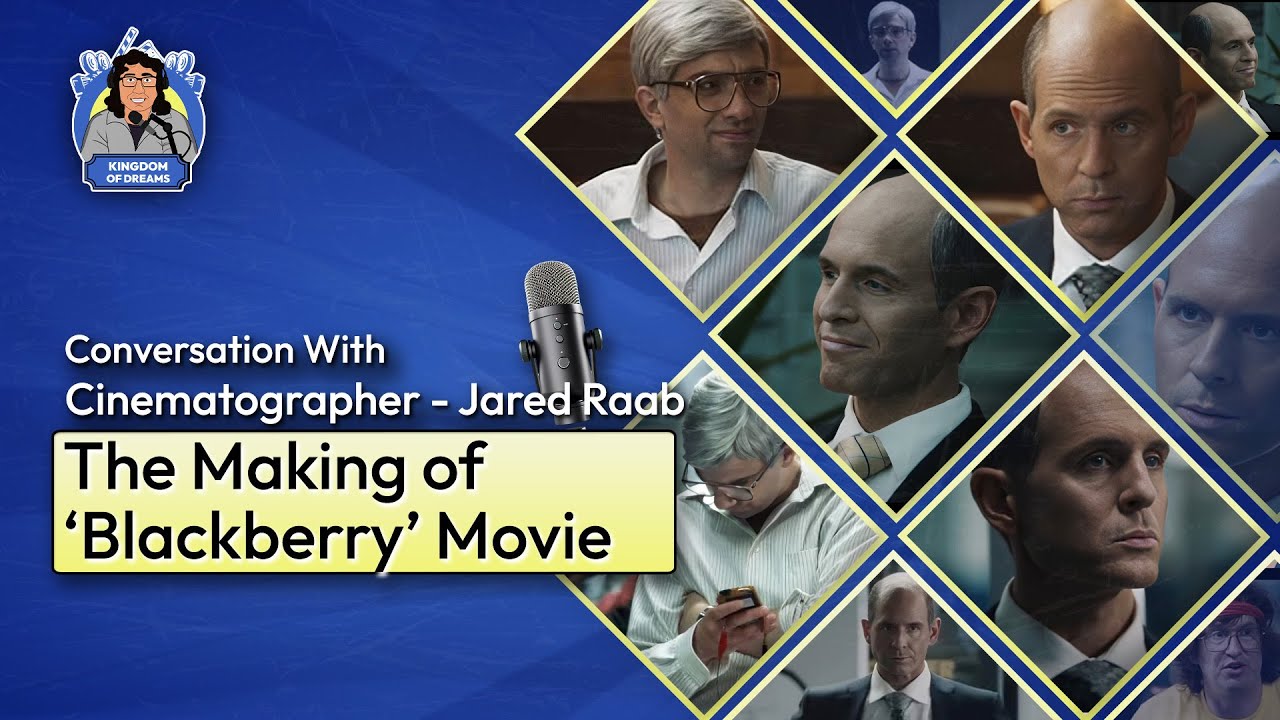
'BlackBerry', Cinematographer, Jared Raab
About this episode
Behind the Making of BlackBerry is a captivating deep dive into one of the most compelling tech-dramas of our time, told through the lens of award-winning cinematographer Jared Raab.
Blending humor, drama, and the chaos of innovation, BlackBerry traces the meteoric rise and fall of the world’s first smartphone. In this conversation, Raab shares how the creative team brought the story to life with gritty authenticity, improvisational energy, and cinematic precision.
Jared Raab is a Canadian cinematographer and director best known for BlackBerry, Operation Avalanche, and Nirvanna the Band the Show. A longtime collaborator of director Matt Johnson, Raab earned the 2024 Canadian Screen Award for Best Cinematography for his work on BlackBerry. His distinct visual style also shines in music videos for artists like July Talk and Andy Shauf, earning him multiple Prism Prize nominations.
Full transcript
Automatically generated from the episode audio, so expect the odd misheard word or name. Speakers were labelled automatically. About 11,300 words. Tap a timestamp to play from that moment.
0:06Jawad MirThanks so much for joining. Appreciate it.
0:09Jared RaabOh, no, I'm happy to do it. Always, thrilled to be able to talk about the movie, and we're still in, like, a Q&A mode, so it's good timing. We're, like, been talking a lot and thinking a lot about the film in the last few weeks.
0:28Jawad MirSure. That's great. That's fantastic. No, it's a, it's a lovely old film. I, first of all, thank you for providing, with the screener link, and, I honestly, I saw the trailer whenever it came out, I think two months ago, and I was intrigued. You know, just because it's just one of those things before the iPhone, and being in Ontario, Canada as well, and, my brother-in-law used to work for BlackBerry, and so I…
0:59Jared RaabOh, amazing
1:00Jawad Mir... You know? Yeah.
1:01Jared RaabSee, yeah, it's, like, close to your heart.
1:04Jawad MirThat, plus I think the bigger thing for me was when I was watching the film, there was all this little nostalgia that was tossed in. Like, one of my favorite scenes, I mean, you probably think it's one of those things that's, that has nothing to do with the film, but to me it did. You know, when they share good news and bad news, you know, the bad news being…
1:23Jared RaabOh, the good new… This is the good, yeah, we have some good news and bad news.
1:26Jawad MirYeah. The good new…
1:26Jared RaabThat's very funny. Is that... It's, it's, like, I guess, yeah, that is a bit unique to, like, it's slightly regional or something.
1:37Jawad MirNo, it was, it was funny in a sense that it was real because, you know, I, 'cause I remember, like, you know, being a big Spielberg fan, that's what got in… into me, into films, and then in '90, late '90s, you know, internet booming, I was being, I was part of that whole website and all that stuff, revolution and stuff. And so I related to that a lot, like, where movies were everything, like, you know, for people
2:06Jared RaabRight. They were, like, the cultural touchstone for…
2:08Jawad MirThat was it.
2:09Jared RaabYeah.
2:09Jawad MirThat was it. Like, you know, it's like, okay, let's... And then I was also, you know, for a year I was part of a company, during the IT boom where we had that kinda culture, where we had foosball table, pool table. You know, there was…
2:23Jawad Mir... Any possible thing you can imagine you can do. So I related to that quite a bit, and I loved a little bit, little bit of anecdotes, a little bit of a nostalgia tossed in there, and it was more than that, it was just the characters were done so well, and it was such a tightly knit film that you just could not even, you know, say, "I'll watch half tonight and I'll have w… watch half tomorrow." You had to experience it in one sitting.
2:51Jared RaabOh, that's fun. Well, don't tell that to, CBC…
2:55Jawad MirYeah
2:55Jared Raab... Who are gonna have the miniseries version of it in the fall.
2:59Jawad MirOh, are they?
3:00Jared RaabYeah. Yeah.
3:01Jawad MirLike they're…
3:01Jared RaabI'm just going…
3:02Jawad MirThey're splicing it or?
3:04Jared RaabIt's, yeah, it's going to be, basically just three, broken into three parts, which is interesting. I mean, there's some stuff, it's almost like a director's cut in that there's stuff that's in the miniseries that isn't in the…
3:18Jawad MirOkay, so there is some…
3:19Jared Raab... The feature
3:19Jawad Mir... Extra stuff. Okay.
3:21Jared RaabYeah. There's, like, a little bit sort of, especially at the heads and tails of each section, so it plays... It's interesting. I mean, I just saw the cut the other day and it's, it kinda has a neat flow to it. It's different than the movie, but it still kinda works.
3:37Jawad MirYeah, no, as long as it can work. I mean, w… series are, you know, good too because it gives you a little bit more, latitude in terms of character development and, a… and all that. And I think the type of film it is, if it had come out even, that it has nothing to do with the film, it's just the world we live in, if it had even come out like 10, 15 years ago, you know, it would've been one of those films that does relatively well at the box office.
4:05Jared RaabRight. Yeah.
4:06Jawad MirBut I, we live…
4:06Jared RaabWe're in a slightly different time.
4:08Jawad MirYeah, where everything has changed…
4:09Jared RaabYeah
4:10Jawad Mir... And you have to kinda take that resort of
4:12Jared RaabYeah
4:12Jawad Mir... The route of, you know, web series and stuff. But
4:16Jared RaabYeah
4:16Jawad Mir... But yeah, no, I'm, I'm ex… I'm looking forward to seeing the web series whenever it's launched, just to get a…
4:21Jared RaabOh, the, it's, it'll be like a TV, like, TV miniseries.
4:25Jawad MirTV series is what I meant.
4:26Jared RaabYeah.
4:26Jawad MirI'm sorry. I…
4:27Jared RaabYeah
4:27Jawad Mir... When I say web series, I think about Netflix, right? So.
4:30Jared RaabWell, that's, yeah, it's not even a d… dirty word anymore.
4:35Jawad MirYeah. No…
4:35Jared RaabIt's just, it's just the reality.
4:38Jawad MirNo, for sure, man. Tell me before we get, talk about Blackberry, how did you get into being a cinematographer, DP in the world of, you know, media and films?
4:51Jared RaabI will start my recording in that case. Hold on.
4:55Jawad MirSure.
4:56Jared RaabJust 'cause I do, I might sound very off mic if I'm sitting here. Hold on one sec. Da. Voice Mail. Okay. So then that's in frame slightly. Let's see. Got it right? There.
5:25Jawad MirYep, that's in.
5:25Jared RaabThere we go.
5:25Jawad MirThat's good. That's…
5:26Jared RaabGreat. How did I get started? I, you know, I've always been one of these people that does a lot of different things. The, I haven't done exclusively cinematography, and I still don't. I've always been sort of jumping around doing different roles. So I've done quite a bit of directing, especially music videos and, a couple doc, sort of, well, three years ago I did a doc series for Netflix called This Is Pop, all about pop music, and a lot of things in, with bands and in the realm of music just 'cause that's sort of how I got into it. But… yeah, cinematography is just sort of a natural extension that I always like being behind the camera and holding the camera and the fun of grabbing a movie camera and then heading out into the, to make stuff with your friends. And so that's sort of how I, how I found it.
6:26Jared RaabI s… I've been doing it forever too. I started in high school making little videos with friends of mine, and so…
6:32Jawad MirSure
6:32Jared Raab... It's something that, like, I've always loved.
6:36Jawad MirFantastic. Fantastic. And which… I mean, the fact that you mentioned that you do cinematography, directing, I'm assuming you've done editing as well. There has to be one thing that you are more keen on doing than the rest of them.
6:54Jared RaabI mean, I know there's supposed to be, but there, I really don't think there is. I really do... For me, it's so much more about the project. You know, if it's… ... I will do just about anything that I, that I think I can do a good job on if the project is really great. So I will say I stopped, at one, I was doing quite a bit of editing, and I edited a few feature docs, and at a certain point, I stopped doing that because it was just kind of…
7:25Jawad MirSure
7:27Jared Raab... It, a lot of sitting, by myself in a dark room in front of a screen, and I think that y… months and months of that back to back start to wear on me. But you know, I still love editing and I think in some ways I'm probably better at editing than I am at cinematography, but it's just I don't know if I can take it.
7:48Jawad MirYeah. Yeah, no, it does require a lot of, focus, a lot of time, and a lot of solitude time. Like, you know, you're not, being on the set is as much as, you know, rough days you may have, you're at least interact, interacting with a group of people, and you can bounce off your, you know, your energy, whichever it is, back and forth. But when you're in the editing room, it's just you and the screen and the characters who are in there, and that's it.
8:18Jared RaabYeah. And that's, you know, it's funny, like most, I think most aspects of filmmaking are in some ways in conversation with the film itself, so they, you know, you're always, there's always a give and take where you're contributing to the film and the con… film kind of tells you what's working and what isn't. And, but with editing, there's this weird thing where it really, it, you're so much more directly in the footage, because it already exists and the characters…
8:44Jawad MirYeah
8:44Jared Raab... Already exist, and the scenes already exist. And the last film I edited was about somebody who was, an artist at the end of his life and he was dying. So through the… ... Process of editing the film, and he actually died while we were still, while we were cutting and while we were still shooting. And I think it took, it just took so much out of me because it was like you're spending months and months w… in these really difficult moments. And something about that, it was like, you know, people who live things only have to live them once, but when you're, when you're editing, you live things until the film is done, and I…
9:24Jawad MirYeah
9:24Jared Raab... Spent about six months working on that film, and that was the last one. I w… after that I said, "I think I need to take a break from this." It was really doing… I mean, that's one really great thing about cinematography is in some ways you get to focus really intensely on the shooting and that shorter period of time where you're on set, which you don't have the luxury of doing if you're a director or, an editor.
9:49Jawad MirYeah.
9:49Jared RaabYou know, you, the time is more stretched. I mean, there's obviously a tremendous amount of prep, but really the prep is prep for that very condensed period of time.
10:02Jawad MirYeah, no, editing, it, is incredible piece of, work because it lets you create even, you know, the film is written in three stages, right? The script, production, and post-production, and it just lets you really create. But it, at the same time, yeah, it takes such a toll on you. I know that, you know, I had two features that I ended up docu… feature documentaries, narrative docs that I ended up, that I was directing, and COVID happened.
10:36Jawad MirAnd, I took it upon myself just to start putting rough cut for both of them. They were, th… these were both heavy human rights, you know, completely, non-positive stories. And it r… and then I obviously ended up hiring an editor just to, you know, final… finalize the film and complete it. But those two years, because COVID happened, we had some delays and stuff, takes such, took such a toll on me that…
11:06Jared RaabYeah
11:06Jawad Mir... As much as I love editing, and I'm in that same head space as you are right now, is that I, not that I don't want, I don't want to ever edit again. I just don't know if I can do it right now if a project came.
11:21Jared RaabYeah
11:21Jawad Mir... It does, it takes out so much on you. It really does.
11:25Jared RaabYeah. It's, it's, you're, you're, you're emotionally entwined with the footage in a way that I don't think any other role, you know, e… even a director has a…
11:37Jawad MirYeah
11:38Jared Raab... Slightly broader perspective in some ways. Like if you, if you're not spending so much time with the footage and going through the footage. And also the other thing that I realized about editing is it doesn't, like, leave you. You know, you wear these grooves of trying to solve story problems so deep that you go to bed and they're, you're dreaming all night. These same editing problems are like, they don't, they don't go away. And so, you know, in some ways, any, you know, that still happens to me. I'll be, you know, on…
12:10Jawad MirYeah
12:10Jared Raab... The set of Blackberry, I was still having weird, you know, c… lighting issues I couldn't solve dreams every single night. But the… The, something about, yeah, the editing is, requires so much of your brain for such an extended period of time that it really is an intense endeavor.
12:28Jawad MirYeah.
12:28Jared RaabIt's like,.. And I love it. I mean, for the same reason, I think it's incredibly powerful, like the power of s… storytelling that you wield, you know, in an edit is much... It's more, I think, you know, editors have a much greater impact on the finished film than I ever could as a cinematographer or, you know, any other role could.
12:55Jawad MirWell, it's…
12:55Jared RaabIt's like the, yeah.
12:58Jawad MirIt's a collaborative effort, right? But, one thing I really like what you said, it's so true, whether it's an editor or a cinematographer or a director or set decorator, production designer, when you're working on the set or in the editing room, whatever your job may be, you know, you come across something that you have to solve, right? That's just the nature of filmmaking. And m… most of the time, if not all, you can't figure out that solution that you really want that makes everything work out. And then you go home, or you're taking a shower, or about to go to sleep, and that moment light bulb pops up, and that has happened to me so many times that where you get all these best ideas when you're not actually working because your mind has taken a break from it.
13:47Jawad MirAnd you're thinking about it, and it's so true. It happens to all of us, and it's, it's just part of the process. You know? You, that tells you that how much in, gr… how much involved we are in storytelling, that's all we're thinking about all the time.
14:02Jared RaabI know. Well, it's an all-encompassing... I mean, that's one of the great things about film is you can, you know, the more you... I think that the, especially with this crew, the Blackberry crew, we have this, you know, real belief that, like, e… every amount of effort that you put into the film is gonna be rewarded back to you, like the, by improving the film and that, and making it a little bit better. And we'll kill ourselves for that extra little, you know, 2% better on the scene. You know, if we can make the scene 2% better and it's gonna take a day of our work, we'll do it.
14:41Jawad MirYeah
14:42Jared Raab... Because I think those little tiny improvements add up, and that's something that I think a lot of, you know, filmmakers struggle with, or at least I see, you know, filmmakers work on things, and by the time they get to, you know, that last stretch, they're just exhausted. You know?
15:02Jawad MirYeah.
15:02Jared RaabYou get to, you get into the last couple weeks of editing or maybe you need another two weeks of editing, but you're just spent, and you say, "This is the film," and it's done. And I think what they don't realize is probably that two weeks made all, was all the difference. Like, that little push at the end where you have nothing left in your, you know, it's the end of the day, and everyone's exhausted, and you just have two more shots to get, and you do one take, and it's not great, but you j… everyone wants to go home. It's like that's, I think that's kind of where the films are made or lost, is in, is in that final little bit of energy and thought and care.
15:44Jawad MirYeah. No, I agree, and I think it's also, I have this theory, I talk about this all the time to a lot of people, is that when you see a film, any film, right, any genre, and it's going great, you know, they review it, that the first half was great, but the last half wasn't, or it was great until the last act or the ending kinda got messed up, I genuinely believe, especially, I don't, because in production these things are sort of, you know, you're not really filming chronologically most of the time.
16:13Jawad MirSo it's hard to tell, but in post-production you're more or less editing, you know, chronologically after you've kinda cut down all the scenes. And you, that last stretch sometimes shows in the ending, where the ending happened too quickly…
16:27Jared RaabRight.
16:28Jawad Mir... Or too abruptly, and there is no, like, ba… Like, how did we get here all of a sudden? Right? And that stuff happens, I think, in every part of the cinema in the world, and I've seen that where the ending kinda just pops out of nowhere. There's no explanation. I can't think of a film right now, but there are several, that have had that happen. You notice that they've just ended abruptly for whatever reason, whether they…
16:52Jared RaabThis is a bad example because it's so meticulously planned, but we were just talking about how The Little Mermaid… ... The animated version…
16:58Jawad MirYeah
16:58Jared Raab... Has an ending that just, it's just, like, happens very quickly and is done. But it's so funny…
17:03Jawad MirYeah
17:03Jared Raab... When, you know, I mean, that's a beloved animated film, so it's kind of a bad example of, like, oh, ruined the movie. But it did for me. I hadn't s… I rewatched it for the first time couple of, you know, years ago, and that's the thing that shocked me. I was like, "The e…" It just completely rushes the ending. It's like…
17:20Jawad MirYeah
17:21Jared Raab... Very funny.
17:22Jawad MirNo, I know. It happens in a lot of films, and yeah, it's just one of those things. But, you know, talking about Blackberry, how did you get on board on the film? Like, did Matt know you, or were you…
17:35Jared RaabYeah. We've, we, th… this movie was made by a group of friends and filmmakers. We've been working together since, for now about, since 2007 or so.
17:49Jawad MirOkay.
17:49Jared RaabMaybe 2008. That's when I started making a web show with Matt and Jay McCarroll, who is the composer on this film and executive producer, and he's, we started 'cause we had been, you know, they had started making this very silly web show, just the two of them in their apartment, and they needed somebody to come and basically hold the camera.
18:10Jared RaabAnd so that's kind of how our dynamic evolved, was making this silly web show. And then after that we made The Dirties… and, that wa… went to Slamdance and it won Best Feature at Slamdance, and then, that kinda s… launched Matt into being able to make a second feature, Operation Avalanche. So, but all along it's been the same basic small group of, you know, five or six people. We've kept the team really close together and I think that part of that is that the movies that we make are really loose in their production, and so they inherently have a lot of trust. Also, Matt has always kind of acted in his own stuff, and been on camera as well, so you kind of need to have a team ar… around you that you trust w… because, you know, even on Blackberry it wasn't, it wasn't possible to review every take, and it wasn't possible to, like, go back and do playback on everything.
19:19Jared RaabWe like to shoot these long kind of i… documentary style scenes without cutting. It's not standard coverage necessarily. So, yeah, the, it feels like we've been working together so long that it's like a given at this point that's just sort of how movies are made. I mean, I, we all go off and work on other projects and it's, it's always, funny to realize that, oh, no, in the real film world, like, people come together for one project and then part ways. It's not like…
19:52Jawad MirYeah
19:52Jared Raab... This, like, deeply worn, relationships and friendships that you can just step into at any time and it's easy.
20:04Jawad MirI wonder how much of that is in Blackberry, your friendship and your connection.
20:09Jared RaabOh, a hu… a huge part of it. I mean, Matt Miller and Matt Johnson, there's a, quite a few Matts in this core group, so just if it's, in case it's not confusing enough. They wrote the script, and I think that what, really cracked the script for them was when they realized, oh, we can make this about filmmaking and our lives and our experiences, because I think, you know, the feeling of going from just a small group of friends working on something to suddenly having all these resources, and things scaling up quickly and the, and a challenge that, poses to friendships, is something that, you know, w… we've all gone through. I think, you know, we've, we've had to navigate what it means to suddenly find success and I think that, you know, or at least whatever modest success a Canadian film, filmmakers can achieve.
21:14Jared RaabBut the, but that was what kinda gave them, I think, the fuel to realize that they had, that they could be the people to tell the story. You know, this was something that, you know, that we weren't a part of. We didn't, like, we weren't like you, we didn't work at a tech startup in the '90s. We were, you know, still learning how to, you know, make films and were very separate from that tech boom when it happened. So the, turning it into a film about friendships I think gave everybody an access point to understand that, you know, it was something that we could all dig into and have some relationship with.
21:57Jawad MirYeah. No, it's, it's quite evident and I, you know, there are these little things in the film that I really like. I don't think we ever come to know the names of those characters. Excuse me. The staff that was working with, before Blackberry became Blackberry, like the group of guys, and even when Blackberry was before iPhone, like all those individuals that you'll see on camera here and there…
22:27Jawad Mir... And you don't even hear them, but there is this certain expectation, that I got that I need to see what they're up to, even if they are just… ... You know, tightening the screw or whatever they are doing. It's just built in so nicely. Like, I thought that was the heart and soul of the film as well, is just those little things that make a huge difference, the little details.
22:53Jared RaabWell, it's, it's part of, that I think is, we wanted, you know, every, I think we knew that if we didn't make the environments feel alive, then we weren't, we were gonna fail…
23:05Jawad MirYeah
23:05Jared Raab... Because we're not obsessive about how exactly... I mean, there were, there were certain points in the film where we wanted them to feel, you know, very controlled and where we wanted to have control over how the shots were gonna play, how the scene was gonna play out and that kinda thing, but we're not freaks about,.. We're drawn to visual storytelling that comes out of the real world. So, you know, the behavior of the camera person discovering something, you know, finding something in the frame that's interesting. "Oh, what's that person doing? That's, that's interesting." And sort of finding that action, and letting the camera be the eyes of the audience. You know, that's the sort of storytelling tools that we get excited about, so I think that the idea of making these environments feel alive and also, you know, dressing them not to the shot, but to the scene. So the, even the, production design was done in a way where these rooms were just basically decked so that we could go into them and shoot in any direction and if someone walked over by the window or, you know, something was happening over here that we didn't plan on shooting, but we decided last minute or, thought was interesting, or if I just pan over there, you know, as part of the coverage, that it was all usable.
24:28Jawad MirYeah
24:30Jared RaabThat's something that I think is maybe a little bit unique and you don't see a ton of in, you know, more of a traditional fiction filmmaking.
24:40Jawad MirYeah
24:40Jared Raab... It's not, you know, I think it's a, it's a powerful tool, especially as we all get more comfortable with handheld camera and we're watching hours of amateur video shot on iPhones every day. You know, the social media just bombards us with that. The language of, real documentary or like, you know, home video, I suppose. I think those tools and the, and the language of home video and the camera being excited, what it feels like to be, you know, seeing things through a camera that's being held by somebody that's excited versus somebody that's, has malicious intent versus somebody that, like, you know, is being sneaky, like, or is catching…
25:30Jawad MirYeah
25:30Jared Raab... Something you're not supposed to see. You know, we all are ingesting and developing a, like, a, an understanding of what that looks like and feels like. So we know, we know if something's real. You know, you could show a 14-year-old kid two videos and say which one is staged and which one's real, and they're gonna be able to tell you. Whereas, you know, that nuanced language is not necessarily always trickling up into cinema. We're still making cinema pure artifice, and I think that there's, like, much to be learned from the very scrappy, homemade style films or even just video, you know, home-shot video in terms of getting into the psychology of the viewer and manipulating emotion and that kind of thing.
26:26Jawad MirRight. And your... When you... H… how many days of the production was roughly? Was it two or three months?
26:36Jared RaabIt was, we, yeah, it was about two months. We shot, it was 35 shoot days
26:41Jawad MirAnd where did you guys shoot mostly?
26:42Jared Raab... Including reshoots. We were almost entirely in Hamilton. We took over an old steel mill that, was basically an abandoned building. At, and there were huge empty spaces. And then what that allowed us to do was the production design team could be working on, you know, the office set upstairs while we're shooting the engineering stuff downstairs and that kind of thing. We knew that our big challenge was gonna be these big production pieces and trying to recreate engineering floors and that kind of thing. So the only way to really do it efficiently was to own the space and let them really, you know, plug away at it all in one building…
27:31Jawad MirSure
27:31Jared Raab... Basically. And we, if we were to do the same thing in a studio, it would be completely unaffordable. I mean, the…
27:37Jawad MirYeah.
27:38Jared RaabThe, so then we had to run power in and it was, you know, there were raccoons living in the ceiling and that kind of thing. So it was, you know, there was no air conditioning, no airflow. The actors were always cooking. They felt terrible. Yeah.
27:54Jawad MirYeah. And, were there any references that you took, not just the, just you, maybe production designer that you're aware of or even Matt, like any of the archival photos of BlackBerry or was it…
28:11Jared RaabYeah. Well, weirdly, I mean, these are not things that there's normally great documentation of. Like, there'll be, you know, a magazine would come in and do a spread with Jim and Mike…
28:22Jawad MirYeah
28:22Jared Raab... But they wouldn't show the nitty-gritty of the messy office and how people worked. So early on in the research phase of writing, Matt and Matt made contact with an engineer that worked there sort of from the beginning all the way to the end. He
28:38Jawad MirSure
28:40Jared Raab... And he was nice enough to basically just, he luckily was just a guy who always was carrying around a digital camera and he had a huge archive of…
28:51Jawad MirOh, wow
28:52Jared Raab... Photos of just, right, like, just o… offices mostly, you know, or like, "Oh, here's the engineering bay. Here's, you know, this was lunch on Tuesday." Like really banal stuff and that, the photos that he took, he shared in a, in a organized document and it kind of became our bible for…
29:12Jared Raab... The entire look and feel of the shoot. And in fact, I got a lot of the, ideas for lighting the film from that. I mean, not from his photos 'cause they were usually just like flash photography on a…
29:24Jawad MirYeah
29:24Jared Raab... On a little camera. But the spaces would have, were all lit with like, work, l… like sort of, fluorescent work lights. And they would sometimes be mixing color temperatures, so there'd be like one blue one warm one. Like they weren't thinking about the quality of the light. They were just trying to make it bright so they could, at their workstation. And, it gave us the idea to light everything as much as we could with just the available lighting in the space. So like the, you know, the, all the engineering bays, there's, you know, very little, additional lighting. There'd be, you know, we'd, we'd, we'd do like one big window source or something. But most of the lighting is motivated by pra… practicals in the space.
30:20Jawad MirRight. Was any challenges that you recall from a, as a cinematographer standpoint or even on the set by everybody else that you guys faced filming a scene?
30:34Jared RaabI mean, yeah, the puzzle, I think the big puzzle for us was, like, this was a big, departure for us in terms of the scale. You know, we don't normally we're... Matt's previous films have been him and then a couple other friends acting opposite him. We've never had to work with actors before. We've never had to, you know, work with a crew larger than a dozen people. You know, we've kept it incredibly small, and so scaling up comes with its own set of challenges. You suddenly are beholden to…... You know, the, you know, timelines that are extremely condensed to working with larger teams, to the infrastructure of a set. All of that is like, you know, we y… you know, I think there's, like, huge advantages to working with smaller crews, but of course the, we were never gonna be able to pull this movie off without…
31:35Jawad MirYeah
31:35Jared Raab... Without a larger crew. I mean, it's still, I'm sure by Hollywood standards it was still tiny.
31:40Jawad MirMuch more.
31:40Jared RaabYou know, we keep…
31:41Jawad MirHow big was the crew?
31:43Jared RaabMaybe fif… 50 people on set, and then, you know, expanded out into the base camp, whatever. But, you know, maybe d… double that when including all the infrastructure. But yeah, it was, it was like a, you know, m… most people would've w… who work on larger sets would've looked at it and thought it was a very small crew, but it felt gigantic to us considering where we came from.
32:13Jawad MirYeah.
32:14Jared RaabYeah.
32:14Jawad MirNo, fair enough. Fair enough. You know, i… i… in terms of you yourself being on a film like that, right? Like, you've done stuff in the past, and yes, you have shifted from a smaller crew to a bigger crew. Was that ever, not in a negative way, but I think we all get intimidated by certain things no matter where we are, in our career. Was that ever intimidating? And also working with, like, you know, actors who played some of the lead characters.
32:50Jared RaabYeah, it was hu… hugely intimidating. You know? Where it's like I think that everybody, or at least most people who are good at what they do in film suffer from some amount of imposter syndrome where they feel like they're not, you know,.. It's like, you know, we, it was both, I would say it was both intimidating and motivating, 'cause it's, it, there was a real sense that we knew that if we could pull this off, that we could really make something special. And it, and it, in a way knowing that our, the things that we don't know could be helpful, could actually make this not like every other movie. And I think there's a thing that sometimes Canada doesn't do very well, which is understanding that, a unique voice and not trying to make something look like everything else, and the fact that it is, it doesn't follow the mold of everything else that's being made out there.
33:52Jawad MirYeah
33:53Jared Raab... That a little bit of nai… naivete is sometimes an incredibly powerful tool for original stories. And it's something we're aware of, but it also means that, you know, there's no template. So we really felt like we were going into this, you know, it, with, you know, I think, I, it was, yeah, it was a two, there we… it was a two-sided feeling. The f… when on one hand we felt like i… you know, intimidated by the scale of the film and the fact that there were actors in it that had worked on much larger productions…
34:36Jawad MirYeah
34:36Jared Raab... With much more professional and experienced, crews. But on the other hand, I think we were like, "Yeah, but it's probably gonna be a good thing." The fact that we don't know anything is probably a good thing, and I, and I think that comes from the other stuff we've made where we realized that one of our greatest assets as a, as a team is that we're not trying to make something that looks like every other movie out there, and that probably even if we tried, we couldn't. So we may as well lean into what we're good at and try to use as much of that to tell the story as possible. Like for me, you know, the fact that my, I lean towards a more documentary style of shooting scenes…
35:21Jared Raab... And a m… much more observational approach, you know, I think that there's, like, most people would say, "Oh, well then that, you know, I should probably only shoot documentaries." Right? Like, you know, that's what I'm, what I'm good at. I should probably only do that. But fiction film is incredibly fluid, like e… and es… especially at scale, because resources can allow you to take something that you would normally see as a hindrance and in fact turn it into like, what g… more, what could be a unique voice. So that's something that is good, you know, for people starting out or young filmmakers or people who are just, you know, starting out in the industry for them to know is that, like, probably the things that you think would be, are holding you back might be the ticket to your unique voice and your success. You know, the, those, what you don't know is as important as what you do know.
36:28Jawad MirRight. That's, that's, that is so true, man. It's, it's, it's, it's... And then you're, and you're spot on about the whole Canada thing, and I do think that, you know, we… Aside from, I mean, I don't want to say certain things because your film is funded by some of these organizations, but part of the problem is also that we always talk about, you know, giving new artists chances and, you know, all that. And granted, I mean, not everybody can be given chances because there is, you know, a pool and whatnot. But at the end of the day, from what I see and from the people that I know, probably with the exception of you guys now that I know, most of the time that projects that get the green light are by people who are extremely established, like they've already sort of have a career and whatnot. And that new voice kind of, and then you see stuff on different channels and different streaming platforms in Canada.
37:33Jawad MirTo me, they all look, we take this value of, you know, it has to be Canadian, right? Which is great, but then you are so stuck in this box of storytelling… ... That then you have to come up with, and there's a lot of people that do come up with only stories that are within, with the realm of Canada, which is fine…
37:55Jared RaabYeah
37:55Jawad Mir... But it's not gonna get you to the outside markets that necessarily, unless it's more of a human story than a Canadian story.
38:04Jared RaabWell, it's also like, what is it, what, you know, what is it to be a Canadian story if other than a story told by a Canadian? I mean, that's, I don't, that, the, it's such a vague and broad definition.
38:18Jared RaabAnd like, you know, my experience of Canada is an incredibly wide, diverse set of stories from, told by people who have come from all over the world and, you know, have unique experiences from other countries, other cultures, other places, and to bring and share and, like, what, there's not, that's an incredibly Canadian thing too. So I don't, the definite… you know, it's, it's a extremely problematic line item…
38:50Jawad MirIt is
38:50Jared Raab... In the funding bodies of these must be Canadian s… stories, because I don't really know what that, what that is. I mean, yeah, sure, if you're, if, I don't, and I also don't really think that what's gonna suddenly happen if you take that out is that everyone's gonna be making movies set in New York and LA, you know, I, and shot in New York and LA, because that's just way too expensive. You're st… you're gonna end up with Canadian stories no matter what. It's like…
39:16Jawad MirExactly. And, but at the same time, I also think, I don't know if you remember that movie, Sweet Hereafter, but by Atom Egoyan. Which was nominated for an Oscar. This was like, what, 15 years ago or so, maybe even longer. And I, now, the limit to, when you're so right about, like, people are not gonna go to New York and start shooting unless they have a budget. But to be able to get into the outside world, to the international market, I genuinely believe we have to tear this thing down about Canadian stories.
39:48Jawad MirBecause otherwise we're just, we're not expanding ourselves to outside world. I know we don't wanna be like Hollywood, I get it, but at the same time, there must be some sort of a happy medium place, where we can tell these stories. And when you put people in a box, in a constrained box, then they're gonna try to get outside that box. And when there's freedom, then they'll probably still be in that box because they know they can.
40:10Jawad MirAnd they'll make that choice on themselves, right? So.
40:13Jared RaabYeah. It's hard enough to make a good movie. My God. It's like…
40:16Jawad MirYeah
40:17Jared Raab... You know…
40:17Jawad MirI know
40:19Jared Raab... Making a movie like that does not suck is already so difficult and requires so much energy and time and thought and care by such a large group of people, that the more arbitrary parameters you put, on the film, and it's not just the funding body, I mean, that can come from anywhere, you know, the, those…
40:46Jawad MirYeah
40:46Jared Raab... Production companies and, you know, distributors and broadcasters that all do this, where it's just like, "Oh, well, but," you know, the, even the s… what's the seemingly smallest roadblocks in the way can become a huge hindrance to that finished product being great. And I think that, you know, you're gonna have the same success-failure rate on people left to their own devices as you are on
41:18Jawad MirYeah
41:18Jared Raab... Really specific parameters put on a project. Like, you know, I've worked on projects where the broadcaster notes come in and they're, you know, trying to turn the thing into something that it's not, and it ends up just kind of dissolving the essence of whatever it could have been in the first place. I think that there's like a, you know…
41:42Jawad MirNo, I get it, man
41:42Jared Raab... W… it's, it's better to foster that, well, I would say that only works though if we can foster a creative environment where people are, don't feel like they have to only praise, is the other thing. Like, th… this is the other, the flip side of the Canadian coin is like, we're really, you know, too nice to each other when it comes to making art and, you know. You know, and I shouldn't say that because it's not a matter of being nice or not nice. I think that we're, we have a problem with criticism, and we…
42:14Jawad MirWell, yeah
42:14Jared Raab... We don't know how to critique each other in constructive ways, and so everyone just pats each other on the back and says, "Oh, I loved, you know, this. I loved, what a wonderful film. I loved it. Really great," and doesn't know how to tell somebody that they thought the rough cut was bad. I won't name any names, but I just, you know, recently there was a project that I, had seen an early cut of and, You know, I really thought that it was… there was something there, but it needed a tremendous amount of work. And, they had a feedback screening of Canadian industry professionals, and I was so excited because I was like, "Oh, finally," like, "I won't have to be the only one…
43:04Jared Raab... You know, giving really harsh notes." And the feedback screen… and I… after the feedback screen, I said, "How did, how did it go? How'd the feedback screen go?" Like, I was, you know, "What do people think?" And, the answer, it was just, it was, like universal praise. Like, everybody marking 10 out of 10 on the sheet. It was like, "Oh, it's perfect. The film is, you know, it's 100%," from the, from the screening. And, that's like, to me, that's, it would only happen in Canada. Like, you know?
43:42Jawad MirIt…
43:42Jared RaabIt's like…
43:44Jawad MirIt…
43:44Jared RaabBecause I know, you know, I know the film is not, it, that needed…
43:48Jawad MirYeah
43:48Jared Raab... You know. And probably the people there did too. It's just that we really have trouble giving constructive feedback and criticism in a way that we're, we're afraid to say anything bad about something if it's Canadian.
44:04Jawad MirYeah, no, I agree with 100%, and also the fact that, you know, it's, it's hard enough to make a film that is great, but even if you make a great film in today's market, you probably won't even get noticed. Like, it just…
44:17Jared RaabYeah
44:17Jawad Mir... You know, just one of those things. And I, and the whole thing about, you know, I am, and I'm sure you are too, I am the type of person that I want to surround myself pe… with people who will always criticize what I'm doing. Not in a negative way, but in a way…
44:34Jared RaabYeah
44:34Jawad Mir... To make, you know, improve, the work that I do. And I'm, I'm never, I learned my lesson a while ago, like about over a decade ago, with a film that I did, and I showed it to a bunch of people in Canada, not knowing that it's a Canadian thing or an American thing…... And, or whatever. And, you know, there was this all praise. I'm like, "Okay, great." And then I showed it to some of the Americans, it was completely opposite. And that taught me a lesson that…
45:04Jawad Mir... You know, I think I know, like maybe handful of Canadians who would be very upfront with me. But other than that, it's like you have to, if you wanna make a great piece of art or a film, you have to show it to people that you're afraid to show it to them. Like…
45:20Jared RaabOh my God. There's, I went to go see Ruben Östlund talk about his new film. And he, this is a thing that he does and when he's writing. So he did it with, Force Majeure, and he did it with the film, actually, I think he started it with Play, was the first time he did this. But basically, as he's, and Triangle of Sadness, same thing. And the move that he does is he'll pitch the film to anybody who will listen and tell them the whole plot in detail, as he's writing the idea. And it, hundreds of times over the course of preparing for a film. So he did this in Berlin when we were premiering Blackberry, and we went to get, you know, I went with the Blackberry team, we all went to go see it, and he basically stands up there and he explains everything that's gonna happen in the movie. And then he says, "Okay, what do you think?" And he just opens it up for complete criticism. And if someone, you know, he's, you know, obviously people were asking, "Well, what if, you know, don't you feel like you're getting like too much, like if you're getting too much feedback, you're watering down the idea?"
46:24Jawad MirYeah.
46:25Jared RaabOr, you know, don't, you know, i… in some ways, don't you wanna protect your thoughts on the matter so that you're not like, your vision remains intact? And he said, something that I really agree with, which is that if d… you know, creative people being afraid of criticism is really one of two things. Either they think that they are some brilliant artist in conversation only with God, and that any human mortal who interferes with that relationship is gonna water down or ruin the product…
46:59Jawad MirYeah
46:59Jared Raab... Which is, you know, complete BS. Or, they're afraid that they have a bad idea. And that if they say it out loud, then it's a bad idea, that someone's gonna tell them it's a bad idea and that's gonna feel bad. And then they have to be confronted with all the problems in their idea. Because every, you know, inherently every s… every story, especially in its infancy, is gonna be full of errors…
47:22Jawad MirOh, yeah
47:22Jared Raab... And problems and things that you haven't thought about. And so, you know, he really believes in an, this opening up of the creative process. So, you know, people will be p… com… completely changing the film with one note, you know. Force Majeure was gonna be about a whole family. And you know, it was gonna follow, or, no, a bunch of people, and it was gonna follow each person's experience after the avalanche. And, you know, a friend of his said, "No. So the husband, there's gonna be a..." And he said, "Well, one, there's this one thing, this husband, he runs away." And he said, "That's the movie, is that an avalanche happens and a husband doesn't stay with his family, instead runs away and is, you know, leaves them. That's the whole movie is that one story that you have in there." And he thought about it and he said, "Yeah, that's better." And he took it and was like, "That, of course, that's the, he's right." And imagine, you know, how much, and that, and that's what's so great about the film is this really kind of close dissection of that one person's experience and that one family and how it kind of is affected by the incident.
48:29Jawad MirYeah.
48:29Jared RaabSo, you know, I really, I really do believe in that. And we are, especially the team that made Blackberry and all the stuff that we do, we're incredibly hard on each other creatively.
48:41Jawad MirSure.
48:41Jared RaabI mean, we're incredibly easy on each other as friends, and we try to be there for each other and are supportive as friends. But when it comes to the work, like we're not precious. We are not afraid to tell…... Somebody else. And it was, I think, jarring for some people coming on the set to see the composer going up to the director and saying, "I think you need to… that there's a problem with this scene, and you need to reshoot," you know? Or like, you know, Matt coming over to the monitor after a thing and being like, "Was that scene good?" And asking, you know, me and Matt Miller, and Adam Belanger, the production designer, who just happened to be at the monitor, and us being like, "Well, if I were… we should really start it this way. We should change this. Maybe we drop that line of dialogue." Like, there isn't anything that we can't say to each other, you know. The same way that Matt can very frankly come up to me in the middle of it and being like, "This sucks. This isn't working." He's not, you know, there's no fear i… i… in, as, and we s… we're s… understand that's really just part of the process. You make a, you get a much better film if you're able to pivot when something's not working, and most of the time the thing that's stopping you from pivot is just fear.
49:50Jared RaabIt's just you're afraid that, you know, it's gonna, you're gonna insult somebody or hurt somebody's feelings, or, like, you're gonna look bad, or if you're wrong. You know, it, all of these things hold you back from making a better thing. So when you can find people who are not afraid to, like, tell you an idea is bad…
50:08Jawad MirOh, yeah
50:08Jared Raab... Those people, you keep them really close and you know? They're like, that's an, a v… really valuable collaborator.
50:16Jawad MirWell, and…
50:16Jared RaabAnyone can tell you what's working about something.
50:18Jawad MirExactly.
50:19Jared RaabYou know?
50:19Jawad MirAnd it's ki… I mean, this is not literally the interpretation of what you just said, but it's like keep your friends close and keep your enemies closer, right? Like even if…
50:26Jared RaabI would say make your enemies your friends.
50:29Jawad MirYeah.
50:29Jared RaabBecause they're gonna give you better feedback.
50:31Jawad MirExactly, because they are always going to tell you what, and they may not be right? That's the thing. They may not be right, but that's okay.
50:40Jared RaabYeah.
50:40Jawad MirBecause as a, as a creative storyteller, as a filmmaker, director, cinematographer, whatever that you do, you are going to learn something out of it…
50:50Jared RaabYeah
50:50Jawad Mir... That may be applied. And you're gonna, you're gonna grow as a human being by taking criticism that may hurt, right? But if you're looking at the big picture, which is the betterment of the film versus betterment of your feelings, then you're in the wrong…
51:06Jared RaabAnd one is such a short-term, I mean, it's like…
51:09Jawad MirYeah
51:09Jared Raab... It's very easy to say.
51:11Jawad MirAnd that's…
51:12Jared RaabIt is very…
51:12Jawad MirYeah
51:12Jared Raab... Very hard to put into practice, to be able to just eat your ego and really, truly tra… try to have no ego because it is, it is a, it, just kryptonite to the creative process, especially in filmmaking where it is so deeply collaborative, and the product morphs so extremely from script to production and from production to the edit. And then even in sound design, like it's, films are incr… extremely malleable through the whole process.
51:42Jared RaabIt's not like pottery where it takes a form and then you're just sort of refining the form.
51:47Jawad MirYeah.
51:47Jared RaabIt's like it can be completely reconstructed at any point. And so it's very subject to the winds of change and can be blown off course, quite easily. So being able to hear when you've taken a wrong turn from people that you trust and for people not to be afraid to say it is, like…
52:11Jawad MirYeah
52:11Jared Raab... Extremely important. And it should be part of the process. I mean, it, they try to with feedback screenings and all that jazz, and I think in America people are, like you said, are a little less afraid, like you can do a feedback screening.
52:23Jawad MirYeah.
52:23Jared RaabWe had a feedback screening, I don't know, I assume I'm probably allowed to talk about this. I can't imagine why I wouldn't be. But we had a feedback screening, for Blackberry early on with a cut that I think we all knew needed a lot of work. Like, we really felt like the film was not yet in any kind of presentable shape.
52:43Jared RaabAnd, it was, Telefilm said it was the highest rated feedback screening that they'd ever had. Like, it had incredibly high rating. And it, i… if anything, I think it kinda worried us because we were like, "What are we, like, what are they seeing that we're not? Like, what on earth?" It's like this is, it, but it's of course, you know, looking back, you're like, "Oh, that's very Canadian." I mean, it's like, it was just, you know, our bar is so low, I guess, that even a, even a, you know, the... E… even now, I mean, I look at, you know, the finished film and I know that, you know, it's got, what, a 98% rating on Rotten Tomatoes or something.
53:24Jawad MirYeah.
53:24Jared RaabAnd I know it's not in, I think it's a, it's a really, you know, great film and we're incredibly proud of what we made, but we know it has problems, you know? We, you know, there are the things we couldn't fix about the movie or we, you know, look back, we're like, "Oh, we could have done that better, we could have done that better." But it's, but it's okay to hold both those things, you know, to be true.
53:43Jawad MirRight.
53:44Jared RaabTo know that, okay, well it's as, I think we made something good. Of course, it's not perfect. Nothing is ever perfect. No film is perfect.
53:51Jawad MirE… exactly, and I mean, you look at, you know, you talk to Spielberg or Lucas or Coppola or Byr… Brian De Palma, all these great filmmakers, and they will always say that, you know, "I wish I had done something different on Jaws or Scarface" or whatever that is.
54:06Jared RaabYeah. Yeah.
54:06Jawad MirBut that's just, and that's, and that's fine because you know what? At the end of the day, that will teach you something for the next project or the next project after that, and so on and so forth.
54:16Jared RaabYeah.
54:16Jawad MirAnd you grow as a person. And it teaches you that you are not going to make 100% perfect film, so stop worrying about it.
54:28Jared RaabYeah.
54:28Jawad MirYou know? It, that…
54:29Jared RaabThere w… I had a great, teacher in film school named Lawrence Green, who was really passionately cared about, the projects the students were making. And I remember I heard this statistic where something like 98% of the people in film school do not continue on in film. Like, staggering statistic about how few people…
54:58Jawad MirYeah
54:58Jared Raab... Actually make it and actually stay in the industry. And yet you look around and 90% of the people in your class are convinced that they ha… they, this is for them, and they have what it takes…
55:08Jawad MirYeah
55:08Jared Raab... And they're a genius. And I said, I remember I kind of went to him after class, I said, like, "How on earth do you know the difference between... Like, how do I know I'm not one of these deluded idiots that, like…
55:21Jawad MirYeah
55:21Jared Raab... Thinks I'm, I'm, I'm built for film and I'm gonna, I have what it takes to work in the industry and work in film?" And he said something that I al… often think about, and he said, "Well," he s… "There's no recipe at all. You know, some people it's just life, it takes you here, it takes you there. But," he said, "of the people that are successful in film, I have noticed what, they all have this one trait, and it's the ability to finish the film, finish the product, so see it through to completion, to see all the problems with it, and not let that crush them."
55:56Jawad MirYeah.
55:56Jared Raab"To recognize the problems and then go and make an, the next thing." And he said, "That," he's like, "It's not like that's a recipe for success in films," but he said, "Everyone I know who's successful can do that." and when I think about it, I'm like, yeah, that is kind of it. It's like…
56:13Jawad MirTrue
56:14Jared Raab... It's, it's that ability to make mistakes, understand their mistakes, try to improve them while you can, and the mistakes you can't improve, you try to improve in the next project, and move on to the next, and to carry the lessons of the previous one with you and tr… always be trying to do it a little better, a little better. So, you know, that's sort of, I think that's partially why the group of us that made Blackberry are still working together and will continue to work together is 'cause we all share that feeling of, like…
56:42Jawad MirIt's like…
56:42Jared Raab... You know, as long as we stick together, we know we're gonna keep each other in check and always try to make whatever we're working on just that little bit better one line, one scene, one shot at a, at a time.
56:55Jawad MirYeah. No, I, spot on about the whole, you know, completing the film because I have known quite a few people who spent 30, 40, 50 grand, or whatever the amount of dollar, and then halfway they just stop. And even…
57:12Jared RaabJust, yeah
57:13Jawad Mir... And e… and for whatever reason, whether it was financial or insecurities or whatever, and even, one of the courses that I took at Ryerson, it was like a final production course, it was, we had like a group of six of people and everybody had to do a different role on everybody else's film. So one time you'll be a boom operator, a DP, you know, assistant director, cinematographer. And that group of six of p… people, one of them became a real estate agent, and he was probably the most creative among all of us.
57:48Jared RaabYeah.
57:49Jawad MirAnd, one of them, I have no idea what he does. One of them works at a distribution. One of them does corporate videos. And the other one and me are the only ones that are still, you know, trying to just keep going and making films. And it's ri… it's so true. Like I'm willing to bet my entire production class was…... Like maybe 98, 99% of the people have, you know. It's not even film. If, like in other degrees, like you take these other degrees, you don't end up doing what you…
58:17Jared RaabRight
58:17Jawad Mir... Studied.
58:18Jared RaabYeah.
58:18Jawad MirYou know?
58:19Jared RaabYeah, it's true. It's, it's probably not, it's not unique to film at all. We, you know…
58:22Jawad MirYeah
58:23Jared Raab... People, life takes you on different, on different paths.
58:25Jawad MirIt does. It does. And that just tells you that maybe it was, it wasn't for you. You weren't into it as much as…
58:30Jared RaabNo
58:30Jawad Mir... You thought you were. That's all it is.
58:32Jared RaabYeah. It helps to know that, like I also think film is one of those things, and this probably goes for any of the arts, but like it's, it's too difficult to do to not really enjoy it.
58:46Jawad MirYeah.
58:46Jared RaabLike, if you're a musician, I'm sure it's the same thing. It's not, it's like the work is hard, the hours are very long, so if you don't want them to be, like if you're not happy to stay that extra hour just to get it done, then i… it's, you're gonna be miserable. And you see people that, some people that end up, ended up in, working in film and are in it because the money is still good and they sort of haven't been able to find anything else and, you know, just like, you know, p… u… the, some of the union gig workers that are miserable, and it's because it's not an easy, it's like an incredibly difficult job.
59:23Jawad MirYeah.
59:24Jared RaabThe hours are long. It's not consistent. You don't have regular work. Like, you can go through droughts where all of a sudden you're just not getting paid for long periods of time. Like…
59:34Jawad MirYeah
59:34Jared Raab... It's not financially stable at all. You can't count on it. Projects get canceled or postponed. It's like if you, if it really isn't like something you love doing, then it, and I think that's, you know, that's gotta go for just about any
59:51Jawad MirYeah
59:52Jared Raab... Creative industry.
59:53Jawad MirYeah.
59:54Jared RaabBut you know, it's when, if it is what you love to do, it's the best job in the world. Like, there's no better job. It's challenging, and creative, and interesting and, you know, it's possible to be paid well. It's, doesn't always happen, but sometimes it does and so.
1:00:11Jawad MirNo. I think, I think it does, it just, you have to just keep at it, and some people, you do get it rather quickly, some people, you know, you get it rather late. I was talking to Don Burgess, who's worked quite a bit with, Zemeckis. He's a DP. And you know, he's 66 years old, and the amount of child in him and his love for movies, you know, I've talked to him like th… three times, on this podcast, and he just, you can tell why he is great at what he does because he just loves movies, and he just…
1:00:45Jared RaabYeah
1:00:45Jawad Mir... Loves being on the set. And he's like, "This is, this, I can't imagine doing anything else for as long as I live." And that's what you gotta have. You gotta have that drive of not thinking about that safety net and just keeping at it, and that's it.
1:01:00Jared RaabYeah. It's true. I mean, yeah, it's, and it feel, you know, the people that really, you know… That become great at their job. It's like you don't, you know, the 16-hour day is like, you don't even, you don't even blink, of course. It's like if that's the time it takes, it's the time it takes, and it's the time flies by. Our biggest fear making this movie was that we were really gonna screw it up badly and not be able to make the next one because we, you know, the… I turned multiple times to Matt Miller during production, and I was like, "Man, wouldn't it be something if we just got to do this for the rest of our careers, just got to work on, you know, movies with a bit of resources and…
1:01:43Jawad MirYeah
1:01:43Jared Raab... You know, tell a story that we are excited to tell." but I think that is kind of the high watermark for a lot of us. But in, you know, in truth, like, that could mean a lot of things, too. It could be a documentary or it could be, you know.
1:02:00Jawad MirYeah.
1:02:00Jared RaabThere's a lot of… It doesn't always have to be, like, a fiction film with stars in it. I think it's…
1:02:07Jawad MirRight
1:02:07Jared Raab... Like I said, doesn't, for me, at least personally, the project, I don't care the scale of it or what genre or anything as long as it's, it's a great story and it's an exciting, story to tell.
1:02:24Jawad MirYeah, no, if it makes you happy and that's what you gotta do, it doesn't matter what anybody else is doing. And… ... And then with it you're getting paid to do it, and that's it, then you're set. I mean, in…
1:02:34Jared RaabThere's also, I mean, the, what you said made me think of something that my father is a printmaker. He's an, a visual artist, and it's all he's done his whole life is printmaking. And, I think when I was in high school or something I asked him, like, "What, how did you… You know, most people probably told you that you can't make money as an artist or as a visual artist. What made you stick with it?" And he said, "Ah, you know what? You do what you love long enough, people will just start throwing money at you to do it."
1:03:10Jawad MirIt's so right. 100%, if you chase excellence, money will fall on your feet.
1:03:17Jared RaabYeah. It, and it takes time. I mean, he was probably 40 years old before he really started making, you know…
1:03:25Jawad MirYeah
1:03:25Jared Raab... We, when I was quite young we was, we were strapped. But eventually, you know, the, he did start making good money as an artist. But it wasn't until he was in his 40s and started doing these kind of bigger shows and things. He was really just living, you know, day to, day-to-day scraping by.
1:03:45Jawad MirYeah. Well…
1:03:45Jared RaabIt was a little easier to do in the '70s and '80s, but…
1:03:48Jawad MirYeah. But you look at Ridley Scott, right? His film career started in his 40s. Before that he's doing commercials, and look what he's done, like, you know, Alien, Gladiator, Blade Runner, and so many other films that he's done. But yeah, no, listen, man, this has been great. I would love to keep talking. And thank you so much for joining. This has been a very fun conversation, insightful conversation. Before I let you go, anything planned for next project or you guys are still trying to…
1:04:20Jared RaabWe're doing… We're gonna turn that scrappy web show that I started making with Matt and Jay in their apartment. We… It became a television show on Vice
1:04:29Jawad MirOkay
1:04:29Jared Raab... Which has two seasons. In Canada you can watch it on CBC Gem. It's called Nirvana the Band: The Show. But it's a, it's very, it's a very loose comedy shot in the real world, and we are always trying to find excuses to go back and make more of that project because it was a web show and then a TV show, and now we're gonna go, make a movie. So that's kind of the next thing for that team.
1:04:54Jawad MirFantastic.
1:04:54Jared RaabBut, and then who knows after that? Maybe another big feature.
1:05:01Jawad MirWhat is it, what is it called, the show? Nir…
1:05:03Jared RaabNir-Nirvana the Band: The Show.
1:05:06Jawad MirNirvana the Band: The Show.
1:05:08Jared RaabYeah.
1:05:08Jawad MirOkay. I'll, I'll take…
1:05:09Jared RaabUn-unrelated to the '90s grunge band.
1:05:12Jawad MirNo, I was gonna say it's probably not because you probably need to go through a lot of different hoops to make that happen.
1:05:20Jared RaabYes. Yeah. We li… are living in those hoops I think for a lot of this project. But, yeah, the, that is like, I think its purest form of what we, what we do well. And then everything else is just trying to adapt parts of that to other, styles of filmmaking. Yeah.
1:05:43Jawad MirYeah. No, I look forward to that, man. Thank you so much again, buddy, and, lovely talking to you.
1:05:48Jared RaabYeah, it's been a real pleasure