
Episode 159 · October 3, 2024 · 35 min
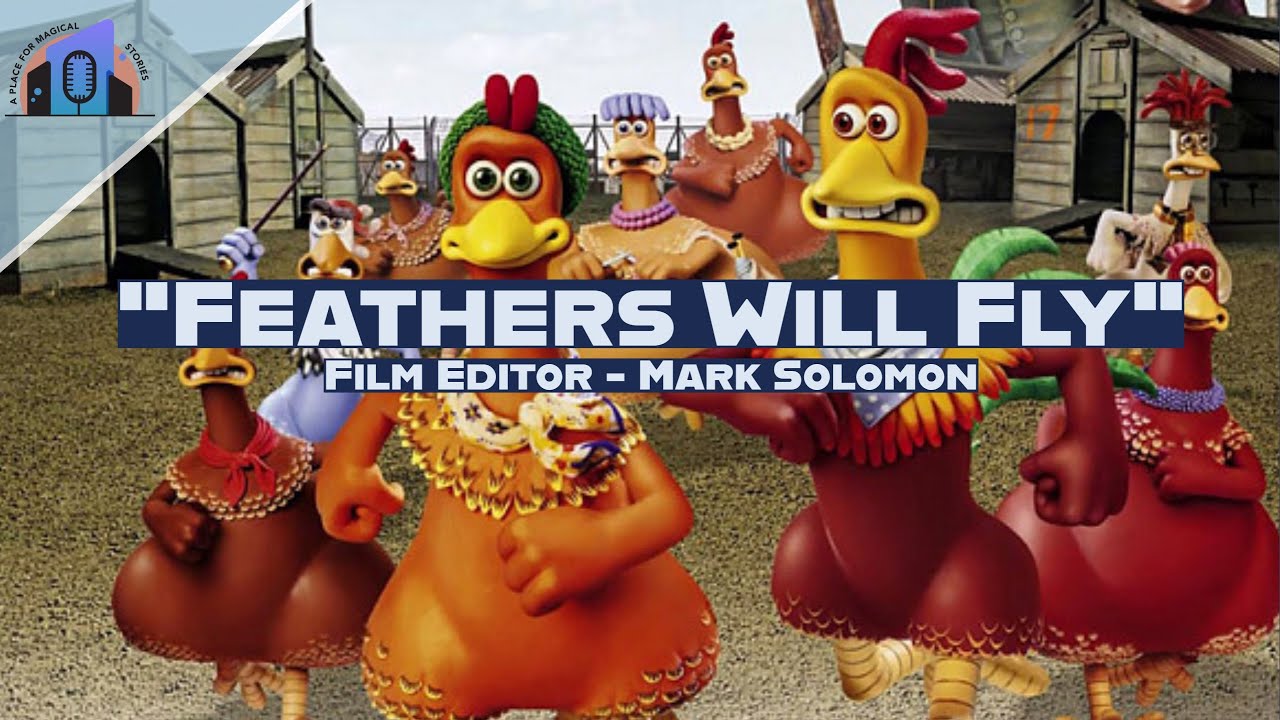
'Chicken Run', Editor, Mark Solomon
About this episode
In this episode of "Kingdom of Dreams," dive into the editing secrets and the magic behind the beloved stop-motion classic, 'Chicken Run.' Discover how the collaboration between DreamWorks and Aardman Animations brought this unique film to life.
Join the conversation with the film editor Mark Solomon, who shares insights into the creative process, the challenges of stop-motion animation, and working with icons like Nick Park and Peter Lord. Learn about the intricate journey from storyboards to the big screen and how the characters and story captivated audiences worldwide.
This podcast series explores cinema and the art of storytelling, offering interviews with screenwriters, directors, animators, and producers.
CHAPTERS:
00:00, Chicken Run
01:04, How it all started
01:47, Harry's Involvement in Chicken Run
05:18, Collaboration Between DreamWorks and Aardman
08:55, Scratch Voices and On-Set Experiences
13:06, Inspiration for Filmmaking
14:39, Passion for Film Editing
15:41, Understanding the Stop Motion Process
19:14, Insights from the First Test Screening
22:44, Discussing Your Book on Animation
28:54, Favorite Animated Films and Influences
32:26, Current Role in Post-Production
33:04, Aspirations to Direct in Animation
34:57, OUTRO
Full transcript
Automatically generated from the episode audio, so expect the odd misheard word or name. Speakers were labelled automatically. About 6,500 words. Tap a timestamp to play from that moment.
0:00Mark SolomonVisual effects weren't there, but we took it out to a mall someplace east of London, and it was, it was fascinating. People said, y… y… yeah, you, 'cause you're, all this work has gone into it. We had, we had been working there really hard for about a year and a half by this point, and you take it out to the mall where there's a bunch of 14-year-old kids with opinions about, "I liked this, I didn't like that." And they said they didn't like the p… the scenes that were unfinished, that were just storyboards, which is natural enough. But the scenes that they talked about liking and laughing about were the scenes with the rats that were still in storyboards, Nick and Fletcher, the two, the…
0:38Jawad MirRight. Of course
0:39Mark Solomon... Thieving rats. So it was in…
0:42Jawad MirYeah
0:42Mark Solomon... Interesting to get their perspective, and it, and people were relieved that it went as well as it did. I was, certainly. And we also got the feeling that you could recognize that there was no other movies out like, out like that.
1:04Jawad MirI really appreciate you, joining in and, to talk about one of my personal favorite films, Chicken Run, which…
1:12Mark Solomonhuh
1:12Jawad Mir... I believe it's been 24 years now.
1:15Mark SolomonYeah. It was a great…
1:18Jawad MirI…
1:18Mark Solomon... Experience. I was, I really enjoyed working on that movie. It was my first movie in England, and, it was my first movie as a lead editor. And it was one of those projects where the stars aligned, you know? The m… the pr… the material was good, the people were great. Audiences responded well. The studio supported it. Every, you know, everything went well. And I thought, "Oh, if they're all like this, that'll be great." And so, you know.
1:47Jawad MirWell, yeah.
1:47Mark SolomonLucky circumstance.
1:50Jawad MirYeah. I still have this book from back in 2000.
1:54Mark SolomonOh, yeah.
1:56Jawad MirYeah. I s…
1:57Mark SolomonThat's great you did. Nice job
1:59Jawad MirYeah, it was a, it was a great, it's a great book, but it was a great movie more so because obviously, you know, Aardman and Nick Park, Peter Lord, you know… ... Leading up to Chicken Run, I had seen their films that the three shorts I think they did, for Wallace & Gromit…
2:15Mark SolomonYeah
2:15Jawad Mir... The Wron… The Wrong Trousers…
2:17Mark SolomonYeah
2:17Jawad Mir... And two others that I can't remember their names.
2:19Mark SolomonClose Sh… Close Shave and A Grand Day Out.
2:21Jawad MirClose, and A Grand Day Out. And, when I saw the trailer of Chicken Run, you know, based on the concept of a war movie that I had seen when I was very young, The Great Escape… ... With Steve McQueen, it just clicked, right? But at the same time, the way it was executed from characters to story to claymation and music by Harry Gregson-Williams, it was just a spot-on film. Like, it was just, there was absolute... I remember, I think at the time, Rotten Tomatoes probably had it close to 100%. It was, it was a very well…
2:51Mark SolomonWell done
2:51Jawad Mir... Received movie.
2:52Mark SolomonYeah, it was great fun…
2:55Jawad MirGreat
2:55Mark Solomon... To, it was g… it was a very enjoyable process. It was nice to be away from Los Angeles to work on something where there's, you know, people aren't looking over their shoulder at what other studios are doing and all that kind of thing, so there was a freedom in trying out ideas and being willing to make mistakes and try things story-wise. In terms of the editing, that was a real, a real pleasure.
3:18Jawad MirThat's amazing. Tell me, y… you were or… were originally working at DreamWorks at the time when you had went to…
3:25Mark SolomonYes.
3:26Jawad MirOkay. So ta… talk about that…
3:28Mark SolomonI started…
3:28Jawad Mir... If you don't mind.
3:28Mark SolomonSure. I started in animation on Space Jam, was the first movie that I worked on as an, as an associate editor.
3:35Jawad MirRight.
3:35Mark SolomonAnd it was just when anim… two big things were happening with, animating, with editing for feature films, is that the sort of rise of animated features with, I think Lion King was the first one that really hit in terms of the public.
3:49Mark SolomonAnd the change from analog to digital was just going on at the same time. And so Space Jam offered me a chance, you know, it was a chance they were just throwing people at this big, unwieldy project with live action and animation mixed, so it was a chance to really try out and experiment some processes and make a fun movie. And then based, and then right when DreamWorks was starting up, so I, the next sh… show I did was Shrek over at DreamWorks working as, like, a second editor. And in the early days, no one knew that was gonna be such a big success.
4:22Jawad MirYeah.
4:22Mark SolomonSo I was sort of, and the sort of DreamWorks stable as an, as an editor, and worked on, I think Shark Tale and Spirit, the one about the horses. And so I was there, and they were talking about this little studio in England that was working on something for them that they didn't quite know what to do with. They wanted someone to go over who understood the DreamWorks way, and to go over for a couple months. And I write about this in my book, Over the Shoulder. I met one of the producers from, Aardman, and we talked about, well, the thing to do would really would be to go over there and stay through to the end. I mean, that's what would appeal to me, is to really, you know, take control of the editorial process. And luckily they agreed, and it, and it worked very well.
5:14Jawad MirSo from what I understanding was that they were already making Chicken Run, Peter Lord and Nick Park. And DreamWorks at the time was exploring different types of animations. I mean, they were doing traditional, they were doing, you know, 3D. And w… was this something that came right the beginning of the production, or was it somewhere in the middle when d… you know, Jeffrey Katzenberg and the DreamWorks and the company decided like, "Let's, let's get them involved, and distribute this film"?
5:47Mark SolomonI think they, it's true that they were trying different processes for animation. I mean, Shrek in the early days, we went through a long experiment with motion capture, performance capture, that was a, it was a little bit ahead of its time. It wasn't quite ready for feature filmmaking yet. And I think that the Aardman folks had done one sort of story reel, you know, sort of put together the storyboards with music and sound effects and dialogue as a trial. That's sort of the main creative process for editing animated movies, and it didn't look like what DreamWorks was used to seeing. It was less sophisticated. They didn't under… sort of understand the DreamWorks w… way of getting to make notes and see it as a story development tool. And so that I understood now the DreamWorks way, which was different from other places because of Jeffrey Katzenberg's strong personality. And so I f… went over there to sort of be a bridge between the two studios, understanding what the DreamWorks expectations were and figuring out how best to work with the good folks at Aardman.
6:54Jawad MirRight. And, you know, that must have been interesting because, Nick Park and Peter Lor… Lord and Aardman, they're, they're sort of like a very independent place… ... Right? Like a small studio, and they just like their world as creative individuals, which is, which is the way it should be, and then just trying to work with a big studio, right?
7:15Mark SolomonYeah.
7:15Jawad MirHow... D… what kind of challenges were there, trying to sort of accept that and letting things go by also keeping their own, you know, essence of what they do?
7:28Mark SolomonWell, the trick for Aardman w… was that they thought s… since they knew how to make these Wallace and Gromit sort of 20-minute, half-hour short films… ... That making a feature film would just be like making three of those. And it's a different thing, because it's a l… a longer scale that you're asking an audience to sit through. It's more complex, and the story has to have an arc that lasts over the whole s… the whole length of the running time. So it's not just a thing where you can just put gags in. That there has to be sort of this dramatic…
8:00Jawad MirRight
8:00Mark Solomon... Structure that holds it together.
8:03Jawad MirYeah.
8:03Mark SolomonAnd that was new to the Aardman folks. And for the DreamWorks people, it was new to deal with these people, in who were doing stop motion. You know, they ha… they had little clay figurines of these chickens, and, you know, if you look at the film on a big screen, you can see there's thumb prints in the silic… you know, in the plasticine on the characters, where it's very handmade and has sort of an English love of craftsmanship involved with it, which was unique to Aardman. And the sort of story style, the sort of cinematic imagination of Nick Park, is very specific, and he loves what he loves. And to work with him doing big action scenes was different than an American style film. And, it was a g… it was a really, you know, that was a real good learning experience for, I think, on all sides.
8:55Jawad MirI assume you were the Rocky in the post-production world, like as an American working in the British
9:00Mark SolomonOne of. One of, yes. Did the, you know, we did the scr… we did scratch voices as well. You know, we, 'cause we have to sort of act out the story before the cast comes in to do the scenes. But a lot of the voices had been recorded by the time that I came on.
9:17Jawad MirRight.
9:18Mark SolomonAnd really good voice talent. A l… lot of them are still very active in, English theater and film now.
9:25Jawad MirYeah, no, it, I mean, aside from Mel Gibson, everybody was more or less, you know, British theater actors and…
9:31Mark SolomonYeah
9:31Jawad Mir... And, they made the second one, which I haven't seen, because as soon as I found out they didn't cast Mel Gibson for whatever reason…... Contract or whatever, I just didn't, I didn't, dive into it. But were you ever physically present on the set where they... I mean, I've seen a lot of behind-the-scenes stuff of all of their stuff, like Wallace and Gromit and Chicken Run. Like, just to see that world that they create…
9:57Mark SolomonYeah
9:57Jawad Mir... And…
9:57Mark SolomonYeah, that was, yeah, that was really f… that was one of the best parts about it. That's what I like about, stop motion in general, is that the sets are r… usually in the same building. Like, we were in a big warehouse on the a… a… outskirts of Bristol in the southwest of England. And so the ground floor was all the sets where they did the shooting.
10:21Mark SolomonSo they'd… big black curtains they divided into, I think, to 30 different sets, and the editing and the offices and the screening rooms were all in the upstairs on the second floor. So when we were really going at full pace, I would be working on the storyboards of a scene, and then I could go downstairs, and they were shooting it that same day. And I could see the scene with the characters lit on, like, little,.. If you've seen the sets before, they're like sort of like a model train set…
10:51Jawad MirYeah
10:51Mark Solomon... Sort of tabletop sets, with lighting and characters and backgrounds, and so everything's shot at once, as opposed to, like, computer animation where i… it's all in different, passes through it in terms of render and clothing and hair and effects and all that stuff. It's all done in camera. And it was great to see, like, the, you know, the characters that I saw in a drawing upstairs, I would walk downstairs and see the very same scene being shot that day with that character on a set that's lit and everything, which was beautiful. And with one of the actors, there's a good... One of my favorite memories of Chicken Run is there was a day near the end when they brought the cast back to sort of, visit the set and see what they were doing, and Julia Sawalha, who did the voice of Ginger…
11:37Jawad MirYeah
11:37Mark Solomon... Came t… on a tour around, and we were sitting together at lunch, and I was looking at her and hearing her, hearing her talk about something, and all I could see was Ginger's face. I mean, it was really hard to imagine that voice that I'd been listening to for a year coming out of a real person and not some plasticine chicken with a big beak of a nose.
11:58Jawad MirThat's awesome. So I guess her real voice is very similar to Ginger…
12:01Mark SolomonYeah
12:02Jawad Mir... In Chicken Run.
12:03Mark SolomonIt's clearly her
12:05Jawad MirThat is so cool. I think, you know, honestly, like, yeah, Mel Gibson is Mel Gibson, but she really carried the film. I saw it this morning, just to refresh my memory, and just her accent and her confidence and her, you know, perseverance of not giving up to get…
12:23Jawad Mir... The hell out of here, she literally carried the film. And I know Mel Gibson's a big name, but I think she carried the film really well. And Mel Gibson was sort of there for, like, you know, humorous elements and just trying to…
12:35Mark Solomonhuh
12:36Jawad Mir... Help push her, but the, yeah, she was phenomenal. He was really good. I remember admiring her work at the time too when it came out.
12:42Mark SolomonYeah, she was good. And all the, a lot of the voice cast were really good.
12:47Jawad MirYeah.
12:47Mark SolomonJane Horrocks as, Babs, and Imelda Staunton, who's gone on to be, do wonderful work as an actress. She was terrific as the big chicken Bunty lays eggs.
12:57Jawad MirYes. Yes, of course. Of course. She was a big…
12:59Mark SolomonBut it's Ginger's movie. I mean, she's the main character, clearly.
13:03Jawad MirYeah. Going back to some time in the past, what sort of drew you to the world of film, whether it's animation or film, the catalyst that, you know, this is what I wanna do for with my life?
13:18Mark SolomonI was, sort of finished by, I think, my second year of college, and I went to the movies with a friend. We saw a movie, Harold and Maude. I don't know if you've ever seen it, with Bud Cort and Ruth Gordon. It's about the, a young sort of, Goth kind of young man who was, sort of obsessed with suicide, and he meets this life-affirming older woman who's about to turn 80. And it's sort of a romance between those two characters, directed by Hal Ashby.
13:45Jawad MirOkay.
13:45Mark SolomonAnd had very good music, by Cat Stevens, and something about the e… that era and where I was in life and what that movie was, it was sort of inspired me. That set a spark to say, "I wanna do that. I wanna, I wanna learn how to do that. I wanna make movies that look like that." And that's what sort of set me on the path to go to film school and pursue a career in filmmaking.
14:10Jawad MirThat is so cool because from that era, it was 1971, if I were to hear anybody talk about what inspired them, I would probably hear Godfather, American Graffiti…... You know, Converse… Conversation, Jaws, even, you know, Superman, Star Wars. But I haven't heard of that movie ever before, and I just Googled it, and I will definitely look at it. I mean, just looking at the poster and some of the still images, it's already, you know, captivating enough. I would love to check that out.
14:38Mark SolomonYeah.
14:39Jawad MirWhat was the reason for editing? Was it just something that happened, or you just loved the piecing of the story together?
14:45Mark SolomonI like that the movie's real. By the time it g… it gets into the hands of an editor, all that early work of raising the money and making it go from a dream into something real has, is done, and it's about getting it over the finish line. And so a p… I like that it was a t… the movie was a tangible project by the time it's ready for an editor. Even if it's at the beginning of shooting, it's, the money's in place. The script is real. There's a real cast. I mean, everything is ready for an editor, and I, that really appealed to me. My background had been in the theater before that. I worked as a performer, part of an acting troupe out in San Francisco and in New York.
15:27Mark SolomonAnd so that sort of performance character, drama, comedy stuff came naturally to me, and editing, especially animation editing, was sort of like a new avenue to apply those same skills.
15:40Jawad MirYeah. So when you... You know, it's different with computer animation. It's different with traditional animation. The more... So nowadays it's very similar, but at the time, you know, working with stop motion, what was that process of you receiving everything? Because to me... So I actually directed a stop motion short where…
16:02Mark SolomonOh, yeah?
16:02Jawad MirYeah, it was... I'm not a stop motion guy. It was just for a client, and, we hired a company, and, us, you know, young guys, and I was on the set just looking at, you know, the way you set it up on the table…
16:15Jawad Mir... And everything, and I loved the process of it, right? ... Back in that time, how would you... Like, what's the process of putting everything together frame by frame by frame?
16:30Mark SolomonWell, it, some of it has to do with the best tools of the era. So at the time of Chicken Run, it was shot on film, 35 millimeter film, and they had these, you know, cameras adapted to do, you know, click, move, click, move. And so the... And they would do... It was very complicated at the, at that time. The tools were sort of getting, being stretched to the limit. So they had a real 35 millimeter film camera that they would click and move and sort of be able to see on a monitor how the process of the shot was going. Sometimes if it took more than one day, you have to make sure that the, there's not a frame in the gate overnight that gets fogged.
17:13Mark SolomonAnd they would do cutbacks where they would sort of have to, you know, if they weren't happy with how the s… shot was developing, they would go back a few frames and pick up at frame 52 and carry on from there, sometimes more than once in the same shot. So the editing of the film, which is not as cre… as a creative process as cutting the storyboards before shooting, but cut… cutting the film pieces together when it comes back from the lab, was about pulling out those cutback frames and the fog frames that were done overnight and leaving the handles of the shot long so there'd be something to play with in cutting when the scene was all put together. So there was, handles long, cutbacks gone, was the process of the film, and that was when the first time they did, you know, inter… interpositive and there'd be a film finish on that movie. But taking it out to preview audiences was difficult, 'cause there were little cuts, you know, every few frames in every shot.
18:15Mark SolomonSo you'd hear it running through the projector and go drrr as you go through all the splices…... Running through the gate. And now… ... With this, the, like, film since then, like, Frankenweenie was a stop motion movie that I worked on.
18:29Jawad MirRight.
18:31Mark SolomonAnd that they ha… they used still cameras, like a Canon 5D that had a big, a nice big, viewfinder.
18:38Jawad MirYeah.
18:38Mark SolomonAnd you could do it all, you know, they would just have a sensor, and they digitally captured each frame. So then, so a lot of the processes were simpler to do, 'cause you didn't have to go through the photographic process, sprocket driven with 35.
18:52Jawad MirYeah. Yeah, that's, that's what we used, in 2016 or 2015 was Canon 5D.
18:57Mark SolomonYeah
18:58Jawad Mir... That's why I was asking, because the, obviously technology has changed so much. You know, back in the day, and for people who don't know what the handles are, it's just basically extra frames at the beginning and the end of the footage.
19:09Mark SolomonRight.
19:09Jawad MirYou know, just so that you have enough room to cut it with them, just informing the audience basically.
19:14Mark Solomonhuh.
19:14Jawad MirBut yeah, no, I, do you remember the first time there was a test screening and with public test screening, and how people reacted, or even Jeffrey Katzenberg, when he first saw something that was more or less finished?
19:31Mark SolomonWell, we did do a test screening outside of London, when the movie was maybe three-quarters done. So it was partly still in storyboards, partly, you know, finished animation. But sometimes if there were, there were minimal, special ef… visual effects, like sky replacement, where they would have, like, a green sky behind the chicken huts, and they would put in…
19:56Mark Solomon... A cloudy sky that matched other parts of the scene later in the process. So a lot of those sort of minor, visual effects weren't there. But we took it out to a mall someplace east of London, and it was, it was fascinating. People said, you, because you're, all this work has gone into it. We had been working there really hard for about a year and a half by this point, and you take it out to the mall where there's a bunch of 14-year-old kids with opinions about, "I liked this, I didn't like that." And they said they didn't like the p… the scenes that were unfinished, that were just storyboards, which is natural enough. But the scenes that they talked about liking and laughing about were the scenes with the rats that were still in storyboards. Nick and Fletcher, the two
20:42Jawad MirRight, of course
20:43Mark Solomon... Thieving rats.
20:45Jawad MirYeah.
20:45Mark SolomonSo it was i… interesting to get their perspective, and it, and people were relieved that it went as well as it did. I was certainly. And we also got the feeling that you could recognize that there was no other movies out like, out like that. I mean, the movie that was competing with us at the time was Shaft.
21:05Jawad MirYeah, I remember…
21:05Mark SolomonAnd the, Samuel…
21:06Jawad Mir... With, Samuel Jackson. Yeah.
21:07Mark SolomonYeah. That was coming out the same summer, or the same weekend, I think. And he said, "I'm worried about that chicken movie," which was very flattering. It was very flattering to know that he was worried about us.
21:19Jawad MirWell, the great thing about Chicken Run is that minutes into the film, you forget about it. I mean, even though I knew it's stop motion… ... Because the story and the characters are so captivating, and obviously the whole product, everything from music to cinematography, lighting, editing, everything, is that you forget that you're watching a stop motion, you know, film. And it's similar with Wallace and Gromit. I remember when I first saw Wallace and Gromit, the, I think it's the Wrong Trousers one, where the penguin…
21:48Jawad Mir... Comes to rob. There's a sequence, and I remember appreciating editing back then, 1998 or 7, around that time, when they're going on the train and, you know, Gromit is putting his…
22:01Mark SolomonLaying the tracks
22:01Jawad Mir... His patch on.
22:02Mark SolomonYeah.
22:02Jawad MirAnd it's like, holy crap, how do you do that in stop motion, right? And then… ... I mean, even if I think about it right now, it's just amazing to be able to pull that off. No matter how much technology you have, it's still a lot of work. Same thing with Chicken Run.
22:17Mark SolomonYeah, a lot of imagination. I mean, like, that was very Nick Park, that kind of scene where they do a big action scene with laying train tracks as a train's running in somebody's living room, you know? Like, this contrast between, you know, big, exciting action and a very mundane, everyday kind of setting. It was, that's very charming, and it was, that's down to Nick, a lot of that, and the Aardman way of doing things.
22:43Jawad MirYeah, 100%. Tell me, about your book, that you have. It's been released, or it's coming up. Just talk about it, the title.
22:50Mark SolomonOver the Shoulder. I don't know, if I hold it up, you can, you, will the type be, you'll, for…
22:55Jawad MirYeah, people will see it. You can lift it up, Esmon. Just lift the type.
22:58Mark SolomonThere.
22:58Jawad MirPerfect. Awesome.
23:00Mark SolomonSo that's about, sort of my o… over… overall experience of, you know, visual storytelling. And so it's out now. It's available on Amazon. And, it came out in February.
23:13Jawad MirOkay.
23:13Mark SolomonAnd, it's, I was, I wrote it for, you know, the young editor that I was when I was just starting out, like, how, h… how do, how do you make a life as a, as an editor, as a filmmaker? And h… and what do you do when you have the opportunity to tell a story? Like, what are the tools that you, that go into visual storytelling? S… and es… especially from the editor's seat. That, editors are sometimes considered, you know, technicians, and I would say that, I mean, the argument I sort of make in the book is that editors are a part of the creative team, and that the way that, and that in some ways editing is the essence of filmmaking, that idea of putting two shots together to tell a news, to tell some new information that you can't tell from one alone is unique to cinema and is very, Widespread and a way to make, viewers and audiences ap… engage with the material because you can en… engage emotions as well as just making it about information.
24:24Jawad MirYeah. No, that's, that's true, and I find editing... You know, nowadays DaVinci Resolve, Premiere, Avid. There used to be Final Cut. Well, there still is, but the old Final Cut. And, you know, there's just something about editing where if you have five shots, and if you put them together in one way, and then you do it different way, and you have, like, you know, four or five different permutation, the messaging of those, that scene will be completely different.
24:51Mark SolomonYeah.
24:51Jawad MirRight? You can just make it... And that's what's so magical about editing… ... Is. And, you know, your reason for writing this book was just to sort of educate the upcoming editors, or was it something revisiting s… you know, your own life and how you came to be where you are?
25:08Mark SolomonWell, there's a memoir aspect to it because I go over sort of the history of how it w… the steps that I took to have a life as a editor and as a filmmaker. But it's for... The idea is to pass it on. I mean, the... When I was starting out, the editors I first worked with were very generous with me, and they were kind to let me sit over their shoulder and see what they were doing and learn from them, and that sort of, master to apprentice, like…
25:38Mark Solomon... 'cause there's an aspect of editing that's like a real craft, and that's sort of... You know, they call it the Editor's Guild that, th… you join as a union.
25:46Jawad MirYeah.
25:46Mark SolomonAnd that sort of passing it on from person to person is harder to do now because everyone's in front of a computer screen, and so you don't get that chance to sort of sit with the editor and say, "I mean, what do you think would go next here, and how does this play, and h… how does that, and why did you choose that?" And tho… and those sort of things that some editors like to talk, and I was lucky when I was a young assistant that people would... I would ask them, you know, "What, why did you, w… how are you going to put this together? What can you do with this footage to make it into something special?" And them talking about it taught me a lot, and then you get to see, you know, at your... When you see the film put together, what the, w… how the decisions worked, how the process developed, and I love that, and I wanted to share that with the people coming up now so that they can get some of the benefit of that sort of over-the-shoulder experience of learning how to be an editor.
26:44Jawad MirWell, that's very nice of you. And, you know, it's something... You know, e… everything comes with practice, but there... You can say you have a skill in something, but at the same time it's also about having that feel.
26:58Jawad Mir... Right? Like, when to... Editing is all about feel. Like, you know, if somebody asked me why did I cut from here to here, after five second instead of seven, saying like, "I don't know. It's just pacing," right? It just feels. It just feels that way, that to me…
27:11Mark SolomonYeah
27:11Jawad Mir... That feels right. It may not feel right to the audience, but to me that, the way, that's the way it feel. And that's one of the most beautiful things about editing is that, you can reshape the entire story, entire…
27:24Jawad Mir... Film i… in the post-production stage.
27:27Mark SolomonYeah. I mean, lots of movies change dramatically, when it... You see, when you have the material, I mean, you start, you start with the script and the material, and then you try to make them fit together, and sometimes it doesn't and you have to sort of th… see what you really have and how can you make this into the best story you can. And what's interesting about animation editing is that it's pretty e… it's very flexible at an early stage because it's storyboards.
27:55Jawad MirYeah.
27:56Mark SolomonAnd so cutting together storyboards, you can say, "Well, the sec… it's taken too long for this, when this character left three, four scenes ago, and we haven't seen them for a while. We forget what their problem was, so how do we compress that part of the movie so that they're more present?" Or how to, you know, do a pass where it's just about the comedy, and how do you make something that is playing, at a sensible pace funnier? And a lot of that is about making it go faster, you know? Louder, faster, funnier, where it's more animated. It's, it's, it's, you know, it feels like a little more urgent and intense, and that, in general, usually makes things funnier. And trying to develop a comic timing so that you build in like an eccentric rhythm into something so that something happens unexpected or surprising in a way that sort of makes you startle and s… and pay attention and enjoy the humorous aspect of it.
28:56Jawad MirRight. What is one, some of your favorite animated films that, whether you worked on them or not?
29:04Mark SolomonWell, Chicken Run's up there. I like... The other, another one that I worked on that I enjoyed the process of a lot was called Sergeant Stubby, which was based on, World War I, a real story about a dog who sort of attached himself to an American s… young soldier in World War I and became sort of a heroic dog in the trenches of France. And it was an independent film, and, sweet story. Gérard Depardieu, Helena Bonham Carter, Logan Lerman were the voices in it. And to do something that was based on, a, real e… events and something that's sort of risky for animation, but they're set during wartime, I thought was really a fascinating project, and I got to work with one of my favorite composers, Patrick Doyle, who's wonderful musician, and, he did the music for that, was, which was a real appeal. I like, Miyazaki, you know, the…
29:59Jawad MirYeah
29:59Mark Solomon... My Neighbor Totoro…
30:01Jawad MirOf course
30:01Mark Solomon... And Spirited Away and the movies that he did. The, that sort of style is really appealing.
30:07Jawad MirYeah, I'm just looking at Sergeant, Stubby, which c… came out not too long ago in 2018. Yeah, it is a very risky plot, because I don't think I've ever... The great… the probably the closest film that you ever worked to on close to World War II is Chicken Run, because it's inspired by The Great Escape.
30:25Mark SolomonYeah. That's exactly. It's a great escape movie.
30:27Jawad MirYeah. You know, just to sort of... You worked on some great stuff. So I've, I've spoken to Lorne Koch, who you may have worked on Spirit: Stallion of the Cimarron.
30:36Mark SolomonSure, I remember her.
30:37Jawad MirRight. And Shark Tale, Space Jam, Shrek. I remember vividly, you know, now that you've mentioned Sh… Space Jam, vividly remembering sitting in a specific movie theater that is no more in Toronto and watching it, and remember the feeling that I had of watching it. I mean, it wasn't like an Oscar-worthy film, but just watching Bugs Bunny, Daffy Duck, and you know…
31:01Jawad Mir... Porky Pig, and all these characters sort of joined in with Space Jam. And what's so incredible, this movie came out, Space Jam came out almost 30 years ago, right?
31:10Mark SolomonYeah.
31:10Jawad MirAnd I'm not, and I'm not trying to criticize anyone here, but I st… I started watching the new Space Jam with my kids… ... And I got up after five minutes. I just could not... It was just... It was combination of everything, just did not work for me.
31:27Jawad Mir... But the original one still holds that, you know, Michael Jordan doesn't know how to act, but still you… you're involved in that film…
31:36Mark Solomonhuh
31:36Jawad Mir... For whatever reason. And, yeah, so just wanted to put that out there. Sha… shout out to you, all your work that you've done.
31:42Mark SolomonThank you.
31:42Jawad MirFabulous.
31:43Mark SolomonThank you. I've been lucky to work with good people. I mean, a lot of it is what I ch… the reason I chose projects is the people that I wanted to work with. And that's sort... Because I figured if I, if I like them and I admired their ability to make movies, then the, or the result would be worthwhile, and that's the most satisfying thing to me.
32:00Jawad Mir100%. That's a great way of, approaching things. And the results are automatically positive, right? Because you just, that's, you like people that you're working with, and that's the way it is.
32:10Mark SolomonMost of the time, yes.
32:12Jawad MirYeah, most of the time. It doesn't happen all the time. I agree with you. But you're lucky if it happens most of the time.
32:19Mark SolomonYes. And then once in a while you work on something that you feel like is really great, and that's, that's very satisfying. And that sort of takes you through over the long haul.
32:28Jawad MirRight. Now that you have written this book, which has been out for six, seven months, are you still in the post-production world? Are you working on any projects that's very virtual?
32:36Mark SolomonI get asked to help out with things now and then. I mean, I'm doing all what I can to promote the book. And I get asked to sort of, you know, look at scripts or to, or to look at cuts, and sort of, you know, give feedback to people that I've worked with before about just, like, how something is playing. And, but the day-to-day working at the coalface of the editing room, I'm, I'm happy to pass the torch.
33:02Jawad MirYeah. Awesome. That's awesome. Any… anything that you wanna do in terms of directing ever down the road, or it's kind of closed that down now?
33:10Mark SolomonI've had opportunity in the past. I mean, it's possible. I, produced a couple documentary films. I mean, one of them was about doctors in Nepal. I went up to the mountains in Nepal where they did eye surgery. That was very exciting. Himalayan healthcare.
33:24Mark SolomonAnd some other projects I did with, sports things, like for the English rugby team, got to make a animated thing about the mascot for the team that played in the, on the big jumbotron at the London Olympic Stadium.
33:37Jawad MirNice.
33:37Mark SolomonSo we'll see. I mean, projects come up. Peop… you know, sometimes the phone rings and you get an opportunity, like the way I g… the way you wrote to me to do this podcast. Th… that's the way things happen.
33:50Jawad MirTh… th… they most certainly do. It's always out of... I always, I always say this to people, that when you're expecting for things to happen, 99% of the time they will, they will not happen.
34:01Mark SolomonRight.
34:01Jawad MirBut when you're not expecting, out of nowhere something will pop up, and that's just the way the universe is trying to communicate to you, right? So… Awesome.
34:09Mark SolomonAnd I've really enjoyed this. It's, it's been a real pleasure to talk to you, Joe, and it's nice to be able to talk about good experiences that I've had on movies.
34:17Jawad MirWell, I appreciate you tun… joining, because I've... I, like I said, it's, it's been amazing talking about this film, and if you're ever up for more conversations, like for films like Shark Tale or Space Jam, I'm, I'm always here. I mean, I've had,.. You probably know Simon Wells.
34:35Mark SolomonSure.
34:35Jawad MirYeah, I've had him like six…
34:37Mark SolomonThe spirit
34:37Jawad Mir... Seven time. Six, seven times I've had him on. Lorne I've had a few times and, yeah. So there's, it's always a pleasure having people, you know, who work in the same field that I do, and I love talking about films.
34:51Jawad MirI love watching films. I love making films. So it's very refreshing…
34:54Mark SolomonYeah
34:54Jawad Mir... For me too.
34:56Mark SolomonGood to meet a fellow traveler.
34:59Jawad MirThank you so much, Mark, for your time. I'll be in touch, and I would love to speak to you more if you're e… ever up for it.
35:04Mark SolomonOkay. Very good. My pleasure.
35:07Jawad MirTake care, sir. Bye-bye.
35:08Mark SolomonSo long.