
Episode 175 · November 10, 2024 · 58 min
'Lost', Director, Dan Attias
Clips and Shorts from this episode
About this episode
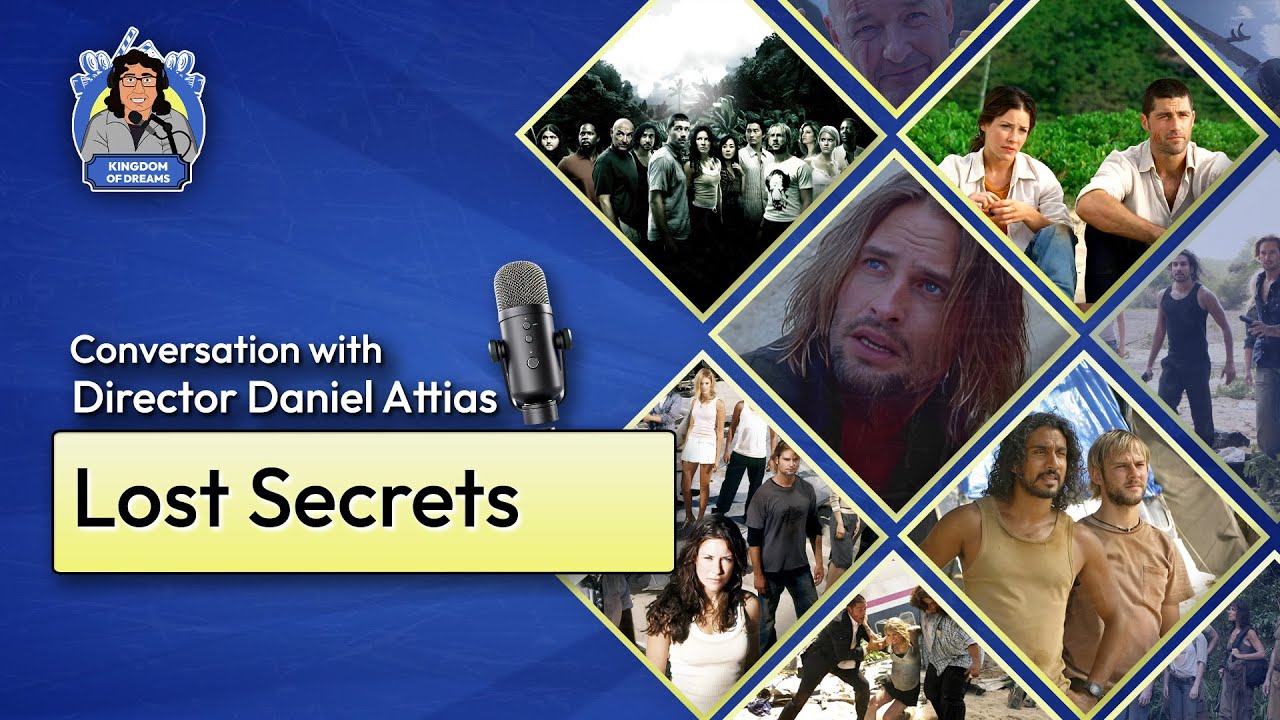
Director Dan Attias talks about his work on two episodes of Lost that he directed. Numbers (Season 1, Episode 18) & Everybody Loves Hugo (Season 6, Episode 12) along with his other shows 'Alias', 'Homeland' & more.
Daniel Attias is an American television director and producer. He is also director of his only feature film Silver Bullet from 1985, based on the novella by Stephen King. Attias' career has spanned five decades, during which he has directed a significant number of popular primetime television programs, including Miami Vice and Beverly Hills, 90210. He frequently works on series for HBO and has directed episodes of The Sopranos, The Wire, Six Feet Under, True Blood, Entourage and Deadwood. Attias has received two Emmy Award nominations for his directing of Entourage.
Full transcript
Automatically generated from the episode audio, so expect the odd misheard word or name. Speakers were labelled automatically. About 10,700 words. Tap a timestamp to play from that moment.
0:08Jawad MirWelcome back everyone to another episode of Kingdom of Dreams podcast. I'm your host Jawad Mir. Today's episode my guest is Dan Attias. I'm hoping I'm pronouncing his last name okay. He is a television director and author and who has worked on series like Alias, Sopranos, Six Feet Under, Homeland, and the st… the series that I reached out to him for, was Lost. He directed two episode in season one and season six, about, Hurley and Hugo. But also how Lost was it conceptualized from beginning to end with all those connections and sp… you know, webs of character arcs and everything. It was a very fascinating conversation. I truly enjoyed, and I'm gonna have him back on again to talk about his book in more depth, which you'll see in the episode. So here's, without any further ado, my conversation with Dan for Lost and all of his other projects. Well, tell me just in general how you, how your journey as a director, a storyteller started.
1:17Jawad MirI know it's going back in time, but just trying to always interested in, you know, how people's journey starts because I'm in the industry as well myself, so it's always fascinating to hear how people get into where they are and be where they are.
1:32Dan AttiasYeah. It was,.. It was kinda circuitous. I mean, I didn't, I didn't grow up, you know, into early adulthood really having any aspirations to be a director or, you know, it wasn't until after I graduated university with a degree in English and an admission to law school that I started…
1:55Jawad MirYeah
1:55Dan Attias... To question, "Is this really what I wanna do?" I'd always been a big… I was an English major, so I love story, and, you know, thought about possibly writing. But, y… you know, it wasn't really until I got started on... I mean, I was about to start law school that I really questioned, "Is this, is this something I wanna do?" And I realized I had real no real enthusiasm for it. So I, returned to Los Angeles, where I was raised, and just really as a kind of way to loosen myself up, I got drawn to acting, and not really at first with any interest in becoming a career actor, but I really wanted to, you know, experiment with playing and with, you know, specifically with identity, and also in the context of storytelling. So 'cause I was, you know, very interested in story. But, the acting really liberated me, and I, for about three years I said I was very enthusiastic about, "Okay, this is what I wanna do."
3:00Dan AttiasBut I didn't have the confidence to go out and try to do it. I just wanted to study, and I did a lot of that. And then kind of I worked my way into film school really because I wanted to pursue acting. But in the course of film school, I had to make a film. At tho… in those days it was with Super 8, which was, you know... You nod your head. I'm glad you even know what it is. But, I made the film, and that was the epiphany because I realized I was much better suited to direct than to act because, which has partly has helped me a tremendously amount, tremendous as a director because I have such empathy for actors because I know how difficult it is, how challenging it was for me to have to, put my personality, my defenses, all that to the side to play another part, and that was very challenging for me. And I realized that as a director, it appealed much more to my strengths, which is to see story and to, be able to participate vicariously with actors as they took the emotional risks that I was unwilling to take as an actor, to really sacrifice my, you know, ways of dealing with presenting myself to the world and put those to a side and let some new, you know, entity emerge.
4:27Dan AttiasAnd it became, it became a very intimate process where I was actually a better actor directing a, directing other actors 'cause I wasn't the one who was gonna have to take the chances. But I made a film, and that was the epiphany. And then getting the job is always a, an individual journey, you know? And I, it's like for me, I wound up transferring over to film school, I mean, to the creative side of the film school, and, not having a thesis film I wanted to do, so I thought, "Well, until I have that, I'll, I'll apprentice myself to good directors by ca… becoming an assistant director," not really knowing at the time that as an assistant director you're really not assisting directing. You're really doing a lot of other things.
5:12Dan AttiasBut I got into the Directors Guild program, the assistant director's training program, and I got to work as a trainee and then as a second AD on a lot of big films. E.T., the Extra-Terrestrial, One From the Heart that Coppola directed
5:27Jawad MirRight
5:27Dan Attias... A Wim Wenders film, a Sam Fuller film. So I had a great training, and then I went back to film school, made a film, and won a bunch of film festivals, and I got started, and that was my entry into the, into the business.
5:43Jawad MirThat's amazing. You know, it's, it's... I went through your IMDb, and as I was scrolling the E.T. Poster popped out like, you know. And, Twilight…... Twilight Zone and Airplane!. I think you had something to do with Airplane!
5:59Dan AttiasYeah.
5:59Jawad MirI don't, I don't know.
6:00Dan AttiasI was a, I was a trainee assistant director on Airplane!, yeah.
6:03Jawad MirYeah, which I remember watching back home In the late '80s, and I absolutely love that film. I mean, even now I was watching some clips of it on YouTube, like few weeks ago. It's such a, it's such a classic and such an amazing film. But, you know, going to your career, it's, it's so amazing to hear that journey that how, you know, from a lawyer to wanting to be an actor, and then getting into directing. And another, I think another actor that is probably better at directing than acting is Ben Affleck, right?
6:37Dan AttiasYeah.
6:37Jawad MirLike his movies…
6:38Dan AttiasYeah
6:38Jawad Mir... Movies that he dir… direct are amazing, but the ones that he act in are okay. It's like, you know, this way or that way.
6:45Dan AttiasI agr…
6:45Jawad MirSo it's fascinating.
6:48Dan AttiasYeah. I…
6:50Jawad MirGo on.
6:52Dan AttiasNo. You please, go ahead.
6:54Jawad MirNo. I was literally gonna jump on the next question, but you had a thought. I would love for you to…
6:57Dan AttiasNo. No. It'll, it'll come back. Go ahead.
6:59Jawad MirOkay. So you know, you've, you did all that, and then I think you got into the world of television. You worked on Alias, which was a very popular TV series in the '90s, by J.J. Abrams, and all other stuff. So you know, directing is one thing, but figuring out directing into films or television, was there, was that an organic journey, or was that by choice?
7:26Dan AttiasWell, it was organic in the sense that one thing led to the next, but it was not planned. And I, you know, when I determined to be a director, my dream and hope was to be a feature director because, you know, I was weaned on the great films of the, you know, independent cinema of the '70s and '60s and '70s. And you know, that was my thought that... And at that time, TV directing wasn't really taken very seriously as an artistic form. So my first job was a feature film, which was I made my short in 19, '82, and I was hired in '84 to direct Stephen King's Silver Bullet.
8:08Dan AttiasAnd, I'm not a particular, particularly a horror film buff, but my, what I'm always drawn to is story and character. And, you know, I think the best horror films do have, you know, good stories and good characters, but they're not... Th… but they also traffic in a lot of sensational stuff, which isn't so much my interest. But I took the job because it was an entry-level film and, I was a bit at war or at odds, shall we say, with, the producer, who was a very famous producer at the time named Dino De Laurentiis, who made a lot of spectacles. Made a lot of personal films too. He worked with Fellini in Fellini's earlier career too. But, I saw Silver Bullet as a film that I thought I could really make into a really wonderful kids adventure, and yet Dino wanted a very hard R-rated thing with a lot of violence happening every other scene. So, it was a bit of a schizophrenic experience, and I think the film reflected that.
9:10Dan AttiasAlthough, I gotta say, no matter what job I go to, there's a whole cult following around that film. But I made the film and then was offered other horror films, which I did not wanna do. And I wanted to, my next feature to be something more reflective of my sensibility, and I became so choosy that, I rejected a lot of things. But I did not have the,.. I had such a kinda critical voice in my head saying, "No, not that." And I always thought I'd develop something on my own. I did get a few development deals, but nothing really came to fruition. But during that process, I was offered some television. And, as I say, at the time it really wasn't regarded as a, as a significant medium artistically.
9:57Jawad MirYeah.
9:57Dan AttiasThought, "Well, this will be my chance to develop as a director." So I started working, and my early jobs included a lot of the original Beverly Hills 90210. I directed, like, 20 of those. So I mean, I really got a chance... You know, you don't learn to be a good director by not directing. You gotta get in there, try, you know…
10:16Jawad MirYeah
10:16Dan Attias... Imagine things and try it and see how it works out. Have the experience of directing, you know, scenes and working with individual, different actors and different crew and all that. So it was a great training ground. And while I was doing that, something called the golden age of television kinda grew, and I was being very selective about feature projects to get involved with, and rejecting most, and not being offered the really great stuff because obviously I wasn't an A director at that point. But I was fortunate in that I got to work on a lot of really great shows. And then after a few years, I got involved with the first season of The Sopranos, which really opened up for me a lot. I directed, several of those. I became a producer/director on some other good show, a show called Party of Five. But I worked on a lot of the early HBO shows, The Sopranos, The Wire.
11:08Dan AttiasI did many episodes of The Wire. Directed Six Feet Under and Deadwood, and these were all great shows, far surpassing, I thought, in quality any feature I was looking at. And I actually, you know, wrote a book about my experiences, ab… and it's called Directing Great Television, which just came out a few years ago. And it kinda charts my journey, and I share a lot of stories about, just the kinda questions you ask, like what is the, what is the difference between feature directing and episodic directing, series directing? So I grew to really love that, and it became... I really... I mean, I still, you know, keep my hand... I try to, I look at, I check out things, but what I l… there's so many things I love about series television that it's really... You don't get the ego strokes that you get as being the pr… the director of a feature film because, right, fairly or unfairly, directors are kinda credited as being auteurs of feature films, when in reality there's tremendous collaboration. There are some true auteurs directing feature films, but, television is much more collaborative art and much more, you have to blend...
12:17Dan AttiasYou have to, you have to meld your vision with the showrunner's vision. You ha… And you have to work a lot more quickly, and that really suited me, 'cause I loved, you know, the shows I mentioned that I worked on. And I've been fortunate to stay working on popular shows for, you know, 30 or 40 years. I've worked on, you know, on Buffy the Vampire Slayer, on, The Americans, on Homeland, on The Marvelous Mrs. Maisel, on The Boys, and right up to this present day. And it's, it's a wonderful experience for me, because I really regard it as, a growth experience. It's like every show has... Is its own world, and you... I know you have a tremen… an interest in Lost, and I'm sure we're gonna discuss that, but that's a perfect example of a very unique, creation, a whole world you're entering when you go in to be this... And as the director, you come in, when you direct an episode, you have to be the storyteller. You have to take full responsibility for being able to tell a story with all the parameters, all the givens, all the rules, all the conventions of a particular show.
13:25Dan AttiasAnd so you have to totally immerse in that and learn, essentially learn a new way of seeing. It's not as if you're just gonna create a feature film and this is how I see it, I'm gonna just do it. No, you're entering a world where there's a whole set of expectations already there in place, and the audience and the viewers, they're, they're entering that world. So you are the guardian of it when you're directing. You have to know its rules, know its c… know how it sees, know what the sensibility is. Not so that you can mimic it, but th… so that you can take responsibility for it. I think of it as like learning a language so you can speak it in your voice. You know? Not just... You're using, you're using different vocabulary, but you have to come through if you're gonna offer anything. If you're gonna make an episode worth viewing, you have to get impassioned about it. You have to find something you personally care about, because I feel if I, if I don't, if I can't care about something, I can't make you as an audience member care about it. Because as a director, I'm always...
14:25Dan AttiasMy... One of my philosophies of directing is, you know, I have to be both, at every moment, both director and storyteller, but also audience, so I can experience, you know, what the viewer is experiencing at each moment, so I can be sure where they are, that they're in, that they're in position to understand the story, that they're in the right subjective state to, for something to land, for example. So that's how my passion grew for series television. And it, the variety and the possibilities that you, the... It's a real opportunity to enrich your own experience and to grow personally. So that's one of the reasons I really love it.
15:09Jawad MirYeah. I mean, you mentioned some of the names of the shows which sadly I haven't seen. They've been on my list to watch it. Like, I, you know, in the '90s, like Buffy Vampire Slayer was something that everybody in the school would talk about. Then I remember The Sopranos, Six Feet Under. Like HBO actually completely changed the way television was made. Like w… what you see on Netflix now or Apple TV was initiated by HBO. I mean, they took a bold step with…
15:36Dan AttiasAbsolutely. Absolutely
15:36Jawad Mir... Sopranos changed everything, right? Even though I haven't seen it, which I want... I have to see it. I know it's like long overdue, but I know that Sopranos changed everything.
15:46Dan AttiasVery good.
15:46Jawad MirAnd you know, I remember... And we'll, we'll kind of swingle back and forth between different stuff, but just specifically, not specifically about Lost, but just in terms of what you said about, as a director, like there is a series that, ha… this world that has its own rules, right? Whatever that series is. But let's take Lost, for example. I remember when Lost, I was watching Lost, I was probably just finishing some of my film school courses, that I was just taking on the side, to get myself going, in terms of storytelling. And I remember when I was watching Lost, I used to wonder why isn't... Because, you know, the way that they would market is like, you know, from executive producer J.J. Abrams and, you know, all that stuff. So in my head was J.J. Abrams directed every single episode like at the time. And then I started seeing like, you know, different directors' name popping up and I w… I used to ask myself, "How is it that you have all these different people who are directing, but the actual vision and the characters and everything, the arc of the story is so weaved together?"
16:55Jawad MirLike, how do you make that happen, right? And especially the two episodes that you directed, I think it was season one, episode 18, called, Nu… Numbers, was it?
17:08Dan AttiasNumbers.
17:08Jawad MirAnd in season six, episode something, I forget, 15 or 16. And it was about Hugo and how the arc of all that sort of connects…
17:20Dan AttiasSo was…
17:20Jawad MirSorry
17:20Dan Attias... Both of the ones I ch… Both were about Hugo.
17:23Jawad MirYeah.
17:24Dan AttiasThey both…
17:24Jawad MirThey're both about Hugo. Yeah. I actually just saw them again, right now before I started talking to you, and it was kind of interesting watching those two episodes, because I've seen the series twice, once by myself, once with my wife. And just watching those two episodes one after the other, it was just amazing to see that how connected they were without me even having to watch anything else in between.
17:47Dan AttiasYeah. Yeah.
17:48Jawad MirAnd how, it's... And my, I guess my ques… it's more of a comment but more of a question is like how... Lost was one of those series which was so interconnected, right? Like you figure, how do they figure this out that's in epis… season one and epis… season six? What was that like? Was there like a big like road map that you guys had?
18:06Dan AttiasWell, you know, the…
18:06Jawad MirI mean, I know you only did…
18:08Dan AttiasYeah. You raise a lot of really interesting questions, and I'd love to answer all of them.
18:12Jawad MirPlease.
18:12Dan AttiasBut let's start, let's start with this last one that you asked. Lost was, so, And let me also pair that, in talking about that, pair it with Alias, which were my... Alias was my first JJ Abrams show I did. And in fairness, Lost was much more a creation of Damon Lindelof than J… Yeah... JJ did the pilot, directed the pilot. Yeah. But, my experience on both... And I did an episode the first season of Lost and the last season of Lost. And so I saw it the, you know, the beginning of it and the ending of it. And JJ was certainly a consultant, and he read everything, but JJ was very respectful of the fact that it was Damon's, Damon's show. And I'm sure he gave notes and stuff on the scripts, but it was very much his. But there is something that is very similar in the sensibility of both Damon and JJ. I was amazed on Alias first, right? That was a few years before Lost, how it had a very intricate plot, as did Lost.
19:17Dan AttiasYou know, it's like there are all these plot developments that would happen. Oh my God, that's like, he's her father? No. Oh my God, the mother's alive. You know, it's like things that you d… you know, you never would... You're, you're, you're constantly having the rug pulled out from under you about all your assumptions, and that was part of what was exciting. But what was amazing to me about JJ, unlike me, for example, if I were running a show, I mean, my need as a director, I really wanna be on top of the story. Because, you know, I wanna be in control of everything that gets communicated and make sure that everything that's getting communicated is enhancing the experience of the story. So I mean, that's one of the chief jobs I view as of the director. It's like if you don't really fully know the story and if you're not... If you don't have a sophisticated, interesting, deep understanding of the story, you're not gonna be as good a director because you're not gonna tie things together. You're gonna miss thousands of opportunities where when you're staging a scene or watching a scene play out or how an actor is playing things.
20:17Dan AttiasIf you're not having awareness of everything that's going on, you're not gonna sense, you know, there's an opportunity here, I can enhance that little beat, I can enhance that storyline. I can set up something, oh, that's gonna happen later, it's gonna make that moment play better if this happens now. You have to be thinking of all those things to tell a good story, to tell a good episode. You know, a lot of people can watch an episode and they'll think, "Yeah, it's an episode. It's fine. It just didn't affect me that much." It can be the writing is bad, but it can also be that the director was just not in command of what story he or she was telling. You know? That it's just, you're not aware of it. Well, I mean, my... You know, the thing I always try to do when I enter a story directing, how I really wanna have as much information as possible about what's going to happen and when, and so that I can manipulate things. Well, JJ on Alias, he was constantly willing to just make something happen that he thought, "Wouldn't it be cool if this happened?" And it's like, yeah, maybe, but then you have to think, "But what, how is that gonna affect all these other things at play?"
21:22Dan AttiasHe would not... He would have complete faith, "I'll solve that later." And you know, I remember, I think I did on Alias, the first season, I think I did about the sixth episode or something, and there were so many really interesting things happening, and I com… would compliment JJ. I said, "God, it's so cool, this reveal of this happening and this happened and this happened." And then he says, "Oh yeah, well, you know where we're gonna end the show." And I said, "What?" He says... And he... I forget what it was. It had something to do with her parents. If you remember Alias, I don't remember even that well. Although, by the way, I hear there might be a reboot of Alias. Oh... I, something, someone told me that, who was the, involved with the first season, and, she said, "I hear that JJ might wanna revive it." So I don't know. That would be exciting. But he gave me some amazing plot twist about like Sydney Bristow, that's Jennifer Garner's character, you know, her whole character was contingent... I forget how it started, but that her father was an asshole. He rejected her mo… her mother, who died, and she's alienated from her father and then in the course of the series, then she becomes tightly bound to her father because she sees, oh, he wasn't a bad guy.
22:33Dan AttiasAnd then, oh my God, he is a bad guy. And oh my God, my... And it's like, and I heard, "We're gonna learn the mother's alive," or something that just upset everything you knew. And I thought, "Oh, what a great season finale that's gonna be. That's just gonna be great." He says, "Yeah." And then about five days later, I get a new draft of the next script, I, which I like to read anyway, even though I wasn't directing it, and he had pulled that up to the next episode. He said, "Oh, we're, no, we're gonna find out next episode that this is what happened." The thing that he had originally thought would be a great, you know, 18 episodes later, we'll have that happen, he decided he was, he liked it so much, he said, "Let's just have it now happen." And then it's like, what happened to your whole conception of the season then? It's like, where do you go? You're into season two now on episode eight or something, you know? And it's like, he says, "Yeah, we'll figure it out. We'll figure it out." And it was like constantly he was... The image I had is like he was constantly sawing off the branch he was sitting on. You know, he's sitting on a tree, and it's like, if you can imagine, he's sawing off that branch and he's gonna fall, but he's trusting, he trusted in his own creative powers to figure it out.
23:41Dan AttiasAnd I... That is a very exciting way to work, but it can also lead to problems. I mean, some, I, you could argue that Lost, people who are unhappy with the last episode might say, "Well, you can't keep kicking the can down the road about how it all ties together. You just end it arbitrarily." Some people felt that way. Some people loved the ending. So I'm not saying that, but it's just risky. Okay, so now come to Lost, and Damon is in the same category as JJ. And, I'll tell you, it's funny, you know, in the first season, you know, when you, when you do a series show, one of the great things about series as opposed to features is you have a… You have a long-term relationship with the actors and the characters.
24:29Jawad MirYeah.
24:29Dan AttiasA feature is, "Okay, this is what it is. Here is who we're casting. This is the story. Ready, go, boom, we gotta complete it." And if it's, if there's bad chemistry between the leads, I mean, you can recast and reshoot, but that's pretty hard. Sometimes you just have to bite the bullet, and then, you know, the movie comes out. Eh, it wasn't so good. I didn't really believe... That guy wasn't sexy, or she wasn't... I didn't believe she would've liked him, or whatever. It's like, but you're stuck with it, and so you play these scenes. Well, you know, in television you can adjust to, like a, like, I started... A lot of my early episodic directing was in Beverly Hills, 90210, and I don't know if your viewers will remember that. It was a long time ago. It came out, started out in the early '90s.
25:15Dan AttiasBut, you know, at that point the, Shannen Doherty became ver… sadly she passed away recently, but you know, she became Brenda, the kind of vixen who everybody, like, was, she was very conniving and manipulative. Well, it didn't start out that way. The story of Beverly Hills, 90210 was originally, in the pilot, was, a really salt of the earth, down to earth work, middle class family from Minnesota decides to move to Beverly Hills, and they were the fishes out of water. And Brenda, played by Shannen Doherty, was the sweet girl who lived with her brother, and J… Jason Priestley played him. And that the next door neighbor or the friend was Kelly, who was like a stuck up Beverly Hills kinda, you know, spoiled character. Well, they started doing the scene and they turned out that Shannen Doherty had much more of that was much more in her wheelhouse to be the conniving kinda one. And the girl, the young actress who played Kelly, Jennifer Garner, was...
26:15Dan AttiasOh, no, I forget her name. I'm, blanking. Played Kelly. She was a very sweet girl, and so you sensed that. And they'd write the early scenes where they were saying this dialogue, and then they realized, "We have to reverse how we write these characters." So they completely flipped it, and then Shannen Doherty became a huge hit as being this kinda, you know, dangerous character. So, in Lost, they did not think of Hurley as being a significant character, you know? He was kind of this guy who was kind of service to story and all that. And they started doing the episodes and, you know, in Lost that there was a lovely device that, yeah, each episode we'd kind of have a backstory of one of the characters. You'd…
27:02Jawad MirYeah
27:03Dan Attias... And I came along to Lost, like, I think it was about the... Well, you just saw it. I think it was about the 18th episode or something like that. It was deep…
27:10Jawad MirYeah, the first season was the 18th episode. Yeah
27:11Dan Attias... Yeah, deep into the first season. And, Hurley was one of the only characters who did not, had not had a backstory episode yet. It's like several of the characters had multiple ones. You know, like Matthew Fox's character. You saw a lot about him and the Korean couples. You know, you saw a lot about them and, you know, the things that the writers obviously figured out early on. "Oh, this'll be interesting. We'll have this, we'll have that." You know. But Hurley, I'm not even sure if he wasn't cast just because they were watching Curb Your Enthusiasm, and this big overweight guy was, kind of a guy standing outside the jury selection room when, Larry David comes out and he sell, he sells him... I don't know. He gets him to take him to a Dodger game or something, and he was just hilarious. And they said, "Let's put him in Lost. It'd be fun to have on the airplane." And so, on the island. And so Hurley comes in, and he's just got this incredible droll, deadpan delivery and they had never thought of him as a key character, and so they had never thought even of his backstory.
28:18Dan AttiasBut now he was taking a p… fans were really liking his character and they said, "Okay, we gotta give him a backstory. What the hell is his backstory?" And when I was in prep, they weren't even sure what it was gonna be. And prep, when, your audience should know, it's like, you know, you get about a week and a half of…
28:37Dan Attias... The script's supposed to be given to you, and then you have a week and a half to get it ready, and then you shoot it for about two weeks. And, they came up with this idea at the last minute. Like, "Oh, what if he won the, what if he won the lottery and these numbers or something?" You know, they came up with this idea, and I was there watching it, and happened. It was just, you know, pulled out of their rear end. You know? It's like, "Let's do that." And they had fun with it, and they did it. The episode comes out and, oh my God, the explanations for the numbers were unbelievable. I think they were six digits or something, and people said…
29:13Jawad MirYeah
29:13Dan Attias... "It's the, it's all of the great Yankee players from... Oh, Lou Gehrig's number, 24, and 29." And it's like, you know, it's like the explanations were unbelievable. And the writers were sitting there, "Great," you know? "This is great. This, people are so interested. We'll figure out what it is." So in terms of your question, did they have something in mind? I don't think they did. I think, I know they had a kinda rough, "I don't know. Maybe it'll be purgatory. Maybe it'll be what?" But they didn't know. They just kept trusting, "We'll figure it out." Like, you know, like in the beginning episodes there was, like, the snowman or the monster. It's like, that was not a significant thing of the story.
29:55Jawad MirYeah.
29:55Dan AttiasThey dropped that, you know? It's like, it's not like they had figured out. And JJ, who directed the pilot, he said something very funny, too, which is he said, "You know, n… all of us were sure this show was never gonna get picked up. It was just way too, you know, out of the box. And, so we just had fun with it. Let's do this. Let's have a monster in the thing, and let's have that happen." They would just throw it, not having any idea what this, like, this master plan is. You asked if there was one. Not a chance. Not a chance. So it was quite amazing how they would really, you know… Figure it out as they went along. So there you go
30:36Jawad MirThat's, that's, that's so amazing. It's called... I mean, it's about, like, the believing in yourself and also about the r… g… great writing, right? Like, 'cause when you watch... Like, when I watched Lost again with my wife after, like, 10, 15 years, whenever that was, it was... I was just trying to figure out all those connections, and even the second time it became way more interesting that…... How it was it was done. Which is fine. I will believe in that, you know, that's... It was conceptualized from the beginning to end. And for f… but the most amazing part of Lost was, you know, the backstories and how they weaved that into the current moments. And I know two scenes, I mean, there are so many moments, but two scenes that really hit home, in terms of emotions, was, one was I think it was the ending of season three when, or four, when, you know, they're, Jack, meets Kate at the airport in the pr… in the future or in the present, whatever, and they're by the airport and he says, "I wanna go back.
31:44Jawad MirWe need to go back." Like, that moment that how you were trying all this time to get off the island and now that life is g… there was a purpose there and now life has no purpose. You're alcoholic and now you wanna go back. I mean, that is just such a... I think it's such a deep scene that it really spoke volumes about how all of our lives are. Like, y… the purpose thing is so important, even if it's, you're in the shittiest times in life, right? Like, I think purpose is just so significant to have. And the other scene was, when Sawyer reveals to Jack, I think it was in the last couple of season, that he met this guy at a bar who was a doctor and he was proud of his son, and it turned out to be Jack's dad. I mean, there are just such amazing moments, but those two scenes really spo… spoke volumes to me in terms of connecting and hooking you as an audience member.
32:40Dan AttiasWell, I think it's, the creative process is so fascinating. I've spent a lot of my life considering it. It's,.. And you know, there are different ways of being. I wanted to just mention in passing that…
32:50Jawad MirSure
32:51Dan Attias... One of the shows, maybe you haven't watched that one either, but many people consider it, with The Sopranos, as maybe one of the best shows ever made, is The Wire, which I had a great, good fortune of working on for its five seasons. And, that is, was diametric… the creator of that, David Simon, that was diametrically opposed to this. They knew from the very beginning we're gonna make five seasons. The first season is gonna treat this, the second season is gonna treat this, third season's gonna treat this. You know, whether it's, like, how, you know, the drugs and the police trying to, you know, wiretap. Second season, how do they come in? And we're gonna do the docks. And the third season is gonna be, like, y… you know, I forget what it was, but, like, the school system and how the young, you know... The systemic whole analysis and that, you know. So that at the very beginning he knew exactly where he was starting. And the show was threatened with cancellation each year because nobody was w… really watching it, but he kept coming in and making his case to HBO.
33:51Dan Attias"You gotta stay with us. It's gonna be great." So there are all different ways of being creative, but it's very... Television is really fascinating to me in so many ways because it's really collaborative creativity and you get, you get, when you, when you really are willing to ask questions and not have the answers all right away, that's when things come from a deeper place and unexpected places. And then when you put a co… like, collection of creative people together, like in a writer's room, you know, I can just imagine how those discussions occurred that, "Oh, why don't we have a scene where this happens?" And you bring your own experience of life and then you say, "Yeah, you know..." I mean, just like you say about an alcoholic wanting to go back to that time or, you know, it's like, yeah, it was, it was terrible and painful, but it also made me feel more alive than I've ever felt or rid of my existential angst that nothing means anything or whatever it might be.
34:51Dan AttiasAnd everybody gets to kinda, "What if we do this?" And wh… and then people kind of, you know, respond to it and there's a kinda collective wisdom that can happen in the best of circumstances. So I have found that... You know, I wrote a book, which I hope some of your viewers might, if they're interested in any of these topics, it's, you know, Directing Great Television, and I really talk about so many of these topics. And one of the things I do talk about too is the mystery of how creative solutions kinda come about, and that's one of the things I say is, you know, what I valued in directing series television, because it's an odd thing. It's like unlike, say, a feature that you've developed yourself. It's like you're, as a director, you're called upon to take responsibility for the storytelling, and you can't know everything going in. You have to be trusting of answers that will come to you as you're in the process of doing it based on so many factors, including that you don't control...
35:54Dan AttiasThere's so many things you don't control, like the mood of the actors or even the very cast themselves. They may, you know, you haven't cast everybody, or you choose somebody and you don't... They're, everybody's a mystery. You don't know how they're gonna respond to something, and then it's your job to blend with them and, not just say, "Okay, whatever you wanna do is fine." That's bad directing, I think. You know, a lot of people take that as being, "Oh, I'm being creative. I'm just letting loose." Well, no. Y… there has to be, I believe, a guiding, you know, someone. That's what the director's job is to, is to assess moment to moment how the story is landing, where it's going. Is it a good choice or is it bad direction? Is it right direction? Should we, can we trust this intuitive thing? And then you hope your instincts... Are rewarded, you know. But often they're not, and then you have to adjust to that. And, in series television, unlike features, you know, y… y… so you're asked to be, to hold the vision, to take responsibility for the telling, but you're also aware that you're serving another's vision.
37:00Dan AttiasYou're serving the vision of the showrunner, that they're, you know… ... But that doesn't mean... This is a big mistake a lot of, I think, people have and some directors have, and it leads to not great television or not great episodes, is like when you think, "Well, I'm just here to, I'm just gonna do whatever they tell me, or I'm gonna just do what I think they want." That's, you know, when you're cut off from your own c… you have to own it. You have to figure out a way. Okay, here's this person's vision. I get it. But I have to, I have to then connect it with my vision. I have to... And it's like so I'll have to have a take on a story, on a script, and then I'll really, I'll need to check it with the writers. Now tell me, what's the point of view of this scene? What were you, what were the deeper levels you were working at? And then often it's an exchange. I'll say, you know, "I really respond to this side of that. I'd like to go a little further with this. What do you think?" If they say no, you have to accept that. I mean, you don't have to, but if you wanna be invited back, if you wanna connect, you know. And so then you're faced with a situation of how can I, newly perceive this set of circumstances or this story?
38:11Dan AttiasHow can I, how can I find my way into it, given, you know? And it's like the best directing is, I think, and I think the good showrunners run, understand this, they want the creative contributions of somebody else. Because I can take it maybe in a direction they might not have thought, which actually enhances the first idea they started with. And it even goes... And then you have to also, you're, you're passing along as well because same thing applies when I as a director am working with actors. I'll have an understanding of where I think the scene needs to be or even how it should be done, and an actor, and m… more often than not, I'm working with the actor to get them to make that their own and do what I want them to do. But there may be times when the actor has a very different take. Well, there's often at times when they have a different take, and I'd say more often than not I'm working with the actor to try to get them to kind of reconceive things so that they're in the story I'm trying to tell. But sometimes they do something that if I'm open to it, I say, "That's better.
39:11Dan AttiasOh, that's interesting. I had never thought of that." So, you know, it's like you have to be open to the contributions of others to make... And then the result when people are truly working together and are true to their own instincts, but also open to being affected by somebody else's, that's when you can really create something I think really exciting.
39:35Jawad MirYeah. No, it's true. To your point about taking someone else's vision and making it your own, it, this is just my opinion, you know, in terms of Star Wars, after episode one, two, three, Jar… Lucas sold Star Wars to Disney, and anything that has come out after that, to me, has been a rehash of all the other films that's already been done. I'm not talking about the series, I'm just talking about the film. Except, in my view, the Rogue story, the one that was directed by Gareth Edwards. It was very…
40:14Dan AttiasI'm not, I'm not familiar, I'm not familiar with that, but please…
40:16Jawad MirOkay
40:16Dan Attias... Yeah.
40:17Jawad MirBut it was just, it just... Gareth Edwards is, I don't know if you've seen any of his work. He, his first film was called Monsters, which he shot around the world about an alien invasion with like five or six people, and, with, incredible visual effects, and that's what g… got Hollywood's attention. He got Hollywood's attention from that film. And he did Godzilla, and he did Star, Rogue One. Star Wars Rogue One. It was received so,.. Disney wasn't happy with it, but the fans loved it because it had its own voice as well as it was still Star Wars. And that's what Gareth, in my view, does. He's just one... You know, there's other directors out there too, but there's just some directors who have that. And maybe some other directors have that too, but they just, I don't know, they fall under pressure of studio or, I mean, it's not easy…
41:07Dan AttiasNo, it's, it's…
41:08Jawad Mir... Deals
41:08Dan Attias... It's complicated because…
41:10Jawad MirYeah
41:10Dan Attias... You know, some people are just not connected to the material, and then they have to fall back on, "Okay, well, I'm not connected, so how am I gonna get through this? I'll do what they did. I'll, you know, I'll figure it out." And they're…
41:22Jawad MirYeah
41:22Dan Attias... And it's, kinda feels like what you described as rehashed. Other directors, get inspired and then, but that doesn't mean they're right. They may be whack. You know, they may be inspired to make a film, and they're just not very interesting, and they've ruined it. Other directors, other people who, you know, have a facility to connect to something in a deep way and absorb it, and it comes through them in a new way, but they stay connected to the original material, but not slavishly and not, like, imitatively…
41:57Jawad MirYeah
41:57Dan Attias... And sun… suddenly something organic comes out that has a chance, and certainly not always, but has a chance at being great. And that may have well have been the, you know, the case.
42:08Jawad MirYeah.
42:08Dan AttiasYou know, and so I find in my work, you know, some of the most exciting times when I've directed have been when I have, been able to take a story, having to, ha… it, there's something can be very creatively rewarding about accepting limitations. You know, a lot of directors famously have said, "Oh, if only I could just make whatever I want and not be guided by the studio and not be told this and not be told that." And they get their chance, and it's just like this self-indulgent mess that doesn't have anything. Whereas other…
42:43Jawad MirYeah
42:43Dan Attias... Directors have taken terribly, what seem to be terribly onerous, strict limitations, and then they're very creative within it, and they make a virtue of what is… Was perceived as, you know, a, you know, it's like, you know, I think of Coppola and The Godfather and all the, you know, interference with, you know, the studios and all these, "All right." And he winds up making this genius work. Well, you know, in a much more reduced way, it's like I regard, you know, when I get a script I don't really care for or a showrunner who has what I think is a pretty uninteresting understanding of what could be happening, and I ask for a rewrite, say, and they say, "No, we want it this way." And it's frustrating 'cause I know I have to do it that way 'cause that's the job. You're, you know.
43:29Dan AttiasBut then if I stay with it long enough and really ask myself the questions, "How could I care about this more?" Okay, I can't change any of the dialogue. I can't, you know, I have to... I know they care about something emotional happening. I've gotta honor that and make that happen. But how could I, what could, how could I rethink this? How could I rethink what's going on deep, more deeply within the characters that could make it a story I find compelling? And I have a couple of chapters in my book, one in an episode of, The Americans, which I think was a great show, where I had a tr…
44:06Dan Attias... Had a real problem with it. And I love that show, and I love those showrunners. But we, but they had, in this particular instance, they had written a scene that I thought interrupted the flow of everything, and, I kept wor… how can we make this? I'm afraid we're gonna lose the audience. I'm afraid nothing's really happening in it. And when I questioned them, it was, they gave me to understand, "Well, you know, we think the scene is about this, but really what we have to do is the scene's not important. We have to really just introduce this character in this scene 'cause in the next episode, that character is gonna X, Y, Z." And it's like I say, "Okay, I get it." So I'm serving the bigger picture now, but I'm treating the f… the story as my little film. I gotta make it work on its own. And as I stressed and stressed and stressed about it just within myself, how can I make this work? At the very last minute, I figured out a way that really excited me and actually made the scene really relevant to all kinds of themes. And it's like the showrunners were delighted when I told them about it and, you know.
45:09Dan AttiasAnd to their credit, it's like, and this is an instance where, you know, some people, y… you know, as a director, you're doing a lot, or actors I'm sure have this experience too. You make sense of something that isn't really there on the page, but you make sense of it, and it's, it turns out really compelling. And then the writers say, "Oh yeah, of course, that's what I wrote." Well, that's what you wrote, but you were not aware that this was a, this was a buried treasure within it if someone really dug deeply enough. And so that w… that works in a lot of ways. And the thing that I wanna also mention is it's, creativity is so interesting. It's like it's not all conscious that, you know, it's like in both... I also wrote a chapter about an episode of Homeland, which is another great show, and I love those writers too, but I had a real problem with this episode I was given to direct. They didn't wanna change it, and I worked on it and wor… just stressed about it and came up again with some way to understand that I thought really helped. But I remind myself in those times, I wouldn't have arrived at that new understanding if they hadn't written it exactly as they'd written it.
46:15Dan AttiasSo in some way, it's in the zeitgeist. It's in, they weren't even aware that was a possibility, that they had given me to understand it, you know, so that what we're consciously aware of what we're creating is just a fraction of the potential of it, you know?
46:33Jawad MirYeah.
46:33Dan AttiasAnd that's what's great about collaborative creativity when it really works well.
46:38Jawad MirSo true. Homeland is something that I've seen, I think I've seen the first couple of seasons, which I remember I saw Homeland at probably the worst possible place. I watched it in an airport in a 12-hour span while waiting for my flight with explosions going off and terrorist attacks going off, and here I am sitting at the airport watching the show. But
46:59Dan AttiasWait a minute. Who terrorists on this plane? Yeah, right.
47:03Jawad MirBut you know, I think limitations are so important, and i… in my experience too, the films that I have directed, my... Now I'm getting in the narrative world, but I've done, like, narrative doc features and stuff, and where limitations, as annoying as they are, I've found myself over and over again, that's where the best stuff comes out. It's just incredible that how your brain is forced to figure it out as opposed to given a blank check, and, you know, then you're not challenging yourself.
47:35Dan AttiasAlso, we all develop our own habits, and when we're just…
47:38Jawad MirYeah
47:38Dan Attias... Creating out of habitual stuff, it's not as good. It's not fresh anymore. It's been done before. It's like you wanna, you know, everything is unique. Everything is unique. Every story is unique. Every... You know, it's like people say, "Well, these actors have done this." It's the, yeah, but they haven't acted this story, this moment in this story ever before.
47:59Jawad MirYeah.
47:59Dan AttiasIt's unique. It's like they have, what their scene partner has never been this person. The character they're relating to, it may be a girlfriend, and they had a girlfriend in other seasons, but this is a unique human being. It calls forth different things. If you just say, "Yeah, that's the girlfriend. This is how I act with girlfriends," you're, you're not engaged, and therefore, the audience isn't engaged. They may think they are for a while, but it doesn't last. Whereas if you really get a sense of everybody being involved with a particular and unique situation and a particular and unique scene partner and a particular and unique moment in their own internal life that's never happened before because they're changing all the time…
48:41Jawad MirYeah
48:41Dan Attias... If you get those things to happen, that's when you have something kinetic and alive. If you can't, it's like people are watching it, "Yeah. Oh, yeah." And the audience often wants things they've seen before. They don't, you know, they don't, they... You might, you have to risk upsetting them. "Oh, I wanna see it when this guy does that great thing where he always does this," you know? Well, what if he doesn't that time? You're gonna be disappointed, but Maybe you're gonna see something new, you know?
49:08Jawad MirThat's, that's, it's true.
49:09Dan AttiasYeah, so.
49:10Jawad MirIt is so true. I can't tell you how... So this is just, again, my experience. One of the things that I never signed up to make documentaries. I just sort of how landed in that world, and now I've always wanted to make narratives, and now I'm getting into that world. But one of the things that I've learned now in the last 12 years now that I'm working on a narrative is that there was a purpose that I did this because what that allowed me to do, among many other things, one particular thing was, you know, I have the protagonist and I have an antagonist, and I don't know much about the antagonist in the beginning when I'm starting the project. I know about the protagonist. But as the film unravels, kind of like, Dancing with the Wolves effect or Last Samurai effect, like where you start to understand the other side in a way that you probably never imagined, even if they're crazy and even if they're wrong, and that empathy kicks in. And I think that has sort of brought, allowed me, because of that challenge, to be able to try to, whenever I'm writing something, I need to know what the antagonist is based on, you know, how I've ex… actually met these real people for the films that I've directed.
50:20Jawad MirSo it's, it's a very fascinating process. I mean, I... You obviously have immense amount of experience, and I love that you talked about all these different things, including your book, which I would love to read, and I would love to have you on again to talk about that book if that's something you're up for.
50:36Dan AttiasYeah. Yeah, I'd love it. I want to put a plug in. This is the cover.
50:39Jawad MirPlease do.
50:40Dan AttiasDirecting Great Television: Inside TV's New Golden Age. It's really not just for directors. It's really a process of, you know... One of my notions about directing is you have to find yourself in the film. You have to connect. You have to find what you can care about. You have to find how, what questions the story is raising in you. So it's really so much a journey of self-exploration and…
51:03Jawad MirYes
51:03Dan Attias... Self-discovery about how does this make me feel? And then what would I... Where does this point me to, and what would I like to learn more about? It's a series of asking questions. So, you know, I've had people read it who aren't directors at all, but really regard it as a really... And it's, and it's my sharing. It's like putting you in the chair next to me. It's like I try to recreate situations I had, and I said, "This was the problem. This was the challenge, and this was... I didn't have the answer to it. I didn't know, so I tried." I thought, "Well, you know, how could I..." You know, it's like, it's that kind of a story, and it's, you know, hopefully for the l… talk about a lot of episodes people have seen and loved. But what people, I hope, emerge from the reading the book and the experience is it's like, you know, you see a story on... You see a TV show or a film that you think is great, and you think, "Oh, that's just how it was. What a great experience." And you realize, no, it was created. It wasn't... It's like, how did you get there? It's like…
51:58Jawad MirYeah
51:58Dan Attias... It's like it's, there's a thousand, there's an infinite number of choices that have to be made at every point 'cause you're share… you're trying to create a subjective experience. So I try to, you know... And if you ch… make one choice, it's gonna point the audience one way. If you make another choice, it's gonna point them somewhere else. So it's a series of choices and gambles and, finding out what you care about, what you don't care about, editing it when you, like, you know, monitoring yourself and putting yourself in the place of the audience. And then it's an active communication. So when people see movies and TV shows now, I think they might emerge with a much more of a sense of wow, this... How did they do... How did they create the effect that they had on me? It's like 'cause they did. They opened me up to something. How did that happen?
52:48Jawad MirYeah.
52:48Dan AttiasAnd it's, it's... So I hope, I hope people have a look at it. So.
52:53Jawad MirYeah. I truly believe, and I've... Again, this is my own experience. Storytelling, whether it's writing a book, making a documentary, TV show, feature film, whatever it is an act of therapy for yourself, for your crew…
53:08Dan AttiasOh
53:08Jawad Mir... And for the audience, and that's it. Like…... It's, it's, it's such an... I have learned so much about myself in the last 12 years, and every time I'm making a film or working that I probably don't in other times when I'm just sort of, you know, doing the regular things that we all do. But it's, it's just an amazing thing.
53:26Dan AttiasWell, I think of it too, right in line with that, I think of it as like my biggest... I realize the thing that motivates me more than anything else is I wanna find, I wanna finally get to the point of being authentic. What is real? What is r… so you have a situation where something, you start a story and something hasn't come out yet, and okay, how can we get clarity? How can we, how can we start with confusion and arrive at this feels like it's the truth about this character. This is the truth. And it's like the best films and stories are when you have a personal stake in that too, and you're making those discoveries right along with the, with the cast, and you're, and you're helping with the camera to help shape how a viewer sees the story. It's like it's not just... Y… you have to, you have to be minutely attuned to where everybody, your audience, is receiving stuff. A lot of times, you know, not enough attention. I have a whole chapter about creating the world of your story, which is to say how important it is to con… contextualize things for people so they have an a… a, they can follow what you're saying.
54:34Dan AttiasIt's like think of a joke. If you just tell a joke badly, you can just say all the information in the joke and say the punchline at the wrong time, and it's like… ... "Isn't that funny?" And no one laughs. Why not? Well, you're not setting up the audience.
54:49Jawad MirYeah.
54:50Dan AttiasOkay, what's the belief you're suggesting? What's, and now what's the turn? And if you miss any of those steps, it lands flat, and people are like, "That's a bad joke," when it's really just the telling of the joke that was bad.
55:01Jawad MirYep.
55:01Dan AttiasAnd in directing a show, you know, you have to be really demanding of... I find I have to be really demanding of myself to be perfectly honest and deal with the frustration of not having it yet. God, no, that's not it. It's not landing. That moment I watch, I keep watching that scene, and it's not affecting me Why not? You know? And it's like, I know the writing's okay. You know, it's like, well, maybe the writing isn't okay. What's... Well, no, let's go back here and, you know, and then you have to work with the actors. What aren't you thinking about? 'Cause it's like scenes aren't about the text, they're about the subtext. They're about what's, what does the character want? We rarely speak our truth. We, you know, it's like we have agendas that n… often, most often we're not even conscious of. We wanna be liked, or we wanna be feared, or we wanna, impress that potential sexual partner, or you know, it's like we have things that are motivating us that affect how we present ourselves that may be below consciousness. Well, as a director, you have to, you know, help the actor find those deeper meanings and deal with, you know...
56:08Dan AttiasIt's like so it's, it really requires you to look in yourself and ask yourself constantly, how does this make me feel? And to be able to tolerate not having the answer yet, and to still stay with it because of this drive you and I share of wanting to get to something true. There's so much that's unclear in our lives.
56:28Jawad MirYeah.
56:28Dan AttiasThere's so much we're not happy with. There's so much ignorance we have even about ourselves, especially about ourselves. You know, we'd like to arrive at who am I? What you know, or who, you know, what would make me happy? Or why do I behave the way I... I don't like that. And how can I change? I'll just change. No, I can't. Gee, I keep doing the same thing. Goddamn it, why? Why? And then you start to open up and you start to see, oh, you know, it is, that's not the way, you know, I have to admit I'm not good at this. And how, what would make me good? It's just a constantly humbling experience, and that's why, that's why it's a privilege you get to do it.
57:08Jawad MirAmazing. That's really good to hear. And again, Dan, thank you so much for your time. I would love to have you on again, talk about your book, and maybe we can talk about other shows. I'm probably gonna watch The Wire and Sopranos in the next coming couple of months.
57:24Dan AttiasSix Feet, Six Feet Under's another great one.
57:26Jawad MirYeah. I remember hearing about it a lot, when it was out, so let me, let me get to that. Whenever I'm traveling and I have a little bit of time, I'll try to catch up and we can chat about it.
57:35Dan AttiasNext time you get 12 hours in an airport, yeah, okay.
57:38Jawad MirOh, yeah, I hope not.
57:42Dan AttiasYeah.
57:42Jawad MirThanks again, Dan, for your time.
57:44Dan AttiasThank you, Gilad.