
Episode 208 · February 23, 2025 · 43 min
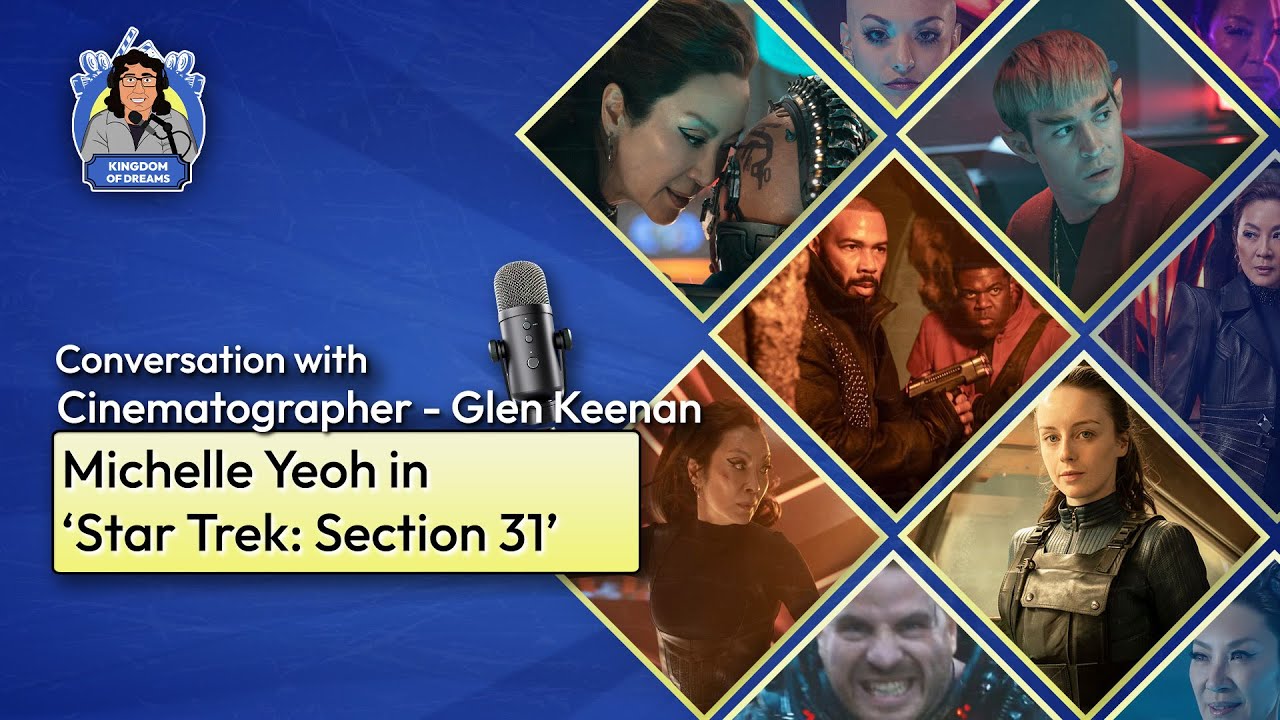
'Star Trek, Section 31', Cinematographer, Glen Keenan
About this episode
Today, my guest is cinematographer Glen Keenan, who worked on Star Trek: Section 31. In this engaging interview, Glenn shares his journey from art school to becoming a sought-after director of photography, offering insights into his creative process, lens selection, lighting techniques, and the challenges of crafting visually stunning narratives.
Glen Keenan is a Canadian cinematographer, who worked as Director of Photography on Star Trek: Discovery, Star Trek: Short Treks, and Star Trek: Strange New Worlds. He photographed the odd-numbered episodes of Discovery's first season (starting with the fifth episode, "Choose Your Pain"), the odd-numbered episodes of the second season, and the odd-numbered episodes of the third season. He also worked on two episodes of Star Trek: Short Treks and five episodes of the first season of Strange New Worlds.
In 2024, he was nominated for an ASC Award for "Episode of a One-Hour Regular Series", for SNW: "Hegemony".
#cinematiclighting #directorofphotography #visualstorytelling #startrekcinematographer #rogerdeakins
Full transcript
Automatically generated from the episode audio, so expect the odd misheard word or name. Speakers were labelled automatically. About 8,500 words. Tap a timestamp to play from that moment.
0:09Jawad MirWelcome back everyone to another episode of Kingdom of Dreams Podcast, the making of stories. I'm your host Jawad Mir. Today my guest is Glen Keenan, who's a cinematographer, AKA director of photography, on a recent film that came out called Star Trek: Section 31. Believe it or not, I had never heard of this film. It just came across on my feed. And being a Star Trek fan, I figured, you know, give it a shot. So I saw the film, which, you will find out in the conversation with Glen, I didn't like at all. Having said that, one of the things that I really loved about it was the cinematography, and you'll find out why in my conversation with Glen. We talked about lenses, we talked about camera that was used, we talk about lighting, how that serves the story, and everything else that goes around with it. So without further ado, here's my conversation with Glen Keenan for Star Trek: Section 31. Thank you, man, for joining. I appreciate it, to talk about, Star Trek: Section 31. Yeah, good to have you.
1:11Glen KeenanYeah. It's good to be here. You know, I got the invitation, and I s… I went to your website and had a, had a poke around. And I saw two names that I recognized. Sal Totino, who I worked with on Cinderella Man. I did a second unit.
1:24Jawad MirYeah.
1:24Glen KeenanAnd Baz, who, I know th… indirectly through people. So, I thought, "Well, okay. I gotta talk to this guy. Gotta do it." He's, he's got good taste.
1:37Jawad MirYeah. I actually, I went to IMDb this morning again, and I saw that second unit credit that you had with, Sal for Cinderella Man. But yeah, look, I'll be very straight up. I started wa… I didn't even know anything about Star Trek, like, 30… Section 31. Like, I'm a, I'm, I'm not, I wouldn't consider myself a Star Trek nerd, but I grew up with Next Generation, Deep Space Nine…
2:04Glen KeenanSure
2:04Jawad Mir... Voyager. Obviously the films. I didn't even know this existed until, like, we reached out to you or to your agent.
2:12Glen KeenanOkay.
2:13Jawad MirAnd, so I began watching it. And I will tell you very flat out, I love the cinematography. Absolutely love the cinematography. One of the things that I've been talking to my cinematographer about as well for the last few years when we talk about films is the desat… desaturation of image in a lot of films…
2:34Glen KeenanRight
2:34Jawad Mir... Nowadays. And I am, I'm so tired of that. And so when I saw…
2:39Glen KeenanYeah
2:39Jawad Mir... You know, all the colors, the vibrant, the popping out, it really s… you know, put a smile on my face. I'll be honest, I didn't like the film at all. We're not gonna talk about the film.
2:49Glen KeenanThat's okay. That's, that's, let's not talk about that part.
2:52Jawad MirYeah. We're not gonna talk about that. But, we, I do wanna talk about your work. But before we do, I would love to know your backstory as to how you got into cinematography. Are you a Torontonian? Yeah, just dive into that.
3:08Glen KeenanSure. I suppose you could say I was one of the lucky ones. I knew... I went to art college right after high school, and through that experience I discovered cinematography. So at 18 years old, I said, "Okay. I'm gonna be a cinematographer." And one of the first books I read was called Masters of Light, which is sort of a classic '70s book with Conrad Hall, Storaro, Gordon Willis.
3:35Glen KeenanAnd I just, you know... You know, this is before the internet. There was no real way to know what this was. So I dived into as many books as I could. And I remember going to the local bookstore, and they had, in their magazine section near motorcycles and guns and whatever it was out in Alberta, was an ASC, the American Cinematographer magazine. And I remember picking it up and going, "Well if they got a magazine, this must be, like, a real thing, being a cinematographer."
4:01Glen KeenanSo I changed gears and I went to film school out in, Toronto. I went to Sheridan. And basically tried to pursue this career since I was 19 years old. And fortunately, by the time I was 25, I had an agent and I was shooting music videos and commercials sort of around the world. For about 15 years I did the commercial side of things. So in a way, kind of self-taught, you know? But through my art background, I think that was key for me because I learnt that as a, you know, as the human beings tried to develop ways to communicate, art was one of the first ways that it sort of happened. Just communication. And there's a lot of history there. There is thousands of years of image-making. So I really got sucked into the idea that, you know, maybe my edge, as a cinematographer is gonna be the understanding of these basic fundamentals of art and, you know, the way that 3D perspective was not m… a given until sort of early Renaissance.
5:01Glen KeenanOh, we can actually draw in perspective. This is interesting. So there were these little mini technology breakthroughs, and I found that fascinating. So I've tried to sort of, you know, approach this craft in an artful way. I've never really learnt it as a technician. You know, I've always learnt it as, the... Really what it is it's, it's trying to, go through this incredibly hard process of making images on a film set, which you know. They're, it's not an easy world. It's challenging. It's full of things that are difficult. Lot of, things against you. But when you sit down and get to watch your work or watch anybody whose work of very high caliber, there's a joy there. There, you don't know. You kind of forget about all that hardship to get there. So I've always tried to keep that in mind as, like, my career, you know, proceeded. To keep an artful eye on the job, you know, and always want to, watch the work the way, that you're proud of it and you're not always going, "Darn it.
6:03Glen KeenanDarn it. This didn't work out. This didn't work out." Which you do, as you know, 100%. You… ... Never are fully satisfied. I had a conversation with a colleague of mine who was my focus puller. He went off to shoot something… On his own time. Just wanted to do it, you know, wanted to try that. And, he came back and I looked him dead in the eye and I said, "So what was it like being constantly disappointed?" And he sort of like gave me a big like, "Oh, yeah, that's the feeling you get." You know, you get that feeling of, okay, there's so many things against you to pull off an image. And when you see... If it's your work, you know, you can see where you did right, see where you did wrong. But when you see the really powerful work that exists in the world, you really have an appreciation for the ability to get that. It's not easy. And I think one of the lessons, I have to remind friends who aren't in our business is, you know, I know you didn't like that movie, and I know this didn't, you know, you hated that one and you really didn't like that, but it's hard to make good work. It is exceptionally hard to be a part of a big project that could be good or a small project that is great. It's not that easy to do.
7:09Glen KeenanSo mindful of all that, I decided I was gonna get into the business. I did the commercial thing, and just got, you know, some good breaks. Ended up, getting that second unit with Sal, and I did a bunch of second units as a, as a DP. And then the industry kind of flipped a little bit. 2008, if you recall, we had a, the housing crisis and the, advent of the internet, and all of a sudden commercials were, I wouldn't say drying up, but evolving. They wanted content for the internet. They didn't want it the same way they wanted it for a broadcast, so it kind of changed. And I had been in it for a while and I thought, well, I need to sort of look elsewhere. And I got lucky enough to get, on a show called Nikita, which was the reboot with Maggie Q. And that was my first real foray into episodics. I'd never done it before. And that was a very challenging show. And I learned a ton, and I really cut my teeth on that, and I did that for three years. And then just kind of springboards from there. You know, did Sleepy Hollow, did some other shows, did Lucifer, and then ended up, on the road a lot and kind of got tired of that, just traveling all the time.
8:17Glen Keenan'Cause as you know, in the Toronto market is wonderful as it is now. It wasn't always the case. You really had to travel with the work and with who your collaborators were. The group, the directors and producers who've kind of, you've, been in battle with, for lack of a better word, in the episodic world. I never really thought I would get into it, Joel, I'd have to admit. I, you know, you know, you seem like you're probably my age, that it was, you know, television isn't where you wanted to go. You wanted to go to movies. You know, everybody wanted to go to movies. And then all of a sudden there was this advent of, really high caliber television shows. Game of Thrones was right around the corner. You had a lot of these HBO things. And it became more approachable creatively. You weren't just there to capture close-ups. You were now wanting to make it look like a movie a little bit. Everybody wanted that cinematic quality, and thankfully that was something I could pull off. I was always much more interested in sort of the, you know, the filmic cinematic side than sort of the documentary cinema verte side.
9:23Glen KeenanThat really wasn't where my brain was. So, d… I found that home to be actually quite rewarding, doing shows like Lucifer. It was a joy to make the images. They were a joy to watch. And through all that, you know, I ended up, hooking up with, Alex Kurtzman on some of the projects that he was doing. And, I ended up getting on the f… Discovery, which I landed about the fifth episode in.
9:52Glen KeenanThey were looking for somebody, and I was in between gigs, and it all just sort of worked out, and they haven't let me go since. So I've been doing Star Trek for about 10 years now, almost. Well, I guess eight years, really. A few little things in between here and there, but it's been dramatically living in space for a long time visually. So that gets you caught up, though. That's kind of the story.
10:12Jawad MirThat's amazing, man. Which year were you in Sheridan?
10:16Glen KeenanI was there in 1990 to '92.
10:19Jawad MirOkay. So you… I went to Ryerson.
10:22Glen KeenanYeah.
10:22Jawad Mir'96. Not for film. So I'm just trying to figure at that time, Sheridan, you know, they only had the Oakville campus, right? Is that right?
10:33Glen KeenanThat's right. Yeah.
10:34Jawad MirYeah.
10:34Glen KeenanYeah, they had a media arts program, and I w… you know, I was, I looked at a bunch of different schools. You know, the US, Ryerson was there, all those kind of schools. And the thing that Sheridan had that not many had, because I knew I wanted to be a cinematographer. I wasn't looking to explore…
10:51Jawad MirYeah
10:51Glen Keenan... My film language or... I knew what I very much focused on the idea of cinematography. And, Sheridan, you got a Bolex in your first four weeks. A lot of these other schools, it took years to get a camera in your hands. And I was like, "No, I need the camera. This isn't gonna work if I don't get to shoot stuff."
11:08Jawad MirYeah.
11:08Glen KeenanSo it became a, you know, to me it was my first rental house was the uni… was Sheridan. And I just shot a bunch of small projects, some experimental films, some music videos, and walked away with about three things on my reel, and then basically just took them around town. And, you know, we'll go back. One of the good things about art school is you learnt, you know, the artistic, you know, tried and true critique. You put your work up on the wall, and everybody talks about it, and you get positives, you get negatives, and you learn from those, that feedback 'cause you get stuck in your own head. Yeah, it's great. It's the best thing ever. They're, "Wait a minute. No, they didn't, you know, this guy has lots of things to say about it." so I was g… really into that process. So I would just take it to five or six producers every six months and say, "What do you think? What do you think?" And got great feedback. You know, too c… not commercial enough. It's a bit weird. You know, a lot of these kind of things. But finally I ended up taking it, you know, over a couple of years of just shooting stuff on my own. Someone finally said, "Yeah, you gotta come do this project with us." And that kinda kicked it off, you know?
12:10Glen KeenanSo, a… again, art school was a key factor in sort of learning how to build your creativity and learning from Having a constructive way to learn, how to get better, you know?
12:22Jawad MirYeah. Yeah, no, Sheridan actually, I remember at the time, like Sheridan was a big deal even, especially for animation.
12:30Glen KeenanIt was huge for animation.
12:31Jawad MirRight?
12:31Glen KeenanYeah.
12:31Jawad MirLike, a lot of, a lot of animators at Disney and DreamWorks went from Ryerson.
12:35Glen KeenanYep.
12:35Jawad MirThey, there was even a short film that was nominated, I don't know, what year was this? I'm guessing 15 to 20 years ago.
12:41Glen KeenanYeah.
12:41Jawad MirBest animated short. That was, from Sheridan students. I forget the name. But yeah, no, Sheridan definitely, I think, was a… ahead of its time. I know Ryerson, I went to school for IT, and then I went back for a film certificate, which I never finished, and I remember using the Bolex.
13:00Glen KeenanYeah.
13:00Jawad MirMy first short film was underexposed. My second was overexposed. But th… but that's how you learn, right?
13:08Glen KeenanThat's right.
13:08Jawad MirThat's, that's how you learn. But that's really great, man. It's a, it's a, it's a fascinating journey, right? When you hear people talk about where they, you sometimes you forget, like you, I'm sure you do too, like, you know, in the, in the times and space that you're in right now, you sometimes forget about how long have you taken to be where you are today. And when you think about it for a second, it just humbles you completely.
13:32Glen KeenanVery much, yes. Very, and you know, and you're, you're, the same time, you're ex… you're kind of blown away by the fact you've actually, you know, I've been doing this for 30, 35 years almost, right?
13:42Jawad MirYeah.
13:43Glen KeenanSo since my early 20s. W… I was happy for t… if I could get 10 years out of the industry, you know? I would say, "Okay, if I get 10 years, this would be great." And I've been, you know, it's turned into something. But at the same time, there are obviously things you wanted to, you know, one would like to achieve that is still o… out of your reach, you know? You just…
14:00Jawad Mir100%
14:00Glen Keenan... "Oh, I wish I could've got that gig," or, "I wish that project had come my way," or, "I wish I'd done better with this project," you know, or vice versa. So it's, it's an interesting career without a doubt. It's, and I will say, it doesn't say in the brochure that you're gonna have, you know, 14-hour days, 16-hour days, 20-hour days back in the, you know, when I was starting out. It's, it's, it's a, it's a difficult mental exercise as well as a physical ex… exercise. And at my age, that's, it's sort of, sort of, I'm at that point I'm going, "Boy," you know, you know, I'm about to start Strange New Worlds, Season 4. We go to camera next week. So, you know, I'm excited, but I also know how exhausting it can be, you know? It's, I don't know how many more years I wanna be on a film set. I'll say that.
14:54Jawad MirI hear you, man. I hear you. Are you shooting that in Toronto or…
14:57Glen KeenanYeah
14:57Jawad Mir... In LA? In Toronto.
14:58Glen KeenanIt's in Toronto. Yeah.
15:01Jawad MirYou know, it's amazing. No, it's, a… and one thing you talked about that making a film is hard, right? And…
15:07Glen Keenanhuh
15:07Jawad Mir... Nobody sets out to make a bad film.
15:12Glen KeenanNobody does. Nobody does.
15:12Jawad MirAnd every, and there are so many things that happen. It may not even be at the production level or script level. It could be at the studio level, the executive, the team, the marketing, you know, everything. Every little thing plays a big part.
15:29Glen KeenanYeah
15:29Jawad Mir... And then egos clashes and, you know, there's all those things. But yeah, i… i… in terms of, you know, your work on Star Trek, Section 31, in terms of the cameras, in terms of lighting, you know, anything that you can pick up scene-wise or just in general that you wanna talk about, the lens selection. What was that workflow like to be able to pull off the scenes that you were able to pull off i… i… in the film?
16:00Glen KeenanWell, it, this, Section 31 was a long process. It was a six-year-old concept that got rescheduled and derailed a number of times due to just, you know, COVID was there. Actor strikes were there. I mean, we forget that the last, you know, since 2020, there hasn't really been a year without some kind of major upheaval in the film business. And, I knew Tunde, the director, very well from my Discovery
16:27Jawad MirRight
16:27Glen Keenan... Collaboration with him. And he's a very strong, very technical, very hardworking director. Big heart, lovely man. But he knew what kind of film he wanted to do. He did. And we had a early battle between what we think this movie could be. And you know, I've always thought that it is best to follow a director you trust and, instead of trying to get in their head and second-guess them. So we had our battles early on, but once we said, "Okay, this is what we're doing," you know, everything kinda falls in place. What kinda lenses you would like, you know, what's the, how dynamic do we need to be? What kind of tools do we need to pull this off? If you get inside a director's head too much and you start making them not understand the movie they want to make, then they start relying on you to make the movie for them.
17:18Jawad MirYeah.
17:18Glen KeenanAnd when you have, in my opinion anyways, in a film of this size, that could be a disaster. Because there's so many moving parts and there's so many, things going on, that if the director needs to sort of really be in charge, you know, to make these things happen, you know? I always wonder if, you know, someone like who works with, Villeneuve, you know, Greg Fraser or something, like what is that like for them? Like how does that dynamic work? Because that stuff is just gorgeous. I mean, it's just, there isn't a bad frame in there, you know? Greg did his part, and Villeneuve did his part, right? So when you get that moment together, you know, that's when film really is a true force, you know? So I've always tried to get the, you know, to find what the director needs, get on board with that concept, whether it's my bag or not. You know, get on board with it and do what I need to do to help them make a successful movie. In this case, the lenses were driven by the director. The shot, a lot of the sequences, the action sequence driven by the director.
18:20Glen KeenanI would, you know, basically be Taking his ideas, making, executing them, and trying to make them look like something I wanted them to look like. And sometimes easier than not. I mean, we had some really nice sequences at the, at the opening of the film.
18:34Jawad MirYeah.
18:34Glen KeenanWhere we had, you know, you know, the hammer on the anvil. And we knew we wanted that shot, you know? We were, we were like, "Okay, we could be here, and we'll have this going on, and the sun we know is gonna be right there. You know, we just gotta be ready for it. It's gonna be, you know, super early in the morning." And, we get there, the sun is up. There's no clouds or, you know, it's about to rise. We're in position. I got three cameras going. We're ready, and the actor's not ready. And the actor's still not ready. And the actor's still not ready. Now the sun is out of the shot. So we had to come back the next morning and just make a special for that shot, because we were heartbroken we couldn't get it. And thankfully the sun came up two days in a row. As you know, in Toronto, you c… you know, you get this marine haze all the time. You either get it at the, you know, you can get it at the end of the day or the beginning of the day. But that, the fact that we were able to, and kudos to the director. He didn't give up on it. He said, "You gotta bring the guy back. We gotta do it tomorrow. It's too important of a s… you know, of a sequence." And that's when that collaboration really works.
19:36Glen KeenanLike, he, it was important to him. He knew it was important to me, and we were able, were able to pull it off. And there was another sequence at the end of the evening. So we had sunrise and sunset, situations in that sequence, and we had two of each. We had two sunrises and two sunsets. We had two days. And there's, our young Giorgio on top of the hill standing in front of the sun. And we had, you know, he had conceived, you know, conceived this shot, and we really needed the sun. If the sun wasn't there, I had a gag. I had this big light rig set up that would blow out the lens, and it would look kinda like a sun. You know, sort of a fake. And, we got the sun. And all of a sudden I was like, "Oh my God, pull the fake thing out of here and let's just shoot it." You know, we shot it natural and the actress nailed it, and it looked beautiful, blah. Pulled away, there's the sun and a flare. It was great. So but instead of not using that rig, we had this sequence, all those black, f… flashback sequences.
20:33Glen KeenanSo we knew we needed something for that sequence. And I had pitched the director, "Well, we can do it in front of this light. It'll be all crazy, and we'll use some crazy filters, and we'll do all this stuff." And that's what we ended up doing, you know? Instead of the original design of that light was for another reason, but we used it for a separate reason. That was absolutely fabulous. Really, that was one of my favorite moments, when you have those moments in a, when you're working that you stumble upon. You kn… you think it's gonna be good, but then you realize in the edit how good it really was. And so like, well, that's a fresh of, just a visual breath in the show, you know? It looks beautiful. It's emotional. It's kinda got, it's got some... You're not bored to look at it at any time that it's in the cut. So And that was all within two days. Those real nice moments were right there, you know?
21:17Jawad MirFascinating. And that's one of the things I loved about, the, oh, the whole, the whole film, especially the opening. The production design was top-notch.
21:27Glen KeenanYeah, great.
21:27Jawad MirThe effects, the effects were top-notch. The costume were top. Like, technically it was just…
21:33Glen KeenanYeah
21:33Jawad Mir... You know, everything was just spot on. I felt at least that much c… be able to sort of watch it through and just appreciate the visuals and all that. And that obviously is a testament to the director, right? Because he is holding the fort, making sure that…
21:51Glen KeenanYeah. He could, he could let any of those things slide if he wanted to, right? That, and we don't really, you know, again, you know, unless you're the Roger Deakins of the world, right, who has just, the ability to really convince, "This is, this is what we must do," you're dealing with a lot of personalities. And as a cinematographer, you know, trying to help the director get his day against the studio, you know, you've gotta help them as much as you can. And if they fight, then you can fight. If they don't fight, then you really don't have much…
22:23Jawad MirYeah
22:23Glen Keenan... Of a fight, you know?
22:26Jawad MirYeah. No, amazing. W… were you guys using RED?
22:29Glen KeenanA camera?
22:30Jawad MirOr yeah.
22:31Glen KeenanNo. This was, the Alexa 35.
22:34Jawad MirAlexa 35.
22:36Glen KeenanYes.
22:36Jawad MirAlexa 35.
22:37Glen KeenanWhich is a lovely camera. It was my first experience with it. On Strange New Worlds we used the Alexa LF, and we have, you know, full-frame, photography, anamorphic, which I love. It, there's just a way that combination of, full-frame, negative and full-frame anamorphic just sort of has this, volume, is how it captures space. It's just different. It's much more attuned to what I think the eye kinda sees. There's just something about how, things, spread out in our periphery, and this sort of, that sort of has that same thing. But, third, the Alexa 35, and we went spherical. But it's still a big negative, so don't get me wrong. And we did a lot of, lens tuning with Panavision. This was a pet thing for, Tunde, the director. He was really a big fan of it. My first experience with it. I'm a bit more on the purist side of things. I'm, I'm, I'm sort of the school that doesn't really matter what tool you're given, you should be able to tell a story with it.
23:37Jawad MirYeah.
23:37Glen KeenanYou should find the strength of that story and be able to tell it a certain way. I've, I wouldn't say I don't see the value in being ultim… ultimately customizable with your lens, but you really must know what it is you're trying to get. If we're just experimenting, you know, it sort of gets, it's a long path, right?
23:57Jawad MirYeah.
23:57Glen KeenanTo find. It's a long path. So, you know, we played around with those. We had a lot of lenses. We had anamorphic, sphericals, primes, zooms, telephotos. There was a lens for every gag. We had different irises in the back to change the bokeh, which Panavision created, which was a super cool concept that Tunde came up with. So in certain sequences you'll see a square bokeh. Another sequence you'll see a round one. In some you'll see a diamond eye, you know? Now, will anybody have noticed this? Ah, who knows?
24:25Jawad MirNo.
24:25Glen KeenanYou know? It's one of those. I remember I did a sequence on Strange New Worlds where it was a s… it's a, was a sub-episode, and I designed this incredibly elaborate building of the, of, the red alert. So the red alert sort of slowly built as the story got more intense. Really riffing on Crimson Tide, you know, good old Tony Scott stuff, and the lenses got closer and closer and closer. I think probably psychologically somebody would notice that. Even when I watched, I didn't notice the red, and I was going, "Okay, I spent a lot of time on that, so, you know, I gotta pay attention to what really the audience will register." You know, I think that's something to be aware of. Doing things just to do it for yourself sometimes are not always communicated to an audience.
25:09Jawad MirThat's true. That is so true, and I wanted to ask you because we talked about prime and zoom. So there was a time in my life, what, when I say my life, I sh… it's, was not too long ago, I would say about 2008 to 2016 when, before I directed my first feature documentary, I was doing events.
25:32Glen KeenanYeah.
25:32Jawad MirAnd, yep, camera operator, you know, I Black Magic, Sony, Canon, all that fun stuff.
25:40Glen KeenanYeah.
25:40Jawad MirAnd there was a time when I was using zoom lenses, right? So 24 to 70 or 70 to 200, and then I went on prime because prime were sharper. For me, that was my reason for going on prime. But what I…
25:53Glen KeenanRight
25:53Jawad Mir... Realized was prime makes you, at least for me, I'm not speaking for anybody else, prime made me more creative as opposed to being sitting there lazy, zooming in and zooming out.
26:07Glen Keenan100%. Yeah. I've banned primes since Discovery, basically. I'm sorry, banned, telephotos…
26:15Jawad MirZoom
26:15Glen Keenan... And zooms.
26:16Jawad MirYeah.
26:16Glen KeenanAnd I think the language gets lazy if you don't, if you're forced to move the camera and find the shot, and you're gonna make it good 'cause you just had to do all this work…
26:26Jawad MirThe work, yeah
26:27Glen Keenan... To get it there.
26:27Jawad MirYeah.
26:27Glen KeenanAnd then when I was first starting out, the first, boy, handful of shows, it was sort of the CSI sort of era where you would set up some dolly tracks and put on a big zoom, and you would just sort of find, well, you do a pass at certain lengths and, you know, we got all this footage, great, but it's all kind of the same footage, just different sizes of the same footage. The prime makes you story tell in a very, you know, committed way, right? When the director knows they can't just lay this track and just zoom in when they've got their first take, we have to move the track to get in or change a lens or whatever we're gonna do, right? It just adds to the storytelling and to, and, you know, it also adds to the consistency of the piece you're making. You now have, you know, when I put together Strange New Worlds, I picked a set of seven lenses, you know, for three cameras of course, but seven lenses, and I really forced the team not to take anything else. Do not use any other lenses.
27:30Glen KeenanThis is enough to tell this story. If we use these lenses creatively, we're gonna tell the story. They'll all be our versions, but we'll have the same tool, so there'll be continuity between directors and continuity between, cinematographers that we're working on. And I find that your solutions to problems become more creative when you have a limited toolbox, you know?
27:50Jawad Mir100%.
27:50Glen KeenanYeah. And I, and I think it's very, it's not, it's not any easier to have 70 lenses, you know, to tell the story. In fact, it, you probably won't even use 80, you know, six, 60 of them. You'll find the ones you like, and you just keep going back to them.
28:03Jawad MirYeah.
28:03Glen KeenanAnd then you realize the story you're telling now makes sense 'cause the visual style is part of your decision-making opposed to just zooming in, zooming out. I will say that we did have some zooms in section three. We had to see, you know, conceived of sort of a, you know, Ocean's 11 vibe to some of these scenes. And…
28:22Glen Keenan... And we thought, "Let's bring back the zoom." You know, I hadn't done the zoom in eight, 10 years. So we brought it in, and not much of it really made it into the final cut…
28:31Jawad MirYeah
28:31Glen Keenan... I don't think. A lot of that was due to the fact that we had to squish this huge story down to 90 minutes or 95 minutes from what was once a, 10-episode season, you know? So it's a very challenging, undertaking.
28:49Jawad MirWas it supposed to be a 10-episode season? Is that what you're saying?
28:52Glen KeenanSix years ago, it was gonna be a ser… it was gonna be a series with Michelle Yeoh. Yeah. And then a lot of different things happened, and COVID happened, and Michelle blew up.
29:00Jawad MirWow.
29:01Glen KeenanThey couldn't, yeah. So the concept was really amazing. The first script I read was, I was like, "This is, this is freaking brilliant. We don't have time or money to do it, but it's, it's absolutely brilliant." And that was nowhere near what we ended up, what they ended up trying to do within that, within, you know, 90 minutes of a story, right? So it's pretty breakneck to get all that story in. So a lot of the ideas…
29:25Jawad MirYeah
29:25Glen Keenan... That Tunde had, were trying to get a lot of story in it, and how do we separate... We had so many different times to deal with. We had, you know, present time, made-up time.
29:35Jawad MirYeah.
29:35Glen KeenanTime, you know, there's all these sort of things going on. We had lens choices for all of them. I had a color palette for everything. And it is interesting. We had, we had a conscious decision to be, to do the most aggressive color we could do, you know? We just said, "Okay. Let's just be aggressive." I have no problem with that. I b… I'm a bit of a, I c… I was like you. I got a little tired of the, of the desat world. We all kind of fell into it for a while. I think it's equally... You know, I guess I'll say this. Cinematography, like anything, i… is a trend. There's trends. You can see trend lines all the time. You, we all kind of use the same filter. Somebody does a cool thing with a filter, and what was that filter? What is, what was that lens? What prime did you use? I like it. Then all of a sudden, everybody's using those primes. And which body did you use? Oh, I used this. Okay, we're all using this. So you start to all follow and repeat and stuff. I, you know, I was trying to get to a place on this one where we didn't want to… One didn't wanna break it, because I think one of the things I always try to do is give a, give the actors a world to live in that the audience will believe.
30:42Glen KeenanAnd if I'm consistent enough at it, they'll believe the actors live in this world. And I, and I've always tried to maintain that. Whether it's, like I said, whether it's my cup of tea, whether this is my favorite. If I can convince the actors and myself we're in this world, then you can do what you need to do. The, you know, the audience should come along and not question, why is that so green? Or why is that, why is that skin so squint, skin tone magenta?
31:06Jawad MirTrue.
31:06Glen KeenanYou know? I've just never been bothered by that. There are some that are, that don't find that appealing. But I think if you can, you know, be convincing and consistent in your work, even if your work is, you know, as long as you're consistent in, I think the audience will buy it, I think no matter what.
31:21Jawad MirYeah.
31:22Glen KeenanYeah.
31:23Jawad MirI think a prime example of that, which in the mid…'90s started, The Matrix started the green tint.
31:28Glen KeenanYep.
31:29Jawad MirRight? But I saw the most recent Matrix film, which I didn't like. But I don't remember…
31:35Glen KeenanYeah
31:35Jawad Mir... If the colors were green tinted or not. But…
31:38Glen Keenan'Cause we've seen so much of it since, right?
31:40Jawad MirYeah, right, so it just went away.
31:42Glen KeenanYeah.
31:42Jawad MirBut i… in terms of Star Trek, w… have you seen Generations or Deep Space Nine or Voyager or any of them?
31:49Glen KeenanWell, I, when I was, you know, TNG was, on when I was in college, you know?
31:55Jawad MirYeah.
31:55Glen KeenanI grew up in the prairies, and so, Star… I had two channels, and Star Trek was on every day after school. So I watched that every day that it was on. And then I was a big fan of TNG. I've watched Voyager. And that's kinda I think when I fell out of it, I think. I'd watched a bit of Enterprise, and I remember talking to my wife. It had been a while, and we were both going, "Geez, there hasn't been a new Star Trek in a while. You know, geez. You know, like, there's been, like, 15 years or something." And then
32:26Jawad MirYeah
32:26Glen Keenan... I heard through some people I work with that, Alex Kurtzman was thinking of doing a Star Trek. So, you know, then the movies came out, actually, and the movies were fantastic.
32:35Jawad MirYeah.
32:35Glen KeenanBut there hadn't been a TV show for a while, so yeah.
32:38Jawad MirThat's interesting.
32:38Glen KeenanSo I am a fan. I am a fan of the, of the franchise. I know that there is a massive fan base that is, dedicated to the franchise. Yeah.
32:49Jawad MirHave you seen the Trekkies documentary?
32:51Glen KeenanOh, yeah. I did see it. Yeah.
32:52Jawad MirYeah.
32:53Glen KeenanYeah.
32:53Jawad MirYeah, that pretty much is the ode to Star Trek, the amount of effort and time they put into it
33:00Glen KeenanYeah
33:01Jawad Mir... Their entire life, right, revolves around it. Which is awesome. I mean, it's great. It's fantastic.
33:07Glen KeenanYeah.
33:08Jawad MirJust to kinda wrap things up, with what now you're working on, you said just, another season for Discovery, right, next s…
33:19Glen KeenanNo, Strange New Worlds.
33:21Jawad MirStrange New Worlds. Sorry. Besides the Star Trek world that you, when you're part of that, obviously keeps you busy, do you from time to time get scripts that you don't end up doing because you don't have time? Or is that something, or you wanna get out of the Star Trek world eventually and do something different? Or you don't know yet?
33:43Glen KeenanYeah, it's an interesting question. I'm sort of at that point in my career whether, I... As I said, it's a difficult business. It's a physical business. You know, doing long days and, you know, battling to get the images, it can be exhausting. You know? It can be an exhausting business. So I think if anything, it's probably sh… you know, turn, full 180 degrees away from, you know, big franchises and do something small, independent with a box of lenses and minimal lights. And just try to make images that, you know, that are emotional and appealing with a director that you trust. Now, putting that all together is not that easy. You know? It's, it's not like there are a ton of those projects out there. And because I've been locked into this sort of big TV world, it's not like I'm on anybody's radar for that kinda stuff. So, we'll see what happens, you know. You never know. But, this, it's been a wild ride.
34:45Glen KeenanIt's been a long, a long journey through space. And there's still lots to do. So I'm looking forward to this year. And as I said, I've never had a season that didn't have some type of upheaval. We had COVID for the first two years of Strange New Worlds. Last year, I got pulled off to go do Section 31. And then, this is the first time to say, "Okay, let's have a season where nothing dramatic happens to anything, so we can just kinda concentrate on the work." You know? That hasn't really happened with Strange New Worlds, which I think is a fabulous show, and I enjoy shooting that. And, I look forward to another season of that. And then, you know, if I do get back on a film set after this one, it'll, it'll probably they have to be for all the right reasons, and not just to work. I think I'm at that point that I'm not, "Oh, I must do this. I must do that." I'm very content. I've shot a lot of images, you know. Been doing it for 30 years. It's, if somebody brought me the, some fabulous project, yeah, of course. Who wouldn't consider it, you know? I would.
35:45Glen KeenanBut, you know, I'm just taking it ch… job by job right now. Just I'll finish this one. I'll have a little break and see what's available. And if nothing shows up, fine, you know.
35:56Jawad MirYeah. No, that's a, I mean, that's the right way of looking at it because it, you have to go with your instincts and…
36:04Glen KeenanYeah
36:04Jawad Mir... Right? And I know from my experiences, like it's hard from... What I have learned so far in my career is that hard to raise capital than to make a film. At least for me so far. That might change.
36:22Glen KeenanRight.
36:22Jawad MirYou know? But getting people on board and believing in you is the toughest part. And everything else, and then obviously selling is also another tough part.
36:33Glen KeenanYeah. Yeah.
36:34Jawad MirThose two to me are the toughest part in the business.
36:37Glen KeenanIt's an interesting time because of all these, you know, you know, this mixed blessing of having so many places to take content.
36:45Jawad MirYeah.
36:45Glen KeenanBut at the same time, so many people are making content with, you know, people w… with... You know, I went and got my hair cut the other day and so when they asked me, they said, "What do you do?" I said, "Oh, I'm a, I'm a cinematographer." And he goes, "Oh yeah, my sister's a cinematographer. She shoots for, on these v… you know, on YouTube." And I'm like, "Okay, wait, no. Okay, I'm a director of photography. It's like a, you know, I got a crew, I gotta deal with." So the role of the cinematographer has changed. It's, it's broadened out to a lot of different avenues and a lot of access. So the job itself is, you know, is much different than when I started. You know, I started on film.
37:24Jawad MirYeah
37:24Glen Keenan... Playing with Bolexes, going down that whole path. And then digital took over, which I loved. I actually don't have any resentment for that. I think it was a very interesting turn, and it opened up a lot of interesting image making. But at the same time, kinda marginalized a little bit. You know, it sort of, it was allowed to,... It was liberating 'cause you can now see it. You didn't have to commit to it and go to a lab and get it back and go, "Did it work?" You know? It was like instinct, instantly, "Okay, this is what we want." And by that, by having that happen, of course everyone has an input. So now you're now defending what you're doing all the time on the spot. You know, "Oh, is it gonna be this? Is it gonna be that? Is it that dark? Is it that bright?" Da. You know, there were, the faith-based thing kinda went away.
38:08Jawad MirYeah.
38:08Glen KeenanYou know?
38:08Jawad MirBut I think f… I think what the positive of that, as I…
38:11Glen KeenanYeah
38:11Jawad Mir... As much as I ag… agree with you 100%, I think the positive of that, at least for me, I don't know if that's come with experience and age, I used to be very much about this lens or that camera or that drone or this, that. But because of obviously working for a while, but also with the advent of technology and everybody, now how do you distinguish yourself?
38:36Glen KeenanYeah.
38:36Jawad MirYou've gotta be an, you've gotta be an amazing storyteller, and that's it.
38:41Glen KeenanYeah.
38:41Jawad MirAnd there's not that many great storytellers out there.
38:43Glen KeenanYeah. Yeah. That's very true. I mean, I think that's, you know, I, when I work with my crew, I was like, where... You know, my operators and everyone, you try to get them engaged, on their part of the storytelling. The dolly, grip who pushes the dolly, you need them to be a storyteller. Like, they have to approach it…
38:59Jawad MirRight
38:59Glen Keenan... Like a storyteller. The focus puller can help tell the story with where they put the focus, you know? So it's, it really is about the storytelling. You're 100% correct. And I think that it's, it does… not that it gets lost, but you really sometimes have to dig for it. Like, what is the story we're telling? Like, you can't just because it's a left or right dolly, okay, what, there is a story going on here that there's a reason this character's walking. They're trying to, you hope anyways, they're trying to get somewhere. So you have to sort of find your little narratives to help tell those stories. And some people are very good at it, and then some people will never see it. You know, I think I've realized that having been in it as long as I have, is there are natural storytellers, and there are others who, you know, have learnt it or are technical about it, you know? And you don't really know…
39:43Jawad MirYes
39:43Glen Keenan... Until you see them do their work where they lie on that side of things. But the s… you know, to me, cinematography is storytelling. I mean, it's a visual…
39:51Jawad MirYeah
39:51Glen Keenan... Storytelling. And maybe that still will be required and separated as, you know, the years go forward. I mean, I would, I tell myself with AI coming that as long as there's actors, they're gonna need cinematographers. They're gonna need someone to photograph it. But we're shooting on the wall a lot, you know? It's a completely virtual environment.
40:09Jawad MirRight.
40:09Glen KeenanAnd we put the actors in front of it, and, so they're still there. But if, you know, this idea that you can basically dictate to an AI, "Okay, here's a, my favorite book. Make this book into a movie, and I want Cl… Clint Eastwood as the star," and, you know, all of a sudden spits it out. I mean, who knows if that's 100 years away, 200 years away? We're not sure, you know? Is that possible? So I also think there is the flip where the more real something is, the more rend it's, the more it connects to an audience, you know? You have to be, you have to make sure you ground these shows. And the more technology we have, that's one of the main mantras I have with my producers, is we need to ground it. You know, and actually, Akiva Goldsman, that's his main mantra. We need to ground the show. It can't just be technical mumbo jumbo. It needs to be grounded, otherwise we will lose some of what makes Star Trek, you know, s… last so long. There is a humanistic grounding to the morals of the show, you know? And trying to photograph that is a challenge. You need to sort of approach it that way. So I've always tried to keep it simple, let the storytelling come through.
41:12Glen KeenanYou know, overwhelm the audience when you need to for a story, if it's a solar energy blast or some type of wacky nebula thing going on. But otherwise, just try to let the actors own the world that they're in, and let them tell the story. And you know, I had this interesting conversation. He was a, an operator for, Tony Scott. He became a director. And he said to me, I didn't, not, take this the wrong way, although it could come off as a slight. He said to me, "I don't care how well you light this shot. If I don't get a performance, there is no shot." And I was just like, "Interesting. Interesting." So I…
41:45Jawad MirThat is interesting.
41:46Glen KeenanRight? And I think he's, he's absolutely correct. If the performance is bad, nobody cares how beautiful it is. So I took that as the challenge of, okay, I need to make sure my team and myself is ready, so when that actor unleashes some fabulous performance, we're ready and we capture it the right way. So that's always sort of been my mantra, was like, let's be ready. Let's make sure we don't blow it. And if the actor needs three takes, fine. But if we miss that take, that's really not good, you know? 'Cause then, you know, I mean, actors, it's not an easy job either. You know, the real good ones, you know, they put a lot of effort into it, and it's not, and they're working long hours. So you wanna make sure you give them the benefit of being ready for them and making a good image, so when that, performance lands, you've put the best image you can put around it, you know?
42:34Jawad MirYeah. No, that's, that's a great, piece of advice that you got, and I'm gonna remember that too. Because, I mean, b… for one reason, what you said, the other reason is you could be lighting up the set really beautifully, but how is that affecting the eyes of the actor? Is that distracting him or her and to get out of their performance and go in a completely different direction? So, yeah. No, amazing, man. This is, this has been super cool. I really appreciate it. And the fact that you're local, if you ever want, would love to grab a coffee or something.
43:03Glen KeenanYeah. Let's do that. I mean, I love talking about cinematography. Not everybody wants to, about filmmaking, you know?
43:09Jawad MirYeah.
43:09Glen KeenanLike, so you're one of the rare channels that has, cinematographers on it, so it's nice to see.
43:16Jawad MirAwesome, man.