
Episode 217 · March 24, 2025 · 44 min
'Band Baaja Baaraat', Editor, Namrata Rao
Clips and Shorts from this episode
About this episode
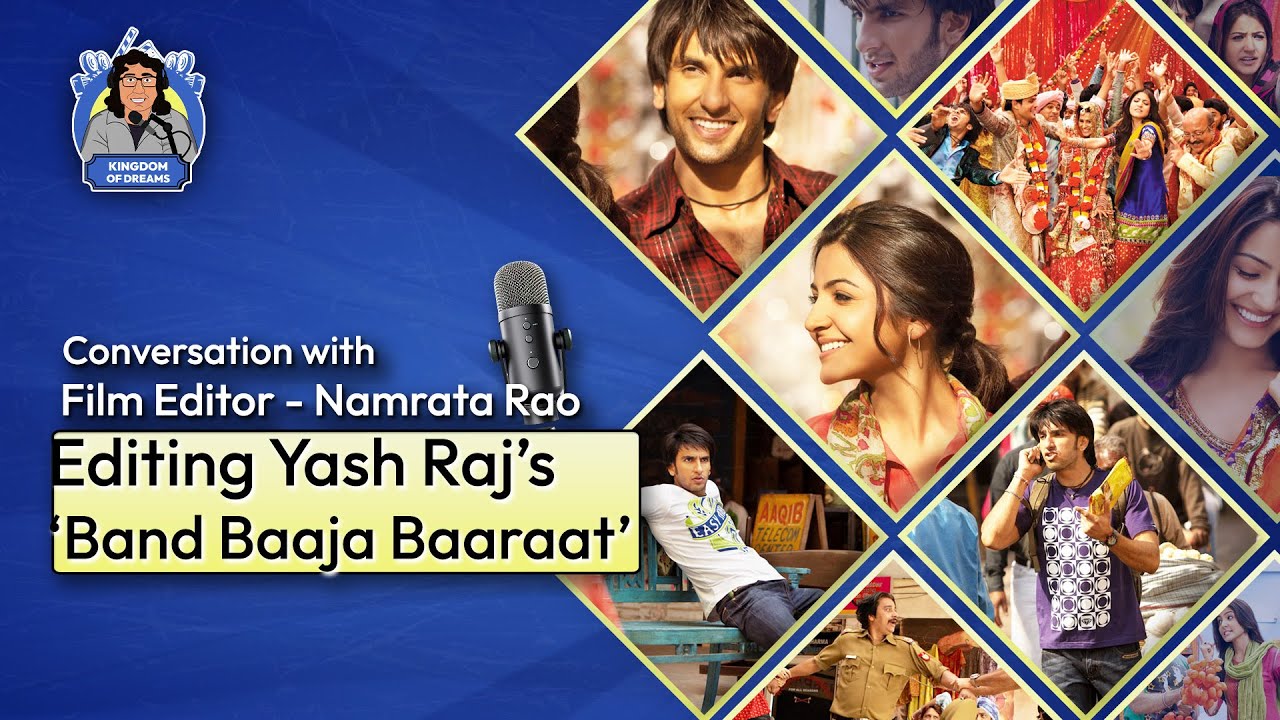
The acclaimed editor Namrata Rao to explore her creative journey in editing the beloved film "Band Baaja Baaraat." Namrata discusses her collaboration with director Maneesh Sharma and producer Aditya Chopra, the challenges of editing her first studio film, and her unique perspective on shaping the story of Shruti and Bittoo, played by Anushka Sharma and Ranveer Singh.
Namrata Rao is an acclaimed Indian film editor known for her sharp storytelling and innovative editing style. She gained widespread recognition for her work on films like Kahaani (2012), Band Baaja Baaraat (2010), Shanghai (2012), and Dedh Ishqiya (2014). Her editing has played a crucial role in shaping the narrative and pace of some of Bollywood’s most compelling films.
A National Film Award winner for Kahaani, Rao is known for her ability to craft gripping suspense, seamless transitions, and emotionally resonant storytelling. Her collaboration with top directors has made her one of the most sought-after editors in Indian cinema.
#finalcutpro #premierepro #editingpodcast #namrataraofilmeditor #waltermurch
Full transcript
Automatically generated from the episode audio, so expect the odd misheard word or name. Speakers were labelled automatically. About 7,300 words. Tap a timestamp to play from that moment.
0:09Jawad MirWelcome back, everyone, to another episode of Kingdom of Dreams Podcast: The Making of Stories. I'm your host, Johwad Nir. Today, my guest is film editor Namrata Rao. I had a pleasure of speaking to her late last year or mid to late last year, for her directorial, work on Amazon documentary series Angry Young Men. Today, we go back to her roots, when she first started, in her early days, editing a very popular film called Band Baaja Baaraat, which came from India, starring Ranbir Kapoor and Anushka Sharma. We had a great chat, and without further ado, here's my conversation with editor Namrata Rao for Band Baaja Baaraat. Good to have you again.
0:51Jawad MirI saw Band Baaja Baaraat last night after a long time.
0:55Namrata RaoYeah.
0:56Jawad MirAnd I couldn't believe it's been 15 years almost.
1:00Namrata RaoYeah, I can't believe it either. Yeah.
1:03Jawad MirAnd, the great thing about…
1:05Namrata RaoNovember 2010.
1:06Jawad MirPardon me?
1:07Namrata RaoIt released in 2010, December.
1:10Jawad MirOh, was it December 2010? So almost 14 years then.
1:13Namrata Rao14 years, yeah.
1:14Jawad MirYeah. And, the first thing I noticed about it that really put a smile on my face among, this is just me being a film nerd, was I could tell that it was shot on film.
1:25Namrata RaoYeah.
1:25Jawad MirLike, the grain and... Like, you could just feel it right away, and that was the first thing I noticed. And the colors were obviously vibrant, as opposed to now everything is so monotone and, like, it's just…
1:39Namrata RaoYeah
1:39Jawad Mir... Totally different, right? But aside from that, what a great film. Still holds, after all this time. And it…
1:46Namrata RaoAbsolutely
1:46Jawad Mir... Yeah, so great to have you to talk about from the editing standpoint, and it was probably one of your major first films, if I'm not mistaken, to work on?
1:56Namrata RaoYeah, it was my first film for a studio because before this I had done three films, Oye Lucky!, Love Sex aur Dhokha and Ishqiya, all of which was sort of not considered so commercial, et cetera. So Band Baaja Baaraat is my first song with lip-sync song. First film with lip-sync song, yeah.
2:19Jawad MirIshqiya was great, by the way, which we'll talk about some other time.
2:23Namrata RaoI love it
2:23Jawad Mir... Yeah, I love it too.
2:25Namrata RaoMy favorite. It was a really great learning experience.
2:29Jawad MirSo tell me how you got on board. Just let's start with the journey of getting on board on Band Baaja Baaraat, and I think Anushka Sharma had only done one or two or three films until then. Ranbir Singh was debut. And, yeah, just kind of talk to me about the first, the journey of getting on board, and then we'll get into the technical and the nitty-gritty stuff.
2:52Namrata RaoActually, Ishqiya released on, I think, end of Jan 2010. It was, 28th or 30th, I forget what… whichever was the Friday, and I went to one of the theaters with a friend to see how people were reacting. So we were standing outside the ticket window trying to overhear conversations, et cetera, is when I get this call that, you know, there is this film for Yash Raj, which is the studio, and the director wants to meet you. I think the director only called me, if I remember correctly.
3:28Namrata RaoHe said, "My name is Maneesh, and I saw Oye Lucky Oye!, and, I want to meet you." I told him also my film has released today, please watch it. So he said, "Okay, I'll watch it, and then we can meet in the, later in the evening." So we met the same day, and I mean, we had a Delhi connection. We were both in Delhi University at the same time, and we both speak Hindi the same way, you know, which is not very common in Bombay. Bombay Hindi is a bit different, so when you meet a Delhi wala, you're like, "Ah," you know? So our language was the same, and we really connected on Delhi University, and he said, you know, the film is that, and he also said that, "I want this film to be very collaborative", which is something I liked. I thought that was not really very studio talk or something like that. So I decided to do it, and he gave me the script. When I read the script, I thought it was very Bittu-centric script.
4:29Namrata RaoLike, it was most, more from the guy's point of view.
4:33Jawad MirYeah.
4:33Namrata RaoWhich I told them, and as we... I mean, because we had such a strong female actor. Anushka's so good, so spontaneous. So when we started watching, putting the scenes together, she also became, you know, like, almost, as much, as Bittu, if not more. Because for me, the film is, of course, it is about the two of them together, but for me it was always about Shruti, Kakkar.
5:05Jawad MirYeah, a… and it…
5:06Namrata RaoYeah. Exactly
5:07Jawad Mir... It was, I think, I mean, that's, even after watching after 14 years, like, it just... You know, because he wants to join her company…
5:17Namrata RaoYeah
5:17Jawad Mir... Right? And it's like she's trying to give him a break, for the lack of a better word. So, and the journey sort of, and then how she feels after, the in… intermission…
5:27Namrata RaoYeah
5:27Jawad Mir... And all that. So for me, it was al… al… always about her, and I think even at the time I may have felt that because when we were seeing it was brand new, I don't think anybody cared, right? So it was more about her…
5:35Namrata RaoYeah
5:36Jawad Mir... From that standpoint, too.
5:38Namrata RaoYeah, totally, because she's the one who starts with clarity, then also she's the one who becomes really vulnerable. You know how she starts calling him up, and you know, and then, like, "I'll make tea for you" and all suddenly that switch happens. It's all funny, right?
5:55Jawad MirYeah.
5:55Namrata RaoIt happens to people, so it was good fun to do it.
6:01Jawad MirYeah. You know…
6:01Namrata RaoThen we did one scene was, shot and, written and shot later. You know, the chow mein scene where both of them are sitting and having chow mein.
6:13Jawad MirReally?
6:14Namrata RaoAnd talking about friendship and how they like each other or, you know, what they'll do in the future, I think. I don't remember the exact content, but it was a friendship scene.
6:25Jawad MirYeah. I remember. Yeah.
6:25Namrata RaoLike, see that, you know, their connection is strong. They have a bond. So that was written and shot later.
6:35Jawad MirYeah. Okay. Well, that's awesome.
6:36Namrata RaoSo there were lots of small, sequences where they're organizing wedding. You know, they keep, they're standing next to the thrones of the bride and grooms, and the bride and grooms keep changing, and they are there. So all those things we shot later.
6:55Jawad MirGot it.
6:55Namrata RaoAs we edit, kept it up. It was…
6:59Jawad MirSo were you, were you, was the film already shot or halfway in production when you were brought on board, or...?
7:05Namrata RaoI started almost at the same time. They had only shot one scene and one song.
7:10Jawad MirOkay.
7:10Namrata RaoSo they wanted me to give a small test, you know, because I'd never done lip-sync songs. So they wanted me to do Bari Barsay, the first song that comes… ... Which is singing at the wedding.
7:21Jawad MirRight.
7:22Namrata RaoThey wanted me to cut it and then have a s… you know, see whether I can do lip-sync song.
7:30Jawad MirGreat. You know, what, the most interesting part about that timing of that film was, personally for me, so between 2007, but specifically from 2010, like early 2010, we were running a company, that we were, where we did wedding cinematography around the world.
7:50Jawad MirAround the world. We even did it in India, you know, Africa, Europe and everything. And 2010, I remember in April, from April to January, our business just went through the roof, like, before the film came out. And when I saw the film, because I had seen so many weddings, mostly Indian, right? Like, Indian…
8:11Namrata RaoYeah
8:11Jawad Mir... Pakistani, it was just to the point about how even, you know, dealing with wedding planners and all that, yes, the culture, you know, th… little bit difference, even though same, but the idea and everything was to the point about how it was the essence of wedding was captured from a business standpoint as well as from, you know, how the brides and the groom and the family and all that stuff deal with. So that was, that was really cool and I think that's why I probably resonated with it more. If I had not been doing that, it probably wouldn't have been the same.
8:44Namrata RaoMaybe.
8:45Jawad MirYeah.
8:46Namrata RaoI mean, for me, film always was more about witnessing two people fall in love. The weddings and all, of course, I mean, I really enjoyed them, and they, but they were essentially the backdrop, you know. It was actually about witnessing how two people become friends, they develop feelings, then they have concerns. You know, it is that and then they get into misunderstandings. We all have our pride, and then how…
9:15Jawad MirYeah
9:15Namrata Rao... It's resolved. So…
9:16Jawad MirBut the thing is, so j… just to be fair, the thing is a lot of films in, you know, I think things have sort of changed now, but when it comes to love stories, like, they're more about the same thing, right? Like…
9:28Namrata RaoYes
9:29Jawad Mir... Right? So you…
9:30Namrata RaoIt is. But you know the difference, I'll, that's why I say witnessing of the falling in love.
9:35Jawad MirYeah.
9:35Namrata RaoBecause usually in films you see that in one montage th… these two have fallen in love. So you don't really know, I mean, of course, there's banter in the beginning and there is some, you know, sweet moment, soft moment, intimacy, all that happens, but there's always... You, I always wonder that what does he like about her and what does she like about him? I wonder that in a lot of romantic films. Like, what exactly do they like about each other? Okay, now we move to the conflict, now all this is happening, but why do they like each other? For me, Bang Baaja was that. Maybe that was the lens with which I approached it, that it is about witnessing, which is why that chow mein scene was also very important for us…
10:27Namrata Rao... You know, to have that, to see that this is the kind of bond these two have. Because when that scene was not there, I think that witnessing was a little less.
10:40Jawad MirInteresting. That's a good point. That's a good point. I also feel that the idea of putting people together, you know, I think that was more interesting. Like, you know, you're trying to get pe… em, pe… people's weddings, you're trying to get involved in their wedding and how you're trying to help them get, you know, united for the lack of better word, be one, and then here you are trying to deal with that same situation but not understanding it. So that oxymoron
11:10Namrata RaoYeah
11:10Jawad Mir... That was, that was very, that stood out more and I think at a subconscious level that worked a lot, 'cause here you have two people trying to do this, but they don't even know how to do it themselves.
11:20Namrata RaoYeah. Yeah. That's a nice way to put it. Yeah.
11:24Jawad MirYeah. In terms of your, the process of editing, right? Like, a… as the, now that you've done the lip sing, the song and the scene, how, what was your process as the production was going on? Were you on the set? Were you dealing with the rushes? Were they coming to the studio? Just run that by me.
11:48Namrata RaoSo initially they were shooting and I was just editing. But once we put the whole film together and we saw that, okay, we can do this or we can add something here, then the second part of the shoot, I was there. I went to the set and all that. But honestly, I mean, we spoke about this last time also, I'm not a big fan of being on set because it, I feel I become…
12:10Jawad MirYeah
12:10Namrata Rao... A little sensitive to, you know, the logistics and how difficult it was, et cetera, which is not really my job. My job is to really judge the rushes, right, like for what they are. So, but I did go, and, especially the montages that I'm talking about, the wedding montages that we did. There was another scene in the end where they meet for the big wedding, which was shot much later, so you know, those kind of thing. But otherwise, I was editing while they were shooting.
12:43Jawad MirSo from… ... A different, from a different standpoint, like you direct as well, right? So, or even, I don't know at that time if you had the inclination to direct or even, you know, so was there ever…
12:53Namrata RaoNo
12:53Jawad Mir... Okay, so was, is there ever even now a chance that, you know, maybe I want to go on the set, aside from the editing thing, like the selfish reason, maybe I get to see what's happening on the set and…
13:04Namrata RaoYeah. Yeah
13:04Jawad Mir... Pick some, learning stuff, right?
13:07Namrata RaoYeah. Absolutely. Now I feel very hungry to be on set. In fact, I miss it a lot, you know?
13:13Jawad MirYeah.
13:13Namrata RaoIt's, it's I think it's like an addiction. I've heard even others say that energy of being on set, of seeing things get created, it's amazing. But thankfully, at that time when I was editing this film or the others around it, that thought hadn't entered me. I was still a very purist editor, so I think I didn't, I was not really keen on doing it, keen on going on set.
13:43Jawad MirOkay.
13:43Namrata RaoUnless it's on a foreign locale, then of course. Then it's very important to take the editor.
13:51Jawad MirYes. The traveling, I have a, my DP is a great friend of mine, and he's amazing at what he does, but, and I know him well enough to know this so that I can joke around with it, like I know that he loves traveling, so I can take him anywhere for anything and he'll be okay with it.
14:11Namrata RaoYeah. Yeah. I belong to the same category. Like…
14:14Jawad MirSo do I. So do I
14:15Namrata Rao... It's a love…
14:16Jawad MirI think we all do. I think we all do. We love traveling. And it, actually traveling really opens you up, right, like for…
14:23Namrata RaoAbsolutely
14:23Jawad Mir... Creativity purposes. It just, like, it shows you the world the way you have never seen it before.
14:28Namrata RaoYeah, especially when you're shooting, you're interacting with the locals in a very different way. You know, you're, you're staying there. It's not just a quick touch and go. So it's really nice. Yeah. I've…
14:41Jawad MirYeah
14:41Namrata Rao... I've been very lucky to travel with quite a few films.
14:45Jawad MirWhich ones?
14:47Namrata RaoI went to, Jab Tak Hai Jaan set, so we went to London, Srinagar, Gulmarg, Pahalgam. Then, Befikre, I was in Paris while the film was being shot. I went to Croatia with Fan. And, what else? One more I'm forgetting. Also, some local stuff, you know?
15:12Jawad MirOf course. That's traveling, too. I mean, it's…
15:14Namrata RaoYeah
15:14Jawad Mir... Different culture everywhere. I remember I was in, w… I, when I was in India, I was in Bangalore. I went to Amritsar. We were supposed to go to Mumbai. We got sick. We never went. Delhi, Agra, Jaipur, and Pune, and they were all very different from each other.
15:32Namrata RaoYeah.
15:33Jawad MirRight? It's a…
15:33Namrata RaoAbsolutely. Yeah
15:34Jawad Mir... Totally different world. When you're working…
15:37Namrata RaoDifferent countries
15:38Jawad Mir... Yes. Yes. 100%. When you're working on a film like Band Baaja Baaraat or anything else… ... In terms of, and we all as artists, right, like we, whether we're directors, we're writers, we're editors, there's always that personal thing that lingers…
15:54Jawad Mir... And somehow gets translated into what we're doing knowingly or unknowingly, right? W… A… as an editor, has that sort of ever happened to you where you realize that your personal, whatever that is, right? I'm not trying to get into that, thoughts and personal experiences kind of being translated into and you picked it up, like, "Oh, I'm doing this because of that," or?
16:20Namrata RaoYeah. Absolutely. I think so. I mean, all the films that I feel I've done a good job with, I've related extremely with one character or the other. That resonated a lot. So Shruti Kakkar's character was very relatable for me. It really resonated with me. I think I was, I knew where she's from. I was, I was, I grew up in a similar kind of Delhi, not the very posh Delhi. You know? Just like Shruti. Then also this whole, you know, being very focused, wanting to, do everything as a checklist. I think I relate to all that, too. And so for me, it was her. She was my gaze into the film. For me, it was totally from Shruti Kakkar's lens. Of course, I mean, you don't feel it because it's not written like that. But I think…
17:20Namrata Rao... For me, it was her softness. It was about her. And I mean, that was my entry point. Like in Kahaani, for me, it was Vidya. Like, I could totally, completely feel this woman who's in an alien city all by herself. I don't know. I mean, it was, it resonated so much with me because that's the life I've lived. So lived by myself for very long, dealing with your own personal stuff on your own. So it was, I really resonate. Even in Ishqiya, Krishna's character similarly, you know, like very seething, not very... I don't, I mean, I don't think I am Krishna in that sense, but I related to aspects of… Her whole dilemmas, you know, so.
18:17Jawad MirRight.
18:18Namrata RaoSo I think it helps to have... I was also very lucky, like you're saying, that whole period where there were films like Band Baaja or a Kahaani or an Ishqiya, even, say, a Shanghai, where there was... I mean, these kind of films had very strong women characters, so it was very easy for me to relate with them, you know? And I was very lucky to get one film after another where I could really attach myself to one of the characters and enter the world of the film. You know, of course, as an editor, you have to be empathetic to everybody. In fact, I mean, that is what you have to do. You have to relate to the bad person, the good person, the in-between person, the neutral person, everybody. But, you know, you enter the world through someone. You have a soft spot for one character.
19:17Jawad MirYeah.
19:17Namrata RaoSo I think for me it is usually the woman character.
19:22Jawad MirFair enough.
19:22Namrata RaoUnless, like, I did a film which was very different, Jayeshbhai Jordaar, in which I think I connected more to Jayesh, because his whole struggle of standing up in front of his father, I really, I mean, I thought it was so universal, so it was easy for me to relate with him than with the female character. So that also happens. I mean, there's no rule, but it's…
19:48Namrata Rao... It's always helpful to have one character with whom you have, you know, hotline.
19:55Jawad MirYeah. No, it's true, and I think the more you... Sometimes it's a curse for your own sanity, but…
20:03Namrata RaoIt is
20:04Jawad Mir... For the f… for the film's benefit, it's really good that you actually feel, you feel like you are the person, the…
20:12Namrata RaoYeah
20:12Jawad Mir... Character in the film, right? Like, you start r… seeing all these things that are not, may not even be there. "Oh, yeah, he's like this bec… I'm like this, too," right? "He's doing this because he's thinking like this, and I'm thinking like this, too." So for you as an individual, because then you start getting…
20:28Namrata RaoIt is, absolutely. I've heard my therapist say it very often, that it's called misplaced empathy, you know? But I think it really helps to be, to have that kind of empathy for everyone as an editor. It really helps.
20:44Jawad MirUnderstood.
20:44Namrata RaoLike Javed saab says, that dialogue writing is an, is an act of schizophrenia because, you know, you're, you have to think like so many different characters, sometimes who are actually opposite each other, and you have to be equally justifying both of them. I think even editing is like that. You have to do the best for each and every character.
21:06Jawad MirYeah.
21:07Namrata RaoWhich is still…
21:07Jawad MirNo, I agree. I mean, creativity is all about empathy, right? And if you don't…
21:12Namrata RaoYeah
21:12Jawad Mir... Have empathy in the characters, then f… in my book, the, I call it propaganda, and then that's not art, then it's, it's lost its way and…
21:20Namrata RaoYeah
21:21Jawad Mir... It's going in a different direction. One comment I really wanted to make, you know, I'm a huge fan, I may have said this to you last time, I'm a huge fan of shots where the frames are wider because you can see the environment, you can feel the character in the environment, but also holding onto a cut unless it's necessary, right? And there were a lot of times in this film when, I mean, if you watch a film nowadays, back and forth, back and forth very quickly, right? With the exception of some directors who've been around for a long time, even in Hollywood. But with that, with, Band Baaja Baaraat, there was a lot of times I was so pleased that, you know, a s… a certain shot was just left as it was. Like, you just wait for the person to connect to the audience as opposed to getting a reaction shot, you know, from the other person that he or she may be talking to. And this is just a comment. I thought it was really well executed in that sense, because that's where you connect with the correct character at a very deep level, right?
22:27Jawad MirSo kudos to you on that.
22:30Namrata RaoThank you. I mean, I like to see things like that. I like to edit things like that. I've always done that. Because for me, cutting very fast is equivalent to, you know, like, when I'm speaking, but you just want to say something…
22:47Jawad MirYeah
22:47Namrata Rao... And not really listen to me. You already know what you're going to say.
22:50Jawad MirYeah.
22:50Namrata RaoSo when there's too much cutting, I always get that insecurity that, oh, the other character isn't listening. They just wanna say something fast.
23:00Jawad MirThat's true. That's a really good way of putting it. That's a really good way of putting it. Awesome. I had never thought of it that way. That's really cool.
23:07Namrata RaoAnd it starts to give me anxiety that, oh, I'm not being heard…... Or, you know, like, not me, but this character is not being heard.
23:16Jawad MirYeah.
23:17Namrata RaoAnd I also feel that maybe it's the right time for me to not edit so much, because I don't think I can do that. I mean, I don't enjoy it so much. Of course I can do it, but I don't think I enjoy it so much.
23:33Jawad MirRight.
23:33Namrata RaoI like, I like to listen. I like to see, observe, get into things. You…
23:39Jawad MirWell, that's a, that's a sign of a good director.
23:43Namrata RaoThanks.
23:45Jawad MirWould you agree if I said this, that, you know, if you look at films…
23:52Namrata RaoHm
23:53Jawad Mir... Let's say from '40s until 2000, with some exceptions, there are some exceptions, where the char… where the story, the characters or the music were great, the story was great, but the technical aspect of the production was not there because technology was not there, right? Like, a lot of shots, the way that things are done now didn't exist even fif… 20 years ago. I feel even in Hollywood it's more like from 1990 to 2010, and I think in India it's more like 2000 to 2013, where the marriage between technicality, story, and characters was more or less spot on, you know?
24:37Jawad MirAnd now I think, again, there are some exceptions where technicality has become way too much and the story and character is lost.
24:46Namrata RaoYeah.
24:46Jawad MirWould that be a fair statement? I mean, you're in the industry, so I'm just... Your thoughts on that.
24:50Namrata RaoI mean, my observation is similar. I think so, too. But of course there are exceptions and…
24:55Jawad MirYes
24:56Namrata Rao... I think everybody's slowly coming back, and maybe it happens cyclically because…
25:01Jawad MirIt does
25:01Namrata Rao... This is a universal fact that story is where it all begins and ends at the end of the day. It is like, you know, while I was doing Angry Young Men, Ramesh Sippy said this, and I thought it was really profound. He said, "It all starts with the word," and it does. So even now, like, I was watching Terminator the other day, which is from early '90s. And of course…
25:30Jawad MirThe second one?
25:31Namrata RaoYeah.
25:32Jawad MirOkay.
25:32Namrata RaoAnd the technology is not the same as it is now, but I really thoroughly enjoyed it. Or Basic Instinct, I watched that also recently. I don't know why I'm watching ni… early '90s Hollywood these days. So it's, it's not so much the technique, what, that is engaging me. There is an emotional thread that's holding me there, so.
25:56Jawad MirYeah. No, it's, it's actually true. I, for most part, I do not watch anything... I shouldn't say anything, but I watch more old stuff than new stuff.
26:06Namrata RaoYeah. Yeah.
26:07Jawad MirRight? I had, Steven Rosenbaum, who was one of the VFX supervisors for Terminator 2
26:13Namrata RaoOh
26:13Jawad Mir... Which we're gonna, which we're gonna post in the next couple of days, and we talked about the very similar thing, like how technology was... I think that film's visual effects are way better than even stuff that comes out today, and whether that is because less is more, and also that emotional thread, it just worked. I mean, I saw it, like, all the stuff, it's just crazy how real it looks.
26:37Namrata RaoAmazing.
26:38Jawad MirRight?
26:38Namrata RaoOh, wow, I'll be very curious to see this because I just watched the film, you know? I really enjoyed it.
26:44Jawad MirI'll send it to you. I'll send it to you.
26:46Namrata RaoYeah.
26:46Jawad MirSo you can take a listen. When Bhaiyyajaan Baraat was completed, right, what was the... W… did it have any s… test screenings? Did Aditya Chopra see it or how much re-edit that you had to do, aside from the scene that you had to re, you know, pick up shots and everything? What... Just talk to me about that, if there was, it was just a simple process, or...
27:10Namrata RaoActually, there were three people in the edit. Manish the director, me, and Adi's the producer. He was very involved with the process of the edit, so he was watching it as I was editing it. Like, it was not something that he saw, at the end.
27:27Jawad MirOut of the blue.
27:28Namrata RaoYeah. So it was, he was a very big... In fact, he gave some really good ideas. There's one scene where she's crying. She tells, after the whole, once she realizes that, "Oh, he's not into me," she waits for him in the office and she's like, "Hey, "" You remember that scene? And…
27:47Jawad MirYeah
27:48Namrata Rao... She's, she has headphones in her ear and she takes them off, and then she starts crying. And there's a jump cut there which, I mean, which was Adi's idea and I really like it. I mean, I haven't seen the film very recently, but it was…
28:04Jawad MirI remember the jump cut, yes.
28:06Namrata RaoYeah. You notice it, you know? It's a statement, that jump cut. It was totally Adi's idea. And many such things. There are many scenes which we cut out because of his suggestion. So it was really good. So he was there throughout the process, so it was, in the screenings we did have, so it was the three of us and the whole world…... With, because we were nervous about, you know, having a new boy, and are the songs big enough hits? You know, you are, I mean, those kind of things. Then there is a buzz on, "" you know, the
28:46Jawad MirBox office opening
28:47Namrata Rao... Market research is not showing…
28:48Jawad MirYeah
28:48Namrata Rao... That it's going to get a good Friday. Those kind of things you start hearing. And actually, we didn't. We didn't get a good Friday, but Saturday onwards the film really picked.
29:00Jawad MirYeah. No, it's one of those films that definitely, s… spreads its wings based on word of mouth, right?
29:07Namrata RaoYeah.
29:07Jawad MirAnd I think the music, I mean, I have heard those songs at weddings I can't even tell you…
29:13Namrata RaoYeah.
29:13Jawad Mir... How many times, right? So, and, again, it's always about the characters. Now, once the film became successful or the week went by or two week, you as a editor at that part of your career in your life, your emotional reaction, you know, whatever that is, do you remember the feeling that you got?
29:36Namrata RaoOh, I was elated. I was so happy because of course there were people who were saying, "Ah, whatever. What is the big deal? Another rom-com from YRF," and all. But there were so many people who were really connecting, and I went to the theaters and saw the reaction, you know? And that is what was, that was really gratifying.
29:57Jawad MirYeah.
29:58Namrata RaoTo see that they're laughing at the right places, then they're making the right kind of sound. So it was really good. Even the kissing scene, you know, where they first, they kiss for the first time at the office party and, we had an internal argument. I've spoken about it before, but… so we helped the kids, right? Like, it's, it's a single shot. We cut much later. You see how it happened, and that was the idea. So when Adi saw it, he said, "I think we need background music here because people will start to get uncomfortable." Like, you know, most people here in our country, they start to get uncomfortable in intimate scenes, and you're holding. This will not work. So both Manish and I used to feel, no. You know, it works very beautifully because that tension is building only because there's no background music. And then there was a lot of back and forth, and Adi finally convinced us that, "Guys, trust me, it won't work, so let's put a wine glass effect."
31:07Namrata RaoSo we put a wine glass effect. Right now there's just like that. And we saw it in a single screen cinema here, and you won't believe, even with that wine glass effect, people were laughing. I mean, that uncomfortable laugh.
31:23Namrata RaoSo everybody was laughing because they were uncomfortable, and then we were thinking, "Oh, maybe we should have put background music and not wine glass". But much later, many years later, when I see it now, I think it was good. I mean, good that it doesn't have music, background music, you know, that proper music.
31:45Jawad MirYeah. A… and I'm so glad that you talked about no music, right? And I think a lot of times great scenes in films, no matter where they're from, get completely lost with the…
32:00Namrata RaoYeah
32:00Jawad Mir... The presence of music, right?
32:02Namrata RaoYeah.
32:03Jawad MirI get the reason for music. I understand it, but sometimes your audience needs a break. Like, for example, I'm a h… I love Christopher Nolan films, right? I don't know if you've seen Oppenheimer.
32:15Namrata RaoYeah, I have.
32:15Jawad MirI... The whole film had music… ... Aside from the nuclear testing.
32:21Namrata RaoYeah.
32:21Jawad MirAnd that threw me off completely. It's a great soundtrack, but to just listen, you know, there was no break, and I think audience needs that break, especially in key moments. So I'm glad that you guys fought for that because it's very important.
32:38Namrata RaoYeah. So I mean, I realized where Adi was coming from because he was proven right. He was. I mean, it is not easy to hold such a long scene without background music in India. I mean, at least it was not at that point. I think we've really evolved in the last 14 years, but at that point it was a big deal.
32:58Jawad MirYeah. Would it be fair to say that your career took a, not, I wouldn't say a good change, but, like, it just sped up after that?
33:10Namrata RaoYeah. It did. Of course, yeah. I mean, it gave me a lot of confidence because it was a mainstream film. You know, it had lip-sync songs, and, I really enjoyed working and collaborating with Adi and Manish. I mean, they were so good to work with. We really connected. We were all working for the film, you know? It was really great. So it was, it was one of the best experiences really. Like, all that I had heard about working in the studio system and all, it was not like that at all. It was so good.
33:51Jawad MirYeah. I saw the film, the documentary series, The Romantics, when it came out, I think last year.
33:57Namrata RaoYeah.
33:57Jawad MirAnd obviously, I mean, that, the whole trailer is about him never being interviewed and…... You know, it was very interesting individual, very humble, very articulate, and…
34:11Namrata RaoYeah, and very fun, very knowledgeable about films.
34:15Jawad MirFilms, yeah. I mean, if you look at his films in terms of direct… direction, like, two of the, two of the three films I think he directed were super hits, right? Like
34:24Namrata RaoHe's directed four.
34:26Jawad MirFour? Which one's the fourth one?
34:28Namrata RaoBefikre.
34:28Jawad MirOh, Befikre, right. Yes, yeah. I haven't seen that. I haven't seen that. I s… I saw the trailer and it just didn't connect with me. Maybe I will give it a shot, but I know he was try… I… the thing with him is he experiments a lot, right?
34:44Namrata RaoYeah.
34:44Jawad MirWhich is, which is, if you see all of the films that he's done, they're…
34:48Namrata RaoYeah
34:48Jawad Mir... Very unconventional. I mean, they seem very conventional now, but at the time they weren't.
34:54Namrata RaoYeah. I mean, I don't know. I'm not a very big fan of Rab Ne Bana Di Jodi. I never understood.
35:01Jawad MirReally?
35:02Namrata RaoNo.
35:03Jawad MirI didn't like Mohab… I didn't like Mohabbatein at all. I thought that was way over melodramatic, but that's just my opinion. But Rab Ne Bana Di Jodi, I thought it was a very tight story. I know there were some... I, it was, it was somewhat similar to Band Baaja Baaraat, I would say, in a, in a certain way because it was very focused on two characters.
35:20Namrata RaoYeah, but he also becomes this other character.
35:22Jawad MirYeah. Yeah.
35:23Namrata RaoAnd for me, that was hard to buy. That was not an easy thing to buy.
35:27Jawad MirOh, like, as in, like, a, she can't recognize him?
35:30Namrata RaoYeah.
35:32Jawad MirYeah.
35:32Namrata RaoYeah, I mean, I…
35:33Jawad MirWell…
35:33Namrata Rao... Couldn't, suspend disbelief so much, I think. I couldn't. And he's Shah Rukh Khan, so even more so.
35:42Jawad MirWell, you have an opinion. I mean, it's okay. You have, you have…
35:45Namrata RaoYeah
35:45Jawad Mir... A right to have your opinion. Where, we talked very briefly about this last time in the beginning as well, that are you focusing more on directing now? Would you still like to edit, or editing is long gone for now?
36:03Namrata RaoNot long gone. I mean, I don't think I can ever stop editing. I'm always editing. Even when I'm looking at people, I'm always making scenes.
36:10Jawad MirOh. Yeah, I mean, you know what I mean. I'm talking about in the actual post-production.
36:15Namrata RaoNo, I think I'll stick to direction.
36:17Jawad MirYeah.
36:17Namrata RaoBecause I've done... Yeah, I mean, I started editing in 2005. It's been good 20 years now. I think 20 years to direction.
36:30Jawad MirSo is it because, and I'm asking you this because I am speaking from my own personal… ... Experience. There was a time, I've edited a lot, like a lot, like from, branding videos to films to everything, right? Events. And there was a part of me which was like I always wanna edit because, you know, I think most editors, if not all, are introverts, right? Like, they just don't like to get out and…
36:56Namrata RaoAbsolutely
36:57Jawad Mir... Right
36:57Namrata RaoThey're highly functioning introverts I think.
36:59Jawad MirYeah. But then a time came, I think, after I directed my first three films, after the third film like, "Okay, I think I'm done with editing," right? Because I start engaging, I start liking the on-set experience more. And now even though, yeah, I will do some edits here and there, some rough cuts and everything, but I enjoy that more and I don't think I'm that much of an introvert person anymore because I don't like being an introvert anymore. Is that something similar to personality, you feel, for m… for you?
37:31Namrata RaoYeah, I agree somewhere. I mean, you've articulated in a very interesting way. I'm just thinking I'm resonating it with, res… resonating with it because I have been an introvert somewhere also because I've, I've never come from a film family, right? I… I've never had exposure to films growing up also.
37:50Namrata RaoI never had people to discuss films with. So when I came to Bombay and started working as an editor, I was highly aware that I don't know a lot. You know, I was very aware of it. So just working very hard and very diligently and fully pouring myself into something slowly gave me that confidence. It was really just the work, not even the reward. So now I have the confidence to say that, okay, I always wanted to direct and I always wanted to tell the stories that I want to tell, you know? But I needed this preparation because editing…
38:33Jawad MirYeah
38:33Namrata Rao... Really taught me building blocks. You know, which block to put after what and what kind of impact it can create. It's a really powerful learning.
38:46Jawad MirIt is.
38:47Namrata RaoIt is, right? And if you…
38:49Jawad MirI…
38:49Namrata Rao... Have edited you'll understand what I'm saying that…
38:51Jawad Mir100%
38:52Namrata Rao... Like doing Angry Young Men, I was thinking if I have not been an editor, I don't know how I would've done it. I don't know.
39:03Jawad MirYeah. No, it makes sense. I, it's interesting you say that because yesterday I'm going over my s… my, the script that I'm working on right now ... And I'm talking to another script writer, but I'm just going over a draft and I'm just reading it. You know how you go over it over and over again, like, just trying to figure things out? And there's a scene in there, and it kind of goes back between time periods, and there's a scene in there that's at a certain point where I felt it shouldn't be here, it should be up here, right? And when I just literally cut and paste that I'm like, "I wonder if I was able to do this if I had not edited."
39:39Namrata RaoYeah.
39:39Jawad MirRight? And it's, it's, literally that's all it is. Like, it's every single thing is just you're just editing everything from a…
39:46Namrata RaoYeah
39:46Jawad Mir... Dialogue standpoint, from a scene standpoint, from an action standpoint.
39:50Namrata RaoEmotional continuity standpoint. For me, that is…
39:52Jawad MirYeah
39:52Namrata Rao... So important. Like you're leaving a scene when I'm reading something, if I'm leaving a scene at a place, where do I pick up the next scene from and why? It's, it's good fun if you've edited before.
40:07Jawad MirIt is.
40:07Namrata RaoYou know?
40:08Jawad MirI'll tell you a story because, I was talking to, the gentleman who wrote Bram Stoker's Dracula.
40:17Namrata RaoWonderful.
40:18Jawad MirJ.V. Hart. He's worked with Francis Ford Coppola a lot of times.
40:21Namrata RaoAll these interesting people.
40:23Jawad MirSo he told me a story, and this is such a, you will appreciate it as an editor. So The Godfather Part II, when it came out, they screened it, right, like test screening and Francis For… Ford Coppola saw the reaction that the audience wasn't connecting. Like, the reaction of people were just absolutely negative, like, "What is this?" And they, he went back to his, apartment or hotel, and he's like, he went underneath his bed and lied down under the bed and just trying to figure out how the he… what have I done? Have I F'd this up, right, after the success of The Godfather. And it either was him or his editor or both of them, it hit them, they figured out what the problem was. The problem was that... You've seen The Godfather Part II, right?
41:07Namrata RaoYeah. Yeah.
41:08Jawad MirSo you know how it goes from one time period to another?
41:11Namrata RaoYeah.
41:11Jawad MirWhat they realized was whenever they went back into the past with, Don Corleone's Robert De Niro character, those scenes were almost only always 10 minutes long, and they realized that if they make them 20 that may work, and that's all they did, and the film worked. Because the au…
41:33Namrata RaoWow
41:33Jawad Mir... The audience wa… needed time to emotionally connect with the characters before being taken away to another time period.
41:42Namrata RaoAbsolutely. Right.
41:42Jawad MirAnd that's, I just thought you would appreciate it. It's such a powerful…
41:45Namrata RaoAbsolutely
41:46Jawad Mir... You know?
41:46Namrata RaoAmazing. And even I have experienced that sometimes pe… people are not connecting to a scene or to a film, and you make it longer and they find it shorter. They feel, oh, you know, now it's moving very fast.
42:02Jawad MirYeah. It's, it's, it…
42:04Namrata RaoIt's amazing
42:05Jawad Mir... It's, it's all human psychology, man. Like, filmmaking is all human psychology. I agree.
42:09Namrata RaoIt is because if I'm really invested in you, then two hours are flying by. When I'm not invested, even five minutes feel like a lot.
42:19Jawad MirE… eternity, yeah.
42:20Namrata RaoYeah. Yeah.
42:23Jawad MirAmazing.
42:24Namrata RaoYeah.
42:24Jawad MirThat's awesome. Well, I'm... You know, it's, it's been amazing to chat with you again. I, again, I saw…
42:31Namrata RaoIt was fun
42:32Jawad Mir... Band Baaja Baaraat yesterday. I don't know if it's on Amazon Prime in India, definitely here is, here.
42:36Namrata RaoI think it is. It is.
42:37Jawad MirAnd, shot anamorphically.
42:39Namrata RaoThe whole Yash Raj library is on Amazon.
42:41Jawad MirIs it over there? Okay, awesome. So, yeah, shot anamorphically, which I enjoyed on my anamorphic monitor, which I thought it was lovely.
42:47Namrata RaoYeah.
42:47Jawad MirShot on film, and great fun film and…
42:51Namrata RaoYeah
42:51Jawad Mir... Great songs and great work. Thank you so much for being part of it.
42:54Namrata RaoThank you. I hope you like Dum, that's my favorite thing to watch on the big screen. I mean, I used to go to screenings only to see that song because I…
43:02Jawad MirThe song at the end, right?
43:04Namrata RaoYeah, the Shah Rukh song.
43:05Jawad MirYeah. Yeah.
43:06Namrata RaoWith all those laser effects and all that. Because it was the first time I cut a song which was shot with three cameras. So the actors…
43:14Jawad MirWow
43:14Namrata Rao... Are dancing once, but they've shot in three different camera angles. And then to cut them together was so much fun.
43:24Jawad MirYeah. But have you ever done music videos? I mean, because essentially that's what it is, right?
43:27Namrata RaoYeah.
43:28Jawad MirJust cutting. Yeah.
43:29Namrata RaoThank you. I like singing, dancing, so yeah. Enjoy that.
43:36Jawad MirAmazing.
43:36Namrata RaoThank you.
43:36Jawad MirWell, it's, it's been pleasure, Namrata. Thank you so much for your time.
43:42Namrata RaoThank you. This was fun
43:42Jawad Mir... I'm sure you're s… yeah, absolutely. Yeah, I'm sure you're busy.
43:45Namrata RaoAll the best for your shoot. I hope…
43:46Jawad MirThank you.
43:47Namrata RaoYeah. And I'll watch it whenever it's out. Let me know…
43:51Jawad MirYes, I will. I will. We are…
43:54Namrata RaoLook forward
43:54Jawad Mir... Fingers crossed, right? So...
43:58Namrata RaoThank you.
43:58Jawad MirThank you so much, Namrata.
43:58Namrata RaoBye.
43:58Jawad MirTake care. Bye.