
Episode 216 · March 22, 2025 · 52 min
'Narnia, The Lion, the Witch and the Wardrobe', Editor, Jim May
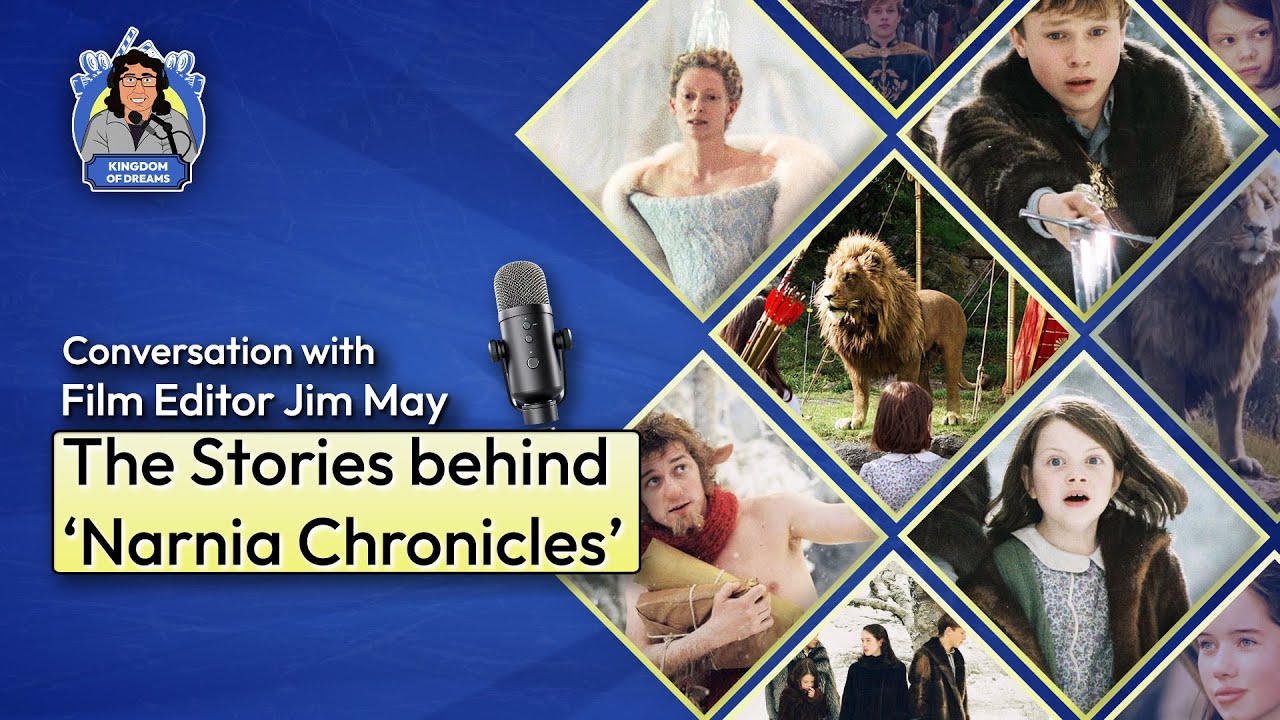
Clips and Shorts from this episode
About this episode
In this episode, editor Jim May shares his journey through the creation of "The Chronicles of Narnia: The Lion, The Witch, and The Wardrobe." Discover behind-the-scenes secrets, including how key moments like Lucy’s first steps into Narnia came to life and the challenges of crafting compelling edits that resonate with audiences.
Jim May is a seasoned film editor known for his dynamic storytelling, precise pacing, and ability to elevate narratives across genres. With a career spanning over two decades, he has worked on major Hollywood blockbusters, critically acclaimed dramas, and high-profile studio projects.
May’s editing expertise shines in films such as Non-Stop (2014), GI Joe: Retaliation (2013), and Goosebumps (2015), where his keen sense of rhythm and emotion played a crucial role in crafting compelling cinematic experiences. His collaborations with top directors and production teams have made him a sought-after talent in the industry.
Beyond feature films, May’s versatility extends to television and streaming projects, bringing the same level of precision and narrative finesse to every frame he cuts. His ability to shape performances, build tension, and seamlessly blend action with character depth has cemented his reputation as one of Hollywood’s top editors.
#visualstorytelling #videoediting #benbarnes #tildaswinton #tumnus
Full transcript
Automatically generated from the episode audio, so expect the odd misheard word or name. Speakers were labelled automatically. About 10,400 words. Tap a timestamp to play from that moment.
0:09Jawad MirWelcome back, everyone, to another episode of Kingdom of Dreams Podcast, The Making of Stories. I'm your host, Jawad Mir. Today, my guest is Jim May. He's a film editor who's worked with, a lot of amazing directors, including Michael Bay, Andrew Adamson, and a whole lot more. He used to work as a VFX editor, then he switched over to editing. And we had a wonderful talk just, not just about professional, editing and films that he's worked on, specifically being, The Chronicles of Narnia: The Lion, the Witch, and the Wardrobe, but it's just a whole bunch of other stuff. I had a great time talking with him. So without further ado, here is my conversation with editor Jim May. I have grown up with the movies that you, Chris, Joel, you know, William, and now he directed the most recent film, Unstoppable, which I absolutely loved.
0:59Jawad MirSo it's... Y… you have... And I say this to almost everybody whenever there's a chance. You have absolutely no idea how many lives you have impacted with the films that you have worked on, even if I, if it's the, you know, a camera operator or a focus puller or an editor. It's, it's just, for me, my entire life is films.
1:22Jim MayRight.
1:22Jawad MirAnd it's very... And this is one of the reasons I do the podcast, because I effing enjoy it.
1:27Jim MayYeah.
1:28Jawad MirBecause that's my life. And to be part of, you know, talking to people who have sort of, I've sort of grown up with way, grown up with in a very strange way, it's very meaningful for me. So I'm really honored to have you and The Lion, the Witch, and the Wardrobe. You know, I remember seeing the book for the very first time in library when I moved to Canada in early '90s, and then seeing a movie about it was just a joy. So honored to have you, sir.
1:53Jim MayAll right. Well, thank you. Thank you. Again, honored to be here.
1:56Jawad MirI would love to start off with talking about your career first. How did this bug of being in the film get started? What inspired you? What was the catalyst?
2:07Jim MayYou know, it's funny. It wasn't, you know, 40, 50 years ago, it wasn't like it is today with, your phone could, like, make a movie, you know? It was somebody in the neighborhood had to have a camera, either a 16 millimeter or more often a s… a Super 8 camera. And my friend happened to have a Super 8 camera, and we discovered early on that you could crank it up and roll it back, you know, at that high speed so that when you shot at high speed, it had really cool imagery on it, and it would roll back at slow motion. And so we decided to make a little film using my, all my plastic models that I had built together, plastic models of tanks and airplanes, and we had some fireworks. This was Colorado, so this was, this was sort of a bit of the Wild West where I was living.
2:53Jim MayAnd we would blow up the models, and we created a little film we called Scenes from World War II. And it was just bu… really an excuse to just sort of destroy and demolish these old models that I had. And we kept it, you know, sort of on the, down low from my parents and just went out and took the camera. And then, at that point then I realized, the power of putting these images together. You know, it was, again, it was an involved process. You had to wait a few days, if not longer, to get the film back, and you project it on a little projector, and you had to be very careful 'cause if you tore the film, that was it. There was no copies of it. There was no negative. The Super 8 was what they called reversal film. So it just, you processed it, and that was your only copy of it. And Scenes from World War II needed some editing. So I got a little tiny tape splicer and, I mean, you know, it's tiny. It's eight millimeters. It is not a big piece of film.
3:46Jawad MirYeah.
3:47Jim MayBut we had a little projector, and we were able to watch what we'd shot, and it was just sort of got a bit of a bug there. And then next, Jawad, I got a job at a movie theater, which, was sort of the local theater. It wasn't a small theater by any means, though. It was a, an exclusive house, 900 seats. It was the Continental Theater in Denver, Colorado. And this was where they had big premieres and, you know, single showings. Like, the entire city, if you wanted to see the movie, at times you had to go to the Continental Theater. And it was just one of those classic movie houses, just huge lobby, huge concession stand, huge box office. And it was, again, sort of a bit of an honor to work there. And I found when I was working there as what they called a doorman, which is essentially an usher. I had my red jacket and my bow tie, my black bow tie. What I found was that there were certain parts of certain movies that they had in-house that, I wanted to go back and watch again and again. And in some cases, like we played the movie, Ron Howard's Cocoon was playing.
4:49Jim MayAnd there was a joke, I don't know if you've seen Cocoon, but it was a really…
4:52Jawad MirI have
4:53Jim May... Brilliant movie on a lot of levels. A complete Ron Howard, you know, right, just right at the height of sort of him, you know, finding his footing as a director. And there was a line in there where Steve Guttenberg says, "If this is foreplay, I'm a dead man." And it was just... The audience reaction was so fun to be a part of, especially when you had, you know, 800 people in there. The roar of, you know, the laughter from the audience when, you know, especially people who hadn't seen the movie yet, was so fun and so, cacophonous and so, you know, energetic and inspiring that I would go in there at times to just see, you know, well, is it... And, you know, at times if, you know, I had a couple hundred people in there, the joke wouldn't play as well. But it was fascinating because I then started, I realized looking back at my time at a movie theater that I think that was part of what led me to be an editor or wanted to be an editor, was just that idea that you could go in and see how certain scenes, certain sections, certain edits would play. You know, not just even from different audiences, but just for me, you know, at different times of day, different times of, you know, night.
5:58Jim MayAnd it was just, I think that really led me to be able to sit in a dark room and watch certain scenes, certain edits, certain, you know, films over and over and over again, you know?
6:11Jawad MirAmazing. Yeah, no, it's, it's, it's fascinating. You know, it's funny you were talking about, cutting 8 millimeter. I've done flatbed editing on 16 millimeter, on the Bolex camera. My first film came out completely underexposed. My fir… second film came out completely overexposed. But that's how you sort of learn and, you know, you kind of figure... But the, I think the flatbed editing, which I never signed up to be an editor. I ne… I always wanted to be a director. But that somehow got into my head, and editing became, like, a huge part of me. Not anymore. I'm sort of trying to dwindle away from it. But it's just a fascinating thing to know editing, because even as a director, you can just cut everything in your head as you're even lying down in bed and about to go to sleep, and you're thinking of a, you know, scene and how you're gonna cut it this way or that way. But that's, that's really fascinating. I appreciate you sharing that. That's really cool. It's always fun hearing where everything begins.
7:05Jim MaySo not to jump too far forward or too deep into our other conversations, but there was a scene in Narnia that, you know, Narnia, a longer story about how that movie got…
7:19Jawad MirYeah
7:19Jim May... Sort of broken up and, be… between me and the other editor. But, there was a scene in there, because we had been on the movie for so long, oh, probably by the time we had our first preview in an audience, or in front of an audience in Los Angeles, we had been shooting for probably, you know, or it's, it'd been since we'd started shooting about 15 months, which today is a really long time, extremely long time to wait to show the movie in front of an audience. And we had weekly or biweekly, screenings, you know, that the director wanted to have with friends and family. He'd bring them by the cutting room. But those weren't like an audience of 600 people…
7:55Jawad MirYeah
7:55Jim May... 500 people. You didn't get the same reactions, and a lot of the people who came had seen the movie before. So we took the film out to La Verne, you know, which is sort of in the San Gabriel Valley east of Los Angeles, and showed the movie. And there was a scene prior to that where I had to fight to keep this one beat in there, and I was convinced that it would get a laugh. But we really didn't know how big of a laugh because we were all so used to seeing this one beat in there. I don't know how well you remember the movie, but there's a beat where Lucy, the little girl…
8:29Jawad MirYeah
8:29Jim May... Steps through the wardrobe, goes into the, to the, you know, Narnia for the first time and is just…
8:34Jawad MirRight
8:34Jim May... W… wowed by. I've got great stories about how that scene was shot and put together, by the way. But there's a beat where Mr. Tumnus, or Lucy reaches out her hand to shake Mr. Tumnus' hand, and he has no idea what that means, so he stares there kind of blankly, staring at her. And, we just hold on it. And I've had producers, I had studio executives say, "You can't. You gotta cut that down. That just, that's, it's a little awkward." And I s… I finally just said, "Look, I promise if this doesn't get a laugh, I promise we will pare it down. We will take seconds off of this edit and... But just, can I just play it and we'll see what happens?" And it worked really well. Same thing. Got gangbusters response, almost like the Cocoon response. And, 'cause people got it. They understood this little girl is trying to shake his hand. He has no idea what's happening here. There's this awkward beat. And it was just, it was really, Jawad, it was a very satisfying moment to know that, again, this single piece of editing had survived for that long a time. And, you know, and the director let us try it and see what happened, and it was, it was one of those things where I just recognized, you know, wow, this takes me back to going to the movie theater, and we're just kind of, like, getting a sense of what does it take to pace a little comic moment like that.
9:47Jim MayYou know, what does it take to sort of get an audience and suck them in, pull the rubber band a little bit, and then, and then when do you release the rubber band? I think that's a lot of what editing is just the…
9:58Jawad MirYeah
9:58Jim May... The timing of that sort of stuff, you know. And finding that timing in it, because it's, you know, you can previz the movie, you can storyboard the movie, but there's a lot of that just can't be, you know, figured out until you actually have the footage and you can try it and time it and get it in front of people.
10:14Jawad Mir100%. And, you know, over the last 15, 20 years, one of the things that I've learned is sometimes, and editing is not about cutting, but it's about holding. You know?
10:26Jim MayYeah.
10:26Jawad MirThat react… whether it's somebody crying or whether it's somebody laughing or that little pause for people to think, you know, without a piece of word really kicks in. And audiences are smart. They really…
10:37Jim MayOh, yeah
10:37Jawad Mir... You know, they get kicked, they get pulled out of the movie when there's a cut. Have you s… heard Francis Ford Coppola's story about Godfather II?
10:44Jim MayI'm not sure if I have.
10:46Jawad MirSo you know how it goes back and forth, right?
10:48Jim MayYep.
10:49Jawad MirSo he was like, when they first did the screening, people hated the film, Godfather Part II. And he was underneath his bed, like, really trying to figure out what had happened. He was really stressed out, anxiety. And then him and his editor, all they had to do was extend each period from 10 minutes to 20 minutes, and that pulled the audience in.
11:10Jim MayInteresting.
11:11Jawad MirBecause the audience wanted to be in that world a little longer before being cut to the other world.
11:16Jim MayYeah.
11:17Jawad MirBut that's the magic of editing.
11:19Jim MayYeah. Well, and he also had the advantage that the audience had already been sort of…
11:22Jawad MirYeah
11:22Jim May... Immersed in that world in the first movie.
11:24Jawad MirTrue.
11:24Jim MaySo on some levels, the audience was already along for the ride when you came in to see Godfather II.
11:29Jawad MirYeah.
11:29Jim MayThere was another example, though, Jawad, of what you're talking about, the hold, where, on a film I worked on called Non-Stop.
11:35Jawad MirYeah.
11:35Jim MayAnd, Liam Neeson and, I forget the other actor who was, who was…
11:41Jawad MirIs that the train one? The one that... Or was that the…
11:44Jim MayNo, that's the airplane one
11:44Jawad Mir... Commuter? Okay. Oh, okay.
11:46Jim MayYeah.
11:46Jawad MirYes, that's the one.
11:46Jim MayCommuter was Non-Stop on a train.
11:49Jawad MirGot it. Got it.
11:50Jim MaySo yes, it was, the one on the airplane that's, you know, that gets hijacked and
11:55Jawad MirYeah
11:55Jim May... Liam Neeson plays a federal air marshal. At one point, Julianne Moore approaches him. They've just gotten on the plane. Julianne Moore approaches him and says, "hey, can I maybe switch seats with you?" And Liam Neeson has alr… already had this run-in with the actor who's sitting next, ends up sitting next to him. And Liam Neeson looks over and just, stares at him for a bec… a second. And it was the same thing that you were talking about. There's just a hold there, and hold, and a hold, and waiting for this guy to basically get up and give his seat away. And I held it much longer than, you know, you would normally do. And it was the same sort of response. The audience, like you said, they're smart. They… you've already set it up with this confrontation at the, at the TSA line, and they got it. And they just, it just, it got, like, a great response, and even better than I thought it would get. And I just remember thinking, man, there's a real power to just letting good actors and letting these beats kind of hold. And there was no dialogue. It's just Liam Neeson staring at the guy for a second.
12:56Jim MayAnd as the seconds go on, and the guy is, like, you know, he's saying, basically, "I'm waiting for you to get up and leave. You need to, like, change place, change seats with this woman." And it was just a little beat that was kind of, like, improvised almost, and just the editing, you know, the Avid allowed us to just sort of stretch it out and turn it into something that wasn't there. It was never gonna be a funny moment. It was, really gonna be just a moment where he looks over, the guy gets up and moves his seat. But it was just, it was kinda nice to be able to add that beat in there, have it work.
13:24Jawad MirThat's awesome. Yeah, 100%. And, you know, before I ask you how you got on, The Narnia, The Lion, the Witch and the Wardrobe, I specifically remember, so this was, I think it came out after Harry Potter, right? Like, when the fantasy and Lord of the Rings…
13:39Jim MayYes
13:39Jawad Mir... Was kind... Yeah. I remember, while I was, while, when you said, told me that about opening the wardrobe, I, it hit me that I remember watching the teaser, the very first teaser that came out, and I still think it's one of the most amazing teasers because it ends at the wardrobe, right? And, like, you don't know what's there to expect afterward. And it, I, and I was really pulled in with that, and I thought it was really brilliantly marketed. But just wanted to point that out. Tell me how you got onto the film, the very first one.
14:11Jim MayI got onto the film through a executive, she's now an executive at Universal. She's the head of visual effects at Universal. Her name's Jennifer Bell. She had worked with the director and the editor, back in the days when the director, a man named Andrew Adamson, who came…
14:31Jawad MirShrek
14:31Jim May... Up through visual effects and then through animation. They'd worked together at a visual effects facility, like, years and years and years prior to that. And then Andrew just, through sheer... He's a New Zealander and just a wonderful gentleman, and just, through sheer just sort of persistence and intelligence and, guidance and again, political savvy, and also vision. I mean, he's a very creative gentleman. And I think through the ranks of the VFX, I think people saw that this was a gifted gentleman. So when he got into the Shrek world and started, you know, sort of overseeing those, I think people recognized, here's somebody who's got something. So he went and pitched, to Disney, but also, Walden Media, who was tied in with, the estate of C.S. Lewis, you know, the author…
15:21Jim May... Of the original, Chronicles of Narnia books. Andrew was able to, you know, basically sell them on this huge budget movie. This was a $175 million movie back in 2004. This was not a cheap movie to make, and I know Disney was very nervous. I was, I'd worked on several D… Disney movies up at, you know, to that point, Armageddon and Pearl Harbor.
15:45Jawad MirYeah.
15:45Jim MayAnd several of the executives were very concerned about the budget on this film and having a first time, live action first time director down there shooting this movie. And, you know, they're in New Zealand. There wasn't gonna be a whole lot of studio, oversight, and I don't think they like that, you know, on certain, on certain levels. They like to be kind of involved and, you know, part of the process. But, in Andrew, they had a director who was extre… extremely confident and really, I don't think had any qualms or any concerns about how this was gonna come off. And they started off putting it together like a, like a, an animated feature on certain levels. They built what they call a story reel, which is, built with these, you know, a collection of storyboards that you sort of dissolve from one to the other.
16:31Jim MayAnd then, in certain cases, they had a whole previs team creating the entire sequences because some of the more complicated sequences were hard to board, would've been really complicated to storyboard. And, you know, previs was happening then, but it wasn't as, pervasive as it is now and as sort of widespread as it is now. I mean, now previs is, there's entire companies, that's all they do. We had an entire unit, that was in New Zealand and had been working up in Burbank, where they had a DreamWorks office working on the film. And they were putting it together, you know, for probably a good year before the shoot started. So they had, they, you know, they had a good blueprint for the film. What they didn't have was a, an editor who had a lot of live action and in my case, visual effects experience, and I had been a visual effects editor, for years and then before starting to get into, like, feature film cutting. So, I think they wanted, the, I have to, sort of step back for a second and tell you that I was actually the second editor on, Lion, the Witch and the Wardrobe.
17:40Jim MayThe lead editor was Sim Evan-Jones, who had worked with Andrew, the director, on multiple Shrek movies and stuff, and they had gone back for years. So when I came on, that was, that was my role, was to basically be the guy who had done some live action stuff, but mainly was bringing, like, a visual effects editor, you know, knack to the, to the process as well. They, the, my friend, she was our visual effects producer on Van Helsing, the film I was on when I got the call. Went in and met the both of them, and they recognized my enthusiasm for the, for, one, working with them. I was a big fan of the Frek… the Shrek franchise. But also just, you know, the idea that we could m… move down to New Zealand for months and work remotely like that or work, you know, like, that far away for a while. I honeymooned in New Zealand, so I was very familiar with the country and I just, you know, fell in love with it on my honeymoon. So for me, it just was a wonderful opportunity. So I, you know, I kind of begged to join them on the film and said, "Look, I will take on whatever role you needed."
18:47Jim MayAnd they were convinced. They brought me on. But then here's what happened. Jawad is kinda interesting. I went down there kind of not fully knowing what my role was gonna be, but shortly after we started shooting the first unit, they added a second unit. And I gotta tell you, the shooting schedule on the film was, 172 days or something. That's for first unit. So second unit was essentially coming on a few weeks after that, maybe six, seven weeks after that, and was shooting concurrently the same amount of footage. It was all shot on film. So you can imagine how much footage…
19:27Jawad MirWow
19:27Jim May... Was coming through. And at one point, I think, Sim, the lead editor recognized, you know, "Jim, let's just, you and I just do the movie. Let's just make this happen." And, you know, obviously a great, boon to me to be able to, like, and a great honor to have him kinda, like, take me on as his, you know, as his co-editor. And the... What we realized was, again, that, you know, we started off early on just both taking swipes at some of these scenes, like the scene where the family gets on the train early on, the train in London. And they have an awkward moment with some of the other kids in the train car and stuff. And Sim and I both took a pass at that, and then we ended up showing that to the director. And at one point, Andrew, the director, turned and said, "Look, guys, I can't do this for every scene. I can't have, like, a bake-off between, you know, each of the scenes." And he was right, and it didn't make sense. And so again, Sim, you know, thought, "Well, I'll tell you what, let's checkerboard it." And that way, rather than having to sort of edit to keep up the camera all the time, if you need a few days to work on a scene, which in some cases some of these scenes needed a lot of, you know, a lot of TLC, we were able to take the time to do that and not so much worry about keeping up the camera because there were two of us.
20:39Jim MayYou know what I mean? So the checkerboarding of the scenes ended up being a really wonderful way of doing it. For example, Sim, had a scene, we were probably two-thirds of the way through the production, and Sim took on this scene that we just ended up being extremely involved, the scene where Aslan gets sacrificed at the altar.
20:56Jim MayAnd there's just a bunch of coverage, and a bunch of coverage of all the characters sort of chanting and rooting for Aslan to get sacrificed. And, the queen eventually, you know, picks up the sword and does her business. But the scene was extremely complicated. Again, tons of cameras shooting over the course of, I don't know, a week of just footage pouring in. And for Sim to have tried to, like, just sort of, you know, throw that together was not gonna happen. He needed time to work on it. And so there were smaller scenes coming from second unit, smaller beats coming from second unit, and I was able to sort of pick those up and let Sim do his thing, and really focus on the scene. Like, focus on it, like get married to it for a week. And, you know, you can see it in the final, the final film how effective that scene is, but it's largely because he had time to work on it like that, you know, while we were shooting. So again, the, I think the role kind of evolved over the first few weeks when I came on, and we were still trying to figure out what it was gonna be.
21:56Jim MayAnd then once I settled in, once we all settled into kind of this, like I said, checkerboarding of the various scenes, then we, you know, we kind of, moved into the place where I was accepted as a co-editor on the film and we didn't look back there. And, you know, like, other people you've talked to, other editors you've, you've talked to, Chris, Billy, Joel, these guys can all point to one or two films in their career that was, a bit of a turning point for them, a seminal part of their career. And I would say The Lion, the Witch and the Wardrobe for me was that turning point, because I was, you know... I'd worked in that capacity. I'd cut feature films myself, but they're all much smaller. And this, and, you know, this film ended up being not just a tremendous responsibility and tremendous sort of, opportunity, but then the, you know, the response to it was pretty phenomenal. The film ended up being a huge hit, and it just... You know, it's funny when you get one of those on your, on your resume, how your career changes.
22:54Jawad MirYeah. Yeah, it's always about that one project that turns…
22:58Jim MayYep
22:58Jawad Mir... The tables for you.
22:59Jim MayYep.
23:00Jawad MirAmazing. No, that's really cool stuff that you shared. Thank you so much. And you know, I looked up your IMDb and you talked about it too, that how you were a VFX, editor. That transition, you don't still do that, right? You're more on just on the editing side, correct?
23:17Jim MayYeah. No, I haven't been a VFX editor for 20 years.
23:20Jawad MirYeah. Do you, did you ever miss that once you became an editor?
23:24Jim MayWell, it's funny because, there were times, and this has happened the last few projects, where, I would quickly put together a little composite of images on the Avid. You know, an Avid allows you to do that.
23:36Jim MayDo quick visual effects cheap and quick sort of representations of what the visual effects are gonna look like. And, I would show that to the director and the editor, and the director would say, "Wow, that's, that's interesting that you can do that." And I said, "Well, that was my past. That's what I used to do." So it's, for me, a sort of old hat. So it's kinda fun to have that kinda, that experience and that past. But no, I haven't, I haven't really been a visual effects editor for, like I said, over 20 years. Closer to 25 years. But it definitely helps to have that experience. And you know, it's interesting in hearing some of your other editors on your podcast, they talked about their paths and how they got into editing. And I'm sure for most of them, the ones that I've listened to at least, they all worked their way up from, you know, the standard sort of cutting room hierarchy…
24:24Jawad MirYeah
24:24Jim May... That happens. The apprentice or the production assistant, then the apprentice editor, then the second assistant editor, then the first assistant editor, and then you get a chance to co-edit on a certain project where the editor gives you a chance and offers you a break. And then from there you're able to sort of take off and find your own director to work with, or you keep working with that same editor who gave you the initial, the initial opportunity. My path was definitely different. There's not many visual effects editors who have worked their way from being a visual effects editor then kind of jumping onto a film as a, as an editor. That doesn't happen that often. I mean, Conrad Buff, I know, started in visual effects, and he and I had a similar path. I followed his sort of trajectory a little bit, or his path. Again, not on his level, but I did work at ILM, and I know that he had worked at ILM when on the first Tri… I think it was the Return of the Jedi films and The Empire Strikes Back. And then he s… was able to wrangle that and turn that into a career as a very successful editor. For me, it was working on, as a visual effects editor, working on these huge budget visual effects films like Armageddon, like Pearl Harbor…
25:31Jawad MirYeah
25:32Jim May... Like The Mummy. And so it was sort of being in that space at the right time, but also just, like, sort of, you know, being able to interact with the editor, interact with the directors to the point, I think, where they could see that, like, the pressure was something that we could handle. And I was able to kinda wrangle that and convince somebody over at Jerry Bruckheimer Films to get me a job as a third editor on a film. And I also had to wrangle the visual effects at the same time. So, I wasn't free and clear of it yet, but it was a film called Kangaroo Jack. It was a Jerry Bruckheimer film. That was the…
26:07Jawad MirYeah
26:07Jim May... I was the visual effects editor but then also the third editor on that film. That's where I met Billy Goldenberg, was, worked with him on that movie.
26:15Jawad MirThat's so great.
26:15Jim MayAgain, not a, not a usual path for, most editors to…
26:20Jawad MirYeah
26:20Jim May... Go, yeah, explore that path.
26:21Jawad MirIt's very different.
26:22Jim MayYeah.
26:23Jawad MirVery different. So, you know, y… y… we talked about how you got inspired to be who you are today. We talked about how you got into Lion, the Witch and the Wardrobe, the Narnia films. But that f… first bridge that you have to cross to get a project to, for people to sort of start seeing you, and what was that journey like? Was that, you know, just to get your first film and for the world to see it, a major film or a small film, working with producers or directors. J… if you can just sort of run that by me, I would love to hear that story.
26:58Jim MayThe very first one, or you're talking about the ones after Lion, the Witch and the Wardrobe?
27:02Jawad MirNo, before that. So before…
27:03Jim MayBefore that
27:03Jawad Mir... Ev… before you were even, like, a VFX, editor, just to kind of break through into the industry, right, and just…
27:10Jim MayYeah
27:10Jawad Mir... To have the, to be involved in projects.
27:13Jim MayGotcha. The VFX, again, the VFX features that I was on, I was at ILM for a while before moving back down to Los Angeles. And I had happened to land at ILM at a really opportune time. The first film I worked on was Terminator 2, and then, you know, that was the time when ILM, I think, won four Oscars in a row for visual effects.
27:39Jim MayAnd so to be in that environment gave me a chance to, basically, you know, be at the Harvard of visual effects facilities. And so when I came back down to Los Angeles, that carried with it a certain panache, anyway, even though I was just one of, you know, a crew of, you know, 20 visual effects editors up there, and assistant editors. So, but I had the advantage to be able to... You know, a lot of people at ILM are, you know, they've been up there for years and they were, you know, had, set their families there, their kids were in school and stuff, and they didn't have the flexibility that I did to move sort of back and forth between Los Angeles and San Francisco, or, you know, Marin County. So, when I came back down, you know, Harvard visual effects degree in hand, I was able to, wrangle that a little bit. I worked at, Sony ImageWorks, for a little while. Sony ImageWorks was just getting started at the time on the Sony lot, and I was able to kind of, come in there, work in their sort of newfound and ad hoc editorial department, which was great.
28:39Jim MayHad a chance to meet some Sony executives. And then, at one point, I m… I had a friend who was a high-ranking visual effects executive, again, visual effects executive at Disney, and he, knew Frank Marshall, Kathleen Kennedy. He'd worked with them for years, a guy named Art Rapola, and he recommended me to be a visual effects editor on a film that, Frank Oz was directing called The Indian in the Cupboard. So again…
29:10Jawad MirOne of my favorite films.
29:11Jim MayYeah. And again, Frank Oz is just, you know... The, I'm, I'm being dropped into this, dunked into this situation where my first, you know, visual effects editor feature is just with some of my heroes, you know? Frank Oz, again, is just, like, just a amazing gentleman to work with. And, again, Marshall, Kennedy Marshall at the time was just doing, just, you know, groundbreaking. And yet, you know, you've got your Spielberg there in front of you. Just groundbreaking stuff. And they just, you know, everything they're doing was, like, turned to gold in terms of people coming and watching their films and stuff. So for me, it was just, like, this huge opportunity to drop in and... I know you talked about sort of the various, platforms people, the various, platforms people cut on. That was on the Lightworks. That was the only show I'd ever worked on with the Lightworks, which is kind of fascinating. Everything else had been Avid since then. And because of that role, I got, several different visual effects editing jobs afterwards, and it's just the people that you meet along the way, Gerard, you know?
30:15Jim MayAnd there was a guy who was, producing a really small budget film who just I happened to run into at some, like he had seen, some party or something, and he had seen The Indian in the Cupboard and thought the visual effects were great, and asked about how that was done and like the, you know, how did they do this, did it work, did it, you know, how'd they shoot it. And he and I started talking and he said, "Well, so what's your deal? Are you always gonna be a visual effects editor?" I said, I said, "No, actually. I'd, I'd really like to, like, edit. That's kind of interesting to me." I'd done editing in film school. I'd edited something, believe it or not, on the EditDroid when I was at ILM. A baseball documentary. A short, like, 30-minute baseball documentary I was trying to get shot. And ILM was great at the time because they would let you just use equipment. If you wanted to use equipment at night or on the weekends, they were just like, "If the equipment's just sitting there, go ahead." And I learned the EditDroid, taught myself the EditDroid, and used that to cut this documentary. So it was out there. People knew that I was looking to cut stuff, kind of anything, and this producer, you know, got the sense that I was enthusiastic and looking to cut in my spare time.
31:22Jim MayAnd he said, "Hey, why don't you come interview for this feature with, the director?" So I came over and meet the, met the director. And the budget on this movie was $500,000. It was being shot on DigiBeta. It was like, it was, to say it was low budget is an understatement. They were paying me, I think $100 a week. I mean, just something insane.
31:43Jawad MirOh, wow.
31:44Jim MayYeah. This wasn't what you'd call tier one. This was underground…
31:47Jawad MirOkay
31:47Jim May... Low budget
31:49Jawad MirYeah.
31:49Jim MayAnd then it was called, Cookers, and it was a really small bud… budget film, again, about, these three people who hole up in a abandoned house. The shot, they shot it up in Oxnard, sort of in an abandoned house. And it was one of those weird sort of lightning in a bottle things where the director and the writer and the producer, they just all found this crazy weird tone to this thing, and it was kind of a joy to work on. It actually ended up being a really, fun project and ended up launching careers for some of the actors. And for me, we won several awards actually for editing, not just for the film itself, but also for editing. And it went to certain, horror film, you know, film festivals. And that then in turn, when that happened, I had several people that I'd worked with, prior to that. You know, the Michael Bays and, Bob Ducsay, who's a editor friend who had hired me to work on, Steve Sommers' film called Deep Rising.
32:54Jim MayI think what happens is they recognize that this is something you're not gonna... It's a, it's a, it's a handle you're not gonna let go of. This is something that you've, you've got it in your blood. You wanna do it, and you're, if you're gonna go do this in your spare time, your weekends, and get paid $100 a week to go do this, then I think, people sense that enthusiasm, are looking to kinda help you get a leg up, you know?
33:16Jawad MirYeah.
33:16Jim MayAnd that's, I think that's what happened, is because then those same people, Bob Ducsay, ended up bringing me on to Van Helsing as a third editor. Michael Bay ended up hiring me after Lion, Witch and the Wardrobe to be, one of the editors on... He had just formed this small, production company called Platinum Dunes, with a couple partners of his, Brad Fuller and, Andrew Form. And those ended up being kind of perfect for guys like me, guys like Joel, Negron, guys like Roger Barton, because they were, you know, they were low budget. The directors were usually commercial directors, and Michael was able to sort of oversee them and make sure that nothing went haywire. And he was very interested in who the editors were and, you know, because he and I had a really good relationship coming off of Armageddon, coming off of Pearl Harbor, Michael was okay with, you know, putting me in the editor's seat on films like that. I did six of those movies with Michael, six of the Platinum Dunes movies with Michael.
34:13Jawad MirWhich one were they?
34:15Jim MayLet's see. I did, sort of a funny project to leap on, onto after the, Narnia films. The Child, you know, the PG movies. The Texas Chainsaw Massacre: The Beginning. I did that one. I worked on The Hitcher, worked on a film called Horsemen, worked on, both of the Ninja Turtles movies that Michael and Platinum Dunes did.
34:36Jawad MirOh, right.
34:37Jim MayYeah. And then I worked on, the first Purge film as well.
34:42Jawad MirOkay. Well, that's, that…
34:43Jim MayVery small
34:43Jawad Mir... That part I missed on IMDb. But, you know, you were talking about VFX, early days, Terminator. So I... Do you know Stephen Rosenbaum?
34:56Jim MayI don't just know Steve Rosenbaum. I love Steve Rosenbaum. He and I were friends…
35:01Jawad MirThere you go
35:01Jim May... For a long time. We were on a basketball team together. Yeah, he and I go way back, and he was…
35:05Jawad MirYeah
35:05Jim May... One of those eight guys on Terminator 2. He was one of those eight visual effects supervisors they had up there that ended up, just doing this…
35:12Jawad MirYeah
35:12Jim May... Groundbreaking work, yeah.
35:14Jawad MirI've spoken to him so many times. I just spoke to him last week about Avatar. I've had John Rosengren, on for Jurassic Park, Terminator 1, Terminator 2. But yeah. I mean, it's just, it's, it's amazing. Again, I always said earlier that all these films that you're talking about, it's just, you know, like mouthwatering, even to this day. And one of the key things that you said, you know, having that enthusiasm to work on a project regardless of the budget, I mean, that's something I think I s… I say this to everybody including my son. I retell this to myself every day even at this point in my career. Attitude is everything. Noth… talent doesn't mean shit if you don't have attitude, a proper attitude…
35:57Jim MayYes
35:57Jawad Mir... And work ethic, so you have to have a good attitude. And that pays dividends in long term. It may not do it right away, but it does certainly do that.
36:04Jim MayYeah. And I think if you look back at Armageddon, it was one of those rare things. Again, it was the highest movie, highest budget film that Disney had greenlit up to that point. I don't remember what the budget was. Probably like $130 million or something like that, which was outlandish at the time. But, you know, obviously Jerry Bruckheimer was overseeing it, and this was I think his third or fourth movie with Michael Bay, and it was just... They had a amazing cast. Bruce Willis, a young Ben Affleck. And it just was like a synthesis of all these, like, great things coming together with that. But because of people like Roger Barton, Joel Negron, Todd Miller, me, we, Jawad, we pulled, I personally pulled 10 all-nighters on that film over the course of the last, you know, six months. And 10 all-nighters meaning getting into work at 8:00 in the morning, working all night long And showing the movie to, I don't know, some producer or Jerry or something, you know, the next morning. And you just, I just, I couldn't get enough of it.
37:05Jim MayI was so enthusiastic. I was just so thrilled to be working on that movie in that environment. My office was, again, I was what they call the supervising visual effects editor. So I was overseeing this whole network of 16 different visual effects facilities, providing, you know, shots for the 1,600 films that, or 1,600 shots that ended up in the film at the end of the day. Jerry would walk, Jerry Bruckheimer would come in from the garage. His office is connected to his garage. He'd walk in and he'd always stop in my room, always, every morning and say, "What do you got for me? What do you, what do you got?" Because he knew, he was so interested in the visual effects and so curious. Like, he knew how cool these visual effects were gonna be. He knew that they were groundbreaking. They eventually got nominated for an Oscar in, you know, their own right. And it was, again, I look back and I think, I'm amazed that I wasn't like, you know, wiping tears away because, you know, at one time he brought in Jackie Chan, and Jackie Chan came and said, "Oh my God, this is this. You guys do the coolest stuff." I was like, "Jackie Chan, you do the cool stuff." "But thank you, but let me check out this shot that we just got from Dream Quest."
38:09Jim MayI mean, it was just, it was one of those times where it just, it was sort of, again, lightning in a bottle. You could just sense it. This was, movie was gonna be big. And you know how I knew it was gonna be big was the week before it opened, somebody was doing a stock report, and they were talking about Disney stock, and they said, "And Disney stock is waiting anxiously for the release of Armageddon this week." And I thought, "Wow. Wow, something I've been working on buried in the dark room, you know, for a year is actually gonna potentially affect Disney stock." And I thought, "That's kinda cool to think about."
38:41Jawad MirIt is cool. It is cool. I'm sorry.
38:43Jim MayWell, I was just gonna say, and then I think, you know, there are a lot of these editors, their names I've mentioned, were all working, all very successful, all not just, you know, sort of B-list, but A-list editors, I think because they, we were all in the foxhole together, and these people learned from, you know, that experience. It was a pretty brutal experience. Again, you don't, you don't wanna stay up all night very often. I worked 78 days in a row on that film without a break. Every, like, meaning every day. Not a day off for 78 days in a row. But again, I think it, this, we all saw that this was sort of this group camaraderie that fed off itself, fed off each other, and a lot of those people, again, I think have become very successful because they shared that enthusiasm, shared that work ethic, and I think somebody like Michael Bay sensed that. You know, the film was successful because, so many of the people... And I'm only really talking about assistants and VFX assistants and stuff. I'm not really talking…
39:39Jawad MirFor sure
39:39Jim May... Even about the editors. At times we had six editors, like picture editors cutting away on that film. So it was insane, and the insanity of it was on some levels kind of, cathartic, if that's possible.
39:54Jawad MirYeah. Yeah, no, I, you know, the thing is that with films like Armageddon, Indian in the Cupboard, I mean, even to this day, the visual effects of those films are far more superior than... Like, I mean, I'm, I'm not trying to put down any film, but…
40:11Jim MayOh, of course not
40:11Jawad Mir... I haven't seen the film. I just saw the trailer of Lilo & Stitch, the live action one, and I just didn't buy it. The visual effects for me didn't do it. I did…
40:22Jim MayYou mean the look of them or...?
40:23Jawad MirNo, just the blending. The blending…
40:25Jim MayOkay
40:25Jawad Mir... Of the real world versus... To me. But I did really, it c… the How to Train Your Dragon live action trailer really clicked with me because I felt like they were in the same frame. And maybe it's just me, but the point that I'm trying to make is that majority of the films in the '90s, especially with great directors like Michael Bay, Steven Spielberg, you know, even producers like Jerry Bruckheimer, had really good, Frank Oz, really good visual effects blending in with the real world, and I think that's where people sort of connect at a deeper level with the characters, is through that.
41:01Jim MayYeah. Yeah. Yeah, I agree. I agree. I think that's a real, that's a real, it's a real art, the ability to take it and make it look real. You know what I mean?
41:14Jawad MirYeah.
41:14Jim MayI think, there's, there's still for me, I have an, a harsh eye towards visual effects. I, it doesn't take much for me to kinda tune out watching, you know, certain things that are done well.
41:28Jawad MirYeah.
41:28Jim MayAnd because of that, when I see something like, and I'm just, one example, Dune 2, and I see those worms pop out of the sand and my jaw hits the f… the sand, they drop out of the sand.
41:38Jawad MirYeah.
41:38Jim MayMy jaw hits the floor, and I just think, "I know how they did this, and yet I can't, I can't fathom how complicated this was to make this look so real." I mean, you're just convinced that is, that is really happening, and it's just, it's always so impressive to me when they're able to do that. One more thing about Michael, I do have to say this, y… you know, and obviously I'm biased, but I think at times Michael, you know, his reputation in the business, and he's a, definitely a, has a, has a bit of a reputation. It,.. I will see whatever Michael Bay movie comes out because the guy's visual style is so jaw-droppingly, unique. But also his knack for visual effects, again, I'm biased. I sat in a room with him while he talked to ILM or talked to his visual effects supervisors. It was like watching, an artist do his thing. I don't wanna overstate it, but I think I would watch some of those Transformers film and just, and just…
42:33Jim MayAgain, my jaw was on the floor. I just, I couldn't believe, one, that he hadn't won, that he hasn't won multiple Oscars for his visual effects work. Because that's all him. That's all... You sit in a room with him, I did on, like I said, Armageddon, Pearl Harbor, and it was just… It was act… actually kind of fascinating, 'cause the editors wouldn't join us for that. It would just be me and Michael, and he would be on a, what they call the cine sync, you know, with the talking ILM.
42:54Jawad MirYeah.
42:55Jim MayAnd grab the pencil and circle and say, "No, I want this plane f… I want this plane flying here. I want this happening like this, and this boat needs to come in here." And it was just, it was again, just, it was mesmerizing to be in that, to be sitting there and watching him, you know, talk at that level and with that level of complexity and get what he wanted, you know? He was very uncompromising with his visual effects, and it shows in his work.
43:17Jawad Mir100%. I mean, he, h… he... I wasn't a fan of Pearl Harbor movie, but the trailer for Pearl Harbor with the music of Hans Zimmer from the Thin Red Line and the speech by the president and the baseball pitcher throwing the pi… the ball and the plane going.
43:35Jim MayYep.
43:36Jawad MirI mean, every one of those shots in that trailer is just mind-boggling.
43:42Jim MayYeah.
43:42Jawad MirAnd the way he paces them, you know. I... It's funny, you're talking about Bruckheimer and Michael Bay. I had Mark Mancina on, the composer for Bad Boys.
43:53Jim MayOh, right.
43:54Jawad MirAnd Speed. And the... I'll send you the link. He had a funny story about Jerry Bruckheimer, how he would just kinda sit there. Because Mark Mancina wasn't Mark Mancina at the time. It was his first film, and he would just kinda like overlook him and, you know, making him push more and more. And these people, like Jerry Bruckheimer and Michael Bay, they come across as very tough customers, but it's for the betterment of the film, right?
44:14Jim MayYeah.
44:14Jawad MirThat's the goal. It's nothing personal.
44:16Jim MayYeah.
44:16Jawad MirThat's all it is.
44:18Jim MayYeah. There was a, I forget, I think it was Washington Post, New York Times, reporter was in talking to Michael about it, and asked him point-blank about his reputation as a tough guy to work with. And, you know, I was sitting in the room with him when that, when he asked that, and he kinda looked at me sort of slyly and then talked to the reporter and said, "Look, I, everything I do is in, is in service to the movie. It's all... I push people hard because these are hard movies. These are, these are hard things to do. These are tough movies to make." And he, I think he honestly believes that, and especially when it came to visual effects, which I was intimately involved with on those films. I think he felt like if he, like, let down his standards, that the standards would drop accordingly.
45:01Jawad MirOf course.
45:01Jim MayAnd I think he felt like, you know, if somebody from ILM brought him something that was sorta substandard to him and below his standards, that there would, it would, the whole process would slip below a certain line. And so it was always like, "Don't, don't bring me something that's gonna suck. It's just, it's... You're, you're wasting my time. You're, it's, you know, we're just not at that level. We're at the, we're at a very high level, and I expect that." And just to see the way that he would push people, yes, hard to deal with. But again, having done eight movies with the guy, clearly there's a, I have a ton of respect for the way that he operates and, you know, he's not cranking out movies the way he used to, but I'm still looking forward to what he's doing next whenever it comes out.
45:42Jawad MirOh, so am I. I loved, Ambulance.
45:44Jim MayYeah.
45:45Jawad MirI wasn't too crazy about the, in the beginning, the drone shots, but the film itself was fabulous, the drama and everything. And, I think I saw yesterday he's working on a documentary of, I don't know what to call. You know those guys that jump from building to building, like they have this…
46:02Jim MayParkour.
46:02Jawad MirYeah.
46:02Jim MayParkour, yeah.
46:03Jawad MirYeah, he's, he's directing that without being ever present at location, so he's working on a documentary. But yeah, I'm... There's sort of some names that I would watch even if it's terrible, because that's just who I grew up with and what I like, and I appreciate every little frame that comes in, the sound…
46:19Jim MayYeah
46:19Jawad Mir... The visuals and everything. But yeah, no. We talked less about Narnia, but we, which is fine, because I really got to know your work and who you are, and it's really fascinating hearing, like I said earlier, these stories. Because it's something I relate to too. Like, you know, we always, we always tend to forget where people come from because, you know, they are at a certain level, like, okay, well, they must have gotten it easy, and it doesn't work like that. You gotta work through so much crap to be where you are, and you're still working through crap. It's just part of life.
46:49Jim MayYeah.
46:49Jawad MirBut you enjoy that, and that's what matters the most.
46:52Jim MayYeah, absolutely. I did wanna say something also about mentors too. I mean, working through…
46:57Jawad MirPlease
46:57Jim May... Crap's a big part of it. But I've had, and I think, some of the other editors that you've had on your podcast would say the same thing, and DPs and composers. I mean, I think mentors is something that just can't be overemphasized. I've had people who recognized, again, not a talent necessarily from me, but, just an enthusiasm and a work ethic and then just a, like, a love of this part of the process, the post process, and I've loved it since, again, like I said, I was a little boy. And then in film school, that was always my favorite, those were my favorite classes, the editing classes, the sound classes, the, you know, the post-production classes. And I think having those people who recognize that in you, like a Bob Ducsay, who was a, again, an editor I've worked with, I think, on six films now. And he has made me a co-editor on certain projects that he worked with. Just, I think because not only were we friends, went to each other's weddings, et cetera, but also I think he just recognized that, like him, I have this burning desire to just, you know, make movies better. Which, you know, and as you know, Jawad, editing can make movies much better depending on the project.
48:04Jawad MirYeah.
48:04Jim MayBut if somebody like, you know, Jerry Bruckheimer, this guy named Pat Sanson, who was Jerry's post-production supervisor. He really did grab me, after Pearl Harbor and said, "I want you to stay with us here at Bruckheimer." So he put me on as the third editor on Kangaroo Jack. It's people like that in your career who just basically not just give you a leg up, but in some cases can really make a huge difference in your career.
48:27Jawad MirFor sure.
48:28Jim MaySo yes to enthusiasm, yes to, you know, who this person is individually, and there's obviously some, you know, luck involved too in being in the right place at the right time. But I definitely have mentors, and I know that Billy Goldenberg, for example, in your podcast mentioned Michael Kahn.
48:44Jawad MirYeah.
48:44Jim MayAnd, you know, Billy wouldn't be... He's the first to admit it. He wouldn't be in the position he was, today if Michael Kahn hadn't seen in him that enthusiasm, but also vouched for him to go on and work on some of the films that he did. And I think all of us can point to the certain mentors, and I can point to about five or six of them that I would point to and say, "I couldn't have done this without these guys looking out for me."
49:06Jawad MirThat's amazing. It's, it's beautiful to hear that. And what would you say, to sort of wrap things up, how do you, for people who are watching and listening, how do you find a mentor? Is it just, does it come to you if you work hard? Is that it?
49:21Jim MayI think that's a good chunk of it, yeah. I think some of it's, kismet, some of it's fate, some of it's just right place, right time. I have a guy, I'm not gonna mention his name, but
49:32Jawad MirSure
49:32Jim May... A guy that, I worked with on a film called Ghosted, and then I stole him. I stole him to come work on Candy Cane Lane, this guy, because he's just got that juice, that enthusiasm, that, "I will cut your sizzle reel. I will cut, you know, I will take the marketing tools and put together my own trailer. I will cut together, like, a little gag reel for the, you know, the studio wrap party." And just somebody who just dives in, weds themself to the project, and just, you can't peel them away from it. And I'm not talking hours-wise. I'm not talking about all-nighters necessarily. I'm talking about just has that enthusiasm for the film. And I think you can find that sometimes in somebody who's a production assistant, who's taught themselves Premiere Pro, and just wants to, like, take clips from the film and put in Premiere Pro. And as an editor, and I know, a lot of editors do the same thing, I'll encourage any assistant, any visual effects person, anybody to go cut a scene. If they've got access to the footage, go for it. Like, why not? You know what I mean? 'Cause I think that's what we're looking for, is people who share that enthusiasm.
50:34Jim MayIt just makes the movie better. If somebody comes and brings a scene to me or to the director and shows... Well, obviously you want them through me first before they show it to the director. But i… if they've, if they have an idea, you know, best idea wins. I'm not, I'm not, it's not a democracy, but at the same time it's, it's, I think you want people like that who are gonna, like, work really hard and have that enthusiasm. I think it makes a big difference. So I've, I've been on both sides of the mentor part of it. And it's, it's, it's a joy to have those people, you know, in your cutting room, you know, in your environment.
51:09Jawad MirYeah. No, that's, that's beautiful advice. Thank you so much. It's been amazing to chat with you.
51:15Jim MayYou as well.
51:17Jawad MirWhen, whenever things get a little bit more calmer with you, or whenever you have time, as many times as you would like, I would love to have you. Because, for me, this podcast obviously is, you know, enthusiasm and exciting, but I learn so much every day when I talk to people like yourself. So door is always open, and I will reach out. If you have time, please do come back. Would love to have you.
51:39Jim MayI, as you can tell, I can talk about this for hours, so probably too much.
51:42Jawad MirI know, I know.
51:43Jim MayBut again…
51:43Jawad MirYeah
51:43Jim May... It's, it's a real honor to talk with you. And if you're in Los Angeles, please, look me up or let me know, 'cause, I would join you for a cup of coffee with some of the other people you've talked about on the, on the show and…
51:53Jawad MirWell, I would love to
51:54Jim May... Just catch up there.