
Episode 227 · April 17, 2025 · 45 min
'The Americas', Cinematographer, Darryl MacDonald
Clips and Shorts from this episode
About this episode
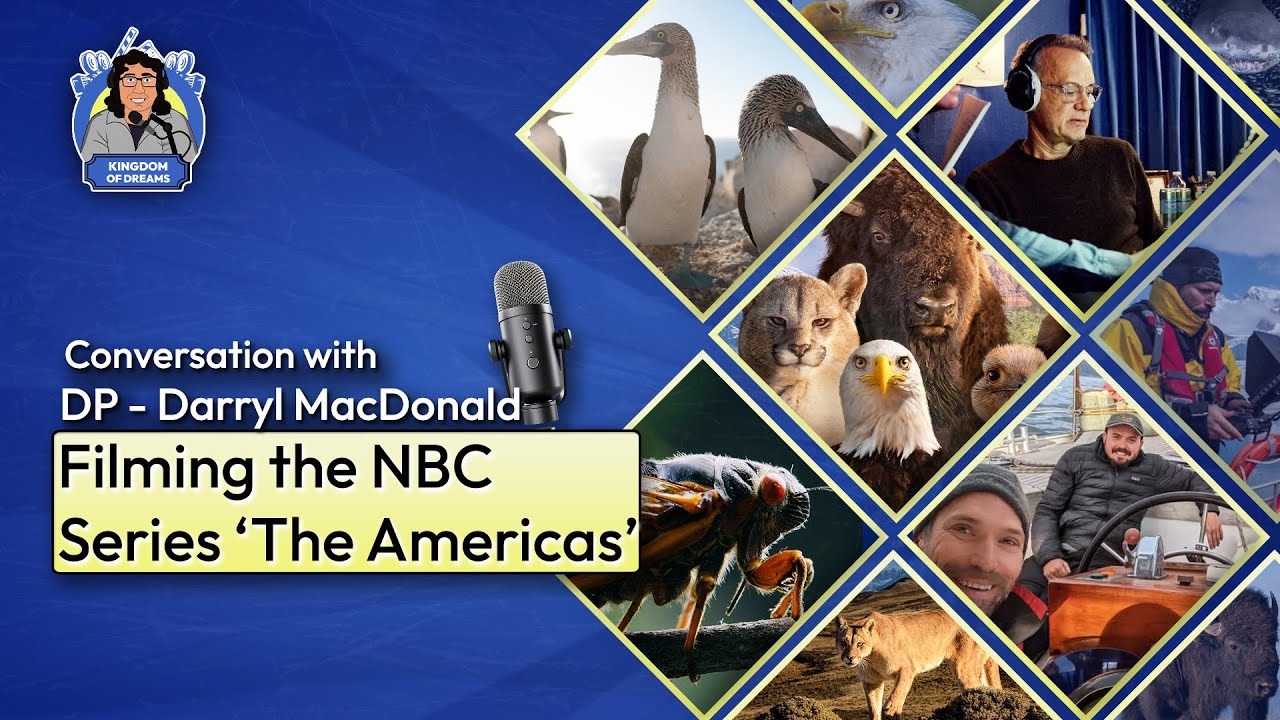
On today’s episode, I sit down with cinematographer Darryl Macdonald, whose recent work is featured in the NBC series The Americas, narrated by Tom Hanks.
We had a powerful conversation, not just about his craft, but about life, personal challenges, and the journey that shaped him.
Go behind the scenes with Darryl as he shares his experience working on The Americas and how his love for outdoor sports and adventure has deeply influenced his visual storytelling.
Through his company, Clear Blue Photo, Darryl specializes in aerial drone, underwater, motion time-lapse, and high-angle cinematography. Backed by top-tier gear, safety training, and years of experience, his work consistently delivers striking visuals that help productions truly stand out.
Full transcript
Automatically generated from the episode audio, so expect the odd misheard word or name. Speakers were labelled automatically. About 7,300 words. Tap a timestamp to play from that moment.
0:09Jawad MirGood afternoon, everyone. Welcome back to another episode of Kingdom of Dreams Podcast, the making of stories. Today, my guest is Darryl McDonald, who is one of the cinematographers on NBC's series, The Americas, which is narrated by Tom Hanks. It just had its 10th episode and last episode shown yesterday or day before yesterday, and there's a behind-the-scene episode coming in the next two days. It was a great conversation with Darryl. We talked about many different things. We talked about life, we talked about his work, we talked about, being away from family for a good chunk of time, as long as three months, and working in tough conditions, and all that fun stuff. Here's my conversation with Darryl McDonald, who is one of the cinematographers on NBC's The Americas. I, haven't seen all the episodes of The Americas, but I did see the one, that you shot, episode 10, I think it was, right?
0:58Jawad MirYeah, the one that just came out, and a few others. ... The, you know, the thing is there's so many nature shows now, as opposed to even five years ago or 10 years ago, and it's really hard to find them unique, for the lack of better word. But the reason I enjoyed the episodes for this one more, maybe, this is just my guess, close to home.
1:25Jawad MirSimilar ki… similar kind of, you know, environment a… and all that. But, also, there's just something about the way it was shot, not necessarily from the movement standpoint, but the colors, that stood out to me more than others may have. I'm not downplaying any other ones, but it just, there was just something about this that I can't figure out what it was…... That I enjoyed more than the others.
1:52Darryl MacDonaldYeah. And I suspect that might be in the editing. I mean, most of the cameras… So this was a, like, a co-production. It was with the BBC for MSNBC.
2:02Jawad MirYeah.
2:03Darryl MacDonaldAnd so you have a lot of the same… Not same, but a lot is… The BBC crews that you know that would've shot, you know, like, Planet Earth and Frozen Planet and all those types of things. And, we often use their cameras. But in this situation, I don't know how the editing worked, if that was done, solely by BBC or if that was partially done in the US. But I do have to agree, like, watching it, there was an explosion of these types of natural history, shows after COVID, in around and after COVID. You know, there's a, there's a bunch of things that happened where, Disney bought National Geographic and they decided to make a whole pile of stuff. Netflix decided to make their own natural history, and when they did that, I think a lot of people that they had in the office doing that is people from BBC, people from Nat Geo, and that sort of thing.
3:08Darryl MacDonaldSo they…
3:09Jawad MirYeah
3:09Darryl MacDonald... The whole system sort of spread out, a little bit, and there have been quite a few similarities. But yeah, watching this series so far, I'm just extremely happy with how it turned out and, there's some really beautiful cinematography in it. They did a great job, with the storylines. But yeah, I definitely... It, there's, there's, there has been a lot of natural history and a little, you know, you can get some, yeah. Not tired of it, but definitely it can, it start to feel a little bit the same.
3:45Jawad MirYeah
3:45Darryl MacDonald... This stood out a little bit for sure, yeah.
3:49Jawad MirNo, that's good. You know, Darryl, tell me, I'm always intrigued about everybody's journey. We all have our journeys of, you know, how we became, h… how, where we are today and what sort of initiated the catalyst of being, whether you're a director or producer, cinematographer, editor. What was your journey like? You know, I've had my set of movies that inspired me to where I am today, but I would love to know about you. What kind of took you on this journey to be where you are today?
4:21Darryl MacDonaldYeah, I think I would be an example of how not to get in the industry.
4:27Jawad MirOkay
4:28Darryl MacDonald... Definitely a long and sort of winding journey. I can tell you a lot of people that I work with are scientists. So it's tough with natural history. A lot of people go into science first. You know, you get access to an animal population where you get intimate access to that population, and then you get to witness behaviors that nobody gets to see. And so when you wanna film it, that's… You're the person that they go to is sort of the most direct line to get, I think, into natural history, having both the cinematography and... I do not have a science background. I was actually a professional photographer for a number of years, and I started with underwater photography when I was young. But the industry changed. So back then, you know, you have a, you have your film roll that you go underwater with and two or three months after you take those photos, you find out if you got the shot or not. And the industry obviously changed with digital and that instant feedback…
5:31Darryl MacDonald... Loop and the ability to... And I was seeing less and less clients looking to pay me to travel because there were so many people that were willing to do it for free. There was a lot more people that w… had access to cameras. And with that instant feedback loop, there was… there's a lot of better photographers, so you just had to have a good eye and you could sort of figure the rest out on the, on the camera, right? So I swapped over to, cinematography and, And then I started working with scientists on a regular basis. So I did some volunteer work, early on. I worked a lot with, the Arabian humpback whales, in the Middle East. And they kept bringing me back after that, and then they got me onto a few other, projects. Again, working with scientists with little to no budget, really difficult locations. And that got me access to several other jobs. And then when scientists wanted to...
6:34Darryl MacDonaldOr sorry, when, productions wanted to film the animals that we were working with, the scientists would often send them in my direction because they're like, "Well, we have this guy that works with us that does all our media, and he can do video and he can do photos and, you know, drive the boat and all that sort of stuff." So yeah
6:54Jawad MirNice
6:54Darryl MacDonald... It was, it was started with one, and then once you can, I guess…
6:58Jawad MirSure
6:59Darryl MacDonald... Prove that you know what you're doing and yeah.
7:03Jawad MirWhat got you into photography? Was there a specific moment in life?
7:07Darryl MacDonaldNo, I took several years of photography in school when I was younger, and I've just always had a passion. I had,.. There was a program actually in high school and when I started taking it, I just sort of fell in love with it. And then, out of high school, I did a lot of, traveling. I spent a couple years traveling in around Central America and Mexico and stuff like that and…
7:30Darryl MacDonald... Yeah, that was the one expensive thing that I had on my travels was I bought myself a really nice, DSLR camera and, some rolls of film and, you know, it was just sort of a thing that I had a passion for it from the beginning and it, and it definitely grew over time and, yeah, no, I can't really… even now I can't do much without a camera.
7:57Jawad Mir100%. Amazing. Tell me about the episode that you shot. Obviously it was shot in different places, different seasons. ... My fa… my favorite, part is the puma sequence. And what's the other animal called? Some… it had an interesting name, I forget. It almost looked like a deer, but it's not. It was in the winter when the puma is trying to chase it down.
8:32Darryl MacDonaldOh. Now I'm drawing a blank. So that sequence I was not on. And I'm drawing a blank on that cinematographer's. That was beautifully shot.
8:43Jawad MirYeah.
8:43Darryl MacDonaldOh, man. He got some absolutely, stunning shots on that one. Yeah, so…
8:50Jawad MirThat was like…
8:51Darryl MacDonaldEach of those sequences, just so to give you an overview of like how you would shoot one of these, it's the average lifespan of, a natural history production is sort of four to five years.
9:08Jawad MirYeah.
9:08Darryl MacDonaldSo initially they… they'll do the research, they'll find the stories, they'll find, you know, the, again, the scientists, which is why that, it's, it's a bit easier as a scientist to get into it, but they'll find the scientists that are working with the populations and then they'll look at it and consider, 'cause they're trying to, they're trying to film things that have never been filmed before, whenever possible and then... Or trying to, do a different take on a story. And so they need to sort of prove that, yes, we can actually film this. And you look at the logistics of how do we get the equipment here? What's the likelihood of this, behavior happening? And then and can we find the right team? And then they look for people who have experience in those, regions to go and film it. So an example, the, penguin, portion at the beginning that I worked on, we are the second team in history ever to film on that island, and the first team was the producer of that, episode.
10:20Darryl MacDonaldAnd she went down and they, I believe they had a team of three or four. I think somebody got injured on that one, and when we look at the, again, the logistics of it's on a very remote, Patagonian island. It was a couple of days to sail out to the island, and then once you're there's no… you can't get a helicopter off. You know, if you need a boat, you have to call it and they have to sail from the mainland to come over. So if you have an injury or an incident, you're looking at potentially a week of extrication time. And then once we arrived to the island, it was a wet landing in like four-degree water, so you're getting out of the boat and hauling, we had 1,000 pounds of equipment onto shore, and then you're hauling that stuff from shore. We had to go probably three, couple kilometers in just to find a spot that was sort of out of the wind, out of the ti… intertidal zone.
11:24Darryl MacDonaldAnd then from there, the penguin colony was up on top of a small mountain that was 300 meters without a trail. And we weren't allowed to stage. We… it wasn't possible to stage up there with 1,000 pounds of equipment, so we had to have sort of a second staging area, but cards and batteries and everything else, had to go, up and down mountain. I apologize. I have…
11:47Jawad MirIt's okay. It's okay
11:48Darryl MacDonald... Just broke into my office here. So yeah, you're going with cards and batteries and everything up and down the mountain every single day. And the temperatures on the island averaged about eight degrees… we had 60 to 100 kilometer an hour winds almost every single day. We woke up in the middle of the night one of the evenings, with our gear tent just exploding because of the winds, and we spent an hour trying to, inside the tent trying to hold the tent up. And it ended up, we ended up snapping a pole in half and we had to collapse the entire tent, and then we had a spare tiny little tent that we had to try and hide the gear in and around. And, so from a logistical perspective, it can be really difficult. And I hope... So next week, the episode that comes out this Sunday is actually a behind-the-scenes, which…
12:48Darryl MacDonald... A lot of my friends and family always say that's their favorite part is to see the behind-the-scenes.
12:54Jawad MirYeah.
12:54Darryl MacDonaldJust for that, again, for that penguin sequence, you know, it's, it's a really short sequence, but we were there for a month. I didn't shower for a month. You just do… There's no possible way to do it and, the weather was, really difficult. It was probably one of the more physically demanding jobs I think I've ever been on. Yeah.
13:15Jawad MirI'm so glad you talked about the penguin sequence because I was gonna talk about the puma, which I'm glad I clarified that you weren't, involved in that. But the penguin sequence, you're talking about the one with the sea lions, right?
13:27Jawad MirYeah. There's a shot which I really, enjoyed because, you know, the thing is that whether you're doing a doc or a nature doc or a narrative film, there is always cuts, right? Like, for… ... The reason of attention span, for the reason of, speed things up, whatever that is. But there's a shot that goes on for a good, I would say, 15, excuse me, 20 seconds, where the sea lion is chasing a couple of penguins…
13:53Jawad Mir... O… on the rocks, and it just doesn't cut. And it just builds up so much intensity and suspense and, eventually it does cut, but for the longest time it doesn't, and I thought that was beautifully done. I thought it was great to even to have that, you know, because with nature series, sometimes, like for example, the one, I think it was Planet Earth II where there's a sequence of the iguanas and the snakes.
14:15Darryl MacDonaldYeah.
14:15Jawad MirThey shot it…
14:16Darryl MacDonaldYeah
14:16Jawad Mir... Over a course of two years just to, and they merged it together, right? But to be able to see that in one go, I thought that was very refreshing.
14:24Darryl MacDonaldYeah, and actually, so for that particular shot, so Graham McFarlane was on the long lens for that. And we were in the air…... With the drone, and when I saw the sea lion come out, like Graham is such an incredible, cinematographer with the long lens. I would say within probably four or five seconds of me yelling that the sea lion was out of the water, Graham was zoomed in and in focus, and we were up on a cliff. Like, he probably would've been shooting at, you know, 1,500 mils…
15:03Darryl MacDonald... At that. He was in focus on top of it instantaneously. He's just such a, such an amazing long lens cinematographer. And so, a lot of that sequence was actually the same, you know, both angles happening at the same time, which, as I'm sure you are aware that, you know, often in natural history you're, you're building these up over weeks and…
15:28Darryl MacDonald... You know, a period of time. But that was, that, a lot of that was from the same moment, which is not something that happens, super often, so.
15:36Jawad MirYeah.
15:37Darryl MacDonaldYeah.
15:37Jawad MirI mean, I'll say this for the audience. I'm sure you know this. The very first time... When was the very first Planet Earth came out? It was al… it's almost been 20 years, right, I would say?
15:48Darryl MacDonaldOh, it's,.. Yeah, that's a good question. I think it has…
15:52Jawad MirI mean, it's, it's, it feels like it's been that long, but, because that kind of, started, I think everything to, it took everything... Yeah, 2006, March 5th. It's, it has been 20 c… 20 years. So I remember there's a sequence in there, and this was when…
16:08Jawad Mir... In my ear… early days of production. I watched behind the scenes of that, and there's a sequence, I don't know which episode it was, what it was the context of it, but it was a 360 degree, shot of bunch of plants growing and then going down and then growing. Something to that effect. And…
16:28Darryl MacDonaldI think you might be talking about Life. There was…
16:31Jawad MirMaybe
16:31Darryl MacDonald... They did a three-year long time lapse.
16:35Jawad MirYeah, that's the one then.
16:36Darryl MacDonaldI know it's…
16:36Jawad MirMaybe it's Life
16:37Darryl MacDonald... But yes.
16:38Jawad MirYeah.
16:39Darryl MacDonaldThat is one of my favorite sequences of all time. It's, it's so incredible how they did that shot.
16:47Jawad MirYeah. So that came out, 2009. Still around… ... The same time. And I remember, so I'm a huge nature buff, right? Like, I have flown drones all over Calgary, Banff, and ... Jasper, all of that stuff. And when that came out, I was, like, so blown away by the fact that it took that long. And…
17:14Jawad Mir... I, and I'm just sitting in my head thinking, "Yeah, it may pay well." I'm imagining it paid well. But to be able to get one shot over three years and just be responsible for that, if that's the only job that you have…
17:28Jawad Mir... Must be quite boring, right? From that st… from that standpoint.
17:35Darryl MacDonaldI mean…
17:35Jawad MirBut kudos to them who did it.
17:38Darryl MacDonaldYeah, I mean, I suggest, the people who were on that wouldn't have been their own, their sole job. They did…
17:45Jawad MirYeah
17:46Darryl MacDonald... Other stuff on the project. But to dream that up at that time, you know, I have, I have to say I've worked, you know, I've worked with Netflix and I've worked with Disney and I've worked with BBC, and all of them are amazing. The BBC, the two things that I feel that they do the best that I've seen, they're very good at… Creating innovation to capture new things, and they're also very good at picking these really small teams that are capable of just doing, like capturing ama… amazing things. Like very small dedicated teams where people can wear multiple hats and get along together and can go out in the wilderness for a month or two months and work in really difficult environments and capture amazing things. And so in that sequence, they dreamed that up, and that was shot in two locations.
18:46Darryl MacDonaldSo it was actually shot both in the studio and in the wild. So they're… they did some green screening with it, again… ... Back in the day because you imagine out in the wilderness, you can't have your, you know, wind and sun and the change of the plants. So in the studio, the plants that are right in front of the camera are actually in the studio, and then they did also film out in nature as well. And the other thing they did with that is it's a, it's a single movement pushing forward. So you've got, basically building like the tracks over time because you can't have a track in front of the camera the whole time.
19:27Jawad MirYeah.
19:27Darryl MacDonaldSo there's several... From a technical perspective, it's an incredible thing to have done at the time and just the technical things that they had to overcome to create that, there was, there was many. There was many. So it was…
19:47Jawad MirYeah
19:47Darryl MacDonald... It was pretty cool. Yeah.
19:48Jawad MirNo, it is, and that's what I was saying that at the time, I was like, "Oh my God, this must be boring." But then after a while when I started watching more stuff and then I realized that obviously it's multiple teams and all, and, you know, you do different things, and it makes it makes it interesting. And, you know, you said something very cool about... Which is true. I mean, it's just true for any film, you know, or any relationship or any group of friends. It's like getting along, right? To be on an island for a month with, I'm assuming there was no, regular internet, if anything, or it was limited, and to be around people that you're working with
20:30Jawad Mir... I… I'm sure there were disagreements and, you know, you... How many of you were there at the island?
20:36Darryl MacDonaldSo there was... We had a team of four basically camera people, and then we were with a ranger as well.
20:45Jawad MirSo how was that? Like was there a lot of bonding, or is there a lot of, you know... You're just limited to interact with the same group of people. Sometimes it can get a little bit too much, but then you still have to work with that. If you can just willing to share that experience of just more like dynamic, you know, interpersonal skills and relationship.
21:06Darryl MacDonaldYeah. No, it's a great question because, again, it's something that I think it's one of the things that I really enjoy about natural history. I find with this job, I think if you're not a great person to get along with, you're probably not gonna get invited back because, you know, if you're on a shoot for a month in a place in the middle of nowhere, you can honestly, you can derail a shoot by just not being a good human being, you know? If you're not getting along with people, if you're not making everybody's life easier. And on this particular shoot, I honestly couldn't have asked for a better team. Every single person on our team, no matter... And again, you have to consider we're, we're, we're not showering from a physical perspective. We're, you know, we're, we're hiking, you know, several hundred meters up and down every single day.
22:10Darryl MacDonaldIt was snowing. It was sunny. It was windy. There's constantly, every time you come back to your tent, it would be filled with sand. You know, you'd have to like de-sand everything to go to bed in the evenings. The smell towards the end of the three weeks inside of myself was just, you know, it's, it's difficult environments, and everybody was just always in a great mood and always ha… in a, in a, you know, "How can I help you get your job done today?" again, I d… I don't, I honestly truly don't think I could've had a better team, or worked with a better team on this shoot. And that goes for most. I have in, you know, I've been doing this now for natural history in particular for, ooh, it's been about 10 years now, and I've maybe had one or two where I've seen some minor conflicts. But other than that, again, I think, I think if you're not a person that gets along with people, you just, you don't get invited back, and it's something that I don't, I don't necessarily see it in other production industries, so in the commercial industry and, you know…
23:27Jawad MirYeah
23:27Darryl MacDonald... Doing features and stuff like that. I've seen people on features that honestly in, any other job would probably be fired for their attitude and how they treat people. I've never seen anything like that in a natural history shoot, so.
23:45Jawad MirSo the thing is, right, like aside from obviously attitude in life is everything. I truly believe that in any profession, like you could be, you know, great. You could be Steven Spielberg, for the lack of better word, but if you have a ridiculous attitude, it's not gonna get you anywhere. But one thing that sort of fits in the attitude is that this constant... There are people, I'm sure you've come across them, not in your professional life only, but personal, they're always just…... Complaining about the same thing, right?
24:16Jawad MirLike, it's just like a circle that they just can't escape even if they want to. Without, I don't, I don't wanna know any names, I don't wanna know any production names. Has that ever happened on a set where it's just, like, that constant, you know, complaining, about the same thing? And it demoralizes you as a production team.
24:34Darryl MacDonaldI would say I've, I've never, I've never had it on a natural history production. I have had it on some sort of nature-based productions before, and it can be. Like I said, you know, one, you can have one person derail an entire project because if you don't, if you're not there to help each other or if you can't deal with, the difficulty of the environment that you're working with, it can really, it can really throw a shoot off and, 'cause it throws everybody's groove off, right? It
25:20Jawad MirYeah
25:20Darryl MacDonald... And like you said, it sort of brings people down and you need to... You're often on these shoots, you imagine, you know, it costs a lot of money. It's, it's, you know, a year or two of prep. If they send me down to the Antarctic for, you know, two weeks, you can, you can guarantee they're paying a lot of money. They print, rent a private boat. They've got this dedicated crew, this dedicated team of filmmakers, and you have a really short period of time often to catch something, capture something that's never been captured before or is extremely difficult to capture. You're working as well the whole time. Like, as soon as you leave your home until you get back home or until you've finished, you know, you're, you're, you're wrapped, you're sort of 100% on 100% of the time because you have to be ready at any second to be able to go out and capture and, you know, and then you're just re… resetting equipment and cleaning equipment and, you know, downloading cards.
26:24Darryl MacDonald'Cause again, it's a very small team, so you're doing what would be on a feature set or a commercial set of 100 people, you've got like four people doing all those things…
26:34Jawad MirYeah
26:34Darryl MacDonald... While living in a tent and running a generator and, you know, like, it's, it's definitely, it's definitely different. So again, you just…
26:45Jawad MirGot it
26:46Darryl MacDonald... You can't have a bad attitude and…
26:48Jawad MirYeah
26:48Darryl MacDonald... It can really, it can, it can wreck years of prep, from the other team that's in the office, right?
26:59Jawad MirYeah, 100%. When you're with the same group of people for that long, you end up talking about things that you normally... You know, you run out of things to talk about from a professional standpoint, so you have to talk about personal stuff, right?
27:14Jawad MirHas anybody ever become vulnerable on a s… on, like, you know, when they're just having a ran… random chat about just life in general, and how do you, h… but whether that's yourself or anybody else, and how do you deal with that?
27:29Darryl MacDonaldYeah. That's, that's a good question. I had, when we were on, Our Oceans, which is the Netflix series that came out…
27:42Jawad MirYeah. Yeah
27:43Darryl MacDonald... We were working with the killer whales in the Antarctic and actually, I had been... So I went straight from this shoot. I had a couple days in Argentina in between, and then I went straight back to the Antarctic on another boat for the Netflix shoot. And so I was away from home for three months, which was really difficult for me. I was away from home during the holidays as well, Christmas, New Year's, all that sort of stuff, which I'm used to, but it is, it's always difficult being away from family and friends and stuff like that for a period of time, and then during the holidays. And then, my wife and I, we have, we have a couple of cats, and one of our cats we've had for 18 years.
28:29Darryl MacDonaldAnd when we were in the Antarctic on the boat, they got Starlink, before we left dock, so for the first time ever in the Antarctic, I was able to, have video chats with my wife, which was amazing. Because before it was just text-based. It was amazing, but she called me one morning. Our cat, we knew he was getting old, and you know, they're, they're part of the family. We had him for 18 years is a, it's a pretty long time to have a pet. And he was to the point where he was unable to walk, and she was gonna have to put him down, and she wanted me to see him one last time beforehand, so she gave me a video call, and it was first thing in the morning. And I was, I was pretty upset for a couple of days, but definitely that day, but I didn't want to... There's, there's nowhere, we were on a really small boat, and there's almost nowhere that you can stand where there's not somebody around, so you can't really have time to yourself, and I had to work. That was the beginning of the day. I had to work that day, so we were, we were underwater. I was, like, tearing up inside of my mask underwater and having to, like, clear the tears out of my mask and still do my job effectively and safely.
29:50Darryl MacDonaldAnd I didn't, I didn't wanna bring anybody else down on the boat, and I did tell, one of my colleagues on the boat. I think he picked up on something and he did ask me. And I just mentioned to him like, "This is what happened," and he just didn't quite immediately give me a big, giant hug, and that was, that was what I needed. It was, it was nice. It was
30:17Jawad MirYeah
30:17Darryl MacDonald... Again, you know, you spend… That much time with people in a really difficult place, and you do, you definitely, you bond. And especially, you know, in those difficult environments, it's a hard job and it's… I think it would be hard not to be really good friends with the, you know…
30:38Jawad MirYeah
30:38Darryl MacDonald... The crew at the end of the, at the end. And often you're working with different people, but I do occasionally work, with the same people over and over again as well, which is nice, 'cause you just…
30:49Jawad MirYeah
30:50Darryl MacDonald... You go through these bonding sort of shoots, and then you don't see each other for a year or two years or sometimes 10 years, and then you either run into somebody somewhere else or are on another shoot, and it's, yeah, it's, that's nice.
31:05Jawad MirThat's really cool. You mentioned your wife, and how is she... I'm sure she's supportive, which obviously is why you're doing what you're doing still. But being able to be away for three months, right? And, or even more, or more or less throughout the year, how d… how does that sort of work out in the understanding that you guys have? If that's not too much of a personal question, you can pass that. I just thought I'd…
31:29Darryl MacDonaldNo, it's, it's, it's a fair question. No, I, my wife, I can honestly say she is, I wouldn't be doing the job that I have, without her. I was in my, in my previous career, I did end up at one point getting an office job that paid really well. I didn't love it, but it was secure and stable, and I was turning down opportunities. It was in the transition of, you know, going in between sort of photography and cinematography, and I was turning down opportunities to go out into the field to go work with the Arabian humpbacks and, a couple other cetacean, populations globally. And, my wife, when I was about to turn one down, she convinced me to quit my job and go into cinematography full-time. And it was, it was definitely difficult.
32:35Darryl MacDonaldIt was a massive change in pay, and there was a few years of being really slow. But then when it picked up, it picked up a lot. And she has never once said, "You can't..." Every time I've shown her a shoot, she's, she said, "You've… you have to go and do it." And we… I have… My wife is an engineer, and she likes to plan a year in advance, so she often will book, like, a vacation or something like that, several months or even a year in advance. And there's been several where she's had to take friends because I got offered a shoot that we both agreed I couldn't refuse. And so she's taken… She took our, one of our neighbors on one of our vacations, 'cause again, often I have… We have stuff that you can't…
33:30Jawad MirYeah
33:30Darryl MacDonald... You know, you can't… y… you're not gonna get your money back if you cancel, and so she's gone anyway. She's gone on a few scuba diving trips, on her own with our friends that we were meeting out there. There's been… I've missed birthdays, Christmases, a lot of personal, you know, and family sort of events over the years, which is difficult, but at the same time, you know, I wouldn't give my job up for anything.
34:03Jawad MirYeah.
34:03Darryl MacDonaldI'll, I'll do this job until... I don't, I don't even see retirement in the books. I'll, I'll do it until I can't hold a camera anymore, so I really just enjoy it that much. And again, my wife is never… I'm very lucky and appreciative because she is, super supportive and yeah.
34:24Jawad MirI'm sure, I'm sure you're gonna get bonus points for this question.
34:31Darryl MacDonaldShe knows, she knows. She's aware.
34:33Jawad MirYeah. No, I know, I know. I'm just kidding around. What's one thing that you have learned about yourself, whether it's on this production or any other production, that you didn't... I… it… it was just something that taught you something big about yourself, whether it's your limitations, whether it's your strengths, your weakness.
34:58Jawad MirNot at a professional level, at a personal level, as a human being.
35:03Darryl MacDonaldYeah. That's a tough one.
35:10Jawad MirWe can come back to it if you like.
35:15Darryl MacDonaldI think one thing that it has shown me, over the years, especially early on with some of the shoots that I've had, I think a lot of what... Be… because you're asked to do things that are really difficult on shoots, and work in these extremely difficult environments, you know, in your, in your head, it's, it's hard to wrap your brain around something that nobody's ever done before or, you know, to, again, to work in really difficult, locations. And I think a lot of the limitations that people have are mental limitations, and every time you do something difficult and you're successful with it changes… What you realize you can do or what you understand that you can do.
36:28Darryl MacDonaldYou know what I mean? It sort of moves that bar of, oh, this is, this is, this was a hard thing, like, five years ago, but then I did this, and so now that's not hard anymore. You know, now this is hard, but then I went and did something else that was more difficult, and so now that's not so bad. That's something that I can... It's a challenge that I can, I can get through, right? I don't know if that makes sense.
36:54Jawad MirYeah, it does. Because I... It certainly does. I truly believe, I'm so glad you said that limitations are something that we create ourselves in our head as an… ... Excuse, as an excuse of not being able to do what we should be or what we wanna do. But I think we are able to do anything that we want. It's just about, you know, you have to go into that uncomfort… comfortable zone…
37:18Jawad Mir... Because where there's that, there's that fear factor, right? Which is natural.
37:21Darryl MacDonaldYeah.
37:21Jawad MirI think we all have that.
37:23Darryl MacDonaldYeah.
37:23Jawad MirBut it's amazing what you can overcome
37:26Darryl MacDonaldYeah
37:26Jawad Mir... Because everything is possible.
37:28Darryl MacDonaldAbsolutely. Yeah. And I, and I don't know if it's even, like, an excuse. People, you really believe that, like, this is, this is gonna be impossible. This is gonna be really difficult. This… we'll never accomplish this. But then, you know, when you get there, and you get into a groove, and you know, sort of figure things out, yeah.
37:49Jawad MirYeah. When I, when I say excuse, I mean, like, obviously it's not all the time, but for example, so I w… I had a full-time job in 2006. W… well, up until 2006.
38:02Darryl MacDonaldYeah.
38:02Jawad MirAnd I was struggling to figure out, I wanna do this, how am I gonna do this? And I always told myself that, "Oh, it's not gonna happen for me." You know, even though I was doing it on the side, but it was not just something full time. And it had... The universe had to make me do it by my CEO firing me from my job.
38:21Jawad MirAnd that pretty much, you know, took it. So I think when I say excuse, it's like sometimes it's a…
38:26Darryl MacDonaldYeah
38:26Jawad Mir... Combination of fear and excuse, like you're trying to find reasons… ... Of not doing it by convincing yourself that it's not possible. How am I gonna be able to do it?
38:36Darryl MacDonaldYeah. No, absolutely. Yeah, even when my wife convinced me to quit my cushy office job that paid a lot of money and completely change careers into something new. You know, it's,.. At the time I was… I wouldn't have done it if I wasn't pushed a little bit, for sure.
38:54Jawad MirYeah
38:54Darryl MacDonald... Yeah. And now, again, I wouldn't give it up for the world, and it was the best decision, I think I've ever made.
39:04Jawad Mir100%, man. I can totally relate to that, and I'm so glad with your attitude of not retiring because there's, this is it. This is the purpose of life. This is just tell stories, whether it's about, you know, natural history, whether it's about people and their lives, or whether it's narratives. Whatever you wanna tell, that's amazing.
39:20Darryl MacDonaldAbsolutely. Yeah.
39:21Jawad MirKudos to you. And I really admire, the work that you and your team and everybody else in this industry that does, because it is, it's not a piece of cake, but you have to be, A, crazy, but also be able to fall in love with what you do to be able to do what you do. So amazing stuff.
39:39Darryl MacDonaldYeah. It's definitely not for everybody, but, s… it is for me.
39:45Jawad MirNo. A… and it requires a lot of patience, too, right? Like, to be able to, you know, whether it's drone or whether it's long lens, whatever it is, just sit there and wait for action to happen. It's not like you're... It's similar to, like, a documentary with humans, of course.
40:01Jawad MirBut still, you can direct people. You can't do anything with the animals, right? You just have to…
40:07Darryl MacDonaldYeah
40:07Jawad Mir... Wait on that natural instinct and natural moment.
40:10Darryl MacDonaldYeah
40:10Jawad Mir... But people like yourself have exposed the world to things that we had never seen before. So it's, it's, it's amazing.
40:19Darryl MacDonaldYeah. I'm, I'm very lucky to have seen some pretty incredible animal behavior, that few people on the planet have ever seen. It's, it's pretty amazing.
40:32Jawad MirI'll, I'll just start with some…
40:33Darryl MacDonaldAnd I've definitely, I've definitely sat in a hide for, like, four to five weeks and gotten zero shots. As well, so... Yeah.
40:43Jawad MirThat must have, created a lot of self-reflection about life.
40:47Darryl MacDonaldYeah.
40:47Jawad MirJust sitting there trying to figure out…
40:49Darryl MacDonaldThe whole time. The whole time, yeah. Definitely.
40:52Jawad MirI'll, I'll wrap it up with one little question since you talked about animal behavior. What has been the one of the most fascinating/unexpected animal behavior that you witnessed in your career? Like, that just you didn't expect, or that you learned something new from that blew you away. It could be a hunt. It could be just an animal behavior. It could be anything.
41:19Darryl MacDonaldOh. There's some, there's quite a few. I think…
41:23Jawad MirWhat, like, you wanna name?
41:25Darryl MacDonaldOne of the most recent ones, because we already touched on it, the killer whales, the, do the wave washing in the Antarctic… ... Was really, I think, definitely up there with one of the most incredible things I have ever seen in my life personally. The intelligence that it, that is required to do what they're doing. So they hunt differently depending on the different types of ice, that you can find in the Antarctic. They're a very small population, so there's less than 100 of them in existence. And it's only this one group that does this specific type of hunting. And so they work to-w… together to create a wave to wash, a seal off of a piece of ice. So if it is a piece of fast ice, which is the stuff that freezes and thaws, over the wintertime, it'll be a flat sort of sheet of ice on the top and the bottom. And if it's really large, they'll create a subsurface wave. They'll break that chunk into smaller pieces. Then they'll… Find the one with the seal on it, and push that piece out into open water, then create another wave to wash the seal off.
42:42Jawad MirOh, wow.
42:43Darryl MacDonaldIf it is... And they look beforehand to see which edge the seal is closer to, the water, and they'll create a wave on the opposing side. We also saw them one of the days, it was a piece of glacial ice where it's more like an iceberg, so it's got a lot on the bottom, and they just took turns in small groups wave-washing over a period of several hours, and it melted away the one side of the ice to the point where they could just push it and flip it and knock the seal off. One of the days we were there with, I believe there was seven or eight, a group of seven or eight, and another small group showed up, and the seven or eight were already in the process of wave-washing a seal off, a crabeater. And another group of killer whales showed up. They were there for maybe two minutes, and then they had the… both groups together were all coordinating to wash this seal off.
43:42Jawad MirOh, wow.
43:42Darryl MacDonaldSo whatever it was, whether they had a conversation underwater or what, you know, they coordinated together. They knew where it was, the direction they were going, you know, all of these nuances, just the incredible intelligence it takes to figure all of that out. Yeah, it was really… I'd seen it, you know, from Frozen Planet, on television when I was younger, and to actually see it in person and yeah, it was pretty incredible. It's definitely, again, up there with one of the, one of the more amazing things that I've been lucky enough to see.
44:21Jawad MirAwesome. That's so cool, man. Thanks for sharing. I appreciate that. What's next for you? Anything that's coming up that you're able to talk about, or you're taking a break until somebody else calls you?
44:32Darryl MacDonaldIt's been a slower start to the season. I have a few coming up. But I can't say much about them.
44:39Jawad MirYep, that's fine.
44:40Darryl MacDonaldYeah. It's nice. I have a few tropical ones coming up, which is underwater tropical, which is nice, so. And they're a little bit, less impossible s… than some of the other shoots that I've had in the past, so it's nice to get something a little bit easier, and nice weather, so yeah.
44:59Jawad MirAmazing, man. Awesome. Thank you so much, Darryl. Really pleasure talking to you. Thank you for sharing the stories that you did. Awesome. Really cool.
45:08Darryl MacDonaldYeah, thank you for having me on. I really appreciate it.