
Episode 230 · April 25, 2025 · 49 min
'American Made', Cinematographer, César Charlone
Clips and Shorts from this episode
About this episode
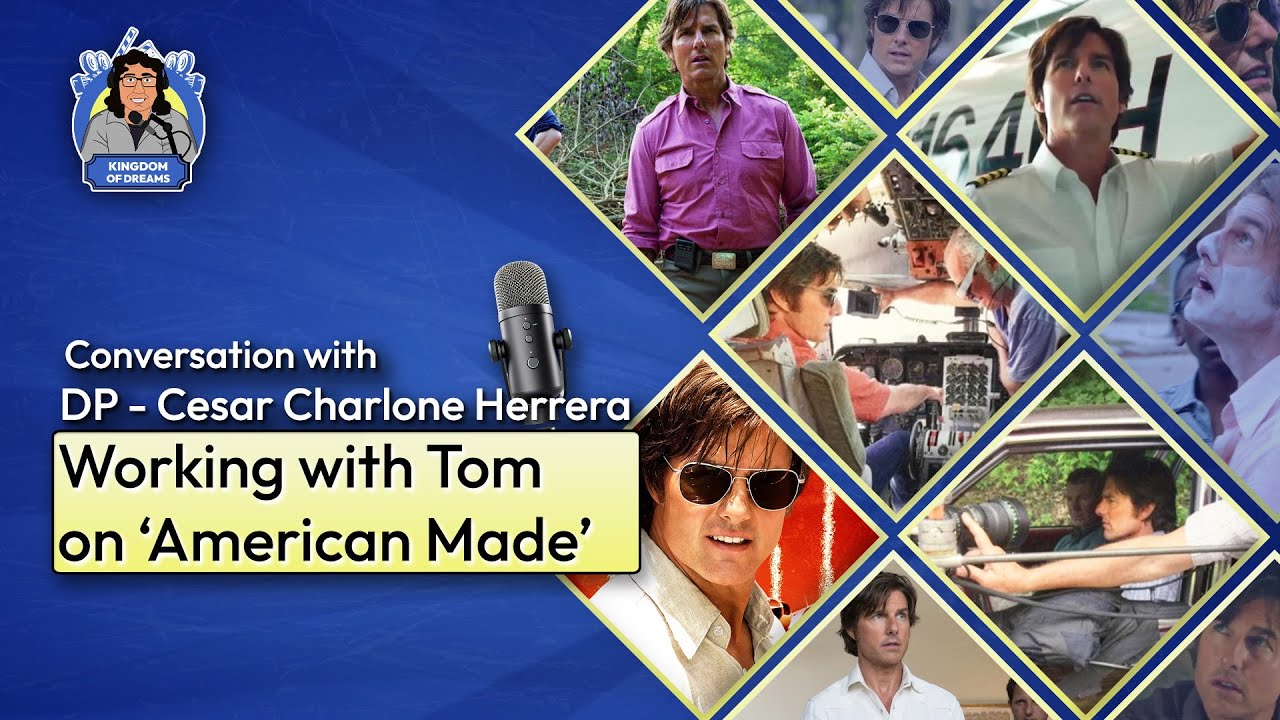
César Charlone is an acclaimed Uruguayan cinematographer, director, and screenwriter best Step inside the world of "American Made" as cinematographer Cesar Charlone Herrera joins the Kingdom of Dreams podcast to share exclusive insights into making of the movie starring Tom Cruise and directed by Doug Liman.
From piloting real planes to creating scenes with documentary-style authenticity, Herrera reveals the challenges and triumphs of capturing the essence of this thrilling true story.
Known for his Oscar-nominated work on City of God (2002). His visually dynamic style has earned international praise, particularly through collaborations with director Fernando Meirelles on films like The Constant Gardener, Blindness, and The Two Popes. Charlone’s ability to blend realism with artistic expression has made him a standout figure in modern cinematography.
Beyond his work behind the camera, Charlone has also directed films such as The Pope's Toilet, Uruguay's submission to the Academy Awards, and Artigas: La Redota, highlighting his commitment to socially rooted storytelling. Born in Uruguay and long based in Brazil, his multicultural perspective informs a body of work that bridges Latin American themes with global relevance.
Full transcript
Automatically generated from the episode audio, so expect the odd misheard word or name. Speakers were labelled automatically. About 7,800 words. Tap a timestamp to play from that moment.
0:08Jawad MirGood afternoon, everyone. Welcome back to another episode of Kingdom of Dreams Podcast, the making of stories. I'm your host Jawad Mir. Today my guest is Cesar Herrera, who I had the pleasure of speaking a few times for Constant Gardener and City of God. Today he will be talking about his cinematography work for American Made, starring Tom Cruise, directed by Doug Liman. Great conversation. There were some personal elements to this, conversation as well, but mainly for American Made and also, Tom Cruise as a human being, as a producer, as an actor, and a whole bunch of other stuff. So without further ado, here is my conversation with Cesar for American Made.
0:41César CharloneDid you get the pictures I sent you?
0:43Jawad MirNo, when did you send it? Just now?
0:46César CharloneJust sent them in, yeah, in WhatsApp.
0:49Jawad MirLet me just take a look. Oh, nice. Oh, I... That is so funny. I was literally, I watched the film two days ago. Re… re-watched it, and this sequence of, him in the car, I was just watching it right now again. That is so cool. Thanks for sending that.
1:13César CharloneYeah. Yeah, there I'm using the little Black Magic camera that I had. So I, for occasions like that, like inside the cabin when he's, when he's piloting, I used all that also.
1:26Jawad MirThat's amazing. Yeah, no, it's really good to have you, to talk about American Made, with Tom Cruise. It's actually one of the most rarest Tom Cruise movies along with Magnolia, I feel, that don't really get recognized that much, and he's got some great performance in there.
1:46César CharloneHe did, yes. He wa… he was very generous the way... I learnt a lot from him because he was, like for example, when they were doing the casting for the lady… ... He was interacting with all the candidates. You know, that's something that's not common…
2:08Jawad MirYeah
2:08César Charlone... To have an actor interact with the candidates, helping choose the casting. And…
2:15Jawad MirWell…
2:15César CharloneYeah, he very great guy.
2:19Jawad MirWell, he's very much involved, right? Like, I mean, you hear that all the time in every, performance and every film and everything, and even with the new…
2:27César CharloneYes
2:27Jawad Mir... Mission Impossible film coming out, like I was just watching behind the scene. It's a really simple thing, but in the world of film it's very powerful. I think he was talking to Christopher, MQ, the director, and they were on outside of this... They did this, they built this massive water tank, like for the largest ever. I don't know if you've seen this behind the scene featurette.
2:50César CharloneNo
2:51Jawad Mir... And it just came out last week, and they're engaging with each other, and To… and MQ goes, "Tom came up with this idea." And Tom goes, "We came up with this idea." And he's always about collaborative, which is what the wor… film world is about.
3:07César CharloneYes. Yes.
3:09Jawad MirAmazing.
3:09César CharloneI remember some very incredible moments, like for example, we had a very difficult scene that was kind of complicated for focusing because he was moving around a lot. And when we ended filming that scene, we had done it three or four times, and in one of them, we stopped and he looks at the crew and, the director says, "It's, it's good." And Tom Cruise looks at the assistant cameraman and sees that he looks a little bit, insecure. And he says…... "You wa… you want another one, don't you?" And the guy said, "Okay, let's do another one. Don't worry." He noticed by the eye of the assistant cameraman that he wasn't very comfortable with the focus. So he's very into the crew and respecting and amazing.
4:01Jawad MirYeah.
4:01César CharloneGreat guy.
4:02Jawad MirYou know, it's, it's, it's, I mean, we can talk about Tom Cruise all day long with the career that he's had, but every time I hear an interview, you know, there was a time when things were not really, like, you know, media really painted him really negatively, but it's just he has become this person. I think he's the one carrying Hollywood on his shoulder, like with, you know, he's the only last living star left and he's what, 60?
4:31César CharloneYeah, 60 something.
4:32Jawad MirYeah. And he just, he's doing this sequence of hanging upside down on a plane up in the air in Cape Town and yeah, no, he's very dedicated to his craft. But I think from what I've heard all the time, he's a very amazing human being. He really likes to talk to people.
4:49César CharloneYeah.
4:50Jawad MirYeah.
4:50César CharloneVery friendly, very part of the crew, you know. He's this big actor, but he acts very humbly with everybody and says hello to everybody and knows, learns their names and very nice.
5:07Jawad MirAmazing. Well, let's, let's talk about the film and your work in it. How, just to kind of start off with, the director Doug, what's his last name? Doug Li… Liman
5:20César CharloneDoug Liman
5:20Jawad MirLiman.
5:20César CharloneYeah, Liman.
5:21Jawad MirHe directed Edge of Tomorrow with Tom Cruise as well.
5:23César CharloneYes.
5:24Jawad MirWhat was your involvement on this project? Like, how did you come on board, on this film?
5:33César CharloneAgent in Los Angeles, Paul Hook, from, it was at the moment ICA, today is CAA. He was approached by the producers and that, Doug Liman had seen my films. And since they were gonna film in South America, because there was a big part filmed in Colombia…
5:56César Charlone... Th… they thought that, you know, a South American…... Director of photography would be of some help. So they contacted me and send me the script. I liked it because it treats about South America, and it's so important to show the reality of South America and everything. So I a… accepted and went to it, but it was something through my agent, and basically because of that, because I think because, you know, since they had South American. And they actually, it was very nice because, I was the cinematographer, but they always, used me also as a consultant for South American costumes and stuff like that.
6:42César CharloneYou know, so because obviously even in the script, all the South American characters were a little bit stereotyped and, you know, I would do, you know, Doug would ask me, "Cesar, what do you think of this?" "Oh, no, this could be a little bit..." You know, and I was kind of giving them a hand with the South American view, you know, to…
7:05Jawad MirOf course
7:05César Charlone... To not be so stereotyped and s…
7:09Jawad MirThat's really good. And did, were you…
7:12César CharloneYeah
7:12Jawad Mir... Were you aware of the story? Because to be able to know, I mean, there's been a lot of this talk over the last 20, 30 years, you know, how, you know, CIA and the cartels and all that, and obviously it's in the film, it's based on a true story. Were you, in any way shocked? Or are you…
7:32César CharloneYes, I was very shocked. I didn't know anything about this, so I got very much in... And y… you know what happens is when you are doing a film like that, you are alone in a hotel, you don't have your family, so you have a lot of free time. So, you know, I would go back to my hotel and I would research about Pablo Escobar and about the drug dealers and about the cartels and everything. I would research in order to understand and to, you know, to be able to be more in the film. So it was a chance of me to learn very much about how it works and how the cartels work and how the drug gets into America and stuff like that. So, yes.
8:14Jawad MirI think, I don't know this, but I'm guessing, before this, the only, series to my knowledge that talked about the cartel was Breaking Bad. But I think after this film, on Netflix a lot of Pablo Escobar series, documentary series, started coming out. There was a huge trend for a good six, seven, eight years where there's all this nonstop stuff coming out.
8:39César CharloneYes.
8:39Jawad MirSo I feel, I feel American made sort of being sole… you know, somewhat responsible for that. But, you know, I can talk about so many scenes, but I would love to know from your standpoint, what was the most fun y… sl… and/or challenging scene to shoot? Because a lot of it was handheld. A lot of the stuff is very documentary style.
9:03César CharloneYeah. Well, you know, being in the cabin with Tom Cruise piloting and me filming him, you know, like, and the picture I s… sent you, that was a lot of fun. A lot of fun, you know, to be... He is piloting and I'm filming him, and he's reacting, and it was all real, you know? So there was little, some s… some stuff we did, you know, with the plane landed and we had like a, some kind of green screen in the back that we moved a little bit or stuff like that. But most of it was real, him piloting and so that was a lot of fun. And it w…
9:47Jawad MirA little boy gone
9:48César Charlone... It w… No, it was, it was funny because since I didn't know very much about planes, at certain moments I would, you know, like a bump or something, I would get very scared, and he would look at me and laugh and say, "No, don't worry. That's no problem." But suddenly I would see that he was a little bit scared because of something, and I didn't understand, you know, what is dangerous to him, I didn't realize that it was dangerous, and what was dangerous to me, it was not any danger at all. So, you know, I was learning and getting in contact with that world.
10:25Jawad MirWhat was that…
10:27César CharloneAnd it's a world, it's a world, it's a world that, is very close to me because, I'm very close to the Andes rugby team that, you know, the, that they did this film about… ... The Society of the Snow, yes. I lost my best friend there and I, the, those were my colleagues. I used to play in that rugby team. So, plane crashes and stuff is something that I carry very deeply inside and scared about. So, you know, there is this, I was on a plane, you know, and with this in my, in the back of my head, I, it was something that touched me quite a bit, you know, because of that, because that relationship with the, with the plane crash and everything. So, but yes, I was, I was learning about planes and the danger and, you know, all that.
11:24Jawad MirSo we can, we can talk about American Made in a minute, but if you don't mind, if you feel comfortable, you talked about…
11:30César CharloneYes
11:30Jawad Mir... Losing your best friend. If you want to share that, I would, I, you know, how that unfolded…
11:38César CharloneI…
11:38Jawad Mir... And also your relationship with your best friend, like how long you've been known him for. I find those things are very more humanistic that we, you know, can relate to with each other.
11:47César CharloneYeah. Well, I used to go to this, Christian Brothers school in Uruguay… ... And we played rugby. And when we graduated, we were the Christian Brothers school, and when we graduated, we formed a rugby team called Old Christians. And I played in that team, and, you know, and in that team was my best friend, which was one year older than me, but, you know, I admired very much, and we were very close, and going out to parties, and going out with girlfriends, and so on, so and so. And, he was the captain of the team.
12:28Jawad MirWhat was his name?
12:29César CharloneAnd, Guido Margari.
12:32Jawad MirOkay.
12:33César CharloneAnd, well, I was, as I said, very close to him, but suddenly I moved to Brazil to study film, and we departed and he had,.. My family went to Chile. My father was the U… Uruguayan ambassador there in Chile. And, they organized this, trip to Chile to play against a Chilean rugby team. And for that they got, the support from the Uruguayan Air Army, and, a plane was, given to them for, you know, a trip with, Uruguayan, army pilots, to take the rugby team to play there. And, my... All my friends were there, all my colleagues, the colleagues that I had grown up with. And if I had stayed in Uruguay, I would have probably been in that plane.
13:36César CharloneSo, well, that plane went to Chile, and it crashed in the mountains, and they were, disappeared for, like, 70 days, and given by, given, like, dead. And I was in Brazil studying, cinema, and I heard that, and I was, I was broken down. I cried. When I called my mother on the phone, because I read it in the newspaper and I called my mother to Chile, "Mother, is that right?" And she said, "Yes, they crashed, and they disappeared, and the army is looking for them, but they're not finding them." it's all in the film, this film that has been released lately, The Society of Snow, that, Bajona, the d… Spanish director directed. It's, it's in Netflix.
14:30Jawad MirThat's the one?
14:30César CharloneNetflix one.
14:31Jawad MirOh, it's ba… that's based on... That's... Oh, okay. I know exactly what…
14:34César CharloneYes
14:34Jawad Mir... You're talking about. This came out, like, four, five, six months ago, right? More or less?
14:38César CharloneA little bit, a little bit. Yeah. W… yeah, more or less.
14:40Jawad MirYeah.
14:40César CharloneMore or less. More or less.
14:41Jawad MirYeah.
14:42César CharloneYeah. Well, that, I was supposed to be in that, and my best friends are there, you know, like, th… Fernando Parrado, the guy that walked, was my colleague, and I have lots of pictures with him. So as I said, I would have been in that plane if I hadn't gone to Brazil to study cinema, because I would have gone to play rugby and to visit my family that was in Chile. So but anyway, my best friend died when the plane crashed. 16 of them survived. Actually, 45 survived when the plane crashed, but then during the 70 days that they stayed there, they died.
15:23Jawad MirRight.
15:23César CharloneAnd they survived, they survived by eating the bodies of their colleagues, which was something very polemic, but, you know, but…
15:32Jawad MirYeah
15:33César Charlone... It was the, it was the way they could survive. So, anyway, I, as I said, I lost my best friend there and, so I have this very powerful relationship with planes and plane crashes, you know, it's something that touches me. So I, when I was, in the cabin with Tom Cruise, I would, in the back of my head, I would be a little bit scared of the plane crash or anything.
16:01Jawad MirDid you ever tell him that?
16:03César CharloneSo that…
16:03Jawad MirThe story of your friend?
16:05César CharloneI don't remember, no. I don't remember.
16:07Jawad MirYeah.
16:08César CharloneNo.
16:09Jawad MirWhich is fine. It's the pr… most professional thing to do. You don't wanna bring that up
16:13César CharloneYeah
16:14Jawad Mir... During production. And was your friend, did he die in the instant plane crash, or did he survive for more…
16:21César CharloneYes. Yeah
16:22Jawad Mir... Focus then he died then.
16:22César CharloneNo, he died in the... Yeah, he died in the instant plane crash. Yeah, he was sitting in the back, and the plane hit the tail, so all the tail fell off and, like, f… five or six were… ... Disappeared in that moment, yeah.
16:39Jawad MirThere was a similar movie which was based on a true story, which I think Frank Marshall directed. It was called Alive. It was…
16:47César CharloneIt's the, it's the same, it's the same crash.
16:49Jawad MirYeah.
16:49César CharloneIt's the same, it's the same, it's the same accident, yeah.
16:52Jawad MirOh, is it the same accident?
16:53César CharloneIt... That's... Yes. Yes.
16:55Jawad MirOh, okay. That again, something that's…
16:56César CharloneYeah, the first, the first version was that one that Frank Marshall directed, but, you know, it was kind of Hollywood style.
17:04Jawad MirYeah.
17:05César CharloneSo then Bajona came and did a more... He went really, you know, he researched with the guys and was very close to the, to the survivors, and the survivors were always in the film, d… supporting and instructing in how things happened, so he was more real. And I did a documentary called Society of Snow. No, called Stranded, that, tells the story, and we interviewed the 16 survivors, but we reenacted in a…
17:38César Charlone... In a plane that we put, in s… in... It was similar to snow. We didn't have the budget to put it in the snow, so we put it in the sand dunes, and by the Technicine, I transformed the sand into s… into snow. So yeah, that's, th… that's a film I recommend. It's called Stranded, and it was in Netflix. I don't know if they, it, if it's in Netflix anymore. But you can find it somewhere. Stranded.
18:08Jawad MirStranded.
18:08César CharloneIt won d… i… i… it won docu… because it's a documentary, it won the Amsterdam, or the Rotterdam, Documentary Festival.
18:21Jawad MirOkay. Yeah, no, I see it made in 2008. I'm sure I'll…
18:24César CharloneYes
18:25Jawad Mir... I think I found it. It's, Yeah. No, that's the website. No, I'll look for it though. That's, that is so crazy that I did not know that Alive and Society of the Snow were the same story. I thought they were just coincidentally two separate incidents that happened in separate parts of the world. But sorry for your friend's loss. You know, may he rest in peace.
18:49César CharloneYes. Yeah, it's something, it's something that, it's something that touches me very deeply because I was very close to him and, you know, he... When I was studying cinema in Brazil, he came, he organized, two car, with eight of my friends, and they visited me studying in São Paulo. And yeah, we were very close. We actually, we actually had planned that we were going to get married, both of us together in Chile, because he was engaged with a Chilean girl, and I was engaged with a Brazilian, but my parents were in Chile. So we had this idea that by the end of the year, we would go to Chile, get married, hire a car, and the four of us, him and his wife, me and my wife, would go in the mountains of the Andes to drive and that, you know, that plan was ended by that accident, yeah.
19:47Jawad MirYeah. Well, that tells me how close you guys were, but, because for two guys to decide to get married in the same time
19:55César CharloneYes
19:55Jawad Mir... It's a, it's normally sometimes brothers do, so obviously…
19:59César CharloneYes
19:59Jawad Mir... You guys are very close.
20:00César CharloneWe're, we're very close, like brothers, yeah.
20:04Jawad MirWell, thank you for sharing that.
20:05César CharloneYeah.
20:05Jawad MirI appreciate that.
20:06César CharloneNo, my pleasure.
20:09Jawad MirAmerican Made, what was one ch… the most challenging technical scene, aside from the one that you were in the plane, which had this fear of, you know, a plane crash, from a technical standpoint?
20:25César CharloneWell, the, it's not a scene, it's a fact, is that when I came on, I had moved to digital already. You know, I was very slow to move to digital until the raw system of filming came. Because before, all the, all the videos, all the video camera that were coming out, like Sony, they had a very compressed image, so they didn't give me the possibility that the negative would give me to work on.
20:57Jawad MirYeah.
20:57César CharloneAnd as I told you, as I told you before, I am very dependent on post-production. I do, capture an image, but afterwards I'm gonna work on it very much in post-production. So it, those first video cameras didn't allow you to do very much because they just had a compressed image. But when the raw system came, then I moved to digital, and then nobody would move me away from digital. So when I come onto the film, they tell me, "Hey, listen, but Tom Cruise doesn't want to be filmed in digital. He wants to be filmed on film." And I said, "Well, why? What can, what can I do?" So I said, "Well, I'm gonna do a test and film him in digital and go." So I, as I, as I already maybe told you, I'm very close to the post-production colorist.
21:48Jawad MirYeah.
21:48César CharloneAnd I work with him from the very beginning in looks and approaches and so. So I told him, "You have to help me because I'm gonna convince Tom Cruise that we're gonna film him in digital," because Tom Cruise had some bad experiences with digital. I don't know what film, but they had done some films in digital that he wasn't pleased at all. So I had to bring him back to this, and I didn't want to film with negative because, you know, to me it's like going back to the past.
22:17César CharloneSo, I'm, I filmed some tests that I still keep with me as a, as a souvenir. I filmed some tests with Tom Cruise, and I went to the colorist, and we did a very careful coloring. And I took Tom Cruise to a screening room, showed it to m… him, and said, "Tom, this is what we can do with digital." And he said, "Okay, let's go." So…
22:43Jawad MirSo he was happy with the digital at the end?
22:45César CharloneYes. Yes. Yes.
22:48Jawad MirAmazing.
22:49César CharloneSo, you know, to me that was a, that was a great relief because they had a, they had, told, they told me, "He's not gonna let you film in digital. He doesn't want digital. He hates digital." So I said, "Well, I have, I have, like, two months of pre-production. I have the time. Let me try it." So I did this test, and he came to the test a bit like, you know, not trusting very much, but I filmed him, and I filmed him, you know, in the shadow, in the sun, da. I did different sh… shots. I took them to the colorist, and we worked on them very nicely, and showed it to him in the big screen, and yeah.
23:30Jawad MirWow.
23:30César CharloneSo that was, that was the most challenging. It was not a scene, but it was a whole concept of it. But, the, I would say that the most challenging films, scenes were basically the ones in plane when he's piloting and interacting with other planes, because there is one, for example, that he's followed by a... And s… and I had to film him piloting and the, and get the plane in the background, and th… that was, that was fun. That was tough, but it was fun.
24:03Jawad MirYeah.
24:03César CharloneChallenging, fun.
24:05Jawad MirIt's an interesting year when that was made, right? So this was ma… That came out in 2015, I think. So obviously…
24:13César CharloneYes
24:13Jawad Mir... Production-wise, 2013, 2014.
24:16César CharloneYeah.
24:16Jawad MirAt that time, at that time, Red Scarlet had come out or was coming out, and Blackmagic was coming into the world of digital. Obviously now it's a totally different ballgame within the last 12 years, right?
24:31César CharloneYeah.
24:32Jawad MirBut to be able to do that…
24:34César CharloneWell, that d… that camera that you see me handing there…
24:37Jawad MirYeah
24:37César Charlone... It was my own personal Blackmagic That I had bought…
24:40Jawad MirPocket Cinema, right?
24:42César CharloneYeah. To, that I had bought to do my, small, documentaries, and I carried it with me because I did tests for everything and, you know, I showed Doug Liman, mixing those, that camera with the real Sony that we were using. No, the Arri that we were using, and, that was the A camera was an Arri, you know? And, but it was very difficult to maneuver inside the cabin, so we did some tests with the Blackmagic and saw it cut together in the big screen, and Doug said, "Great. Let's go with that." So, and I was very happy and very proud because I saw the opening of that in an IMAX cinema in San Paolo, and when, you know, when you see those scenes of him close-up that I did with my little $900 Blackmagic cut to the $50,000 Arri, and intercutting that, and it works perfect.
25:45César CharloneSo, yeah. I was very…
25:48Jawad MirYeah
25:48César Charlone... Very happy.
25:50Jawad MirAnd that's one of the things I loved about, the early Blackmagic cameras. So my first film, half of it, because it was shot, it was shot over four years, I shot on the Blackmagic 2.5K Cinema Camera, the very first model that came out. Not the 4K, because the 4K was really terrible at low lighting, but 2.5K. And then the Pocket Cinema. And the noise on that, I cannot find any camera to date that can produce that ha… it comes as close to film. I a… you know, I don't know why they stopped doing that, because the Pocket Cinema Camera and the 2.5K camera, K camera were remarkable in that look. And you see that in my film because I, again, I was, i… you know, some of the interviews you could see, if you really c… pay close attention, maybe the audience won't see it, there's noise. You know, real noise…
26:44César CharloneYes
26:45Jawad Mir... Like built in the camera. The other is, like, graded noise. So yeah, I truly miss those cameras. I think they were, they had their flaws, but they were great.
26:53César CharloneYeah. Yeah.
26:55Jawad MirAnd the Pocket Cinema battery was like, what? 20 minutes or 25 minutes internal battery?
27:00César CharloneYeah.
27:00Jawad MirAnd you had to have the V-mount.
27:02César CharloneYeah. Yeah.
27:04Jawad MirAmazing.
27:04César CharloneI carried a couple of them on my pocket and I would change them quickly and, yeah.
27:08Jawad MirYeah. I thought the best, one of the most coolest scene in the film is when he gets arrested and he, you know, I never knew when I saw that film that he was originally from Alabama, 'cause his accent is the film, you know, is Southern. And I thought he did a remarkable job in doing that. But I, obviously that's where his roots is. But the idea of him telling the policeman that, you know, "I'm gonna get out of here and there's, a… ain't anything you can do about it," right? I mean, obviously he did a way better job than I'm saying it. I thought that was really well executed. Is there any story behind that scene that you can share, or any other scene for that matter? I'm just talking about one of my favorite scenes in the film.
27:54César CharloneNo, it was, it was his acting. You know, him, let him act and he understands so well the character and he builds it so strongly that, you know, it was fun just to be seeing that, you know? Yeah, it was…
28:15Jawad MirGot it
28:15César Charlone... N… no big challenge for us, but you know, just the pleasure of seeing an actor perform so intensively and so well.
28:28Jawad MirYeah. What about the takeoff scene? There was a scene where m… the runway was very small. I think it was in, it was like dirt runway. Do you, do you remember what I'm talking about?
28:42César CharloneYes. In…
28:43Jawad MirAnd the…
28:43César Charlone... In Colombia?
28:45Jawad MirIn Colombia, yeah. And that…
28:49César CharloneY… you know, you know, we had, we had a very terrible accident in Colombia.
28:54Jawad MirOh.
28:56César CharloneYes. It was so sad. We had, we had, three special pilots come from Los Angeles to pilot the planes in Colombia. And we had a very difficult day filming in Colombia in a faraway land, strip, this short one that was very difficult, and they did a great job. And you know, it was a very tense day and very, you know, difficult. But everything went right, so at the end we kind of celebrated, "Hey, baby." And they fly back home and there was a storm, and I guess they were a little bit overconfident that they didn't have to go over. They were tired, so they wanna get home quickly, so they didn't ha… they didn't want to go over the storm, so they went through it.
30:02César CharloneAnd they clashed, and they crashed against a mountain, and we lost two of the three pilots. And one, stayed kind of paralyzed.
30:15Jawad MirOh, wow.
30:15César CharloneIt was very terrible. Yeah. And they were professional, cinema pilots. That was very sad.
30:26Jawad MirThat is, that is so crazy. And was this during like…
30:29César CharloneYeah
30:29Jawad Mir... Half, halfway during the production, or beginning, or?
30:33César CharloneAlmost at the end. We were…
30:36Jawad MirAnd by then…
30:36César CharloneWe were go… we were going back, we were going back. Yeah, we were wrapping actually because…
30:44Jawad MirOkay
30:44César Charlone... We wrapped… We wrapped the film without it being ready, so they did this first edition and then w… they called me back to do some extra scenes, and then they edited it a bit more and called me back to do some extra scenes. There was, like, three or four reshoots. Reshoots because, you know, they were editing and they found that they ha… had to do something better, so they were always making the film better.
31:12César CharloneAnd there's actually, there's actually one of their reshoots that I couldn't be able... I didn't... I couldn't go, so Doug Liman, the director, did the cinematography of that reshoot. He called me and he said, "Cesar, what should I do?" I gave him a little, some kind of tips, and he shot it and it looked great, matched perfectly.
31:35Jawad MirThat's good. But were you happy with the overall outcome of the film…
31:39César CharloneYes
31:39Jawad Mir... The story, cinematography, editing…
31:41César CharloneYes
31:41Jawad Mir... And everything?
31:42César CharloneYes. Yeah, very happy. Very happy.
31:45Jawad MirWhat was the most…
31:45César CharloneYeah, and I…
31:46Jawad MirWhat was it... Sorry, go on.
31:48César CharloneNo, and as I said, I am... I love being Latin American and, you know, and showing Latin America to the world. So, you know, the fact that we could show a little bit of Latin America to me was important, so yes, I enjoyed showing our side and, you know, the drug problem that we have and how we have to deal with that and how important it is for the drug that it is bought in America, and that is, what supports the drug industry. So, you know, all of that to me was important that the film approach that.
32:35Jawad MirDo you think... I mean, well, I'll, I'll talk about this first and then we'll go back to American Made. You know, there is this media, the way media is, when I say media, I mean news, I mean movies, I mean TV shows, everything, right? It constructs a certain image of certain part of the world for us, right? So for example, and I'm, I'm just throwing this out. You know, if you go to, let's say, if you look at Hollywood, right? Like, and if you hear Colombia, probably the first thing that will come to your mind is drugs.
33:13César CharloneOkay.
33:13Jawad MirRight?
33:13César CharloneYeah.
33:14Jawad MirRight?
33:14César CharloneYeah.
33:14Jawad MirSame thing with Mexico. ... And if you look, if you talk about, you know, pe… people of color, maybe what will come to mind is okay, they're all, in gangs, right? Again, because the way media paints
33:33César CharloneYeah
33:33Jawad Mir... I don't, I don't know if they do it…
33:34César CharloneStereotype
33:34Jawad Mir... Yeah, I don't know if they do it intentionally, but there is that stereotype. How have you seen that overcome in your career, if at all, by working on the films that you work with the people that are outside of that part of the world? Like, whether it's Doug Liman or Tom Cruise or anybody else for that matter.
33:53César CharloneYeah, you know, I... People have always good intentions, but it's, you can't avoid the fact that you carry some stereotypes…
34:05Jawad MirBiases in your head
34:05César Charlone... Because you ha…
34:06Jawad MirYeah.
34:07César CharloneYeah, because you haven't had the real time to research it. When you research it, you change your mind, but if you go by the first images, it's unavoidable that, you know, you'll go with the first. So yeah, you kind of grow up with this idea that the media shows you, the media or, you know, that the colored people are thieves or whatever, and it happens the same here in South America.
34:35Jawad MirFor sure.
34:35César CharloneYou know? We live with those stereotypes. We were colonized by Europeans and, you know, and they used the locals as the Indians and the slaves that they brought from Africa as, and labor, and, you know, that different, that social difference stayed until now today. You know, if you go, if you go in Uruguay here in the streets, you see the people that are living in the streets, you know, sleeping in the streets. They don't have my color skin, they're darker.
35:09Jawad MirYep.
35:09César CharloneAnd that is, and that is very... And we're always fighting against that and making, you know, making a point to show that we have to correct that. So yes, it's, it's something that, whenever a film brings that up and tries to show it's, it's very welcome, you know? To show…
35:33Jawad MirYeah
35:33César Charlone... The stereotype and yeah.
35:35Jawad MirI think that's a, that's a similar problem in all countries in the world. Like, I originally am from Pakistan. It's the same problem there, that if you're lighter skin, you are perceived differently. Same thing in India, same thing in Bangladesh. Like, you know, everywhere.
35:49César CharloneOh, sure, yeah.
35:50Jawad MirAnd it's, it's... And I think we're all, what's the word I'm looking for? Responsible for that somehow there's this conception…
36:01César CharloneYeah
36:01Jawad Mir... That we have in our head. But the best way to overcome all those stereotypes is to go meet people that you have got stereotypes about, and then you'll realize those stereotypes don't mean anything.
36:15César CharloneYeah, exactly.
36:16Jawad MirYeah.
36:17César CharloneAnd work on that and…
36:18Jawad MirYes
36:18César Charlone... And work on that to undo the stereotype. Yeah. That's…
36:24Jawad MirDid you…
36:24César CharloneAnd I enjoy ev… sorry, I enjoy every time I get a film that helps me or, you know, or does that in a certain way, so I thought this film was good for that because it showed, you know, that the cartels and the poverty of South America is supported by the drug, people that consume drugs in America.
36:48Jawad MirYeah. Is there one thing that... I mean, there's different types of stereotypes, right? In any society. Is there one particular stereotype that bothers you the most that you want to use film to overcome that? Whether it's within…
37:10César CharloneWell, my co…
37:11Jawad Mir... The society that you're in or outside the society.
37:14César CharloneYeah. No, I... Yeah, the one I kind of work mostly, hear is that we believe that we are a very healthy democracy and, you know, and we talk about that, but we don't accept that we carry for 500 years a social difference that, you know, these guys are rich, and they're born rich, and they will inherit the richness. These guys are poor, and they will inherit the poor… the poverty, and that doesn't change. There isn't this, you know... It's only accidents that are break. But that's why I tell you, because, you know, after 500 years of colonization, if you go, you, in the streets in Montevideo, you see that the people that are sleeping in the streets are dark skinned, and the guys that, you know, you look at the television and the guys that are in power are white skinned like me and, you know.
38:20César CharloneAnd that is something that we have to fight to break this unfairness and help interact, you know, and help the guys from this class participate together with this and mix them, you know? As you, as you have in more fair countries like Scandinavia or stuff like that you have a more equal society, you know?
38:48Jawad MirYeah.
38:48César CharloneSo this is probably the thing that bothers me most. And it's, it's, it's very many people in South America that don't have the conscience of this.
39:01Jawad MirYeah. I agree. I don't think it's just South America. I think it's all over the world, and the reason I feel is for that, it's a very simple thing, which I said earlier, is if you are being informed by a TV screen or your phone as opposed to going and meeting these people for real, you're always gonna have those misconceptions.
39:22César CharloneYeah.
39:22Jawad MirRight? So.
39:23César CharloneYeah. Yeah. Exactly.
39:25Jawad MirWith American Made, what's the most, the one scene that you're most proud of from a cinematic standpoint? An image that you really love.
39:35César CharloneYou know... Yeah. You know, it's funny. They all may… they always ask me this, and I'm very bad at choosing. You know, I…
39:42Jawad MirI don't blame you, 'cause I will do the same thing. I just had to ask
39:46César CharloneYeah. Yeah. They always ask me, and I say, "I don't remember." You know, to me, ev… every s… every morning I would wake up and I was challenged by, okay, today we're doing the scene of the actor and the actress talking about marriage, and then we're doing the scene of them, you know, piloting, and then we're doing the scene of him being arrested, and I don't know. There's
40:08Jawad MirThat's fine. I was just, I, it's just something…
40:10César CharloneI remember ha… I remember having fun, as I said, in those pictures that I…
40:15Jawad MirTwenties, yeah
40:15César Charlone... I sent you. Him, yeah, him piloting and me with a little camera with a viewfinder watching him. Yeah. That was fun, but, no, it was fun working with him, you know. There is, there is... I always tell this. There is this one scene that, the, there is a phone, a phone call of Tom Cruise, of Barry Seal talking with a police chief that is Mexican origin, and he... And we've had filmed already the Tom Cruise part on the phone. We had to film now the guy waking up in Washington or where he was. He wakes up and he talks with this guy, and it was a very simple scene, so Doug Liman asked me if I could direct it, because he had to stay up there in the set preparing something else.
41:15César CharloneSo I went to where the, art department was preparing. They were doing, like, a corner of a, of a set to have a window and a bed, and it was two actors, a lady that was faking that she was sleeping, and this guy that wakes up and talks on the phone and just gives the... And we had already the part of Tom Cruise, so what I did, as we normally do, I put a monitor where I, where I would play the part of Tom Cruise talking, and this guy would interact with that, and I would film him talking. That very simple. So I were preparing, and the art department was taking some time painting it, and it was, like, you know, 11:00 at night or something like that. And I go to grab a coffee, and I find Tom Cruise there getting a coffee. I said, "Tom, what are you doing here? Why don't you go home? You must be tired. We started at 6:00 in the morning." He said, "No. I'm gonna stay and help you do this scene with the guy." I said, "No, Tom, don't worry. Go home. I j… I have you filmed.
42:16César CharloneHe interacts with the television." "No. I'm not gonna leave a colleague of mine interact with the television. I'm gonna be there to give him the…
42:25Jawad MirThat is so Tom Cruise
42:26César Charlone... So generous, you know? He stayed until 1:00 in the morning to help the other actor interact with him. I admired, I ad… I embraced him. I said, "Tom, you have, you have taught me a lesson, because I come from South America where actors are so, you know... An actor, a Brazilian actor would never stay." He said, "No, you put the television on and make him interact with the television." No. Tom Cruise stayed and interacted because it was his colleague. He's an actor as me. I'm gon… I'm not gonna leave him alone, interact.
43:04Jawad MirWow. I…
43:05César CharloneYou know, that, those kind of things
43:07Jawad MirYeah, I'm, I'm not surprised, but I'm surprised, right, if that makes sense. Because, and e… even aside from the colleague thing, to have an actual person interact off screen…
43:21César CharloneRight
43:21Jawad Mir... Versus a screen with an audio, th… you know, from a standpoint of putting it out in film, it's a, he probably reacted so differently with Tom there versus a screen. 100%.
43:34César CharloneYeah.
43:34Jawad MirAnd that's…
43:34César CharloneYeah
43:34Jawad Mir... That's cinema. That's cinema.
43:36César CharloneThat's cinema. That's cinema. Yeah, you're right.
43:39Jawad MirThat is cinema, right? I mean, that's…
43:40César CharloneYeah
43:41Jawad Mir... Those things count so much, and we overlook them maybe in the earlier parts of our career, but I think… ... They're very meaningful. What a guy.
43:48César CharloneYeah.
43:49Jawad MirWhat a guy.
43:50César CharloneYeah, I mean, and another thing that I learned about him is, you know, he, what I realized, he's a human being, a very human being, but he's also an enterprise. Because I said, you know, Tom Cruise, if you think of it, there's South American companies that don't make the money that Tom Cruise makes a year. So he has to take care of himself, his body, as you take care of a factory, you know? So that's why he carries two trainers. One is his personal trainer where he has his resting space, and the other is a full gym…
44:32Jawad MirOh my God
44:32César Charlone... Where he has two personal trainers, and every time that he's not filming, he'll go and work out and, you know, he has that second trainer that is a gym. And when I saw that, I said, "Yeah," he said, " He has to take care of that body because that body is an enterprise." Like, you know, like Ford would take care of the, of the company, of the factory, and the house of the factory, well, he have to take care of that body because that body is what gets the money, what gets the work, so you know, take care of it. Definitely.
45:07Jawad MirYeah. I mean, he's, and like I said, like he's 60 and he's running around, he's doing nine G's in a…
45:13César CharloneI mean…
45:14Jawad Mir... F-14, right? I mean, it's just, it's just crazy how he does that.
45:18César CharloneYeah. Yeah.
45:19Jawad MirI mean, I'll tell you a little story about Top Gun: Maverick. So I have never seen a movie in the, in a 4DX where the seats actually move, 'cause I don't want to be distracted from the, from the film. But I just thought because that's a movie in a plane, you know, you, I, you, I want to experience that. And the one of the most amazing film experience I had was watching Top Gun: Maverick because, A, sound, the visuals, and the way the seats moved with that, I mean, obviously kudos to the crew and, everybody involved in that film, but there was nothing special about that film in terms of story. It was simple story, but it was just the execution that took place in that film, and that again goes back to Tom Cruise, like the amount of time and the effort he puts into every little shot and scene is remarkable.
46:12César CharloneYeah. Yeah. Yeah, and the fact that he does his own stunts and, his o… his own stunts and everything, it's... No, it's incredible.
46:21Jawad MirYeah. I…
46:22César CharloneGreat guy
46:23Jawad Mir... There is a scene in the new Mission Impossible trailer, and this is my guess it's gonna happen, I'm just talking out loud here. So there's a couple of scenes that they show in the trailer, so there's a yellow plane and a red plane, right? And in one shot he's on one plane, and the other shot he's on the other plane. I'm willing to bet he's gonna jump from one plane to the other, and he probably did that, 'cause that's Tom Cruise. You can expect that from him. And if he does that, man, that's, that's crazy. Obviously, you know, I…
46:54César CharloneYeah
46:54Jawad Mir... It probably i…
46:55César CharloneYeah
46:55Jawad Mir... But that's, yeah.
46:56César CharloneYeah.
46:58Jawad MirAmazing. Amazing. Awesome. Thank you so much.
47:01César CharloneNo, it was an, a incredible experience, it was. I loved it.
47:05Jawad MirYeah. I hope you get to work with him again.
47:08César CharloneNo, as I tell you, tho… yeah, and as I tell you, those details like him taking the time to interact with every actress that was... You know, I have never seen that. He went to the casting sessions and they were testing ladies, and he would interact with every lady because he thought that they would understand better the character i… i… if it was him the one, you know, doing that. I had never seen that. You know, he's very generous. Very generous.
47:40Jawad MirAnd it's, kind of boggles me that to this day he has not won an Academy Award.
47:46César CharloneYeah.
47:47Jawad MirRight? He should have won for Magnolia.
47:48César CharloneYeah.
47:49Jawad MirI truly think he should have won for Magnolia, the best performance.
47:51César CharloneYes. Y… yeah, you're right, you're right.
47:53Jawad MirYeah. But…
47:55César CharloneHe'd probably get a life achievement or one of those, yeah.
47:58Jawad Mir100%. 100%.
48:00César CharloneYeah.
48:00Jawad MirHe's, he has to.
48:02César CharloneYeah.
48:02Jawad MirBut
48:02César CharloneYeah
48:02Jawad Mir... But, anything else you wanna add to...?
48:07César CharloneNo. No, n… not that I remember. I interact better with question that, or that…
48:15Jawad MirOkay. Okay, good
48:16César Charlone... Than, yeah.
48:17Jawad MirWell, great. I hope I, you had a great, good time, and I certainly did.
48:22César CharloneYeah.
48:22Jawad MirThank you for…
48:23César CharloneYeah. No, I, it, talking with you is great because, you know, you know what you're talking about, and that is great to talk…
48:32Jawad MirI'm glad
48:32César Charlone... With a colleague like that. Yeah.
48:34Jawad MirI'm glad. I'm glad.
48:34César CharloneI enjoyed very much.
48:36Jawad MirAwesome. Are you coming through LA anytime soon?
48:39César CharloneNo. Fernando Meirelles has a film he has talked to me about that, I think happens in New York. But we haven't, we haven't got the green light yet, so, we'll see. I'll let you know…
48:54Jawad MirAwesome
48:54César Charlone... If it comes.
48:54Jawad MirYeah, please do. I would love to m… I would love to connect with you in person.
48:58César CharloneOkay, let's do that.
49:00Jawad MirAwesome. Thank you so much. Enjoy your weekend.
49:02César CharloneThank you.
49:03Jawad MirAnd thank you for your time.
49:04César CharloneYeah.
49:04Jawad MirHave a good weekend.
49:05César CharloneYeah, no, my pleasure. Bye-bye.
49:17Jawad MirBye-bye.