
Episode 242 · June 26, 2025 · 40 min
'Mission, Impossible III', Production Designer, Scott Chambliss
About this episode
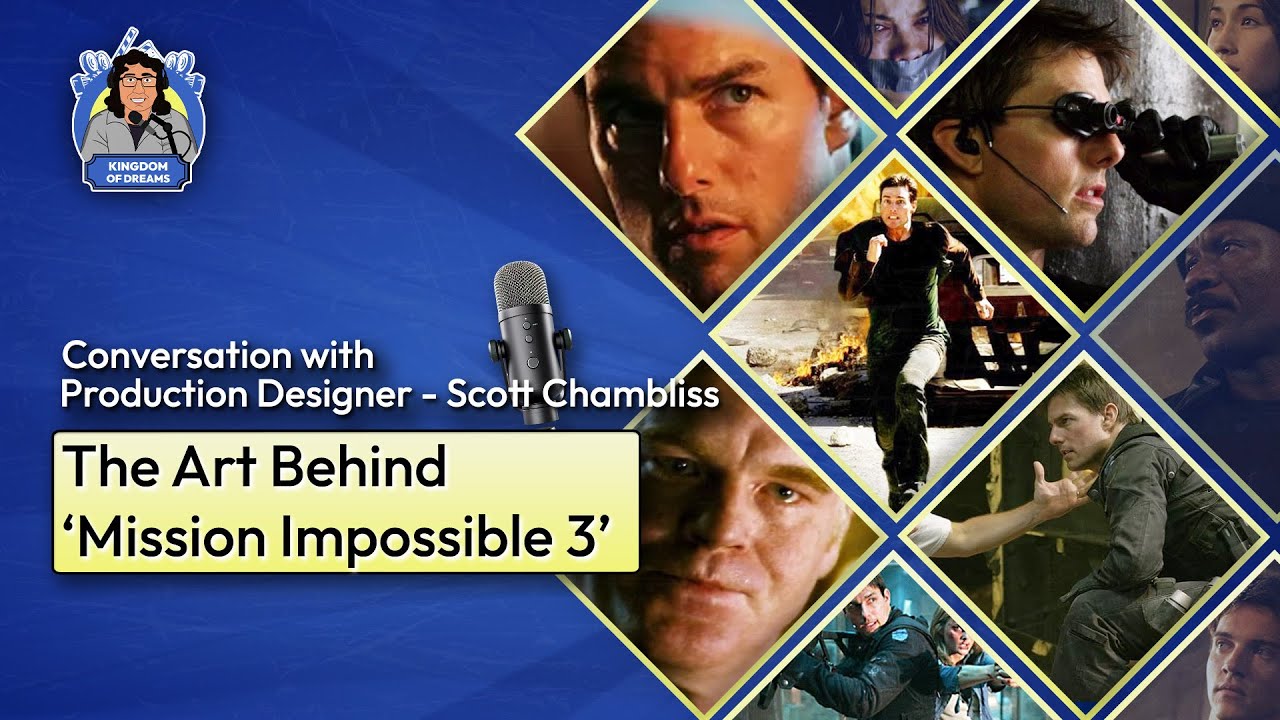
🎙️ Today’s episode of the Kingdom of Dreams podcast is all about Mission: Impossible 3, and we’re going behind the scenes with legendary production designer Scott Chambliss.
Ever wondered why J.J. Abrams had second thoughts about some of his creative choices on the film? Scott opens up about their longtime collaboration, what really went down on set, and how the look and feel of the movie came together. We talk about the film’s gritty, grounded visuals, working with Tom Cruise and Philip Seymour Hoffman, and how the experience helped shape the direction of the Mission: Impossible series going forward.
If you're into filmmaking, design, or just love hearing how big movies get made, this one’s for you. 🎧🔥
Scott Chambliss is an award-winning production designer known for his work on both television and major feature films. He began his career in theater before moving into film and TV, gaining early recognition on series like Alias and blockbusters such as Star Trek, Mission: Impossible III, Guardians of the Galaxy Vol. 2, and Godzilla: King of the Monsters. Chambliss is celebrated for creating immersive, visually rich worlds and is a frequent collaborator with directors like J.J. Abrams.
#moviereview #missionimpossiblereview #missionimpossibleinsights #missionimpossible3 #productiondesigner
Full transcript
Automatically generated from the episode audio, so expect the odd misheard word or name. Speakers were labelled automatically. About 6,400 words. Tap a timestamp to play from that moment.
0:00Scott ChamblissThere were two things that always bothered me about the one that JJ and I did. One was that, the main thing was that he f… he focused his camera so tightly on Tom and the actors all the time. We were all around the world in these most amazing locations, and you would never know it from watching the movie, and I think that was a really wasted opportunity, on his part. But, you know, he was a, relatively speaking, a brand-new large…
0:33Jawad MirDirector
0:34Scott Chambliss... Maker.
0:35Jawad MirYeah.
0:35Scott ChamblissYou know, he hadn't done anything of that scale before. It was still early enough in our collaboration, which lasted about 10 years, that he was, he was indeed finding his way as a visual storyteller, at that time, and I think you could see from the next movie that he did after that one, he learned a lot from Mission Impossible.
1:11Jawad MirGood afternoon, everyone. Welcome back to yet another episode of Kingdom of Dreams podcast, the making of stories. I'm your host, Jawad Nir. On today's episode, I have Scott Chambliss. He's a production designer on a lots of different films that has come out over the last two decades, especially with JJ Abrams, Mission Impossible III, starring Tom Cruise and Philip Seymour Hoffman. Lovely guy, great conversation. There were some interesting tidbits that we talked about that what he felt of the film at the time and what I felt of the film at time, and how things look a little bit different, at least for me, and bunch of the stuff. And he was really nice enough to send a really nice email, which we'll post on social media about how much he enjoyed the conversation and whatnot. So without further ado, here's my conversation with Scott on Mission Impossible III. Well, good to have you.
2:01Scott ChamblissThank you
2:01Jawad Mir... I know we've been sort of going back and forth, and I really appreciate all the work that you've done in our world, in the film world, and, especially being here to talk about Mission Impossible III. And I just watched it again yesterday. To me, b… I'm a huge fan of JJ Abrams 'cause I think he has this ability to pull emotion out, of actors and characters that he writes, even in Lost. I mean, he was a part of it, obviously, not just the main person. There was a lot of emotion in this film, especially the way it begins, you know, the whole scene with Philip Seymour Hoffman, who was phenomenal, in this film, and the emotional arc in this film was much stronger than, in my view, than any other film of Mission Impossible series. That's just my take.
2:49Scott ChamblissYeah. I understand that.
2:51Jawad MirWhat about you?
2:53Scott ChamblissWell, to be honest, I haven't seen number three since it came out, so I'm, I'm I never go see my own movies after they're out. I really enjoyed, Brad Bird's movie, which I think was number four.
3:11Jawad MirYes.
3:11Scott ChamblissBe… because it had a strong sense of humor, and the one thing that... There were two things that always bothered me about the one that JJ and I did. One was that, the main thing was that he f… he focused his camera so tightly on Tom and the actors all the time. We were all around the world in these most amazing locations, and you would never know it from watching the movie, and I think that was a really wasted opportunity, on his part. But, you know, he was a, relatively speaking, a brand-new large…
3:49Jawad MirDirector
3:49Scott Chambliss... Maker.
3:51Jawad MirYeah.
3:51Scott ChamblissYou know, he hadn't done anything of that scale before. It was still early enough in our collaboration, which lasted about 10 years, that he was, he was indeed finding his way as a visual storyteller, at that time, and I think you could see from the next movie that he did after that one, he learned a lot from Mission Impossible and started, embracing visual storytelling more and more as time went on, and he became more secure in his projects.
4:27Jawad MirI… it's interesting you mention that, and I'm glad you mentioned that because as of maybe eight, nine years ago, I started realizing as a director that how important it is to have a wide frame, so you can see the surroundings and the environment that your character is in, and I learned that a lot from obviously from Spielberg and Quentin Tarantino's work. I mean, there are other directors too, but mainly those two, and Robert Zemeckis. When I... For Mission Impossible III, from an emotional and arc and story standpoint and performance standpoint, that was, to me, the best film. But you're right in terms of the camera. Like, even when I was watching it yesterday, I couldn't figure out where was this place, and now if you watch, like, four, five, six, seven, eight, you will get the vastness of it, kind of like the Lawrence of Arabia approach and all that. So yeah, I agree with you on that 100%.
5:24Scott ChamblissHm.
5:26Jawad MirAmazing. So let's talk about your career, Scott. How did it all begin?
5:32Scott ChamblissLet's see. I was, devoted to theater actually, and got a graduate degree in that at Carnegie Mellon, and right out of graduate school was asked to join Tony Walton and his design studio doing Broadway shows, and I thought I would do that for, you know, doing theater for the rest of my life. But after about four years, living in the business of Broadway, I really grew to hate theater. And b… and back in those days, the design community at a certain level, the designers who were doing the top jobs, whether it was theater or film or television in New York City, we all kind of knew each other or knew of each other, and I, was able to move, you know, slowly out of theater and into film design, and that blew my mind. Film design just opened a whole world to me because it's, it's an unlimited medium in many regards, and I really quickly realized that I need to be a designer of films.
6:44Scott ChamblissSo I started doing that in New York, and, moved to Los Angeles because it was the inevitable thing to do back in those days. This was where, the industry was based, and most of the jobs were here, and, that's sadly not at all true anymore.
7:02Scott ChamblissThat's... You know, I was lucky in terms of my timing and coming out here.
7:09Jawad MirYeah. What is... As a production designer even b… what, when you were doing before theater or when you started doing films, what were some of the films that you probably got inspired from…
7:24Scott ChamblissYeah
7:24Jawad Mir... That this is what I, this is what I wanna do?
7:27Scott ChamblissIt's so strange, but it's… I was so fortunate. Tony Walton, who I mentioned before, he was a big deal production designer as well as a theater… ... When I was a kid growing up, and I didn't know who he was, but two of his movies had a huge imprint on me as a young kid. They opened my eyes to, design for film, and the first one was Murder on the Orient Express.
7:55Scott ChamblissYou know, Sydney Lumet's 1970s movie, which all takes place on a train in the 1930s.
8:01Jawad MirYeah.
8:01Scott ChamblissAnd all these great costumes and textures and style that, you know, a 10-year-old kid who lived in a crappy farm town had never seen anything like that before. And then some years later, probably four or five years later, I saw one of Tony's older British movies called The Boyfriend, which is a Ken Russell bonkers extravaganza. It's just so over the top, theatrical, hilarious. And those two really jolted me awake, and the final one wasn't a Tony Walton movie, but the one that really landed for me the most of all is The Red Shoes, the Michael Powell and Emeric Pressburger film. That… and that one has stayed with me. That movie is a constant source of inspiration for me.
8:56Jawad MirThat's amazing. Murder on Orient Express, I saw a long time ago. Obviously they re… did a remake with Kenneth Branagh. I think it was a Kenneth Branagh version, or it could be something else.
9:05Scott ChamblissYeah.
9:05Jawad MirYeah. But no, that's really cool, and I think your earlier part of your career, you worked on, correct me if I'm wrong, I may be mixing this up, Alias. Did you work on Alias?
9:17Scott ChamblissI did, yeah.
9:17Jawad MirYes, yeah. That was with JJ, right?
9:20Scott ChamblissYeah. That was where our pa… We had worked on a season of Felicity together before. He was still doing that show when I met him, but it was with the pilot of Alias that he and I really connected, and, discovered a kindred soul, shall we say.
9:41Jawad MirAnd working with him on that show compared to working with m… him with, Mission Impossible, obviously they're several years apart. What was something that... You know, you… when you work with someone for quite a bit, it becomes s… like a shorthand.
9:55Jawad MirLike, you understand each other, you know, the way you guys work and move in… during the production. What was that change of experience like working with him between those two projects, if any?
10:09Scott ChamblissThere, it was an evolution, of course. You know, as a creative collaborative partnership, you learn to, create your own verbal language about visual things. And we did that, and we came at the storytelling from really different points of view. Before working with him, I wasn't really strong on, the emotions of storytelling, nor was I all that, tuned into making the visual world of a story really deeply accessible to a viewer. It's those are things that JJ is best at, and I learned those qualities from him. He was always… Especially I remember doing, the first Star Trek movie.
11:00Scott ChamblissHe kept using the word accessi… accessible. "We need to make this accessible to today's audience. They need to feel that the world that we're in, even though it's 200 years in the future, that it makes sense, that they, that they can believe it exists." And so that, at that point, I think we were really hitting the highest points of our collaboration. And in Mission Impossible, we were supporting each other because we were both kind of scared shitless doing that huge scale movie.
11:35Jawad MirYeah.
11:35Scott ChamblissAnd I don't know if you know, but Tom, at that point, he'd gone through two, I think two directors and maybe two scripts of what was supposed to be number three, and they even started pre-production on it in Germany and built some sets and had locations chosen, and they had vehicles and a warehouse and all of that stuff, and then Tom just shut it down. And there was a lot of pressure on Tom and Paula Wagner, who was his producing partner at the time, to…
12:08Jawad MirYeah
12:08Scott Chambliss... Get it going and to choose… The right person for them to make the show happen. So, you know, on the one hand, JJ was thrilled that Tom and Paula were coming to Disney every week while we were shooting Alias and trying to charm him into, to taking the job of writing this script and directing it.
12:29Jawad MirYeah.
12:29Scott ChamblissAnd on the other hand, like, oh my God, it's like I'm going from this modestly budget series to the biggest fucking budget in the world. Help, please, Scott. So we helped each other, and it was, it was such a pleasure. I w… there, in the prep version, in the prep period, all these seasoned pros who were looking at JJ and I like two television pieces of shit who didn't know anything, they were, they were so flipped out by JJ's lack of, willing to commit to ideas and concepts, and shots even. They were like, I don't know how... Everybody was just so nervous that we would never get anything done because he l… he improvises until can't anymore. And the m… literally the minute we started shooting and he got behind the camera, and he was fully in charge, and he knew exactly what he wanted to do, everybody around went, "Oh.
13:33Scott ChamblissOh, he does know something. Oh, actually, he's really smart, and he's, he's funny. And look, he's… he's secure. What the hell? How great." And from that moment on, it just like went really well.
13:47Jawad MirThat's really cool, man. Thanks for sharing that. I knew about the, multiple scripts, but I didn't knew about, I didn't know about the Germany, set and all that. Which makes me wonder because Mission Impossible 2, even though when it came out I thought it was cool, but that's one Mission Impossible I haven't seen more than once. And I think that put a lot of pressure probably on Tom Cruise because it went a completely different direction because at that time Crouching Tiger, and Hidden Dragon, and films like that, Jackie Chan…
14:15Scott ChamblissWow
14:15Jawad Mir... You know, they were, they were really taking over Hollywood in terms of audience accepting that kind of action. And I wonder if that had to do with more, aside from what you mentioned because the second one wasn't really that critically successful or even commercially…
14:29Scott ChamblissOkay
14:29Jawad Mir... If I'm not mistaken.
14:32Scott ChamblissYeah, it's not very good. It's…
14:34Jawad MirYeah
14:34Scott Chambliss... It's the one I looked at and thought, "Ugh, we can do better than that."
14:37Jawad MirYeah. One of, one of the things I did notice, I don't know if you remember this, Aaron Paul is in Mission Impossible 3.
14:48Scott ChamblissI didn't know he was in that.
14:48Jawad MirJesse Pink… Je… Jesse Pinkman from Breaking Bad.
14:52Scott ChamblissOh, how about that?
14:54Jawad MirSo he plays, he has like a literally quick shot, a snap where he, where he interacts with Tom Cruise. I think he, from the dialogue it's I think he was, Michelle, who plays Julia, her brother.
15:09Scott ChamblissYeah.
15:09Jawad MirSo I…
15:10Scott ChamblissOh
15:10Jawad Mir... I, yeah. I think he just came in like for, you know, like 10, 15 second and that was it.
15:16Scott ChamblissOh, so he was probably in the party scene at the beginning of the movie.
15:18Jawad MirYeah.
15:20Scott ChamblissYou know what else? Another funny thing. The, Tom Cruise's house, I based it literally on JJ and Katie's house. That kitchen is a, is a replica down to the dimensions of their kitchen at, in the house they used to live in at that time.
15:38Jawad MirAny reason for that? Just to feel at home? Was that it?
15:42Scott ChamblissYeah. I asked him when I was talking with JJ, I asked him when he was r… while he was writing the script what was he envisioning, what kind of home? And JJ said, "Well, I'll confess something to you. I was writing the script and I was envisioning myself as Tom Cruise and all of the home scenes taking place in my house." And I was like, "Okay, great. I'm coming over."
16:05Jawad MirThat's pretty wild. That's pretty wild.
16:07Scott ChamblissBut he, when he got on the set the first day of shooting that, he was completely wigged out, and he called his wife Katie and said, "You're not gonna believe this. Scott really did replicate our kitchen. It's here. You have to come."
16:19Jawad MirWell, another way would've been, which he probably never would've gotten permission from his wife, was let's just go to your house and shoot everything there.
16:26Scott ChamblissProbably.
16:28Jawad MirYeah. Working on Mission Impossible 3, you know, we talked about some things already, but in terms of your vision and your design, and one aspect that you mentioned about the shots not being wide enough to give you that feel, what was, other than those things, what was the most challenging part? You can talk about a scene, you can talk about a location, or, you know, whatever sort of comes to mind that you... I know it's been a long time. It's almost been 20 years.
16:58Scott ChamblissYeah. You know, the, I, the one I was most concerned about being able to pull off effectively was the underground, the crypt underneath the Vatican, it, because it was such a theatrical conceit to do that, and it's not based on, you know, a real spot in Vatican City at all. But I was unsure that we would be able to pull it off in a convincing manner. And fortunately, we had such great artisans doing the plaster work and the painting down there that at the end of the day I was so proud of it. But it, again, it's just like you don't really get the richness of the environment down there because of the shots being so tight.
17:51Jawad MirYeah. And, you know, obviously you're working with JJ, but there's producers too. Tom Cruise is a producer on the film, Paula Wagner. Were your, any engagements ever with one of them, even in passing?
18:08Scott ChamblissOh, yeah.
18:08Jawad MirAny…
18:08Scott ChamblissOh, a lot
18:09Jawad Mir... Producers?
18:10Scott ChamblissVery hands-on.
18:11Jawad MirAny s…
18:11Scott ChamblissTom and Paula were, always present. And I have to say, Paula… Was incredibly supportive for JJ and I. When they decided that they wanted him, they gave him full support, and when he decided he wanted to take some of us from his team as opposed to, being surrounded by Academy Award winners, which is what Paula and Tom were wanting to make happen to begin with, once they got on board with really s… supporting JJ in the way he wanted to be supported, they were, they were present 100% for us. And Tom, I, you know, I will always have respect and love for Tom because of his respect and love for JJ, and also he, I mean, I p… it's... This is completely ridiculous, but something that's important to me when I'm doing a job is I want to, introduce myself to whoever the stars are and make my presence known and felt so that they understand I'm a human being who's there to help them do their job and support them, and I also wanna have a good time with them.
19:22Scott ChamblissSo in the early days, I would be going up to Tom, which nobody ever did, and, you know, cracking stupid jokes or just, like, being the ridiculous person that I can be when I work.
19:36Jawad MirNo.
19:37Scott ChamblissAnd finally…
19:37Jawad MirThat's not ridiculous
19:38Scott Chambliss... He, you know, he got it. He understood that I wasn't there to mess with him and I wasn't there making fun of him. I was j… you know, I was being with him the same way I am with JJ, or was with JJ, and he got it. He f… he finally got it, and was a delight to work with. And he worked so hard. It blew my mind that how dedicated he was, and I imagine still is, otherwise he wouldn't be able to pull off what he…
20:09Jawad MirYeah
20:09Scott Chambliss... Continues to pull off. But he would always surprise me, and to… it's not to say he's a perfect human being by any means, and, you know, watch out if that guy gets ticked off at something that's going on, during a shoot. That's a, not a happy scene. In fact, Keri Russell came and hid behind me once when he was going off, when they were doing a scene together. But…
20:36Jawad MirWell, there was, there was a whole thing with the, during the COVID, his audio got leaked, right? And…
20:41Scott ChamblissYeah
20:41Jawad Mir... I don't know if y… and which I was watching in the recent interview with McHugh, somebody talked to, he talked about that how there was only, like, five people in the room, and he got upset because it doesn't matter what you believe about COVID, whether it's real or fake, the bottom line was there are rules and you have to follow even if you don't agree with it, and the rules were not being followed, and he lost it. He's a human being. Who wouldn't, right? It, there's so much…
21:03Scott ChamblissAnd I…
21:04Jawad Mir... Stress
21:05Scott ChamblissIt's true. I mean, him losing it's, I think there's a bit of performance in that, too, when he does that. It's, I mean, he's an actor, you know? And if he's, if he's gonna commit to something, he commits big.
21:19Jawad MirYeah.
21:19Scott ChamblissThere we are.
21:21Jawad MirAnd I, you know, you had mentioned, what you mentioned about being ridiculous and joking with Tom, 'cause I don't think that's ridiculous. I think the thing is, w… on a film set there's so much pressure, there's so much, you know, there's so much that needs to be done, and you need to have that thing. And I always find one of the things I've learned more on this podcast than I have learned with the, films that I've directed is that when I'm talking to people who have shot films like English Patient, like John Seale, or John Schwartzman, who's done The Rock, people who worked with, like, Spielberg, Michael Bay, like, you know, big names, if I come across to them as like, "Oh my God," you know, "I'm your biggest fan," it doesn't suit them. They w… everybody wants to be at the... They even appreciate, like, me talking to you. You're, you know, you're one of the top production designers. Like, you probably appreciate the way I'm communicating with you because it's just, like, at the same level, and I think people genuinely…
22:12Scott ChamblissOkay
22:12Jawad Mir... Like that even if they don't show that.
22:15Scott ChamblissSure. Yeah, you're about... I mean, the people who don't want that, I kind of avoid, honestly.
22:21Jawad MirThere are s… there are some, yes, but I think more or less, most people are pretty good about it, I think, but you would know better.
22:29Scott ChamblissYeah. There's, there are some people, some directors that I've had the privilege of working with that I do not ever wanna have that privilege again. S… there are all types out there.
22:40Jawad MirYeah, 100%. 100%. You talked about Star Trek, which I'm glad you mentioned because I'm not a Trekkie, like, you know, like a Trekkie documentary that came out 25 years ago, but I've watched Star Trek: Next Generation, Deep Space Nine, the Voyager, and all that. And when the s… and all the films that came with Star Trek, starting from the very first one with William Shat… Shatner, all the way up to, you know, Next Generation cast, the only one that I really liked was First Contact. I don't know if you've seen it. I'm just kind of putting it out there. But other than that, when this one came out, the one, the re… kind of like a relaunch of, you know, Captain Kirk's earlier…
23:22Scott ChamblissYeah
23:23Jawad Mir... I remember I've seen that trailer for that film so many times. It's probably one of the best trailers ever made, in my view. And what makes this amazing is what you were going back to, is that JJ ha… and that's why I like JJ's work in terms of storytelling, not necessarily visuals, is that he has this ability to ground characters by having simple conversation between them, like a father and son relationship or, you know, two friends, and that's what connects the audience. Everything else is, you know, necessary, ab… absolutely, but he just has this magical touch, I feel, that not many directors out there have from an emotional standpoint.
24:02Scott ChamblissYeah. You know, the, that point was proven to me again. It's Star Trek, I haven't seen these movies since they came out, but…... At AFI I've been, one of the directing and producing professors there asked me to come in…... A Star Trek presentation for their class, which was something I'd put together as a promotional event for AFI a few years ago.
24:26Jawad MirSure.
24:27Scott ChamblissAnd what he did was he showed, as an introduction, the clip of the first scene in the movie when the Kelvin ship is, in danger and about to go down…
24:39Jawad MirYep
24:39Scott Chambliss... And the wife is pregnant and delivering a baby and all that stuff. And the whole melodrama and spectacle of that sequence blew me away. It was so emotional. All those human qualities that you're talking about were captured, you know, at the beginning of the movie with characters that we don't know at all, but the situation that they're in is immediately identifiable, and you get the intensity of it right off the bat. And that's, that's the pitch that he starts that movie with. And I was so impressed seeing that. It's, it's something that I don't think I really understood the first time around because when you're deeply involved in putting a movie together…
25:20Jawad MirYeah
25:20Scott Chambliss... It's hard to have any critical distance from it.
25:24Jawad MirYeah. No, that's... I completely agree with you on that. You know, we can talk about Mission Impossible, but your career is such, so rich and so vast. And Mission Impossible came out almost 20 years ago. You probably started working on it definitely 20 years ago because it came out in 2006, I think. What have you learned in the past two decades? Not to make you sound, like, old, but that, you know, you have become a better human being/better production designer/storyteller in the art form that you do.
25:58Scott ChamblissYou know, I think the thing that I can offer you is that I start, each new project with a blank slate and don't come in with preconceptions about it. And I d… I have the awareness to allow the story to reveal itself to me. And, starting with, starting a project with an open mind is, I think, vital as the foundation for building something that has merit. You know? It's, I guess it's sort of a life lesson. You really don't know anything to begin with, and you learn it to go.
26:48Jawad MirAnd when you're starting... Sorry, go on. I think, I thought you were done. Pardon me?
26:56Scott ChamblissDoes that make any sense at all? It's…
26:58Jawad MirYeah, it does. It does. But I'm gonna add a little bit more to that, is that when you're starting on a project, let's say, you know, we just talked about Kiss of the Spider Woman. What do you... How do you start on a project after you've read the script? Like, I, for me personally, I love watching films that I enjoy, like Godfather, Schindler's List, you know, English Patient, stuff like that, before I embark on a project. Or even if I'm working on a project, continuously watching something just to constantly get my juices going. Do you do anything like that?
27:37Scott ChamblissNo, not at all. In fact, I avoid looking at other movies when I'm putting a film together.
27:43Jawad MirGood.
27:43Scott ChamblissKiss of the Spider Woman is a complete exception to that, though, because that is a movie about movies, and the research of looking at all of the musical numbers in particular that had inspired Bill Condon to write what he did, it was vital for me to be plugged into all of that material. And fortunately, because those old musicals are something I'm deeply interested in anyway and always have been, I know a lot, a whole lot about that period in filmmaking and those stars and that music and all that. That's just, like, actually...
28:27Jawad MirAh.
28:29Scott ChamblissIt's, it's, you know, my home base, so the fact that I got to design a movie that was about all of that stuff was such a gift, an unexpected gift for me, as I'm so typecast in science fiction.
28:46Jawad MirAmazing. I'm sure you've seen Evita.
28:49Scott ChamblissYeah. Not a fan of that.
28:52Jawad MirSomething that... Not a fan of that. I, that's fine. So I'll tell you my story about Evita. I'm not crazy about musicals, just being honest, right? I remember I went to see Evita with my friend, not knowing at all it was musical. We sat down and…
29:08Scott ChamblissProbably playing a 16-year-old.
29:11Jawad MirYeah. And then it started, and I'm like, "Okay, when is this gonna end?" And my friend goes, "This is a film musical." I'm like, "Really? Oh." But, I mean, if I look at it now, I gotta, I should watch it again. Like, the costumes, the performance, the production design. I probably didn't notice it at the time, but I think it probably spoke for itself in that way. But I'm sure…
29:29Scott ChamblissYeah
29:29Jawad Mir... It had its weaknesses and stuff.
29:31Scott ChamblissOh, God, yeah.
29:34Jawad MirWhat are some of your favorite films? Not necessarily production designer standpoint, just in general.
29:42Scott ChamblissI love The Conformist, the Bertolucci movie from 1970.
29:46Jawad MirOkay.
29:47Scott ChamblissAnd I'm a huge fan of Juliet of the Spirits, which is, one of Fellini's 1960s films, his first in color. I love the Antonioni dramas from the early '60s, like L'Eclisse and La Notte.
30:07Jawad MirI gotta watch these movies. I've never seen these movies, so I gotta watch them.
30:10Scott Chamblisshuh. It's, I'm, you wouldn't look at my resume and think that's my taste in filmmaking, but I mean, my resume isn't my taste in filmmaking. It's what I get hired to do, and I love… I've loved designing for science fiction and adventure and espionage and all of that stuff, but my go-to entertainments are very different.
30:32Jawad MirInteresting. But I'm sure there's a little bit of all of that in the work that you do because that's something you really like, right? Like, that's what more or less inspires you.
30:42Scott ChamblissYeah. It's... I mean, at the end of the day, I'm a storyteller.
30:45Jawad MirYeah.
30:46Scott ChamblissAnd my medium isn't words, it's visuals. You know, I'm hoping with Spider-Woman coming out that people might look at me with a little more dimensionality to their decision-making and understand that I can do more than pull
31:07Jawad MirI will be very honest with you, and I'm not making this up. So when you sent the link…
31:12Scott Chamblisshuh
31:12Jawad Mir... Just before this podcast…
31:14Scott ChamblissYep
31:14Jawad Mir... I, s… Sumi sent it to me. I watched it, and as I'm watching it, I have no idea in my head, even though I know it's you sent it, that, you know, you worked on as a production designer because to me in that trailer, I... The o… the only thing I saw were two things. Obviously, Jennifer Lopez, she's the main character, but the work around it, the space. The…
31:38Jawad Mir... The scenes, the sets and everything. So I think it, even in the trailer it shows. I mean, the movie's…
31:46Scott ChamblissOh, good
31:46Jawad Mir... The movie's gonna be something else, I'm sure.
31:48Scott ChamblissYeah.
31:50Jawad MirAmazing. You should…
31:51Scott ChamblissI saw, I saw a com… the completed cut of it, and it's, it's so powerful. I'm, I'm so proud of it.
31:58Jawad MirYou should be. You should be. Even if the film is terrible, you should be proud of your work.
32:05Scott ChamblissYes, there is that. That goes on the resume as well.
32:10Jawad MirNo, I'm sure it's gonna be great. I mean, if it's being targeted for October, obviously it has received some good feedback from audiences, test screenings, and studio executives that they're putting it there in that realm, so that's, that's really good.
32:24Scott ChamblissGreat.
32:24Jawad MirWhat's, cooking for you next, or what's genre that you want to do that you haven't touched yet? Without, if you don't wanna reveal anything, that's fine. It's just my job to ask questions.
32:37Scott ChamblissNo, it's fine. I honestly, I don't have anything lined up right now. It's been deadly quiet. And the industry in America is in a really sad place right now because the corporations who run all the studios have understood in the last five years that they can make films much more cheaply overseas than they can here in the States. So once again, America has exported one of its main industries, offshore. And a whole lot of us who normally are continually in demand and constantly working are sitting around twiddling our thumbs going, "now what do we do?" and if I do get another job before I, quit the business, I hope it has something to do with history and not so much to do with futurism because I think I've, I've blathered enough in terms of designing ideas of the future, and I would love to take more peeks at history and see what can be presented in a way that has a contemporary impact.
33:55Scott ChamblissI would love that, challenge.
34:00Jawad MirAmazing. And I'm, I'm... You know, what you said about work, I, it's everybody I talk to, even in Canada, it's the same story. Like, it's just doesn't seem like there's any work around anymore. Right? And, I was watching, I think it was Mel Gibson's interview or somebody else's. Somebody said that it's cheaper to fly to Ireland with 100 crew members…
34:25Jawad Mir... Than to go across the street on a sound stage and produce a scene or a film.
34:34Scott ChamblissAnd you know why they do it? So they don't, the corporations, the money people, they don't wanna pay the benefits of the workers. The whole business about strikes and our union and all of that is just to give American labor health benefits. It's that simple. It's 33 to 35% on top of the labor costs themselves that the union health benefits cost the studios, and they would prefer not to have to pay that to anybody, thank you very much. So they go to countries where healthcare is nationalized, very civilized, and they, you know, scrape off that 35% of money that they don't have to spend anymore, and then they gobble up the gigantic tax incentives that those countries give them, as much as 35 to 50% back.
35:28Jawad MirYeah.
35:28Scott ChamblissSuddenly there's 85% of the budget that they get for free, and there goes the industry.
35:39Jawad MirWell, what, wasn't it Donald Trump, Pre… President Donald Trump who said recently that it needs to be like 100% tariffs if you start making films outside? I think he said something like that, right? I haven't read the intricate details of it.
35:50Scott ChamblissYeah
35:50Jawad Mir... Do you think that's something like that is a solution, or is that too extreme? I'm not trying to bring politics into it, but it's just because related to the industry.
35:59Scott ChamblissI think it's a thoughtless comment on his part. There is no reality to that notion. It would not work out in the way the stable genius su… suggests it would.
36:13Jawad MirAnd, so what's the solution then? Like, how... Because I mean, you know, look, the, for me personally, and maybe I'm not speaking for everybody, as much as I love where I am For me, when I think about films, I literally think of LA, and that's it. I'm not saying that we should not make films anywhere else in the world. You should, d… if it d… if the location demands it, you know, like Mission Impossible films. But then what's the solution? How do you... Is it more like nationalizing health benefits, or w… how would you, what would you suggest to people in power?
36:48Scott ChamblissYou know, it's really hard. It's... California itself isn't really supporting…
36:52Jawad MirYeah
36:52Scott Chambliss... The film industry. And if the home state won't support it, I don't see how anybody else can really bring it back or make it viable or make it more affordable for the corporations. It's, I mean, it's... The state we're in is just a reflection of what America's priorities have always been in the first place. It's, we call ourselves a democracy. I think we're more likely a market economy than a democracy, and winner takes all in such environments, so.
37:30Jawad MirBut do you think, but do you think that was the case in the '90s and '80s?
37:36Scott ChamblissThings were different. You know?
37:38Jawad MirYeah.
37:39Scott ChamblissEvery… everything was different then. The circumstances, the priorities. We, America wasn't, as international, mi… internationally-minded in the entertainment business as… ... It's become. And in the, from the '80s and '90s, there weren't the film making professionals all around the country and all around the world as there are today. And it was the tax incentives themselves that started creating other film professional communities around the country and around the world. It's, you know, the dollar chase bred…
38:19Jawad MirYeah
38:19Scott Chambliss... Training, and it's, I, you know, it, this just seems like an evolution that can't be reversed.
38:30Jawad MirYeah. I mean, I agree with you because I think in '90s, and '80s, some of the best movies were made, and now... 'Cause there was a lot of studios that were not necessarily owned by companies. I mean, I think that started in the late '90s, but now what do you got left? Disney, Warner Brothers. What else? Paramount. And I think…
38:51Scott ChamblissParamount
38:51Jawad Mir... And, maybe one more I'm forgetting. That's about it. You only got…
38:55Scott ChamblissSo…
38:55Jawad MirUniversal. Universal
38:57Scott ChamblissUniversal. Yeah.
38:59Jawad MirYeah. So you got, like, only four major production h… c… not production companies, studios that are left, and Disney has owned, bought a lot of stuff, right? And now there's…
39:10Scott ChamblissDifferent business. It's a different business now
39:12Jawad Mir... Yeah. Netflix too, so. Yeah, it's interesting times. It's interesting times. And now with the advent of AI, there's always that thought in the back of the head that how is that gonna play, but we'll see.
39:26Scott ChamblissIt's already having a huge impact. I use it a lot.
39:29Jawad MirSo do I. So do I, almost every single day.
39:34Scott ChamblissYeah
39:34Jawad Mir... But we'll see what happens. It, I know, I appreciate you doing the work that you do, Scott, b… and I know these are tough times. But I think after Kiss the Spider Woman, things will go up north for you for sure.
39:48Scott ChamblissI hope so. We'll see. Thank you.
39:52Jawad MirFingers crossed. I would love to chat with you again, maybe before Kiss the Spider Woman, for another film if you have time sometime late summer.
40:00Scott ChamblissSure. Okay.
40:00Jawad MirThis has been a pleasure. I really enjoyed talking to you. Thank you so much for your time and for your work.
40:05Scott ChamblissI've enjoyed it too. Thank you very much, and I hope, things go well for you too.
40:09Jawad MirThanks, Scott. Appreciate it. Take care.
40:12Scott ChamblissThank you.
40:13Jawad MirBye.
40:14Scott ChamblissBye.