
Episode 318 · August 26, 2026 · 43 min
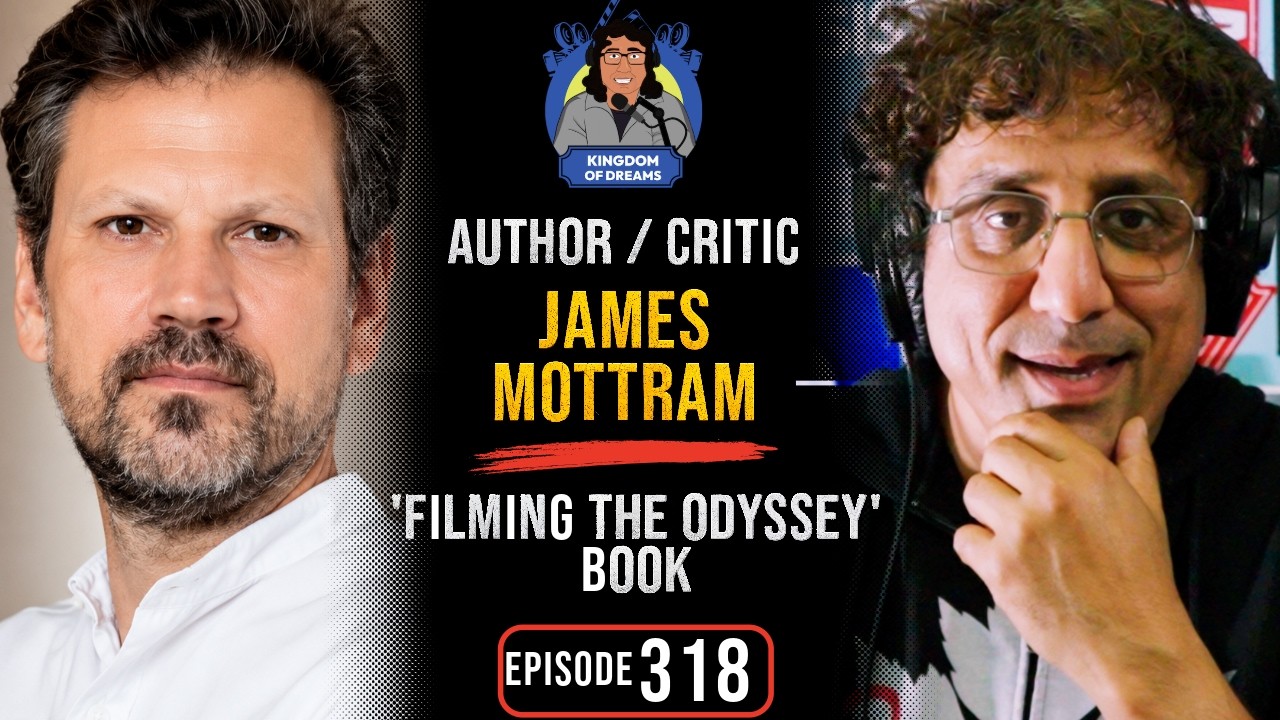
Filming 'The Odyssey' Book, Author James Mottram
Clips and Shorts from this episode
About this episode
🎙️ On this episode of the Kingdom of Dreams Podcast, I sit down with author and film journalist James Mottram to discuss his book Filming The Odyssey and the making of Christopher Nolan’s epic film.
James takes us behind the production, sharing stories from the cast and crew, his favorite sequences, Christopher Nolan’s filmmaking approach, and the extraordinary practical effects used to bring the story to life. We also explore the ambitious use of IMAX 70mm and what it means for the scale and experience of the film.
It’s a fascinating conversation about The Odyssey, Christopher Nolan, practical filmmaking, IMAX, and the stories behind one of the most ambitious productions in modern cinema.
James Mottram is a British film journalist, critic and author who has written extensively about cinema for more than two decades. His work has appeared in publications including Total Film, The Independent, The Times, The Sunday Times and Sight and Sound.
He is the author of numerous books exploring major films and filmmakers, with a particular focus on the creative process and behind-the-scenes production. His books include works on Christopher Nolan, Tenet, Oppenheimer and The Odyssey, offering access to filmmakers, craftspeople, production imagery and the making of large-scale contemporary cinema.
#theyodyssey #mattdamon #christophernolan #tomholland #annehathaway
Full transcript
Automatically generated from the episode audio, so expect the odd misheard word or name. Speakers were labelled automatically. About 7,800 words. Tap a timestamp to play from that moment.
0:00Jawad MirThe sequence of the witch, the way they did the transformations was so cool and neat, using th… editing techniques and, you know, instead of doing like your typical, you know, morphing and all that. I loved that sequence. I think that, for me... What did you think about it, or when you were even writing in terms of that sequence?
0:20James MottramYeah, it's a good question. It's definitely, from what I'd, I'd heard and learnt about Hades and how it sounded, you know, in my imagination, how I envisioned it to be, that was the sequence I desperately wanted to see. This would have been a sort of close second. The crew were all like this was just one of the maddest scenes they've ever been involved in. Because if you think about it, n… not just her transforming the soldiers into pigs, which we'll, we'll come to that in a minute, but you've got like a real crow squawking in a cage. You've got the actual pigs, you know, when she does transform them, you know…
0:56Jawad MirYeah
0:56James Mottram... Actual pigs sort of running around. Yeah, and it is just a sort of mad sort of setup.
1:11Jawad MirWell, good to have you again, man. I wanted to... I'm thrilled to talk to you about your excellent book, Filming The Odyssey.
1:20James MottramIndeed.
1:20Jawad MirAnd…
1:20James MottramI've actually... It's a good day to talk to you 'cause I've literally just received my first copy through the post today, so, even I haven't had a proper chance to look through it, you know, as in the physical form. But, we can go through it together.
1:35Jawad MirYeah, absolutely. And then this came as a surprise, which I had no idea. I didn't see this anywhere on Amazon. I didn't know this was coming, and it came in the same package, so which was kinda cool. So it's called The World of The Odyssey: A Visual Journey, based on the film by Christopher Nolan. And, yeah, no, I have gone through the Filming The Odyssey for about, I think, 40, 50 pages. As always, wonderful and delight to read and learn all of these cool and behind-the-scenes stories.
2:03James MottramThank you very much. It was a, it was a fun one to put together, that's for sure.
2:08Jawad MirObviously you've seen The Odyssey.
2:10James MottramI have, yeah. I saw it at a press screening in the BFI IMAX in London's Waterloo, f… what was it? Four days or so before the film came out, something like that.
2:24Jawad MirSo you did see it in 70 millimeter?
2:26James MottramI did, yeah. So i… as it's meant to be seen.
2:29Jawad MirAmazing
2:30James Mottram... I have seen, I have seen it since at my local cinema, you know, in a, you know, very different projection. And I, you know, I did miss the IMAX at first, but then I think strangely the power of the story just sucked me in again for a second time, and I didn't really notice not having the IMAX afterwards, which I think is to some degree a testament to the storytelling.
2:53Jawad MirThat's interesting. So I've seen the IMAX. Literally today at this time I was supposed to be watching it again in IMAX, but w… we scheduled that. I wanna watch the film again because to me it maybe felt a little tad long, but it was a great experience from the IMAX standpoint. I have... You know, I saw Oppenheimer and the screen kept changing, you know, the size from IMAX to your regular, format, and that was very annoying for me. So this was v… very incredible experience, and I was so immersed. I never realized how powerful IMAX could be. But of course, the story, the visuals, the performances are all sort of integrated in that.
3:38James MottramYeah. No, I mean, I think, you know, for a film that's what, very close to three hours, isn't it? Yeah, it, to me, a… and I'm a real persistent, you know, clock watcher in films if I'm getting restless, but, it never felt like, you know, almost…
3:55James Mottram... Three hours to me. You know, it raced along. And I had that exact s… experience strangely when I read the script. I found it quite a propulsive read and, you know, a page-turner basically. And, you know, 'cause you're, you're, you're moving on swiftly from one adventure to another really. The, you know, it doesn't stand still. I mean, that's... And again, that's why I, you know, I know people that sort of bemoaned ahead of time the running time, but for me, I was just completely sucked in. And of course, I knew, I knew what was coming, so.
4:31Jawad MirYeah. And that's one thing I loved about the film is it has all these different kinda like five or six separate films. You know, they ha… the, each of the sequences were almost like 15, 20 minutes long easily and, you know, that was really cool. And I felt a lot of reminder of films like Jack the Giant Killer, Sinbad and the Seventh Voyage, especially with the one-eyed monster. And, yeah, no, it was, it was spectacular. I'm looking forward to experience it again. Let's move on to your book. What were you... Was this more on the remote kind of a approach on the m… on this book as well, or were you physically at any given time in any of those locations?
5:16James MottramSadly not, no. And i… and i… I've thought about this and, y… you know, l… for argument's sake, let's say I'd, I'd gone to Favignana, you know, obviously where they shot the exterior of, sort of Odysseus's, you know, castle.
5:33Jawad MirYeah.
5:33James MottramAnd, you know, yeah, I could have gone there and you'd have definitely got a sense of what they were doing there, but that wouldn't have helped, you know, in terms of what they were doing in Iceland or in Scotland or back in Los Angeles. So, in some respects, going on set, unless they took me everywhere with them, which of course would be a lovely idea. But, you know, y… I don't think it would've greatly helped, if you see what I mean. So I started the process last September when I went out to Los Angeles to read the script at their office. And then we were sort of given a, you know, p… little presentation. We saw some artwork, just to get a sense…... Of what they were doing. You know, the, which is just as good a way as really as visiting the place in the sense that you could see all the different landscapes and, you know, and key props. I remember seeing one of the, you know, the Trojan horse w… was obviously designed and up on their ar… art boards. Yeah, so I got a pretty good sense of it early on, and then, you know, and then the interview process started, and that was done remotely.
6:38James MottramI was in London basically with most people, I think, in the States, I think, most of the time when I was doing the interviews.
6:46Jawad MirAmazing. You know, your book has eight chapters. I'm just gonna, you know, adapting Homer, casting chara… a character as pre-production, Morocco and location of the Ithaca and Iceland, Mediterranean, all that. What was... Obviously, you know, access is important. You and I have talked about this before. Clearly you spoke to pretty much most of the key people. How… was this in any way different than any of the other books that you have worked on from the standpoint of the amount of, you know, it's based on a book, there's a lot of baggage that comes with it. Talk to me about that. Or was it sort of s… you know, seamless as before processes in the previous books that you were…
7:30James MottramYeah. It's, I think it's always the same when you do a Nolan film. I, so I've obviously done for Insights who are, have published this, I did the one on Dunkirk and the one on Tenet, so I've been through the process of how they like to do things, and certainly it, they can't even begin to think about, you know, someone from the outside coming in to do a book until they've wrapped. You know, they ha… it, that's why the process didn't start till September when, you know, they obviously got back to Los Angeles and, you know, had a brief rest and then started the editing process and that's sort of the period that I came in. Yeah, and so strangely it was a little earlier this time because previously I didn't read the scripts for either Dunkirk or Tenet until December. I'm not really sure why that was, but it, you know, this time we managed to sort of start the process a little earlier. The idea being, of course, just to try and get it out as near as possible for the film…
8:32James Mottram... Which is difficult, which is difficult. But, yeah, so it was a little earlier this time. But the basic process of, all the time, every time I've started, it's been with the production designer, previously Nathan Crowley for Dunkirk and Tenet, this time Ruth De Jong who also did Oppenheimer. So she's the, she's the person to start with because she's the person that, you know, obviously apart from Nolan who's written, you know, written the scripts and so forth, she's the person that comes in first and they start kicking ideas around for design. You know, things…
9:07James Mottram... Like the Trojan horse, they had to approach that really early. They just wanted to get that right. So yeah. So I always started with a production designer. And then, although actually technically that's true, actually technically speaking that's not true 'cause I just remembered, just because when I was setting interviews up, s… all of a sudden the casting director, was available, so actually I did do him first. Now I say I say that but, that was be… you know, it, that was kind of, I thought that would be okay to start with in the sense that, you can... I knew who was playing which role, so you could basically just go through each actor and say, "Well, what led to them being cast?" So I thought, "Okay, I can get away with that one, to start with." But really Ruth was the proper starting point because that's where you're learning, I suppose, the earliest points of the film, you know, the design points of how they're, how they approached it, what locations they were gonna shoot in.
10:11James MottramAll of that was in the early conversations. And then it's a case of just who you get and you, when you get them, and you just kinda start going through a barrage of people, and then you're really building up to interviewing Chris himself, which obviously comes a lot later partly because he's extremely busy. Obviously they're cutting the film and so forth. But it was so I don't wanna do him too early anyway. I want to learn about…
10:34Jawad MirYeah
10:34James Mottram... The film from other, from other people, and then you build up to him. And in the end, I think I spoke to him three times over a couple of times quite quickly, and then a third sort of time, sort of a, k… kind of a catch up really and just to sort of address a few concerns that they, you know, that was had with the book. Nothing major, but that just helped me, get over the line with the book. So he was, you know, he was very generous with his time as ever, given, you know, obviously they're, they're, you know, they're putting the film together.
11:08Jawad MirYeah. You know, he, I didn't know this. I spoke to, Eric Watson, he's one of the producers and close friends with David Arnofsky, and, originally Christopher Nolan was attached to direct Troy. Right? And this was…
11:26James MottramHe actually told me that in the interview, the first interview I did with him, and that is clearly, I'm gonna have to confess this, I didn't know that, so that was a surprise when he said that to me. And I think it is reasonably well, I mean, it's much more known now it's…
11:39Jawad MirYeah
11:40James Mottram... Come out with The Odyssey. But, I think it was, it wasn't a secret. It was sort of known that he'd been involved at a certain…
11:47Jawad MirYeah
11:47James Mottram... Point with The Odyssey. Sorry, with Troy. But, yeah, I was a little taken aback by that one. But it'd be fascinating that he's obviously been brooding on it for what? Over two decades.
11:57Jawad MirYeah. But it, what's interesting is, so Brad, so the, Brad Pitt was supposed to be in The Fountain…
12:04James MottramRight
12:04Jawad Mir... And he really loved the script, but they had some creative differences, so he was subjected to be in Troy because he had to be in a Warner Brothers film. And David, Darren, not David, sorry, Darren Arnofsky was as… asked to direct Batman Begins… So when Nolan said no to Troy, that then he went for Batman, you know, because... And it's interesting how these things kind of work in Hollywood because a lot of directors come and go based, you know, at different stages. But I thought that was really fascinating and, you know, you talked about talking to Christopher Nolan. When you spoke to him, what became clear about why The Odyssey, this particular book that is historically known, is a story that he wanted to kn… make at this particular time? Was there any kind of revelation in that?
12:50James MottramWell, I think coming off the back of Oppenheimer, and, you know, the incredible success that had, I mean he's always been a director that wants to challenge himself, and you can look at his career as a series of stepping stones, not just with success and box office and acclaim, but also in the technical ways he's learnt how to make films. And because he obviously loves to do things practically as much as possible. So I think when he always talks about looking for a space sort of in, I suppose in popular culture, something that hasn't quite been done before. And of course, The Odyssey hasn't quite been done before, not in the way that he's approached it. And I think he thought post-Oppenheimer, a… and prior films to that, Dunkirk b… being a particular example because there was a lot of that set on water, and there's a lot of this film set on water. You know, he's gradually learnt how to do, you know, how to accumulate these skills, these techniques and the, and obviously his sort of crew that he works with regularly know how to do these things.
13:54James MottramAnd it felt like the right time technically, I think, that he... A… and obviously a big part of that is putting something in its entirety in IMAX, filming something en… entirely in IMAX. And I think, you know, they've tried that before and it hasn't quite worked, and this time they developed, you know, this blimp to sort of house the camera to sort of muffle the sound of the camera.
14:17Jawad MirYeah
14:17James Mottram... You know, they finally did something that kind of worked. So it all, it all coalesced into, well, he's gathered all these techniques, he knows how to film something in, or at least they were confident or potentially confident that they were gonna be able to film something in IMAX. I don't think they 100% knew. But, all of these things together, and for that you need a huge canvas, and something like The Odyssey is an enormous canvas. And clearly he's been brooding on it, as we just said, for a couple of decades now.
14:45Jawad MirYeah. First of all, I, you talked about, your previous books. I don't know you actually worked on, you wrote a book about Memento as well.
14:52James MottramI did. That was for a different…
14:53Jawad MirYeah
14:53James Mottram... Publisher. That was a…
14:54Jawad MirYeah
14:54James Mottram... Long time ago, but
14:55Jawad MirLong time ago, yeah. But I j… I just came up on my Amazon, recommendations and thought, "Oh, James wrote Memento as well." Talking to Chris or Matt or Penelope or anybody else in the, in the cast or the crew, what was, if you can share some stories, like, without talking too much into it that's in the book, what was the most fascinating and surprising things that you learned, whether it's related to IMAX, whether it's related to production design or just the story in general?
15:29James MottramWell, this is one I'm fairly sure hasn't come out because obviously they did a lot of press for the movie, you know, Nolan…
15:37Jawad MirYeah
15:37James Mottram... And his…
15:37Jawad MirTons
15:38James Mottram... Answers. And I certainly did start to see stories that I'd been told come out, which was obviously…
15:43Jawad MirYeah
15:43James Mottram... Slightly annoying because I was thinking, "Oh, damn, they're in the book." But, this is one I'm pr… I mean, it's, it's not a glamorous story, but it kind of, felt, yeah, it just shows you the lengths that, like, that he goes to. So obviously they're, they're, shooting, y… you know, in IMAX and he wants to see the rushes basically, you know, the dailies.
16:10James MottramSo they have to be basically sent from wherever they're filming, which of course was various remote locations, back to sort of Los Angeles with someone, and then they have to be developed and then sort of shipped back, and they have to sort of do it in this kind of five-day cycle, because I think, you know, that's just what he wanted basically. No mo… no further than six or no more than six. And yeah, just, and they kind of, they had trackers in the suitcases of the shipment of film, and they were, they were, they had people at the various airports where thing, the planes landed, you know, photographing the packages because obviously it's incredibly valuable what's being…
16:52Jawad MirYeah
16:52James Mottram... Carried, this unprocessed film. A… and then, you know, they had, I think, runners or whatever coming back on flights to bring this stuff back and I just thought, "Wow, that's just..." You know, and, but the, you know, there was, there was a reason. It wasn't just sort of, you know, n… there was a reason, let's say, to ha… to see these deve… these dailies as they were intended, you know, to get a sense of how amazing things were looking. I think it gave a real boost to the crew to see, you know, the, because all these often incredibly difficult to access locations which were really hard on the legs and the knees as they were climbing up mountains and God knows what. But then to see the result of sort of Hoyte van Hoy… Hoytema's cinematography and these things sort of, you know, it was a real boost as some of the crew told me. So yeah, I f… I found that kind of like, you know, that attention to detail when it could have been done in a much different way, but to much lesser effect.
17:54James MottramAnd I think that sums up his filmmaking process is that he will go that extra yard to do something tangible, if that makes sense.
18:04Jawad MirYeah, no, I'm not surprised at all. In that same breath, there was a story that I think Christopher… Nolan shared that they almost lost some of the film because it was going through the airport security scanners, and if it went through it would've just completely destroyed the film. And some… I don't remember the detail of the story, but somehow they were able to prevent from that going through security scanner.
18:27James MottramI think there was a story about some customs…
18:31Jawad MirYes
18:31James Mottram... People o… opening up the…
18:33Jawad MirOpening it, I'm sorry
18:34James Mottram... Un… opening up. This is raw film. It wasn't stuff they'd shot on, if I'm... But then obviously once it's been opened, it could be…
18:41Jawad MirIt's exposed
18:41James Mottram... It's exposed.
18:42Jawad MirYeah.
18:42James MottramSo they had to then scramble to get more film. And I, the, some… one of the, exec producers did tell me that at one point they contacted, he contacted contacts of his on the Dune 3, set to see if they had any spare film, basically, 'cause obviously they were also partly, I think, shooting in IMAX, but... So I thought that was quite nice that it could've been some Dune-intended film stock, that ended up shooting The Odyssey, although I don't think in the end they needed it.
19:16Jawad MirWell, they did show the, Dune preview, I don't know if you guys saw it in the UK, shown on IMAX, which was surprising to me. I wasn't expecting it, so that… ... Looks phenomenal too. You spoke with so many different departments for the book, right? You know, production design, cinematographer, costume, director, of course. Was there a particular department story that made you appreciate the film after hearing what they had created? Like, I mean, yes, visually, you know, you've seen everything, it's in the film, it's in the book, but just listening to these people…
19:51James MottramI always…
19:51Jawad MirNot necessarily Christopher Nolan
19:52James Mottram... Yeah, no, I always get a thrill from talking to the sound team, the sort of sound designer, because they go to sort of absolutely crazy lengths, you know, to create some of these sounds. So yeah, I really enjoy those guys. I mean, Ludwig Göransson, he was my last interview, the composer, and, we were really running up against, time in terms of, you know, getting the book or getting my part of the process, let's say, done. And, yeah, he was the last one, and I kind of managed to get a hold of him and I said, "Are you free at any time?" And then he'd literally just finished the score, I think, and he said, "Well, I can do 9:00 PM tonight." Which unfortunately in the UK is 5:00 AM, so, I did have to get up at 5:00 AM to do that interview. But, you know, I was glad, 'cause then it was... And he was absolutely fantastic, told me sort of stories about his kind of trekking across sort of various parts of Europe to sort of, record sort of choirs and sounds and things and, yeah.
21:00James MottramYou know, so it's, it's the sort of stuff that background stuff to a score, for example, that you'd never know if you listened to the score. You might love the score, but you don't know what's gone into the score. And so to hear that... And, you know, and those are the kind of guys, unfortunately, that don't, although, you know, Ludwig is very well acclaimed, but, you know, and yes, he probably gets interviewed more than most, but a lot of these guys just don't, their work doesn't, does go a bit un… un… unrecognized. So it is a, it's a real chance to sort of look at how they contributed to the film. 'Cause as much as it is Nolan's baby and his vision, it's, it's all their work that's gone into it.
21:38Jawad MirYeah. And I think the music is interesting because, so as you said, he went around. Nolan didn't want him to use any traditional instruments because this is like a, you know, old tale as old as time. And one of the things that I really appreciated, so, you know, it's not like Gladiator came out 25 years ago. Gladiator, a different type of a soundtrack, very kind of like action-oriented. This one's hard to get used to, but I have been listening to it ever since I saw the film, and it really wears on you. It's, it's, it's, it's very unique. It's not something like, you know, Hans Zimmer would do, but, or anybody else like Jerry Goldsmith, James Horner, or whatnot. But it's just something unique about it and you, I, it's incredible that when I was listening to it after watching the film after a cou… a week or two, I was literally there with the characters. It was just very unique.
22:32James MottramYeah, I need to sort of listen to it, I think, in isolation like you've done to sort of truly... Because there's so much going on the screen when you hear it, as much as it, you know, it's there to propel you through the film…
22:46Jawad MirYeah
22:46James Mottram... So you probably notice moments of it, but yeah, to properly absorb it like you have, I think that's, yeah, it's a good idea. I mean, he's just a fantastic composer.
22:55Jawad MirOh, he's incredible
22:57James Mottram... And I mean, difficult to know where this film, The Odyssey, will land in terms of the awards season, but I would've thought he stands a very good chance of, would it be number three? I think so.
23:10Jawad MirTennant, Oppenheimer, and…
23:13James MottramDid he do one…
23:14Jawad Mir... This one
23:14James Mottram... Some, yeah, I'm sorry
23:16Jawad MirNo, Dunkirk was done by Hans Zimmer.
23:18James MottramYeah.
23:19Jawad MirThen it was Tennant and Oppenheimer, because I think Zimmer was busy with Dune, at least that's what I've read. I don't, I don't know if, it's even true or not. But yeah, they've sort of found a really good connection with each other, Christopher Nolan and Ludwig.
23:35James MottramYeah. No, I mean, he's, yeah, he… he… he's a great person to talk to, so I was quite pleased that he was the last piece of that particular jigsaw.
23:45Jawad MirFor me, the most interesting, so, you know, going into the film and knowing Christopher Nolan's approach to films, you know it's everything is gonna be practical, right? A lot of the conversation before the film was released or during the press was the real, the life-size Trojan horse that they built. But to me, what was incredible was the Cyclops puppet. I did not know, I mean, I was wondering if it's… How did they do it? Was it like a camera trick? You know, kind of like the old ways. But going through your book, and there was a photograph of Chris and Matt, and then the Cyclops puppet is like, you know, 20, 30 feet higher. And then I was blown away. I mean, not that I was surprised or not, but still, to be able to do that i… is incredible.
24:31James MottramI mean, it... The puppet's amazing, obviously. But it is... Well, put it this way, the editor, Jennifer Lame, she, told me that sequence was the one they were still working on. She was another late interview that I did, and that was the one that was not necessarily giving them the most trouble, but the one that was the most difficult to get right because it wasn't just the…
24:58Jawad MirThe puppet
24:58James Mottram... The puppet on location…
25:00Jawad MirYeah
25:00James Mottram... Although obviously that served, you know, a significant portion of that sequence. But obviously there's the work of Bill Irwin as well, who played the Cyclops, and they shot him on, I think, two different sets…
25:14Jawad MirYeah
25:14James Mottram... In Los Angeles. Plus there were sort of other sequences that they kind of... Or other moments with Bill they kind of kept adding in. You know, it… it's incredible mix of techniques, that sequence. And it's an incredibly clever sequence, it has to be said. I thought... That's one I thought he completely nailed, in the film.
25:36Jawad MirAnd I thought it was kind of smart, although the st… script demanded it, was to... Most of his sequence is in dark, right? Like, it's, just the fire of light or just completely pitch black or by the opening, and that kind of gives them a little bit more leeway in terms of, you know, saving the dollars and saving the hassle of showing every itty-bitty detail, which they do eventually, right? But yeah, it was... I thought it was remarkable when I found that out.
26:05James MottramWell, I'm curious what you thought, because this was... These were things I couldn't really imagine. Well, I could imagine the whirlpool. You know, obviously it's gonna be like a whirlpool, so that, you know, was well done. But the scylla, the, you know, the kind of monster that comes out of the rock and plucks the men just after the whirlpool, you know, I'd sort of been told what it would be like, but you couldn't really imagine it because I hadn't seen photos of what the actual protrusions that come out of the rock, if you see what I mean, what they would look like. So I was just curious what you thought of that sequence, because that's one, obviously it's shot in a real location, but then they've obviously added CG there. But it's done so quickly, I think that it's, it's really clever because you certainly don't notice that it's a CG addition.
26:59Jawad MirYou hit the hit nail on the head because I think that's what worked with that sequence because by the time you're trying to understand what this thing looks like, it's gone. And I actually genuinely thought it's gonna come back out again. Like, you know how in movies, like, there's a moment of calmness and then something else happens? Which didn't happen in this, which is awesome.
27:18James MottramYes.
27:18Jawad MirBut I…
27:19James MottramIt's really annoying when that happens in movies
27:21Jawad MirYeah. It's, it's very predictable, right? But yeah, I... If you ask me what it looks like, the only thing I can think of is like it had tentacles. That's it, right? Like, that's the only thing I can remember from it. But now that I'm gonna see it again in the next week or so I'll, I'll look out for that. But yeah, it was very quickly done and you know how they did the whirlpool since you brought it up, right?
27:40James MottramWell, I know that they, you know, had sort of these RIB boats sort of circling to create, a marker, let's say, for where the CG could then be…
27:53Jawad MirYeah
27:53James Mottram... Added in. But even, you know, even that, I know how... You know, that's a very practical, you know, technique. You know, quite rudimentary really. But I know from the, you know, what the VFX guy said that was really helpful to sort of, you know, as a, as a marker, I suppose, to, you know, to help create the whirlpool. So, yeah, you know, whenever they could do something practical they did, and, I think that's why it works on a visual level because it certainly doesn't feel like a sort of, you know, glossy CG. You know, he said in its... This is said in the book, that, he wanted to make a kind of cold weather Mediterranean film…
28:34James Mottram... Which is really interesting because most of the time they're, you know, in glorious sunshine and… You know, and I think that really is reflected in the visuals and in the way they've used very subtly CG so it doesn't stand out. It kind of, you know, is very much in the background, you know, when they have to use it. Yeah, I... You know, I just think sort of from a visual point of view, and even the costumes, you know. I know lots of people went online and talked about, oh, th… those aren't accurate or whatever, but they suited the world. They suited the characters, and the characters have a lot of action to do, so they've got to be able to move in them...
29:11Jawad MirI mean, I think for people who are looking at the costume, I think they should also look at the fact... I'm not saying they should, but if they're really gonna complain, then, you know, nobody used to call their father Dad back in that time. You know? I mean, it... There are, there are these little things that Christopher Nolan has done. Mind you, if any other director had done it they would've probably nailed him. Like, you know, "Why the hell are you making it look like it's present?" Kind of like Titanic when the way Leo's dialogue was very modern as opposed to 1912. But I mean, again, you know, the whole experience, the film is what matters. I think that's what people enjoyed. And I'll tell you, when I was sitting, I literally had a dead center seat and I did not hear, see a phone light coming on. I didn't hear a peep. Normally I have to be, like, aware of that. Like, "Oh my God, here we go again." Nothing. Didn't happen, and that's a testament to his filmmaking and his storytelling. When you were talking to, you know, Christo… Chris, I forget the DP's name. I always have a hard time pronouncing his name.
30:11James MottramH… Hoyte van Hoytema.
30:13Jawad MirHo… Hoyte van... For me, the biggest challenge on this film, the way I would see it, of course they would see it separately, differently… One thing is IMAX, but to be able to film the boats, the ship or the sequences and make sure the focus remains intact, that is darn hard even with a regular camera, like a film camera. Did you guys touch upon that?
30:38James MottramYeah, that's interesting. Not... If I'm being honest, not particularly, but then I think that comes back to their time on Dunkirk and they would've... You know, they spent a lot of time on the water there. So I think they learned, they've learned how to do these things. As I said earlier, these are sort of techniques they've developed over time. But yeah. I mean, they're, they're, they're brilliant at sort of, water work, let's call it. I mean, the ability to shoot on water, you know, we all know from Jaws…
31:09Jawad MirYeah
31:10James Mottram... It can go very wrong. Or at least, you know, can be very protracted. But, you know, they're, they're rigorous in how they do it. Yeah, I mean, even Tenet had sort of various kind of water sequences as well.
31:23Jawad MirYes.
31:23James MottramThe catamarans, for example. So, yeah, they're just very experienced at that. But... And, you know, the... I can remember in, certainly in Dunkirk, I don't know if I saw one for The Odyssey, but there's a still in the Dunkirk book of Nolan in a wetsuit in the water, you know, in the sea, obviously working out whatever shot that it is that he's, he's studying at that moment. And it's like, yeah, he's not one of these guys, you know, in a puffer jacket four miles away basically watching it on a video. You know, he's right, he's right there. Yeah, so yeah, they are very experienced, well, shooting water and getting in water by the, looks of things.
32:05Jawad MirYeah. I mean, to add to that Dunkirk story, I think it was, Kil… Cillian Murphy who said that he would never do so… he would never ask you to do something unless he does it himself. So there was a sequence in Dunkirk, I don't remember what it was, but I just remember him describing it. He had to, C… Cillian Murphy had to get on top of this boat which was sort of upside down, and it was very dangerous, and he was having a hard time. And Chris went and stood there for a bit, and that gave him a little bit of confidence to go there. And I think that's the keys. Like, a lot of people talk about, actors talk about, you know, directors being in another room and monitor, which works for some, but it's a totally different thing. Like, your team leader, your captain needs to be right in front of you so he can guide you through the obstacles and the performances.
32:55James MottramYeah. No, he's, he is a sort of... Yeah, he doesn't s… strike me as this sort of general-like figure that's barking orders.
33:03Jawad MirYeah.
33:03James MottramHe's quite the opposite. He seems extraordinarily calm, and I think maybe that radiates through the crew. I mean, you know, the... I definitely got the impression from the crew that they would, they would go anywhere for him. You know, it's that kind of a... You know, they were h… they were seriously invested in getting this right, you know, and getting it to the high standards that he sets, basically. You know, and then, and they, you know... There is a story in the book, I think it's from the art… the art director, where he, you know, he came home and then was sort of sleepwalking for about three weeks afterwards, just a sort of general PTSD of, dealing with the sort of ocean and the waves. And I think he was kind of wandering around, sleepwalking and moving objects around the room or something, just because it's a sort of... It'd been an extraordinarily tough shoot, but an incredibly rewarding one by the sounds of things.
34:03Jawad MirYeah. No, I completely agree, and I think for me, I wanted to f… get your take on, which I don't wanna give away, the sequence of the witch. I thought, I thought the way they did the transformations was so cool and neat using editing techniques and, you know, instead of doing like your typical, you know, morphing and all that. I loved that sequence. I think that, for me, reminded me a lot of stuff like, you know, Jack and the Giant Killer, Sinbad and, Seventh Voyage. Talk to me about that. What did you, what did you think about it or when you were even writing i… in terms of that sequence?
34:46James MottramYeah, it's a good question. It's definitely... Strangely, it wasn't the sequence that I was most an… anticipating seeing. That would've been the Hades sequence.
34:58Jawad MirYeah.
34:58James MottramFrom what I'd, I'd heard and learnt about Hades and how it sounded, you know, in my imagination, how I envisioned it to be, that was the sequence I desperately wanted to see. This would've been a sort of close second. It's definitely people said the crew were all like, "This was just one of the maddest scenes they've ever been involved in." Because if you think about it, n… not just her transforming the soldiers into pigs, which we'll, we'll come to that in a minute, but you've got like a real crow squawking in a cage. You've got the actual pigs, you know, when she does transform them, you know, actual pigs…
35:34Jawad MirYeah
35:34James Mottram... Sort of running around. Yeah, and it's just a sort of mad sort of setup. And then the whole sequence is completely mad. I mean, I... The bit I love, this is always the strange thing of doing these books. You learn a little detail which probably to you on your first viewing you might not even notice, 'cause this, the one I'm about to tell you is quite small. But it… it's the sort of thing that jumps out at me, 'cause I'm like, "Oh God, yeah, that's what he was talking about." So i… in that sequence where, let's say, the madness really starts where the soldiers are sitting around a table, you know…
36:09James Mottram... And she's, she's feeding them this sort of stew. And I don't know if you noticed, but when they start eating it kind of starts pulling them downwards. It's in their jaw…
36:19Jawad MirI did
36:19James Mottram... And it's kind of slightly pulling the... It's n… it's not totally obvious, but, Anyway, that was done through a sort of, I suppose, puppeteering-type system where there were people underneath kind of yanking those things down, as I remember. And just sort of crazy things like that. And then obviously the pig transformations, I think they were kind of, sort of masked. And it... You know, and it's done like a sort of... It reminded me of American Werewolf in London, that transformation.
36:43Jawad MirYes.
36:44James MottramLike…
36:44Jawad MirYou're right. You're right
36:45James Mottram... You know. And that was obviously, you know, a work of genius, that. It was Rick Baker, wasn't it, that did that. But, yeah. And th… this, yeah, it's just a mad sequence. And then I know that people were completely moved by Samantha Morton and her performance, and I think, you know, she brought a few people to tears. And, you know, 'cause, I mean, I don't know b… from people you've spoken to, but pretty much everyone or everything I read, everyone's talking about, Samantha Morton in terms of, like, possible, you know, acting prizes and things down the line. Certainly nominations I would have thought. I mean, it's a pretty powerful piece of work for minimal screen time. So yeah, we'll see. But it, I, no, I love the sequence when I saw it. It was just, yeah, really bizarre and, you know, it was as mad as they described, but it still wasn't quite how I imagined it, and that was great. You know, it, there was something left for the imagination there to be s… you know, surprised at.
37:43Jawad MirI also felt, and I have to rewatch it to understand to see if that was the case, so you were saying that, you know, how the puppeteers were pulling them down when they were eating the stew. I also felt from a camera standpoint, I just... There was something happening in the camera. Either they had changed the shutter speed or something else that it just didn't seem like a normal frame, and I d… I don't know what they did, and I would love to see it again and I would like to find that out because that, I think, made much of an effect than just the puppeteers pulling down, which was as impressive as it was.
38:18James MottramYeah. I, yeah, I don't know if they, if they adjusted the camera particularly for that sequence. That's not something I ever found out, but there you are. Next time you meet Christopher Nolan, you can ask him.
38:29Jawad MirI will. I will. And I do have one part that I would love to talk to you about. I thought... What's her name? Anne Hathaway.
38:39James MottramYeah.
38:42Jawad MirShe was phenomenal. So I had seen, I'm kind of segueing, End of Oak Street two days before I saw…
38:48James MottramOh, I've literally just seen that yesterday, so, I actually went to my local cinema to see it.
38:53Jawad MirYeah. So I was r… I was really surprised with that film. I think it's better than many Jurassic Park films, the recent one at least, if you ask me. And to see her performance in that and three days later to watch her in Odyssey, I mean, she's such an incredible actress. I knew she was great, but those two movies, like, she was just out there. I don't, I, kudos to her. She's remarkable.
39:16James MottramWell, she's also had Devil Wears Prada 2, albeit a character she knows reasonably well, you'd think.
39:22Jawad MirYeah.
39:22James MottramAnd then, or Mother Mary.
39:24Jawad MirShe's got two more movies coming out.
39:26James MottramWell, she's got Verity as well, and then there's M… well, there was also Mother Mary.
39:31Jawad MirYeah. And there's another one, something, Paper Tiger. She's in Paper Tiger.
39:36James MottramThat's right. I have seen that.
39:38Jawad MirYeah.
39:38James MottramYes.
39:39Jawad MirYeah
39:39James Mottram... Yeah. That's quite a, that's been a qu… quite a, quite a run of movies, isn't it?
39:43Jawad MirYeah. No. She was remarkable, and I think the, Odyssey honestly reminds me, a… as the genif… genesis of the film, as somewhat like Gladiator. You know? It's like the coming of home story, and he's trying to go to his family, you know, Maximus. And I think that's what resonates with people more than anything else is just his journey home. And especially, you know, he was away for what, 10 years or 20 years, I forget. I think, but he only spent three years on the sea and seven years with the Charlie Thrones character. And…
40:18James MottramRight
40:19Jawad Mir... The question is like, and the question is like, why did he not choose to leave when he could? And that's something for the, you know, the philosophical things you can discuss. Like, that's something really cool and deep, and I just thought it was fascinating. I don't know if it's from the book or not, but I look at those little details and things and it's really mesmerizing.
40:37James MottramI mean, I think the interesting thing is how not only you could say, well, as I was saying earlier, he built up to the Odyssey from a technical point of view over the years, which he certainly had. You know, he needed a lot of money to make this, and probably Oppenheimer gave him that cachet
40:55James Mottram... You know, to, you know, to get that budget. But you could say he's built up to this film thematically through, you know, all of his films really. I mean, there's… some Memento in there. There's Interstellar. There's Dunkirk. You know, the idea of homecoming is particularly key in Dunkirk and Interstellar.
41:18Jawad MirDunkirk, yeah.
41:19James MottramAnd then, you know, the idea of memory, w… is obviously crucial in Memento, and that's something that's quite significant here. You know, father-son relationships. I mean, there's a lot that, he's touched on before, and he seemed to find again and perhaps shed new light on, in The Odyssey.
41:43Jawad MirA… absolutely, James. What's any particular books that you're working on right now, without giving away the title, that,... I might be excited to see?
41:52James MottramYeah. There's one that's, well, we've alluded to before 'cause we, I c… couldn't really talk about it, and I still don't think I can, but it…
41:59Jawad MirYeah
41:59James Mottram... It's supposed to be coming out soon. Very big movie, so I will be excited…
42:03Jawad MirRight
42:03James Mottram... To talk to you about that. And then hopefully I'm starting a couple of other things, but they're very early days at the moment. But, yeah, hopefully there will be a n… a n… a nice big blockbuster that I'm sure you're a fan of, down the line very soon.
42:20Jawad MirI'm looking forward to that. I'm looking forward to chatting about that too. That's awesome. Thank you so much, James, again for your time as always, and enjoy Venice Film Festival, and I hope you come to Toronto one of these days so we can, we can get together.
42:32James MottramThat'd be great. Thank you so much for having me.
42:34Jawad MirThanks.