
Episode 319 · August 28, 2026 · 46 min
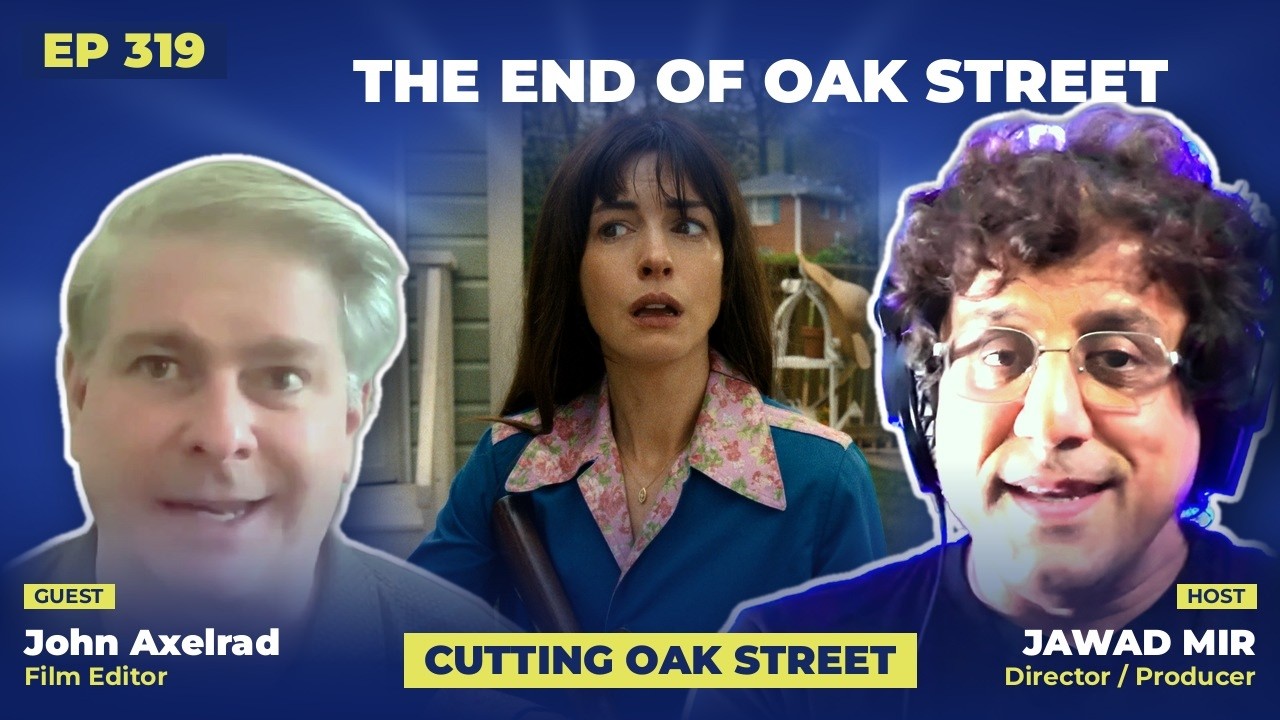
'The End of Oak Street', Editor, John Axelrad
Clips and Shorts from this episode
About this episode
🎙️ On this episode of the Kingdom of Dreams Podcast, I sit down with acclaimed editor John Axelrad, ACE, to discuss his work on The End of Oak Street, one of the most remarkable films of the year.
John takes us inside the editing room, breaking down how tension and suspense are carefully built, how pacing shapes the audience’s experience, and the choices that turn individual moments into a gripping sequence. We also dive into a specific scene, with John walking us through the editing decisions and creative thinking behind it.
It’s a fascinating conversation about editing, tension, pacing, performance, and the invisible craft behind one of the year’s most impressive films.
John Axelrad, ACE, is an acclaimed American film editor known for his work across independent cinema, studio films, and television. Over his career, he has collaborated with filmmakers including James Gray, David Lowery, and others, developing a reputation for emotionally driven, character-focused editing.
His film credits include We Own the Night, The Immigrant, The Lost City of Z, Ad Astra, The Green Knight, The Old Man & the Gun, Krampus, Crazy Heart, and The End of the Tour. His work spans drama, science fiction, fantasy, thriller, and comedy, demonstrating a versatile approach to pacing, performance, and visual storytelling.
A member of American Cinema Editors (ACE), Axelrad is particularly respected for shaping performances and finding the emotional rhythm of a film in the editing room.
#theendofoakstreet #dinosaurs #jjabrams #annehathaway #ewanmcgregor
Full transcript
Automatically generated from the episode audio, so expect the odd misheard word or name. Speakers were labelled automatically. About 7,300 words. Tap a timestamp to play from that moment.
0:00Jawad MirThat whole scene before, just before all that chaos starts, there's a family that walks into the driveway… ... You know, as the camera's panning… ... Was so remarkable because as an audience member, my attention is on this family that happens to be getting into the car while the other family, the main family, is walking in the background.
0:20John AxelradWell, I mean, that was one of those scenes where David did not have coverage for, and…
0:24Jawad MirThat's awesome.
0:26John AxelradAnd that is awesome. And you know, there are shots like that where he was gonna force the hand of the studio if they said, "Well, this goes on too long. We gotta cut it down," and we're like, "Well, this is, this is the intent." so a lot of those shots, no, there wasn't coverage for. When I interviewed for this film, one of the producers told me, "We wanna make a commercial movie, but in David's style."
1:04Jawad MirI was completely blown away. It was such a fantastic film, and I would even say it was better than a lot of recent Jurassic Park films because, it had so much, obviously, human drama, that's number one.
1:21Jawad MirBut the edge-of-seat suspense and some of the unexpected moments, I was just... And the special effects, right? They were just… ... Really believable. So the, first of all, I wanna say that. I think it's a…
1:33John AxelradWell, thank you
1:34Jawad Mir... Fabulous film.
1:35John AxelradThank you so much.
1:37Jawad MirIt's a fabulous film. And…
1:37John AxelradI'm, I'm thrilled that you liked it.
1:41Jawad MirAnd I think a lot of people will… ... Because it just has that element of human drama and, more than anything else. So, you know, one of the things that I really appreciated with the film was the setup. Talk to me about the process of telling this story. It's an hour and 40 minute film…
2:03Jawad Mir... In that tight of a timeframe, but still it doesn't feel like it's rushed. Was that in, always in the script, the setup of, you know, at least 15 to 20 pages, or was there any sort of changes that was implemented in post?
2:17John AxelradWell, there were some changes. You know, working with David Robert Mitchell, this was my first time, and he, you know, I just idolize his work, Myth of the American Sleepover and, It Follows, of course, and then, Under the Skin Lake. And the one thing about his style is he's very into naturalism, and I f… do believe, and he's indicated to me as much, that he wanted the beginning of the movie to feel, to have a sense of naturalism, to not fully jump right into the story. He was really resistant to doing, like, an opening tease which was floated at some point where we see, like, a portal or some crazy thing like that.
3:11John AxelradReally wanted the story to unfold naturally, and he wanted this to be driven by the characters. And so I do believe, you know, it was much longer, I can tell you that, but I mean, I don't, I haven't worked on a film that wasn't longer before we got down to cutting it. But the four characters we wanted to introduce, and we originally had them introduced separately doing their own separate things, but then it was decided, you know, the summer block party was a really good way to see them as a family unit, which I think was important that they do love each other, they're very together, but at the same time, each of the characters has a secret that they're keeping from one another. And, so, a… and there's of course some dysfunction in the family with, the parents contemplating divorce. So the way it was set up is, yeah, it's a little, slower at the beginning and then when the mayhem starts, it just picks up steam and grows.
4:21John AxelradAnd so it is a very tight 100 minutes, as you said, and, it was obviously much longer before, but through the editing process we whittled things down and got it into shape, and really it was achieving the right balance of momentum, pacing, and having thorough character arcs where we really feel for all the family members and wanna root for them 'cause that's what's at the heart of this movie. I mean, it's a dinosaur spectacle, but at the core it's a family drama. And, so yeah, it was, it took a lot of effort to get the right balance of humor and terror and action and drama. But hopefully we pulled it out.
5:16Jawad MirYeah, and I was actually telling somebody after I watched the film, I WhatsApp them, I'm like, "It's a great, entertaining film, but it's not a dinosaur movie."
5:25John AxelradYeah.
5:25Jawad MirIt's a family movie, right? And…
5:27John AxelradFamily movie
5:27Jawad Mir... And one of the thing, one of the things that I loved about it was, you know, kinda like approach of Jaws or the original Jurassic Park where you don't necessarily have to show the dinosaurs all the time.
5:40John AxelradRight.
5:40Jawad MirRight? Just the fear of, the fact, the sheer fact that they're there but you can't see them or you see… ... Their tail wa…
5:47John AxelradYeah
5:47Jawad Mir... I thought that was really aesthetically and coolly done because it builds up that anticipation that… ... The audience has to kinda go through, right? You talked about, the music by the way was just fantastic too. It had a very kind of like…
6:01John AxelradYeah, Michael Giacchino
6:02Jawad Mir... Stanley Kubrick type of feel. You talked about having it being longer. Was there a scene, if that's something you're able to talk about… ... That got taken out that you probably were fighting for because it served the story, but in the grand scheme of things it may not have worked?
6:21Jawad MirAnything that you can sort of talk about that?
6:22John AxelradWell, yeah. I mean, that's a really good question. There was a different storyline and, unfortunately I can't go into liberty of divulging. But, there were some other characters in the movie, like Chris Coy was in the movie and, playing a neighbor, and we did have to cut him out unfortunately. I mean, nothing about his performance, but it's very hard when you're, you have to literally cut out characters from the movie. But that becomes very clear when a film is put together, that you're thinking, oh, well, this tangential character, it read really well in the script, but it's really inhibiting the momentum of the story and the direction of the story. So, yeah, I mean, we're, unfortunately had to do those kind of lifts of a few scenes, but a lot of it was just trimming. Trimming, cutting.
7:29John AxelradJust there were scenes that played too long, that, you know, went on too long. Again, in the script it was like, oh, this is all great, but then when we're putting it together we're, we think, "Well, we don't need all of this dialogue," or, "We don't really need the beginning and the ending." I mean, the middle of the scene is the crux of the scene. And this is all part of the editing process where we can, truncate scenes, also rearrange scenes, which we did, several times in the move… movie…
8:03John Axelrad... That, really helped heighten the tension.
8:08Jawad MirYeah, tension is something that was there from the beginning, even before the, you know, the chaos started.
8:16John AxelradYeah.
8:16Jawad MirThere was tens… there was so much tension between the character because that's literally what sort of served the movie, the story forward into the whole dinosaur realm. And one thing I really liked, and I know that's not a post-production thing, but I'm just making a comment, I love the blocking…
8:32Jawad Mir... Of the film.
8:33John AxelradThat's great.
8:34Jawad MirAnd I loved, I love the fact that there were very, there were not that many setups. You know, these, you know, for example, if you're showing a shot of the neighborhood and the characters are walking through, you know, you can easily cut away to a close-up, a medium, and all that. You know, I found that was, that was very minimal, which obviously helps with the budget, but at the same time it really sucks you in.
8:57John AxelradYeah.
8:57Jawad MirThat you're not cutting, right? Which is…
8:59John AxelradRight
8:59Jawad Mir... Something, as an editor, that's the job, but sometimes the best job is not to cut…
9:05John AxelradYeah
9:05Jawad Mir... Even if you have something to cut. Was there a lot of coverage…
9:08John AxelradExcuse me.
9:09Jawad MirThat's okay. Was there a lot of coverage for a lot of scenes that you guys just didn't use, or was that just the way it was done?
9:16John AxelradWell, it, you know, it's interesting, because yes, there was a lot of coverage that wasn't used that I didn't know this at the time, and I should've picked up on it because a lot of, directors do this. And having worked with James Gray, I thought, "Oh, well, maybe he's the one that does this." But David Robert Mitchell did the same thing, where they'll shoot two cameras or sometimes three cameras for a setup, and it really is to give the illusion, to the studio that we're shooting coverage. And we are getting coverage. I mean, it's, it's nice, but the studio is always gonna complain, "Do we have the coverage? Do we have the coverage?" And little do I know, but David's intent is to stay in the master shot for the scene.
10:05John AxelradOr as you say, using discipline in how much we're editing. And David is definitely a director that likes his long shots, likes the slow zooms, and that's the way James Gray is too when I've worked with him. So, yeah, a lot of the B camera, so you know, I feel bad for the B camera team…... Because a lot of their work didn't get used. But it was a lot of the, Mike G, our cinematographer, his idea to say, "Hey, let's, you know, let's get some coverage here in the B camera." And sometimes the B camera wasn't always the B camera. Sometimes the A camera was called B camera, and the B camera…
10:48John Axelrad... Was called C camera, and, or A camera. So I had the script supervisor, who was great, let me know the hero camera. So basically the camera that David favors. So I am informed, "Okay, yeah, you don't wanna use this shot." And David wasn't really a fan of, he wasn't really a fan of long lenses, and a lot of the coverage and stuff like that. So I, you know, it was a learning process. If I do another film with him, I'll know moving forward…
11:25John Axelrad... What his preferences are.
11:27Jawad MirYou talked about working with script supervisor. You know, in the old days, and even now some directors and some editors, you're actually physically on the set or…
11:39John AxelradYeah
11:39Jawad Mir... Remotely on the, on, off the set working on dailies on a regular basis that the production is taking place, and then there's, there are parts where you just kinda come in when everything is done.
11:49John AxelradYeah.
11:49Jawad MirWhat was the process of this? Were you on the set? Were you remotely working on dailies as the production was going on, or did you come completely at the end when everything was finished?
11:56John AxelradWell, you know, I know a lot of productions, not a lot, but some of the big ones, they want the editor literally on the set and cutting… ... From the camera feed. I have not had that experience yet, maybe I won't, where they're literally there and the director is looking at the cut as it's taking place in real time. More often, an editor is on location. So say, for instance, this film they shot in Atlanta, an editor could be on location in Atlanta, or if they're shooting in London, they're in London. But, most common, at least with the budget range of the films that I'm, I've been doing, is to still be in LA.
12:49John AxelradUnless there's a tax incentive reason that I have to be in New York.
12:53Jawad MirSure.
12:53John AxelradBut, so in this case, we were in Los Angeles, and they were shooting in Atlanta. And, any edit sharing took place remotely. There are a lot of robust systems right now where, such as Evercast and Clearview and, all these things where you can share edits virtually, and it does save the production a lot of money, to not be there. But I was there from day one, for dailies because what we do as editors, we're not just editing. We're also the gatekeeper. Especially in feature films, we are the head of our department, and it's my responsibility to inform, the director of like, "Hey, I think we're missing some coverage," or, you know, "This is not really coming together the way that I think you envisioned."
13:53John AxelradOr calling a cinematographer and saying, "Hey, I think, you know, there's, you know, some focus issues with this lens." And then the production office constantly is calling me and they're like, "Hey, can... Do you have everything you need? Can we strike the set?" Which is the worst. I hate dealing with that because…... They're basically using me as the excuse. Like, "Well, the editor…"
14:15Jawad MirYeah.
14:16John Axelrad"... Please strike the set." And meanwhile, you know... So I have to be on my toes and cut things very quickly, much faster than I would want to, and I don't have time to polish because more material is coming in, and more material is coming in, and it just doesn't stop. So, these are the reasons that we edit from day one. And I know in Europe, and other places, they're not used to that. They usually have the editor come on after shooting is done. But it doesn't make sense for a lot of reasons. It also, when shooting is done, I will have been familiarized with all the footage, I will have organized all the footage, and the director can just start working with me, you know, within a week after shooting stops.
15:06Jawad MirWell, I agree with you. I think, obviously, as you know, as I know, the reason for that is just s… meeting a deadline of a release date that's already been announced and all that stuff. But do you find... So I have, I direct, I've edited quite a bit of feature docs.
15:24John AxelradOh, you have?
15:24Jawad MirAnd I, and I know that from experience, I always find that when there's tight push and under pressure… ... Everybody works differently. But at least for me, I think I will work under pressure. But I think most of us do because we will make the instinctive choice that we should be making when you are under pressure. Now, granted, sometimes it may not work, but do you don't enjoy that pressure at all? Or you just wanna be sort of done with everything and organize everything and then kinda go through it?
16:01John AxelradWell, yeah, and I know people thrive under pressure like that. And believe me, there's always pressure in the editing room because…
16:11Jawad MirRight
16:11John Axelrad... There's pressure getting the cut out for a screening, preview screening coming up, and we're not quite ready for it. I'm more comfortable in those phases because… ... I have already ingested in my brain the footage, and I know the footage, I know the film. So for me, doing dailies is like a writer staring at a blank page. You know, it's, it's totally fresh and you're, you're going through it and you're like thinking, "Oh my God, what are their intentions here?" And like, "Why is this like this?" And, or you know, a lot of surprises like, "Wow, this is incredible, but how am I going to incorporate this shot?" Because it totally doesn't mesh with the rest of the coverage. So there's a lot of self-discovery, which is rewarding, but it's this, I call it administrative pressure that's…
17:09Jawad MirYes
17:09John Axelrad... Happening. So it's not creative pressure and, you know, just this need to answer to all these people about,... Do we, do we have everything?
17:22Jawad MirYeah, no, I see that. I see that. You were on the set, so I don't think…
17:27John AxelradI wasn't on the set for this one.
17:29Jawad MirOkay, you weren't on set for this.
17:30John AxelradI was, I was, yeah.
17:31Jawad MirBut working in the post… ... When going through the footage, you would know this, I didn't, I didn't feel that there was any animatronics. It was all CG. Would that be a right thing to assess?
17:43John AxelradEverything was animatronics. No, I'm kidding. That's a joke.
17:48Jawad MirYou got me there for a second.
17:49John AxelradYeah, I got you for a second. Well, you know what was really neat is our, premiere, was at Warner Brothers, and they did have animatronics dinosaurs… ... Throughout the Warner Brothers lot. It was really neat. But no, everything was CG. We used ILM and, yeah, I mean, the, literally there were special effects guys wearing these gray…... Green suits running around…
18:19Jawad MirYeah
18:19John Axelrad... Dinosaur heads on a stick. So…
18:22Jawad MirYeah, I mean, that was done in Jurassic Park too, you know, back in the day, right?
18:25John AxelradYeah.
18:25Jawad MirSo that's…
18:26John AxelradYeah
18:26Jawad Mir... That's a good reference point. No, the, this, the animation was really good.
18:32John AxelradYeah.
18:32Jawad MirLike, it was just…
18:33John AxelradAbsolutely
18:33Jawad Mir... So believable, right? And…
18:35John AxelradILM. I mean, Jay Cooper, Jennifer Mieslon were the producers and, you know, they did incredible work, and the artists, involved with ILM were top-notch.
18:46Jawad MirAnd even the performances. I'm, I'm not gonna give away anything here, but Anne Hathaway especially.
18:52John AxelradYeah.
18:52Jawad MirThere's a scene where she's really…... Gets really scared and things kind of happen. And to do that without, you know, even with, like, a stick dinosaur head…
19:03John AxelradRight. No, I know
19:03Jawad Mir... You know, it's, it's remarkable how amazing she was in this film. She was f…
19:08John AxelradYeah
19:08Jawad Mir... Even the kids, especially the kid with the boy, I forget the character's name and the actor's name.
19:14John AxelradMan, yeah.
19:14Jawad MirHe was phenomenal when he's pushing the door and…
19:17John AxelradYeah
19:17Jawad Mir... In that sequence, right? So yeah.
19:19John AxelradYeah.
19:19Jawad MirIt was, yeah, very believable.
19:21John AxelradWell, this is where the actors have to earn their money, and I'm always really impressed that they can act that way looking at a m… an overweight man in a tight suit wearing, you know, wearing gray and holding a dinosaur head. I mean, you're more tempted to laugh. So to get the, you know, the reactions we did out of Anne and Ewan, and yeah, Anne was, like, ch… channeling her Shelley Duvall from The Shining…
19:56Jawad MirYeah
19:56John Axelrad... In a way. So yeah, and it was funny because I think I had that one, there's one take where she's just truly terrified at the front door, and, I think I had it in my original cut, and then somehow it got lost with all the changes we were making, and later in the process I rediscovered it and I said, "Hey, David, what about this?" And he's like, "Oh my God, yeah, you know, we have to have this." So, yeah, the actors just gave us gold.
20:27Jawad MirYeah. How involved was JJ? Or was he just a pure producer, just ... Kind of thing?
20:33John AxelradNo, well, I mean, he was, he was involved, definitely in the early phases and the pre-production phases and, he was involved during the shoot, but he, I don't think he was there on set often. John Kohn, Hannah Minghella, Tommy Harper, Matt Jackson, so they were very active on set. But JJ was extremely active in the edit in terms of giving notes.
21:09Jawad MirYeah
21:09John Axelrad... We were at Bad Robot for a good part of it, but JJ had an… his next film in development and he was spending a lot of time in New York, so, didn't have as much in-person time with him. But no, he was…
21:26Jawad MirYeah
21:26John Axelrad... He was very involved in the shape of the film in terms of note-giving.
21:31Jawad MirI think he's an incredible storyteller.
21:34John AxelradYeah.
21:34Jawad MirHe's just been s… you know, with the Star Wars, a lot of people don't really care for his work, but I think the stuff that he's done over the years as a producer or the director… ... You know, I saw his presentation once about a mystery box, like how there was…
21:49John AxelradYeah
21:49Jawad Mir... You know, like how much you wanna reveal, which is a, which is kind of in this film too. Like what…
21:54John AxelradYeah
21:54Jawad Mir... Do you actually reveal? Like, you know, where…
21:56John AxelradI actually saw the mys… the physical mystery box in his office.
21:59Jawad MirOh, so that's, it's the same one probably…
22:01John AxelradI…
22:01Jawad Mir... In the presentation that you…
22:02John AxelradYeah, it was like high up on a shelf, and it was late at night, and I told my crew, I'm like, "Hey, let's go open it."
22:09Jawad MirAnd you know, I'm all, every time you s… I see it's been, it's, it's been a while since I've seen his name attached to a film, and it's good to see that because he is an amazing storyteller. Nothing to take away from David, you know? I think the duo really worked phenomenally in sync along with, you know, composer, the DP…
22:28John AxelradYeah
22:28Jawad Mir... Yourself. Everybody was just, bang on, and I, you know, at, again, without going into any details, there's a scene which involves going up the stairs towards the end of the film. That's all I will say.
22:42Jawad MirIf you know what I mean. That sequence was so well done. It was so petrifying. Like, you actually are s… like I, you know, even for like the 10 seconds I was like, "Holy crap, this is like as real as it gets." Like, you know, you're in it. And te… again, performances, visual effects, and same thing with editing. Like, or lack of editing, or invisible editing, whatever you wanna call it.
23:08John AxelradRight. Yeah.
23:09Jawad MirSo…
23:09John AxelradIt's always I like to do the invisible kind, yeah.
23:12Jawad MirYeah. It's amazing. And you know, you, how much suspense from what you, came from what you chose to show? Because if you watch movies like Jaws or Jurassic Park, like the original Jurassic Park has only has 14 minutes of dinosaurs in it.
23:26Jawad MirRight? Out of the two hours.
23:28John AxelradYeah.
23:28Jawad MirSo what was that, what was that process? Was that always the case with David, or was that more of a post-production where you try to minimize the revealing of the dinosaurs too much unless needed really badly
23:42John AxelradYeah
23:42Jawad Mir... Kind of thing?
23:43John AxelradWell, definitely the beginning of the film, this was all by design. Wanted it to, you know, be that lean-in moment and an extended tease, where, before the dinosaurs are fully revealed. Because we wanna be with the characters that they don't really know something is up, and they're beginning to slowly sense something is up. And, so that is, that was a real fun sequence to put together, and we rearranged the scenes 'cause all four of the characters are individually discovering You know, that something is different in their neighborhood…
24:25Jawad MirYeah
24:26John Axelrad... Before the full dinosaur reveal. But yeah, I think, you know, David probably would have wanted to feature more dinosaurs and more different kinds of dinosaurs, but it became a budgetary issue 'cause the visual effects were incredibly expensive and, we couldn't really develop new models of different types of dinosaurs. I think there were maybe, if I remember correctly, eight or nine different types of dinosaurs that were decided on…
25:01John Axelrad... In pre-production, and those were the models that ILM developed. And so f… the middle of the process we said, "Hey, let's add, you know, this different type of dinosaur." That would've been a really big ask because,.. And we actually did, and we got approval for it, but it… I remember it was definitely a budget overrun 'cause then they had to develop and 3D model and animate, you know, to get it to its full, crown and glory. But I do think that, yeah, David no doubt would've wanted more. But it was by design to withhold information the way we did, and then by the end of the film, you know, the scene, as you mentioned, going up the stairs, that's when things really get bonkers.
25:54Jawad MirYeah. And so I guess the film suffered the same syndrome that Jaws did, right? Like, unless in not showing the shark until the last act.
26:03John AxelradYeah.
26:03Jawad MirAnd if I think if the more dinosaurs had been added, I think it would've probably taken it away from the film itself. So it was a right amount…
26:11John AxelradYeah
26:11Jawad Mir... Of terror and dynamics.
26:12John AxelradOh, I agree. Yeah.
26:13Jawad MirRight?
26:13John AxelradI agree, and I love the slow build. I love that the first act is really the, you know, all the family dynamic, and then sensing that, you know, hey, this plant doesn't really belong here, or this big pile of poop doesn't belong here. So yeah. I mean, it was,.. I think sometimes the audience wants to say, "Well, where are the dinosaurs? Why are we waiting so long?" But it wouldn't have been the same movie. You're right.
26:41Jawad MirWell, that's, that's what builds to the anticipation of the audience, right?
26:44John AxelradYeah.
26:44Jawad MirBecause…
26:44John AxelradExactly. Yeah
26:45Jawad Mir... It gets them in right there.
26:46John AxelradRight.
26:47Jawad MirWe talked about coverage earlier. I just re-read… There was this, there was all these scenes yesterday when I was watching the film. I'm not, it's not really giving away anything, but you'll see the characters in the foreground walking. In the distant background you'll see a dinosaur chasing somebody…
27:02John AxelradYeah
27:02Jawad Mir... Or eating somebody, right?
27:03John AxelradRight there.
27:03Jawad MirWas there ever coverage… Yeah. Was there ever coverage for that?
27:07John AxelradNo. So David, yeah, I mean, there's one shot that's in the trailer where Ian and Anne are running, and there's a family in the foreground, and the girl is singing The Flintstones.... Camera just kinda pans over to the door. I mean, these are hallmarks of David Robert Mitchell and his style and his taste, which, you know, I just adore from, you know, from the first time when I saw, It Follows. But yeah, that shot you're talking about is just a slow pan, and he does that in a few thing, in a few places throughout the movie, where it's just a slow pan of the environment. And I'm so glad that we got to keep these things in there. I can tell you that, originally, that shot that you're referring to that was a slow pan and we're looking way down the street…
28:05John Axelrad... Originally it was just a man running. And the pan just kept going, and I thought, "Oh, this is great. This is awesome." It's just, like, dark humor and creepy at the same time. And then I think it was our VFX, producer said, "Well, what if we add a dinosaur, you know, chasing him, like a Velociraptor-type dinosaur, specifically a Coelophysis?" And, so that's what we did, and there is a delay. You see the guy running, and then you see, the small dinosaur chasing after him a few beats after that. So that's part of some of the inside humor, the Easter eggs. Some people don't even see it.
28:51Jawad MirYeah, no, it didn't feel like that there was any delay in... You talked about a scene which you kinda got a shot of Anne Hathaway's reaction which you kind of lost, and they kind of found in the, in the end of the post-production. I'm, I'm assuming it's the one, without giving anything away, where they're trying to open the door…
29:09John AxelradYeah
29:09Jawad Mir... As the dinosaur's up.
29:10John AxelradYeah.
29:11Jawad MirSo that whole scene before, just before all that chaos starts, there's a family that walks into the driveway… ... You know, as the camera's panning. I absolutely, you know, the, yes, there was that sheer terror un…
29:24Jawad Mir... Until, at the end of the scene, but that freaking build-up that you did…... Obviously with David, was so remarkable because as an audience member, my attention is on this family that happens to be getting into the car while the other family, the main family, is walking in the background.
29:42John AxelradYeah.
29:42Jawad MirAnd it just, it just plays with your mind in such a way where I don't know if it had, if you guys had cut away back and forth too much.
29:52John AxelradWell, I mean, that was one of those scenes where David did not have coverage for, and…
29:57Jawad MirThat's awesome.
29:59John AxelradAnd that is awesome. And you know, there are shots like that where he was gonna force the hand of the studio if they said, "Well, this goes on too long. We gotta cut it down." And we're like, "Well, this is, this is the intent." so a lot of those shots, no, there wasn't coverage for. I mean, a lot of the other scenes that were dialogue scenes and stuff like that, yeah, there was coverage, and then coverage shot that we didn't use. But, yeah. I-it's just, when I interviewed for this film, one of the producers told me, "We wanna make a commercial movie, but in David's style." And that always stuck with me because he has, flourishes and from his, the first time I saw It Follows, I mean, his work has been mimicked by a lot of people, in other horror movies that even the music from It Follows.
31:01John AxelradBut, yeah, I wanted to make sure that those flourishes came through because otherwise you wouldn't know that David directed the movie.
31:12Jawad MirYeah. Yeah. No, it's, it's interesting you talked about studio executives… ... For the lack of better word, like, you know, the scene's dragging on too long. There's a video I saw, which I'm sure you've seen online, of David Lynch, it's like a behind the scene…
31:25Jawad Mir... Video, and he, and he's directing and some studio lady, she goes, "The scene is dragging out too long." And he takes off his headset in his typical David Lynch style. He's like, "You know, w… what the F does that even mean? Like, who cares…
31:38John AxelradRight
31:38Jawad Mir... How long the scene is, right?" And I, and I think that's, that's i… if the performances are there…
31:44John AxelradYeah
31:44Jawad Mir... It doesn't matter how long the scene is, as long…
31:47John AxelradYeah
31:48Jawad Mir... As they can carry the story, the scene, as long, you know, whatever it takes to sort of, from start to end to finish.
31:54John AxelradWell, and I learned that from working with James Gray. He is a master of what I call quiet intensity. So a lot of his films just simmer with, simmer with tension and dread, and, but they're very understated. But it becomes creepy as hell the longer things drag out. And in his upcoming movie, Paper Tiger, there are several scenes in there that are just chilling. And so, yeah, I'd, I, we try to use that in The End of Oak Street, that type of, sensibility to, really let things simmer before they just explode. And as you said, this is not so much a dinosaur movie as it is a family drama. So in Paper Tiger, I mean, there's a couple of scenes where James, just has this slow simmering, understated tension in the air, and I love that.
33:04John AxelradI mean, I, you know, from my first time working with him on We Own the Night, when…
33:10Jawad MirI love that movie, by the way.
33:11John AxelradOh, thank you. Yeah. But when we're working with the drug cartel and Joaquin is watching the drugs being cut and, dealing with them, James is just a master of that. And we did, I mean, from that, I think I took that sensibility and we worked with, I worked with David to bring those kind of scenes with the slow build tension and the brewing tension where you're just, like, sitting at the edge of your seat and you're like, "Ah, when is this gonna happen?" so hopefully that is to positive effect.
33:50Jawad MirDid you work on Paper Tiger as well?
33:52John AxelradNo, I didn't because I was working on this.
33:55Jawad MirThis one, yeah.
33:55John AxelradThis one.
33:55Jawad MirThat, I saw the trailer yesterday or day before. It looks phenomenal.
33:59John AxelradNo, it's great. I was, I helped them in, you know, came to the cutting room. Scott Morris, used to work for me. He was my first assistant editor. And when I couldn't do, Armageddon Time, I recommended Scott to cut.
34:20Jawad MirWe're talking about Paper Tiger and, you know, which you had sort of helped, James and Scott with. What's cooking up for you next? Is there any project? Un… unless you can't talk about it, of course.
34:33John AxelradNo, I can talk about it because the answer is nothing. Yeah, it's been really hard. I, look, I count myself very lucky that I've been working pretty solidly over the last few years. Up until 2026, I've had very good years, but, the film business in Los Angeles, in California, is really hurting at the moment. A lot of work is going to other countries, Canada, the UK, Australia, Spain, Ireland, and, a lot of the post-production work is also leaving, and a tremendous amount of post-production work in the US is going to New York and New Jersey. They have a post-production tax incentive in place.
35:28Jawad MirYeah.
35:28John AxelradSo now we're playing this post-production tax incentive game.
35:32Jawad MirI would, I don't know about UK and other countries, but being in Canada, I can tell you almost everybody I talk to in industry, I mean, obviously there are people who are working, everybody is having a hard time.
35:45John AxelradYeah.
35:45Jawad MirLike, you know, I know, I know DPs and editors who haven't had work for a year.
35:51John AxelradYeah.
35:51Jawad MirSome of them are leaving the industry just because you have to survive, right? But I think, I think that New York, New Jersey, and before that it was Atlanta, because Atlanta had very good tax incentives…
36:04John AxelradRight
36:04Jawad Mir... Which is where you guys sho… shot the film, right? So…
36:08John AxelradYeah
36:08Jawad Mir... I also heard JJ talking about they were originally gonna do it in Australia… ... Until the location managers found this suburban
36:15John AxelradYeah
36:15Jawad Mir... Beautiful location.
36:15John AxelradWell, they did want to shoot The End of Oak Street in Australia originally, and
36:20Jawad MirYeah
36:20John Axelrad... Thank goodness they didn't, 'cause they wouldn't have found the Americana '70s style homes.
36:28Jawad MirYeah.
36:28John AxelradSo that was... And we got a great neighborhood in Atlanta. Someone, I think I read some comment, someone said, "Well, this is clearly a studio lot." No, it's a real neighborhood. In the Atlanta area. But, yeah, I'm sorry to hear that things are slow in Canada.
36:44Jawad MirYeah.
36:44John AxelradAnd things are, in this business, they just shift where the wind blows, and I think where the money is. I mean, granted, yes, there are fewer productions going these days. I do think the majority of films that I've been up for, that first say, "Oh, you know, we're gonna shoot here, but then we're gonna post it in LA," and I interview for it, and then they come back and they s… And this has happened to me four times this year, where they say, "Oh, you know, we're gonna post it in New York. There's a tax incentive there, and we're gonna try to hire a local."
37:20John AxelradSo it's dollars and cents, and
37:22Jawad MirYeah.
37:23John AxelradYeah, so I…
37:23Jawad MirWhich four films were they? Are you able to t… to say, talk about them, or does that matter?
37:28John AxelradWell, I probably shouldn't.
37:31Jawad MirSounds good.
37:32John AxelradBut that, I mean, d… you know, they were studio films, both studio and indies. And sometimes there's a lot of indecision. I was gonna do a film that, ca… I can tell you this, it's called The Surgeon, and it was directed by, Rosshan Sathi, and it was just a great script. And Rosshan was such a wonderful guy, truly a gentleman, and, I wanted so badly to work with him. And it was lower budget, but I was totally down for that.
38:05John AxelradAnd they're shooting it in Ireland. I mean, yeah, Ireland is really a hotbed for shooting, and now Spain, London ... Australia. So they, were gonna then come back and post in LA. But I... Two weeks before production started, they said, "Oh, you know, we're gonna go with a British Columbia tax incentive for post." And then they had to hire, a Canadian editor. There was a day…
38:37Jawad MirYeah
38:37John Axelrad... They would let Americans go to Canada to work, but now you can't get the full benefit of the ta… tax incentive for post unless they're…
38:47Jawad MirYeah
38:48John Axelrad... Local.
38:50Jawad MirWell, the next big place, I would say is Saudi Arabia, because I was at TIFF last year.
38:55John AxelradWow.
38:56Jawad MirAnd they offer 65%.
39:00John AxelradWhat?
39:01Jawad MirThat's what the banner said.
39:03John AxelradThat's…
39:03Jawad MirI don't know how much to... But I believe it, because they have money.
39:07John AxelradYeah. No, I know. Well, then yeah, then we're doomed. Even the California... I mean, we have a new robust California tax incentive with 750 million, but it's not being utilized because there's still too much red tape. There are caps on it. I don't know all the business side of it, but it's, it's surprisingly not as attractive, as to shooting Spain or elsewhere, maybe Saudi Arabia. So these things are gonna change, for us, and there are fewer opportunities, and as a result, yeah, I'm having the longest unemployment stretch of my career.
39:49Jawad MirWell, I hope that changes, because, you know, everybody should be working. It's a collaborative effort.
39:56John AxelradA lot of really... Yeah. A lot, a lot of really good people who aren't working. So I've been blessed up until this point. But, this is the new reality. And
40:08Jawad MirBut I do, I do feel, and I pray and I hope that after the release of this film, y… you're, you're gonna get some attention in terms of work, right? And I think it's…
40:19John AxelradI hope so. I mean…
40:19Jawad MirBecause it is, it i… it is a great film. I mean, you can give credit to vi… visual effects, performances, everything, and direction, but a lot of it has to do in editing, right? Like, you can, you can kill a film with lack of tension, even if it was done in production.
40:35John AxelradYeah.
40:35Jawad MirSo that really adds to it. And I wanted to sort of ask you one last question, though. Obviously, the film had test screenings. Correct? Okay.
40:43John AxelradYes.
40:44Jawad MirSo do you remember the evolution of that, being there the first test screening versus the last, and what the audience reaction was? Was it, like, a drastic change based on the notes or the reaction versus the last one, or was it very sort of gradual?
41:01John AxelradWell, the audience always loved those key action moments, all the dinosaur scenes. And as time went on, we got to refine them more and more. And granted, the audience saw, at least with the initial preview screenings we had, they saw more rudimentary v… visual effects.
41:22John AxelradSo they weren't as scary or as convincing. But we always knew those action sequences were gonna be great. I think what they responded to at first was, they wanted better pacing in the first act. They wanted, they wanted a tighter movie, and we did wind up cutting... From the first preview screening to the final film, I think we cut out about 20 minutes, which is pretty…
41:56Jawad MirOh, wow. So it was a two-hour movie. Yeah.
41:58John AxelradYeah. And, so it was just a lot of shaping, a lot of fine-tuning, constantly whittling at it, having moments of enlightenment where we tried different things and moved things around. So, the audience al… was always into the movie, but we knew that there were things we had to do to improve it.
42:20Jawad MirYeah. You're not... I'm not asking you that would there be one, but would you want to work on a sequel if there was one?
42:28John AxelradOf course. Of course I would. 'cause that'll probably be my next job.
42:34Jawad MirYou think there's gonna be a sequel?
42:35John AxelradIf I wait long enough. Well, I'm joking, but…
42:39Jawad MirI know
42:40John Axelrad... No, I mean, I would, I would love for that to be… I mean, who knows? These are decisions that are above and beyond, my pay grade. You know, what is deemed successful. I mean, this is obviously original property, original concept that we don't have the benefit of being a Spiderman and part of a franchise to have a built-in audience. So I think the box office numbers this weekend will be okay. They're not gonna be really great.
43:14Jawad MirYeah.
43:14John AxelradAnd hopefully the film, though, gets some legs and sustains through word of mouth.
43:20Jawad MirWhich I think it will.
43:21John AxelradYeah, hopefully so. And, those that don't go out to see it maybe see it later.
43:28Jawad MirYeah, but, you know, like, for example, me coming back and talking about it, and then I spoke to somebody and they're like, "Oh, I've been hearing good things about it from one of his friends," and, you know, they're... So word of mouth, like, you know, that kicks in. Now, obviously, next weekend is gonna be a big decision maker because second weekend is almost, like, what the drop was, like, you know, what…
43:42John AxelradRight
43:42Jawad Mir... What percentage.
43:42John AxelradYeah.
43:42Jawad MirBut…
43:43John AxelradSo we'll see if there's a drop or not. I think we have Insidious open next weekend. I don't know… ... What their prediction is.
43:51Jawad MirBut I really hope that this film does really well box office-wise. Not just because I, you know, there should be a sequel or not, which doesn't really bother me in any way, as much as, you know, you should get work, but it's more about the deserve. It deserves to be seen in theater.
44:08John AxelradI agree.
44:09Jawad Mir'Cause that's what I'm sort of pushing…
44:11John AxelradI agree
44:11Jawad Mir... For people at theater movies.
44:12John AxelradYeah. I mean, a lot of movies that I've edited I've felt that way that don't sadly get, good distribution. And I really do think Warner Brothers is trying very hard. But the marketplace right now, I mean, fortunately, the film business, we're having our best year in a long time.
44:34John AxelradAnd there's still a lot…
44:35Jawad MirAnd…
44:35John Axelrad... Of competition out there.
44:36Jawad MirAnd that's because, not because the film is having a good business, film business having good business, but it's also good films are being made.
44:43John AxelradYeah.
44:43Jawad MirI mean, I think that's the key thing, right? Like, which has lacked in the last, I would say, for me at least, last 10 years. I have no idea what the hell has come out other than just a few major films, right? It's just you lose the sense of it because they're just streaming…
44:55John AxelradYeah
44:56Jawad Mir... Here, streaming there, and then theatrical movies.
44:58John AxelradWell, they're playing it very safe. But I have to tip my hat to Warner Brothers because The End of Oak Street is something different. It's a little wacky. It's a very hard PG-13 here in the US. And, it pushes the boundaries, and ultimately it's a good time. But, to make something original like this, I think the audiences want and long for that, but there's this tendency for studios just to rubber stamp sequels. So…
45:32Jawad MirYeah
45:33John Axelrad... Hopefully this…
45:34Jawad MirSay it that way
45:35John Axelrad... Is something that can trailblaze, a future for The End of Oak Street.