
Episode 328 · September 30, 2026 · 48 min
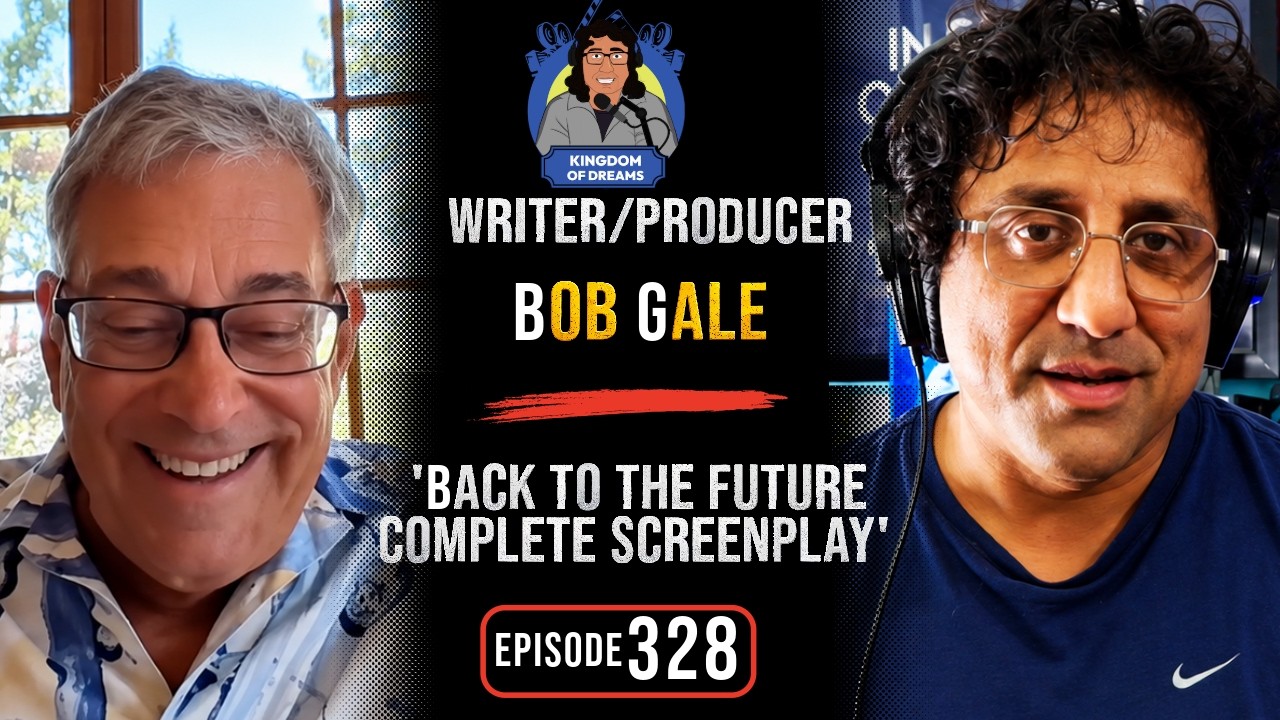
Bob Gale, Writer / Producer, 'Back to the Future Trilogy'
Clips and Shorts from this episode
About this episode
🎙️ On this episode of the Kingdom of Dreams Podcast, I sit down with Bob Gale, writer and producer of the legendary Back to the Future trilogy.
We talk about the upcoming book, Back to the Future: The Complete Screenplay, arriving October 21, and dive into the stories behind the screenplay, the evolution of Back to the Future, and the films that became such an important part of cinema history.
It was a great conversation about the new book, the Back to the Future trilogy, Bob’s creative partnership with Robert Zemeckis, and some of the other films and projects from his remarkable career.
A fascinating look at writing, filmmaking, and the legacy of Back to the Future.
Bob Gale is an Oscar-nominated screenwriter, producer, and director best known as the co-creator, co-writer, and co-producer of the Back to the Future trilogy alongside Robert Zemeckis. A graduate of the USC School of Cinema, Gale’s credits also include 1941, I Wanna Hold Your Hand, Used Cars, Trespass, and Interstate 60, which he wrote and directed. Beyond film, he has written for major comic-book characters including Spider-Man and Batman and has remained closely involved with the Back to the Future franchise for decades
Full transcript
Automatically generated from the episode audio, so expect the odd misheard word or name. Speakers were labelled automatically. About 7,500 words. Tap a timestamp to play from that moment.
0:00Jawad MirAnd after three of those film, minus Romancing the Stone, how were you guys still able to push towards Back to the Future? Like, you know, that discouragement and that sense of rejection from the audience.
0:12Bob GaleThe rejection was not really from the audience. You see, we had dynamite screenings of both I Wanna Hold Your Hand and Used Cars. Okay, with I Wanna Hold Your Hand, Universal didn't treat it well. And then with Used Cars, we had the misfortune of it opening a week after Airplane, so Airplane took all the air out of comedy. We had no idea whether people were gonna go see Back to the Future. After 40 rejections, why would we think that they would, right? The one thing that happened, there was one night, we are shooting at Whittier High School. People in the neighborhood are gonna say, "Oh, they're shooting a movie here. Who's in it?" And in December, Eric Stoltz. "Oh, who's that?" And we didn't have any visitors, any kids, any locals coming and hanging out. Michael J. Fox was the answer to that question. "Oh my God, Michael J. Fox." And we had kids lined up seven deep, to try to catch a glimpse of Michael J. Fox.
1:17Bob GaleBob and I looked at each other and said, "People might actually show up on opening day to see this movie." And they did.
1:33Jawad MirHi, Bob.
1:33Bob GaleHow you doing?
1:33Jawad MirHow are you?
1:34Bob GaleGood, Jared. How are you?
1:36Jawad MirI'm doing good. Nice to finally meet you. I appreciate your time. I'm really looking forward to our conversation.
1:44Bob GaleHappy to, happy to talk with you and,... Answer any questions you may have. I'm sure you have a lot.
1:52Jawad MirWell, I do, but the thing with Back to the Future is it's been s… there's been so many things done on Back to the Future that you have to figure out what has not been talked about, right? And…
2:01Bob GaleRight
2:01Jawad Mir... I'm sure that y… y… you have probably heard some repetitive questions, so I hope I'm not asking anything that's been repeated before. But if I am, I apologize in advance.
2:10Bob GaleNot a big deal. It's, there's, I've, a long time ago, I figured out that a lot of people ask questions because even though the questions have been asked, they might not have been around to hear the answers. So I can't expect everybody in the universe to do all their homework and look at every interview, and every piece of material on Back to the Future that there is. So I have no problem answering questions that I've already been asked.
2:39Jawad MirAmazing. Well, I appreciate that approach. I do have the copy of the book, the, I have the screenplay that I've gone through, and I have to tell you, I mean, being in the film industry myself as a writer-director, going through this and looking at it from a, you know, writer-director perspective but at the same time as a fan, it was one of the most exhilarating experience. So I really appreciate you guys doing this because it's long overdue, and there's been so many books out on so many films, but not to this level on Back to the Future.
3:11Bob GaleThank you. That is exactly the reaction I was hoping for. I started to get a taste of it when I heard that the people at the book company that were working on it, they were always excited whenever new pages came in, 'cause they wanted to read them, and they s… said, the editor told me that doesn't happen very often. And, part of the reason that the book is as comprehensive and the way that it is also stems from my frustration of getting a book that says, "Okay, this is the book of the screenplay," but it's not the screenplay. You know, The Annotated Godfather, okay, it's a good book. I'm happy to have it, but it's, that's not the screenplay. That's, like, a transcript of the movie, and the Godfather book that's way better than that is the one that Coppola did where he annotated Mario Puzo's novel.
4:14Bob GaleAnd you can see all of his notes and get an idea of what he's, what he's thinking about each scene. So I thought, "You know what? Nobody that I k… have ever heard of has ever reproduced a shooting script in the colored pages that show you what was revised." plus this is my own personal copy of the script, so y… as you noticed, you'll see my handwritten notes in there throughout.
4:44Jawad MirYes.
4:44Bob GaleAnd that helps people understand, okay, wait a minute, okay, the, Florence Nightingale effect, that wasn't actually in the script. It was something that they came up with on the day or leading up to it. And there, the whole creative process in making a movie from a script, it's, it's like I say at the beginning, the script is really a blueprint. It's not, it's, it's an intermediary work to get from what's in your head to a movie that's on the screen, just like architectural plans. You know, yeah, we can look at Frank Lloyd Wright's plans, and they're great, and they're fascinating and so forth, but it's not the same as walking through his house.
5:35Jawad Mir100%. That's, that's very accurate. And I have to say that going through this, so the first Back to the Future that I ever saw was Part III, actually, not knowing what was the connection between the second and the first one. And then I saw the first one, then the second one, third one, and it is just one of those trilogies that you can never, ever get bored of. Like, I have seen the trilogy a ridiculous amount of times. I'm sure people have seen it a ridiculous amount of times. But for me, what is really interesting about this… About this film, about the screenplay, is the relatability it has. You know, the connection that it makes, not through the sci-fi, not through the time traveling, but the school atmosphere, the relationships, the friendship, and all that. And that's what resonates with people so much 41 years after, which has been a long time.
6:26Bob GaleExactly. It's, it's a human story. It's a story about a family.
6:30Jawad MirYeah.
6:30Bob GaleAnd, you know, you think of all the, you think of all the great movies, and most of them, there's a family aspect to it. And if not that, at least there are some fascinating characters. You know, even Jaws has a family aspect to it…
6:49Bob Gale... But the characters are so great that you just love watching the interaction between those three guys. So yeah, you can,.. It's something that gets missed an awful lot, especially in science fiction, when people think, "Okay, we can just have these great special effects, and we can have these great ideas." But if there aren't really solid characters anchoring it's gonna be, it may be an interesting thing to see, but you're not gonna wanna watch it again.
7:27Jawad MirYeah, I completely agree. Going to this, you know, complete screenplay, Back to the Future, last year was the 40th anniversary. Today, this year is the 41st anniversary, next, I think in December. What was the r… what made this the right time to release this? Like, was there something that, you kind of touched upon it, but something that didn't happen two years ago that happened last year that you yourself or, you know, you guys decided…
7:56Bob GaleWell, this was…
7:57Jawad Mir... You had to release it.
7:58Bob GaleIt was... I mean, the book's a year late, you know?
8:02Jawad MirOkay.
8:03Bob GaleWe thought…
8:03Jawad MirOkay
8:03Bob Gale... We thought that this would come out for the 40th anniversary. But… ... It wasn't gonna be good enough, it wasn't gonna be finished. There were some hiccups with the book company. And, you know, to their credit, they wanted this to be the best possible book that it could be, in this, in this format. And, final… you know, I kept saying, "When am I gonna see some more sample pages and mock-ups?" And finally they said, "You know what? The guy who's, the guy who's the designer on this is not... He doesn't get it. We wanna bring on a whole new designer. He's gonna start all over again, and the book's gonna get pushed back, till next, till 2026." And I said, "Well, okay, if you're gonna do it in 2026, release it on October 21st, 'cause that's…
9:01Jawad MirYeah
9:01Bob Gale... Back to the Future Day. It's a apropos." But they, and the, and the designer, a guy named Josh Baker, had worked at Cashin. That's where they got him from. And so he was used to doing these types of books. So the two-page spreads that are in there, that's, he brought, he brought a lot to the party. And he, first thing he said is, "It's too short. We need at least 16, maybe 24 more pages to just have stuff in this." So, it was a godsend that he got hired and that the book company at Insight Editions was really serious about wanting this to be a crown jewel in their, you know, in their collection of books. And I, and I think it is. I certainly don't think that there has ever been a screenplay that has the colored pages.
10:04Bob GaleAnd when I originally proposed this to the, to the editor at Insight, she got it instantly. She said, "Yes. Yes, let's do that. Let's do it in the colored pages. Let's really reproduce the screenplay." I mean, Insight did, the Jurassic Park screenplay.
10:24Bob GaleAnd I am not absolutely sure, what that is, but I know it's not the script the way my book is the script. The, I mean, this is the script. It was duplicated directly from my own copy. And they were so fanatical about wanting to get it right, 'cause I scanned it, I scanned it with my scanner, and they said, "Well, this isn't good enough. The quality isn't good enough. You know, would you send us the script and we can do it?" I said, "No, I'm not, I'm not letting this out of my possession." So they sent a guy over to my house with a scanner, and he sat in my dining room, you know, for four hours scanning each page of the script. And if you get your hands on the limited edition or the collector's edition, they actually have in there, in addition to the book, with a, with a slightly upgraded binding, a facsimile of the script in script form.
11:31Bob GaleSo you can hold that, and I defy most people to tell me that isn't the actual shooting script that we had in October of 1984, other than my handwritten notes in there.
11:47Jawad MirYeah, and y… you're so right about, so I've got, like, all these books that you see, I've got a lot of Insight Edition stuff. I've got shooting scripts from films from the '90s. There used to be a ne… a publisher, Newmarket Press, and those were just like, you know, black and white pages with black text on it.
12:04Bob GaleRight.
12:04Jawad MirAnd I also have the Jurassic Park one, the one that you're talking about. But yeah, what's so great about this, like you said, that, you know, one page…... S… the script, the next, the page before that is, you know, just basically the other content and other stories and the photos and that's what I... And I love the cover. The cover is so cool. It has such a retro feel, right? And, I really enjoyed going through it, and I think fans, like, I don't consider myself a hardcore Back to the Future fan. I mean, I love the, love the films very much, but there are far more bigger fans than I am. They're gonna go nuts about this book. I can guarantee you that.
12:41Bob GaleWell, I wanted it to be not only for those people, but for people like you, for, writers, for people interested in filmmaking. So, whether you're a fanatic, a fan, or you've only seen the movie once or twice, it doesn't matter, because there's gonna be something in there for you. And I put in my little screenwriting tips here and there so that, you can say, "Oh, yeah, you know, I never, I never thought about that idea, that two characters should never t… have dialogue talking about what both of them already know, that's a absolute no-no. And if you have to do that, you gotta figure out a reason why it's gonna work." So, right, the book is full of that kind of stuff so that you say, "All right, how did they solve this problem?" Or, "I didn't even realize that this was a problem that needed to be solved." And just little details about, well, why did they pick those dates, and what are the time displays gonna look like, and the fact that we eventually chose to use three-letter abbreviations for the months as opposed to, two digits for the months, just to make it really, to communicate.
14:09Bob GaleBecause s… a screenplay is figuring out what are the best pictures to tell the story, and those pictures are what the audience is gonna take away. So just because I say, you know, "10, 26, 85," that doesn't immediately translate into everybody, "Oh, 10 is October." They gotta think…
14:34Bob Gale... About that. But if you s… put Oct, they know it. And then, of course, internationally, they would put the day, the day first. It would be 26/10…
14:47Jawad MirYeah
14:47Bob Gale... 85, 1985, and then the American audience would not know what that means. So i… it all, you have to think about everything, and that is one of the things I wanted to communicate with this. You, we did think about everything, and I think the movie's as good as it is because we did think about everything.
15:08Jawad MirYeah. And you know, there's a handful of directors that I have grown up watching and loving their films, and to this day I still go watch their movies. Spielberg is one of them. Zemeckis, I mean, I love his stuff, and well, who obviously directed Back to the Future. And I've had Don Burgess, who was DP of
15:29Bob GaleLove Don
15:29Jawad Mir... Rob. I've, I've had lunch with him. I've had breakfast with him. I've l… have had him on my podcast so many times. He's such an amazing human being. And you know, when I, when I meet people like that or when I talk to people like yourself, it just brings out the child in me back, because of all those things that we grew up with. And your revisiting the screenplay, you know, even though you have been attached to Back to the Future with so many anniversaries and programs and stuff, what z… still surprises you the most about the time when you and Bob, Zemeckis wrote the script?
16:09Bob GaleWell, there are a number of things. Obviously the number of rejections that we got is still, it's still pretty amazing, really. But as I note, it's not that surprising, because time travel was not, really a genre, before us. There were some time travel movies. They were never big successes. So the idea that, you know, some company or some studio wouldn't wanna make a movie 'cause it was time travel, it made sense. You know, if you're a businessman, you say, "Why am I gonna take a flyer on this? This is kinda crazy." so that, just the fact that we got from where we started to where we ended up, and the thing that I always talk about, and this is, goes beyond the script, of course, George Lucas once said that the two most important elements in a movie are the screenplay and the casting.
17:23Bob GaleYou can buy everything else. But if you don't have a solid script and a really good cast to make it come to life, you're nowhere. You know, people will, people will forgive bad filmmaking, you know? People will forgive little mistakes, you know? Nobody leaves the theater because when the fire trails go through Doc and Marty's legs, the registration isn't e… exactly right. It's okay. We get the idea. Nobody leaves the theater when, Sonny is beating up Carlo Rizzi and misses that punch, you know? It's okay. It's all right. They're, these are human beings making a movie. But…
18:05Jawad MirRight
18:06Bob Gale... If it's Eric Stoltz and not Michael J. Fox, then we have a problem. So the, that is the, that is the thing that still… I s… I think about that couple times a month, really, to think about the difference between success and failure is the edge of a razor blade. That's how narrow it is.
18:35Bob GaleAnd that if we'd been on one side of that razor blade, the movie wouldn't have done well, but we were on... We got ourselves on the other side. And we knew, we discovered that we were going off the wrong way. And as I said, the stories are all in here that thankfully, CEO Sid Sheinberg at Universal was, you know, enough of a standup guy to be able to say, "Okay, I kind of bullied you guys into Eric Stoltz in this, and I understand that it's not working, so go ahead. Just try to cut as much as you can to save us, to, you know, to keep the budget closer to where it's supposed to be." And then when he finally saw the movie, he said, "Oh my God, this is so good." He gave us the best reaction that any filmmaker could get from a studio head.
19:39Bob Gale"Don't change a single frame." Wow.
19:43Jawad MirWow.
19:43Bob Gale"Don't change a single frame." We might have changed a couple frames. I don't remember. But he said, "And I'll spend however much money it's gonna cost to advance the release date of this movie so that it opens on the 4th of July weekend." And wow, he was right about that. And, you know, things that he, things that you think are gonna be problems can often be blessings in disguise. And that, I think, that goes beyond Back to the Future. That's life, right? That's…
20:18Bob Gale... You shout, "Damn it, I didn't get into that school."
20:21Jawad MirYeah
20:22Bob Gale... And you end up going to another school. But because you went to that other school, that's where, you know, you meet your life partner, or that's where some teacher there inspires you and you go off in this direction when you thought you were going that way. So, th… that's what Back to the Future's all about. And the story of the making of Back to the Future is also the story of the movie. And I think that's one of the things that helps it resonate and why it resonates so well this many years later. And yeah, there are some jokes that people can't make sense out of today. They don't know what a, what Tab and Pepsi Free means. But the book answers that. I, you know, I said, "Okay, let's put a picture of Tab, a can of Tab and a can of Pepsi Free so that, everybody that was born, s… you know, since 1990 will know what the heck we're talking about."
21:24Jawad MirYeah. Yeah, no, I completely agree. And you talked about Eric Stoltz. You know, everybody knows that story, so I'm not gonna get into that. But one of, one of the things that I've been so impressed by the fact that, you know, when you guys did, like, single shot of Michael J. Fox replacing the Eric Schultz, Stoltz shots, when you watch the movie, you don't even feel for a second from a lighting standpoint, from the energy standpoint around, you know, Marty McFly or Michael J. Fox, that there's, you know, this was done by somebody else, and that's one of the things that works brilliantly. I mean, it's, that film is a, an entire film about chemistry. Literally, the whole thing is about chemistry of the characters. And it just gels so well. And one thing that you talked about that how, you know, blessing in disguise, and I truly believe that because there have things been happening, happened in my life and are still happening where I would feel that I didn't get into film school, but that was the best damn thing that ever happened to me. Because if I had, who knows, you know, maybe I would've taken it for granted. So those things really mean a lot.
22:26Jawad MirAnd I wanted to ask you know, you... I've seen all the films that you and Bob did before Back to the Future. You know, I Wanna Hold Your Hand, Used Cars, 1941, which wasn't, I mean, it's considered to be one of Steven Spielberg's, quote-unquote, "one of the worst films," but I still enjoy it. And, you know, you let off a…
22:46Bob GaleThe extended cut, the extended cut, by the way, for those of you who have not seen it, is worth seeking out. That's the, it's on, it's on the Blu-ray. And, it has 20 minutes that was cut out and helps make sense out of a lot of things that don't make enough sense as it was released.
23:07Jawad MirYeah. And I'm glad you mentioned that. So, you know, you worked on those two f… three films, and then there was Romancing the Stone between, I think, 1941 or I Wanna Hold… one of those two film and Back to the Future.
23:19Bob GaleExactly. It was, it was between Used Cars and
23:21Jawad MirUsed Cars
23:22Bob Gale... Back to the Future, yeah.
23:23Jawad MirYou weren't involved in Romancing the Stone, right?
23:26Bob GaleNo. No. No, Bob and I, Bob and I had written a gangster movie, for a short-lived division of ABC called ABC Films. And, we were actually in pre-production for five weeks, and they market tested it out of existence. They… You know, that's what TV networks do. So, we were all set to make this movie, and, then we got canceled. And Bob said to me, "Look, Bob, I gotta direct something. I can't go through this again. I need to get back on the floor. I'm just gonna direct the next decent script that crosses my desk," and that was Romancing the Stone. And Michael Douglas was a big fan of Used Cars, and he backed Bob 100, 200%. And, He made a big hit, and then everybody and their uncle wanted to be in business with Bob Zemeckis. And said, "Bob, what movie do you wanna make?" And he said, "I wanna make this thing called Back to the Future." And, but he decided not to make it with any of his fair-weather friends because Steven Spielberg had always liked the script, and we didn't go back into business with Steven because I Wanna Hold Your Hand, Used Cars of 1941, they did not do well at the box office.
24:52Bob GaleAnd we didn't wanna be those guys that people would say, "Oh, they only work 'cause of their friend Steven." And we were candid with Steven, said, "If we do another movie with you and it tanks, we will probably never be able to get arrested." And he said, "You're right, but if you change your mind, I'll be here." So now it's, Steven has made, E.T., and he's got Amblin Entertainment.
25:21Bob GaleAnd Steven has, is now the new Walt Disney in everybody's consciousness. And, we go back to Steven and say, "You remember that script of ours, Back to the Future? And, are you still interested in it?" And he said, "Yeah." And it was the first movie that was produced out of Amblin Entertainment at Universal. I think The Goonies was actually the first... I think that started before us. But we made the movie out of, out of his Universal, compound.
25:59Jawad MirYeah. And boy, you know, you mentioned Amblin. Like, a lot of us, a lot of us in the, in our 40s and 50s, our childhood is Amblin. Like, you know, films that came out, around that Back to the Future time, like Gremlins, Goonies, you know? And…
26:15Bob GaleRight
26:15Jawad Mir... And I've mentioned, I mentioned Gremlins. I mean, the set of Gremlins in the opening shot is the same set that was used in Back to the Future, right? And
26:23Bob GaleYeah, both out of Universal, yep.
26:25Jawad MirYeah. I... You know, y… y… you guys made all these films, Now I Wanna Hold Your Hand, Used Cars, 1941, which weren't bos… box office success. And that, you know, one film can really deter you from making another one because of all the pressure, not just within yourself, the self-belief, but the exterior, external pressure. And after three of those films, minus Romancing the Stone, how were you guys still able to push towards Back to the Future? Like, you know, that discouragement and that sense of rejection from the audience.
26:58Bob GaleWell…
26:58Jawad MirDo you remember those emotions and feelings?
27:00Bob GaleYeah. The rejection was not really from the audience. You see, we had dynamite screenings, dynamite test screenings of both I Wanna Hold Your Hand and Used Cars. And those screenings were... Used Cars got some of the highest test scores in the history of Columbia Pictures at the time. Those experiences said, "Okay, you guys know how, we know how to make a movie. We know how to get an audience interested in it. We're just not any good at getting asses in seats. We're, we can't get the people to come to these movies." And okay, with I Wanna Hold Your Hand, Universal didn't treat it well. They didn't wanna spend any money to promote it, because it was an inexpensive movie and they wanted to put all their advertising dollars into Jaws 2.
27:56Bob GaleIf they had put more advertising dollars in I Wanna Hold Your Hand instead of Jaws 2, they might have, in the end, m… made an overall profit between those two movies. And then with Used Cars, we had the misfortune of it opening a week after Airplane.
28:14Jawad MirOh.
28:16Bob GaleSo Airplane took all the air out of comedy. So it was like, "Okay, you gotta go see Airplane. You gotta go see Airplane." And Used Cars turns out not to be the best title. And so, and Kurt Russell didn't have the, reputation as a funny guy. Everybody was used to seeing him in, these Disney movies.
28:38Jawad MirYeah.
28:39Bob GaleSo there were, there were a lot of things that kinda conspired against us, in terms of that. So we had no idea whether people were gonna go see Back to the Future. After 40 rejections, why would we think that they would, right? But the one thing that happened, there was one night, and I talk about this in the book, we are shooting at Whittier High School.
29:05Bob GaleThe exteriors of the dance. And this was the second time we shot at Whittier High School, 'cause we shot there with Eric Stoltz, and you can only shoot at a high school when the school is on vacation.
29:19Bob GaleSo we shot Eric Stoltz Christmas break, 1984, and we shot Michael there spring break 1985. And what happens, especially if you're in a place like Whittier, where nobody films, nobody shoots movies or TV shows in Whittier. It's like people in Southern California don't even know where it is. But we liked that high school and it had the best look for us. So people in the neighborhood are gonna say, "Oh, they're shooting a movie here. Who's in it?" And in December, "Eric Stoltz." "Oh, who's that?" And we didn't have any visitors, any kids, any locals coming and hanging out. Well, in spring, Michael J. Fox was the answer to that question. "Oh my God, Michael J. Fox." And we had kids lined up seven deep, to try to catch a glimpse of Michael J. Fox. And Bob and I looked at each other and said, "Wow, this kid is a star."
30:20Bob GaleAnd it's all from Family Ties on television.
30:22Jawad MirYeah. Yeah.
30:23Bob GaleAnd they wanted to see Michael, and we said, "My God, people might actually show up on opening day to see this movie," and they did.
30:35Jawad MirYeah, 100%. I just wanna share, I mean, there's so many magical moments in the film. To me, the one scene that I watch over and over again, and I've watched over and over again, is the ending of Back to the Future II, where, you know, when Marty McFly says, "I'm back. I'm back from the future." And then the camera sort of pulls out, and the music kicks in, and then to be continued. That scene, that entire sequence, leads up to... Is such a, it's such an emotional thing for me to watch, and I can't even explain to you why. I have no idea why, but it just works so well at so many levels.
31:15Bob GaleI'm a big fan of the, of the scene that immediately precedes it, where he gets the letter.
31:22Jawad MirYes.
31:22Bob GaleBecause it is, it is, to me, one of the coolest time travel ideas that anybody could come up with, to say, "Yeah, okay, your friend looks like he's dead." And then suddenly there's a guy there, "I'm alive." And then the explanation, and you're going, "Yeah, oh wow, that's really brilliant that he would've thought to do that." and then of course, it helps to have that, little trailer for part three. So even though you think that things might be, in dire circumstances, you say, "Ah, there's gonna be another movie, and I only have to wait until May to see it." and that made everybody happier. But, you know, we talk about the marketing and so forth.
32:23Bob GaleOne of the arguments that I had with the head of Universal back then… ... Was I wanted to make it clear in the campaign that Back to the Future II was part two of a three-part series. Because I thought we should prepare people for the fact that the movie wasn't gonna have all the loose ends tied up. And the head of the studio wouldn't hear it. He wouldn't hear of it. He said, "No, we're just gonna market this as Back to the Future Part II." So I think, now this could never happen today because of the internet and because of how much everybody already knows about a movie ahead of time. You know, we already know there's gonna be yet another Avengers movie after this one.
33:15Bob GaleYou know? We don't have to explain that to anybody. But back then, people wouldn't know that kind of stuff. So audiences were disappointed that it didn't all get tied up in a nice, neat package at the end of part two.
33:31Bob GaleAnd I think that hurt our box office a little bit. But okay, it was, the movie is the movie, and we made the movie that we wanted to make. And, you know, here we, here we are. Here we are 40 years later and we're talking about, talking about everything and okay. That's every writer's, every writer, every f… filmmaker's dream, to have work that lasts that long.
34:00Jawad MirI couldn't agree with you more. You know, one of the things about the film, aside from having perfect screenplays, perfect casting, perfect everything, like production design, costumes, the music by Alan Silvestri. Not to take anything away from anything else, but Al… Alan Silvestri's music does make the, take the film from already here to another level, right?
34:22Bob GaleIt does.
34:22Jawad MirJust when the theme kicks in. Working with him, what was that like? Because he's obviously still working with Zemeckis. He's an amazing composer.
34:32Bob GaleWell, the, really, the working relationship there was with Bob and Al. You know, I wasn't, I didn't sit in on the creative meetings.
34:42Jawad MirOkay. Okay.
34:43Bob GaleOn those, I mean, you know, I, obviously I would hear the... I was involved with the temp score and say, "Well, this should sound like this, and this should sound like that." but at the end of the day, you know, the nice thing about my relationship with Bob is that I trust him and he trusts me, so I know he's gonna give the right suggestions, and do the right thing with the composer. And then after Alan did a version of the score and Steven heard it, Steven said, "You need to use the theme more. That theme is so great, we've gotta hear it a few more times." So Alan went back and we re-scored a couple cues so that he could have, you know, dun, dununt, dun, have that in there more.
35:39Jawad MirYeah.
35:39Bob GaleAnd it's missing from movies today, you know? You think about, there was a guy that did a, there was a guy that did a YouTube video, it was great. He was, he w… he went up to people and he says, "Can you hum the theme from Star Wars?" And of course, everybody could. "Could you hum the theme from Jaws?" And everybody could. "Could you hum the James Bond theme?" And everybody could. He said, "Now, can you hum the theme from any Marvel movie?" And everybody just kinda went, "No."
36:13Jawad MirYeah.
36:15Bob GaleAnd…
36:15Jawad MirIt's true.
36:17Bob GaleIt's true. And he said, "Here's the… The biggest franchise, the most money-making franchise, and there isn't a signature theme that goes through all these movies or even some of them. And finally, at the end of the video, they cut back, the guy said, "I just... Yes, I can do, I can do a Marvel." It's like, "Spider-Man, Spider-Man, does whatever."
36:49Jawad MirBut that's... You know what, Bob? That's very true. I am a huge movie score nut. Like, I've been listening to movie scores for the last 33 years, and the most scores that I listen to are from the movies all the way from '60s, maybe all the way up to 2003 and '04. There might be some handful exceptions after that, but I don't listen…
37:10Bob GaleWell, you should go back, go back a little bit further because you're missing…
37:13Jawad MirThere you go
37:13Bob Gale... Some of the great, you're missing some of the great Max Steiner and Bernard Herrmann stuff. But I…
37:19Jawad MirI'll, I'll take that.
37:21Bob GaleI love, I love Bernard Herrmann. Oh, my God, I think he was revolutionary in terms of what he did for scores.
37:31Jawad MirI'll, I'll, I'll definitely look into that. But you know, you talked about extending the theme with Alan. That kind of reminds me of a conversation Steven had with John Williams for in Raiders of the Lost Ark. You know, it, I think it was, like, you know, the regular theme that John Williams made. Da. And then the other one he made, which I can't remember exactly how it went, and Steven is like, "Why don't we just use both of them?" Right? Like, and I think that is the connection with Back to the Future too. It's a similar concept, that you have to have a theme kind of kick in at a certain moment for the audience to feel that, you know, they're back into this and they're with the characters.
38:13Bob GaleRight. Right.
38:14Jawad MirYeah.
38:14Bob GaleYeah.
38:15Jawad MirI sort of wanted to, you know, close up with a couple of more questions. Robert Zemeckis, you know, he started off with comedies and adventures, right? Like, you know, all the films that you guys worked on, including Romancing the Stone, Death Becomes Her. I think, I mean, I would say even Forrest Gump was probably his last kind of, like, a humorous type of a film, even though it was more dramatic, and then he shifted onto, you know, much more different films and experiment all the time with something different and new. Was there a... Was it more so by, from in terms of your involvement and partnership with Bob, you just wanted to sort of pull back on staying to have your own career? Or was…
38:56Bob GaleHe, no, he was... It wasn't so much that as it was that he became such a hot director that everybody was sending him these absolutely great scripts. So when he got, for example, when he got... Well, Roger Rabbit is, I mean, that's…
39:18Jawad MirAmazing film
39:19Bob Gale... It's, it's brilliant. It's a brilliant movie and, I hope you've seen Coyote vs. Acme 'cause it's a close…
39:27Jawad MirYes, I have. Yes
39:27Bob Gale... It's, it's a worthy, it's a worthy successor to that.
39:31Jawad MirYeah. 100%.
39:32Bob GaleI love that movie. But, when he was offered, Forrest Gump and he had an opportunity to do Contact, I mean, these were really powerful pieces of material, and his filmmaking head said, "I can do this. I know how to do this." And so Bob is as interested in s… in certain technical aspects, and certain cinematic challenges. I mean, here, I don't understand why audiences didn't embrace that and why the critics trashed it so much because this is a great movie, and it's exactly what a filmmaker of Bob's caliber should be doing: pushing the envelope, experimenting. And even if you don't like what it turned out to be, respect the experiment, for Christ sakes. I mean, the idea that you, the camera's not moving and everything happens in front of it, that is absolutely...
40:39Bob GaleThat's like Hitchcock making Rope, you know? It's, it's, it's, it's a breakthrough concept and it's, you know, yeah, it's experimental. Does it work? To me, yeah. My wife, it didn't work for her, but nevertheless, she appreciated it, and it has the best de-aging, use of de-aging technology that's ever been seen. When Tom Hanks looks like he's, you know…... 19 years old, you swear to God…
41:12Jawad MirYeah
41:12Bob Gale... He's 19 years old. How'd they do that? So Bob is always interested in pushing the envelope.
41:18Jawad MirYeah.
41:19Bob GaleAnd then sometimes it's like, okay, he makes a movie that doesn't do well, and then he's just gonna sign on to do something just to keep himself out there. So y… you know, the career choices that he ma… And of course, m… motion capture was something that he was fascinated by…
41:38Bob Gale... And made some breakthroughs with it. And James Cameron gets all the credit when he used the same technology on Avatar.
41:45Jawad MirYeah.
41:45Bob GaleSo go figure, you know?... It's,..
41:50Jawad MirBut I'm glad you talked about Here. So I was talking to Don about Here on the podcast, and it is one of the most remarkable movies. And, we were talking about this whole box office thing, and to me, one of the things that stands out, you know, I... If you remember the film, there's a scene that there's a painting by the wall, by the window, and you can see the painting being lit in a distant background before the, because it's gonna, before the f… painting is even talked about. So the detail, the attention to the detail and the attention to storytelling, I did not feel bored for one second.
42:28Bob GaleYeah.
42:28Jawad MirAnd I truly think it's one of those films that is going to live for… In the long run. Like, people are gonna look back at it…
42:35Bob GaleI hope, yeah. I hope people will look back on it and dis… rediscover it the way they rediscovered, It's a Wonderful Life, which tanked at the box office, and now is considered to be this great classic. Hey, Wizard of Oz was a disaster at the box office.
42:51Jawad MirYeah.
42:51Bob GaleIt took years for it to finally become what it became. So, you know, I'm, I'm really fortunate to have made a movie where it was recognized as a great, movie, a great piece of writing, and a box office sensation when it was released, and it still holds up. Because, you know, I... 20 years from now, we're not gonna be thinking about The Da Vinci Code, right?
43:23Jawad MirThat's true. That's true. No, it's, it has a lot of heart that films, you know, back in the day used to have. And, you know, you ta… talked about de-aging of Tom Hanks. He alm… it almost reminded me of the movie Big, if you remember.
43:37Bob GaleYes.
43:37Jawad MirWhich, it…
43:38Bob GaleYes, absolutely
43:39Jawad Mir... Right? The way, the way he looked.
43:40Bob GaleYeah.
43:40Jawad MirAnd, yeah. No, it's... And I think for me, Zemeckis has amazing films, but to me, one of my favorite films of his is Contact, which it was such a... I was blown away. I still remember the theatrical experience when the father shows up at the end. I'm like, "Whoa."
43:56Bob GaleYeah.
43:56Jawad MirYou know, that whole scene.
43:57Bob GaleYeah.
43:58Jawad MirAnd Interstellar…
43:59Bob GaleYeah
43:59Jawad Mir... Interstellar kind of follows that plot a little bit. I'm not trying to suggest that.
44:03Bob GaleYeah.
44:03Jawad MirRight?
44:04Bob GaleYeah. But, yeah.
44:05Jawad MirBut it's…
44:05Bob GaleNo, Nolan can't do what Zemeckis does. Not in the... No, not in the same league, in my opinion.
44:13Jawad MirYeah. No, I agree. But I just, I just felt that the influence was there, you know, the father-daughter story.
44:18Bob GaleYeah. Yeah.
44:19Jawad MirAnd, you know, going w… where you are in life, obviously, you know, your pivot, your biggest achievement in terms of a career has been Back to the Future, right?
44:32Bob GaleYes.
44:32Jawad MirAnd does it get redundant at times that you're still talking about it?
44:40Bob GaleNo. You know what? It, there was a period where I felt it was, but then when I saw how much joy it brings to people, and that new generations were discovering it and loving it, and then we decided we're gonna turn it into a stage musical.
44:56Jawad MirYeah.
44:56Bob GaleAnd that has caught fire all over the world. Like I said, this is every writer's dream, to come up with an idea that leads to a story that everybody in the world falls in love with. Bob and I have talked about this many times. When they write our obituary, Back to the Future's gonna be in the first line. Okay. W… why not? That's great, you know? We're all trying to write our name on the bathroom wall of life. So we did it.
45:31Jawad MirYeah, you should, you should write something which is on the back of the book, "Roads, where we are going, we don't need roads." but no, that's, this is, this is awesome, Bob. I mean, I can talk to you forever about Back to the Future. Anybody would. And I can't stress enough, Back to the Future didn't really, you know... I moved to Canada when I was 13, so I didn't really get exposed to Back to the Future until the third one came out. But sort of revisiting all the '80s movies, it's definitely one of the three films. I mean, you know, Martin Scorsese, Spielberg, and all the other s… major films that came out in the '80s, the magic of the '80s. And it's part of a l… millions of us, and it will remain like that because at the end of the day, it's a story of a family that you talk about.
46:19Bob GaleThank you.
46:19Jawad MirSo thank you for all that.
46:21Bob GaleThank you.
46:21Jawad MirWe really appreciate it.
46:22Bob GaleAnd, you know, for those of you, once again, the impetus for this was this, was the book. This one.
46:35Jawad MirYes.
46:35Bob GalePlease get... If you like Back to the Future, if you're interested in filmmaking, there's gonna be something in there for you. And hey, if you need to figure out what you're getting somebody for Christmas, perfect gift, right?
46:47Jawad MirA hundred, 100%. 100%. I really appreciate it.
46:51Bob GaleOkay.
46:51Jawad MirMe too.
46:51Bob GaleWhere in Canada are you?
46:53Jawad MirI am in Toronto.
46:55Bob GaleOkay. Okay.
46:56Jawad MirYeah.
46:57Bob GaleWell, I shot a, I shot a movie in Toronto, don't know whether you've ever heard of it. Interstate 60.
47:02Jawad MirWhich one? Oh, you shot that in Toronto?
47:04Bob GaleYeah.
47:05Jawad MirOh, I did not know that.
47:06Bob GalePart of it I shot…
47:07Jawad MirI gotta re-watch
47:08Bob Gale... Shot a, I shot a week in Arizona, but ev… everything else was shot in Toronto, in the area. Yeah.
47:15Jawad MirThat is so awesome. You know, let's do this too. When you're back and when things a little bit, you know, slow down, I would love to talk to you about your other work because those things…
47:25Bob GaleOkay. Let's do that
47:25Jawad Mir... You know, those films are not as popular to other people, but I want that, bring that attention to people that, you know, they're such amazing films.
47:32Bob GaleGood. Yeah, I'd like, I'd like people to see that movie, too. All right.
47:36Jawad MirPerfect. Thank you, Bob.
47:37Bob GaleOkay. All right.
47:38Jawad MirTake care.
47:39Bob GaleTo be continued.
47:49Jawad MirBye.