
Episode 36 · February 11, 2024 · 1h 14m
'Finding Nemo', Editor, David Salter
Clips and Shorts from this episode
About this episode
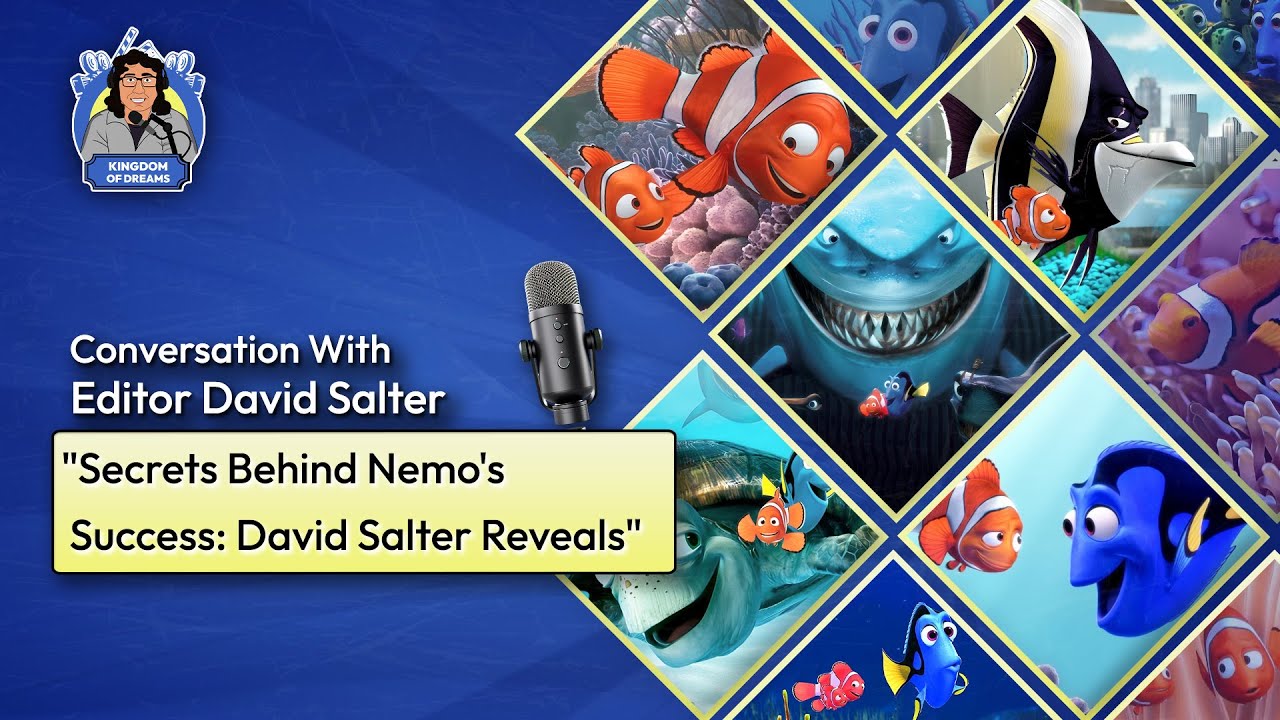
This episode dives deep into the world of cinema and storytelling with the esteemed editor David Salter. Known for his pivotal role in crafting "Finding Nemo," Salter explores the intricate process behind one of Pixar’s most beloved films. From the challenges of underwater animation to the evolution of the film’s narrative, Salter gives listeners an insider look at Pixar’s creative world.
David Salter is a film editor known for his work on animated and live-action films. With a career spanning major studios like Pixar and Disney, he has contributed to acclaimed projects such as Finding Nemo, The Incredibles 2, and Puss in Boots: The Last Wish. Salter’s keen storytelling instincts and precision in pacing have made him a sought-after editor in the industry, bringing emotional depth and energy to every film he works on.
#movie #americancinemaeditors #animation #animation #howtoanimate
Full transcript
Automatically generated from the episode audio, so expect the odd misheard word or name. Speakers were labelled automatically. About 13,500 words. Tap a timestamp to play from that moment.
0:06Jawad MirHow was your vacation in Amsterdam, I think you went, right?
0:09David SalterYeah, it was great. You know, my wife is a, she's an artist. She's a, an Israeli artist and her, V… Jan Vermeer, you know, the Dutch artist, is her kind of muse. All of her art is inspired by his. So, y… I don't know if you're aware, there's a once in a lifetime Vermeer show going on at the Rijksmuseum over there now.
0:31Jawad MirOkay.
0:31David SalterThey've got…
0:31Jawad MirOkay. I know the museum, but I don't know about the show. But go on, sorry.
0:34David SalterWell, they put, they got f… it's, it's, they brought together the most Vermeer paintings ever in one place. So, and it's only through June, and our kids had the week off from school. So, this was…
0:46Jawad MirRight
0:46David Salter... Our one opportunity, right? 28 paintings out of his 30…
0:50Jawad MirWow
0:51David Salter... Eight. Yeah. So it was quite a show. We went to it, every day in addition to, you know, seeing, going around Amsterdam.
0:59Jawad MirFantastic. Well, did, was it was strictly in Amsterdam, or was also in R… Rotterdam? Because Rotterdam is more of, like, an architect, artistic, creative city.
1:08David SalterYeah. No. It was, it was in Amsterdam, sp… only in Amsterdam. They have,.. He also, they had, they borrowed some of his paintings from the Mauritshuis… ... Which is the big museum in, where The Hague, I think. But, and sadly, right when we got there, we didn't know this. They hadn't really publicized it, but they had returned Girl with a Pearl Earring to the Mauritshuis the day before.
1:31Jawad MirOh, no.
1:33David SalterYeah. So we didn't, we were thinking maybe we'd go to Delft and may… but we, you know, we just spent our time. Anyway, my wife had seen it when it was at the Louvre earlier some other time, so. But it was quite something. It was, it was fun.
1:46Jawad MirOh, that's good. I'm glad to hear that. It's a, it's a beautiful city, Amsterdam, with a lot of history, culture, and then great, group of people as well. A lot of, bicyclists, right? Like, it's like a…
1:56David SalterYeah
1:56Jawad Mir... Everybody bicycles there.
1:58David SalterYeah.
1:58Jawad MirSo
1:58David SalterYeah. We were gonna…
1:59Jawad MirAwesome
1:59David Salter... We were gonna, you know, go biking, but, unfortunately the weather was a little unseasonably cold. Winter hadn't quite…
2:07Jawad MirYeah
2:07David Salter... Come in, so. Didn't get to bike, didn't get to…
2:10Jawad MirGood. I'm glad you guys had some good time off and time with family, and good to have you here to talk about all your fantastic…
2:17David SalterYeah
2:17Jawad Mir... Work.
2:18David SalterYeah. Yeah. Thanks. Always happy to do that.
2:21Jawad MirSo let's chat from the beginning. What got you into doing what you do? You know, whether it's animation or editing or whatever it was that…
2:32David SalterYeah. Well, it's a good…
2:32Jawad Mir... Yes
2:32David Salter... Good distinction to make, right? Or lack of same, because I don't make that distinction, you know, between animation and live action. I just think of it as cinema.
2:42Jawad MirSure
2:42David Salter... The, and we can talk more about that later. Specifically, e… even more specifically when it comes to, computer animation, which we can talk about if you choose.
2:54Jawad MirSure.
2:54David SalterThere's, I have l… long been, you know, generating my own thesis about that. But, no, film, you know, I've always been, you know, big, always into film since my dad, my uncle always told me stories about going to, you know, the Saturday matinees when they were growing up, during, you know, World War II and post-war era. But no, then, so then I, my undergrad school didn't have a film program at the time, Brandeis. So, you know, I made some short films with some fellow students there, the few of us that were, that were, you know, interested in filmmaking. But, then it was, it was grad school, you know, I came out to USC for the film program and, you know, from there it was,.. So I, my best friend in, film school was Lee Unkrich. And so after film school, we both, you know, Lee pref… Lee preceded me and then, and then, I followed and, you know, we became assistant editors in TV.
4:07David Salter... And he moved on to editing and then he got a call to come up to Pixar when they were in the middle of Toy Story, because they were just in need of, you know, some experienced, an additional experienced, editor just, you know, because, they were, they were coming from... They were kind of inventing the wheel, inventing, you know, inventing, computer animated features which as I said are…
4:37Jawad MirSure
4:37David Salter... Are in… inventing the process. So he went up to join, you know, the, editorial team there on Toy Story and then, and then they... You know, he really hit it off with John Lasseter, really, who was the creative, you know, the driving creative force…
4:54Jawad MirRight
4:54David Salter... At Pixar. So he, you know, he really, took a liking to Lee and with good reason, you know. Very talented fellow. And then, so Lee asked me to join him for, you know, John asked Lee to edit his next film, as the lead editor, which was A Bug's Life. And, Lee asked me to come up and join him as an additional editor, a second editor, I think was the, was, what the official credit was, in the end. And, yeah, so I went up 90, January 2nd, 1996. I think I was almost exactly employee number 200. I had, prior to that I had been doing, been editing and, assisting in television, a bunch of shows, including, NYPD Blue was a big one. And…
5:43Jawad MirRight
5:43David Salter... Lee's offer to join him came at exactly the same time that, one of the editors on one of the Steven Bochco shows took a maternity leave, and they offered me, the opportunity to move up to the editor's chair. At least for the duration it was a really, the timing was both great and terrible because, you know, I'd been go… Looking for, hoping for that, longing for that for a long time, and now I had to tell them, had to tell one or the other no and, but I was too excited to,.. I had to tell, folks at Bochco Productions that, you know, thank you but no thank you because, you know, I was just too excited to see what this new form, this new medium was. And also, you know, the chance to live in the San Francisco Bay Area was also very appealing too, so both. And ever since then, you know, ever since then, it's, you know, the, you know, there's, the, there's a double-edged sword aspect to it because, you know, my career took off in, an… animation editing, but, then I became typecast in a sense, you know, that it's, it's kind of...
6:57David SalterI always have to, remind people that's actually not my training or not how I started out. And as we can talk about, I don't actually see the distinction, you know. It's the same. There's some, there are some differences in the process, but the basic principles are the same, at least with computer animation, you know. So…
7:18Jawad MirRight. Right
7:18David Salter... And somewhere in the middle of there I've, I've, I've gone back and forth. You know, I consider Errol Morris, the great documentarian, I consider him a friend. He's, he works out of, out of, the Boston area, Be… Cam… Cambridge, the Boston area, and I'm from Boston. And so, every so often I would go back home to visit family and visit Errol and, you know, pitch in on one of his projects.
7:43Jawad MirThat's wicked. That's really cool. And I'm... A… and you're right about the distinction, like, you know, whether it's animation or whether it's, live action. Cinema is cinema, right? And it's all about storytelling, and that's one of the things that from day one Pixar has been so incredible at. You know, when did To… Toy Story come out, '94, '95? Around that time?
8:08David SalterWell, '90… '95. '95.
8:10Jawad MirYeah.
8:10David Salter'Cause I started '96
8:11Jawad MirSo I remember... Yeah, so I remember watching in theaters specifically, and then at the same time I remember my parents, they had a c… children clothing store. And, they had this TV on the top as you walk in, and the only two films that would play it in loop all the time were Lion King and Toy Story. So I have seen that film God knows how many times just being, you know, in that store just working part-time with my parents at the time. But even if you look at that film today, for some reason there's a big... Obviously there's a big difference between the animation, improvement over the last few decades, right? Like, you know, between…
8:49David SalterThe rendering. The rendering, I would say. Right.
8:52Jawad MirYeah
8:52David SalterYou mean the, more for the texturing, the rendering, the technical.
8:54Jawad MirYeah. But you don't... Because the story is so good, at least for me, I don't see it. Like, for me, Toy Story 1 and 2 are, like, the best Toy Story films.
9:06David SalterOh, yeah. It's, it's… 'Cause I think the other two are, you know, pretty impressive too, but yeah, they're, they're,.. Yeah, it's a good thing. You know…
9:14Jawad MirI'm just speaking from a…
9:15David SalterYeah.
9:16Jawad MirI'm just speaking from a story sense. Like, they just kinda…
9:18David SalterYeah
9:18Jawad Mir... Struck a chord with me personally. But Finding Nemo, I mean, that is just another ti… another level of storytelling. And obviously, you know, at the time, I think it came in the early 2000s, like especially the water element…
9:32David SalterYeah
9:32Jawad Mir... Was something new. It had featured…
9:33David SalterYeah
9:34Jawad Mir... In Prince of Egypt, which was a DreamWorks film. But just to shoot, have the entire film in that environment, how…
9:42David SalterThat was a challenge
9:42Jawad MirHow did you... Sorry, go on. Go on.
9:44David SalterOh, it was a challenge. It was a technical challenge, you know, very much.
9:47Jawad MirYeah.
9:49David SalterYeah.
9:49Jawad MirSo how did you land onto Finding Nemo? Was it, like, an obvious thing because... Or was it, like, something you could pick? What was, what was that…
9:58David SalterWell…
9:58Jawad MirWhat was like…
9:58David SalterI was, I was,.. You know, Pixar, which, you know, is one of the unique things about a handful of the animation studios. Pixar, Disney. Now it's the same company, but, you know ... A few others. DreamWorks. That they're, they kind of operate almost like an old school, old school Hollywood did, where people were, you know, employed by the studio, right? As opposed to the freelance, the freelance, way that the industry has been working since, I think, the '50s, right? Or certainly the '60s. And, although Pixar didn't... Made a big point of not requiring, not doing contracts, so, you know, which is a little different. I think the other studios did or do
10:47Jawad MirSure.
10:48David SalterSo as a result, you know, you were hired at Pixar, and then the assumption was that you would continue. I don't... You know, that might not have been the case for everybody. I mean, certainly at the end of a film, if there wasn't a role for someone moving forward, you know, some people moved on. But you know, as I went up there was a tiny group of editorial team, which was basically Lee and, a… and then myself as the next second person up there as an e… as an editor. And then a handful of, very dedicated and talented people who were there as assistant editors and, production assistants and department managers, et cetera, that cons… constituted the entire department at the time when it was such a small place. So it was kind of, almost like a repertory company or an old school studio where the thing, the question now was, "Well, what's our next project?"
11:50David SalterAnd so, I don't know all the ins and outs. I mean, I was aware of them, of the actual green light process to where Disney and, you know, the folks at Disney and Pixar chose the projects. But I know that Andrew Stanton, who, you know, who was and is a key creative, person at Pixar, and r… had Been the writer or co-writer of just about everything. He had been pitching, this story and he got, he got the green light to go ahead. And then it was, I think, I think he, you know, he just, I knew Andrew because Andrew was, it was a small company to begin with, you know, a small company both from the, as a, you know, from the sense of a corporation and a small company in the sense of a company of, a troupe, you know. And so, he asked me if I, if I was interested in editing it and of course I was, and then I loved working with Andrew.
12:50David SalterHe had been the co-director, the writer and co-director of A Bug's Life.
12:56Jawad MirYeah.
12:56David SalterAnd, so it just went on from there. And I think that was true probably for most of the crew. The only little wrinkle there, or not wrinkle, but the only little twist there being that I believe, if I have the timeline correct, it's been a while.... This was the first time that Pixar was trying to overlap and have multiple projects going, right? So Toy Story was the first, you know, prior to that they'd done commercials, short films…
13:26Jawad MirYeah
13:26David Salter... And sold hardware and software. But, so Toy Story was first, and then A Bug's Life just kind of, everybody just kind of rolled right onto Bug's Life, you know, linearly. Like John, you know, directed the first one, he directed the second one. All the heads of the departments kind of just moved on to A Bug's Life. But I think at that point then they decided they wanted to, you know, they needed to, both from a financial standpoint and creative standpoint. You know, you couldn't... These films took years.
13:55Jawad MirRight.
13:55David SalterSo you couldn't just have... You put out one product every three to four years, right? I think that's probably not financially viable.
14:04Jawad MirYeah. Yeah.
14:05David SalterSo the goal was to get to one film a year or more and, it gradually ramped up. And so they started doing, I guess it was, what was it? Monsters, Inc., right? I think.
14:15Jawad MirYeah.
14:16David SalterLike Mons… Monsters, Inc. So Pete Docter started Monsters, doing Monsters, Inc. And Andrew, you know, and they were doing this kind of thing. And then, and then so then the crew, so then they needed... Then there were op… openings, so then openings for people to move up to lead positions, like for me to move from second editor to lead editor because…
14:35Jawad MirOf course
14:35David Salter... You know, things were, there were multiple folks, multiple projects.
14:41Jawad MirNice.
14:41David SalterSo that's, that was the genesis of Nemo and, you know, it went through, it went through quite a rollercoaster of, metamorphoses as we went along.
14:53Jawad MirI bet.
14:54David SalterYeah.
14:55Jawad MirAnd when you, when you're... So I'm familiar with animation a little bit. My main thing is in live action. That's what I do. But, in terms of editing, right, when it comes to, like, a film like Nemo, at the time, I don't know, maybe things have changed now, do you get... Like, do you start editing what is, like, fully rendered and everything is the way it looks in the final film?
15:21David SalterNo. It's the opp…
15:23Jawad MirOr do you get, like…
15:24David SalterYeah. It's, it's the opposite actually.
15:26Jawad MirSo tell me the process.
15:28David SalterOkay. So we can... You know, you'll, you'll tell me if I'm getting too granular or not granular enough, right? But just…
15:33Jawad MirNo, it's okay. I'm, I'm familiar with... I'm, I'm in the film world myself, so I should be okay.
15:38David SalterYeah. No, but I mean, you know, like, you know, there's, there's a... You know, I've been doing it for a while, so there's a lot of thoughts on the subject because…
15:45Jawad MirGot it
15:45David Salter... So this is, and this is where we get into what I alluded to before, which is, you know, the overlap, the similarities and differences between compare and contrast, live action, animation. So…
15:56Jawad MirSure
15:56David Salter... In my mind, I've, I've long had a, you know, Venn diagram, you know, overlapping circles of different modes of cinema, which, the relevant ones anyway in this case, which would be live action. Live action narrative, I should say. And, traditional animation, two, you know, the kind of the t… two-dimensional animation.
16:17Jawad MirSure.
16:18David SalterWhether it's drawn by hand or it has computer assist or whatever. And then computer gen… ani… you know, computer animation, computer generated animation. And I see them as overlapping, all three overlapping with each other and overlapping, t… you know, all three overlapping in the middle and each one overlapping with the one next to it. So to my mind, and you have to understand that as well that, it, with the exception of a single... When I went to USC Film School, there was, there was only a single, animation course available. It was not, you know, nobody went to…
16:54Jawad MirRight
16:54David Salter... Very few people, I should say. There were a couple, a couple exceptions. You didn't go to USC for, to learn how to, you know, do animation, right? And this was, I went through in, '88 to '91, '92. So, you know, I did have, you know, this tiny introduction to doing a few animated shorts, which was everybody had... It was a requirement everyone had to take, had to take the class. But beyond that, and since then, they've, they've developed quite an animation program. But, that's my only, my only training. It's just one little introductory class. I have no, I have no... All my knowledge of, with the exception of that class, all my knowledge of the process of ani… of traditional animation comes from learn… you know, just observing my colleagues…
17:38Jawad MirSure
17:38David Salter... Mo… most of whom, even though we were working in computer animation, most of whom had traditional animation training because that's all there was, you know. Since Pixar was at the forefront, and then PDI had just kind of started up overlapping with, Bug's Life. Since Pixar was at the forefront of developing, you know, computer animation, they weren't really teaching it in schools is my understanding. And, so everyone we were working with had traditional animation training outside of the editorial department. Traditional animation training, and they were learning on the job how to do computer animation. Whereas those of us in the editorial department had live action training and were learning on the job how to do any kind of animation editing, right?
18:20Jawad MirRight.
18:21David SalterSo the conceptually, the way I see it is that, anim… animation, computer animation editing is that it has the,.. It shares some of the techniques with traditional animation editing, but it shares the, basic principles of cinema with live action. And the reason I say that is because basically the way the production works is that there are, the actual end result, it's, it's a, it's a virtual version of a three-dimensional s… set. It's a sto… you know, a story converted from…
19:01Jawad MirRight
19:01David Salter... Three dimensions to two dimensions on a screen, just like live action. Notwithstanding, not talking about whether it's, it's being presented as a stereo, you know, 3D film or not. That's, that came later.
19:11Jawad MirYep.
19:12David SalterBut, so you've got, virtual, you've got virtual cameras shooting virtual actors, virtual props, virtual, on a virtual set, right? So that's unlike live action. In traditional animation, you know, it's all drawn. It's all two-dimensional. It's, it's a direct translation. Nothing's... You're not going from three di… three dimensions to two. You're staying in two dimensions, right? So i… in a way, what you see is what you get. And, you know, and the way... So what… I had to learn some new terminology there because they were still using... We all did. They were still using, the terminology they'd learned at school or they'd learned working on two dimen… traditional animation. So in traditional animation, I think this has changed with the, you know, because now computer animation is kind of the main thing they're teaching. So in traditional animation, the word scene refers to, my understanding, refers to a, what we would call a shot, right?
20:13David SalterSo, you know, in live action or comp… or, you know, what I would call a shot
20:17Jawad MirYeah
20:17David Salter... A traditionally trained animator would call a scene. And what I would call, what I w… would call a scene they would call a sequence, okay? And I…
20:26Jawad MirGot it
20:26David Salter... It took me a long time. I, it wasn't really till I worked on the SpongeBob, the second SpongeBob film, S… Sponge Out of Water, which was a hybrid mix of two dimension, three, you know, 2D anim… traditional animation, CG, live action…
20:41Jawad MirYes
20:41David Salter... That I s… saw it firsthand. You know, that was actually my first exposure to it. And so I guess what the difference being, the reason I think they call it a scene is that they have to think in terms of the background, a single camera angle. There's no, there's no slight adjust... You know, you can do a two-dimensional move. You can zoom in, pan on…
21:01Jawad MirYeah
21:01David Salter... But there's no, "Well, could we just turn the camera slightly to the right?" You know, could we, could we... You know, there's no tilting the camera or pa… you know, panning or tilting in three dimensions. Whereas in, CG, of course there is. But so that's the end result. The end result, C… computer animation, you know, really has, in a way, more in common with live action that way. But the process is kind of the best of both worlds because the process is, the big difference between, c… you know, editing animation what… what… of any type and editing live action is that instead of choosing from among, instead of your raw material being multiple takes of the same sh… of the same shot, and multiple shots to make up a scene. Instead of multiple takes of the same shot, you're actually doing multiple iterations of the s… of the, of a single take, right?
22:05David SalterSo you're, you're actually cr… ... You're actually, it's, in a way, you're actually, you're, you're, you're, you're building a take. It's e… it's only ever a single take of a shot in a way, is one way, is the way I think of it. Only ever a single take, but you can swap out elements and change things. You know, you can change the actors, you know, the voices. You can change the sound effects. You can change the... You know, you can move them around. You can change y… you know, you can change the timing within the shot. You can also…
22:31Jawad MirSure
22:32David Salter... When you get to the stage of layout, and I can explain those steps, but when you get to the layout stage, you can also ask for, you know, the camera to be changed. You know, you can say, "Well, could you, could you just tilt it? Could you do this? Could you do that?" Which of course is, i… it… it's like being able to do, pickups on a, you know, endless pickups on a, on a live action set. And
22:56Jawad MirRight
22:56David Salter... So it's the best of, it's the best of bo… You can, you can't do that in traditional animation without... It's, it's, it's, it would be incredibly labor intensive. It would... If you ask someone to do this, you know, just turn the camera slightly, well, that would require somebody to make a whole brand new background drawing and then make all the, change the angles on the characters and that, you know.
23:17Jawad MirYeah
23:17David Salter... So the way, the way the process works is because you're, rather than taking a bunch of already, you know, of shot, you know, rather than a linear pre-production, post-production timeline, it's m… it may be more useful to think of editorial as a hub. It's, the production is like a wheel. In a way, it's all post-production.
23:41Jawad MirYeah.
23:41David SalterAnd, editorial is the hub in the middle with spokes leading out to all the different departments. And so you're building the film in the editorial department, in the Avid or whatever, you know, system you're using, mostly Avid. And
23:55Jawad MirYeah
23:55David Salter... And so you start out with drawings. You know, storyboard artists,.. Well, no, I should ask you how detailed do you want me to be, because that's, this, you know.
24:05Jawad MirNo, you can keep going. I'm listening. I'm enjoying this.
24:08David SalterAll right. So the w… so it's, an animated feature is, written multiple times, in a, in a…
24:15Jawad MirYeah
24:15David Salter... So live action, you know, you know, you try to get the script, you know, the s… the writer in a room with the script is the least expensive time, right? You try to get the script Where you want it. And of course, then you go and shoot it. You may make changes on the set. You know, actors may ad-lib or, you know, you know, you may have some... You may change your mind or do rewrites. But basically, you know, you shoot the, you get the final shooting script, you shoot it, and then in a way it does get rewritten in the, in the editing process. Right. But there's a lot of limitation. For sure. Yeah. You know, you start out trying to do the script, but then you see all kinds of problems and you tweak it. But you're working with the existing material, and maybe you have, if you have the budget, maybe you have a couple days of pickups, but that's rare and it's not gonna... You can't redo the whole film. In, and the timeframes are much shorter. In, animation editing, you get the script.
25:16David SalterThe script alm… to my experience anyway. There's may, there may be exceptions to this, but I haven't experienced it. The script invariably may be very good from a, you know, maybe fine from a story structure standpoint and a basic premise standpoint and a character development standpoint, but it invariably, it lacks the spark that if it's, if the film is good, it ultimately has, if you're lucky. It just lacks that spark. Like I have yet to read a script. I've read good ones and not as good ones, but I've yet to read a script where it was anything near as scintillating, you know, as exciting as the final product. In fact, there's a, I have a f… a humorous memory of, my first day there, where, when I went in to... My first day, Lee sat me down in a room, in my room, my new room. Gave me the script and said, you know, "Read this and then let's talk."
26:18David SalterSo I read it and I'm a slow reader. Took me a while probably. And I read it, and then, I went into his room next door. And before I could open my mouth, he didn't even let me say anything. He put up a hand, he said, "Hold on. Before you say anything, I just wanna let you know that when I read the script for Toy Story, it wasn't, it wasn't all that exciting either," or whatever. You know, I'm paraphrasing. And he was right. Because, you know, there was, there was a great story, a great story artist. He was more than a story artist. He was really a key creative person in the animation field, like kind of a legend. Joe Ranft, who was, you know, head of story on a lot of Pixar films, and, w… John's best pal from film school. And, not film school, f… art school. And, CalArts. And, Joe, sadly Joe passed away in a, in a tragic accident a number of years back. But Joe, who I loved dearly. He was, everybody did.
27:19David SalterJoe would always say, that, every, in animation, you know, every department, every department that every person who touched the film needed to plus it. Which is, you know, grammatically maybe not correct, but conceptually it is. So it always got elevated at every stage. Yeah. And, you know, just a lot of, a lot of this, you know, if you just think about, for example, just a lot of the visual humor, the gags, the things that an animator. And they're not the only ones, but it just, it's, it's, it's an easy one to visualize what an animator would bring to the table in terms of all the, like, the subtle humor that maybe might... Y… you know, you... It would be pointless to try to write that stuff out in advance, you know, codify it. You just… Yeah... Kinda have to. It's almost like a performer, you know? Like what an actor would bring to it or what the actors do bring to the, d… did bring to it. So that, none of that's in the, at the script stage, right? So this, so, you know, getting back to the f… this film's been written multiple times. So you get the script, of course.
28:21David SalterIn the case of Nemo, that'd be An… Andrew, and same actually most of the films when I was there. And they were fine scripts. They were fine scripts, but they still, you know, were gonna be plussed. So, the next rewrite or the main, I would even say the primary rewrite would be in the story department. So the first, next thing that happens is, different s… you know, the story team, which would be a bunch of different story artists. Artists who are trained in basically drawing storyboards. Telling, you know, telling a story visually. And storyboards are also used in live action films, but, Yes... But in the animated films… Yeah... They're, they're, they're more, it's more key. In the live action films, most of the storyboards would be to just to kind of work out the camera angles and things like that, and the s… and the, and the logistics of it to make sure you're not wasting time on the set for more complicated projects. But in animation, it's essential. I mean, it's, it's, it's a rewrite of the script. Visually. It's a visual rewrite of the script. And the story artists, you know, these were the tops in their field at Pixar.
29:24David SalterThat's one of the key, you know, things, is that, you know, even back in film school, you know, they always taught us that casting is really 90% of the, of the director's job. Let's say, you know, once the cast… if the casting's right, you're almost done, right? A lot of directors have… Yeah... Have noted that, right? Yeah. So, in the case of the animated film, the casting i… is kind of casting the crew entirely, right? So, which I suppose would be true for any film, but even more so here. So the story artists. Casting the story artists. Who's good at humor? Who's good at this, who's good at that, right? So, they would assign... So they would, they would do it in multiple iterations of, you know, go through a sequence. Assign, a sequence be assigned to one person. Sure. And then we would get the, you know, we would get the sequence in. Sequence meaning scene usually, right? Yeah. We'd get seq… the sequence in and we would put it together. The, and that would be the first step. Build a seq… build a se… build a sequence f… and the elements would be, the picture would be the story panels, right?
30:30David SalterAnd it's an art in and of itself that we kind of had to figure out as we were going along how to do that. Right? How to, how to cut story panels a little bit different from cutting, a 24 frame per second material, you know. And
30:43David Salter... And the soundtrack, which was e… even more key in a sense, would be made up of, scratch dialogue, which is, you know, we would just basically... They would cast fellow, coworkers to do different…
30:57Jawad MirSure
30:57David Salter... Characters, right? And so we would record that and, a scratch dialogue and then use s… you know, canned sound effects for the most part from sound effects libraries. Temp sound effects. These were all temp. Nothing would make it to the final film usually. And then, you know, the traditional, a… and this is the same with live action, you know. The music would be, you know, music from other scores, right? In the case of…
31:22Jawad MirYeah
31:22David Salter... Nemo, for example, we were, we were, you know, Andrew knew he wanted a... He was hoping Thomas Newman would do the score. He really liked,.. He really thought it would, he would be great, and he was. And so, you know, we went ahead and, used, Thomas Newman's p… prior scores that gave some of the similar feel to what Andrew was looking for. Meet Joe Black was a big one, I think we, I, you know, I used there and, bunch of others.
31:49Jawad MirAmerican Beauty.
31:52David SalterY… yeah, exactly. Yeah, American Beauty was another. The,.. I mean, a whole bunch but, you know…
31:58Jawad MirYeah
31:58David Salter... There were f… there were a few key tracks and, you know, for Toy Story 2, that was an easy one because since Jo… we knew John w… just want, you know, was gonna keep going with Randy Newman. We were able to…
32:14Jawad MirYeah
32:14David Salter... Use a lot of Randy's scores, particularly the score for Toy Story. And, there's another fun anecdote there because when I had temped, I had temped pretty much excl… you know, I... There were, there were a lot of parallels between t… one and two in terms of the tones. So his score, you know, a lot of the temp score worked great from, w… Toy S… the first Toy Story, as well as, you know, some of Randy's other things. And I was just ever so slightly apprehensive going into the actual spotting session with him. You know, the spotting session where you actually sit down with the composer and the…
32:55Jawad MirSure
32:55David Salter... And discuss well, what, where are the cues gonna be and what are they gonna be doing. Because back in film school, I had attended, you know, film school at that time was right next to the music school. And Jerry Goldsmith, you know, the great composer…
33:11Jawad MirOf course
33:12David Salter... Was... He was giving a talk, but not a talk, a talk to the music students. You know, it wasn't, it wasn't for the benefit of the film students, so he was coming at it from his own music bent. And I just heard about it 'cause my n… my roommates were m… music students. So I sn… I think snuck in. I don't, you know, I don't think it was, it was, it wasn't a closed thing. But I did get to hear him talk about, candidly to like, to like the composing, the film score candidates, you know, what his frustrations were that I think he probably would've expressed differently if he'd talked to film students. And what he said was, I remember he s… he said... Someone asked him, I don't remember what triggered this, but he said, "When I, when I go in to a, spotting session and I see and they show me, you know, the film and I see they've spotted with my previous work, I get so offended. I...
34:12David SalterTo me, it's like they're asking me to just, you know…... Plagiarize myself. Just, not do anything original. Just do more of the same." And he said, you know, I don't know if he said he walks out or something, but, you know, he put the fear of God into me about doing that. And so it, that came back to me when, you know, we were sitting with Randy and I, you know, I was meeting Randy for the first time, I think. And, I was like, "Is he gonna react like Jerry Goldsmith?" 'Cause that, you know, that you know, am I gonna get, you know, chewed out? And because I've temped it with only with his stuff. And not only with his stuff, but with mostly with his stuff from the other, the previous film. And he, and so the film... So he said he said, and I can't do his accent, you know, 'cause he spent some formative years in New Orleans and he really, you know, has that, you know, trademark drawl, even though he's from LA, I guess. But, he said a few times, "And right here I'll, do something similar to that," 'cause the cue would come on. Say, "Oh, you know, that's, that's, that's kind of sounds about right.
35:13David SalterI'll, I'll do something like that. And then right here I'll, oh, you know, kind of like that." And he said, "And it's not being lazy because it's the right thing for the picture." So breathed a sigh of relief there. But in any case, so that's, so I, you know, that was a digression, but…
35:35Jawad MirYeah
35:35David Salter... We build a film with the story, you know, with the, with the story panels, the, you know, the temp, the temp dialogues, s… you know, scratch dialogue, temp effects, temp score. And…
35:48Jawad MirRight
35:48David Salter... And we iter… iterated there and screen it again and get the story working at that stage and that, you know, at Pixar that goes on or went on, you know, may have changed, but it went on a bit longer than it tends to go at other studios, and that's probably the secret sauce, just the willingness at the time anyway to keep w… keep working at it until we got it right.
36:10Jawad MirYeah.
36:10David SalterYou know? Just like maybe even an extra year.
36:12Jawad MirYeah. Yeah.
36:15David SalterAnd then…
36:15Jawad MirNo, that's, that's, that's so true because I was wondering, do you remember when you got that script the first time of Finding Nemo, how drastically different was it? Like, we don't have to get into specific, but was it complete overhaul or was it just like scene changes but the main plot line was the same or?
36:33David SalterWell, both. Yes and no, right? Because, And this I think happened with all the, all the Pixar films, at least the ones I was involved in, and I think it was all of them…
36:43Jawad MirSure
36:43David Salter... And another part of the secret sauce. So, it was the same core story, but so much changed, right? I mean, from the beginning, you know, if, it had, it had a flashback structure that's completely gone.
36:57David SalterI mean, a really key flashback structure. Like, you were introduced at the beginning to I think it was 10 images with a heartbeat, you know, kind of fading up, fading down, fading up, fading down. But this may be, this may be on supplemental material. It probably is on the disc. And
37:12Jawad MirYeah
37:13David Salter... And then we kept coming back to it to the… repeatedly, and then at the end it was revealed what the images really referred to, you know. And that stayed for the longest time, for at least a year or something like that. And we had,.. There were also other changes. You know, I think, I think at the be… I think there was one point at which we added in, you know, Andrew, you know, this is the business of Nemo having a damaged fin. I don't think... I think, I think that got added early, but it wasn't there at the very beginning. There were other ch…
37:47Jawad MirSure
37:47David Salter... Lots of other changes structurally, when, what the flashbacks are, that sort of thing. But... And there was, there was a big change in casting, too, which necessitated some rewrites. But the basic story was there.
38:04Jawad MirWou…
38:05David SalterYeah.
38:06Jawad MirSorry, go on.
38:07David SalterWell, so the relevant, the relevant moment there was, we finally put the whole film up after maybe a year or something and brought it down to show to the folks at Disney, which was the way we would do it at that time. Get feedback.
38:25Jawad MirSure
38:25David Salter... In a meeting there. And I remember, I think it was, Tom Schumacher and Peter Schneider I think were running, were running, animation at that time, and they said something to the effect of, "It's really great." you know, it m… I think it was the, it was the highest praise I had ever heard them say, having been, you know, through mul… multiple of those screenings for different films. They said…
38:54Jawad MirOkay
38:54David Salter... "Really there's, you know, there are no major notes," which was unheard of, right? And then they said, "Okay, except for, except for this, and the other. You know, these are the..." And it... And A… Andrew really I think, you know, as one does, one tends to focus on the negative, right? And I think…
39:13David Salter... Andrew focused. You know, he heard the notes. "Damn it, we have to change so much." And I, you know, I reminded him, you know, he said it was pretty much, it was pretty much, not perfect, but, you know, as close as you could get…
39:27Jawad MirYeah
39:27David Salter... At this stage. And so at that point, we made a lot of changes. Too many. And this is kind of the normal reaction. We... Too many. We went down a, you know, changed too much.
39:43Jawad MirYeah.
39:43David SalterAnd then backtracked for the next six months, let's say. Then backtracked to... So that in other words, what I'm saying is that on the one hand, it changed quite a bit. On the other hand, in the end, looking back, once we kind of had it all put together, those changes were not as great as it felt at the time, right?
40:04David SalterSo you, for example, if you take out a flashback structure, is it a significant change or not? It, on the one hand it's an enormous change structurally, right? Gigantic change. Like, changes everything. On the other hand, it really wasn't, is, it really didn't, because it wasn't actually. It was more of a cosmetic change in a sense, you know, and a lot of those were like that. But so the answer is big changes and not so big changes, right? The core was always there…
40:33Jawad MirYeah
40:33David Salter... But much changed.
40:35Jawad MirAnd I think what you just said happens to a lot of us. I know it's happened to me, and it probably will happen to me for years to come, is like when somebody... You know, when you get feedback from test audience or just a small group of people, they will point some stuff, whatever it is, 10 changes or 20 changes or recommendation, and then you go back at it and then you start seeing things that you didn't see before. Either the, you're looking into it too much, and then, you know, what you just said, that now you look at it, those changes that you thought were changes were not necessary because you're so deeply involved into the project that…
41:10David SalterYeah
41:10Jawad Mir... You're, you know, you're, you're completely, you just turn negative. Like, you just start picking on things that an average audience member would not even see in any way…
41:22David SalterExactly
41:22Jawad Mir... Whether it's story or visuals. For me, David, I fe… I would like to know, there were three sequences in the film that I'm, I'm betting that it had its own challenges. The jellyfish scenes.
41:36David SalterSure.
41:36Jawad MirAnd then, the shark where you have, you know, inside the ship.
41:40David SalterSure.
41:40Jawad MirThe chase that takes place. And, the, what was that scene, in the end? The English Channel was it, where you meet the turtles? The tortoise?
41:56David SalterThe... Oh, God. The, yeah, the…
42:00Jawad MirEnglish Channel. I don't know why I called it the English Channel.
42:03David SalterNo, it's, it's the, it's the, expre… they express the,.. What's... Now I forgot. I would've... If I wasn't trying to... Yeah. You're, you're talking about the underwater current. Yeah. Yeah, those are all…
42:15Jawad MirYeah
42:16David Salter... I mean, I don't know that they... Every sequence had its own challenges. I don't know that those had more than any others because I'll, I'll tell you what the biggest challenge probably…
42:26Jawad MirSure
42:27David Salter... From a filmmaking standpoint, an editorial standpoint for sure, for everybody, was what you mentioned right at the beginning, which is that the whole thing takes place underwater, okay? And if you think about it may not, it may not have... You know, there's of course the technical challenge at the time because every film Pixar did… You know, they were kind of inventing a new... You know, they were, they were the pioneers of, you know, how we're gonna render this or that cloth or hair.
42:54Jawad MirYeah.
42:54David SalterIn this case, water in particular, right? Nowadays you see it in all over the place, but at the time it was a big, a big thing. I remember, talking and all the technical directors talking about, the different... You know, they studied, they did all kinds of research trips and things to study, you know, what is going on with light underwater. You know, they have the so-called caustic lighting, I guess. I don't know why it's, you know, caustic. Like, you know, with the, it's the more of the rings of light and things like that you see on the surface and coming down. Then... And all the different types of light and the little motes of things floating and, you know. But the huge challenge from a filmmaking standpoint, from an editing standpoint, of course, is except for when you are on the, on the surface, the, you know, at the bottom of the ocean, right? Where you're down near the ground.
43:48David SalterWhich whether you're walking or floating on the ground, underneath, deep under the ocean at least, you know, that's kind of the equivalent of what we're used to. There's no... There... You've lost most of your bearings, most of your visual, clues, bearings. When you're floating in the middle of the sea, between the surface and the ground, you know, there's, there's nothing to indicate, geography at all.
44:21David SalterSo that's a huge challenge. You know, if you've gotta cut dialogue between, two people or two fish or two creatures that are back and forth, how do you keep that from just popping, looking like a... How do you, how do you make that look, like, you know, a properly cut sequence as opposed to a jarring, you know, jump cuts all the time? Like, wow, you know, the, they're popping all over. Like, you know, you're just replacing... Like, the background's the same and you're just replacing, you know, you're just replacing the, you know, the subject. That took a lot of work, and that was tough. That was really tough.
44:58Jawad MirYeah.
44:58David SalterMany m… you know, both right from the beginning with the story panels, then we went to layout and to everything else, and there were all kinds of tricks about changing the lighting and things. But there are times when it's, it is really tough, you know? And then on top of that, then of course, and this is across the board in animation, but particularly here, y… you know, it might not, it might not be obvious, but, if you think about it, so fish, right, you know, character design's a big thing. And, Pixar was great at it and had great character designers and John always had a great sense of character design. So those are... They're very appealing characters, right? Those f… those fish, their whole body, their face and their body, their face is basically the front of their body. Their body is, you know, a close-up. What's different? The, shot sizes are not the standard shot sizes because what's the difference between a close-up and a full, and a, and a wide shot, right? I mean, you can see their whole body in a close-up.
45:56Jawad MirYeah.
45:57David SalterDepending on their angle, right? So right away, like you've got a whole different approach there, in terms of, you know, you have to rethink all those things. So there's a lot of, lot of thought put into that.
46:10Jawad MirYeah.
46:10David SalterYou know, so that's those challenges. When it comes to, like, the jellyfish, for example, sequence, if you think about it, that actually, it actually takes away one of those challenges because the jellyfish then become a little…
46:23Jawad MirA little bit
46:24David Salter... A surface and a, and a reference point.
46:26Jawad MirYeah.
46:26David SalterBut I will tell you this. I will tell you, that I thought, I thought of, this was an... I mentioned this to Andrew. I, this was my, this was m… what was going through my head. I don't, it wasn't particularly, I don't think it resonated with Andrew particularly. But for me, I was always thinking of the beginning of that, where the, you know, where the g… jellyfish gradually, you know, fill the frame and, you know, you become a… aware that you're in bigger and bigger trouble.
46:53Jawad MirYeah.
46:54David SalterI was always thinking of George Romero's, the o… you know, opening of, the original, you know, the original Night of the Living Dead. You know, where…
47:02Jawad MirOkay
47:02David Salter... Where if, I don't know how well you remember it
47:06Jawad MirIt's been a long time since I saw it, so I don't probably remember.
47:09David SalterWell, it's been a long time since I saw it too. Maybe my memory's incorrect, but,... But if I recall, you know, it starts with they're in a, I think a cemetery, th… this couple. And in the background of different shots you gradually... You know, they're, they're, they're having a fine time and, but then, you know, you see these, what you learn are zombies at the time. At the beginning you know, they just seem like, well, oddly behaving people. But you see one in the background, then more, and with each shot, you know, with each cut or with every few cuts there are more and they're getting closer. And it doesn't seem like that big a deal until suddenly, you know, then you start paying more attention to them and you realize, oh my God, they're, you know, we're in trouble now.
47:49Jawad MirYeah.
47:49David SalterAnd that is kind of, that... Not kind of. I mean, that was very much the template I had in mind for the cutting of that bit of the, of the opening, you know? There were lots of other things going on. I know, I know there were other interesting things going on there. I just, I, it's been a while, you know?
48:09Jawad MirYeah. See…
48:11David SalterYeah
48:11Jawad Mir... I find it, with the jellyfish scene, I find it, now that I remember it, and this is probably because they just look so visually appealing, right? Like pink, and they're just so slowly moving. They're not like a shark with, you know, gigantic teeth. And I remember watching that scene, it was even when, before, Dory, started getting, you know, shocked or electrocuted or whatever you wanna call it was like you never felt in, at least for me, I never felt the same way as I did from Bruce, you know, because of that visual representation.
48:48David SalterYeah. For sure.
48:48Jawad MirAnd then even after that scene was over I don't know if that was intentional from you guys or it was just the way that the nature works. As I had never felt anything about the jellyfish. I just felt that they were there.
49:02David SalterYeah.
49:02Jawad MirAnd, you know, they did their thing and they moved on. Like, it was not like a nemesis or arch rival.
49:07David SalterNo, yeah. I mean, I think that's a very astute observation. I don't know that we even necessarily spoke of it in those terms. We may have, but the thing is that I think, if... That's very much, that's kind of across the board. That's, that's, in a, in a way, a theme throughout the, many of the Pixar films, at least the ones when I was there, and the ones with Andrew and,.. Which is that I do know from having talked about it on Toy Story 2, and, you know, Toy Story 1 as well, I know it's the case, that, you know, everyone was very well aware that a lot of, a lot of the nemeses or the bad guys, whatever, were only so from the point of view of the characters. But that actually, you know, like for example, Sid in Toy Story…
50:02Jawad MirYeah
50:02David Salter... That, you know, he wasn't a bad kid because he was only…
50:06Jawad MirYeah
50:06David Salter... Playing around with his toys. You know, he wasn't actually torturing,.. You know, from the point of view of the toys, he was, he was almost evil, but he wasn't because he was just a kid, you know? And, you know, you're not gonna tell, like, I mean, maybe the parents would be annoyed at him not taking care of his toys, but he's not hurting, you know, anybody. Any… anybody from his point of view, right? And yeah, so for sure there was a very much a respect for the natural world, a lot of research. And yeah, jellyfish were,.. You know, I, like I s… like I said, I, for me, they were like the zombies. You know, the zombies were even the zombies…
50:44Jawad MirYeah. Yeah
50:44David Salter... Aren't, aren't actually, like, evil. They're just, they're, like, mindless in the, in the Romero films. But, even l… even more so, they're just, they're just existing. It's just by their very nature, they're, they're dangerous. And slow moving too, which is another thing that they had in common with zombies, right?
51:01Jawad MirYeah.
51:01David SalterBut there was a lot of, there was a lot of research and a lot of thought. Andrew initially with his script, but then the entire production crew with, during the production. A lot of research into the real life creatures, the real life, you know, biology…
51:17Jawad MirYeah
51:17David Salter... And the real life, fish and jellyfish and all these things. It was all, there was an attempt to be pretty true to life, notwithstanding that some of them... And of course, the jellyfish are not anthropomorphized, right? Which bruise…
51:30Jawad MirYeah
51:30David Salter... Which the sharks, the sharks are.
51:33Jawad MirRight. Right. And you know, it, you were talking about the lighting and the water, and it's funny because when I was watching Avatar when it came out, what, four or five months ago, you forget about certain things, you know, certain films, certain books, a certain piece of art over time, but it still remains in your memory un… unli… until something reignites it, right? Finding Nemo is one of those films which, you know, for me, it's like up there with Toy Story, Lion King, the Prince of Egypt. Like, for me personally, it's really some of the, one of the top films, in, if you wanna call it, animation ever made. And when I was watching Avatar 2, it just triggered my memory when they were showing these scenes of, you know, light coming in the water.
52:17David SalterYes.
52:17Jawad MirLike, there are so many of them. Especially there's a sequence like where Sigourney Weaver's character is just with the nature. I don't know if you've seen Avatar 2.
52:24David SalterOh, yeah. Of course.
52:26Jawad MirYeah.
52:26David SalterYeah.
52:26Jawad MirWith the nature, and it's like a long scene without much dialogue, and that triggered Finding Nemo for me. The fir… the first one, not Dory, but just some scenes where the way the water, the light was coming in the water in the distant background. Especially over that, part where the kids were playing and, you know, you want, you don't wanna go far in the water. And I told myself that movie is, came out in 2003. Avatar came out in 2000 and let's say '23 because it's the end of the year. And still Finding Nemo's quality of animation, especially of that lighting coming in the water in different spaces, was right up there with Avatar for me. I mean, that's how good it was. It's just timeless.
53:08David SalterBut was it... I know. There was a lot. As I said, there were years and a lot of effort put into…
53:13Jawad MirYeah
53:13David Salter... Getting that.
53:13Jawad MirI just want to mention that. That's all. It was just…
53:15David SalterYeah, no. Well, yeah. Yeah. Well, you know, there's a, there's a funny... I mean, they did this is a painful memory. I'm joking. Not that painful. But they got in preparation and during the earlier stages, they got all of us, at least, at least the department leads, Pixar, g… they trained us all in, and they s… they got us all scuba certified. And they, you know, we went through the whole process and it was, you know, it was, they would have, they would training sessions at the studio, and then we would go in the pool, and then we went to Monterey Bay for our, you know, in-water test, whatever it's called. It was all in preparation for a big research trip to Hawaii to go diving, to, you know, to, you know, I think it was like a week-long trip or something. And I was pretty excited because not only a great trip, but you know, editors don't, don't usually get to do stuff like that. I was super excited.
54:12Jawad MirI was gonna ask you that.
54:14David SalterNo, but so, and I almost couldn't believe it was gonna happen, but I got trained, I got certified and everything. And then, it was like days before the trip is my recollection. You know, my recollection is like the day before, but I'm sure it wasn't. Graham Walters, the producer, came into the room and I knew what he was gonna say before he said it, 'cause I, you know, I'd just been waiting for it, for it. And he said, "You know, I've been thinking, you don't really need to go on this trip. You know, because I mean, you could make the argument either way, but, you know, it's, you, it's a tough sell to say that the editor needs to have spent a lot of time underwater," right? And whereas the other, you know, a lot of the other folks were actually… You know, they were, they were responsible for creating the look, right? So, he said, "You know, you c… if you know, I think maybe rather than you go on the trip, if you stick, stay behind, you know, you can, you can prepare some s… whatever." And I just sighed and I said, "You know, I was just waiting for you to say that, but okay," you know.
55:18David SalterSo I didn't get to go on that trip. So that…
55:20Jawad MirOh.
55:21David SalterI c… I can't, I can't say he was wrong.
55:25Jawad MirNo, he was right. Part of you wanted to go.
55:27David SalterYeah, that was right. I would've been okay to go on the trip, too. But, you know, so that was kind of a dis… a predictable disappointment on that, on that. But the trip clearly had great dividends for everybody else because all the, you know, the, they really, they really, you know, did a great job. And the part of the process that I didn't, you know, mention is the... So after the story stage, it goes to the layout stage.
55:56Jawad MirYeah.
55:56David SalterAnd story stage is where you kind of get the story, the basic parts of it down. But it gets... Layout is when, is when it goes into, or previs, some studios call it previs. That's when it goes into three dimensions, and that's the biggest leap, right? Because you've been, you've been cutting these two-dimensional drawings, which at that stage it's still very similar to, say, a traditional animated film. Like, you haven't really done anything different from a traditional animated film. Traditional animated film, you would go from those story drawings basically to more detailed drawings, right? And it would stay like that. But in computer animation, it goes from there into the 3D realm.
56:35Jawad MirYeah.
56:35David SalterIt's a virtual realm, but it's like going on a set. And, you know, we editorial, you know, that's where you get to work with them about, "Hey, you know, can you tweak the camera? Can you do this? Can you do that?" And we would recut it and change the timings and things like that. And that is where it gets, you know, previously to that we're trying to work out the story and the general structure. That's where it becomes the actual shots and the actual film that, you know…
57:00Jawad MirRight
57:01David Salter... Doing. And so this is very different from, this is where the process is, overlaps live action and an… and animation. It diverges from both and it's its own unique thing. And so what we would do, at Pixar in particular is, and other studios to some extent, but, I've never had as free a hand as I did at Pixar, is to in a way start from scratch again. In other words, just like on a live action set, okay, we cut it, we cut the story panels. The story panels were used by the layout department to generate. They tried to match them to a certain extent. Now we have the layout material back, the three-dimensional material back, and now I'm going to cut that rather than just match what I did before, which is the way it's mostly done. I'm going to cut that as if I'm now cutting live action and this is what I got. What's the best way to put it together? There's the way it was intended, but I tried to, like, look at a trash. Okay.
58:01Jawad MirYeah.
58:01David SalterWell, if these shots, how do I do it? Right? And sometimes when there was time, they would venture into the realm, and some other pictures I've worked on have done this, venture into more of a live action type realm o… in, of generating coverage, right? Most studios will not do that 'cause it's expensive, right? And technically you don't need to. Generating coverage like you would have a live action set, in other words, material where some of it's not gonna get used because some of it's overlapping and you shoot it, shoot it a few different ways. Sometimes they would do that, and then it would be truly like, "Hey, just cut it like live action. Just watch… what's the best angle, whatever, and rethink it from, don't just copy what we did before." And that l… l… led to the very best. But it's very expensive to do that and
58:46Jawad MirYes
58:46David Salter... It's the first place that a studio would try to, try to save money. And we would work, go back and forth. We could change the shots. That's where you get the benefit of animation. You don't have a live action where you can say to the DP, "Can you change the shot that we already, that you already shot," right?
59:00Jawad MirYeah.
59:01David SalterAnd at the end of that, and then at that point, we would also have recorded the actual actors, their dialogue. And, at that point we would then lock in the timing. So at the end of the layout stage, between there and animation, at the end of that's pretty much where the film has been set editorially. Try to, try not to have to change, try to set all the timings and all the dialogue and all the frames and everything like that…
59:27Jawad MirRight
59:27David Salter... So that when the animators, it goes off to the animators, and they're not really meant, unless they have a, this happens a lot, where they would have some brilliant brainstorm for some physical action that wasn't thought of before and they would ask for permission to get a few more frames for that. But the goal would be to minimize the changes from that point on. And then it gets animated to our timing, and then, with a few tweaks if the animators have some real brilliant, you know, stuff, which they always do. Ideas, you know, business to add. And then, and then it, then it's more, then it's more the, all the artists doing their, the, making it look beautiful. You know, with the lighting and the texturing and the rendering and the com… And then, and then letting the computers just…
1:00:14Jawad MirDo the work
1:00:14David Salter... Just for thousands of hours and everything like that. But it's really, it's really the computer animation, it's, it's that layout stage that is the unique stage that is, that is unique to all modes of, you know, that is diff… similar but different from live action, similar but different from traditional animation. And that's where the film really gets made and, you know, and it's in editorial where we kind of lock it into place in that way. And it's not at the beginning and it's not at the end. It's, it's, it's kind of in the middle.
1:00:47Jawad MirYeah. Were you surprised by any, or were you not surprised? You know, when anybody works on a film, like, you know, it's like that, whether you're a director, a writer, producer, editor, everybody's, like, clinging on, like, how people will…... React, right? Like, for two reasons. Number one, will the audience accept the film, and will the box office show?
1:01:09David SalterSure.
1:01:10Jawad MirBut let's just forget the box office, but let's just talk about the audience accepting it. Were you any, by any means, surprised by the way it was received, or was that something that you ex… expected?
1:01:21David SalterNo, s… yeah, surprised. Yeah. In a way, surprised. I mean, by that point, you know, by the time that those films get released, you've been working on it for so long.
1:01:30Jawad MirYeah, true.
1:01:30David SalterAnd, you know, it's, it's like with, you know, I don't know, do you have children? I don't know if you have children.
1:01:35Jawad MirYeah, I do. I do.
1:01:35David SalterI, yeah, 'cause I do. And, you know, as they grow up, or you can see it in yourself as well, but it's easier when you're watching your kids, you know, they go through huge changes. But on a day-to-day, it's very r… once in a while you'll say, "Wow, it looks like she grew up. Looks like she got a little taller, you know, overnight or something." But you know, there's enormous growth, but it's, you know, from a, on a day-to-day basis it's too, it's too gradual. Like watching plants grow, you know. Like y… you know, mushrooms I guess you could almost watch grow. But regular plants, it's too slow to see, but it, but it is a huge change over not that long a time. So when you're, when you're deep in the film, especially over years, and you're with it for the changes, you know, when you know, when you know the process, how it, how it was made and what all the f… y… you know, you can't help but... You can't quite... You try, and I think it's the editor's job to try to be objective and one thing I try to always bring to the table is to be a good viewer. And I usually feel my gut.
1:02:37David SalterI'm, I'm, I'm... I am able to sit in a room usually and watch something and say, you know, as a first time viewer, this is how I would react to it, even though I've been working on it for... I am able to do that to…
1:02:52Jawad MirYeah
1:02:52David Salter... A certain extent, and I try to preserve that. And it's one of the reasons why, for example, I always, I always request, if at all possible, to be able to look at something fresh in the morning before screening it for somebody. You know, to be able to go home, sleep, come in and try to look at it for the first, instead of having been looking, working on it all day and then show it. Come in, look at it, and just make sure my perception is still the same as what it was the night before. Because, you know, I, once you're deep into... So with the film, it's, it's that in spades. And even though I thought it was entertaining, the idea that like will people, to what extent will people truly get enthralled is really, is really, I don't know. I… it's, it's like kind of magic. And with Nemo in particular, I mean, I thought it was good. I knew I would like it, you know, but what other people will like. You know, there are lots of films that I see that I think are like not so great, and people love them and, you know.
1:03:52Jawad MirYeah.
1:03:53David SalterBut with Nemo, you know, you have these test screenings, which you do at pretty much all the big Hollywood studios.
1:04:01Jawad MirYeah.
1:04:01David SalterAnd, there are companies that run them. So there's only a couple of companies that run them. And so, and there's only a couple people that do them. So you get to know, you get to know people, the responses. It's very... You, but you're through it every film with the same, the same test, same people. The audiences, the people in the audience are the only thing that's different. And so with Nemo, we went out to Ont… a s… theater in Ontario. Not Ontario, Canada, but there's a small, you know, kind of s…
1:04:29Jawad MirYep, in California. Yeah.
1:04:31David SalterRight. Yeah. So we went out to Ontario, California, which is a kind of far suburb, exurb of LA.
1:04:38Jawad MirYeah.
1:04:38David SalterAnd, we screened it. And then they, we, you know, we met, we met with the, with the, after it was over, with the folks who crunched the numbers. And they said, they told us they were, it was the highest, it was the best response they had ever received. The numbers were almost perfect. And I can tell you that having worked on lots of animated films since then, that's true. The nu… numbers never come close to those numbers.
1:05:04Jawad MirYeah.
1:05:05David SalterAnd, they were so spectacular, those numbers, that I actually, a few years later, had dinner, a lunch with a, with a colleague who, from a, you know, from a different studio, who accused Disney or somebody of having lied about that anecdote, 'cause I guess they'd heard that story and saying, "That's not true. It's not possible." But it was true. I was there. I was there. They weren't, they weren't staging it for my benefit, that's for sure. So it, the numbers were the highest ever. So we did, from that standpoint, from the standpoint that the test audiences were giving it the highest score that the, that they had ever seen. I think, I could be misremembering, but my memory is that they told us it was the highest score they'd ever seen, at the time. There was reason to be optimistic.
1:05:51Jawad MirYeah. No, I bet it did pr… it did, because it was nearly... Like, I didn't find anything, you know, too long, too quick. Like, the beats, the comedy beats, the scenes, every, the characters. Like, you know, you look at... Like, I still remember the seagulls and the crab. Like, it wasn't, they weren't even main characters, right? Like, you know, just little droplets here and there. It was just perfect. And I think it, the box office results, you know, obviously shows that. You know, and then they came out with a sequel, Finding Dory. Which I thought was also amazing. But Finding Nemo, for me, holds more of a special place. It's probably because, you know, you watch it a certain time and certain period in your age and, not that I was a kid, but still, I mean, you know, I find that film just to be really up there. So it, you know, obviously it took a lot of years for you guys to make it and to finish it and show it to the audience.
1:06:51David SalterYeah. Yeah, well, thank you. It's, it's gratifying to hear that, 'cause, you know, when you work on something for so long
1:06:57Jawad MirYeah
1:06:57David Salter... You don't know how it's gonna be received, but you also, you want it to be. That's, that's why we do it, right? Because to leave something behind that touches people, right? By the way, seagulls and the, and the crabs… Were both, were both Andrew, right? The seagulls were Andrew and the crab, one of the crabs was Andrew. I think the other one was John.
1:07:17Jawad MirOh, okay.
1:07:18David SalterBut Andrew's doing, he's doing... Even though I guess it doesn't really make sense because it's, like, it's Australia, right? He's doing, he's doing a Boston, you know…
1:07:27Jawad MirYeah
1:07:27David Salter... I was like, "Should use me," because I was, I was the, I was the Aqua Skum.
1:07:33Jawad MirAh.
1:07:34David SalterBut, you know, I'm…
1:07:36Jawad MirYou know, I found... You know, when you were talking about research, right? For me, the biggest research, it's probably nothing to you guys, 'cause I used to go to dentist a lot, right?
1:07:45David SalterOh.
1:07:45Jawad MirLike, you know, I used to have braces and everything and it was so perfect, spot on with that fish tank in the dental office. Like, it was just... And I've been to so many dentist office since then, almost every one of them have a fish tank.
1:08:00David SalterWell, now, I mean, it's, in terms of life imitating art, now I think, although, you know, some of them it's not the case, especially soon after the film came out, but even now, I think the specific mix of fish you'll... I don't think it's a coincidence that in a lot of places…
1:08:17Jawad MirNo
1:08:18David Salter... The mix of fish is the same from…
1:08:20Jawad MirFinding Nemo
1:08:21David Salter... From Nemo. I think they specifically, folks tried to kind of recreate that. But I know, I could be wrong, but I vaguely... I've pretty sure that Andrew was want his own personal dentist or so there was some personal dentist…
1:08:38Jawad MirConnection.
1:08:40David Salter... Experience that he was kind of recreating there. Yeah.
1:08:45Jawad MirYeah. You know, you know you've had a cultural impact when you have people, dentists, getting fish tanks and similar fish in their offices just to, just to be... It made a big impact on people, you know, from a character.
1:08:58David SalterYeah.
1:08:58Jawad MirThe message, the message was phenomenal in the movie, and it was just amazing. It had a little bit of elements of Lion King, like, you know, the father and son story, like especially that. I think that would re… that's what resonated with people…
1:09:10David SalterYeah
1:09:10Jawad Mir... More than anything else. So.
1:09:12David SalterWell, that was, you know, that was Andrew's in, you know, the impetus, the inspiration that, you know, he's told the story a number of times that, you know, he... I think he tells the story that his young son, at the time, his young son, you know, he was walking down the street and he was, he was walking, he was kinda like walking along the edge of the curb, and he kept saying, "Don't... Be careful. Don't, you're gonna fall," whatever.
1:09:33Jawad MirYeah.
1:09:33David SalterAnd then he said, "What am I doing? You know, I'm being so overprotective. Why am I doing this," you know? And I did not have children at the time, so you know, it, you know, it resonates with me even more now, of course, you know. If I had, you know, I, it would've... But anyway, I, yeah, it absolutely…
1:09:57Jawad MirNo, that makes sense.
1:09:59David SalterYeah.
1:09:59Jawad MirThat makes sense. No, that's great, David. I wish I could talk to you for more. Just don't have time. We have another meeting coming up, but I would love to, I mean, if you're up for it, I would love to talk to you…
1:10:13David SalterAbsolutely
1:10:13Jawad Mir... More about other work, whether it's Pixar or not Pixar.
1:10:18David SalterNo
1:10:18Jawad Mir... Just…
1:10:19David SalterMy favorite subject is, you know, film, cinema
1:10:22Jawad Mir... What are you working on now? Are you working on any projects, or are you doing something else?
1:10:27David SalterWell, yeah, you know, so interestingly, the industry's in a, in an odd place right now. I don't know if you're, you're aware things are…
1:10:35Jawad MirYeah
1:10:35David Salter... Are a little... I think folks are waiting for potential writers' strike and everything.
1:10:38Jawad MirYeah, that's coming up.
1:10:40David SalterSo I did this picture for Paramount that, we're still, you know, that was meant to come out last summer. It's called Under the Boardwalk. And actually a lot of what we talked about underwater, there are a lot of underwater scenes, but it's about crabs in New Jersey. And, so a lot of that underwater stuff came into play here. There are a lot of scenes that, you know, although this one also takes place more on the board… under the boardwalk as well, on the beach. So that's a really fun musical.
1:11:12David SalterBut, we're waiting, we're waiting for the studio to... I think there's a lot of, with streaming and everything, they haven't... There's just, it's kind of constant changes in terms of, in terms of the distribution. So that one was meant to have come out this past summer, and it is gonna see the light of day at some point soon. So there was that. And then, and then there's, you know, I was just, doing something at, just finished up something at DreamWorks that, I think we're waiting to hear if that's... I can't, I don't think I'm supposed to say much about it, but
1:11:47Jawad MirNo worries
1:11:47David Salter... We're waiting to hear if that one is gonna get a green light or not, you know, because that's the way these things go, and I'm talking to some other…
1:11:54Jawad MirYeah, I get it.
1:11:56David SalterSo there's a, you know... So, you know, you'll find out w… y… I'll probably, you'll find out shortly after I will. Yeah.
1:12:06Jawad MirI, well, a… as long as you're keeping busy, that's, that's the key thing, right?
1:12:10David SalterOh, yeah. Yeah. There's always, there's a lot of animation being done, and developing my own stuff as well, you know.
1:12:16Jawad MirGood.
1:12:16David SalterYeah. So yeah.
1:12:19Jawad MirWonderful.
1:12:19David SalterSo far, at times…
1:12:19Jawad MirAre you based in San Francisco or LA? Are you in LA or San Francisco?
1:12:23David SalterLA. Out… outskirts of LA. Outskirts. We bounce back and forth between San Francisco, Los Angeles, and New York.
1:12:31Jawad MirYeah
1:12:31David Salter... You know. It's, now with remote work, it's,.. You know, we did the last, the entire last, not this last thing that I did at DreamWorks, but the one before it for Paramount. COVID, I started two months before COVID, so not counting the first two months after that, the two years, entirely, remote, 100%. And it was, it was a breeze. It was actually, it was actually easier in a way.
1:12:59Jawad MirThat's cool.
1:12:59David SalterSo I guess you can be anywhere.
1:13:02Jawad MirI guess. I guess, minus the social interaction part, which, depends. Sometimes you need it, sometimes you don't. So I guess as long as you…
1:13:09David SalterWell, that's true
1:13:09Jawad Mir... That's fine.
1:13:10David SalterWhere are you a… at the moment?
1:13:12Jawad MirI'm in Toronto, Canada, but, I'm in States quite a bit. Like, I'm gonna be in San Francisco later this month, and, we're just doing a lot of screenings, and then I'm just talking to people about some projects that I'm developing and
1:13:25David SalterSure. Yeah
1:13:26Jawad Mir... Yeah.
1:13:26David SalterAwesome.
1:13:27Jawad MirSo yeah.
1:13:27David SalterWell, but if you're, if you make your way to LA, you know, you should, you should, let me know and we, you know, we could…
1:13:33Jawad MirYeah. I would love to. I, that's possible, actually. And I'm coming to San Francisco. I'm trying to schedule a couple of meetings in LA, and if they go through, then I'll let, I'll be there and I'll let you know.
1:13:44David SalterNo, fantastic. Yeah. It'd be great to meet up and be happy to…
1:13:48Jawad MirThank you so much for your time. Sorry? What were you saying?
1:13:50David SalterAll right. Talk to you later. Oh, I was just gonna say, anytime you want, you know, you know, I'm always happy to go on about filmmaking.
1:13:57Jawad MirYeah. Love to, man. Love to. Thank you so much. We'll talk soon for sure.
1:14:00David SalterMy pleasure.
1:14:01Jawad MirAwesome.
1:14:01David SalterTalk to you later.
1:14:01Jawad MirBye.