
Episode 72 · April 4, 2024 · 1h 1m
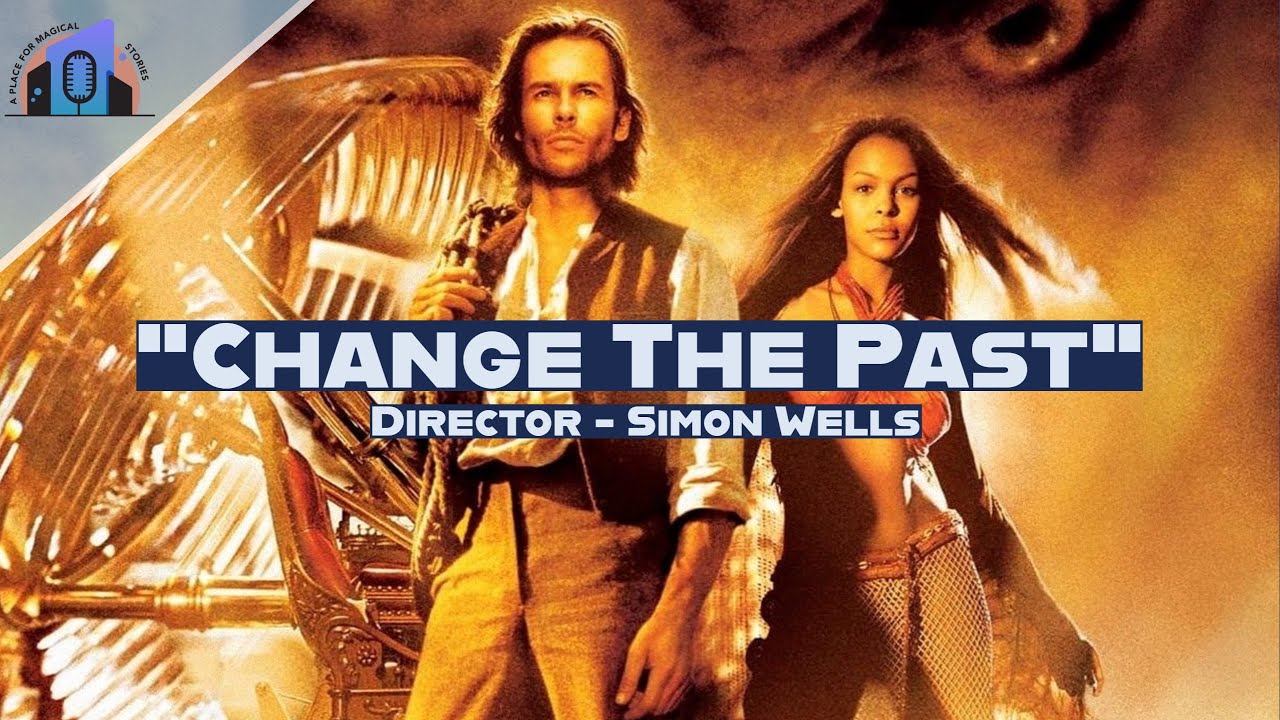
'The Time Machine', Director, Simon Wells
Clips and Shorts from this episode
About this episode
This episode features conversation with Simon Wells, Great Great Grandson of H.G. Wells, Directing 'The Time Machine'
Scientist and inventor Alexander Hartdegen (Guy Pearce) is determined to prove that time travel is possible. His determination is turned to desperation by a personal tragedy that now drives him to want to change the past. Testing his theories with a time machine of his own invention, Hartdegen is hurtled 800,000 years into the future, where he discovers that mankind has divided into the hunter ... and the hunted.
Kingdom of Dreams is a podcast about cinema and art of storytelling. The Podcast series will interview people involved behind the scenes, may it be screenwriters, directors, animators, producers etc.
Full transcript
Automatically generated from the episode audio, so expect the odd misheard word or name. Speakers were labelled automatically. About 10,400 words. Tap a timestamp to play from that moment.
0:08Jawad MirHey, Simon. How are you doing, man?
0:10Simon WellsOh, well, I've actually spent the couple of hours this morning up our canyon. We had a, an enormous amount of re-landscaping done after the big rains like four months ago.
0:23Jawad MirRight.
0:24Simon WellsAnd so I have been following up, you know, reconnecting the irrigation or the sprinkler system. And, it's, it's such a glamorous life here in Hollywood.
0:38Jawad MirI bet. I bet. I, yeah, thank you for joining, man. I was a little, couple of minutes, behind schedule so I apologize for that.
0:47Simon WellsThat's okay. Yeah.
0:49Jawad MirAnd how was your trip to UK, your vacation?
0:52Simon WellsIt was terrific, yeah. Got to see family, friends, and, also had a trip over to Amsterdam, which is a just fantastic city. And we had incredibly good weather. For some reason, the sort of three weeks in June that we were over there, all of Europe was just sunny and lovely the whole time. So, you know…
1:10Jawad MirYeah
1:10Simon Wells... We went around Amsterdam, and the locals in Amsterdam were saying, "You know, it's not like this."
1:16Jawad MirAmsterdam is a beautiful city. It's one of my favorite cities in terms of
1:19Simon WellsIt's fantastic.
1:20Jawad MirIt…
1:20Simon WellsAnd there were things I hadn't expected, like Rembrandt's house was so good. That was such a fascinating place to visit. Anyway, yeah, so it was, it was a good trip.
1:29Jawad MirYeah.
1:29Simon WellsThank you.
1:30Jawad MirGood. Good. I'm glad to hear that. Yeah, I saw Time Machine when it came out, and, I saw it again after a long time this morning.
1:42Simon WellsYeah.
1:43Jawad MirAnd just to refresh my memory. And, you know, I'll just make some comments and remarks about overall of it, and then I can ask you some questions.
1:53Simon WellsSure.
1:54Jawad MirJust, you know, from the standpoint of the way it was shot, it was very old school. You know, like, wider shots, everybody in the frame giving the context of the space. Guy Pearce was great. The music, I still remember it, from Klaus Badelt is it? Is it his last name?
2:12Simon WellsBadelt. Klaus Badelt. Yeah.
2:13Jawad MirKlaus Badelt. Yeah.
2:13Simon WellsKlaus Badelt, yeah.
2:15Jawad MirThat was great. Production design was phenomenal. You know… And obviously it had some, you know, problems that you have sort of talked about before in probably public and to me a little bit as well. But before we dive into it, how... If you can sort of for the audience just kind of fill in your relation to Time Machine on a personal level, as well as how you dived into it as a director after Prince of Egypt.
2:42Simon WellsYeah. Well, I am one of the great-grandchildren of H.G. Wells. My father's father's father was H.G. I never met him. He died 16 years before I was born. But, you know, he was always a presence, in the sense that, you know, there were, there were books and pieces of memorabilia and stuff around. And when we'd visit my grandfather, Frank, you know, there was a whole library of, you know, first editions that H.G. Had signed and things like that. So y… you know, it wasn't a thing like, he was like a super important part of our daily lives, but it was kind of there. And, I had for a long time been,.. Sort of fast-forward now to around n… 1998 or so. When I'd come out to LA to,.. I came out to LA in '95 to help, make Prince of Egypt, co-directing it with, Steve Hickner and Brenda Chapman.
3:46Simon WellsAnd I'd always kind of held ambitions to get into the live action world. That's kind of why I wanted to move out to LA. And, a… and so I saw Prince of Egypt as a potential springboard to get me there. And, Steven and Jeffrey were very supportive. Steven Spielberg and Jeffrey Katzenberg were very supportive of the idea. And so Jeffrey helped me get an agent, and I started sort of reading scripts and getting connected to stuff. And I had been sort of helping develop a couple of projects which didn't happen. And then I read in the trades that,.. Oh, God, what was his name? The guy who directed the first Casper.
4:32Jawad MirBrad Sil… Brad…
4:33Simon WellsBrad Sil…
4:33Jawad Mir... S… S… Sil… Sil…
4:33Simon WellsSil… Silver…
4:34Jawad Mir... Silber…
4:35Simon WellsYeah. Sil… Silverma… Silverberg? Yeah.
4:38Jawad MirNo, S… S…
4:38Simon WellsAnyway, he was…
4:39Jawad Mir... Si…
4:39Simon WellsSilverman
4:39Jawad Mir... Sil… S… Stillgerberg.
4:42Simon WellsOkay. Okay.
4:43Jawad MirRight. Brad Stillgerberg.
4:45Simon WellsAll right. Anyway, a nice guy. I've talked to him a few times. But, he, had originally been attached to direct a new version of The Time Machine, and he dropped out for creative reasons. And Spielberg had said, well, he's gonna direct it, which was probably a thing he said just to keep the project alive, and so that it just didn't get dumped out. Anyway, I went along to Jeffrey and I said, "Look, you and I both know Spielberg isn't gonna end up directing Time Machine, a… and I'd like to throw my hat in the ring." And Jeffrey very reasonably said, "It's a very big movie. I don't think they're gonna let a first-time, live action director, do a movie that size. But sure, I'll, I'll advocate for you," which was very kind of him. And that kind of snowballed. I guess the idea appealed to Steven in particular, the idea of having, the great-grandson directing the movie. And so I met with, Walter Parkes and Laurie MacDonald.
5:48Simon WellsAnd they basically said, "I can't believe we're giving a movie this size to somebody who's never directed a movie before." Like, 'cause they basically, you know, that had, was a sort of foregone conclusion. Which… I've, I've gotta say probably wasn't a wise decision on anybody's part really, but, you know, it was, it was kind of, it was incredibly exciting. And I threw myself into it. I storyboarded an awful lot of the movie myself and I was i… very busy through pre-production. Oliver Scholz said, "I've never met a director who does as much during pre-production."
6:31Jawad MirYeah.
6:31Simon WellsBut I, yeah, it was a very exciting thing to get involved with. And, I honestly at the time believed that I knew what I was doing.
6:49Jawad MirThat's fine. I mean, we all have that inclination. We all, you know, self-believe or, you know, it's just one of those thing, it's a human thing because you want to do something special, and especially your personal connection with H.G. Wells being a great…
7:03Simon WellsYeah
7:03Jawad Mir... Great-grandson. And I mean, the film itself, right, like The T… Time Machine, like, you know, time traveling, it's a cool concept. Now, I haven't, honestly the last, I think I read the book like long time ago when I was…
7:18Jawad Mir... In grade nine or 10 for a book report. I don't remember the story in the book versus that is in the film. I guess the concept…
7:28Simon WellsThe story, the story of the book is very similar to the George Pal film…
7:33Jawad MirOkay
7:33Simon Wells... Apart from the fact he threw in a thing about, nuclear war, in the, in the time traveler's journey into the future. And it then goes on after the experience with, Weena, he goes further into the future and the sort of the idea of the book is actually that, you know, what we think of as being very important social structures, will eventually give way to biological changes, and biological changes will ultimately give way to, you know, much larger, kind of cosmic forces because the book ultimately, gets to, the sun being this swollen red dwarf, and, the last vestiges of life flopping about on a kind of sickly seashore. It's actually, it's tremendously depressing and this sort of, time traveler who's, who's adrift and lost in time and no longer, has any place, you know, i… either sort of socially or physically in the, in the land world that he finds himself in.
8:47Simon WellsSo then he returns, and tells his story to the guests. I mean, in that sense it's very much a kind of, you know, it still has its roots in the kind of Victorian melodrama in that the whole thing is a recounted story. In fact, it's recounted by the author who then recounts the words of the time traveler.
9:08Simon Wells... You know, it's rather like Frankenstein. By the time you get deep into Frankenstein you're, you're sort of four levels of reportage down.
9:16Jawad MirYeah.
9:16Simon WellsBut yeah, so in many ways, George Pal hewed very closely to the structure of the original book.
9:24Jawad MirRight. I thought the concept in the film that you had, was pretty neat and was pretty appealing. Like, you know, I still remember when I went to see a screening way back in, 2002, this was, I still remember the reaction that I had. At the time, I probably would have a different reaction if I was today's age than if I had seen it that time, was at the time I felt that it was too short. Like, it felt too long, but it was too short, and I also felt that the last act kinda just went really fast. Now, aside from the script that we can talk about later and everything…... Was there a lot of changes in the post-production? Was the film longer in terms of its duration? Were there more developments?
10:12Simon WellsNo. Actually very few scenes that got, seriously trimmed down. I don't actually recall. Oddly enough, the biggest major cut was early on. There was a big chunk cut out, that was kind of in the, in the college at the beginning.
10:36Simon WellsOh, gosh, yes, there was a whole, there was a whole sequence that took place kind of out, 'cause originally, you know, there's a long tracking shot that goes through them. We end up in…
10:46Jawad MirYeah
10:46Simon Wells... Alexander's, teaching room. But it was actually deserted, and it's the dean of the, of the college, and he then goes to the window and looks out and sees, Hartdegen taking his students out into this snow-covered quad. Beautiful photography. And then he does a, he does a demonstration to his students which is all about light and dark, and, is kind of the statement of theme of the, of the movie. And then the dean comes and, berates him for writing, ridiculous speculative articles in these magazines. And then it goes to the scene where Mark Addy as Filby shows up in, Alexander's, room where he's writing all the equations on the board.
11:41Simon WellsAnd so yeah, that whole thing with the dean got cut out, i… basically because I, actually it was Walter who felt very strongly, "Look, I just wanna get to the machine as quickly as possible." You know, I, a… all this sort of faffing about... And in fairness, there were scenes that Walter had a big hand in writing, so it was…
12:01Jawad MirYeah
12:01Simon Wells... Okay that he cut them out. But, i… i… yeah, later on, yeah, there was less stuff that was, that was cut out. There wasn't a lot of stuff that was shot that was cut out. There were a few, fairly expensive shots that, actually, Gore Verbinski had directed, that it was kind of painful to cut out because it had taken, like, half a day to set up and shoot apparently, and, but they just didn't, didn't work in the cut, in the flow of things. But, yeah, it wasn't, it wasn't, radically trimmed down. I think, in truth, it was one of those movies that was kinda chasing its tail. We didn't really have the ending worked out when we were already…
12:49Simon Wells... Diving into production. And that was, you know, everyone's gotta learn this for themselves. Everybody says if it isn't on the page, it isn't on the stage. If you don't have a good script, you're not gonna be able to shoot a good movie, that kind of thing. And everyone listens to that, and then falls into the same traps…
13:11Jawad MirYeah
13:11Simon Wells... And then you realize, oh, shit, I wish we'd worked this out before we got started, instead of trying desperately to work it out as we're... You know, it's that, it's that scene from the end of The Wrong Trousers where, Gromit is desperately laying track ahead of the, of the trains…
13:28Jawad MirYeah
13:28Simon Wells... He's actually traveling on.
13:31Jawad MirYeah, that's a, that's a good example. And you know, it's, to be fair, it, everybody learns from their mistakes. They, you know, like I'll be very open about the very first film that I made, and I thought I would, I, it was a feature documentary I directed. I'm like, "I'm gonna edit it, I'm gonna do this." And, you know, it came out, it was okay. It didn't do reasonably well at all, I would say. But it taught me not to sort of think that this is it, like I'm, you know, the director and that. And that sort of led me to the other two projects…... That you, that you saw, that, you know, m… m… you…
14:06Simon WellsWhich were actually very good. Yeah, so I…
14:08Jawad MirThank you
14:09Simon Wells... I'd be interested to see, I'd be interested to see the bad one, see how you learned and stuff. Yeah.
14:13Jawad MirBut you know, o… o… one thing about time, when I was watching it this morning, it was, when, again, I had forgotten most of it, so there was a great, and this is from a script standpoint, and I don't know what version of the script that you guys, you directed, but there c… there was a story right there when he travels back, and possibly meeting, seeing himself or running int… into himself. There was that part that I'm like, okay, I wish…
14:42Jawad Mir... That was explored a little bit. And this is just my thoughts and…
14:45Simon WellsA… actually, there's a thing, there's a thing there that I still rail against the fact it got, that I was forced to cut it. I'd actually shot, so Alexander comes running through to try and, see his, find his girlfriend. He finds his girlfriend, his fiancee, Emma, and whisks her away. And there was this lovely shot where we, the camera followed them as they ran up the hill towards where the coaches are, and then whip panned back to, the rest of the sort of the skating rink stuff. And Alexander came running up to camera, looking around like, "Where did we, where is she?" And it was an exact mimic of the shot where he came, you know, hurrying up to camera, and then sees her, and then, you know, runs into her arms that we've already seen. And this is exact same thing, but now she's not there. And the whip pan was one of those ones where you c… you can hide a cut in a whip pan, and it hid perfectly. I mean, I actually went through it frame by frame. Wayne Wallman, the editor on the show, was superb, and he was very proud of this cut because you can go through frame by frame and you can't find the cut.
15:53Simon WellsAnd anyway… ... So, you know, Alexander whisks Emma away, whip pan back, Alexander comes running up, doesn't see. And Walter could not get his head around the idea that Alexander could be in two places in the same time. And I couldn't articulate to him why that made sense, and it's like, yeah, but you've seen this in Back to the Future. I mean, this…
16:20Jawad MirYeah, I was gonna say that. Yeah
16:22Simon Wells... This is a standard thing in time travel stories.
16:25Jawad MirYeah.
16:25Simon WellsAnd he just said, "I just can't understand how, like, all that DNA can be in these two places." And it's like, but that's the point about time travel. You are physically traveling... Oh. Yeah, anyway, so he made me cut it out of the show and I, it still hurts, 'cause it was one little shot, but it was
16:42Jawad MirYeah, and it would've made a difference because it creates that sense of, you know, tension a little bit, t… it flows the story. And I also felt… ... Go on.
16:51Simon WellsWell, no, it, the complication that would've arisen, I mean, time travel stories are rife with complications. And the complication that would've arisen is that there is a scene immediately after Emma's, repeated death, where, they're in the morgue and Philby comes and talks to Alexander, and he's kind of i… deep in this gloomy, kind of inward v… vision. And then he kinda sparks the idea of making the time machine and walks out. And of course, logically, if there had been two Alexanders, then which Alexander would've been in the morgue, and why would not the Alexander who belongs in the time have come and found his fiancee's body, and so on? I mean, arguably he didn't know that she'd died yet or something like that, but that seems... So yeah, I, just it is actually an interesting point that H.G.
17:53Simon WellsDidn't travel into the past in his, in his novel. He'd actually written, a couple of versions of the novel before he wrote The Time Machine. Back when he'd been a student at the Kensington Normal School of Science, he'd been the editor of a student magazine, and he'd written the first, like, three or four chapters of, Oh, The Chronic Argonauts. That was it. It was, it was called The Chronic Argonauts, and it was, it was an incredibly Victorian melodrama thing. It was, you know, this old manse up on a hill, and there's the villagers all think something horrible's going on there, and it's this, Professor Nebuch Gipfel who is building this extraordinary machine, and, you know, a couple of young people get involved in it and they go whisking off into,.. And even within that there was some sort of internal loop where, the destruction of the manse, the, this mansion on the hill, had been a result of the things that the time travelers had in fact themselves done.
19:00Simon WellsHe abandoned that, and actually by the way also destroyed any copy of it he came into contact with in future years.
19:07Jawad MirOh, right.
19:07Simon WellsHe then later wrote a book which was called The Universe Rigid, which, I think explores the idea that there is nothing you can do to change time. You know, 'cause fundamentally, sorry this gets into the weeds of time travel stories, but…
19:21Jawad MirNo this is good. It's good
19:23Simon Wells... Fundamentally there are two ways you can go with a time travel story. You can either say there is nothing you can do to change it, which is what we were doing with, Emma dying in different ways. I mean, there was actually an even more comedic version of that, script where it became kind of like, what was it called? Groundhog Day, where…
19:49Simon Wells... J… just like there was a series of cuts of her dying in different ways. It's like we can't do that is gonna be too funny. But anyway, so you can either do a thing where it's, it's all solid and there's nothing you can do about it, or you say, "Well, there's a multiverse of options, and at any point you can go off." there was actually a sequel to The Time Machine called The Time Ships written by, oh, I ought to know this guy's name and I've forgotten, I'm so sorry.
20:17Jawad MirNo
20:17Simon Wells... Where he explored a multiverse thing where okay, they keep on trying to fix stuff and they keep on going further and further into the past and screwing up the future even further. It's a very thick and very complicated book. Quite clever, but,.. Anyway, so Universe Rigid appears to have been a version of the time travel story in which there was nothing you could do to change things. And HG had tried to get that published, and apparently it was unreadable and just you could not make, you know, a single sense of a single word of it. And actually he ended up writing the book itself, really through poverty. He had, he'd been a teacher at the, he'd become a teacher at the Kensington School, and he'd then, had an affair with, one of his pupils, had left his wife, who was his cousin Isabel, and gone off to live with, Amy Catherine, Amy Catherine Robbins.
21:18Simon WellsAnd, they were living together before they were married, very modern and shocking to their landlady. And he basically, he'd been a school teacher for a while and, then he got quite ill, through a, actually a football injury. And so the only thing he could do was write. And he wrote, he wrote all kinds of magazine articles, you know, going to the beach, a trip to the dentist, anything at all you could write about and, you know, there was, there was a strange boom in magazine, publication right around sort of the 1880s. Partly because the 1860s had a government push to increase education, and so there'd been lots of money had gone into schools. And as a result, it was a very literate, population that was looking for entertainment. And so all these, like, the sort of penny dreadful magazines started up. And so anyway, HG trotted out this time machine idea.
22:24Simon WellsAnd by this time he'd explored all the, all the ways of doing it wrong, and so then wrote a story where it's just, "I'm just gonna go into the future. If I just go off into the future and we can talk about, you know, human development and the things that we understand about astrophysics and stuff like that, and not have to worry about the paradoxes of, internal loops within time travel stories."
22:50Jawad MirYeah
22:50Simon Wells... By the way, by the way, just as a little bit of history there, he got about halfway through pub… it was published as a serial, as a, as a weekly serial, and he got about halfway through it and then the magazine he was publishing for, was bought, and the original, editor who'd commissioned him was sacked. And they stopped. They just said, "Enough of this time travel nonsense. Go away." And that was suddenly the end of that, and that would've been the end of the book completely had the editor not then been hired by another magazine and had contacted HG and said, "Hey, you know that time travel story? Let's publish that again. That was good."
23:30Jawad MirRight. Yeah, no, I mean, all these, you know, you talked about multiverse as something that's explored nowadays quite often when, you know, Spider-Verse and all that stuff. And I... That part was one of the things that I'm like, "Okay, how come he didn't see himself?" And I also thought there could've been a great amount of at least a scene or two on the grievance, like, you know, him losing his, fiancee. Like be… and I think you talked about it already that how Walter just wanted to jump to the time machine. It was a very quick transition from him losing her into him equating, you know, using equations. There was, for me…
24:06Simon WellsYes
24:06Jawad Mir... Again, you know what I mean? Like I, again, I'm not trying to be critical, I'm just being, honest here, that for me as a reviewer, if they had showed that he was working on a time machine before the opening and then jump into that, then it kinda made…... You know, a little bit more of a flow, at least for me. But it just seemed very too quick, and you pointed that out already. But you know, on the, on the, like a positive note, one thing that I, again, I talked about, I love the, when he goes into the future, and also the time lapse, like when he's traveling through time and all that special effects…
24:41Jawad Mir... Oh boy. I mean, it's, even to this day, I will say it's like top-notch. It's, it's absolutely breathtaking.
24:47Simon WellsI, no, some of the visual effects work has been massively superseded now by, stuff that, people are able to do now. And there's, some of the staging of it, I look at it and go, "could've done, could've done some more interesting, sort of…
25:04Jawad MirYeah
25:05Simon Wells... Pa… camera moves and stuff." But yeah, it was fun, it was fun stuff to do. Yeah.
25:13Jawad MirYeah, and you know, that time traveling thing, I, it's funny, I found when I was watching it, I'm like, "You guys did something that Back to the Future never did." You know, Back to the Future is the greatest, one of the greatest trilogy in terms of…
25:27Simon WellsOh, yeah
25:27Jawad Mir... Time traveling for, all time. Like, you know, you just see them going from one point to the other. There's nothing in between, and you kinda covered that aspect…
25:36Simon WellsYeah
25:36Jawad Mir... And that was beautiful to watch.
25:38Simon WellsWell, yeah, I think Back to the Future does a sort of wormhole idea of like…
25:42Jawad MirYeah
25:42Simon Wells... You're just basically popping out of one reality and popping into another reality. Yeah, the, our time travel thing did the same thing that George Pal did, which is to actually directly refer to the book. The book, the fascinating thing about the book is that when HG wrote it, there was no trick photography. There was no…
26:04Simon Wells... Time lapse photography. This is actually, like, the year, I mean, it might've been the year after the Melies brothers did their first display of moving pictures, right? So it's, it's, it's right at the point where moving pictures first occur. So nobody has done a thing where you simply take a photograph every, you know, 30 seconds and see the day go through, you know, instantaneously like that. The description in the book exactly sounds like trick photography in that he sees, when he's traveling slowly, he sees Mrs. Watchett zip across the room…
26:40Simon Wells... And the candle burn down, and the sun sort of moving across the sky fast and, all this kind of stuff. And then as he speeds up it, you know, other things happen. But the initial, description of the time moving faster, was a… actually a, an act of pure imagination by HG at the time, because nobody had seen anything that looked like that. You know…
27:05Simon Wells... There wasn't visual effects work. There wasn't even, you know, the very, the very basic kind of trick photography. It had, just hadn't been done yet, which i… is one of the things that I think is one of the most amazing things in the book that people very often overlook. But yeah, when you get now in, with all the bells and whistles, even the bells and whistles we had in, back in the turn of the century, yeah, you get to see all this stuff happening incredibly fast and it's, it's, it's very entertaining. It's still, you know, you could still do that today, and people are still fascinated by it.
27:40Jawad MirYeah. No, for sure. If you can, I know it's been a long time, if you were to recall on set something that you remember from a very positive standpoint that you thoroughly enjoyed, and something that may have sort of not so enjoying, you know? Because direction is a very stressful job. Like, it's an…
28:05Simon WellsYeah
28:05Jawad Mir... It's long hours. I mean, people don't realize that it's like, you know, we're talking about 16, 17, 18 hours sometimes, and it's like day after day after day, and especially if you're traveling back and forth, depending on where the shoot is happening and the location, that adds up to it. Just kinda going back down the memory lane, if you can share something from a positive experience first, that you remember.
28:27Simon WellsOh yeah, no, I'm, I can remember. We shot, a whole lot of the location stuff, the, as it were, the Old World location stuff, we shot in upstate New York, both the stuff in the park and the stuff in town. And there was one point I remember calling my wife and saying, "I can't believe they're letting me do this. This is so much fun." I, sort of standing out on this frozen lake with all these guys dressed in, Victorian clothing and skating around a… and stuff. It was, just amazing. And then yeah, and then there are very specific things, like, there is a point way down where the Über-Morlock shows, Alexander the world that he could have had, if, Emma had not died, and he sees his children. And the two children that are there with Emma in that vision are actually my kids, 'cause they were…
29:24Jawad MirOh
29:25Simon Wells... They were, like, three and one at the time. And anyway, so, my elder daughter was dressed as a little boy, and the young daughter was a, you know, a babe in arms. And a very sweet scene. Also weirdly very stressful because as, you know, there I am directing, but they're also my children who'd better bloody perform, you know? Otherwise... And anyway, so I had this whole thing where, the idea was that, I was gonna call out, and my elder daughter would turn around and look up and go, "Daddy." And then I had this lighting cue queued, and I would just say, you know, "Cue the lighting cue," and the lights change because that's gonna take us back to, you know. And damn me, the younger daughter, Tegan, you know, I said, "And now," and Tegan looked up and went, "Dada," and stole…... The line from her sister. I was like, "Do the lighting change. That's it," you know? So yeah, that was, that was kind of a, yeah, fun moment, but also very stressful.
30:30Jawad MirFor sure
30:31Simon Wells... But, yeah, I mean, the… there was stuff, there was stuff that was immensely stressful. When we, when we were shooting the whole stuff with the Morlocks attacking and so on… ... The... We were shooting out at Sand Canyon, which is, about five miles…
30:48Simon Wells... 10 miles north of LA, and, there's a whole ranch that, it hires itself out for lots of stuff. It's a, it's a frequent thing that gets used. Turns out, by the way, don't shoot there on Fridays because all of the private jets are taking off from Van Nuys Airport, and they are all going north straight over Sand Canyon. Like, every 10 or 15 minutes, a… another jet goes over. But anyway, so, there was one point where we are shooting it, the… there's a stuff where the Morlocks are bursting up out of the ground.
31:21Jawad MirRight.
31:21Simon WellsAnd, that set is just not... We're, we're, we're coming up to having to shoot there, and the set is not built and ready to go, and it's just, like, the stress of, well, what the hell are we gonna do? We, you know, we were literally at one point shooting in one corner of this lo… part of the location while they were still, like, digging out a hole to put a great big shipping container underground to build the mechanism to shoot the Morlock up out of the ground. You know, in between takes, you know, as soon as we s… you know, shout cut, they're, they're digging the hole again, in order to be able to shoot that scene in the afternoon. It... So there were things like that were just horrible where we were, you know, chasing... I think the thing I found most stressful was, I felt very responsible, in terms of kind of schedule and budget and stuff in a way that I really shouldn't have done. I should have…
32:21Jawad MirYeah
32:21Simon Wells... Just accepted that, look, somebody else takes care of that, and just think about the creative side of it. But yeah, I mean, it, the movie in many ways for me was a bit of a disaster because it got to a point where I wasn't sleeping sufficiently to actually be able to operate, well enough. And eventually I actually handed over the reins of directing to Gore Verbinski, who, bless him, volunteered. I mean, I don't know Gore very well, but he had a... Previously he'd done, The Mexican with, Walter and Laurie.
33:01Jawad MirBrad. Yeah.
33:02Simon WellsAnd, which was B… Brad Pitt and Julia Roberts.
33:06Jawad MirJulia Roberts.
33:07Simon WellsAlthough they
33:07Jawad MirAnd he did ... Mousehunt as well
33:08Simon Wells... Yeah, they were never on sh… on screen at the same time, which is like you have two of the biggest movie stars in the world, and you didn't put them on screen at the same time. A… and Gore felt very guilty about the fact that movie had not done well, so he basically offered to step in and do this uncredited because he felt he owed Walter and Laurie. So there's a chunk about a, probably about a quarter to a third of the end of the movie which is Gore Verbinski's work. I mean, he worked hard on following the style and, approach that had been used at the beginning of the film. But, so yeah, that's, yeah, the, you know, but I think probably the single most painful thing out of the entire movie is kind of, accepting that I was physically not capable of shooting through the movie.
34:02Simon Wells... But, you know, we're talking about I think over 80 days of principal photography scheduled. And, you know, when we were 40 days in, we didn't owe a single day. Normally there's a thing that happens with live action movies where you kind of, you build up a collection of shots that you know you're gonna... "We're gonna need an insert shot of his hand pulling the drawer open," that kind of thing.
34:23Simon WellsAnd you just kinda keep a list running because you can, you can pick up those at, on a pickup stage later. You can build a little corner of the set and do whatever you need. You know, so you build up a list of shots that are owing. And, yeah, 40 days in, we didn't owe a single shot. We were right on schedule. And yeah, then kinda by the end of the time we were out shooting at, in Sand Canyon, I, the wheels were coming off my bus in a fairly major way. So, yeah.
34:54Jawad MirRight.
34:54Simon WellsSteps were taken.
34:56Jawad MirGoing back to what you said about The Mexican, I saw that recently. I was talking to the editor, Craig Wood. You said they were not in the frame together, Brad Pitt and Julia Roberts?
35:05Simon WellsI think there were only, like, two scenes where Julia Roberts and Brad Pitt were actually in the same scene, and I'm not sure how many shots they were actually… ... On camera 'cause, like, the opening scene, he's being thrown out, and she's up on a balcony throwing things, and he's down on the grass below having stuff thrown at him. And I don't know, there might be a couple of over shoulder shots…
35:25Jawad MirYeah
35:25Simon Wells... But.
35:26Jawad MirThere was, in that balcony scene, there was a shot from ground up seeing... I don't know if it was Brad Pitt or not. Maybe it could have been a…
35:32Simon WellsWell, yeah, it could have been, it could have been a stand-in
35:34Jawad Mir... Stand-in
35:35Simon WellsYeah And I don't know, I... Was there a scene at the end? I can't remember the movie very well. I'm not sure if there was a scene at the end.
35:39Jawad MirThere was a scene in the car when they're talking. It was a long scene.
35:43Simon WellsOkay.
35:44Jawad MirAnd then there was some, y… you, now that you mention it, I mean, the way I looked at it was because the story was like that they're not really together that much, but they were together at the end, too, besides the car when
35:56Simon WellsYeah
35:56Jawad Mir... The bullet gets fired.
35:57Simon WellsI mean, I, all I know is that, Gore felt that the movie had not been what it should have been, and he felt responsible for the choices that had been made and so was kinda doing this as a favor to Walter and Laurie to make up for that.
36:10Jawad MirInteresting.
36:12Simon WellsBut…
36:12Jawad MirNo, it was a good…
36:13Simon WellsI…
36:13Jawad MirI like The Mexican
36:14Simon Wells... I shouldn't represent…
36:15Jawad MirI like…
36:15Simon Wells... Too much about what Gore thinks about that…
36:17Jawad MirNo
36:17Simon Wells... 'cause I never talked to him about it. I don't know what his true feelings are. It was just was the story I've been told.
36:24Jawad MirNo, he's a, I really have enjoyed his work from Mousehunt to The Ring… Pirates of the Caribbean, of course.
36:30Simon WellsOh, yeah
36:30Jawad MirHe hasn't done something in a while. I think he did Rango as well, which was the animation.
36:34Simon WellsYes, actually. And Rango, God bless him, he came out the week after,.. Or was it the week... It might've been the same week as Mars Needs... No, it was the week after Mars Needs Moms.
36:46Jawad MirOh, yeah.
36:47Simon WellsWas it?
36:47Jawad MirIt's the same year. I don't know. I wasn't there for you.
36:49Simon WellsWasn't, no, oh, was it? Yeah, it must've been that. Yeah. Yeah. 'Cause originally I'd, I'd talked to Hans Zimmer about doing the music for Mars Needs Moms, and originally Hans had said he would do it, and then when it became apparent that Rango and Mars were gonna come out more or less the same time, Hans said, "Look, I can't, I don't want to do a shitty job for you, and
37:10Jawad MirYeah
37:10Simon Wells... I'm already, I've already promised I'd do this for Gore."
37:15Jawad MirYeah, Rango came out March 4th and Mars Need Moms came out March 11th, so a week apart. Your memory's pretty good.
37:22Simon WellsAll right. Yeah. Oh, it, you know, the release of Mars Needs Moms is a painful thing just 'cause it... All kinds of, y… you know, there was the whole change of management at Disney and…
37:32Jawad MirYeah
37:33Simon Wells... You know, a small tsunami in Japan the same weekend and all kinds of stuff that just, like... Eh, it's not a good weekend to be opening a movie, is it?
37:43Jawad MirYou know, Simon, what I love about you is that you are so open about your mistakes as much as you are proud about your achievements. And I gotta give you…
37:53Simon WellsWell, I've got a lot of, I've got a lot of the former, so
37:56Jawad MirNo. It's, it's, it's... We all do, right? But how many peop… how many of us talk about it?
38:01Simon WellsI…
38:01Jawad MirRight, and that…
38:02Simon Wells... Well, I think, I think generally in Hollywood you don't. You're always trying to do... It's like the presidential campaign thing of, like…
38:08Jawad MirYeah
38:08Simon Wells... You know, "I've, I've never made a mistake, I've never misspoken, I've never..." it's like... That's, that's a Hollywood thing because you don't want anyone to ever be kinda like, "Oh, well, we best not employ him because X might happen." And, yeah, partly I've got to that point in my career where, you know, people either wanna work with me because they like me and they like the things I've done…
38:32Jawad MirThat's it
38:32Simon Wells... Or they don't wanna work me and I don't care, you know?
38:35Jawad MirYeah.
38:36Simon WellsI've had a fairly successful, you know, in the world of storyboarding, my income is fairly reliable and I know a lot of the people in the animation world. So, yeah, there's, there's stuff that's happened in the past. I mean, personally I think people learn from their mistakes, and…
38:56Jawad MirOf course
38:57Simon Wells... People who've, who've gone through tough times actually, maybe might be a more reliable person than somebody who hasn't. You know, somebody who's just kinda lucked out and... I mean, to be honest, up until Time Machine, that was me. I had, I had basically been recruited by Spielberg personally to direct American Tail 2. That had just kinda rolled into We're Back and then Balto. And then because we had, you know, an animation crew ready-made, that just kinda rolled into Prince of Egypt. And because I'd been working with Spielberg for five years by then, he wanted me on Prince of Egypt. And s… and I couldn't be fired from Prince of Egypt because 120 of the artists, had, their visas depended on my visa
39:54Jawad MirOh
39:54Simon Wells... And depended on me being one of the directors of the movie. So I was actually in this kind of ridiculously, even though, you know, things weren't easy at the beginning of Prince of Egypt, it actually was, I was never that worried about, like, am I gonna get fired and so on. So I kinda, I just kinda floated through. Yeah, the films weren't terribly successful, but somehow that didn't, didn't stop my career from continuing to build. And so I rolled into Time Machine thinking, "Yeah, you know, I get this whole movie-making thing. I know what I'm doing." And on a certain level, yeah, I understood cinematography. I understood how to shoot a scene and how to, and to a certain extent, how to work with actors. Actually in years since, I've realized the things I didn't know about working with actors. But I kinda knew what a scene would look like and how to make it happen.
40:56Simon WellsWhat I realized by the end of Time Machine is I really didn't understand how story worked really.
41:05Jawad MirYeah
41:05Simon Wells... And I had, I had floated through Prince of Egypt with, in particular Brenda Chapman, who is an incredibly smart storyteller. And, you know, Kelly Asbury and Lorna Cook, and indeed Jeffrey Katzenberg. A whole lot of very smart people who were kinda helping the story become the thing that it needed to be, and here am I kinda waltzing through, yeah, doing some kinda nifty bits of kinda shot design and so on, but thinking I know what I'm doing, when in fact really it's not you, Simon. You're not the one who's figuring this out. And that was kind of, that was a shocking revelation. Yeah.
41:53Jawad MirYeah. No, I, like, it's, it's, it's hard. I, it's a very hard thing, you know, not just in terms of what you learned, but just rejection itself in our industry is a very common thing, right? And…
42:05Simon WellsYeah
42:05Jawad Mir... And to be able to staying persistent, that's, like, that's what differentiates... You know, there's, I'll be very honest with you. I mean, I've, I've sorta talked about Time Machine faults, but in terms of, there were some pros. But in terms of had it been somebody else, Simon, there's a lot of people I know who started working on a film, y… you know, whether it was independent or decent budget, and halfway they gave up They gave, like they d… they left the industry period…
42:34Jawad Mir... Like to do something else. But you have stuck it out, and you know, it's a testament to your character and your personality that, you know, resilience that so what, you keep going and you keep learning, and that's, that's life.
42:46Simon WellsOh.
42:46Jawad MirThat's the nature of it.
42:48Simon WellsOh, thank you. I don't think of myself as being a particularly persistent person, but I guess, yeah, I… it's,.. Yeah, I really enjoy working in movies. I've had the advantage of, this kind of secondary career, this storyboarding thing which I've always been able to do. And so there's always been a fallback. There's always been a safety net there. And I think an awful lot of people working in the business, they don't have a safety net. They, the thing they do is they direct or they write, and if nobody is buying what you are writing and nobody wants to employ you to direct, then you've gotta go and get a job, I don't know, selling houses or, working in a shop. You know, you, something. You've gotta pay your mortgage. And I had the enormous advantage of, I could pay my mortgage by doing storyboard work, which in a way was also calisthenics that I'm, I'm continuing to make movies.
43:55Simon WellsYes, I'm doing it for other people, I'm storyboarding for other people, but I'm, I'm still thinking in terms of, okay, how do shots go together? How do pieces of, a performance and shots create an overall, you know, piece of cinema? And so yeah, I'm, I'm getting to continue to do, to exercise in the field that I actually wanna work in. So when I do get behind the camera again, my skills in that regard haven't gone rusty. And then I use whatever spare time I had from doing that, to actually start learning how to write stories and make stories make sense and, that kind of side of it. So I, yeah, I think I was, I was uniquely lucky that, you know, when I was four year olds, I picked up a crayon and never put it down. You know, this is the thing, I remember seeing this online that, you know, it's not that we're marvelously talented, it's just that when we were three or four years old, we picked up a crayon and we didn't stop drawing, and we drew, you know, six or eight hours a day for 20 years, and that's why I can draw.
45:13Simon WellsIt's not because I was given some sort of…
45:15Jawad MirYeah
45:15Simon Wells... God-given talent of you can draw. No, I just started doing it before most other people did, and I stuck…
45:22Jawad MirYeah
45:22Simon Wells... To doing it because it fascinated me. But anyway, so, yeah, I think I was very lucky compared to a lot of other, you know, writers and directors and stuff because they're forced out. You can't afford it unless you're independently wealthy. You can't afford to work in the business. You know, this is a thing which is going on right now with the, WGA…
45:44Jawad MirRight
45:44Simon Wells... Strike, which I'm, I'm enormously sympathetic to, but even when you're working, you're only making enough money to just scrape by. I, you know, the fact that the average, the average screenwriter's making like not even $70,000 a year, which, okay, $70,000 a year might…
46:03Jawad MirIt's nothing
46:04Simon Wells... Sound like quite a lot of money…
46:05Jawad MirNo, it's nothing
46:06Simon Wells... To people in the middle of the country, but you try and live in LA on $70,000. Yeah. It's, it's... And I mean, I think that's about what my daughter is being paid as a production assistant.
46:18Jawad MirYeah.
46:18Simon WellsYou know? It's, it's a, it's a pitifully low wage if you're trying to make a living doing that. And everyone thinks of, you know, writers and movie stars and sure, there are occasional people who are making a million dollars a script, and God bless them. They've got there, by the way, because they have written hundreds and hundreds of scripts, and some of them got made and some of them were good. But, and movie stars, yeah, you think about the movie stars who are being paid $10 million a movie. But there are hundreds of thousands of people, I mean, certainly tens of thousands of people who are kind of eking out a living, doing kinda okay, you know. I have a couple of friends who are extremely talented actors who are about the same age as I am, who bought their first apartment five years ago. They could finally actually get a mortgage.
47:17Jawad MirWow.
47:17Simon WellsAnd it's not that they're not, you know, they're actors, they teach in an acting school. They do regular parts on TV and stuff like that, and it's just that's the reality of almost everybody in the profession is making, you know, a best of middle class kind of income. And, yeah, so, it's, it's a thing which I feel I have been incredibly fortunate in that I happen to have, because I had drawn little cartoons in the corner of my rough book when I was 10 years old, I got the storyboarding thing very… and I... My first job was doing commercials, and in commercials you have to do everything, so I have to storyboard for…
48:06Jawad MirYeah
48:06Simon Wells... The clients and stuff. And it was a thing which, oh, I see how this works. I understand how this works. And I, and also I draw fast, so I can produce more drawings than other people…
48:18Jawad MirYeah
48:19Simon Wells... Just because, just because I've been doing it for so long. You know, it's just a, it's a facility born entirely out of repetition and, you know, sheer muscle memory training. And so yeah, I've been incredibly lucky that's a thing which I can continue to do to make money to fund this stupid filmmaking thing I want to do. You know, I'm writing scripts. I've written or co-written, I don't know, 15 scripts or something. I've had one movie that actually got made, and I was hired to make it before we wrote the script. We, you know, we wrote the script, you know, after I'd been hired to write. And I've never had a thing that I've written myself actually picked up and bought. And that's, that's typical. That's, that's almost…
49:06Jawad MirYeah, that's…
49:06Simon Wells... Every director in Hollywood
49:07Jawad Mir... Everybody.
49:08Simon WellsYeah.
49:08Jawad MirYeah, that's everybody. I mean…
49:09Simon WellsAnd you know, and…
49:10Jawad Mir... All the projects... Sorry, go on
49:11Simon WellsI... No, sorry. There was, there was a, there was a father-son writing team I knew several years ago 'cause my kids went to the same school as their kids, and they'd written, that Jodie Foster film, The Brave One, which had done really good business. And they could not get arrested after. I mean, they couldn't get hired to write another script for years after that. And you'd think, "Well, that was a good script. That was a good film, surely." But no, i… it's... E… even if you have written a film that's successful, it's quite difficult to get hired again. So yeah, the majority of people who are writers or actors in Hollywood, that isn't how they're paying their mortgage, and they'd like to make it how they're paying their mortgage.
49:58Jawad MirYeah.
49:58Simon WellsAnd yeah, the really disgusting thing that's coming out is that, the writers who, even the writers who are in regular employment are barely making enough to cover something like a mortgage. So yeah, I have enormous sympathy for…
50:16Jawad MirSure
50:16Simon Wells... Just the regular people in this business.
50:19Jawad MirNo, absolutely. And you know, one of the things that you talked about was, you know, you picked up a crayon at the age of five, and you s… you said luck, which is true, but at the same time, I also feel like, and I say this over and over again, had you put that pencil down, the luck wouldn't have been there, right? You were persistent.
50:36Simon WellsOh, yes.
50:36Jawad MirLike, you have to make your own, you have to make your own luck.
50:39Simon WellsYeah. I…
50:39Jawad MirYou know? Okay
50:39Simon Wells... Well, I don't believe in, I don't believe in the make your own luck thing because there are things that have happened to me which were stupidly lucky, but was I prepared so that when that came along…
50:50Jawad MirThat's right. That's what I mean, yeah
50:51Simon Wells... Yeah, I got to take advantage of it, and I do know people who had lucky breaks that they then squandered.
50:59Jawad MirExactly
50:59Simon Wells... But that's, to be honest, that's not me being particularly clever. It just, it, again, I was lucky in that the peculiar set of skills that I had developed as a result of being a not very good student at school and spending most of my time drawing in the corners of my rough books, that I happened to stumble into people who wanted somebody who could draw like that. You know what I mean? It's like that was an incredibly lucky break. I, the things that I like to do is the thing they happen to want, and it's like, "Oh, okay. I'll do that then. Thank you."
51:35Jawad MirYeah.
51:35Simon WellsAnd you're gonna…
51:36Jawad MirAnd…
51:36Simon WellsYou're gonna pay me too? Great.
51:39Jawad MirBut I think what I, what I was trying to s… say that when I sit with people not in the industry or even someone who are in the industry, they would say, "Oh, X amount of, you know, XYZ director or producer or actor is so lucky," and then that's it, you know? But the amount of effort those individuals are putting into their career is not even remotely cl… close to what, you know, people…
52:02Simon WellsOh
52:02Jawad Mir... We always…
52:03Simon WellsY… y… you, sure
52:03Jawad Mir... You know what I mean?
52:04Simon WellsYeah. No, there's…
52:05Jawad MirRight? It's like…
52:05Simon Wells... There's luck and you've gotta be…
52:07Jawad MirHard work
52:07Simon Wells... You've gotta be working hard and be lucky. I mean, I know…
52:11Jawad MirYeah, exactly
52:11Simon Wells... Lots of people who work hard and haven't been that lucky. And, I, yes, I don't know many people, I don't know many people who've had amazing lucky breaks and then their careers have continued through sheer luck because unless you're also working hard, your career does not continue. You know, when…
52:32Jawad MirWell, it's kinda like that conversation about nepotism, right? It's like you can have a son of an actor come in to get a break, or a daughter, but if he or she are not good actors or if they're not working hard, they're not gonna last, and that has happened.
52:44Simon WellsYou're going straight, you're straight out the door again. You walk in…
52:47Jawad MirYeah
52:47Simon Wells... Like, "Here I am. I'm son of, you know, Tom Cruise," and then you stink in your first movie, and, bye.
52:57Jawad MirYou're done.
52:57Simon WellsYou know?
52:57Jawad MirBye.
52:58Simon WellsYeah.
52:58Jawad MirYeah. But you know, also you were talking about, people who've done really well, and they haven't seen the f… I was talking to, when I came to LA, I was talking to John Stevenson and Lorna Cook… ... And they said the same thing. Like, you know, John did, what, Kung Fu Panda in 2007, and he didn't get a directorial job until, Sherlock Gnomes, which was 2017, like 10 years.
53:22Simon WellsYeah.
53:22Jawad MirAnd you know, Lorna Cook, same thing. She was nominated for an Oscar, and, same thing. So it's, it's a very brutal industry, and I, but at the same time, you know, you just either…
53:34Simon WellsAnd by the way, by the way, sorry, both of those two people I know personally, and they're both very hardworking. It's not like they were…
53:41Jawad MirThey are
53:41Simon Wells... Like, goofing off
53:43Jawad MirOf course
53:43Simon Wells... They were working their bums off all that time. They weren't just…
53:47Jawad MirYeah
53:47Simon Wells... Sitting around, living high on the hog of some, theoretical residuals that, by the way, they don't make in animation. Sorry, carry on.
53:56Jawad MirYeah. No, that was, that's the misconception people have. You mentioned the beginning of a conversation that glamour, right? Everybody thinks because you've been in Hollywood, you're living this glamorous life. It's not that simple. It's very difficult to keep at it. I mean, maybe people like Steven Spielberg, you know, you can argue, sure, but he's, again, he's worked really hard. He, for the last 45 years. It's, it's, it's sometimes you get it, sometimes you don't, and it's, it's tough. It's really tough, and you just gotta keep at it, and it's sometimes heartbreaking. You are heartbroken most of the time in the, in the film business.
54:27Simon WellsFor sure. Yeah.
54:28Jawad MirYeah.
54:28Simon WellsThere are some, there are some miserable lows. Yeah.
54:33Jawad MirYeah.
54:33Simon WellsAnd… But yeah, I mean, w… what else are you gonna do? I think that there are miserable lows in everybody's job. You can be, you know…
54:43Jawad Mir100%
54:43Simon Wells... In a widget factory, and you're still gonna have some very depressed days. So I'd rather be depressed about the fact that I'm having difficulty making a story point work…
54:52Jawad MirExactly
54:53Simon Wells... Than the foreman shouted at me in the widget factory. I, y… you know, so pick what you're gonna be miserable about, I guess. But, yeah, I, yeah, you have to, you have to work hard. It's not just a lucky thing, sure.
55:09Jawad MirYeah. And, you know, about, like you were talking about doing storyboard as a safety net. It's, it's so funny you mention that. I was having this conversation yesterday with somebody. You know, my safety net, aside from making films full time, is, you know, doing some business side of things, commercial and c… you know, corporate work and all that. And I know editing. I mean, I'm not…
55:34Simon WellsAnd of course the hugely lucrative work of podcasting, which of course is making you…... Making you banks…
55:40Jawad MirMillions of dollars
55:40Simon Wells... Son. I can, I can see.
55:42Jawad MirOh, yeah.
55:42Simon WellsYeah.
55:42Jawad MirYeah. But it's, it's the idea of being... Like I love camera work, I love editing, but there's just something about directing that I dis… and I didn't discover this for the longest time, even though I had directed three films, is that there's just something about tapping into people's lives, whether it's a narrative or a narrative documentary, that triggers this feeling. I don't know how you feel about that, but it's just, I can't even explain it. Like you're just interacting with people and you're like, you're sort of being therapeutic to yourself by talking to other people about what you want them to do.
56:26Simon WellsI, yeah, I got that on Marzi's Mums. Marzi's Mums was genuinely a joy to work on. I loved the actors, I loved the whole crew. Prior to that, I don't know, direction had been more of a chore. I've not directed a whole lot of movies in recent years partly because... Well, partly frankly, I've been picky. I was offered a lot of stuff, particularly Jeffrey Katzenberg offered me several movies
57:00Jawad MirLike which ones? If I might mention
57:01Simon Wells... Af… after Time Team. Flushed Away.
57:04Jawad MirOkay.
57:05Simon WellsThere was a point where they were talking to me about Madagascar. Trying to think what else. There were, there were a couple of others. And it's just like I, at that point I didn't want to be a director for hire anymore just like, just to be a film director. I don't... The job is very hard, and very complicated, and surprisingly unrewarding. There are some parts of it which are enormously fun, and an awful lot of it which is slog, and it's slog like six days a week, 52 weeks of the year. You, y… you don't really get to go on holiday. You don't, you know, particularly when in the days of working for Jeffrey Katzenberg, you get a phone call at 10 o'clock on a Sunday morning. You're, you know, you're never really free.
57:52Jawad MirYeah.
57:52Simon WellsAnd also just the weight of it is on your shoulders all the time. You're always, you're always thinking about it. And then this is a bone-crushing experience of actually releasing a movie. As my friend Tim Johnson said, "I love making movies, I just don't like releasing them."
58:12Jawad MirYeah.
58:12Simon WellsSo yeah, I'm, I'm pretty ambivalent about actually the job of directing movies. I don't think it's a thing I, it's not a thing I have to do. I've... It's funny, I was speaking to Kevin Lima about this a year or so back, and, he was, he very much wants to get back in the directing chair. He, that was when he felt the most comfortable and most fulfilled. And, I'm not sure I feel that way really. 'cause I, you know, yes, it can be very fulfilling, and it can also be a, you know, a personal assault that is just ongoing and crushing. So yeah, I don't know. If I'd had more experiences like Marzi's Mums, I'd probably be eager, more eager to get into the directing chair.
59:04Jawad MirI think you can do... You know, you've learned. And I mean, this itself, I mean, this is just me throwing a terrible idea out there. This itself is gonna be a story you're trying to figure out if you wanna direct after all the experiences you…
59:17Simon WellsOh, yeah. Although, yeah, Hollywood is remarkably…
59:21Jawad MirI know
59:21Simon Wells... Adverse to making stories about Hollywood. So…
59:24Jawad MirI know, I know
59:24Simon Wells... Yeah.
59:25Jawad MirYeah. No, but I mean, just…
59:26Simon WellsNo, but you know, I've got, I've got a few scripts that I put out there that, if they got picked up I would happily direct them.
59:34Jawad MirGood
59:34Simon Wells... I mean, the great thing about writing is that you actually understand how the story is built on such a fundamental level that then you're actually much more open to input from other people because you know where all the levers are and like, "Okay, that's gonna help, that's gonna hinder." it, so I would, I would direct something I've written, much more readily than directing something I've just been hired to direct off somebody else's script.
1:00:03Jawad MirMakes sense. Makes sense. Wonderful. Well, I hope that you direct again, because, you know, it's something that I feel you have it, and it sometimes, you know, the universe doesn't align itself to the way you want it, and with all of us, and but that, you know, like you're still in the business, you're still at it, and storyboarding away, which is fantastic. But I hope to see you direct another feature that you have written
1:00:31Simon WellsOh, thank you
1:00:31Jawad Mir... So you can see it through, yeah
1:00:32Simon Wells... And, yes, from your lips to God's ears, as they say. Yeah.
1:00:36Jawad MirYeah. Wonderful. Well, perfect, man. Thank you so much for your time, man. I appreciate it.
1:00:41Simon WellsOkay. Well, good to talk to you, as always.
1:00:44Jawad MirAs always.
1:00:44Simon WellsBye.
1:00:44Jawad MirWe'll talk soon. Take care.
1:00:45Simon WellsYeah, take care.
1:00:47Jawad MirI hope you enjoyed this episode. Thank you so much for watching and listening. Don't forget to subscribe, like, share, and comment, and do come back for another episode. Until then, have a great day.