
Episode 74 · April 6, 2024 · 43 min
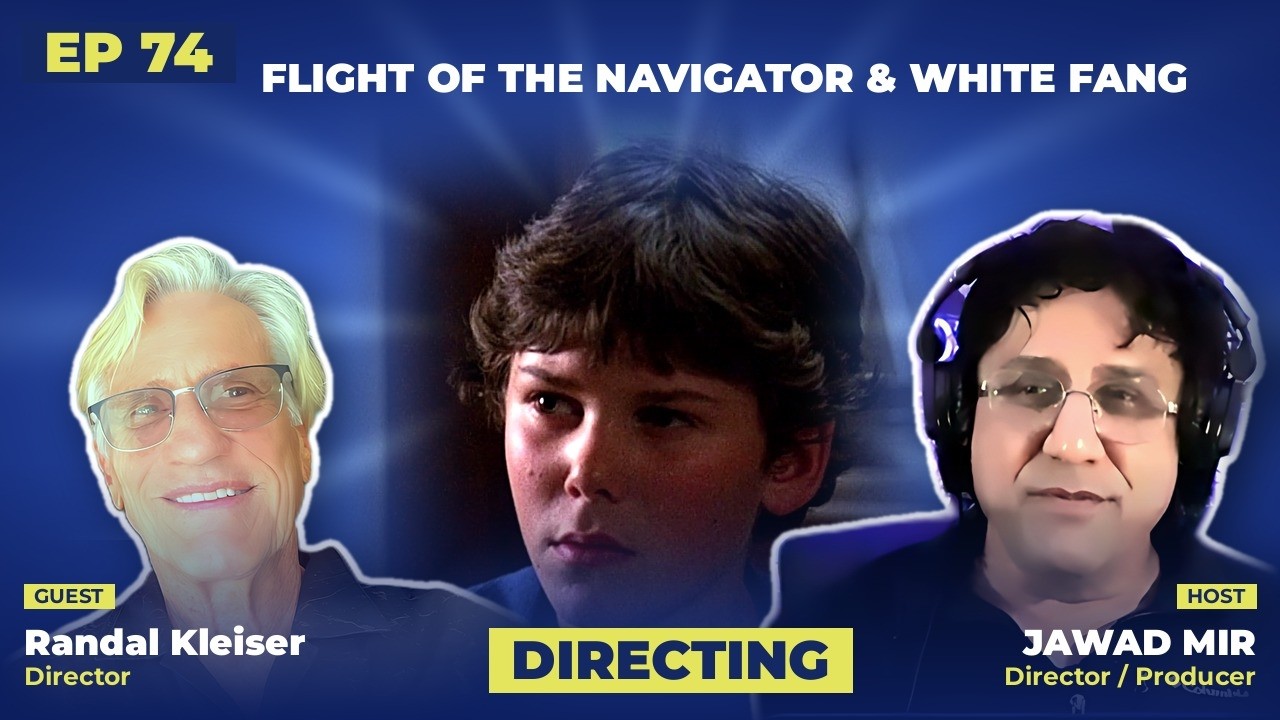
'Flight of the Navigator', Director, Randal Kleiser
Clips and Shorts from this episode
About this episode
The Untold Journey of Randal Kleiser's Directing dives into the world of cinema through an intimate conversation with renowned director Randal Kleiser, best known for iconic films like "Flight of the Navigator" and "White Fang."
Hosted by the Kingdom of Dreams podcast, this episode explores Kleiser's illustrious career, his inspirations, and his unique approach to storytelling. Discover how classic shows like Disney's Wonderful World of Color ignited his passion and how he transitioned from student films to Hollywood hits alongside peers like George Lucas and Steven Spielberg.
Join this insightful podcast series, which unveils the art of cinema and storytelling by interviewing directors, screenwriters, animators, and producers. Listen to these compelling narratives on Apple and Spotify to enrich your understanding of the filmmaking world.
#filmfestivalinsights #filmindustryinsights #filmfestivalstrategy #randalkleiserdirecting #disneyfilmmakingjourney
Full transcript
Automatically generated from the episode audio, so expect the odd misheard word or name. Speakers were labelled automatically. About 7,600 words. Tap a timestamp to play from that moment.
0:06Jawad MirAre you in LA, right?
0:08Randal KleiserI'm back in LA now, yes. I just arrived last night, and
0:12Jawad MirSo you missed out the rain and all of the Hurricane Hilary?
0:15Randal KleiserI did.
0:16Jawad MirDid it affect you?
0:17Randal KleiserCompletely missed it, so everything's fine. As in the path of the hurricane.
0:22Jawad MirThat's good.
0:23Randal KleiserAll right, so.
0:24Jawad MirThat's good.
0:25Randal KleiserYeah.
0:26Jawad MirSo, Randal, le… let's talk about, you know, your career. I saw Flight of the Navigator I would say probably the early '90s. There used to be this, I don't know how it was in US and Canada. There used to be this, on Sunday evenings there at 7:00 PM, there used to be a Wonderful World of Disney.
0:49Randal KleiserOh, yes. I re…
0:50Jawad MirThey would showcase. Right. They would showcase the movies from the '60s, '70s and '80s or even the '90s, and that's when I saw Flight of the Navigator. And I totally loved it because... And I saw that before ET, even though it came after ET, and it's, it's… I saw it again recently. Still very timeless. Totally loved it. And the messaging behind that and the visuals even, you know, at the time were fantastic. So just from that context wise, I'm just sort of letting you know that where I'm coming from in terms of your work and what you have done. So really wanted to thank you for that.
1:28Randal KleiserOh, well, thank you for the comment. I remember very vividly Walt Disney's Wonderful World of Color, 'cause that's where I learned about movie making. When I was a kid, that was the only way that you could learn about anything behind the scenes. The Disney… There was no internet. There was no, director's commentary on DVDs. There was nothing. So the only way a kid could learn about what was going on and how you make movies was from watching that show.
1:56Jawad MirYeah. And, you know, going, talking about that, let's talk about your career. You talked about, you know, learning about your films through watching Wonderful World of Disney, and I'm sure there are other sources. How did the interest start? What was the catalyst in getting in… you getting into films and your journey throughout?
2:15Randal KleiserWell, I was always interested in art, and my grandfather sent me to art school, and, that's where I learned this contour drawing thing, which I've just released in my book, Drawing Directors. But m… I really got interested in movie making from watching the Ten Commandments, where Cecil B. DeMille came out on stage in front of the curtain to talk about the movie he was about to show that he had made. And I, and I figured out, oh, there's a guy who makes movies. And, you know, otherwise I would not have known. I thought they just showed up. So, that's where I first learned that there was such thing as a director, Cecil B. DeMille.
2:50Jawad MirRight. And then you're, you know, after piquing that interest, getting discovered, obviously, like you said, at the time, you know, there was no school. It was just eight millimeters cameras. W… what kind of kept you going up until the first short film or feature film that you made, or even like a home video for, you know, for just to get your hands on stuff?
3:14Randal KleiserYeah. The Disney show was the thing that got me going, 'cause I saw how animated cartoons were made, and I tried to do one myself. When I saw that you had this clear plastic and you inked the drawing on one side and painted on the other, and I did that, by getting these, you know, things from the, stationery store that you put your reports in. I bought a whole bunch of those, and I followed all the directions that I saw on this one, and I made a laminated film that was very crude, but, it was very ambitious. And when my family drove from Philadelphia to Los Angeles in 1958, I took that film along with me in a little yellow box.
3:59Randal KleiserEight millimeter box to show to Walt Disney, and I couldn't get through the gate, so I gave up on cartoons and decided to make live action films.
4:09Jawad MirInteresting. And then what was... What got, what got you into the gate, for the lack of better word, to make the films that you have made? Like, what was that transition and path like?
4:20Randal KleiserWell, when I returned to, Philadelphia and started making eight millimeter films with my friends, very similar to, the Fabelmans. You know, the way Steven Spielberg did it. He got all his friends together and showed it and, made a movie and showed it to his friends. That's what I did. And, then I got into USC and, you know, came out to LA and, started studying filmmaking. So that's... And then when I started making a bunch of student films and helping all my friends make them. John Milius and John, and George Lucas and Caleb Deschanel were all in my class. We were helping each other with our films. And then I made my master's thesis film, which was called Peach, which is about my grandmother in a nursing home, and that movie is the one that's seen by people in the industry. And, I was immediately asked to start directing TV shows from that film. So my master's thesis got me launched.
5:20Jawad MirWhat was the film about, your grand… more than what you just said, grandmother in the nursing home. What was the premise?
5:26Randal KleiserIt was based on a, on a, visit that my family and I had on a Christmas Day to the nursing home to see my grandmother, who was in bad shape. She was sort of blind and senile and all that, and we were trying to give her presents and try and make small talk and everything. And then, when it was time to leave, I stayed behind a little bit and tried to dig deeper and try to trigger her memories about the past. And then I left, and I made a movie about that. And at the very end of the movie, Bruce Davison played my part… At the end of the movie, there's a big close-up of her and she smiles, so you get the sense that she, that all went through and she experienced it. And that film was picked up by all kinds of nursing homes and age… aging centers to show sensitivity training for nurses. So, it was a 16 millimeter film and this company, Phoenix Films, distributed it and, in 10 years it made a million dollars.
6:29Jawad MirOh, wow.
6:30Randal KleiserA student film. Yes.
6:31Jawad MirOh, wow. Oh, wow. I mean, at the time that was huge. Even now, but at the time…
6:36Randal KleiserYes. I mean, the idea that a student film would make money, I mean, it's crazy.
6:40Jawad MirIs that available to see anywhere?
6:42Randal KleiserIt's on, it's on Amazon. Peege. W… P-E-E-G-E.
6:48Jawad MirSorry, P...
6:50Randal KleiserP-E-E-G-E. On Amazon. And, yeah, I was able to get, because of the script, I was able to get names to put, be in it. Barbara Rush, who starred opposite Paul Newman, and Marlon Brando was playing the mother, and Jeanette Nolan, who played opposite Orson Welles in Macbeth, played the grandmother in Bruce Davis.
7:13Jawad MirWow.
7:13Randal KleiserYeah. I was really lucky 'cause I had a casting director friend who called and sh… sent the script around, and they all loved it. So it all came together in a nice way.
7:24Jawad MirWow. That's, that's incredible. Yeah. I'm definitely gonna check this out because it is something that I have a very strong viewpoint about nursing homes and stuff, so I'm completely fascinated with this already and I would love to watch it…
7:37Randal KleiserGreat
7:37Jawad Mir... And check it out. And, you know, you mentioned that you went to sc… you were with, in school with Lucas, and '70s was one of that era that, you know, literally was the beginning of a change in filmmaking world. Not to disrespect anything from the '60s, you know, Stanley Kubrick and everybody else, David Lean, that has done some amazing stuff. But '70s was like a new generation, and Coppola, Spielberg, De Palma, Lucas, yourself. I mean, there are so many people, like Robert Redford, and it just started this trend with American Graffiti, Jaws, Grease, you know, Aliens with Ridley Scott, and then James Cameron in the '80s. How, you know, being part of that era and seeing things progressing compared to where you are right now, what differences do you see, if any, or similarities in... If there, if the new era is starting right now, it already has started 10 years ago.
8:41Randal KleiserWell, now there's so many outlets. The streamers make it so, they need so much content that I think that we are going through another big transition. That transition you're referring to started with Easy Rider in the, you know, late '60s or early '70s. And that's when…
8:57Jawad MirOkay
8:58Randal Kleiser... That's when the, studios realized that there was an audience out there of young people. 'Cause up until then it was more like general audiences, families and stuff like that.
9:07Jawad MirYeah.
9:07Randal KleiserAnd Darstead and Rock Hudson and, you know, big epic things. But then they realized, oh, there's, there's young people out there who watch movies, and I think that triggered a whole change in the way movies were made. And now, the digital revolution changed it too in the, in the 2000s. Suddenly it was cheaper and easier to make films, and now it's even cheaper with, you can do iPhone movies. And there's
9:35Jawad MirYeah
9:35Randal Kleiser... So many s… film, guys who wanna be film directors now. I mean, when we went to school there was just a handful of us. And, now every film school has many guys trying to be directors. But also there's many more outlets, so it's, it's, it's been an explosion. Yes.
9:54Jawad MirDo you, do you feel... I mean, look, the school, like I went to school for, I did my thing in IT and I went back to school for film. Just I was supposed to do a certificate and I only took like four or five courses and that was, that was it, because it was just turning out to be ridiculously expensive buying film and all that. And do you... Sometimes I feel, and you tell me what you think, is it too much focus now in the school, side of things that you are probably not gonna experiment as you probably did in your generation growing up where, you know, not that s… I'm just not discounting school. I'm just saying the idea of being restricted by certain rules where you can't break them, does that take away from the art and media? Do you see that now in your experience from as an outsider?
10:45Randal KleiserI, you know, I haven't been down to school, to the schools lately. I mean, I do speak at schools, but I don't know what's going on there. I just tell them about…
10:53Jawad MirRight
10:54Randal Kleiser... My experiences. But I think that, the rule breakers are the ones who become successful. George Lucas broke every rule. John Milius, same thing. I was more traditional, but I think if you have a strong idea and you, and you're brave enough to try it, that's what breaks out the pack. And all these kids who are now experimenting with new technology and AI and virtual reality and all that, they will come up with a new way of telling stories that we don't know about. And that's…
11:29Randal Kleiser... That's gonna be in the next revolution.
11:33Jawad MirYeah. For sure. I'll come back to Flight of the Navigator and a bunch of other stuff that I wanna talk to you about, but jumping directly into your book.
11:42Randal KleiserYes.
11:42Jawad MirYou know, tell me about your book. What's the title? Leave it for our audience. And what inspired you to do a book like this?
11:53Randal KleiserWell, as I mentioned, I always used to sketch and, when... A lot of times my parents would take me to church and I'd, and I'd be a little bored, so I'd start sketching the cho… the choir, but I couldn't really, Go up and down, looking up and down like that. So I used a technique I learned in art school called blind contour drawing, where you put your eye and your pen together, and you move them together.
12:15Randal KleiserSo you're drawing something without looking down. And so I started doing a lot of that, and then I, when I would go to Q&A's or go to parties and stuff, I would be, I would often be looking at people I admired, like directors, other directors that I admired. And I was lucky enough to be, around a lot of them, going to school and working as an extra in movies. So I had access to these people in real life. So I started drawing them. And I ended up having, like 200 of them. And so I decided to make a book out of it. And, it's, it's got like, on one page it has, like, the drawing, and on the other side it has, like,.. Like, here's one. Buster Keaton.
13:00Jawad MirYeah.
13:00Randal KleiserThis one, I was on the set of Beach Blanket Bingo, 'cause I would, when I was a student I would dri… I'd get a, get a bus route and find out where movies were shooting. And I'd go there, and I'd observe how they made movies. And I snuck onto the set of, like, Beach Blanket Bingo to watch, and there was Buster Keaton sit… sitting in a corner, and nobody seemed to know who he was. And I went, "My God." We had just watched his silent films in school. So I went over and I said, "Mr. Keaton." And he was real friendly. He was, he was happy somebody knew who he was. And he was one of the biggest directors in history. I mean, the movie The General, Orson Welles says it's the best movie ever made. It's a gigantic Civil War movie, I believe. And, there's a scene in it where a big train goes off of a s… shut, a trestle and explodes and falls down.
13:52Randal KleiserThousands of extras. I mean, he was like the David Lean of the silent era, and here he was sitting, doing a little cameo in Beach Blanket Bingo. So there's things like that. And I worked as an extra on different movies with, Mike Nichols and George Roy Hill. And then through USC I met Robert Wise and George Culver. So I was around all these pe… I just started drawing them and writing about them. So that's the book.
14:17Jawad MirAnd you know, I went through your book, and there are just so many, you know, reputable names that you have sort of, you talk about in the, in the book. Cameron Crowe, Spielberg, Coppola, Cameron, James Cameron, Jo… George Clooney, Ge… John Carpenter. I mean, I can go on. Kenneth Branagh, Danny Boyle. Too. And all of them, h… you have these stories with all of them. I mean, yeah, they're page long, and, but still to be able to remember so much. W… were you keeping, like, some sort of a journal, diary over the years, or is it just…
14:49Randal KleiserOh, no, I just, I... You know, when you really respect somebody and you watch their movies and you analyze them and figure out what did they do that I'd like to copy, or what advice…
15:00Jawad MirYeah
15:00Randal Kleiser... What advice would they give people. 'Cause I have a lot of advice in the book from those people.
15:06Jawad MirGreat
15:06Randal Kleiser... It's always good to recycle advice, because you have to be reminded of it every time you start a new project. And you wanna, you know, get the best advice from the top guys. And so I, it stuck in my mind. I didn't keep any notes.
15:20Jawad MirOkay. What were the, what were the top three advices that you received that went into the book?
15:27Randal KleiserWell, I think more importantly than, the book is my advice that I got from my mentor and teacher, Nina Foch, who was an actress… ... In the Ten Commandments, Spartacus, An American in Paris. And I studied with her at USC with George Lucas. And, she worked with Kubrick and Robert Wise and Vincente Minnelli, all these directors.
15:54Randal KleiserAnd she took everything she learned from them…
15:56Jawad MirRight
15:56Randal Kleiser... And combined it with studying Lee Strasberg and Stella Adler and, into her own way of teaching. And it was just amazing. And, it took me about 10 years to convince her to let us film her class, and we did. And it's called The Nina Foch Course for Filmmakers and Actors. And that's also on Amazon. And it was a labor of love. And everything I ever learned about directing, every piece of advice that I got, it came from her. And, so I'd say that's, that's maybe more important to anybody who's interested in learning about directing and acting.
16:34Jawad MirWhat is it called? The, that's on Amazon, the title.
16:37Randal KleiserThe Nina Foch Course for Filmmakers and Actors. And she taught for 40 years at USC and at AFI, and many directors, studied with her. And, we even have a website, Nina Foch, ninafochproject.com where all the directors and actors who worked with her talk about what they learned, including, you know, she also worked with singers. Julie Andrews and Barry Manilow and all these people. 'Cause she talked about how you have to act the song. You don't just sing it. You have to break the lyrics down, just like you do for an actor when you're making a movie. And I used to hire her to break down my scripts when I would work, and she would figure out the action for every line, what the actor is thinking. And if you spend the time to do that on your script, break down the action beside each line, when you're on the set and an actor comes up and says, "I don't get this," you can give them the action.
17:39Randal KleiserTo seduce…
17:40Jawad MirRight
17:40Randal Kleiser... Or to start a party. And you just look at your script, and they say, "Why don't you do it like as if you're trying to start this party," you know? And it works really well.
17:51Jawad MirYeah. Was there a specific advice in that you sought from her that's in that course or just in general that you remember that you executed in one of your films…
18:04Randal KleiserYeah
18:04Jawad Mir... And the story behind it?
18:06Randal KleiserYeah. Well, I mean, she always talked about how on the first day of shooting… The leading actor will challenge you about something really stupid…... To test you, and I found that happens on every movie. And, "You have to win that fight," she said. And I remember on White Fang, I was shoot… like, the first day of shooting, Seymour Cassel came up to me a… and wearing a cowboy hat. I said, "Hey, Seymour, this is, the Yukon in the winter. You c… you can't be wearing a cowboy hat. You have to wear one that goes on your head." "No, I think this character would like this." "Seymour, no. You cannot wear that hat. You have to wear the other one because your ears would burn off if you went forth like that." And he kind of, and he kept fighting me and I, and I won, and then he was fine the rest of the shoot. But I recognized that Nina was right. That was the m… and it happens on every movie.
19:01Jawad MirYeah. Which I, by the way, speaking of White Fang, that's another one of my favorite films that came out in the '90s.
19:06Randal KleiserOh.
19:06Jawad MirAnd I actually just saw it maybe last year, I think, during COVID with my kids. And they loved it too. It's such a timeless film.
19:15Randal KleiserYeah
19:15Jawad Mir... And I think around that time there was another film that came out, Journey of Natty Gann, I don't know if you remember, by Disney.
19:20Randal KleiserSame wolf.
19:22Jawad MirYeah, same wolf. I was just gonna say that, it was the same wolf.
19:25Randal KleiserAnd that was directed by Jeremy Kagan, who is a good friend of mine.
19:30Jawad MirYeah.
19:30Randal KleiserTeaches at USC, teaches directing. And he helped me a lot with, figuring out how to work with animals, because you have to work with the trainer, you know, you have to get a relationship with the trainer. It's very important, 'cause if you don't, the a… the leading actor, the wolf, is an actor and you have to…
19:51Jawad MirYeah
19:52Randal Kleiser... You know, keep, make sure he's happy.
19:56Jawad MirSo, you know, you mentioned working with the trainer. What was there any difference in dealing with an actor that you have worked in the previous films and White Fang, compared to working with a trainer who's obviously working with a dog, and then you have the crew waiting, and, you know, it's a totally different thing. It's not like a human being, right? Like, it's a, it's everybody's... W… talk about that. Like, what was, w… how different was that?
20:22Randal KleiserWell, you have to, tell exactly what you need. Like, I mean, I worked with also, Doug Seuss, who was, who brought his bear, Bart the Bear. He was also in that movie. And working with him, we had to, make sure that the, that the bear did not hurt the actor. There was one scene where Ethan is running away from the bear, and the bear's running after him, and I was terrified that the bear might catch up to him, but we had people all around in case that happened. But, and there's a scene where the bear is roaring at Ethan, who's hiding behind a…
21:01Jawad MirRight
21:02Randal Kleiser... And the roar was actually the bear had his mouth open and we were throwing popcorn in his mouth. And we added this roar afterwards, but it looks horrorful, horrible, but it was, he was just eating popcorn. So there's little tricks that you have to... And, you know…
21:19Jawad MirYeah
21:20Randal Kleiser... They ha… they have, like, spots. They train them to hit a mark, and they go from this mark to this mark with a, with a clicker. And so when they go from one mark to the other, they get a treat. And so you, I t… I would have to bring out, break out where I wanted them to move, and then they would work with them a bit, and then we would film. 'Cause I wanted to use dolly shots with the animals the way Jean-Jacques Annaud did in The Bear. I thought it was so…
21:44Randal Kleiser... Fascinating to see the camera move with the, with the animals as if they were actors, and I love that, and we did it in White Fang, and it has a, kind of a wonderful storytelling feel because y… you feel like the filmmaker's in control of the story because the animals are hitting their marks.
22:05Jawad MirI bet. And you know, I think it was your first film filming in a winter condition, correct? White Fang?
22:13Randal KleiserYeah. It was 40 degrees below zero, and, really cold. I got hepatitis from some fish that, bad fish, and we had to close down for a couple days. It was, it was brutal conditions. And being, in the woods at night, with 40 degrees below zero, surrounded by wolves, not fun.
22:37Jawad MirWell, the fim… film came out to be great.
22:40Randal KleiserYeah.
22:40Jawad MirAfter…
22:41Randal KleiserI'm happy with the way it came out, but it was a struggle to make it. Made it. In one scene, Seymour Cassel is running from the wolves, and the wolves were supposed to go from one cage to the other with the clickers. And we had to time it so Seymour would run, and then the wolves would be released, and then they would run to the other thing. And what happened was we were filming it from a distance, so this was a wide shot. He's running, and he tripped, and everybody went crazy because the wolves, when they see somebody down, that means that they're a prey. So…
23:13Jawad MirYeah
23:13Randal Kleiser... We had, all the trainers came running in to get to the wolves before they got to Seymour. So it was, it was a dangerous shoot too.
23:21Jawad MirYeah. And one of, one of the things I really loved about the film, aside from the visuals, I mean, it was the sort of the beginning of Ethan Hawke's career. And, at least from what I remember reading at the credits on IMDb, I don't remember seeing it on the film one way or other, the music was composed by, Basil Po… I always have a hard time to pronounce his name.
23:42Randal KleiserIt's Basil. Basil Poledouris.
23:45Jawad MirYeah, Bas…
23:45Randal KleiserYeah.
23:45Jawad MirAnd then it also said Hans Zimmer. And Hans Zimmer wasn't that big at the time in 1990, early 1990. How, was he part of that composing or like, could just…
23:55Randal KleiserWell, the story behind that is that Basil and I went to film school together, and he had done my score for, The Blue Lagoon, and he had done John Milius' score for Big Wednesday and Conan. So he was wonderful. He was a wonderful, composer. But Disney had, Hans Zimmer was their favorite composer. So I came in, I said, "I want Basil." And they said, "Well, we're not sure about him." And I said, "Well, I really want him." So they let me get him But then they decided just as a backup they would hire Hans Zimmer to do a backup score, and they, and they spent, a lot of money because they had to fly him to London during Christmas week, to write a score in one week. And, he came back and I said to Jeffrey Katzenberg, who was the head of the studio at the time.
24:44Randal KleiserI said, "Jeffrey, to be fair, I want you to sit with me and watch every cue with both scores, and let's pick it out together." And so we did. He agreed, and we used mostly Basil's score, and then I think there are two of Hans', but mostly it was Basil. And so it was very fair. And, so the movie has two clips, two scores. And a lot of times when I, when I go to film schools, I often will show a sequence, dry and then with, Hans' score and Basil's score so the people can see how different, composers approach a sequence. It's very interesting.
25:24Jawad MirYou know, that's... It's funny you mention that because I've always wondered the same thing about a script. What would happen if Spielberg took a script versus Scorsese and, or anybody, like even a student. Like, what kind of films would come out? Because you're literally, you know, as a storyteller, whether you're a composer or a writer or a director, you're literally telling the same story but from the point of view of your own life experiences, and there'll be some little intricate details that will go in there that will not... And I find that fascinating too, that how things are interpreted by people differently. I think it's pretty cool. It... There should be some sort of a study done on that regularly of, you know, just a film or music, how it pans out with different people.
26:09Randal KleiserWell, watching it, I mean, there was no, there's no right or wrong. It was just different approaches.
26:14Jawad MirYeah. That's what I mean. Is it…
26:16Randal KleiserAnd how... Yeah, and how I wanted to give the movie a flavor. I mean, Hans was doing sort of mood stuff, and Basil was doing theme stuff. So the re… mem… You got this theme in your head that's the Wolf's theme or this is Ethan's theme. And I kinda like that because it just s… psychologically impacts you more than…
26:38Jawad MirYeah
26:39Randal Kleiser... Just s… it's adventure or scariness or, you know, stuff like that. But he only had... Hans only had, like, a week to do the whole score, so I think he probably would've done it a little differently had, if he had more time.
26:51Jawad MirFor sure. No, for sure. Both Basil and Hans, I mean, they're remarkable. I mean, Basil has done Robocop, Conan the Bar… Barbarian…
26:59Randal KleiserYeah
26:59Jawad Mir... Free Willy. I mean, I mean those are, like, some of the big names in the '80s and the '90s. And like I said, White Fang music was fascinating, but I was just kinda curious about the whole Hans Zimmer
27:10Randal KleiserYeah
27:10Jawad Mir... A… and him
27:12Randal KleiserStory. Yeah.
27:14Jawad MirWhat's your plan with the book right now? Is it out? Or are you doing book tours? Just run that by me.
27:22Randal KleiserIt's, it's, yeah, it's on Amazon and Barnes & Noble, and I'm... On this Sunday, I'm going to be doing a signing at the Academy Museum with Carl Weathers, who's one of the, subjects of the book. He's agreed to come, and I'm gonna show the drawing I did of him and talk about our relationship. Because we met when I was directing Starsky and Hutch way back before Rocky. And
27:46Randal Kleiser... So he, I was one of the first directors he worked with. And then we worked together over the years. I, we worked from USC's Institute for Creative Technology, which, was sort of a think tank for future kind of, technology. And then he was in my virtual reality series called Defrost, which you have to wear goggles to watch.
28:09Randal KleiserSo we've been working together for many years and he started directing Mandalorian, and I got to go down on the set of that and see how he worked with these big giant TV screens. That was spectacular. So C… Carl's been a good friend, and he's, he's showing up to help me with my book signing.
28:31Jawad MirAnd have you sent out the books to all the directors that you have featured in the book?
28:35Randal KleiserNo, I'm a little nervous because, that none of them knew I drew them, and they might not like the drawing. I'm, I thought about that, but I thought, "Well, what if they hate it? What if they, you know, or they're offended?" I don't... I mean, I haven't heard from any of them yet, but, I'm sure I will. And when I run into them, they'll either say, "Oh, thanks," or, "How dare you?" I just don't know.
29:02Jawad MirI mean, i… if you were, if you were just doing sketches and nothing else, yeah, you're probably right. But, I mean, there's a story to it too, right? I mean, that, I think to me…
29:10Randal KleiserWell, I mean, the story... Yeah, the stories are all, how much I admire them. It's not... I don't say anything…
29:14Jawad MirYeah
29:15Randal Kleiser... You know.
29:16Jawad MirYeah. I mean, it's, it's, it's funny because when I saw the book, like, I was going through it, and the first thing I wanted to see because I'm a huge Spielberg fan, like what was a Spielberg story? And then I saw a sketch, and that maybe stayed with me for, like, two second, and I wanted to read the story, and I complete… Like, that just immersed me in more. The sketch was great, but the s… the story was more something that people will be in tune to. And obviously that's why, you know, it's just a personal experience of yours with all these incredible individuals.
29:49Randal KleiserOr things that I admire about their movies too. I mean, it's kind of like I…
29:53Jawad MirThat too
29:53Randal Kleiser... I pick out things that I remember from their movies. Like John Carpenter, I talk about the deer coming to life in, one of those movies, the sci-fi movie they did. The guy's stomach eat, chopping o… off a guy's hands. I mean, these things are emblazoned in my memory. Sometimes I talk about that, things that when I think of them I think of... Like Cameron Crowe, You Had Me at Hello.
30:20Jawad MirYeah.
30:20Randal KleiserGod knows, To, what is the thing, famous line about nap… "I love the smell of napalm in the morning." I mean, all these things that trigger when you think of a certain director.
30:34Jawad MirYeah. You're right about that. You're absolutely right about that. And then I, and I, you know, I was going, again, I was going through, like the year that Flight of the Navigator was made, and it was in the mid…'80s, I think, right? '86?
30:50Randal Kleiser'80... Six, yeah.
30:52Jawad MirYeah. And this is just me being maybe overthinking about it too much. One of the things that happened in the '80s, I mean, you know, you talked about that how there was a young audience after Easy Rider, like after 1969, and in '80s what it, what came out was Amblin, right? With Spielberg's, you know, all these movies…
31:13Randal KleiserRight
31:13Jawad Mir... Like Goon… Goonies, Gremlins…
31:15Randal KleiserYes
31:15Jawad Mir... Harry and the Hendersons. And it occurred to me when I was re-watching Flight of the Navigator, it's, Disney wasn't that big in the '80s as it used to be in the, you know, up until like late '60s and maybe middle of '70s, and they kinda got a rebirth in the '90s. And it just kinda occurred to me, was Flight of the Navigator ever possibly planned out to go to Amblin, or was it like... You know what I mean? Like it just kind of, for me…
31:42Randal KleiserNo
31:42Jawad Mir... It's like an Amblin film.
31:44Randal KleiserI get it. No, it was really, two different studios were making that. Mark Damon's pr… pros… producer sales organization, which was an international distribution company, for worldwide distribution, and Disney. And Disney was gonna have it for America, and producer sales for around the world. So Mark wanted to make it an action movie. He didn't, he didn't care…
32:08Randal Kleiser... About family stuff, and Disney wanted to make it a family movie. So I was caught in the middle and in the script meetings say, "We want, we want the..." He'd say, "I want the, government to be shooting down the flying saucer." They'd say, "No, we want the family to be..." And I was sitting there going, "Ah." But luckily, the way that they pulled in two different directions worked out, 'cause the first part of the movie is kinda dark, and then it becomes a Disney movie later on. So it's unusual 'cause I don't think if we started out with one company it would've been like that.
32:38Jawad MirYeah. And it worked out because it, like you, like you said, I think sometimes the pull from two opposite directions, not all the time, sometimes can bring in the best and because you're just trying to, you know, balance, the seesaw…
32:52Randal KleiserRight
32:52Jawad Mir... For the lack of a better word. And, you know, it, w… one film that I truly enjoyed by you, was the sequel to Honey, I Shrunk the Kids. You know, Honey, I Blew Up the Kids. And what was, what was that... I mean, I'll, I'll get to other films, but I mean, you've just done some incredible stuff, the w… the stuff that I and a lot of people grew up with. Taking a film from Joe Johnston, also a Disney film, and turning it into a, you know, literally the opposite of what the original one was. It was a big task, and at the time the special effects, I still remember watching it in theater. I did not even for a second thought that it was, it looked fake or it looked too CGI or whatever the term is.
33:41Randal KleiserYeah.
33:41Jawad MirHow was your experience working on that wonderful film?
33:44Randal KleiserWell, I'll tell you, I did not wanna do a sequel to another movie, and Jeff Katzenberg had another director on that movie and he was clearly gonna go way over budget 'cause of the way he was talking. And so he said, "Come in and save this project for me. I need you to do this." I said, "I don't wanna do a sequel." He said, "Come and look at this." So he took me into this screening room and showed me a test clip of this giant baby walking through Vegas with thousands of people running away, and I, "Oh, okay." I loved it. I thought it looked so cool, like taking the Godzilla thing and having a child. So…
34:16Jawad MirYeah
34:16Randal Kleiser... That's what got me hooked. And I said, "Okay, I'll do it if you let me direct, an adult movie afterwards." And he said, "Okay." Unfortunately, he left before, he left and went…
34:29Jawad MirThat's right
34:30Randal Kleiser... Never got to do that movie, but I did do Honey. And the thing that I, that I loved doing, about doing that movie was, the a… ability to try out, forced perspective shoots. This, film. We did it on the same soundstage as Darby O'Gill and the Little People, which was one of my favorite movies for visual effects because it was all done in the camera. Well, where they build two se… two sizes of set. The camera lines up so it looks like the people are small or people are big. And we did that.
35:02Randal KleiserBuilt several sets that had that idea, and it worked great. The s… the shots are flawless and looked so real. You know, that idea w… that the baby's giant. And, I had so much fun doing that, you know, just experimenting with, visual effects. And we did a lot of blue screen. I had not done much of that, so i… it was a, like a learning experience.
35:27Jawad MirYeah, it was a, it was a fun movie, and you know, it me… funny you mention that, about Katzenberg, leaving. Obviously we know he went to DreamWorks, start DreamWorks. Did you get any time, any approach from anybody at DreamWorks, whether it was Katzenberg or Spielberg, to direct something at DreamWorks?
35:46Randal KleiserNo, I didn't. I kind of went off on my own to do, so… small movies like Getting It Right, which was a movie I absolutely loved the book. And, I arranged to get the rights, and I arranged to put up the mo… to get the money, and went to England and shot that with John Gielgud and Helen Bonham Carter and Glenn Redgrave. It was, it was one of my favorite experiences. It's about a 31-year-old, straight hairdresser who is very shy and how he, how he loses his virginity. It was a small little fun movie, but that's the type of thing I'd like to do.
36:25Jawad MirIt seems to me, I mean, going by your profile too, like your career sort of went in the more independent way if that's not something I'm mistaken about, right?
36:36Randal KleiserYeah. I mean, I, after being in the studio system where they tell you how to do the movie, I wanted to do more things that I had control of. And, I couldn't really get a lot of those movies off the ground because it's so hard, you know?
36:52Jawad MirOh, yeah.
36:53Randal KleiserYeah. So I turned down a lot of, a lot of studio films that I just didn't wanna go through that process again. And, luckily I was able to survive.
37:05Jawad MirDo you have something in the works that you wanna direct, of your own, or would you like to direct another studio film?
37:10Randal KleiserI have.
37:10Jawad MirOr is that…
37:11Randal KleiserNo, I have a project, an independent project to shoot in Europe, at the beginning of the year, and I'm looking forward to that. I'm very excited about it, and it's something that I can't really talk about now, but, it's, it's gonna be really special. I'm really looking forward to it. And I also have the documentary coming out called Baby Boomer Yearbook, and, you can see a preview at babyboomeryearbook.com. It's, it's about my high school class. It's kinda like following along Michael Apted's Seven Up. Have you heard of that?
37:49Jawad MirYeah.
37:50Randal KleiserYeah. He did a series where every s… seven years he would film the same group, and I did that with my high school class. And so it's sort of an American version of that, and we are now looking for the right place to launch it.
38:03Jawad MirFantastic. I'm just, I'm just on the website right now, just, going through it. And speaking of documentary, have you th… I mean, I don't know how that would be. Is there a possible complimentary addition to the book that you've just written that can turn into some form of documentary down the road?
38:25Randal KleiserWell, I hadn't thought of that, but I do have volume two which I'm working on. It's another 100 directors that, so there will definitely be a volume two of Drawing Directors. And, that's an interesting thou… I hadn't thought of it, but I will now start thinking about it.
38:43Jawad MirYeah, no, that would be, that would be wicked. I mean, it's just to have…
38:46Randal KleiserWhich…
38:47Jawad Mir... Those... Well, I mean, the way I look at it is, a… again, I'm not telling you what to do. You know better than I do.
38:54Randal KleiserNo, I think…
38:56Jawad MirJust be… 'cause I make documentaries myself, feature documentaries. I just think like having e… not even like as documentary per se, but more like one-on-one conversation with that director that you want to feature, and just maybe having, you know, like an episode on three directors or just... 'Cause I think people, we're in that era right now where podcasts have become so huge, and people love listening…
39:22Jawad Mir... To conversations.
39:24Randal KleiserYes.
39:24Jawad MirAnd people enjoy that. Just again, just food for thought.
39:28Randal KleiserI'll eat that food.
39:31Jawad MirFantastic. Just one last question. Anything else you wanna add, to the book that you wanna say to people or the audience?
39:39Randal KleiserIt's, it's, it's, for anyone who loves movies, it's a really good, book. It's very easy to read. It's very fast, and it's a great gift 'cause Christmas is coming. Ready Filmmakers. And, you know, it's, it's, I'd suggest that. But also Ready Actors from Filmmakers. The Nina Foch course with filmmakers and actors is a fantastic gift too. And these are not... I don't, I don't get a lot of money from this stuff. I really do believe in getting the word out to people who really care about this. That's what I wish.
40:13Jawad MirRight. No, I totally agree. I mean, the, going through the book, I, like I said, the stories are fascinating. But even if those stories are, whether they're film related, direction related or not, they're just so much stuff you learn from people's personalities and people's conversation, and you can interpret in your own way. And I, and I loved it. I absolutely loved reading those stories, and I think it's a perfect book for anybody who's in the entertainment industry, not anyone who's just a director or producer. Because you can relate to those stories even if you're a, you know, a light, lighting technician or a spot boy or whatever that is.
40:52Randal KleiserGreat. Well, thank you for the wonderful plug there, Tal. I appreciate it.
40:56Jawad MirNo, it's, I'm, I'm j… I'm being honest. I love reading film related stuff. Anything else is challenging, I'll be honest.
41:04Randal KleiserRight.
41:05Jawad MirYou know, but, it was, it was a very fun book to read. I truly enjoyed it, and it just brought back a lot of memories.
41:11Randal KleiserGreat. Great. Thank you so much.
41:14Jawad MirPerfect. It was lovely talking to you, Randall. I hope to speak to you again. Maybe we can do something
41:21Randal KleiserYeah
41:21Jawad Mir... Down the road again.
41:22Randal KleiserLast time we talked, Pee-Wee had just died, right?
41:25Jawad MirYeah.
41:25Randal KleiserIs that when we had caught up?
41:27Jawad MirYeah.
41:27Randal KleiserYeah. Yeah. That was sad. Wow. I'm going to his memorial this, Sunday I think, or next Sunday. I'm not sure. They're gonna have all his friends come and talk about him, so that's gonna be wild.
41:39Jawad MirYeah. That…
41:39Randal KleiserI know it's, that's funny. I think it's nice. He was the most…
41:43Jawad MirYou know, it's, it's, it's so bizarre. I was just talking to a friend the other day. I mean, it's part of life. You start seeing people that you've sort of grown up with…
41:55Randal KleiserYeah
41:55Jawad Mir... And, you know, naturally it's just, again, like it's the way life works. Everybody has to go, and you start wondering about your own…
42:04Randal KleiserOf course
42:04Jawad Mir... Ex… existence, right? Like, what's the purpose and what more to do?
42:08Randal KleiserWhere did they go? Where did they go?
42:11Jawad MirExactly.
42:12Randal KleiserAre they s… are they still on another plane?
42:14Jawad MirYeah. And where am I gonna go, right? All that stuff. So it's, it's, it's, it's sad, but he was a great entertainer, one of the greatest entertainers in my view after Charlie Chaplin.
42:25Randal KleiserAbsolutely.
42:27Jawad MirYeah. He'll be missed.
42:28Randal KleiserAll right.
42:28Jawad MirWell, thank you, Randall.
42:29Randal KleiserOkay.
42:29Jawad MirTalk to you soon.
42:30Randal KleiserOkay. Bye-bye.
42:31Jawad MirTake care. Bye-bye. I hope you enjoyed this episode. Thank you so much for watching and listening. Don't forget to subscribe, like, share, and comment, and do come back for another episode. Until then, have a great day.