
Episode 177 · November 14, 2024 · 53 min
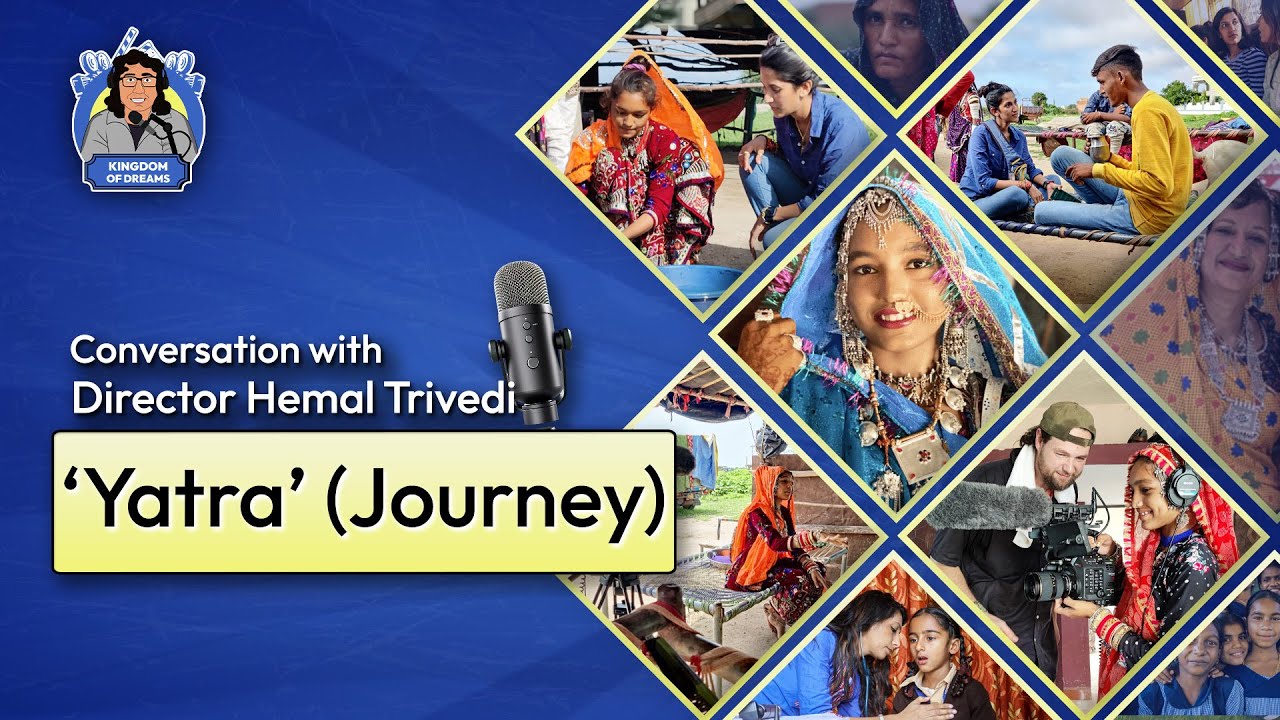
'Yatra', Director, Hemal Trivedi
Clips and Shorts from this episode
About this episode
"The Power of Storytelling: Himal Trivedi on 'Yatra'" features Hemal Trivedi, a talented filmmaker, as she delves into her poignant short documentary "Yatra" (Journey).
Hemal Trivedi has been editing and directing documentaries for 20 years. Her body of work has won one Oscar, three Emmys, one Peabody and seven Emmy nominations, a nomination for MTV Movie Awards, nominations for Independent Spirits Awards and Cinema Eye Award. Netflix, HBO, PBS (Frontline and Independent Lens), YouTube Red, Showtime, BBC, Topic and Channel 4 have
broadcasted her work. She is a member of Academy of Motion Picture Arts and Sciences and the Television Academy. She was recently selected as a participant in the “Television Academy’s Peer Circle Program", a small group of 12 Emmy winning filmmakers who meet monthly to grow their skills professionally. Ms. Trivedi’s key credits are: Philly DA, Battleground, Watergate, This is Everything: Gigi
Gorgeous, Among the Believers, Inshallah Democracy, Outlawed in Pakistan, Saving Face, and When the Drum is Beating.
#audienceengagement #visualstorytelling #filmmakingessentials #filmcourage #storytellingtipsforleaders
Full transcript
Automatically generated from the episode audio, so expect the odd misheard word or name. Speakers were labelled automatically. About 8,300 words. Tap a timestamp to play from that moment.
0:08Jawad MirHello, everyone. This is Jawad, your host at Kingdom of Dreams podcast. Welcome back to another episode. In today's conversation, I have a guest who's also a colleague. Her name is Himani Trivedi. Today, we're here to talk about her film Yatra, which means the journey. And I had the pleasure of seeing it, last month at a screening in Washington, DC. And it was such an incredible film. It's a short documentary. It is one of the most amazing films I've seen. It's very powerful. It's to the point, and it really generated a lot of emotions for the audiences, including myself. So without further ado, here is my conversation with Himani Trivedi for Yatra.
0:50Hemal TrivediSo I was born and raised in a very modest, in a very conservative Hindu Brahmin family. My grandfather was a priest of a temple. And, my mom, you know, she got married off at a very typical age of 18, at a very young age of 18. And somehow she did not... She and my father did not get along with each other. And my father left my mother at a very, like, when she was gi… by, soon after she gave birth to me in the, like, she was in the hospital when my father left, actually, the marriage. He walked out of the marriage. And my mom was 21 when she gave birth to me, and my father was, like, 22, 23. So they were both kids. And, you know, in that society, although I was born in Mumbai, you know, in Mumbai there can be some very conservative, ethnic enclaves, very conservative pockets, and I was in a very conservative Hindu pocket of Mumbai, in a s… suburb of Mumbai called Dahisar.
2:00Hemal TrivediIt's like the Bronx of Mumbai. And so after my father walked away, my mother was shunned by the society. She was, like, treated like this woman who had no man protect, no man to protect her. And she, you know, we kind of, she, like, nobody would rent her a house. We would, like, we would go from one living situation to another living situation to a third living situation. And so we used to live in these, there are these things called chawls. I don't know if you know that. Chawl is, like, a very Mumbai thing where, you know, a lot of houses, like, they're like, container-size house, like, houses with, like, shared toilets and stuff. So we, I re… I was born and raised in that environment. And I, it was very confusing to me, you know, because I, like, growing up, the world was such a messy place. Like, the ri… right was not right. The wrong was not wrong. The good was not good. The bad was not bad. I did not know what to, what to, like, interpret of this world.
3:02Hemal TrivediIt was just a very messy situation. And what I used to do is I used to escape, I used to find my escapes in storytelling. So I used to write stories, and some of those stories used to also get published. So I used to write short poems. I used to write short stories. And, I just was, I was really good at, like, poetry and, storytelling. And, but then, you know, I was also good academically. So my mom put me,.. So I, you know, I got, I got into science because I was good academically. So when I entered, like, when I was, af… right after high school, I joined a science college, and my mom put me in a micro… my mom put me in a college to study microbiology in the hopes that I would be, I would be in the medical profession, and, or the healthcare profession. And then I did not. I hated microbiology. So as an escape, I used to still, write stories and, write poems.
4:04Hemal TrivediAnd then after that, you know, because I hated microbiology so much, I did another practical thing is I went and I joined the business school of India. So I joined, one of India's top, it was one of India's top five business schools, and I was very lucky to get scholarship to enter. So I, a… because I was good academically, a… and I'm naturally competitive, so it, I could get through that, I could get through that door. And here I was, like, you know, in this most, one of the most elite colleges of Mumbai, and it was a complete upward mobility for me. You know? Like, I had... I was coming from nothing, but I was interacting with people who came from, like, tremendous amounts of wealth. So I saw, I saw what, you know, I mean, I s… I did not, I did not have wealth, but I saw what money can do to your life and what money brings to your life, and I really enjoyed it. And I was like, "Okay, let me just indulge in this a little."
5:07Hemal TrivediSo after I, finished my business school, I, b… joined mutual funds and very soon, like, you know, like, my first job out of campus, and I was given a decent apartment in a decent neighborhood in India, in Mumbai. You know, I, there was definit… there was, like, a two-bedroom apartment and, with, like, all facilities that you can think of. And I was just very quickly content materially. I became very quickly satisfied by what material wealth can do to you. And, it was a very nice life until I reached a point where, I wasn't quite, like, you know, I wasn't quite happy with what I was doing. Like, the kida, like, the disease of, dissatisfaction was stuck in my head and I was like, "Oh, this is so easy. I can do this.
6:08Hemal TrivediThis is so easy. Let me just like..." I just didn't feel challenged anymore. And, so I decide... A… and I was also in a relationship at that time and it wasn't quite working out and, you know, I had a bad breakup. And, all that kind of culminated into this place where I just said I need to do something else. And so just out of this whim of my heart, I said, I... Then I accidentally just watched, Harlem County USA. It's a documentary by Barbara Kopple, and I was like, "Oh, I can do this. This sounds like fun. I can do this. Let me do this." And so I just, like, Googled how to be a documentary filmmaker, and bunch of universities came up. One of them was University of Florida, Gainesville, which had a documentary program. So, and I got a scholarship, so I went to Florida to study journalism and documentary films.
7:15Hemal TrivediThat's how, that's how it all began, you know? It's a very strange, random journey. And then I haven't changed my career since, you know. I mean... But so at, by 25 I think I... By, at 25 I landed in Florida. This all this history happened by the time I was 25.
7:36Jawad MirWow.
7:36Hemal TrivediYeah.
7:36Jawad MirWell, thank you so much for sharing that. That... I mean, you and I know each other, but I never knew this story.
7:41Hemal TrivediYeah. No, it's very strange how, you know, the things that you did as a child to make sense of the world, like, I still do the same thing to make sense of the world, and the world still doesn't make sense to me. So.
7:58Jawad MirYeah. Yeah, no, one of the things I really like about what you said, and it's so true, and I, and I have these conversations with people and I'm sure you do too, is that, you know, yes, you know, having the money part is very important because that's what the make the world go around. But after a certain point, I think deep down in all of us, even if we don't say it out loud, we all wanna do things that challenge us because that's what makes life exciting and purposeful.
8:28Hemal TrivediYeah. Exactly.
8:31Jawad MirYeah. You know, your filmmaking started, if, correct me if I'm wrong, I think you, one of your earlier films that you worked on that got recognition was, Saving Face, right? Am I correct? The one that won the Oscar?
8:47Hemal TrivediYeah. Yeah. So I edited that film, yes.
8:50Jawad MirYeah. How did you land on that film? Because I remember watching that film before it won the Oscar somewhere, I don't know where it was, on a festival or in somewhere. How did you get onto that project?
9:06Hemal TrivediSo this is, again, another story. So right after, right out of journalism school, I was hired by this company called Odyssey Networks, and it was a company that ma… produced and, I was a, I was a direc… I was a producer editor, and, my job was to, tell stories that would build bridges of understanding in conflict zones in the world. Which is a very tall order for a 20-something-year-old, right? It's like, "Oh, let's make stories that will change the world." so for in, like, that period that I was there in Odyssey Networks, I did so many short films. It was, it was all short form storytelling, and it was the beginning of, you know, this web series, this short form. So they wanted to join the... They were, like, one of the first ones who used to make three-minute long films and two-minute long films, and I made a lot of... I made, I think in that period of time when I was at Odyssey Networks I made 51 short films.
10:11Hemal TrivediLike, you know, two-minute films, three-minute films, but short films. And, so I did a lot of stories. I did a story on North Sudan, South Sudan partition, then, Nigeria and the civil war in Nigeria, then earthquake in Haiti, then Arab Spring and, Coptic Christian population in Egypt, then, Mumbai terror attacks, the aftermath of Mumbai terror attacks. Then, I did something in Pakistan also. I think there was earthquake. I think there was earthquake. Yeah. So there was earthquake during the same period of time, so I did a story on that. Then lot of domestic stories about, you know, the Muslim boys, then politics of hunger, then gentrification. A lot of, lot of stories. And so it, I basically became really fast because I had to churn out so many stories at such a fast pace that I became a machine and I was like dun.
11:18Hemal TrivediThe storytelling was, like, so fast for me. I was churning out I think three stories a week, three short stories a week. And I had literally, like, reached a point where I had forgotten. All the countries started blurring. All the countries became one. Like, I forgot where was the civil war. I forgot which country had the genocide. I forgot where, who's getting discriminated. It, I became so desensitized to everything that was happening around me that I needed to take a break. So I took a break. It was a very good job, by the way, Jawad. It's like, you know, one of those jobs with benefits and… All the things that I still don't have in my life. So it was a very comfortable place. I should have, like, stayed there in hindsight. But I, of course, that fortified rice, you know, that disease or whatever of…
12:19Jawad MirThat disease, yep
12:20Hemal Trivedi... The disease was like, I was stung by it again, the... And so, I left it and I was... I sat, I was just sitting and then I was like, "What did I do? Like, did I make a mistake?" And I got this, you know, I just got offered this job to edit for HBO, this, the documentary Saving Face, and I did not know what to expect out of it, but they really needed an Urdu-speaking editor. And back then, at least there were not many like me. I think I was probably the only one who, like, was native Urdu-speaking, native Urdu-Hindi speaking, and had, was a skillful editor. So I got hired, and, I was hired as an assistant editor, but then I did well, so I got promoted to an editor. And I was like, you know, that was, I, that's how I got my lucky break.
13:24Hemal TrivediIt was just random coincidence again. The director said, "Would you be willing to travel to Denver to edit?" And I'm like, "Sure." And I didn't have kids back then. I had nothing. So I'm like, "Sure, I'll come to Denver if you pay for it." So I went.
13:38Jawad MirYeah. You know, it's, it's interesting you talked about, you said something, and before we go on Yatra, your current film, you said something about that disease, and I think I think everybody fe… goes through that. It's, for me, it's always about being complacent. The moment you start feeling complacent in whatever that you're doing, and even in film production or production in general, there are different angles, different facets of jobs, right?
14:06Hemal TrivediYeah.
14:07Jawad MirAnd I've, I've had that feeling from '96 to, no sorry, '97 to 2007, 2008 to 2016, '17, and every 10 years. And that third chapter of being complacent, I feel, is hap… in the sort of, in the midst of it right now because I think you need change. You wanna try different things, and you want to be challenged. So it's good that you have that disease because it's very necessary, I think.
14:38Hemal TrivediYeah. I mean, I, you know what, I don't even know. I lose my mind when I'm complacent. Like, if I'm not challenged my, if I'm not challenged, I feel like I'm dead. Like, I drive…
14:49Jawad MirYeah, no
14:49Hemal Trivedi... Everybody crazy. I pick fights for no reason because I'm like, "Ugh, this is…"
14:56Jawad MirI get it
14:56Hemal Trivedi... I need to be. Yeah.
14:58Jawad MirI get it.
14:58Hemal TrivediAnd you get it, right?
14:59Jawad MirI…
14:59Hemal TrivediIt's like that. I always... And, like, people are always saying, "Who told you to do this?" I was like, "I don't know. I just had to do it."
15:07Jawad MirYeah. I, you know, I don't know if you know this, between 2009 and 2017, I used to run this very successful South Asian wedding cinematography company.
15:20Hemal TrivediOh my God.
15:22Jawad MirWe shot weddings in maybe 15 countries, India, Norway, Nigeria…
15:28Hemal TrivediWow
15:28Jawad Mir... UK. Like, it was... And I, people used to ask me, "When are, how long are you gonna go this course?" I'm like, "As soon as I start feeling complacent." And there was that moment when I felt complacent and boom, and that was it. And then COVID happened and done. Pa… over with that world. But that was e… I mean, it was, it was really good business. It was really, like, doing high-end weddings and traveling around the world and doing really well, but it just, again, that disease, you know, it just came in.
15:58Hemal TrivediYeah, it's a disease.
15:59Jawad MirYeah. So I saw Yatra, which means the journey, your most recent film, a short documentary in Washington, DC while you were showing it, I think Voices for Women. Is that, is that the organization? Am I mistaken?
16:13Hemal TrivediNo, I think it's, Vital Voices.
16:16Jawad MirVital Voices. And, before I talk about it and ask you question, just tell me about how that took place and how you started that journey of making a film wh… which is translated into the word journey.
16:33Hemal TrivediAh. So now this is again a very, it's a s… it's, it's again one of the stories of chances, right? So I was coming out of my maternity leave, with my second child. So Palash is now five and a half. So this was when Palash was, like, about eight months old or nine months old, I think, or, and I was just coming out of my maternity leave. And, Matt Alesevich, my co-director on it, he was looking for an editor to edit a sizzle for the footage that he had shot with Indian American doctors who would go to India to, on medical missions. And, you know, my name comes up as an editor because I have been around for a very long time. And the first question I asked Matt is like, so the m… the moment Matt approached me with this job, I was like, "Ah."
17:36Hemal TrivediBut I was like, I knew it was a low stakes job. Like, I wasn't ready to take, like, a heavy duty network television jo… job because those jobs are very demanding. They expect you to work 15, 16 hours a day, and I wasn't ready for that. I wanted to enjoy the childhood of my child and, you know, wanted to be a mother for some time. And this job just seemed very easy to me, of editing a sizzle. And, I asked Matt, "Do you have money to pay me?" I mean, so he said he did. And I'm like, "Oh, then sure, I'd edit." I mean, I had no problems editing. So I edited it, and it was very easy to edit that. And, it… there's nothing new. Like, you know, healthcare in India is fucked up. Everybody knows that. Like, I'm an Indian. I'm a native Indian who grew up in a ghetto, so I know about poverty more intimately than anybody else does.
18:39Hemal TrivediI know the politics behind nonprofits. I know the nonprofit industrial complex. So I was like, "Oh, these, this is one of those white savior films," you know, this white savior and who's like, "Oh, all these poor people, I need to go and save them right now." And all these Indian American doctors, they're just gonna come, and they're just gonna set up this camps, and they're just gonna leave, and it's just gonna be as devastated as it was. Like, I mean, I already, like, I had nothing. There was no, there was no sense of exotic for me. It's not new. So but I edited it, and that sizzle was really... Like, Matt was really happy with it, and he was able to fundraise with it, and I was like, I was really surprised, you know? And I... And then he kept asking me questions about, "What should I do now? What should I do this? What should I do?" And I was like, "Matt, if you're asking me all these questions," I said, "First and foremost, let's be honest, there's no story here.
19:41Hemal TrivediYou have footage of a lot of Indian American doctors going back and helping poor people. But helping for what? Like, there's n… there's no, there's no depth in terms of you have a lot of characters, but you don't have any, you haven't gone deeper. So let's, like, let's just go back to the basics, right?" And, then Matt was, like, ready to go along on the ride. And, you know, and a… also, another thing, another thing happened, Jawad. At that point of time, you know, we had, I had two children. So I had my Palash, who is, like, five, who is five and a half now, and my s… and Satya, my older kid, who's 12 now. And so he was seven back then. Seven or eight, I think. Eight. So I had two young children, and at that time I was also, like, I had two old people staying with me. I had my mother and my mother-in-law, and I was caring for four people at that time.
20:43Hemal TrivediSo I was like, so Yatra was, like, my only creative vent because I, there was no way in hell I could have been able to, I would have been able to take any full-time job. It was impossible. Although I did, I, although I did, edit a series in between, but that came a little later. But
21:04Jawad MirWhat year was this?
21:06Hemal TrivediWhat?
21:07Jawad MirWhat year was this when you were, in this time period?
21:09Hemal TrivediSo this is 2020, 2021. This is before we met.
21:14Jawad MirOkay.
21:16Hemal TrivediBut I edited a series called Philly DA in between. It was 2022 I edited Philly DA. Or '20, I don't remember. But so that was, because, you know, Palash had, like, o… well, was, when he, when he reached one and a half year, I did that. So th… this was, Yatra was, like, my only creative vent. And, you know, Matt being Matt, he's just such a sweet guy. He just has this purest intentions, right? I just, like, he d… like, I didn't... Like, he's one of the very, like, he's one of those very few people who do not have this giant ego. And I think, I think Matt was the one who, like, really, pulled me in. His energy pulled me in. So I did, I did w… so I mean, it was, you know, like, some of my strengths, which is, like, my biggest strength is identifying a story, and I'm very instinctive.
22:20Hemal TrivediLike, I almost instinctively know this is gonna be the story, and this is how, this person is gonna pop in the, on the, on the camera. This person is gonna be a star. This, like, my instincts tell me that. So I was instinctively drawn to Annie. I was like, "Of all your doctors, she's the only one who's going through a transformative journey. Just follow her. Don't follow anybody else. Drop all other doctors. They're all boring." Sorry.
22:51Jawad MirNo, it's, it's good that you're mentioning this because I remember when you and I were working together, at the time you told me about this documentary where a group of doctors go to India, and then when I saw the film, I was like, "What happened to the group of doctors?"
23:05Hemal TrivediI know. They were all boring. So I was like, you know, they're all boring. So, like, so Annie's the most interesting person. She's go… she's authentic. She's raw. She is, she carries her heart on her sleeve. You know, she's emotionally available. She is the person who is, like, this perfect, you know, subject for a documentary. It sound, you know, it sound very strange here. I mean, it sounds very strange, but she did. She is. She is this person who's, who allows herself to be vulnerable in other, and doesn't, is not afraid of sharing her vulnerability. Like, a lot of people are so afraid of being vulnerable and being authentic that they put up a facade, and Annie doesn't. Annie has so much authenticity, and her own personal story, right, of losing a chi… losing her mother as a teenager and then wanting to cha… or having this wide-eyed utopian dream of, like, changing India's healthcare system.
24:10Hemal TrivediAnd then her own personal journey is so amazing that I was just drawn to her energy. And so then the first shoot of, Yatra, it was around COVID. So I think it was the second shoot. I mean, of this present story, actually. So when I went to India, it was peak COVID, and Matt couldn't get a visa to go to India. So, because it was, it was during that lockdown period. And when I went to India, I was just so,.. So I was like, I was like, "Matt, I'll go to India, but, then you, I'm gonna be a co-director. I just cannot be, like, this person who goes and gets all this story for you, and then you just like, you can't just, like, be then, 'Okay, thank you. Bye.' You can't just do that. I mean, I'm risking my life. I'm going to a foreign country."
25:09Jawad MirSure.
25:09Hemal Trivedi"I'm not, I'm, you know, I'm going during lockdown."
25:12Jawad MirYeah.
25:12Hemal Trivedi"And leaving my one and a half year old child behind, and, to tell a story that's your passion." So he's like, "Sure." So I went, right? And I saw Farida. And of all the people in the crowd, Farida popped like a star. She's just so, like, she, like, literally pops. And I was like, "This girl is amazing. She's like, she's sassy, she is witty, she's beautiful, and she's, like, so stylish, and she's, she's completely unhinged. Like, uninhibited. She has no, she's not camera shy. She has no, like, inhibition." And I was like, "This girl is amazing. She's a performer. She's a natural performer. Like, she's a natural star. She doesn't even know that about herself." And so I was so drawn to her that I was like, and at that time we didn't know the story, right?
26:13Hemal TrivediBut I was like, "I have these two beautiful people. I have Annie and I have Farida. And hopefully th… and I'm hoping that there will be a story at some point of time." And the story happened in front of us. And so I became a w… we became a witness to the story, and I'm so happy that, you know, I'm, and I think that's why I appreciate Matt as a partner is because he allowed the story to happen. Like, he did not interfere with the story. Like, he wasn't stuck with his vision and said, "No, but my film is about this." Like, he never did that. He submitted to the process, to the madness of documentary filmmaking. And I think that is the beauty of documentary filmmaking is, like, you know, in documentary filmmaking, you submit. You don't interfere. When the story's unfolding in front of you just step aside and watch and document, and let it reveal itself, and be surprised.
27:15Hemal TrivediAnd that's been the journey on Yatra.
27:20Jawad MirAbout the documentary part that you said, it's, you know, I was talking to somebody about this, couple of weeks ago, and, I was telling them, and I'm sure you can agree with this, is that, you know, when you're making a documentary, you know, it's, it's kind of like life, right? Like, you're born and you die.
27:37Hemal TrivediYeah.
27:37Jawad MirYou know those are two certainties. You just don't know when are you gonna die and what's gonna happen between there.
27:43Hemal TrivediYeah.
27:44Jawad MirIn documentary, i… in documentary you know the beginning, you kind of know where the, where it might wanna be, where you want it to go or where you not wanna go, but you have no clue what's gonna happen in between.
27:55Hemal TrivediYeah.
27:55Jawad MirAnd that notion of not knowing what's gonna happen in between, for me at least, it scares the crap out of me and excites the hell out of me, and that's what really makes it so wonderful.
28:09Hemal TrivediI completely, I cannot agree with you more. In fact, you don't even know, sometimes you st… it's just like life, sometimes you start with a narrative and you think that's your narrative, and the story's completely different. And you're not even paying attention to the narrative, because the narrative's being written somewhere else with someone else. And you kind…
28:33Hemal Trivedi... The only choice you have is to be really, truly be present. That's it. That's all you can do is just trust your instincts and be present and witness. And that's why I love documentary filmmaking so much. There's so much madness in it, but yeah.
28:50Jawad MirIt's crazy.
28:51Hemal TrivediIt's not sustainable.
28:51Jawad MirIt's crazy. It…
28:52Hemal TrivediBut it's madness
28:53Jawad Mir... It, yeah. It is so full of madness, because, I mean, as you know, I don't know if I ever told you this, but you probably actually know, with Citizen Namoria, when you were, you know, helping me out with it and everything, and as the producer and a, and the first two acts took two and a half years in real time to sort of unfold. The last act took one year, and there was, like, eight to 10 different ways the story was going in.
29:24Hemal TrivediOh my God.
29:25Jawad MirAnd I had, and you keep, you know, improvising and trying to figure out where it's gonna go. And then you have to make a decision, okay, this is where it is. But again, it's fun, but it's crazy at the same time.
29:36Hemal TrivediI know, right? And, like same thing with Yatra, you know? We thought that the film finished last year, when, Farida went back to school. And then…
29:48Jawad MirRight
29:48Hemal Trivedi... We're like, "Oh, Farida's getting married." And we are like, "Okay, now we have a new ending. Farida's getting married, so we have to put that in." So I actually had to fight. That was the only time Matt resisted, because Matt is like, "Hema, we are done. I'm tired. We've already screened the film at a festival. Can we let it go? Can we put a photo? Can we put a text card?" And I'm like, "No. We have to film Farida's wedding." And… I had to fight tooth and nail. Not tooth and nail, I'm just very gentle. But I had to fight to put Faidha's wedding in the film. Or allow... I had to fight to be allowed to go and film Faidha's wedding. And I…
30:36Jawad MirI…
30:36Hemal Trivedi... Filmed it, and when I came back, I'm like, "Look, I told you. This wedding is the most important scene in the film." Because this is the one that bridges the gap between utopian idealism and reality.
30:52Jawad MirAnd I couldn't agree with you more, because, I mean, you told me this after the screening that, this little story, and yes, without the wedding, it probably would've been okay, a decent film, and that's it. That, like, that's how I was feeling when I was watching it. Obviously, I didn't know when I was watching it that the ending, the last part, was something that you guys had to sort of, you know, have a discussion about. But I also understand Matt's point of view because he, I'm assuming, started the project way before you became involved, right? So he's…
31:21Hemal TrivediExactly
31:21Jawad Mir... Probably just, he's probably just like, "Okay, this is it. Let's move on to the next one. Is it worth it?" But kudos to you to pushing that, because I think that's what made the film as it is, otherwise it would be just an average film.
31:36Hemal TrivediOh, thank you. Yeah
31:41Jawad Mir... Let's talk about your next film, where it's at and what are you, what's it about. It's called The Half Truths. I mean, I know what it's about, but I would love for you to sort of talk about that, as much as you like.
31:53Hemal TrivediOkay. So, I started The Half Truths 12 years ago, which is, it's gonna be almost 13 years now, actually.
32:07Jawad MirWhen you say you started 12 years ago, the production or the concept or…
32:11Hemal TrivediNo, the idea
32:12Jawad MirOkay.
32:12Hemal TrivediThe idea started 13 years ago. So I, so I was pregnant with my older son, Satya, oldest, like my 12-year-old now. I was pregnant with him, and I was watching a lot of documentaries. I was judging for something or I was reviewing, and I came across this film called Burma VJ. I don't know if you've seen Burma VJ.
32:40Jawad MirNo.
32:40Hemal TrivediIt's, it's a, it's a, it's a film about all these Burmese, all these monks getting killed in Burmese civil war.
32:49Jawad MirIs this connected to the Rohingyas or is it something different?
32:51Hemal TrivediNo, it was before.
32:53Jawad MirOkay.
32:53Hemal TrivediThis was before Rohingya happened.
32:55Jawad MirOkay
32:55Hemal Trivedi... And then of course the Burmese gov, the Bur… the, sorry, the Buddhist monks came to power and then the Rohingya happened. Now, that's a different story. But this is when Buddhist monks were trying to, like, you know, they were fighting for freedom of religion in Burma, which was a communist country. So the Burma VJ, when I saw it, I just couldn't watch it. It made me like physically sick because there was so much violence, and I was also seven months pregnant, so I was like, you know, I was obviously like not in a state of mind when I should be watching Burma VJ, actually. So I was very depressed. And I told my husband that I just want to abort this child, and he's like, "What?" And I'm like, "Look, this world is a awful place. I cannot bring a child in this world. This world is not gonna be worth living for and worth living in."
33:58Hemal TrivediI was just super depressed, super depressed at that time. And my husband was like, my husband is very calm and very rational and, he said, "You know, how about you channel, p… put your energy in a direction that will challenge you and channel your energy in a direction that allow, that is not as negative?" So I started, I joined this organization called Association for India's Development, which is a sort of a... I mean, I didn't join it, I went to a few meetings, which is sort of like this, you know, loose think tank of a group of Indian people who were worried about, a group of Indian intellectuals, actually, who were worried about the way India was progressing. So they were worried that, you know, India was, India was a socialist country once upon a time. It transition, it ch… it, became a capitalist country in, early 2000.
35:01Hemal TrivediAnd this was like 10 years after that. And so in 10 years of capitalism, India was grow… India had an upward mobility of 300 million people. India h… India had a lot of growth. But lot of Indians were also worried about the way the grow… growth was happening, and whether the growth was sustainable for India and sustainable for the planet. A lot of, so I attended a lot of seminars and I realized that, you know, that there is an internal colonization going on in India, where this middle class is basically colonizing its own people. And I'm a, I'm a product of middle class, right? I'm, my, I went to public school in India. I went to public college in India. I got a scholarship to attend a business school in India. So my country has invested a lot of money in me. I wouldn't have not been where I am if I did not have public education or access to public education.
36:05Hemal TrivediAnd so, you know, I was like, I had an upward mobility in my social stature. There's a generation that had a, that had an upward mobility in their social stature. And but that happened at, on the backs of all these, pe…... People living in rural, in ru… in rural areas and, you know, the indigenous populations living in forests, and I wasn't aware of it. So I came to know about that, and I came to know about forests that are in, s… central part of India, the south central pa… part of India. So in south central part of India, there's a forest which is as big as the size of the country of Switzerland. It's… Oh, wow. Yeah, it's a huge forest. It's probably the only contiguous forest left. And it is one of the biggest forests in, the whole of, South Asia, actually, India, Pakistan, Bangladesh, Nepal, all these countries combined.
37:09Hemal TrivediAnd in the past decade that, this forest is called the lungs of India, and in the past decade this forest has seen 37% deforestation because this forest is home to some of the finest minerals in the world, the finest iron ore, bauxite, tin, coal, diamonds, gold, and there is rampant mining, like completely unhinged mining. And the indigenous population of that forest is completely, like, destroyed, and nobody even talks about it, you know? They are just, like, collateral damage really. So, there has been displacement. At, the official numbers say that the displacement is 500,000 indigenous population, but I'm sure there are many more. Thousands of villages burned down, so many people behind bars, you know?
38:10Hemal TrivediAnd so I was drawn to that story, and I was like, "Okay, I want to tell a story about an indigenous population, in, from this forest." And then the indigenous people have, like, picked up bows and arrows literally to fight the Indian government to defend their forest, which is a joke really, you know? So I was like, I want to tell a story of, an indigenous person who is stuck in between this rebel movement, and the police. And the people, some of the people who are deep into the activist circles of that forest told me that, "Keep an eye on Soni Sori." She's the protagonist of my film. They're like, "Keep an eye on her. She's getting framed to be a rebel." A person who is re… who is framed to be a rebel is considered terrorist, and they are thrown in the prison forever. And the prisons of India, of that forest would, like, make Guantanamo Bay look like Club Med or something.
39:13Hemal TrivediIt's just, they're just horrific conditions. And, Soni Sori, like, you know, I, so I found out about Soni Sori even before she was arrested. And then, you know, I gave birth, and, you know, I kept an eye on Soni Sori and her story. I kept in contact, kept in touch with the legal team who was trying, who was fighting her case. And as soon as Satya turned one year old, and I was, like, happy to go away from, you know, I mean, I could take a break from my motherhood responsibilities, I, decided to just go to the forest and film with Soni Sori. So that's what I did. So after one year, when Satya was one year old, I went to the forest, and I was, I embedded myself in the legal team of Soni Sori, and I went and met her in the prison. So and then I, at that point of time, I did not know what the story was gonna be.
40:17Hemal TrivediI thought it was gonna be a story of this horrible woman with, to whom horrible things have happened, right? Like, she was arrested, raped, tortured. Like, she was given electric shocks. The torture was, the sexual assault was so intense that, and horrific that people would, like, shudder at. But I thought that her torture was her story, and it was gonna be a piece on how horrible the Chhattisgarh government is. But I kept following and, you know, I kept following the movement to get her freed, and, d… I also filmed the abandoned school where she used to teach and her children. In fact, some of the stuff that I shot with Soni Sori was used by her legal team in the su… in her Supreme Court hearing and, for her release, my footage was used to show the abandoned school and everything. And then once she got released, I was like, "Oh, wow, what a positive story," you know?
41:21Hemal TrivediThat's the story. She got released. And then she joins politics, and I'm like, oh, that's the story. And then there's corruption in politics, and I was like, that's the story. And then the evasiveness of story kept happening until almost two years ago when, you know, she got finally acquitted from all her charges by the Indian government. She's no longer a rebel. And, she also got, you know, she became this leader, the only leader in Chhattisgarh really who is a big unifying force for about 200,000 indigenous people. And she has gotten, 250 people out of prison, and she has prevented 1,500 arrests, and she has been able to stop the deforestation and mining of her little corner of the forest, of this one mountain called Nandaraj Pahar that the indigenous people call,...
42:31Hemal TrivediAre considered to be sacred. So that's, now I think the story's over. So I think now I've finally finished filming, and, last to last year we filmed a lot of, like, atmospheric stuff and lot of, like,.. We had a long shoot and we, where we filmed, like the way of life of indigenous people. Before that, a lot of my filming was just really, like, following the action of what was going on with Soni Sori. So that's the, that's the next film. We presented it at Gotham Film Week, two, three weeks ago. Before that we were, we were at FIFDH in Switzerland and, we also have received a few grants. We are hoping to receive more grants.
43:23Jawad MirThat's amazing. That's, I mean, what a, what a great story, and it kind of goes back to what you said about Yatra, that how you wanted to continue, you know, with that film, and it's the same path that happened with this one where it, the things kept happening and you kept evolving with it. That's awesome.
43:41Hemal TrivediYeah. Yeah.
43:43Jawad MirAmazing to wa…
43:44Hemal TrivediYeah, it's just like life, right? But I, you know, I mean, in all honesty, Jawad, I don't think I have energy and patience to tell another story. So after this, I'm done. I think I'm gonna... I can't do. But anyways, that's a different story.
43:59Jawad MirYou're done with documentaries or you're done with film?
44:02Hemal TrivediI don't know. I might be done with documentaries.
44:06Jawad MirYou know, it's…
44:06Hemal TrivediIt's because…
44:08Jawad MirIt's, it's interesting you mention that because, I mean, you and I told you about the narrative, right? The, that I'm working on.
44:14Hemal TrivediYeah. I'm writing a narrative script now, yeah.
44:16Jawad MirI… it's just that complacency. Like, I've done documentaries for a good, you know, eight, nine years, maybe 10 years, and now it's like, okay, like…
44:24Hemal TrivediI'm sorry, what are you saying? I can't hear you very well.
44:27Jawad MirSorry. I was saying that, you know, it's a, it's that complacency. Like, you know, I did documentaries from 2013 up until last year, and not that I don't wanna do any more documentaries, but it's just like I wanna do something different where I can create and, you know, put that out there in the world just, through a narrative way.
44:45Hemal TrivediYeah. That's my son.
44:47Jawad MirOh, hey.
44:48Hemal TrivediPalash. Palest, you wanna say hello to Jawad? Come. Okay. Come. He's this five-year-old. Palest, open wide, open... Don't sit on my, don't sit on my lap.
44:59Jawad MirThat's it. Hey, Palest. How are you, man? How are you doing? Good. Good. Well, I hope that you switch to narrative because I do think that switching from documentary to narrative is a lot easier as opposed to switching from narrative to documentary.
45:22Hemal TrivediYeah. I kind of feel, that's what I've heard from everybody. It's like, you know, I mean, I do have the basic storytelling skills. I don't have to worry about,.. I, a lot of people say that, you know, and I, this is again somebody, I'm, I'm, I'm, you know, I'm, I'm basically I'm, I'm delusionally optimistic about life. So this is the this is my delusional optimism probably. But, I, a lot of people say that, you know, the sta… the skills that you've acquired as a documentary filmmaker, which is being present, being adaptive, being, like, flexible, always doing things on the fly, they're very, they're very much suited for this new genre of indie filmmaking which are, which is on the rise. Which is, which is the only thing that's giving the highest return on investment. That's what everybody tells me, that the highest return of investment nowadays is in the indie film market, and you have the skills for it, and I'm like, "Yes."
46:26Jawad MirIt, i… it's, it's so true because, you know, it's, you always do, when you do something, like in, I'm just speaking about the film world or production wor… world, I probably couldn't have done documentaries in terms of the act of, you know, the just adapting to the changes if I had not done 10 years of wedding cinematography and wedding editing, storytelling around the world. Because in that you're filming everything real time. So that helps with that, but now this will help with the next step for people…
47:02Hemal TrivediExactly
47:02Jawad Mir... Who are trying to transform.
47:05Hemal TrivediYeah.
47:06Jawad MirAmazing.
47:06Hemal TrivediAnd, you know, I mean, another thing is, like, I feel like my business degree is coming to help now because I'm learning very quickly that the business of art is not about art, it's about business. And, as an artist, for my own survival, I need to be a good business woman, otherwise I, at the p… the point where I am at in my career, if I don't learn the skills of business, I'm gonna be doomed.
47:35Jawad MirYou know, it's, it's funny you mention that because I went into, business management and information technology…... And, a… and I remember telling my dad, I remember this, "I w… why do I need to do this? I will never do business in my life." And he was so right that's all I've been doing ever since. And it is, it is, it's coming back to me now too. It's, like, sort of that idea of, okay, now you gotta figure out all these little pieces as opposed to just focusing on one thing.
48:07Hemal TrivediYeah. I used to, I used to be very snobbish about it. I'm like, "Oh, money. Material wealth. Oh, what's the point of it? Da. Da." Now I'm like, you know, I mean, I've been, like, fucked over a couple of times in documentary films and, you know, you see that, you know, I don't have such a utopian worldview of people in documentary films. People, I've had, like, a mixed bag of treatments, and I'm like, I better be good at business now. I better learn how to do business.
48:40Jawad MirAnd one good thing about that part is, again, something I've learned over the last two, three years, is that if you go into trying to raise capital from a business standpoint, chances of raising that capital is much more easier than the other way. Because people want their ROI, right? They want their money back, essentially.
49:02Hemal TrivediYeah. Yeah. So I think, I think it's... Yeah, I think, I think being clever, you just have to, like, do that heavy lifting. You just have to suck it up. So I really just compartmentalize my time, you know? Like, my grandfather, who was a classical sing… Indian... He was a Indian classical singer, and, he was a priest in a temple. He was very idealistic. And my grandfather used to always say that, you know, you have two goddesses. In Hin… In Hindu mythology, there are two goddesses. And there are many goddesses, but the two goddesses that my grandfather always used to worship, one is Goddess Lakshmi, which is the goddess of wealth, and the other is Goddess Saraswati, the goddess of knowledge. And my grandfather used to say, "Never worship Lakshmi and Saraswati together because they..." Yeah. He's like, "Because they will always compete with each other.
50:06Hemal TrivediSo when you're worshiping Lakshmi, just worship Lakshmi, and be her slave. And when you worship Saraswati, just worship Saraswati, and be her slave. In the moment of worship, just be very clear about whom you're worshiping and why, and be authentic with your pursuit of, with that w… worship. Because if you start worshiping Saraswati with Lakshmi in mind, Saraswati's gonna be annoyed, and you're not gonna be happy, and vice versa," right? So I sort of do that. I kind of execute that in my philosophy in my life. And I actually, I wear many hats now. I wear a hat of a producer, but I also wear a hat of an artist. But when I'm wearing a hat of an artist, I am a pure artist. I'm a purist. But when I am wearing a hat of a producer, I'm a pure producer. I'm a purist there as well. So it's almost like having a split personality.
51:07Jawad MirNo, it's, it's, it's true. And, going back to, you know, when you're w… making any film, I'm sure you had that, I'm sure I had that, I know I did, is that, you know, you're trying to figure out a film, and you don't have the money that you need, and you're like, "Okay, let's just go and do it," and try to figure that out as you go along. But now it's like, "No, we need the money first, and then we will go," right? Because it's, it's a, it's a whole time thing, and it's about making sure everybody's paid and all that. Yes, if it's, like, a groundbreaking story that nobody's touching, and if you grab on it without any funding, yeah, sure. But those times are... It's tough. It's tough to do that.
51:46Hemal TrivediExactly.
51:46Jawad MirIt's kind of impossible.
51:47Hemal TrivediExactly. So you need to get your act together, you know? It's like, before you give, choose to give birth to that child, make sure you have a nanny fund, otherwise your child is not gonna have childcare. Yeah.
52:02Jawad MirWell, it's not just even about giving birth to that na… that child, but it's also marketing that child, right? Like…
52:09Hemal TrivediMarketing, yeah
52:10Jawad Mir... Promotions.
52:11Hemal TrivediPaying for the bills, paying for the piano classes, paying for this, paying for that.
52:15Jawad MirEverything.
52:15Hemal TrivediEverything.
52:16Jawad MirYeah. Amazing. Thank you so much, Himall. This has been great. I really appreciate your time. Looking forward to chatting on many more projects in the future.
52:25Hemal TrivediThank you. Thank you, Jovan.