
Episode 251 · July 16, 2025 · 32 min
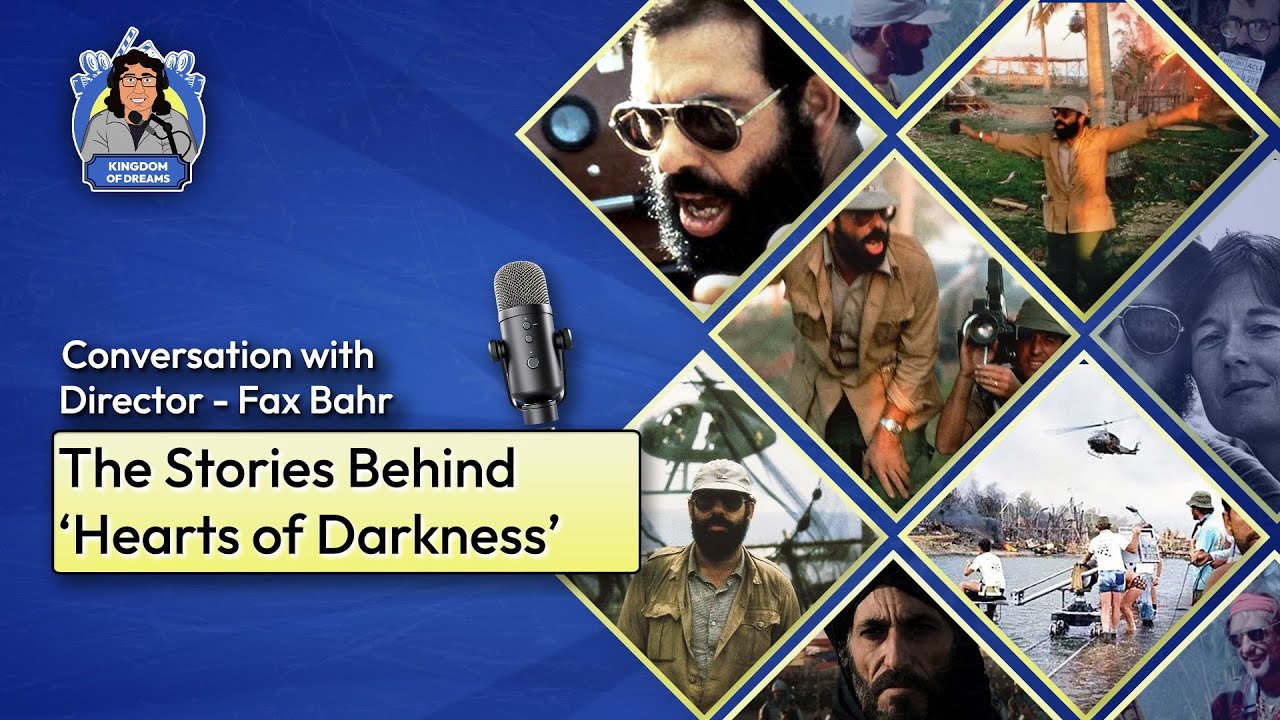
The Stories Behind 'Hearts of Darkness', Director Fax Bahr
About this episode
🎙️ On today’s episode of the Kingdom of Dreams Podcast, we step into the heart of cinematic chaos with director Fax Bahr, the visionary behind Hearts of Darkness: A Filmmaker’s Apocalypse. This groundbreaking documentary peels back the curtain on the making of Apocalypse Now, revealing a journey as harrowing and inspired as the film itself.
In this exclusive conversation, Fax shares how he teamed up with Eleanor Coppola to unearth raw, emotional footage and shape it into a gripping portrait of obsession, artistry, and survival. From navigating industry resistance to capturing Francis Ford Coppola’s descent into creative madness, we explore the untold stories and bold choices that redefined what film documentaries could be.
This is more than a behind-the-scenes tale, it’s a tribute to the power of storytelling under pressure. Don’t miss it.
Fax Bahr is an American director, writer, and producer best known for co-directing the Emmy and Sundance Award-winning documentary Hearts of Darkness: A Filmmaker’s Apocalypse, which chronicles the tumultuous production of Francis Ford Coppola’s Apocalypse Now. A former U.S. Marine, Bahr brings a deep understanding of conflict and character to his storytelling. His work often explores the psychological dimensions of artistic creation and war, blending cinéma vérité with narrative depth. He has also worked in television and film as a writer and consultant, continuing to contribute to bold, character-driven stories.
#eleanorcoppola #heartsofdarkness #apocalypsenow #vietnamwar #filmmakingjourney #vittoriostoraro #documentaryfilmmaking #waltermurch #filmmakingresearch #faxbahr
Full transcript
Automatically generated from the episode audio, so expect the odd misheard word or name. Speakers were labelled automatically. About 5,300 words. Tap a timestamp to play from that moment.
0:00Fax BahrAnd, it was in junior high, and I was in a very dark place. I was, you know, kind of mixed up with some rough people and, smoking a lot of weed and, you know, f… pretty in a, just an unhappy place. And it was my mother, actually, who was like, recognized that this was going nowhere fast. And she, sort of forced me to audition for a play, and I got the role, and it changed my life. I mean, I was like, "Oh, theater. This is great. I love doing this." So I just sort of launched into that, and then in college I took a film class. I was like, "Ah, no, I don't wanna be an actor, I wanna be a filmmaker." So, but yeah, it was, I don't know, just the magic of theater, I guess.
0:55Jawad MirWelcome back, everyone, to another episode of Kingdom of Dreams podcast, the making of stories. I'm your host, Jawad Mir. Today, I have Fax Bahr, the director of Hearts of Darkness, which is a documentary based on Francis Ford Coppola's Apocalypse Now. I had last week the three editors from the film, Shana, Michael, and Jay, who talked about the post-production side of things. But today I have Director Fax Bahr, who will talk about more from the directing standpoint and working with Eleanor Coppola, and all the other tidbits, that went through making into this wonderful documentary. The film is already out. It's playing in theaters, at selected theaters. You can go to zoetropics.com and check out if it's showing in your city, at what time. I think it also comes out on streaming on July 28th. So without further ado, here is my conversation with Director Fax Bahr. First of all, appreciating all the work that you have done, on that documentary. I know it's been a long time, but it still lives. And to kind of kick things off, how did you get involved on this project?
1:56Jawad MirHow did you get, come on board?
1:58Fax BahrWell, it was r… r… really through George Zaloom, who, I was, working for him doing electronic press kits. They had a contract with, Amblin, and then we were doing electronic press kits for a lot of Hollywood stuff that was coming out. And George, had recently read Eleanor Coppola's notes and he said, "Man, I, y… she talks about all this documentary footage. Have you ever heard of a film, that's been, that's come out about the making of Apocalypse?" I said, "No." And he goes, "I'm gonna call Zoetrope." So he called up, and they were very accommodating. They were like, "Yeah, sure. Come on up, let's talk about it. The footage is just sitting around." And, we went up and had a meeting and said, "This is one of our favorite films, and we'd love to do something," and they were happy to show us some footage, and it was just gold what Ellie had shot. We, as soon as we sat down and saw it, we knew that there was a great documentary here. So I basically, I cut like a 10-minute reel, and I wrote up a proposal, and, we took it around town and sold it to Showtime, actually.
3:04Jawad MirIncredible. And at that time, I mean, I know things are different now, I'm just kinda speaking from a standpoint of how you approach studios or production companies. You have to have an agent now and all that stuff. Was it similar back then, or was it something because you had already known people in the industry that was a little bit easier?
3:24Fax BahrGosh, I had an agent at the time, but I think, I think because it was a Zoetrope project, we pretty much got any meeting that we wanted. What was surprising was the studios were, pretty reluctant to do it. Like, we went to Paramount, we went to Warner Brothers, a few other studios, and they were like, "Well, the film is old. You know, it's 10 years old. Who's gonna care about it?" And it really wasn't until we lit the fire at Showtime that they were very enthusiastic about pursuing it. But, you know, as far as I recall, we just, you know, we just knocked on doors, and people were happy to hear about it.
4:03Jawad MirLovely. And obviously, there's all this footage that was, that Eleanor sho… shot, and there was those audio recordings that Francis had, or Eleanor recorded without Francis knowing. But you obviously had to do now interviews, which was like, you know, 10 years down the pipeline of the film production. What was the process of that? Were you and Eleanor, and George directly involved with all those interviews, or was it sort of breaking apart between the three of you? If you can talk about the process of that.
4:33Fax BahrSure. I mean, I reached out to everybody that was involved in the, in the original production, and people were so eager to talk about this film. Nobody said no except Harvey Keitel and Brando. Everybody wanted to talk about it, 'cause I think it was pretty, I think it was cathartic to talk about it. I think it was pretty, challenging experience. Everyone wa… had a little bit of PTSD after the three years it took to make that movie. And so, yeah, people were quite eager. Nobody was reluctant to talk.
5:13Jawad MirThat's, and what was the reason? I mean, I ca… I can, I can guess Marlon Brando's reason because of his, the way he was. Harvey Keitel, I thought he was very, sort of more upcoming at the time. Was it, did he explain to you the reason behind it, or was it just like a flat out no?
5:29Fax BahrWell he, I think, thought about it for a while, and eventually I sent the cut to him. We didn't have a release for him. He was one of the few people that we didn't have a release for. And you know, we wanted to use some of the scenes because it was part of the story, some of the scenes that he was in the film and some of the behind-the-scenes stuff that Ellie shot. And, I sent him the cut act… actually after the negative was cut. Like we'd, he'd, he'd said, "I'll look at it, I'll look at it, I'll look at it. Let's talk, let's talk." But he just kept delaying, and the negative was cut on the film… And, I, he finally looked at like a, you know, VHS vid… you know, copy of the, of the cut, and he was like, "No, I'm not doing it." So we had to go back and recut the negative. And I think it was just, you know, it was like painful for him, painful experience. I don't know how it ever resolved with Ian Francis, but I'm sure it was, you know, he just wasn't, wasn't really h… happy about talking about what had happened.
6:35Jawad MirRight. I'm just, I was just thinking in my head like, you know, I don't know if... I feel things are different now. Like, unless you get... If I was to go to someone and say, you know, "We want you in the film," and we did the interview, but they didn't do a release form, to go through all that editing only to find out later that's not gonna happen, then you have to recut everything, do you think that would happen now? I don't think so, but what are, what are your thoughts?
7:03Fax BahrYeah, I don't know. You know, it, I think he, because we didn't have a release for him, we needed his permission.
7:10Jawad MirRight.
7:10Fax BahrAnd, I don't know. You know, it just sort of depends on the individual. Harvey Keitel is a brilliant actor, and he's had a great career. I just think this was one of those things that was, you know, d… a really unhappy experience for him. And so, I don't know. I suppose it probably would happen again if, something similar had happened. I mean, you probably don't wanna talk about, you know…
7:35Jawad MirYeah, no, I'm just…
7:35Fax Bahr... His release from a film
7:36Jawad Mir... I'm just curious. Yeah.
7:38Fax BahrYeah.
7:38Jawad MirAnd Harvey Keitel obviously around that time went on to sort of launching Quentin Tarantino with Reservoir Dogs, right? He was the one who sort of backed it up.
7:47Fax BahrYeah.
7:48Jawad MirOtherwise we wouldn't have seen... I mean, we may have, but who knows, right? So the fact that he did that's really remarkable on his part.
7:55Fax BahrYeah. Yeah. What a career. I mean, an amazing actor he is.
8:02Jawad MirHe is. One of my favorite film of his is Monkey Trouble. I don't know if you've ever seen it.
8:06Fax BahrNo, I haven't seen that. Oh, I gotta check that out.
8:08Jawad MirIt…
8:08Fax BahrMonkey Trouble.
8:08Jawad MirIt's, it's, it's a kids movie. It was in the mid…'90s.
8:11Fax Bahrhuh. Okay.
8:11Jawad MirIt was very sort of, you know, small budget film, but it was really well done. Going back to your career facts, h… you know, there's always something that sparks people to do what they wanna do in life, whether it's an author, whether it's an engineer, a director, editor. Do you remember that moment that did that, and how was your journey from that point on leading up to Hearts of Darkness?
8:39Fax BahrSure. I mean, I was, it really ca… I started acting and, it was in junior high, and I was in a very dark place. I was, you know, kind of mixed up with some rough people and, smoking a lot of weed and, you know, pretty in a, just an unhappy place. And it was my mother actually who was like, recognized that this was going nowhere fast, and she, sort of forced me to audition for a play, and I got the role, and it changed my life. I mean, I was like, "Oh, theater. This is great. I love doing this." So I just sort of launched into that, and then in college, I took a film class. I was like, "Ah, no, I don't wanna be an actor. I wanna be a filmmaker." So, but yeah, it was, I don't know, just the s… the magic of theater, I guess.
9:32Jawad MirAnd when you decided to become a filmmaker, all the way from that point on to production of, you know, the interviews of this film, what was the struggle like, you know, in trying to get work?
9:46Fax BahrOh, man. It's a difficult road for anybody. But I would say the thing that I just was persistent. You know, I just kept trying. I mean, I wrote a ton of scripts, and they were terrible, and nobody wanted to read them. But if you just keep going, you learn, and you get a little better, and eventually, somebody will like what you do, and then you kind of, take that and move it into something else. And so, yeah, I would say persistence.
10:21Jawad MirI'll come to Hearts of Darkness in a second. I'm just trying to get to, if you feel comfortable sharing this, you know, a moment that you remember in your struggle where you felt like, "I feel like I've done it all. It's not working," and then something happened that gave you a sign to keep going. I know it's been a long time, but just thought maybe I should ask.
10:44Fax BahrYeah. I, well, you know, when I first came to New York, out of college, you know, I'd done some short films and I thought, "Oh, man. I'm, you know, I'm just, I'm a, I'm a great director." And
10:58Jawad MirWe all think that
10:59Fax Bahr... You get there. Yeah. And, I got to New York, you know, and I had like 500 bucks in my pocket and, start knocking on doors, and nobody's interested in anything you've done. And, I kind of think I eventually got a job as, for like, 135 bucks a week. B… it was like boxing commercials off of, like, two-inch tape. I was basically an assembly line worker, just, you know. And it was fairly discouraging. But, you know, I mean, I didn't feel all was lost, I guess. I just kept kinda... I had some friends there, and we just started screwing around with, you know, video cameras and making shorts and, you know, eventually got a job as an assistant editor in a documentary company and then I felt like, "Okay. Well, the path is set here."
11:55Jawad MirLovely. You met Eleanor, of course, I'm assuming.
12:00Fax BahrI did, yes.
12:02Jawad MirWhat was working like, working with her like, and also George?
12:07Fax BahrEleanor was lovely. She's really, she was a very gentle person. At least my experience with her was. And sh… both she and Francis were very, I think the whole vibe of Zoetrope was we're pro filmmaker, so they were never like, "You have to do this, you can't do that." I mean, they read the proposal that I wrote, and I think they liked it, and they said, "Okay," you know, "we'll be hands-off." They gave notes, of course, sent cuts all the time, and there were some things that we were not allowed to put in the film. But overall f… I think they were pleased with how it came out and Ellie was, she was very accommodating. She gave great notes, and she was, I think she was happy that the footage that she had was being, was being put together.
13:03Jawad MirAnd I think I can, you can see that in the film, to be able to document all that and people in their vulnerable state, the person on the other side of the camera has to be someone that they feel comfortable with.
13:17Jawad MirRight? So they have to be caring or at least pretend to be caring,... You know, on a, on a but I think it comes across very gen… people figure it out very quickly if you're genuine or not. But that's, that's the key. I think that's why the f… one of the reasons the film worked with that footage is because the comfort level everybody had…
13:36Jawad Mir... With Eleanor.
13:38Fax BahrYeah. Yeah. Oh, absolutely. And it, I think this is true of all, you know, documentary, experiences, certainly on set, that after a whi… like, at first it's like, oh, there's a camera there, and people are aware of it.
13:51Jawad MirYeah.
13:51Fax BahrAnd after a while it just becomes part of what's going on and you completely let down your guard, as Francis did, you know, w… recording when she would, when Ellie, at late at night, would set out the tape recorder and he would just rant and rave. And I think, so people just, it becomes second nature.
14:07Jawad MirYeah.
14:08Fax BahrAnd she was there every day. I mean, she shot 80 hours of 16 millimeter footage on the set, and after, she did a ton of stuff post-production as well. So there was a lot of material and a lot of, she was just a constant.
14:26Jawad MirYeah, that's, that's incredible. I mean, I will tell you, like, one of the reasons, I've always been into, like, films. Never thought to be making documentaries, but after I made my first documentary, I saw Hearts of Darkness, and I realized how easy my film was compared to what, how that was made.
14:47Fax BahrYeah. Yeah. Yeah, and she was just remarkably, I think the great thing about her footage was she was such a w… wonderful observer. She didn't really insert herself in any way. She was, she was just the camera, just observing what was happening. And of course it was extraordinary stuff, but, I, she's, she's just a, an excellent filmmaker in that regard, especially for documentary. You don't wanna intrude.
15:15Jawad MirNo.
15:16Fax BahrYou want to be, the fly on the wall, and she was.
15:20Jawad MirI like to call it being invisible. You just have to be completely invisible…
15:24Fax BahrYeah
15:24Jawad Mir... On set.
15:24Fax BahrYeah.
15:25Jawad MirWas there ever a thought, or was it even done, any actual interviews with Eleanor? Like, was there an angle of, like, how did she direct this film, or was it just never on the table?
15:36Fax BahrNo, I did, I did an interview with Ellie, and it's in the film, actually.
15:39Jawad MirYeah. Yeah
15:40Fax Bahr... Yes, I mean, I think we talked over a whole range of issues and, how it all came to be, and she was, she was an excellent interview. She's very open and honest and, you know, I mean, you read it in notes too. She's just very, she just tells it like it is. She's not hiding anything. She talked about person… very personal stuff. And it's interesting, only in film do you become kind of, you know, every film that you're on, you become close with all the people around you, and as soon as it's over, it's like…
16:20Jawad MirYou're gone
16:20Fax Bahr... You just don't have real contact with them unless there's another project that you... And the same was true with Ellie, and especially with Ellie and Francis, you know, I was privy to some very intimate, you know, this was a really, cataclysmic, experience for everybody and for them. And, you know, I was right, Ellie put me right in the middle of it all with that footage and listening to everything and then talking with them and so I felt sort of in a weird way close to them without being close to them 'cause I didn't really know them. But, and then the film came out, and then it's just, like, moving on. And I didn't, you know, have a lot of contact with Ellie after that.
17:03Jawad MirI'm glad you brought that up. So it's something I go, I think about all the time, too, like, you know, when you work on a project, everybody's so close, and then you're like, "Okay, you don't even know the person for such a long time." And then Kevin Bacon, I think he was on the Howard Stern Show, and he said the same thing, and he had a difficult time dealing with it. And at that time when that happened, I mean, obviously this was a long ago, like, was there any kind of odd feelings that, why is it this way? Like, why are we not in touch?
17:34Fax BahrWell, no, not so much because, you just move on to another production and there's a whole new family that you're involved with and I was, I got, you know, pretty involved in sketch comedy in television and, which is such a, it's… it's a very difficult form of production 'cause everything is brand new every week. And so I was, like, buried with that. So you move on to another project basically just consumes your, all of your consciousness.
18:09Jawad MirI guess, yeah. W… would you classify some of the time that you spent on Hearts of Darkness to be some of your best memories?
18:18Fax BahrOh, yeah. It was a fantastic experience. Y… yeah, because, well, just the footage was so compelling and the stories were so, you know, people really went through a lot of, a lot of life-changing experiences there. So it was, you know, it was, it was just fascinating to be part of it and to explore it.
18:47Jawad MirWas it life-changing for you? If so, what did you learn about yourself that you didn't know?
18:54Fax BahrAh, that's a great question. Well, I sort of learned.. Let's see. What did I learn from that experience? I mean, it was, it was an incredibly busy time in my life. Halfway through cutting the film, I g… I got a job on a, on a television show called In Living Color, which was like a hip hop sketch comedy show. So I would do, you know, meet Michael Greer in the editing room early in the morning and sort of be, have my head in Vietnam and Hearts of Darkness, and Apocalypse Now, and then I would go and, like, write Homey the Clown sketches and Fire Marshal Bill sketches. It was this very sort of schizophrenic e… experience, and it was just, it was... And I was getting married at the time, and it was just like a, it was a very, I was sleeping maybe three, four hours a night and working the rest of the time. So, I guess I learned you probably shouldn't take on so much, so much at the same time.
20:07Jawad MirBut it may have kept you sane, right? In the morning.
20:09Fax BahrYeah. Maybe. Yeah. Yeah. Sort of both sides, the duality of consciousness or something.
20:19Jawad MirAnd it's interesting you say that because nowadays, forget two, you have to be working on so many different things.
20:25Fax BahrYeah.
20:26Jawad MirYou know, otherwise, one is in development, one is in pre-production, and production and…
20:30Fax BahrYeah
20:30Jawad Mir... Post-production. You know, not necessarily all from beginning to end, but at different stages, right? The overlap happens.
20:37Fax BahrYeah. Yeah. That's right. That's true. Yeah, I mean, it's n… you know, just the way this business works is you have to have many irons in the fire, and sometimes they all sort of land, and then you gotta, then you gotta deal with it.
20:50Jawad Mir100%. 100%. You talked about you were doing press kits for Amblin. Talk, tell me about that. That, I have a reason for asking that because, actually, I'll let you tell me first, and then I'll, I'll tell you the reason for asking that.
21:03Fax BahrYeah. Well, Zaloom Mayfield, ZM Productions, brought me on. They really liked a short film I'd done in college called Nuclear Beach Party. They thought that, thought it was very funny.
21:15Jawad MirYeah.
21:15Fax BahrAnd so they said, "Oh, this guy can, you know, this guy, let's bring him on to do some of these EPKs." And so, God, we did, EPKs for Universal. They were always on set with Steven. And one really fun project that they brought me was, it was Spielberg's 40th birthday, and Frank Marshall and Kathy Kennedy, wanted a short film for Steven's, for the, for the party to surprise him with. And so they, I came on, and shot this spoof of Citizen Kane that was sort of all about discovering what the real Steven Spielberg was about. And we had Dan Aykroyd and John Candy as these reporters, these sort of '40s reporters or '30s reporters. And, that was a blast. I mean, we just were able to get into Amblin and shoot interviews with all these people and…
22:12Jawad MirOh, wow
22:12Fax Bahr... Robin Williams and Barbara Streisand. Everybody, of course, wanted to weigh in on Steven's 40th. So that was really the, one of the highlights. That and Hearts were the highlights of working with, George and Les.
22:26Jawad MirIncredible. So this would be 1987 or '88, around that time.
22:31Fax BahrYeah, I think it was '88.
22:33Jawad MirYeah. Yeah, before Jurassic Park, Hook, and, I think around the time When Always came out. Yeah, no, the reason I asked was because I was very connected with, DreamWorks Studio when…
22:48Fax BahrOh
22:48Jawad Mir... It started because I had this web... All you, all this stuff that you see, majority was from that time.
22:53Fax BahrOh, okay. Yeah.
22:55Jawad MirSo I had a very good connection with DreamWorks for 10 years, where I was just…
22:58Fax BahrAh, yeah
22:59Jawad Mir... Doing the website, and I knew about press kits and all that stuff, so that's why I asked. I used to get those, 35 millimeter negatives
23:07Fax BahrYeah.
23:07Jawad Mir... For scanning purposes.
23:08Fax BahrStill have them. I still have all of them.
23:11Jawad MirOh, that's great
23:11Fax Bahr... But yeah.
23:13Jawad MirWhat's up for you now in the future? What are you working on?
23:19Fax BahrWell, right now I'm just finishing a, just picture locked on a documentary, a feature doc, that's about a, it's a portrait of a, an activist on the Texas Gulf Coast who's been fighting these petrochemical companies that... She's a shrimp boat captain, and these, the bays that her family's been fishing for four generations have been decimated by all this toxic pollution. So it's an enviro doc, an environmental justice doc, and she's fought these people. High school education, five kids, you know, lives on, you know, 600 bucks a month, and she won the largest Clean Water Act lawsuit in the history, in Ame… the history of American law, just by, just by sheer persistence and her personality.
24:07Jawad MirThat's, wow.
24:07Fax BahrSo it's a portrait of this, s… of this extraordinary person, and not unlike Francis, you know, in this kind of…... Titanic struggle to overcome outrageous odds, and she does
24:21Jawad MirKinda like, sounds like Erin Brockovich
24:23Fax BahrYeah. It's sort of Brockovich-ian, for sure.
24:26Jawad MirYeah. And when is this supposed to come out? Later at the festival run this fall?
24:32Fax BahrYeah, I'm out to festivals now. We'll see where we get in and, yeah. And then…
24:36Jawad MirWhat's it called?
24:38Fax BahrIt's called Hell Cat.
24:40Jawad MirHell Cat. And how long did it take you to make it in terms of production and access and following?
24:45Fax BahrFive years.
24:48Jawad MirSo that was the only project you were working on?
24:51Fax BahrNo. I have, I have other things that I'm working on also.
24:54Jawad MirI know. I'm just joking.
24:57Fax BahrYeah. Yeah.
24:58Jawad MirThat's incredible. That sounds very exciting. I'm, I would love to see that when that comes out, because it's… something similar type of work that I do in terms of, you know, just standing against all the odds, and it sounds very cool, kind of David versus Goliath story.
25:12Fax BahrYeah, that's what it is. I'll send you the, I'll send you the trailer.
25:15Jawad MirOh, that'd be awesome. I would love to check that out. Just kind of wrapping up on Hearts of Darkness, what... I mean, you obviously loved Apocalypse Now, that's why you made Hearts of Darkness. A… and plus, obviously a working opportunity. It's been, what? 45 years now almost, right? 44, 45 years. What do you think, based on your own experiences and other people that have come and told you, what do you think Apocalypse Now has done to cinema, and what do you think Hearts of Darkness have done to documentary cinema based on people that may have come to you and said, "That's one of the greatest documentaries I've ever seen"?
25:56Fax BahrWell, I mean, Apoc… Apocalypse Now is one of the greatest war films ever made. And Francis, really took such a, such a deep, took it into such a deep level in terms of why... So many war films are just about the excitement of the war.
26:27Jawad MirYeah.
26:27Fax BahrAnd he really, he really found sort of the, y… and along with Joseph Conrad, using the Joseph Conrad, that extraordinary book, to the, to what the nature of humanity is. So, yeah, I mean, it's, it's a film that I loved when I saw it, and loved even more after I'd worked on the documentary. I, you know, people really do... I think the documentary does stand up very well, and I think it is a great companion to the film, that it's great to see Apocalypse Now. It stands on its own, but if you see the documentary, you understand it on a different level. And I've always felt like that's a, that's a real compliment, to the, to the film that we made.
27:15Jawad MirHas there been any times when somebody's actually come up to you or emailed you or, you know, sort of giving their thought on the documentary or thanking you for the work that you guys have done? It's kind of like a fan moment.
27:26Fax BahrSure. Absolutely. People are, people are always, you know, very complimentary and thrilled that the film is done, and said, "It's one of my favorite documentaries about the making of film." People say that often and yeah, it was... I'm very, I'm just very proud and pleased that it's getting re-released too. And by the way, James Makosky and the folks at Zoetrope did a fabulous job with re…
27:51Jawad Mir4K?
27:51Fax BahrWith 4K. I mean, it's gorgeous 'cause Eli shot it on negat… like 16 millimeter negative. And I think at the time when we brought it out, you know, it was like, we just did, you know, I think, I think they spent a lot of time coloring the film. And it was from so many different sources, you know, I shot, you know, 16, and there were so many different camera people on it and so they really dove back into that footage, so it's a new experience. It's just gorgeous to see it.
28:22Jawad MirI'm looking forward to that. You shot on digital, Bolex 16 millimeter? Sorry, not digital Bolex 16 millimeter.
28:27Fax BahrI think we shot, I think we used Arris, I think.
28:30Jawad MirArris, okay. And, I think the docu… the 4K version comes on July 28th, correct? I think that's the release date…
28:38Fax BahrIt's…
28:39Jawad Mir... That I've seen
28:40Fax Bahr... It was released at the Film Forum in New York on July 4th, actually. So it's been playing and will play there until the 17th, and then it comes to LA, and then, Rialto has, they're rolling it out across the country, and art theaters in, you know, various cities.
29:00Jawad MirI think…
29:01Fax BahrThrough September, I think.
29:03Jawad MirI think I saw online that the streaming release is July 28th. I could be wrong.
29:08Fax BahrOh.
29:10Jawad MirMaybe
29:10Fax Bahr... Yeah, maybe that's right. I
29:12Jawad MirYeah
29:12Fax Bahr... The theatrical, I think is rolling out right now.
29:16Jawad MirYeah. And just lastly, I, kind of going back to what you were talking about earlier, you know, all these fans come to you and tell you what, how important. Is there sp… one specific one that stands out that really had an impact on you? Like how it's... You know, there's always films that change people's lives, right? In that capacity.
29:38Fax BahrY… yeah. I can't think of specifically, but people have said, "This is something that inspired me to be a filmmaker, you know, watching Hearts of Darkness." or, "I didn't understand Apocalypse Now until I saw it." Or, I can't think of any, of a, anything specifically, but pretty much to a person when they find out, "Oh, you made that film with Eli Coppola? That's, that's, you know, that's, that's a great work. That's a great piece of work, and a, and a classic film." And so that's, of course, you know, it makes me very happy and proud and…
30:19Jawad MirAnd your journey from that on, do you think your journey has changed because of that film?
30:25Fax BahrOh, definitely. Yeah, for sure. For sure. It certainly opened doors. My career's been very, I mean, I've just done a lot of different things, which I don't recommend to anybody really. But, as, someone with ADHD, I just sort of go on to the next project and, But, yeah, it's just, it was really one of the greatest experiences I've had in my life.
30:52Jawad MirAmazing. That's great. Well, thank you so much, Fax, for your time.
30:56Fax BahrThank you
30:56Jawad Mir... I really appreciate it. Love the film. You know, obviously, looking forward to your next project and can't wait to see this. I'm gonna wait and s… I wanna see if it's playing in Toronto somewhere in the theater. I would love to go see it. If not, then wait on streaming.
31:13Fax BahrYeah. Oh, so you're, you're Toronto-based, right? Of course.
31:16Jawad MirYeah.
31:16Fax BahrOkay, yeah. Yeah, no. I'm sure... I d… I don't have the…
31:23Jawad MirI'll find out
31:23Fax Bahr... The rollout, but Rialto…
31:24Jawad MirWe'll find it
31:25Fax Bahr... It, you just go on the Rialto website, it'll say where it's playing. I…