
Episode 268 · October 24, 2025 · 48 min
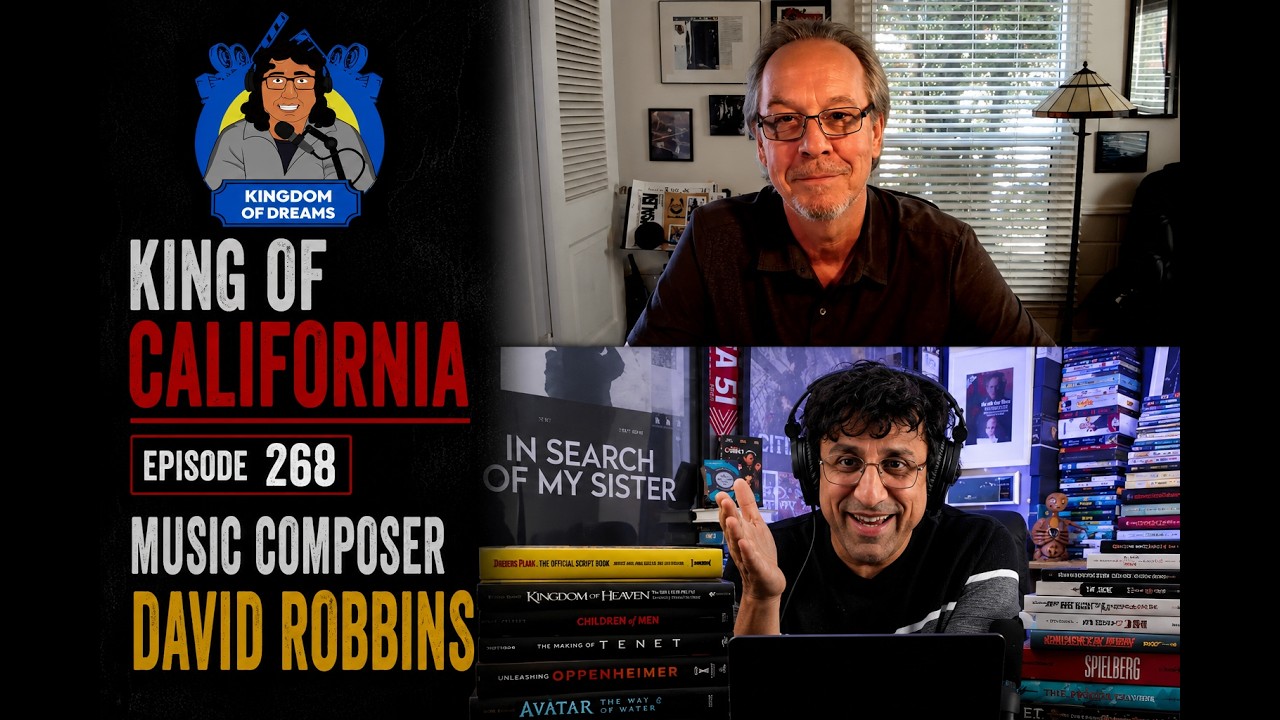
'King of California', Music Composer, David Robbins
About this episode
🎙️ On this episode of the Kingdom of Dreams Podcast, we sit down with acclaimed music composer David Robbins, known for his evocative scores for King of California starring Michael Douglas and the animated film Migration. David shares how the script for King of California first drew him in, its themes of hope, madness, and rediscovery deeply resonating with him, and how composing its music became a personal journey of reflection and inspiration. We also discuss his work on Migration, exploring how he brings heart, humor, and humanity to stories that span both grounded drama and uplifting adventure. It’s a conversation about storytelling through music, emotional truth, and the lasting power of cinema.
David Robbins is an award-winning composer celebrated for his emotionally rich and versatile scores across film and television. With a career spanning several decades, he has crafted music that enhances both intimate character-driven stories and large-scale productions. Known for his collaborations with visionary directors and his ability to blend orchestral depth with contemporary tones, Robbins’s work brings a distinctive emotional resonance to every project. His compositions often serve as the unseen heartbeat of a story, guiding audiences through moments of tension, beauty, and transformation.
#michaeldouglas #costco #music #score #Davidrobbins #kingofcalifornia
Full transcript
Automatically generated from the episode audio, so expect the odd misheard word or name. Speakers were labelled automatically. About 7,000 words. Tap a timestamp to play from that moment.
0:00David RobbinsDuring, Castro's day in Cuba, all of these people just fleeing for their lives and just going then, what, the 90 miles or something, what it is between Cuba and Florida, and a lot of them not making it, and people that made it that didn't know what was in store for them. And we accepted them as, immigrants, you know? We weren't gonna send them back. It was not that way, you know? Unfortunately, current events now just kind of surreal in a lot of ways, but, you know, demonization rearing its ugly head again, you know? And it, for no justifiable cause.
0:42Jawad MirWelcome back, everyone, to yet another episode of Kingdom of Dreams podcast, the making of stories. I'm your host Jawad Mir. Today my guest is David Robbins, who I've had the pleasure of having on this podcast four times. One of my favorite podcasts, to date, features him, which is Dead Man Walking. But today he's here to talk about King of California starring Michael Douglas, which came about 12 years ago. A beautiful little film about a father and a daughter, and the search for gold, and there's so much history and so much relevant topics from today's time in our society that are unfolding, not just in the United States, but all over the world. Lovely conversation. David is always a pleasure to talk to, and we also talked about the music that he did for a play, called Topsy Turvy in LA, which his brother Tim Robbins directed, who also directed Dead Man Walking and who's, Andy in Shawshank Redemption. Met him as well. A beautiful play as well, so they have had several tours, and they're gonna have many more. But without further ado, here's my conversation with David Robbins for King of California.
1:42David RobbinsGood morning.
1:45Jawad MirAfternoon for me. How are you, man?
1:49David RobbinsI'm good. I'm good.
1:53Jawad MirRecuperating?
1:54David RobbinsYeah. It's been... Today it's, like, the first day I'm feeling normal after... I mean, when you, when you do the, these shows, it's like, it takes all of your energy, attention. You're up, you know, you're kind of like, going all the time. And, you know, plus the physical part of it, the setting up, the breaking down, the,.. And once that all gets released, like, on a, you know, when you're on the plane coming back and then you're at home that night, it all just like...
2:33Jawad MirYeah. I bet I always, I've always wondered, like, when people do shows, like concerts or plays like this, like, sometimes it can be like, you know, you wanna top the last one, but at the same time you get so repetitive, like, how do you find that balance? So it's kudos to you that you guys can pull that off. And by the way, just for the audience, we're talking about Topsy Turvy, which is directed by your brother Tim Robbins, and you did the music for it. Fantastic play, and thanks for inviting me on that.
2:58David RobbinsThank you. My pleasure. I'm glad you came.
3:02Jawad MirYeah.
3:03David RobbinsIt's, it's a sto… it's a current story told in a, in a way that, allows you in so you can not, you know, not be... You're not being preached to. It's, it's, it's about what we've all been through, and, opening the door with humor and music and…
3:25Jawad Mir100%. 100%.
3:26David RobbinsYeah.
3:26Jawad MirSpeaking of music, we're here to talk about the film that you did music for, King of Cal… California, starring Michael Douglas. Finished it, yesterday. What a beautiful little film, man. L… really…
3:39David RobbinsThanks
3:39Jawad Mir... Loved it. Very grounded.
3:41David RobbinsI,.. Yeah. I, it, I, you know, as I told you the other day, I watched it when I knew this was gonna be going on. I watched it, and it was the first time in 20 years at least, that I'd seen it, and it... So it allowed that, complete, watching it as a first-time viewer, you know? Being able to see it fresh without any kind of preconceptions or anything, and s… it was, it was, you know, a pretty damn good movie.
4:17Jawad MirIt was. It certainly was from, you know, it seemed very personal as if it's so… someone's story, personal story of father and daughter, and obviously put it…
4:26David RobbinsYeah
4:26Jawad Mir... Into a, you know, a different manner. But I'll tell you one thing, I'll never see Costco in the same light again.
4:36David RobbinsYeah.
4:37Jawad MirThat was, that was really cool, that. But your music, man, like, as always, you know, stood out, but it didn't stand out. Like, it was just on its own, independent, and so rhythmic, especially the scene when she's... That stands out to me the most, when she's pulling him out
4:54David RobbinsYeah
4:55Jawad Mir... From under the ground and when he's…
4:58David RobbinsYeah
4:58Jawad Mir... In the water, the... As she pulls it out and goes back in, pulls out and goes back in, the notes were switching very back and forth in a, not even… ... Necessarily like a cartoony way, but just, it just spoke so much. Like, you could tell that the music was telling a story. So…
5:13Jawad Mir... Wanted to point that out. That's…
5:15David RobbinsThank you
5:16Jawad Mir... What stood out the most for me.
5:17David RobbinsThank you. It was, this is, like, one of those I think maybe f… five or six times in my career that, you know, I was involved right from the start, you know? In fact, I met this director when I was living up in Ojai, and he lived up in Ojai. And I met him through a person that, a director and a writer who, Niels Mueller, and he had... I went to s… to interview him about doing the score for, or he interviewed me, I should say, about doing the score for the movie that he was making called The Assassination of Richard Nixon with Sean Penn. And, he ended up going with somebody else, and, every time I see him now he says, "I should have hired you." But he turned me on to Michael Cahill, who did this movie, wrote and directed it. And, it was his first film. And, so we started meeting for lunch every week in Ojai, at a, at a local restaurant.
6:21David RobbinsAnd we do trade music ideas, you know, just to... He'd give me, you know, a CD of what, you know, he had come up with, and I did the same. And I, you know, it was like a back and forth that was really cool. And we, it was a… we were kind of, creating a language for the, for the film, musical language for it, and a musical, dressing I should say, about, you know, what type of approach with instruments and voices and, usages and the whole bit. And it was really, you know... I mean, it was kind of the thing I did with Tim, and,.. Well, definitely the same thing. And anyway, so i… and in pre-production we were gonna… we did the on screen, playing an upright bass part that Michael Douglas does. So we, had to do pre-recordings for that. So it was like, you know, we had some options about what he was gonna play.
7:24David RobbinsAnd what he ended up playing, was a theme that I had written, and this is a solo version of it, you know. And it gets,.. It gets embellished with other instruments as that piece goes on. But, that was one of the cores of it. And it was, it was, you know... And then during production, being there on set when, Michael is doing the bass and, you know, he, of course, he didn't know how to play it, and I kind of helped him get to some semblance of, you know, looking like he played it. But, you know, it was also, you know, like the shooting tricks, you know, that they do as far as, you know, not belaboring on finger work or anything like that. It's all about face and... And then afterwards obviously creating the score. And, o… one of the things that hit us early on when we were trading music was Jolie Holly...
8:27David RobbinsJulie Holland, excuse me, singer-songwriter. And, there was this one particular song called Darling Ukulele. And it kind of stuck in my head, and I ended up writing the whole score on ukulele. And, you know, orchestrated it as it, as it needed. But, there were… there was that element, and then the other key element was, Native American drumming and percussion and,.. And the third element was a glass harmonica, which is that ethereal kind of sound. And I had to find somebody that played it, and it was a guy that used to do s… he'd play it in, at Disneyland, you know, outside. And it's a fas… fascinating.
9:22Jawad MirWow.
9:23David RobbinsIt's like spinning, glass discs, right? And in… that spin in a bed of water. And as he touches it with his fingers that pl… it causes that rub, you know, when you do the rim of a glass type of thing. And, it... But it's all tuned, you know. So it's like a piano or, you know, piano or an organ or what have you, but it's with spinning plates. It's great. And, so those are the three main things that kind of constituted it. And, also, you know, other funky instruments like, pump organ and, whistling, which I did all of it. And it was a lot of fun.
10:08Jawad MirReally?
10:08David RobbinsYeah. Yeah. Yeah. My dad taught me how to whistle when I was really young.
10:14Jawad MirYeah, I still don't know how to whistle. That's awesome. And tell me, how big is your normal... Like, you know, one of the things I really love... I was gonna ask you, but then you kind of answered as I was thinking it. Because back in the day, now you can find like, you know, when you're composing different music and stuff, like you wanna look for some ethnic music or different parts of the world, you know, we have online, you just search in Google or Facebook or whatever, everybody's there. But back in the day it wasn't like that. But the fact that you were able to find someone outside of Disney World and how to i-integrate that's pretty cool, man.
10:46David RobbinsYeah. I, it's, it's,.. You know, I always, whenever po… You know, aside from what you can find online, there's also all the sampling libraries that composers…
10:56Jawad MirSure
10:57David Robbins... Use a lot, and they've gotten better and better and better. For better or worse, you know, there's, there's two sides of that coin. Two different, opposing thoughts about is it, is it good or bad? And, but I always tried with everything I did to find, players that played the instruments rather than using samples. Be-because no matter how good you are at manipulating samples and how good the sample libraries are, it's still not human, you know? And there's that imperfection of human playing that…
11:37David Robbins... And the noises that like, you know, different instruments make. You know, like that pump organ, you know, he's pumping and you're hearing the tick a little bit with it. And it's just so imperfect. And, that's what makes t-t… that's what really, to me, is a, is a magic of doing, music for film and doing music in general. And, it's that human imperfection and that, just that soul that player's ability… That comes through the player's ability and,.. Anyway, but
12:17Jawad MirNo, that's great, man. That's awesome. You know, what was it about the script? I mean, I can guess, but the script is very grounded, like very tight in terms of characters. You know, dialogue is incredible, and Michael Douglas delivers perfectly. Like, he… I have never felt for a second he was acting.
12:38David RobbinsRight
12:38Jawad Mir... You know. What was it about the script, aside from the full story, if you remember, I know it's been a while, that may have struck you that, you know, other than just doing work, getting work for a film, that felt personal or it hit home in a way?
12:53David RobbinsWell, a lot of it is historical. I mean, the element of it, of the, you know, the first, Spanish settlers and the church and the, priests, that, were trying to convert the nat… native population, which were basically Chumash Indians.
13:19Jawad MirYep.
13:20David RobbinsAnd the legend of this lost, this buried gold, this gold that was mysteriously disappeared, the doubloons, you know. And that's what, Michael Douglas's charac… it's just that character of this guy's kind of off the rails. I mean, the first scene is him coming out of a, an, a clinic, you know, that he was... Had to be there for his, mental health. And, his daughter, who's played by, Evan Rachel Wood, she's, she's, a darling. I mean, she's such a great actress. And,.. And anyway, getting back to the s… the, what I keyed into was that history and the, and also the change, the environmental change of the valley, you know, the San Fernando Valley, which is where this is based, and how at, when he built his house so many years ago, there was nothing around him.
14:30David RobbinsAnd slowly but surely, it kind of came in and it became urban sprawl or a suburban sprawl rather. And there's all these kind of, you know, cookie cutter houses and condos that are in, you know, coming in on him. And, it's like his way of life is gone, you know. To him, it's like it's all gone. And, he can't, he can't handle it, you know. And he wasn't able to handle it. And anyway, he gets this crazy idea and he starts going like berserk, not berserk, but, just totally focused on trying to find this gold…
15:11David Robbins... That is a myth, you know. And he... The lengths that he goes to. It's just this whole, this whole kind of thing just roped me in and said, "I can definitely, you know, I... This is gonna be fun to do."
15:27Jawad MirYeah
15:27David Robbins... Because so rich with possibilities, you know. And, playing with, the, instrumentation and how it's, how these different... You know, from, Native American flutes to the percussion, to the, you know, all the... Just kind of... And the ukulele. You know, it's a soprano ukulele. It's just like, << tuh-duh, tuh-duh >> But I f… I... It made... You know, the way the ukulele's tuned is different than a guitar. And I found that by playing and just like ruminating on the ukulele, I found that it made my brain think a different way. And I would compose, where I wouldn't have been able to compose that on piano or guitar. It wouldn't…
16:20David Robbins... Just would've come out different. And the ukulele kind of brought that out. And that's something that, you know, was really a great, fun discovery, you know. And the director was all for it, you know. Br… you know, bring it in. It's like that thread that goes through the whole score. And, yeah, it's, it's, it was a, it was a special, project, you know. And Michael and I are still friends today. And I did his last movie, called Adopting Audrey, and, he did that during COVID. I mean, I scored it during COVID. He shot it just before COVID. And, he calls me up, you know, and I'm sitting around here, you know, pulling my hair out during COVID, the lockdown. He says, "So how are you doing?" Blah. "Are you busy?"
17:23David RobbinsI said, "Not really." He says, "I've, I've been working on this movie for a year, editing, and I realized that now... You know, I wanted to do it without any music." And I said, "It c… it's not gonna work without music." "So are you busy? You wanna write a score?" I said, "sure." So anyway…
17:42Jawad MirThat's awesome
17:43David Robbins... We,.. And that was a lot of fun, too. I mean, he's, he and I are very, synced as far as music and just, you know, the sky's the limit as far... You know, nothing... It's like oddball stuff, you know, just kind of out there stuff, but there's something about it, you know. I mean…
18:03Jawad MirYeah
18:03David Robbins... The other thing is that Jolie Holland, I didn't know her at all, but we kind of got it in our head that we wanted her to come and…... Sing, a… and, write the lyrics and sing to that melody that Michael Douglas, played, you know, that upright bass theme. And, I found her, and she said sure. And she came down and w… and, right there in the studio, you know, she wrote her... The words that are in it. It's called, Field… called, what was it? Dreams... Oh, God.
18:43Jawad MirField of
18:44David RobbinsFlo… Flood of Dream.
18:45Jawad MirYeah.
18:45David RobbinsFlood of Dream. Yeah.
18:46Jawad MirFlood of Dreams.
18:48David RobbinsAnd, it was a great th… great, experience, and she's... Her voice is so unique that, you know, it was just... It was very compelling, and it was perfect for this, movie. And we use it on the end credits, but it… it's kind of... It kind of ties a nice bow into it because you've heard the theme before.
19:16David RobbinsAnd, she got it, you know, and that's another friendship that's lasted over the years, you know? So…
19:29Jawad MirThat's awesome. That's great
19:30David Robbins... We've done several things together, Jolie and I, so it's been... It was just a really rich and special experience overall.
19:39Jawad MirYeah. Well, maybe one day we'll have to have all three of you together.
19:43David RobbinsOkay.
19:46Jawad MirBut going back to the film, man, you know, what's, what's so... What I loved about, among many things in terms of the story, was the way it ended. You know, we're talking, we're talking about, like, how the Spanish came, and, you know, the... If you look at the history of humanity, if you go as far as back as from the beginning of time, you know, there's always, after a few hundred or several hundred or thousand years, every piece of land shifts in terms of who used to be there and who is there, right? And you look at Christopher Columbus or the Spanish people, you know, discovering, United St… discovering North America, and then in the, and in the film, I mean, because it's an old film I'll just kind of give it away, you know, she tells these people on the beach, you know, "Welcome." So it's like a beginning of a new era, and that's what's happening in North America and Europe now, like, you know, in terms of, population being, not increasing where the locals are and the people from the other parts of the world are coming. Who knows, in about 100 years everything will flip. Like, you know, people who used to be in that part of the world will be here, and here, there, right? So it's just an…
20:52David RobbinsYeah
20:52Jawad Mir... Evolution, and I really, I love that in the way they executed the film. Very similar…
20:57David RobbinsThat th… that thing you mentioned there, which is at the tail end of the movie, it came from current events during the time when that w… was being written. It was the... It was all this kind of fear was ginned up about, Chinese being, you know, on ships, and they would, stay out, like a mile or two out, and never come to shore. And the, and these people would jump with what they had and swim ashore. And then, and they'd have their stuff in a bag that tied to them, right? And then, and once they got on shore, they'd open the bag and dress up, and, that's what, she sees. And she just like... It's a complete surprise. There's n… no clue about anything. She says, "Welcome."
21:45Jawad MirYeah.
21:45David RobbinsYou know, just it's beautiful. Yeah. Yeah.
21:48Jawad MirYeah. And I'm surprised, actually. The film was made in 2007, and, you know, in terms of how we have started hearing about stories like that, people coming through sea ... You know, in Europe it started after the uprising, the Arab uprising in 2011.
22:04David RobbinsYeah.
22:04Jawad MirAnd here it's been happening, but we haven't heard, started hearing about it up until recently, right?
22:09David RobbinsYeah.
22:09Jawad MirBut again, the way it was, it was just executed... I mean, had it been, like, a, you know, end of the world film it would've dealt with it completely differently the way it was executed, but…
22:19David RobbinsYeah
22:19Jawad Mir... It was just so beautifully... Because she saw her father in them. That's the way I looked at it.
22:24David RobbinsYeah.
22:26Jawad MirIt was really well done.
22:26David RobbinsIt... Yeah. The, I... Another thing comes to mind is during, Castro's day in Cuba, you know, there was all of this, all of these people just fleeing for their lives and just going on h… rafts and rickety boats and just going that, what, the 90 miles or something what it is between Cuba and Florida.
22:52David RobbinsAnd knowing... You know, and a lot of them not making it, and people that made it didn't know what was in store for them. And, you know, we accepted them as, immigrants, you know? We weren't gonna send them back. It was not that way, you know. Unfortunately, current events now just is kind of surreal in a lot of ways. But, all of a sudden it's demon… you know, demonization rearing its ugly head again, you know. And it, for no, justifiable cause, you know. And, but anyway
23:35Jawad MirYeah. What was one part in the film, whether it was while you were composing it or that you saw in the edit or r… read in the script, that had a huge impact at you, on you, and that may have changed certain things for you professionally or personally, or both?
23:55David RobbinsI think, well, what keyed me in, I mean, the first piece I wrote on that was the opening. And, it was, you know, introducing us to the main characters, but it was also a kind of a commentary on… the way it was, the way it is or the way it was in the Valley and how the Valley was gentrify… or gentrifying and expanding and just becoming, something completely different. And I remember an earlier Valley, you know, when I c… moved here, moved back here in '76. And, it... That kind of... That, to me, tells that i… in essence the whole basis of the story is right in that and there's no words. You know? It's like, Evan's, character is working at McDonald's. She's driving her beat up car to go...
25:08David RobbinsAnd going through this, plastic fantastic Valley, stu… buildings and, landscape and all that, and going to pick up who is her father coming out of his, the, not an insane asylum but a clinic I guess. And then still the theme going, you know, she's, she's, picking him up and, you know, and she,.. There was a loss there that she... You know, she had, she had to take care of herself while he was in there, and that was for qui… you know, that was for years, you know? And he had trouble, accepting that, you know? And he got this i… this crazy idea that was already like bubbling in his head when he was reading books inside the insane asylum.
26:12David RobbinsAnd, th… it was that thing that really got me hooked ri… and… ... And it meant something to me. It kind of... I ne… I... It was a familiar scenario for some reason. Although that didn't happen to me, it felt familiar, and I keyed in on that. And it starts with a simple tom-tom, you know?
26:41David RobbinsIndian tom-tom. And then, you know, it builds from there and shakers too which,.. The shakers that I used were actually, ones that, a friend of mine who... They make instruments that are based on South American, natives, tribes that would for their ceremonies. These are ankle shakers where they would wear them on their ankles and do dance and in time. So I used those shakers on them and, it was, you know, introducing the element of the native, peoples that were here before we came in and changed it all. And, you know, I was reading recently about the Chumash, you know, and how they were thousands, thousand years old.
27:45David RobbinsThousands of years old they've been there. They were an advanced society. They had, seafaring down. They used to live off of the ocean, you know, the Pacific Ocean there where now is Malibu and, Santa Monica and San Diego and so on. They used to travel and hunt on Catalina Island…
28:09David Robbins... From, you know, in their, in their boats that they made that were very efficient. And it's like it's a... It was an advanced situation. Very, you know, complex art and culture and, bound to the earth and thankful for the, what the earth gives and not, tempting fate by ignoring that, you know? And, so it's, it's, it… this... It's a rich and a tragic, history all in one. And, you learn to appreciate that more, you know, when you get an opportunity to read a story or to come across something like this where Michael obviously, you know, did a lot of research about, things of that nature to put in that and give that, th… this story some of that kind of subtle richness, you know, that history in there and the…
29:17Jawad MirYeah
29:17David Robbins... And the, and what we've done to that valley, you know, from what it used to be.
29:27Jawad MirYeah. Have you, have you seen, 1923?
29:31David RobbinsPardon?
29:31Jawad MirOr have you seen 1923 or 1883, the series by You should. You will love it.
29:38David RobbinsOkay.
29:38Jawad MirIt's similar. It's similar to what we were just talking about, that how technology or businessmen come in and try to take away... It's kind of like a prequel to Yellowstone, which I haven't seen. But yeah, it's, it's... Sorry, you were talking about that so I was just reminded. It's like a miniseries. One of them stars Harrison Ford and Helen Mirren.
30:00Jawad MirAnd the, other one, I forget the actor's name, but yeah. Great two series. Really well done.
30:05David RobbinsI will, I will seek that out. Historic and historical fiction are one of my favorite genres. You know, I... Literally the last book before the one I'm reading now was James Michener's Alaska, and it's the history y… of… You know, still when the pla… the tectonic plates are shifting to form what formed Alaska, he takes it right way back there, you know, pre, you know, before there were really animals of any kind, and then, you know, and it… it... Going through all those stages right up until, you know, the... I think it was the '80s or '70s when he wrote it. And it's just fascinating, and y… you learn so much and a lot of the core of that is based on, the, Alaskan natives and how they emigrated from, or immig… you know, emigrated from Asia, you know, from, the China and Russia and, o… when the Bering Strait was walkable, you know, before the, sea came back up and there...
31:26David RobbinsBut there's still just… ... Just six miles, you know, six miles. And, just amazing. And, it... I love that stuff and it... I love those stories, and it kind of humbles you in a way. A… and, I think that the net effect for me anyway is respect, you know, the respect for different peoples, cultures. It just, it, enriches that, knowledge and that respect of it and say, you know, these were not primitives really. They, you know, they were primi… everybody, y… you know, every culture has primitiveness to it or at one time, but it's not that simple, you know…
32:14Jawad MirYeah
32:14David Robbins... Just to say, "Oh, they, well, they're, they're primitives," you know? And it's, it's just, it's,.. It's a shallow type of thing, I think. Anyway.
32:28Jawad MirYeah.
32:28David RobbinsAnyway, I
32:29Jawad MirI mean, I was just gonna say, a se…
32:33David RobbinsGo ahead
32:33Jawad Mir... Another civiliza… a… another civilization, if there is civilizations out there, which I believe there are, you know, to them we may be primitive. And then even, like, in 200 or 500 or 1,000 years or 5,000 years, people will look back at our time and like, you know, how backward these people were. You know, it's just the evolution…
32:52Jawad Mir... Then may, you know, it's just... We don't... Like you said, it humbles you. Like, when you look at history, it humbles you to see how we are such an insignificant dot, you know, in this whole story that's playing. And I think…
33:09David RobbinsYeah
33:09Jawad Mir... People need to understand that more because we... One of the reasons there's a lot of hate in the world, because we always think about ourselves, whether it's at a domestic level or a national level or international level, right? So it's just when you start looking at things from a broader picture, it changes things up.
33:27David RobbinsYeah. It, that's so true. It, that speck you talk about is... I mean, our country a… as it is what? 250 years? That's nothing.
33:42Jawad MirYeah.
33:42David RobbinsYou know? When, you know, in the James Michener's ca… in Alaska's case, for instance, the, what became the natives, you know, the different tribes of Eskimos basically, Inuits and the Tlingits and all the others, they were,.. Over thousands of years, their culture developed, and their relationships with other, native cultures up in Alaska changed and interwed. And then comes the Europeans with, trade, coming all the way around South America, up the Pacific Coast and Alaska, and they bring the good and the bad with that and…
34:36Jawad MirYeah
34:36David Robbins... Inter… intermarry with some people. And then, but there's this kind of, you see this thread in all cultures is that they... Especially the, this culture, that was in Alaska, for instance, it was the tradition of heritage, you know, and the importance of heritage and not forgetting the ancients, you know. You know, honoring them and continuing their way of life as best you know how.
35:16Jawad MirYeah.
35:16David RobbinsAnd, yeah, it's, it really is humbling, you know? And when you, if you allow yourself to, learn about it, you know, if you let yourself learn about it, you d… you can get rid of, get rid of a l… a lot of baggage about, you know. It's like, "Wait, I don't have to fear anybody." You know, I don't have to... I'm not gonna assume something until I know where... I'm not gonna s… assume anything about a culture until I know more about it, you know?
35:59Jawad MirYeah.
36:00David RobbinsThen you don't want to assume anything because you wanna learn about it, and I, that's the hunger that I have, and it rewards me in a lot of ways.
36:10Jawad MirYeah.
36:10David RobbinsAnd musically as well. You know, I mean, it's like I... There was always that part of it that I really h… hooked into, you know, over the years is the universality of music and the, from culture to culture, it's still h… it still is all based on folk music. The local people telling their stories from generation to generation through song and dance and music. And, that is a reason… there's a reason why it's passed from generation to generation because it's true. You know, it's a truth and a passion and a, and that is what I have keyed in personally all my life, you know, and found more and more as I got older, the importance of that as core, you know? In all...
37:10David RobbinsF… from wherever you are in the world, I always, when… wherever I go, I always am looking first to see what the folk music is, and I wanna hear that. I wanna see it being played. I wanna see it being danced, you know, the whole bit. So, it never, it's never failed me. When I adapt, you know, and I infuse it and use it, use elements of all of that with how I s… create music and, it's never failed me. And I…
37:50Jawad MirYeah
37:50David Robbins... It makes it really enjoyable when you open yourself up to not dictating what something's supposed to be musically for a story or a film or what have you, a play. It's to allow it to speak to you know? And that inspiration will come, and it's through all of what I know and have wanted to learn about. It comes out that way. And it's, it's, it's, me… it means a lot, you know? And it's, it's rich and it's,.. And I w… I wouldn't wanna do it any other way. I'm not your formula guy.
38:39Jawad MirNo, I know, and that's why we appreciate, your work because when you go into the roots of anything, whether you're an engineer, a music composer, whatever, you know, at the end of it's always the original authenticity that needs to shine out even if it's, like, several thousand years later or two. And music, it is such a beautiful language because, you know, I can play a very popular song in Vietnamese or in Swahili or in, you know, Nor… Norwegian, music. Like, it just speaks to you. I'll send you a link of this, there's a, there's a, it's in its, like, 16th season, but last two season they start producing original content. It's called Coke Studio.
39:23Jawad MirSo there's one... Like Coca-Cola, like Coke Studio. And
39:27David RobbinsYeah
39:27Jawad Mir... There's one based in Pakistan and one based in India. But the one in Pakistan you'll appreciate more because they really now for the last two years, they have been going to different parts of their nation and just finding people who had, who have never been discovered…
39:43Jawad Mir... And their music has never been told. And they did this one song which was half in English, half in P… Pashto, which is the Afghan language, and they did one song which was in Urdu and half in Norwegian. And it, they were saying the exact same thing but on the same rhythm, on the same tune.
40:01Jawad MirAnd I don't even care if I understand it or not, but it was just so beautiful, right?
40:05David RobbinsWow.
40:05Jawad MirAnd that's what you're saying.
40:08David RobbinsYeah. And it was like that,.. I had that experience through th… with Them and Walking as well.
40:15Jawad MirYeah.
40:16David RobbinsAnd, you know, when, Tim is writing lyrics for, The Face of Love and Nusrat is writing his lyrics, and we find out later that they're pretty much the same thing. They said the same…
40:28Jawad MirYeah
40:28David Robbins... Same thing. Just, you know, that happens, you know? That stuff really happens. It's not, fancy. It's, it's, there's a truth out there that is universal, and anyone can tap into it if they want to. But it takes diligence and, desire to do it.
40:46Jawad MirYeah.
40:46David RobbinsAnd please send me that link. I would love to hear that.
40:49Jawad MirYeah, I will. Speaking of King of Ca… California, one thing I don't know if this was intended to do. I thought it was kind of funny because it reflected the, African Americans, in the society… ... That how they hire this one guy to disable the alarm, and he's the only one that gets busted by the police.
41:08David RobbinsYeah.
41:08Jawad MirYou know? I thought that was quite... The way it was executed too, he was, you know, his gas was running out, he's slowing down, the look on his face. It was just masterful.
41:18David RobbinsPepper is the character's name.
41:19Jawad MirYeah.
41:20David RobbinsHe actually, the character i… in the story is, an old jazz cohort of, you know, Michael Douglas's character. Charlie is, an over-the-hill kind of jazz bass player, right? And Pepper is one of his oldest friends that he used to play with, and they kinda like commiserate from time to time, and he…
41:43Jawad MirYeah
41:43David Robbins... Michael's character pulls him in and yeah, he's, he's the guy, the guy that gets busted, but he has, but gets busted with a smile on his face.
41:53Jawad MirYeah, he's used to it. He's used to it.
41:56David RobbinsYeah.
41:57Jawad MirAmazing. Any, anything on the horizon, David, that you're looking to do or besides Topsy Turvy, the play?
42:07David RobbinsI'm... Well, that's to, probably gonna, reemerge next summer, or it's looking like it might. You know, there's another tour, European tour. But, that's to be determined, in the... But it's looking like there's a s… there's a start of that building to something really cool. Other than that, I'm, I've been writing with a couple of people song, you know, with songs and, collaborating just to kind of, Keep that, itch that I have. And as far as, you know, movies, I'm, you know, I'm always looking, you know, and, it… there's just not too much out there right now for me, for people like me. And, you know, and that's okay. But it,.. I'm, I'm here and I'm, you know, and I'm... I want to, I want to keep doing this.
43:07David RobbinsThere's w… you know, the… I still feel like a kid in a lot of ways and, I'm gonna keep doing this. I'm, there's no, you know, I'm not... There's no such word as retirement to me.
43:18Jawad MirYeah. Awesome. That's really good to hear.
43:20David RobbinsYeah.
43:21Jawad MirThat's really good to hear.
43:21David RobbinsThere's no such thing.
43:22Jawad MirNo, that's amazing, man. I, you know, you gotta…
43:24David RobbinsYou're gonna have to force that on me.
43:27Jawad MirNo, you gotta keep doing what you're doing because the world is already conspiring against you. Not you as in you, but just people in general when they get older.
43:36David RobbinsCollectively, yeah.
43:37Jawad MirYou know? It's just the way the world works, and sometimes…
43:40David RobbinsYeah
43:40Jawad Mir... We're a part of that conspires, you know, conspiracy too.
43:43David RobbinsYeah.
43:43Jawad MirBut it's just, you know, you gotta stay relevant, you gotta keep at it because if you can't take care of yourself or look after yourself, nobody else will, so.
43:50David RobbinsYeah.
43:51Jawad MirI mean…
43:51David RobbinsWell, just a lot in the spirit of that, and actually today I finally buckled and I'm gonna, I'm gonna replace my computer system after, 15 years, or 10 years, something like that. And 'cause it's been obsolete for about three years, you know the way things go with this stuff these days.
44:10Jawad MirYeah.
44:10David RobbinsBut, you know, I'm, I'm, I'm the, I'm gonna say goodbye to this old trash can over here and, keep it going, you know? It's,.. I have a two closets full of instruments, you know, string instruments, you know, banjos and guitars and, mandolin, a lot of percussion instruments. I have, you know, Mexican guitarron, you know, I have, which takes up a lot of space.
44:48Jawad MirYeah.
44:48David RobbinsBut, and, you know, various kind of little keyboard things, you know. And, it's just when I want to, you know, just wanna play I'll just go in there and pick something, bring it out and start fiddling with it, you know? And sometimes that turns into something. And
45:07Jawad MirOf course
45:09David Robbins... It's kinda like, it's my profession, but it's also my hobby, you know? And, for now it's theater, but, you know, it's, I can't wait for that next opportunity and that project to come along, and, make a movie that I, that I will be proud of doing, putting my part into it. And, so far so good on that thing. I mean, most of the things that I've worked on, fortunately are, projects that, I can l… look back at and say, "Yeah, that was, that was good. I don't know how the hell I wrote that, but..."
46:02Jawad MirYeah. And…
46:03David RobbinsBut yeah
46:04Jawad Mir... A… and also it's the projects that you have worked on that I have seen, and that we have spoken about, right? King of California, Dead Man Walking, the Kashmir film.
46:13David RobbinsI think there's five now. Yeah. Kashmir…
46:15Jawad MirFive now? Okay. Kashmir one. Oh, yeah, and then there were two other. The Se… the Bosnia one. I forget the name of that film. The one with Dennis Quaid.
46:24David RobbinsSavior.
46:24Jawad MirSavior.
46:24David RobbinsSavior.
46:25Jawad MirAnd then, the Tim Robbins film, the one that you did with him.
46:29David RobbinsCrad… Cradle Will Rock and, Dead Man Walking.
46:30Jawad MirYes, the Cradle Will Rock. Yeah. So all of those films, what's so great about them, you can watch them in t… 500 years from now and they will hold their significance. Right?
46:44David RobbinsYeah.
46:44Jawad MirAnd that's, that's very rare for films. And sadly, the films like that, they don't really do that well when they come out, or people don't recognize them, or they don't like them. But similarly with Shawshank, which, you know, your brother was in, people, nobody cared for it at the time, but then it ended up winning all these Oscars. So you're in the right space. I mean, either you wanna have, you know, make a lot of money, be a lot of very famous, which is great, but if your work doesn't live forever, then once you're gone, you're gone, right? So…
47:16David RobbinsYeah. Well, for…
47:16Jawad Mir... You're in the, you're in a good boat
47:18David Robbins... You know…
47:18Jawad MirI know
47:19David Robbins... You know, for me it wasn't a conscious decision, but it was, it was the way it worked, and I'm glad it did. You know, I'm, I'm... I don't care that I didn't become, you know, doing A-list all the time. It might have made me into something else that I didn't wanna be. Who knows?
47:36Jawad Mir100%. I agree with you.
47:37David RobbinsI'm happy the way, the way it's going, you know? And, I can't complain.