
Episode 68 · March 31, 2024 · 1h 14m
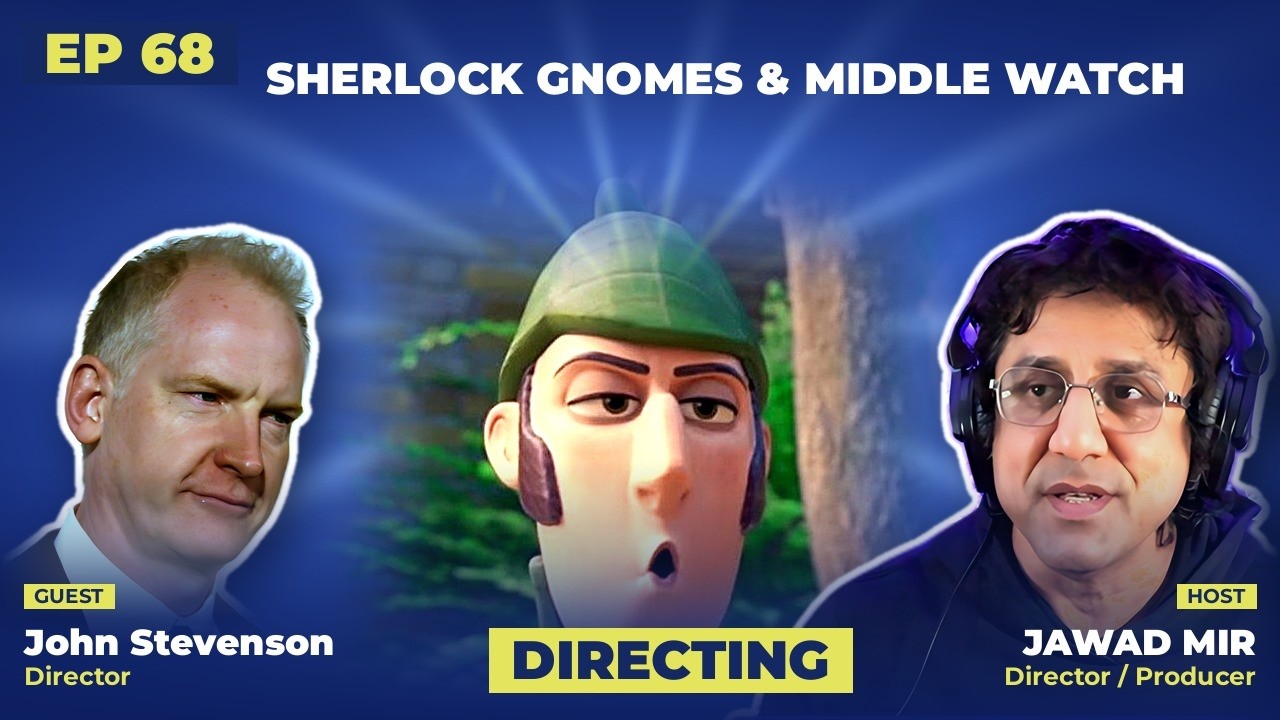
'Sherlock Gnomes' & 'Middle Watch', Director, John Stevenson
Clips and Shorts from this episode
About this episode
This episode features EP 77, Conversation with DirectorJohn Stevenson, 'Sherlock Gnomes' & 'Middle Watch'
SHERLOCK GNOMES
Garden gnomes, Gnomeo (James McAvoy) and Juliet (Emily Blunt), recruit renowned detective Sherlock Gnomes (Johnny Depp) to investigate the mysterious disappearance of other garden ornaments.
MIDDLE WATCH
As World War Two draws to a close, a sailor aboard ship in the Indian Ocean must do his duty. Watch must be kept, the horizon scanned for enemy craft and the bubble trails of deadly torpedoes fired from stealthy submarines. Haunted and scarred by conflict and the loss of fellow shipmates, our sailor's task is the Middle Watch, or the graveyard watch, as old mariners call it. But, as he goes about his duties, in the small hours of the morning, his routine is shattered by an encounter that could tip the balance of his delicate state of mind.
Kingdom of Dreams is a podcast about cinema and art of storytelling. The Podcast series will interview people involved behind the scenes, may it be screenwriters, directors, animators, producers etc.
Full transcript
Automatically generated from the episode audio, so expect the odd misheard word or name. Speakers were labelled automatically. About 12,300 words. Tap a timestamp to play from that moment.
0:05John StevensonGood to see you again.
0:07Jawad MirGood to see you again, too. I'm doing well. And yourself?
0:10John StevensonNot too bad. It's starting to get warm here in, Los Angeles. It's been kind of an unusually not warm beginning of the year here, but it's starting to warm up now. Sun's shining, so things are, things are good. Now we don't want it to get too hot, so it's never, it's never... It's either we're bitching 'cause it's too cold, or we're gonna be complaining 'cause it's too hot, so…
0:34Jawad MirYeah
0:34John Stevenson... Might as…
0:34Jawad MirYeah. No, it's actually pretty humid over here. There's a heat warning. Yesterday was really hot.
0:41John StevensonOh, okay, cool.
0:42Jawad MirBut it's, it's all good. I don't, I don't mind it. I mean, I… we're kind of accustomed to bitter cold or super hot, so it is what it is, you know? You take it one day at a time.
0:52John StevensonWell, yeah, the cold and the wet I'm happy to…... Forgo. Yeah. So…
0:59Jawad MirI think that's, I think that's everybody in California.
1:02John StevensonYeah. The first 30 years of my life I spent in, you know, in the UK and, I got my fill of cold, wet weather and cold, wet winters. So, I always feel kind of cheated when it, when it gets cold or wet in California. It's like, "I traveled 6,000 miles to get away from that rubbish."
1:23Jawad MirNo, I get it. I get it. No, thank you so much, man, for joining. Appreciate it.
1:28John StevensonMy pleasure.
1:29Jawad Mirhuh.
1:29John StevensonAlways.
1:30Jawad MirWe chatted about this, in person about your last feature, animated film, Sherlock, Gnomes.
1:40John StevensonYeah.
1:41Jawad MirAnd, you know, just sort of wanna expand on that. I got... I saw the film just this morning, and, was pleasantly, not surprised, but in based on the reviews…... I was kinda like, 'cause I…
1:56John StevensonSure.
1:57Jawad MirYou know, you and I talked about it, and then I saw the reviews. I had no idea it was that bad, the tom… you know, the Rotten Tomatoes
2:05John StevensonOh, yeah
2:05Jawad Mir... And…
2:06John Stevenson27%
2:07Jawad Mir... I mean…
2:07John StevensonSomething like that.
2:08Jawad MirYeah, even the audience score was pretty low. So I watched it and I didn't think, I mean, it did s… I ju… honestly think it should be around 70, 75%, like, just based on what I saw. I mean, it had great... First of all, the animation I loved. The animation and the characters and the storytelling, and it was very fast-paced and witted. And one thing that I really liked about it that is lacking nowadays even from Pixar films, there were days when Pixar and DreamWorks, I don't know much about DreamWorks right now, like maybe I saw Puss in Boots. There were days when they were used to be humor for kids and adults.
2:47Jawad MirThat doesn't seem to be the case with Pixar anymore. I think it's, I've seen a couple of the recent Pixar films, and I, it just wasn't for adults, it was for kids. And this, on the contrary, was different. It had that fine balance like Shrek did. So, you know, just to kinda let you know that it w… I'm sure other people have told you that…... It is, it is a decently good movie. I just don't know why it, you know, can, why the…
3:18John StevensonI will take decently good movie. Yeah, that's way better than any of the, critical reactions that, you know, we ha… we had. So decently good movie, we'll, we'll take that. Thank you.
3:30Jawad MirPerfect. Well, tell me about the process, how you started that, film, how you got on board. I know we kind of ended talking about Kung Fu Panda, the first one, and then just sort of your journey from there leading up to, this project.
3:44John StevensonWell, there was this sort of weird period of about, I mean, it was seven years between Kung Fu Panda and me getting, Sherlock Gnomes. And, you know, the reason I got Sherlock Gnomes was it was the first green-lit movie that I, you know, I was offered in seven years. I'd spent seven years developing lots of projects and being attached to lots of things. I don't think any of the things that I've been attached to that subsequently went on and churned to other directors have ever seen the light of day. Like, you know, Masters of the Universe, I believe that's actually happening, but, you know, after I left Masters of the Universe, it churned through a whole bunch of directors. I was on, you know, a whole number of projects, a Fraggle Rock movie that still hasn't got made, an adaptation of Grant Morrison's We3, The Minor Took a Cigarette Break, lots and lots of things.
4:44John StevensonAnd basically, those development deals, they paid my bills just for the seven years after Kung Fu Panda while I was trying to get a, another feature. But it wasn't... I, you know, I had many things that I was developing. Normally, I, my brain's just about big enough to hold about five or six different projects at one time, so I was juggling like five or six, knowing that either all or most of them would fall apart, you know, and then you'd have to replace them with a different project.
5:16Jawad MirRight
5:16John Stevenson... And it turned out that Sherlock Gnomes was the, you know, the first real movie, that I was offered after seven years. You know, and it got green-lit I think in May 2015, I think. We were in production in August 2015.
5:35John StevensonI'd been working on it since I first met the producers, Steve Hamilton Shaw and Carolyn Soper, I think in 2012 or '13. And they had originally been trying to raise the money independently, and that was a tiresome process of a, of a few years where they would, you know, I would go out to pitch meetings with them and, They would sort of tell me they, you know, they had like two-thirds of the financing and they were waiting on the last bit, and then they would get that bit, and then one of the other investors would fall out, and it was this house of cards that kept sort of building up and collapsing, and building up and collapsing. And then e… eventually, I think after a couple of years, they made the choice to, you know, do the one-stop shopping deal of go to a major studio. Paramount, was interested in the project and they, you know, it became a Paramount picture that they funded and distributed. But, you know, I'd been working on it for a couple of years before it was green lit in 2015, along with…
6:39Jawad MirRight
6:39John Stevenson... A lot of other... It was not, you know, it was not the only project on my plate. It was one of six, I think, at the time.
6:48Jawad MirRight
6:48John Stevenson... Another was, one other one was The Ark and the Aardvark, which if you check my IMDb page is still about to come out, although,... You know, you know, I haven't, haven't heard any news on that for a long time. So, you know, it wasn't, it, Sherlock Gnomes was not the only thing I was working on, it was, it was the one that got green lit. And my rule has always been, you know, first project to green lit, to green light wins. So that was the reason I did it, was because it was a real movie. It was going to happen. It had a, you know, real director salary attached to it, which I, you know, could do with after seven years of sort of scraping by on, you know, development deals, you know, which do not pay very well. So that was the reason I did. It was partly financial, because, I mean, you know, it was a job security for, about three years and, on a, on a reasonable, you know, salary.
7:46John Stevenson... And it was a real project as opposed to a maybe project, so that was why I did it.
7:52Jawad MirNow, in terms of the treatment that you, or was the script already fully written, or was there a lot of, different, versions that you went through as you came on the direct… as a director?
8:07John StevensonThere was, there was an idea about the film, which I rejected, either rightly or…
8:13Jawad MirRight
8:13John Stevenson... Rightly. And the i… the idea at the, when I was first presented with it was that there was a gnome who thought he was Sherlock Gno… Sherlock Gnomes, but he wasn't. He was, he was deluded, you know? So it had, it had some elements of s… you know, some of the sort of, you know, Sherlock Holmes kind of comedy films, you know? Like is it, is it the George C. Scott film? You know, They Might Be Giants where w… where he thinks he's Sherlock?
8:49Jawad MirRight.
8:49John StevensonAnyway, it's a bit more like that. He wasn't, this guy wasn't, at least in the treatment, it wasn't a script, it was a treatment as I remember, it was a, it was a sort of a gnome who was confused and imagined himself as Sherlock, but wasn't. And I just didn't find that particularly interesting, you know, 'cause I actually really love the character of Sherlock Holmes and, you know, when I was, at school, you know, we had a very Edwardian, kind of boy's own school library. I w… you know, I went to a, an all-boys school in Sussex, and they had this, you know, H. Rider Haggard and Rudyard Kipling-esque type library. And
9:34Jawad MirRight
9:34John Stevenson... And Sherlock Holmes and, Edgar Rice Burroughs Tarzan were like my two favorite characters, because, you know, Tarzan's all physical and Sherlock's all mental. Well… ... Not actually all, he's very good at, you know, he's, he's, he's actually very athletic. But, so he was my favorite character and I just didn't, I didn't, I couldn't really connect with, you know, a film about an idiot, you know, who was a bumbling, you know, fool who thought he was brilliant but wasn't. I didn't find that a particularly interesting challenge. So I thought it would be, what I was more, I l… you know, I pitched, I think my pitch to the producers was something like, "Why don't we make a real, you know, Sherlock Holmes venture, adventure but at 12 inches tall?" You know?
10:28John StevensonA… a… a… and the sort of the backstory that we sort of came up with was that, you know, the n… the gnome factory that makes, that makes garden gnomes and did a specialty line of famous, you know, parodies of, you know, parodies of famous sort of figures and that Sherlock Gnome sort of being one of the puns that they would've come up with. I can't remember what the other ones were. You know, none of this is in the film, of course.
10:58John StevensonBut that's sort of what we imagined, that, you know, a garden gnome factory might have made a Sherlock Gnomes as a, as a joke specialty, you know, gnome. And if they, if they had, they would've gone with the cliche, you know, look of the deer stalker and, you know, magnifying glass and all the sort of, the sort of the tropes that we sort of associate with Sherlock, which actually aren't, in Conan Doyle. So that was kind of how we came, you know, justified that idea. And so that was a, that was sort of the spin, rightly or wrongly, that I chose to put on it, and that the producers accepted, and that we ended up pitching.
11:43Jawad MirNow, when you directed your first feature, which was with Mark Osborne, you know, it was a duo director, on Kung Fu Panda, and then here you are working on this film as a director, were old habits still there or was it… Nothing against working with anybody else. Sometimes those things work out really great, actually quite rarely, but when they do, they work out really well. Sometimes they don't. Was there something that you missed from the previous experience or vice versa?
12:19John StevensonI think the only thing that I, you know, I expect Mark would probably say the same thing if you ask him his, about his experience on directing Little Prince, you know, that it was simply easier 'cause you had one less person whose views you have to sort of take into consideration. There's sort of less compromise about what you want to do.
12:42Jawad MirYeah.
12:44John StevensonThe, you know, the nice thing about directing with someone is that it's a lonely position, you know. You're sort of captain of the ship and you know you have to be…
12:54Jawad MirYeah
12:54John Stevenson... In charge, make the decisions, and keep everything going. You know, it's, it's nice to have someone to confide in who gets it, you know, w… when it gets tough. You know, and that was, that was true with Mark on Panda. You know, we had each other when it was, when things were sort of, you know, challenging or whatever.
13:18Jawad MirRight.
13:18John StevensonOr when one of us, you know, was just tired, physically tired, you know, and our energy was down and we had a lot of stuff to do, you know, it was, it was a… it was nice knowing that somebody had your back and could get you through your bad day, and then you would do the same for them. When you're solo…
13:36Jawad MirYeah
13:36John Stevenson... You don't have, you know, maybe you have to, you have to get yourself up whether, you know, you want, you feel like it, or if you're sick or, you know, exhausted or whatever. You know, you have to lead the parade. But in, but creatively, it, you know, I'm sure Mark would agree, it was easier, you know, because you're only just, you're the only person who you're checking in with about whether you know, want to do something or believe it's right, is yourself.
14:04Jawad MirRight.
14:04John StevensonYou then have to submit idea to the producers and to the studio and you know, eventually to the crew. But in terms of, you know, a direction, you know, it's being solo is easier.
14:20Jawad MirYeah. No, I completely, I completely understand. Sometimes it is, like you said, the confinement and, you know, when you're maybe having a bad day, somebody's that you can count on somebody else…
14:32John StevensonYeah
14:32Jawad Mir... Who's literally, you know, looking for the betterment of the film just as much as you are.
14:36John StevensonYeah.
14:36Jawad MirAnd one thing, so here, h… when I was watching it, I saw a lot of cool stuff in there that really clicked with me. Like I said, the adult humor, the cross-cultural, you know, references and all that stuff. Like in one shot, I think in the, in the beginning you did,... It appeared that way at least that there was a tribute to Indiana Jones, and then there was, you know, Chucky and all that stuff, just very subtly. And it, was that something that you were... I know it's w… it was in the script after it was done and everything, but were those things sort of sometimes added or taken out later on when you guys were in the process? Or was it like very much to the script at all times once it's finally…
15:31John StevensonNo. We would, you know, we were always kind of, you know, I like, I like Easter eggs, you know. If they don't hurt, you know, the narrative, if you're not drawing too much attention to the Easter egg, you know, if it's just there and it's something for people who get it, and if people don't get it doesn't matter. You know, the story…
15:53Jawad MirYeah
15:53John Stevenson... So, you know, it was something we would, you know, w… I, there were, there were things that I definitely wanted to put in. I mean, the most, the most, clearly planted, which is I don't make any apology for is a sort of a, is a sort of a tribute, thank you, whatever you wanna call it, to Ray Harryhausen…
16:15Jawad MirSure
16:16John Stevenson... Carol Zemann. So very definitely planted that. I wanted people to see that. And if people didn't understand what those names meant, then, you know, that was okay. And if people were intrigued, I hoped they would go and, you know, Google it or Wikipedia and find out who Ray Harryhausen and Carol Zemann were. But I just wanted to do it as an acknowledgement that, you know, I wouldn't be directing anything if it probably wasn't for the inspiration of, you know, those two…
16:46Jawad MirSure
16:46John Stevenson... In character. So I definitely, you know, petitioned to add that, you know, that little moment in. But we, you know, we were always looking for, you know…
16:58Jawad MirYeah
16:58John Stevenson... Things that we thought were funny as long as long... A… and acknowledgements of either things that, you know, we liked or we felt were sort of appropriate or nods to other things that had meant something to us. And as I said, as long as it, we didn't feel it was, too overt or pulled focus from the main story and if we could tuck it in…
17:22Jawad MirYeah
17:22John Stevenson... We would.
17:24Jawad MirYeah. Makes sense. One thing animation I find can get away with, and it's so funny, I saw, Dial of the Destiny last night.
17:36John StevensonYeah, me too.
17:38Jawad MirAnd yeah. Okay, there you go. We can go on that subject. I just talked about it twice today to two different people, but anyways
17:44John StevensonWell, did you like it? Did you not like it?
17:47Jawad MirNot really, no.
17:48John StevensonYou didn't?
17:48Jawad MirNo.
17:48John StevensonOkay. I re…
17:49Jawad MirNo
17:49John Stevenson... I really liked it. Maybe it was just because I hated the last one so much and was so offended by the la… you know, the crystal skull that maybe my expectations were set so low after that this one was like, oh, it's, it's, you know, it's a nice wrap up… I'll, I'll tell you a funny story, telling…
18:11Jawad MirSure
18:12John Stevenson... Kung Fu Panda, Tina of the Crystal Skull related story, just as a sorry sidebar, then we'll get back to your question. Mark and I, had to go do some press. We were in Minneapolis, I think, and we were doing press for Kung Fu Panda, and there was a screening, and we did a, you know, an introduction, a Q&A. And then that night, they were gonna show, a late night, you know, pre… preview or premiere or whatever it was in Minneapolis o… of Indiana Jones and the Kingdom of the Crystal Skull. And it was... I didn't think it went on about, you know, 11:00 or something like that, you know? And…
18:48John Stevenson... And we were, you know, we were fans. We said, "Oh, can we stay after our presentation and see the movie?" And they were like, "Oh, yeah. Sure, great." Yeah. But we were exhausted. And, you know, partly it was the end of the film and, you know, four years of that, but also we'd been traveling or whatever. So we were all really excited when the film started and like almost immediately when I was looking at, you know, I, my, f… felt my heart sinking and going, "Oh, no, this is, this is awful. This is all... Everything that I loved about, you know, the original Raiders, all the sort of, all the practical s… you know, stunts and locations…"
19:23John Stevenson"It's all, you know, CGI crap," you know? And so my heart was sinking, and I kept falling asleep and waking up and falling asleep and waking up because I was so tired. And at some point, I must have nodded off, and when I woke up, it was when the alien was there, and I thought I'd slept through into another movie. I thought…... I No, it's interesting you mention that because when I saw that film, I didn't like it at all either.
20:24John StevensonAnd then, past few weeks I've been sort of with my kids watching all the Indiana Jones movies just to kinda give them the background context so when we go to see this one, and I saw Kingdom of Crystal Skull, like, after whatever, 14 years or something.
20:42Jawad MirAnd it wasn't as bad as it was back then for some reason. Yeah, it had problems and everything, but now after watching the, last night, the Dial of Destiny, for me, the only thing that worked were the last half an hour. That's it.
20:58John StevensonOkay.
20:58Jawad MirI loved the last half an hour, and there were some moments, I mean, the Morocco sequence was really good. But I just felt... But my question was leading up to that point was in animation a lot of characters can work because it's animation. You can get away with it.
21:17John StevensonYeah.
21:17Jawad MirIn live action, which was gonna be my point last night, you know, there were so many characters that didn't have any need to the story, at least in my opinion. And that doesn't work. So i… i… i…
21:30John StevensonAre you talking about characters as in we just sort of re… reprise just so that they could have their cameo?
21:35Jawad MirNo.
21:36John StevensonThey…
21:36Jawad MirNo, I wasn't even talking about... I think S… Sallah was wasted. Like, they could have…
21:41John StevensonYeah
21:41Jawad Mir... Had him go on a journey with Indiana. I think that would've been really funny.
21:45John StevensonYeah.
21:46Jawad MirI thought, Antonio's character was, had no point.
21:50John StevensonYeah.
21:50Jawad MirEven the little kid was okay. I mean, I know they were trying to pull out Short Round, but it was not even close, to that. But again, those are just my opinions. I mean, I've, I've…
22:00John StevensonAlthough, so did the Karen Allen, you know…
22:04Jawad MirThat was good
22:05John Stevenson... Yeah, I thought that was very, you know, thought it was very nicely done and genuinely emotional and…
22:11Jawad MirYeah
22:11John Stevenson... And, you know, a nice, you know, a happy ending for Indiana that I was happy that he got, that the film got. And I think James Mangold…
22:21Jawad MirHe…
22:21John Stevenson... Great director. I mean, he's, and he's the…
22:22Jawad MirOh, he's, I... He's amazing. I loved Logan. I loved Ford v. Ferrari.
22:28John StevensonYeah.
22:28Jawad MirWhat I would have loved to see, I tell you, I don't know if you remember that se… sequence…
22:32John StevensonYou know, I…
22:32Jawad Mir... And we're going off topic. Sorry?
22:35John StevensonHis 3:10 to, you know, remake of 3:10 to Yuma I think is terrific.
22:38Jawad MirYeah. That was, that was great. That was fabulous too. What really got me interested and piqued, and I wish they had gone in that r… route... Again, I'm not a, you know, Indiana Jones screenwriter or anything, but when he talked about his son on the boat…
22:55Jawad Mir... You know, what... I thought that moment, I'm like, it would've been great if the story was about him trying to undo what happened and then realizing that maybe he should go back to his, you know, wife. And I think that to me would've been great, but hey, I'm not I'm just, you know, wish... W… maybe I'll like it in 20 years. Who knows? But
23:19John StevensonAnd the last…
23:21Jawad MirSorry?
23:21John StevensonI had a good time and I was happy. I felt it was a good sendoff for that character. I thought Phoebe Waller-Bridge was great. You know, I thought she…
23:31Jawad MirShe was fabulous
23:32John Stevenson... Just terrific.
23:33Jawad MirYeah
23:34John Stevenson... So I'm very happy. You know, I really enjoyed the film and now there are four Indiana Jones films I can watch that make a complete story if you just leave out Kingdom of the Crystal Skull.
23:50Jawad MirIt's so interesting that people have, people are pretty much unanimously in agreement with the f… with the first three ones, but fourth and fifth one I find is it's kinda like torn between. Yeah.
24:03John StevensonI expect there must be fans of Kingdom of the Crystal Skull for all the reasons that I hate it You know, I mean…
24:09Jawad MirThere are, but it's not like the first three, you know?
24:12John StevensonNo.
24:13Jawad MirLast Crusade, Temple of Doom.
24:14John StevensonBut maybe there are people who love the fact that there's, you know, aliens and a flying saucer in King of the Crystal Skull, you know? Which is for me, that was, that was, you know, where the, you know, y… you know…
24:27Jawad MirYeah, I know. I…
24:28John StevensonJump the shark is now sort of in w… what's the thing about the fridge, you know? We nuked the fridge.
24:34Jawad MirOh, God, don't even get me started on that.
24:38John StevensonSo that film…
24:39Jawad MirThat was the biggest turn-off for me. I'm like, if he can survive the nuclear blast…
24:44John StevensonYeah
24:44Jawad Mir... By some coincidence, the c… the fall of the bridge would've broken his neck 10 times…
24:49John StevensonYeah
24:49Jawad Mir... Or 100 times.
24:51John StevensonYeah. So, you know, that film, that was, as I said, you know, when I was watching it and my heart started to sink, that was, that was when my heart started to sink…
25:01Jawad MirYeah
25:01John Stevenson... Was like, "Oh, all the rules of logic have gone out the window. We haven't even got going."
25:07Jawad MirYeah
25:08John Stevenson... That film…
25:09Jawad MirBut going back... Sorry, go…
25:10John StevensonAnd nuked the fridge
25:11Jawad Mir... Go on. What did you say?
25:14John StevensonNo, I said that film jumped the shark and nuked the fridge, you know? It nuked the fridge…
25:17Jawad MirThat's true
25:18John Stevenson... And it jumped the shark…
25:19Jawad MirThat's true
25:19John Stevenson... Put aliens in it, you know, it broke all the rules of what I had loved about the first three movies, you know? So.
25:27Jawad MirI would love to see if there's a director's cut for, the new Indiana Jones, but, we… we'll see. I mean, sometimes these things, as you know more than I do, you know, the studio and all that stuff, there's so many chefs in the kitchen.
25:41John StevensonI, you know, I think as a... I spoke to James Mangold… ... When I was working with Henry Selick on, at Twitching Image in San Francisco, and…
25:52Jawad MirRight
25:52John Stevenson... You know, I think, I can't remember exactly, but we reached out to him, and, you know, he wasn't sort of the director that he is now. He was, he was about, he... I think it was Cop Land that he was working on when we spoke to him and, you know…
26:11Jawad MirOh, he did Cop Land?
26:14John StevensonWhen we, when we called him, I had a, I had a conversation with him, and he was, he was, he had either just turned it in or was about to, but that was the current project that he was working on. Anyway, I just wanted to say that James Mangold was the nicest and most generous person.
26:31Jawad MirOh, I'm sure.
26:33John StevensonHe gave, he gave us a ton of time. He was really kind and helpful. So, you know, and then he went on to make, you know, freaking amazing movies. So, you know, I'm, I'm a, I'm a big James Mangold fan.
26:48Jawad MirNo, he... I... Look, I didn't even know Cop Land was made by him because I remember when it came out, I absolutely loved it. For Sylvester Stallone to be in that kind of a role was, like, unheard of at that time.
26:59John StevensonWell, what I remember, that he was upset because he had written the climax of Cop Land, I don't... You know, if you remember in the, in the film, you know
27:12Jawad MirYeah
27:12John Stevenson... They deafen Sylvester Stallone's character by firing a gun near his ear. And so the final shootout, as written in his script, as he told me on his phone call, was supposed to be played out in kind of silence. So it was a, it was supposed to be a gunfight where you couldn't hear the gunshots because Sylvester Stallone's character couldn't hear them.
27:34Jawad MirOf course.
27:34John StevensonMaybe like a high sort of tinnitus whine, but no sort of pyrotechnic booms and things. And he was upset because, Harvey Weinstein had overruled him on that, and they'd put in, you know, sort of firefight sound effects, which he thought ruined the whole, you know, point of the climax of something he thought was very interesting. And so there's a director's cut of Cop Land, you know, which should be released where there are no gunshots in the, in the final shootout, and that would be much closer to his original vision, as he, as he told us on the phone call.
28:15Jawad MirI would love to see that, and I think he's a genius filmmaker.
28:19John StevensonYeah
28:20Jawad Mir... I really am looking forward to whatever he's got unfolding next. I mean, I truly believe he's at the level of Christopher Nolan and Quentin Tarantino and the names like that.
28:30John StevensonYeah. He's absolutely great. He can make those great big movies and make them really…
28:35Jawad MirHuman. Human, he humanized them
28:37John Stevenson... You know, not only sort of elegant but with great intelligence…
28:39Jawad MirYeah
28:39John Stevenson... And kindness.
28:41Jawad MirSo tell me about, Sherlock Gnomes. Like, once the film, like the problems that you were going through in the production as you were about to sort of unwind, as opposed, as op… as you were about to wrap up, production and, leading up to the release date.
29:00John StevensonWell, we had a bunch of challenges on that film because we had, we had, like, five r… regime changes at Paramount at the time we made the film over three years. So we were green-lit by, sorry, it's Adam Goodman green-lit us, and then, you know, he sort of left the company some, you know, like a few weeks after we got green-lit, and then we went through I think five different, you know, people that we had to show our work to, over the course of three years. And every, you know, every time we'd get used to one, they'd, they'd, they'd be fired or, and leave, and we'd just have to start again with somebody else. And so there was this big churn of sort of the heads of studio, you know, as I said, five different ones, or at least five different people that we were reporting to, and that was definitely challenging. You know, that meant, you know, our boat was zigzagging all over the place because we'd been doing, we'd follow one set of, you know, cues from the, from one person, and then they'd be gone, and we'd get another, a different set and do that, and then they'd be gone, you know?
30:14John StevensonSo… It was a crazy clown car, you know, sort of driving all over the road. That was challenging. That was very challenging, you know. Making the film wasn't challenging. You know, I had a great crew. You know, we used Mikros Animation, i… in France, and we set up a satellite studio at, MPC, Moving Picture Company, in London, you know, and that was where we were, we were based. We used…
30:42John Stevenson... We had a, you know, we had our own sort of satellite Mikros studio, MPC, but we were also using big Mikros over in Paris and sort of... So we'd go over, work with them. They were great. You know, the crew in London was great. So actually making the film, you know, with the people was not, you know, was no more, no more or less difficult making an animation film anywhere. And we had a really great crew that I enjoyed going into work with every day. You know, it was the challenging, you know, who are we trying to make happy this week? That was, that was, you know, that was hard.
31:30Jawad MirAnd how, as a captain of the ship, you know, during that five regime changes and everybody coming in with their own demands and their own politics and all that stuff, as a captain of the ship, how do you steer your crew and your ship? Like, do you have a meeting every time there is a big, you know, some sort of a demand…
31:50John StevensonWell…
31:51Jawad Mir... That this needs?
31:52John StevensonThe head of, you know, you know, I would with, you know, primarily with Steve Hamilton Shaw and Karen Soper, the producers, you know, we would…
32:02Jawad MirRight
32:02John Stevenson... We would huddle, like, "Okay, what the hell do we do now?" You know, whenever we would get sort of some, you know, conflicting directions or, you know, a new set of things that kind of were in, you know, sort of ran against what we'd already been working on, you know, trying to resolve them and trying to keep making the film that we had pitched, that we had got green-lit, while also taking on board all these new, you know, needs and requirements and demands, you know. You know, but it was our job not to pass that down as much as we could to the crew. The crew don't need to know about that stuff, so you know, they need, just need to do, you know, the job that we've given them. So our job was, you know, we were trying to, you know, make the film that we thought it should be and believed in, you know, while, you know, trying to allow for, you know, some input from new, you know, from sort of new p… regimes, but without allowing that new input to sort of derail everything that we'd been working on for years.
33:13John StevensonYou know, it was hard, I kid you not.
33:19Jawad MirYeah. And dealing with the, you know, marketing and promotion of the film, like, that's, I mean, you have so many films in the world, not just animation or studio-based, that could be the most incredible films but we never hear about them because either they're not marketed properly or they're just marketed wrong, like, in a completely wrong way.
33:41Jawad MirDid Sherlock Gnomes go through anything like that?
33:47John StevensonOh, it was... I have to, I have to say, that was, that was... The w… the... We really, I mean, I don't, I can only speak for myself, I hate the way the film was marketed, you know? And I think, you know, look, I'm fine with people looking at the, at something that you make and going, "Well, I don't like that," you know, if you actually look at the thing. But I think a lot of, a lot of, you know, people who've, who've had negative feelings about Sherlock Gnomes, are to do with the trailer and the marketing, which, you know, made it out to be a different movie than we were actually, you know, making. I mean, in fact, you know, the trailer that you can still unfortunately find whenever you look up Sherlock Gnomes on IMDb, you know, about 50% of that trailer was custom animation only for the trailer, that the marketing department, you know, made us animate only for the trailer because they wanted it to... They wanted that movie. We weren't making that movie, the movie that had fart jokes and, you know, no ship Sherlock, you know, puns. So that stuff that's in the trailer was never intended to go in the film, and we had to animate that to please the marketing department.
35:01John StevensonAnd I'd never heard of a, you know, of a film that had to animate special scenes for the trailer that were never intended to be in the film. But that trailer turned a lot of people off. I mean, we thought it completely... You know, people may still have not liked the movie, but at least don't like it for the film that it actually is, as opposed to…
35:22Jawad MirRight
35:23John Stevenson... To the film that it isn't. And I think we got a lot of negative reaction when that trailer dropped. A lot of people quite rightly said they thought it was crass and stupid and lowest common denominator, all the things that we were, you know, trying very much to, you know, avoid doing with Sherlock. And, you know, we, I mean, rule one when we started Sherlock was there was gonna be no fart jokes, and what's the, what's the biggest thing in the trailer? It's that stupid fart joke, which was, you know, that was written by the marketing department. It was not ever part of the script and was never supposed to be part of the film. So, you know, it just shows you know, you can have the best intentions in the world and they can still get scuppered. So yes, I'm not a fan of the marketing. I don't think it represented the film, you know. And I, y… there's no way of knowing whether the film would've performed any better or worse… With different marketing, you know, it didn't, it performed about half as well as I think the original, Gnomeo and Juliet, and certainly got much worse, reviews.
36:30John StevensonWould any of that changed if we did, if we'd had better marketing that more closely represented the film? N… no way of knowing. I would hope so, but m… maybe wouldn't have made any difference. I don't know.
36:44Jawad MirMaybe you should use the Dial of the Destiny to find out.
36:49John StevensonNah, it's all in the past, you know? You know, you do the best you can, so.
36:52Jawad MirI know, I know.
36:53John StevensonAnd then you move on. And that's all you can do, you know? I mean, and, you know, as I sort of said to people, when I was making Sherlock Gnomes and when I was making Kung Fu Panda, they both felt exactly the same to me. You know, day to day going in, working with, the, your crew, you know, it was as hard work and as fun and as enjoyable on Sherlock as it was on Kung Fu Panda. You know, it wasn't... And, you know, w… everybody who worked on the film, i… in terms of, you know, the crew, the MPC and, Mikros, you know, we all believed it, believed in it, and we all thought we were doing, you know, something good. We were all trying to do something good. We all worked really hard. And we had, you know, but you don't know. I mean, you know, what, as I told you, when Kung Fu Panda came out, we didn't know it was gonna be a success. It wasn't like we all felt…
37:47Jawad MirRight
37:48John Stevenson... It was some guaranteed, you know, big hit. You know, I was terrified it would make less than 15 million on its opening weekend, and the studio wanted 20, and we ended up, you know, making, like, over 60. So that was a surprise, you know? A good one. You know, when Sherlock came out, had no idea. It was, you know, could either have been, you know, a big success and celebrated as being something good or, you know, the opposite. And sadly it was, it was the opposite. But making it didn't, it wasn't like when we were making Sherlock we went, "Oh, this is, this, you know, this is the unsuccessful film," you know? This is the…
38:31Jawad MirYeah, of course
38:31John Stevenson... This is the one that's gonna flop and everybody's gonna write bad reviews about it. We're, you know... You have no control over that stuff and you have no idea, so you just do the best you can every day, and as long as you finish up a movie and everybody can look at each other in the eye and go, "You know, we, you know, we did our, the best work we were capable of in the, you know, the time and circumstances allowed to us," that's all you can do. And if the world likes it, great. If it does… if the world doesn't like it, then you go, "Oh, well," and you move on to the next thing.
39:03Jawad MirThat is so true, because, you know, everybody, whether you're in animation, live action, documentary, whatever scene you're in making films, aside from telling a story that you wanna tell, there is a big element that a lot of people who watch films, you and I, everybody else, you know, that the experience that you have making that film,.. You know, I was talking to Simon. He said it very really well about working on, Ma… Mars Needs Moms, is that he, I think he was offered Kung Fu T… Panda 2 by Jeffrey Katzenberg, and, he turned it down just to go, for Mars Needs Mom. And despite how it turned out with critics and box office, he wouldn't change that for anything because the experience that he had with the group of people that he worked with.
39:56Jawad MirAnd same thing, same thing that you said, right? And…
39:59John StevensonYeah
39:59Jawad Mir... It's, it's just that you build this family and, a… a… and this experience that y… that stays with you. And the, you know, the movie comes out and goes o… you know, whether it goes through the roof or tanks, n… whether it's right or wrong, that's a different story. But it's that experience that you have as a human being and how it makes you grow to do something different…
40:21John StevensonYeah
40:21Jawad Mir... And maybe even, you know, better.
40:24John StevensonWell, you know, e… exactly right. I mean, the whole reason I like making things, you know, and particularly animation, is that collaboration with a lot of, you know, really smart, really fun, really creative people that hopefully surprise you every day by doing better work than you had imagined and, you know, maybe inspiring you to do better work yourself and to try and, you know, push harder and do better. That, you know, and I've worked on, you know, like, really crummy low-budget commercials and…
41:01John Stevenson... And sort of low-budget industrial thing, you know, films and, you know, all that kind of stuff that you sort of, you churn through. And, you know, those could still be really good experiences because of the people you worked with. So the thing itself may have just been some industrial film that you tried to make as good as it possibly could be given whatever time and money you had available, but the process of making it, even if you were in some kind of crummy studio in some horrible industrial, you know, wasteland, which I've, you know, been in, but if you're working with really fun people, then that's a good experience, you know? And…
41:41Jawad MirYeah
41:41John Stevenson... You know, if you get, you get the, you know, you get the trifecta of, you know, the, you know, the fun experience working with a great crew and you make something, you know, that you're proud of that is really good, that's a, that's a success. I mean, you know, that does happen, but it's very rare. You know, normally if you just get, if you can get one out of the three, then you're, you know, you're lucky. And the one that you're most likely to get is, working with a bunch of people that you enjoy and enjoy coming to work with every day.
42:17Jawad MirAbsolutely. And that sort of led you, after Sherlock Gnomes came out… you know, your path working on a project that was something that you, a short animated film. Talk about that to me, please.
42:32John StevensonWell, you know, weirdly it may be that the best thing that came out of, you know, the failure of Sherlock Gnomes was Middlewatch, the short film that I made, you know? And the reason it got made was because of the failure of, you know, Sherlock Gnomes. I was... You know, I'd spent, you know, probably five years of my life on, Sherlock Gnomes, three years in production, and it came out and disappeared over a weekend, basically. You know, it got slammed by critics and did terrible box office. And so, you know, you spent five years on something and then, you know, y… you know, by S… you know, Sunday evening you're a donkey and nobody wants to talk to you know? And so I was depressed, certainly, you know, for a good couple of months, and my very kind and, forgiving wife allowed me two months of sort of grumpily m… moping about the house, feeling sorry for myself and getting underfoot and just being a general drag to everybody.
43:36John StevensonAnd after a couple of months of this, she basically got fed up and told me, you know, "Why don't you just go and make a short film?" And I think, you know, I was sort of, you know, like, "easy for you to say, make a f… f…" Some childish, you know, immature reaction like that. And then as sometimes happens, you know, like the next day, I think literally it was the next day, while just poking ar… around on the internet in a dispirited kind of a way, I found what would become the inspiration for, Middlewatch, the short film that I made. And, you know, that started this process of working on it for the next four years, or three and a half years, you know, from 11… which what ended up being a m… like an 11-minute, an… animated film, that eventually got nominated for a BAFTA. So, you know, from a conversation with an exasperated spouse to, you know, being at the BAFTAs, you know, being one of three nominated films, only happened because of, you know, 'cause Sherlock had been, you know, such a, so unsuccessful and the, and the re… reviews had been so bruising.
44:56John StevensonSo if Sherlock had been, you know, even a moderate success, I probably wouldn't have felt, you know, the… ... Need or the desire to make the short. You know, I'd have maybe rolled onto some other kind of, you know, commercial thing, you know?
45:12Jawad MirRight.
45:12John StevensonI may, I may not have ever made Middlewatch or ever felt the need to or, you know, whatever. So, and the, and the thing that only, you know, I know this is sound, this is sound monumentally stupid, but yeah, I didn't actually realize until the end of making Middlewatch, which is a film about, somebody suffering from PTSD who has an experience that ends up opening them up and healing them, and it wasn't until I'd finished the film that I realized, oh, I just made a film about myself. I made a film about someone who was broken and closed down and needed to be o… opened up and healed, and the film did that. So, you know, but I didn't realize it while I was making it, you know? So you know, it... That's probably the, for me, that's probably the best thing, about Sherlock Gnomes, was the fact that it's led directly to making Middlewatch.
46:23Jawad MirIt's funny that, you know, I genuinely believe, and I know it's not easy when you go through it, even for me, it's so important for all of us to every now and then, not all the time, because that would be devastating, every now and then fail.
46:40John StevensonYeah.
46:40Jawad MirBecause when we, when we fail, that keeps us, A, grounded, you know? Then we start from scratch, and then it pushes us to a corner that we've been uncomfortable with for a long time because everything else has been comfortable, right? So those things are so necessary. And it's so funny you talk about the film that you made about yourself. Two of the narrative feature documentaries that I made, simultaneously, and when they were done, I didn't realize, again, same thing happened to me. There was a similar... They're both human rights film, but for the pr… for the protagonist, they had a similar set of feeling and emotion that I never knew they both had while I was doing it, and it was something that I felt, too, about something. I mean, it's just so weird how these things are sitting in the back of our head, lingering, and then when you watch it on the screen over and over again when you're editing it or with the editor, it just comes back, like that's, that's you.
47:42Jawad MirThat's your story.
47:43John StevensonBut you know, that's, in a sense, that's sort of one of the great alchemies of motion pictures is that, you know, you can, you see directors, primarily directors' work, you know, even if they're working in kind of low-budge genre films, you know, they're paying the bills, making whatever their assignments or whatever. But their, but their personality still comes through, you know? And their obsessions and their likes and dislikes and, you know, neuroses or, you know, inspirations are all there in their films, whether they're in this genre or that genre or whatever. I mean, one of my favorite... Filmmakers, who's not a director is Val Lewton, you know. A… and if he was a producer and he made this series of absolutely sort of fabulous, very small budgeted, you know, B movies at RKO in the '40s.
48:48John StevensonYou know, Cat People, and, Bedlam, and Isle of the Dead, and I Walked With a Zombie. All these sort of films that have sort of hokey titles, but are actually wonderful. They're all made by different directors as well, but they're all Val Lewton films. They're not, they're, they're certainly more Val Lewton films than they are the director's films. And you can see, you know, and even if you look at sort of other films that weren't, you know, he's most famous for these sort of, these kind of, intellectual, psychological horror films. But, he did other genres. He did a Western called The Paschi Drums, and he did a historical film called Mademoiselle Fifi, and Youth Runs Wild. You can see him in those films too. So it's clearly him, you know, he is the sort of the auteur more than the director. And these are like, you know, these are like really small, low budgeted, you know, just filler films, but he elevates them, you know, by his, you know, his intellect and by his sort of his good taste and artistic vision.
49:57John StevensonSo every one of those films is at the very least, really interesting, and some of them are absolutely sort of, you know, wonderful, you know, bits of motion picture history and, a… and have a kind of, have a bizarre transcendent poetry to them that you just do not find in most other films of the time period. So…
50:20Jawad MirWhat's his name?
50:22John StevensonVal Lewton.
50:24Jawad MirV-A-L U-T-O-N?
50:26John StevensonL-E-U-T-O-N. Go s… go find out about Val Lewton. There's, Martin Scorsese made a great documentary, I think it's called The Man in the Shadows, I think for TCM, which is terrific. You can, a lot of his films have now been remastered on Blu-ray, so they look a lot better.
50:47Jawad MirOkay.
50:48John StevensonBut all of his films are worth watching. You know, and he, his sort of, he did a couple of kind of not so great comedies late in his life, but his RKO low-budget horror films, you know, all of those are fantastic. You know, I think I Walked With a Zombie is my favorite. There's, there's something absolutely truly magical about that film. But, The Seventh Victim is amazing. I mean, they're all amazing. Go…
51:23Jawad MirRight
51:23John Stevenson... Go and find out about him. He's great.
51:27Jawad MirI'll check them out. Middle Watch, I saw it and, you know, thank you for
51:33John StevensonDid it link work?
51:33Jawad Mir... Letting me see. Yeah, it did. I really liked it, and f… I'll tell you the first reaction I had when I saw it, and it, and I'm thinking, "Where have I seen this protagonist?" And now this does not mean in any way that it was, deliberately or not so, but it reminded me, the animation, and the style, and the character, it reminded me a lot of, like the old Superman animated series…
52:01John StevensonYeah
52:01Jawad Mir... Or the Bat… Batman animated series.
52:04John StevensonYeah.
52:04Jawad MirYou know, that facial structure a… and even the motion, like I, you know, I just felt that, I don't know, maybe because I haven't seen 2D animation that o… you know, in a long time, it was really well done. And the fact as most shorts should be, you know, most features should be too, very minimal, not even any dialogue. And I, and I really enjoyed it. You know, I really liked it. So, and it's truly i… incredible what you, what, the way you executed that with the, with the dark tones and the shadows and everything. So c… congratulations on that. It's, it's a really beautiful…
52:41John StevensonWell, thank you. The congratulations, you know, you know, are mostly due to, you know, Aisha Penwarden, my co-director, and, Rob Stratton, you know, animation director and, you know, the students at Falmouth University and…
52:58Jawad MirSure
52:58John Stevenson... The Arts University of Bournemouth. I had, I mean, there is, there is a sort of a connection between the Fleischer Superman films of the '40s because when I was doing my research into the story, as I said, I found the inspiration for the story online. It's a letter written, in, 1963 to, a magazine called Animals. It's the, if anybody's interested, it's the November 26th issue in 1963. 'cause I have it, took me a while to actually get ahold of that
53:35John Stevenson... Original magazine. But it was a, it was written in 196… the letter was written in 1963, but it was about an event that happened during the Second World War, although he doesn't give a precise date. It was written by a gentleman called JD Starkey, and he s… the only, the only actual hard facts you can find in the letter are that he was serving on an admiralty trawler, which is a very sort of specific kind of warship. A kind of, it's not a Royal Navy warship, it's sort of a conv… conversion of a, of a fishing vessel into, you know, being either a mine sweeper or, searching for submarines. And that he was stationed off the Maldives, you know, but it doesn't give a year and it doesn't give the name of the ship, 'cause I tried to find more research on it. And without those two details, you know, none of the places I went to… Could actually offer any help, but said, you know, we have to have one more of those pieces of information.
54:37John StevensonWe either needed, you know, the year it happened or the name of the ship, and then we could get some more information. So, but it was definitely a World War II story. So when I was trying to think of how, you know, I knew I wanted it to be hand drawn, because that's my first love, and trying to figure out a style, I thought it would be interesting to try and take inspiration from the war artists of the Second World War. And the British war artists of the Second World War, people like Eric Ravilious and Barnett Freedman, Paul Nash, Stephen Bone, John Everett, they worked in this very interesting kind of chunky graphic style.
55:15John StevensonSo even though they were, they were tasked with telling the emotional truth of sort of very devastating and terrible, events accurately, they didn't do it in a kind of a photoreal way. They did it in a sort of slightly, or very stylized, kind of form. And it was, in a 1940s sort of style that these people, you know, had. There's a sort of commonality, even though their artistic styles are very different. It's kind of sort of chunky and sort of, you know, and is kind of abstracted. So I thought there would be something interesting about trying to do that as the art style for the film. Partly, you know, because it is a war story, to try and sort of give it some integrity, so using, you know, a style influenced by war artists hopefully, you know, got you closer to the time period, but maybe also sort of made you sort of subconsciously perhaps believe the integrity of the art style corresponding to the fact that it was a story about the Second World War.
56:21Jawad MirRight.
56:22John StevensonAnd, you know, and obviously as the Superman films or the Flash's have a s… they have a slightly chunky, you know, very young Disney kind of l… look. You know, r… really terrific. I love those Flash and Superman, things. And they weren't a direct influence. The war artists definitely were. I mean, the trick was we didn't want to take any one artist and try and reproduce them, so we had to sort of synthesize, you know, you know, our favorite artists that we, you know... We were looking at sort of John Everett was very... He did a lot of maritime painting, so he was very useful for sort of abstracting seas and ships. And then I think Barnett Freedman w… we kind of used, and Eric Ravilious may, maybe, you know, sort of some combination for how to handle human beings. But really all praise to Aisha Penwarden. She was the one that, you know, f… figured out how to, A, give us the look that was like, "Yes, that's the right look," and also make it work.
57:27John StevensonYou know, make it, you know, something... It had to be animatable, and not just by one person. It had to be a s… we had…
57:32Jawad MirSure
57:32John Stevenson... It was a different style to work in, but it wasn't enough just to come up with an interesting style. It was a, it had to be a reproducible style that we could get, you know... And we're talking about students. We're not talking about like, you know, trained professional studio animators. We're talking about, you know, third-year animation students that we were working with, and it was a very challenging style. And it was really Rob and Aisha who were the s… quality control for the, for the visuals and made sure that the, you know, the look that Aisha and Rob had kind of come up with was carried through by all the various students, because we had students at the University of Falmouth. We had students at the, Arts University of Bournemouth, and we had, an online Russian animation school. We had students working in all part, all universities, all on a volunteer basis in the UK. And it was Aisha and Rob who made sure that, you know, the, you know, the animation style and the characters stayed consistent.
58:37John StevensonSo, you know, all praise to them, not me.
58:41Jawad MirWell, team effort, right? Collaboration. And it,.. And where, you know, people can watch this film, and what are you currently working on, if anything?
58:52John StevensonWell, it's still, Middle Watch is still going through its festival run at the moment. You know, we, as I said, we got nominated for a BAFTA, last year. But, you know, we've, I think we've f… I can't remember exactly how many festivals we've, we've sort of been accepted to e… e… either, to participate and we've won in a few. So I think something like 23, and we still have a few more to go. So while it's doing its festival run, it's not available unless you go to one of those festivals to see it, and you can't find it. You'll find the trailer, but you won't find the whole film on YouTube or Vimeo. But probably once it's finished its festival run at the end of the year, you know, we'll make it available on one of, on a platform for anybody who wants to see it. So, you know, in a few months' time we should, you know, well, once we've finished all our festival applications, we'll, we'll put it up for people to see.
59:54Jawad MirGreat. That's fantastic. And anything that you're currently working on…
59:58John StevensonYeah
59:59Jawad Mir... Or that you wanna talk about?
1:00:00John StevensonI j… yeah, I just finished, I've been, an episodic director on a new series on, for Nickelodeon called Max and the Midnights, which has been really fun and really, you know, interesting to work on. We're using Unreal Engine. You know, and we go straight to, shooting in Unreal w… without going to storyboards first.
1:00:27John StevensonSo that was a whole new way of working that I hadn't, ever done before. You know, and I am sure…... That it will become the norm going forward. It's a great way of working. I was terrified of it to start off with 'cause it was so different to anything I'd been doing of my, you know, career, you know? And then within a few days of working, you know, with it, I was like, "Wow, this is great. This is, this is the way to do it." for television, I don't, I don't know about movies, but for TV it makes complete sense to me. It's much more like shooting live action than it is animation weirdly, 'cause you go on a digital set, you do a…
1:01:07Jawad MirYeah
1:01:07John Stevenson... Location scout, and you look around, you decide, "Okay, well, let's use… we'll shoot here." And then you know, you block the action, a… as you would with actors on a live action set, and then you shoot coverage, you know, in a way that you would never do in animation. And then, you know, a… a… and for the editor, it's much more like, you know, sort of cutting a live action, TV show or a feature than it is, you know, cutting animation where, you know, you only have one angle. You know, I cover the hell out of things, so, you know…... I'm, I provide my editor with, you know, so much coverage, you know, that I know the scene should be bulletproof 'cause I've, I've got it covered, every which way, you know, from Sunday on. I love working that way. I think, I think Unreal is amazing and for working and,..
1:02:08John StevensonAnd I know Unreal's not the only, you know, kind of tool like that, but we were using Unreal, and it was great for us. And I really like it, and I think, I think the show is actually a terrific show. It's, you know, sort of this combination of, I don't know, Monty Python, The Holy Grail, and Game of Thrones, you know, for kids. You know, it's sort of a medieval Lord of the Rings type, fantasy with monsters and comedy. So, you know, ticked all my boxes. So it's been really fun, to work on. And, you know, I don't know when it will air on Nickelodeon. Maybe later this year, maybe early next year. So that's, I've literally just finished wrapping the,.. I was one of three directors. Michael Lewis and Kirk Thatcher and I were the three directors, and we each did six episodes each. And, it was a 20-episode run. So David Skelly, who's the, one of the EPs, with Sharon Flynn and, Chris Perry, who was the, supervising director.
1:03:14John StevensonThey directed the first two episodes, and then Kirk, Michael, and I did, you know, did a rotation doing six episodes each.
1:03:23Jawad MirGot it.
1:03:23John StevensonAnd I just finished, my last day was last Friday, on season one.
1:03:28Jawad MirSo nice little break for you.
1:03:31John StevensonAnd yeah, so now it's, now I'm waking up with like, "Oh, what the hell do I do now?" I, you know, I'm having a, having the s… the summer off, and then we'll see what happens come fall.
1:03:41Jawad MirGood. Maybe you'll make another Middle Watch type film. Who knows? Maybe you'll get the hang of it.
1:03:44John StevensonYeah, who knows? I never say never. I mean, it took a, it took a lot. I mean, you know, we, you know, it was,.. Because we had no money, we had no budget. It was all, it was a entirely all-volunteer project. And I, you know, I don't know if I've got the energy to do that again, or at least not right…
1:04:04John Stevenson... Not right now. I mean, we only just finished it in summer '22. You know, making a short film, you know, with no resources is extremely challenging.
1:04:18Jawad MirThe time. Yeah, it is.
1:04:19John StevensonAnd we, during COVID, we, you know, we did it during COVID, so, that made it even more, challenging. But you know, who knows? Maybe I'll get inspired with another thing at some point and have enough energy to go, "Okay, let's give it a whirl."
1:04:34Jawad MirYeah. No. Well, I mean, you have an entire summer to watch a lot of movies because this year I finally feel, after a long time, I feel like a proper summer movie blockbuster. You know, just Indiana Jones. Mission Impossible was a great film. Then you have Oppenheimer, Barbie, Tenet.
1:04:53John StevensonHave you seen, have you seen Dead Reckoning, Part One?
1:04:56Jawad MirYeah. I saw it last week. It was, it was…
1:04:58John StevensonOh, you…
1:04:59Jawad MirIt was good. It was…
1:05:00John Stevenson... You… and it's good?
1:05:01Jawad MirIt…
1:05:02John StevensonI'm gonna see it next week.
1:05:04Jawad MirAll I'll say is watch it in the biggest cro… screen with the fullest crowd. I mean, which it will be anyways, but it's a great film.
1:05:14John StevensonOkay.
1:05:14Jawad MirIt's a great film.
1:05:15John StevensonI'm, I'm a BAFTA member, so I've got a, an invitation to a BAFTA screening on the Paramount, well, you know, next week, so
1:05:25Jawad MirThere you go. Perfect
1:05:27John Stevenson... You know, that's a very nice theater to see things in.
1:05:30Jawad MirYeah, no. Go on.
1:05:33John StevensonNo, that's it, you know. So I'm looking forward to that. You know, I mean, those movies are,.. I'm a, you know, look, any time I know that's really happening in front of, you know, that's, that's a real human being doing crazy stuff and, you know, for real in the real world and not a bunch of pixels doing it, you know, you got my attention. And, you know, all the Mission Impossible films with, you know, the stunts and the action scenes and Tom Cruise doing stuff that, you know, no human being in their right mind should do, you know, absolutely, I'm, I'm there.
1:06:10Jawad MirYeah. And he, the great thing I love about the guy is that I was talking, I was reviewing the film with a journalist this morning on the podcast, and I mean, we all know him about preparing and all that stuff, you know, in the last five, six, seven years. But he made his, he made a very small appearance as a Francis Ford Coppola film in the 1980 or '81 based, it was based on a book called Outsiders by S.E. Hinton.
1:06:36John StevensonYeah.
1:06:36Jawad MirI don't know if you've ever seen that film or read that book. He had a small role, like, as one of the gang members, and even for that small role, to make sure he looked authentic, the guy didn't take shower for eight weeks. I mean, that's just, it's insane how his mindset is completely different, and that's why he's Tom Cruise. That's why he is the way he is.
1:07:02John StevensonYou know, I mean, the, you know, I honestly believe if you're gonna be a success at whatever it is that you choose, there can be no plan B.
1:07:14Jawad Mir100%.
1:07:15John StevensonYeah.
1:07:15Jawad MirYou cannot have plan B.
1:07:16John Stevenson'Cause if you have plan B, you're not gonna, you will not make plan A.
1:07:22Jawad MirWell, Schwarzenegger said it really well and I… I've adapted to that, I've adopted that theothe… you know, put in my life, is that if you have plan B, then you know in the back of your mind there's a safety net, and you will not take chances on the plan A.
1:07:38John StevensonYeah, he's…
1:07:38Jawad MirAnd that's, that's it. You can't do, you can't have plan B. You cannot.
1:07:42John StevensonNo, you can't have it. And clearly Tom Cruise has never had plan B. There's only ever been Tom Cruise's plan A, and he's just gone all in on that and, you know, and you, there must be some horrifying picture of Tom Cruise up in the attic, like the picture of Dorian Gray, 'cause, you know, I'm, I'm gonna be... I'm in my 60s. I don't freaking look like that, you know. I'm, I'm, I'm overweight, I'm bald and, you know, look like an old shoe, and Tom Cruise doesn't look any different. It's, it's, it's infuriating. Any… anyway, I think he's incredible.
1:08:22Jawad MirNo, I mean, we all have special things that others don't, so I wouldn't count yourself out of that. I mean, there's…
1:08:29John StevensonI'd like to…
1:08:29Jawad MirI'm sure you... I'm sure there are things that you are incredibly amazing at that nobody else is, so, you know, we should be,.. Everybody's different. Everybody's got a different thing going on and…
1:08:41John StevensonYeah, I'm v… I'm look… I will be very excited to see Dead Reckoning Part One in the cinema.
1:08:47Jawad MirYeah, it's, e… enjoy it. And I'm looking forward to Christopher Nolan film as well, and…
1:08:52John StevensonYeah
1:08:52Jawad Mir... Teenage Mutant Ninja Turtle. That looks actually surprisingly good. I love the animation stuff.
1:08:56John StevensonYeah, I'm really, I'm thrilled, you know, and maybe it's because of the success of, you know, you know, Into the Spider-Verse…
1:09:06Jawad MirYeah
1:09:06John Stevenson... That at least some studios are taking a chance on sort of breaking out of that, Pixar-ian kind of family, you know, CG look, which I'm utterly sick of, and
1:09:21Jawad MirSame here. Same here
1:09:22John Stevenson... And just seeing, you know, that kind of, kind of grungy sort of look they've chosen for, you know, Teenage Mutant Ninja Turtle. Without knowing anything about the movie, but I'm just like, "Well, God bless. At least you're, you know, you're trying something different and new. It looks cool." And I hope the movie's great. I'm g… I'm, I'm gonna go see that 'cause I wanna see how that style works and, you know, I hope that, you know, I thought both the Spider-Verse films were fantastic, and I thought they were both visually amazing. And the fact that, you know, a big studio took a, took a huge swing and connected and succeeded, you know, and they were big successes, I hope is inspirational to other studios to try and do more interesting things with animation as, you know, because it should be the most interesting and flexible and imaginative of art forms. And it's, it kind of felt for a while that it had got boxed up, at least, at least in terms of major studio output, into a very samey, you know, slick but not very interesting kind of look.
1:10:31John StevensonAnd so any films that challenge that, get my vote. I'm, I'm the executive producer on Australian, film called Scary Girl, which is based on, Nathan Jurevicius', vinyl toys and graphic novel, which has a very strong and distinct look, you know, which you either like or you won't. It's, it's, it's not trying to please everybody. But I, you know, I'm very proud to be, you know, an EP on that movie and, you know, try and champion that and get it made for the last 10 years with Sophie Byrne and Passion Pictures in Australia because I just wanted to see something that was in Nathan's world, and that just looked different to, you know, Disney and Pixar stuff. And, that'll, you know, that's just had its premiere in Australia and, you know, really pleased with how much movie, you know, we got for n… not very much money.
1:11:34Jawad MirI gotta check that out. I'm just looking at the poster. It looks interesting. Is it already out, or…
1:11:39John StevensonIt…
1:11:39Jawad MirOh, interesting
1:11:40John Stevenson... It had its premiere at the Sydney Film Festival something like a week or two weeks ago.
1:11:46Jawad MirOkay.
1:11:46John StevensonI don't know if any, theatrical distribution deals set for it yet, you know. So hopefully everybody will get a chance to see it. It's, it's a very different kind of film, you know. You'll, I really like it 'cause it's, of all its differences, you know, your mileage may vary, but at least it's different.
1:12:12Jawad MirYeah, no, I'm, I'm, I'm really excited. I just looked at the poster and I'm already, I'm already excited about it, so
1:12:17John StevensonWell, check the trailer online and, you know, check the trailer out. You know, that'll give you a... It, I think it, they, I think they did a great job of, you know, and Nathan was very sort of closely involved in making sure it looked like his stuff. But, you know, for the, for the sort of pretty modest budget, we had to work with, I think they did an amazing job of making it look like Nathan's art, which was the whole point.
1:12:44Jawad MirYeah. Great. No, I'm excited. I'll, I'll check it out and, we'll keep you in the loop about things, and we'll stay in touch.
1:12:53John StevensonYes, please do. It's, it's always fun talking with you, and, you know, next time you're in LA we'll go out and get, you know, a beer and some food and chat more.
1:13:03Jawad MirWe'll definitely get some food. I don't drink.
1:13:06John StevensonOh, okay. We'll get some food.
1:13:08Jawad MirThat's okay.
1:13:10John StevensonI don't drink beer. We'll get some food.
1:13:12Jawad MirBut yeah, no, I would love to. And, let me know how you like Mission Impossible. I'd be interested.
1:13:18John StevensonOkay. All right, man. I will…
1:13:20Jawad MirTake care, buddy
1:13:20John Stevenson... I look forward to that. Look forward to speaking to you again soon. Take care. Okay. Bye.
1:13:24Jawad MirLike wise. Bye. I hope you enjoyed this episode. Thank you so much for watching and listening. Don't forget to subscribe, like, share and comment, and do come back for another episode. Until then, have a great day.