
Episode 79 · April 11, 2024 · 55 min
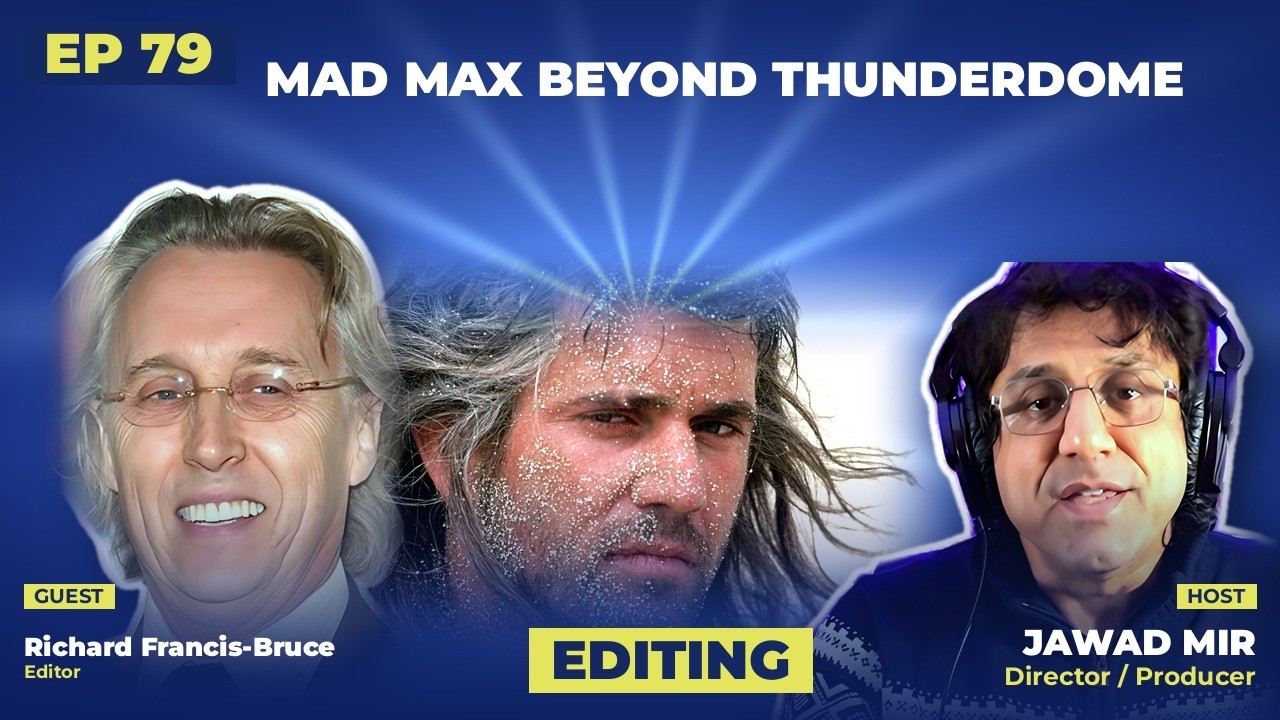
'Mad Max Beyond Thunderdome', Editor, Richard Francis-Bruce
Clips and Shorts from this episode
About this episode
Step inside the world of cinematic storytelling as legendary film editor Richard Francis-Bruce reveals the intricate craft behind classics like Mad Max Beyond Thunderdome and Oblivion.
Discover how he collaborated with visionary directors like George Miller and Peter Weir, and explore the creative decisions that transform powerful stories into unforgettable cinematic experiences. It’s a rare look into the art of editing and the hidden magic that shapes the movies we love.
Richard Francis-Bruce is an acclaimed Australian film editor known for The Shawshank Redemption, Seven, and Air Force One, earning multiple Oscar nominations. Starting his career at the Australian Broadcasting Corporation, he later moved into Hollywood with Mad Max Beyond Thunderdome. His precise, impactful editing has shaped some of the most iconic films of the past few decades.
#madmaxinsights #madmaxgameplay #furiosa #madmax #filmdetails
Full transcript
Automatically generated from the episode audio, so expect the odd misheard word or name. Speakers were labelled automatically. About 9,700 words. Tap a timestamp to play from that moment.
0:06Jawad MirI think Mad Max was the film that you did first, and then Mosquito Coast, right? A year apart or so?
0:12Richard Francis-BruceY… y… y… yeah. What happened was I did Mad Max, and then my work on Mosquito Coast was very limited, really. What happened was, Peter Weir, who shot it in America, obviously, but he... But like most Australian directors, they get the, they get their director's cut. They do it down in Australia, away from the studio system, and away from any interference, I suppose, perceived interference. Just to keep, to keep clear, a clear head.
0:40Jawad MirYeah.
0:41Richard Francis-BruceAnd, he... I'd finished Mad Max, and Peter came to Sydney, and he's friendly with George Miller, and he needed some help with, just extra hands. To… and I was brought on to work on the middle part of the movie, which was all the building of the building process.
1:01Jawad MirYep.
1:02Richard Francis-BruceAnd I only did, I was only on it for about four weeks.
1:06Jawad MirOkay. Okay.
1:07Richard Francis-BruceSo I didn't see the finished film actually until I was back in America, when I was invited to a industry screening of it.
1:16Jawad MirRight.
1:16Richard Francis-BruceAnd, it was quite a different film from when I left it. It was... I mean, it was just completely different. It was much shorter. It just jumped right into the story instead of seeing, what made Harrison Ford's character the way he was. So I thought it was a…
1:36Jawad MirYeah
1:36Richard Francis-Bruce... I thought it was a shame to have lost that, build-up to the story, and build-up to his character. Anyway, that's, that's not my, not my concern…... Not my business.
1:49Jawad MirYeah, you know, it's funny you mention that because I don't remember when I saw it, and I vaguely remembered the premise. I just remembered it was a very different Harrison Ford film, and then I watched it again…
2:01Richard Francis-BruceYes, it was
2:02Jawad Mir... And I just watched it again yesterday, and I felt the same way, that first he was talking about America as this, America is great, America is this, and then all of a sudden he just had this epiphany, and they pack their bags and just leave the house, and leave. And I think that…
2:22Richard Francis-BruceRight
2:22Jawad Mir... From, it was very... I, it felt awkward to me too, but I didn't really…
2:27Richard Francis-BruceYeah
2:27Jawad Mir... Pay attention to it too much.
2:29Richard Francis-BruceThere wa… there was a bit more set up, quite a lot more set up to, why he made that decision, which I think was a shame to have lost. And, look, sometimes it comes down to this s… this mantra the studio hands down. I don't know if this was the case. They usually hand down that, like, it's gotta be X number of minutes long.
2:52Jawad MirYeah. Yeah.
2:53Richard Francis-BruceAnd it's gotta fit into a box so they can fit in all the screenings they need to, which I think has been proven over time to be bogus. You know, like, there's lots of films that have been very successful. I mean, Titanic, for one, which was, like, three hours, didn't hurt…
3:09Jawad MirYeah
3:09Richard Francis-Bruce... The box office at all. So
3:12Jawad MirAvatar 2, Oppenheimer.
3:14Richard Francis-BruceYeah. Yeah. I mean, I don't think... I think going back to the days when films, I remember people, back in the '80s, early '80s, late '70s, used to say, "A feature film should be, like, no more than 110 minutes," and that was, that was what everybody strived to. So when somebody came around and released a movie that was two hours long, it was just like, "Ooh, can we handle this?" Look, I remember when we tested Harry Potter. I know this is nothing to do with Mosquito Coast.
3:42Jawad MirThat's fine. That's fine.
3:44Richard Francis-BruceBut when we tested a scree… did our preview testing for Harry Potter in Chicago, we went from London to Chicago to test it, was all with mo… mostly, like, 12-year-old kids, and that movie's two and a half hours long. Not one of those kids moved from their seat. I know they were a captive audience, and they knew what they were gonna see, although a lot of them didn't know, 'cause the way they play it, just come and see a movie.
4:13Jawad MirYeah.
4:14Richard Francis-BruceBut they were riveted to it, and they would've wanted more, 'cause we had to take out some of the book's characters, minor characters. But they would've loved to have seen it all. So I think, I think it's,.. I've never agreed with that, a film has to be X number of minutes long.
4:35Jawad MirAnd it's so true because even... I'm not, I'm not even talking about studios now. Like, when I was cutting the films, well, I wasn't really doing the final cut. I was just doing a draft, and then I took it to my editor, and we were working on it. And then I wasn't really dealing with studios. I was just r… literally dealing with, people who have zero experience with films, but are putting money into it, and their first question would be, "How long is the film?" And I'll be like, "Does it really matter how long it is?" And even at the... When we were doing screenings for the film, I was asked by so many different non-profit organization that's, "80 minutes is too long. Can you cut it to 50 minutes?" I'm like, "Dude, first of all, it's not like a piece of cake that I just slice it and it's cut."
5:22Richard Francis-BruceYeah.
5:22Jawad MirYou know? You know, there's so many things, and I'm not gonna…
5:25Richard Francis-BruceYeah
5:25Jawad Mir... Cut it. If you don't wanna screen it…
5:26Richard Francis-BruceYeah
5:26Jawad Mir... Don't screen it.
5:28Richard Francis-BruceI mean, you... I think I have said this many times. I've seen incredibly long 90-minute movies…
5:34Jawad MirYeah
5:35Richard Francis-Bruce... A… and really explo… ex… seems... I've seen movies that are over two hours, and I've not realized it was that, because if the movie's engrossing, the movie's engrossing. Cutting it down…
5:48Jawad MirYeah
5:48Richard Francis-Bruce... Can make it worse, because you take out…
5:51Jawad MirNo
5:51Richard Francis-Bruce... Explanation. You take out setup.
5:55Jawad MirYeah, you're so right. And I think that's the thing with, wh… again, it's, I think it's, one of your pet peeves and mine too, is like, you haven't even seen the film… And you have this set timeframe that people are, and people attention span is short. And yeah, it is, but if the film is good, you know, not to toot my own horn, but every time I have sort of come across this, then they give in, and then they watch the film. Like, "Oh, thank you for not listening to us." You know? It's like, obviously I'm not gonna listen to you, but that's the thing, I think, in everybody's mindset nowadays. Not just studios, like, even audiences. Like, how long is the film? Like, my, one of my friends is like, "How long is Oppenheimer?" I'm like, "Three hours." Like, "Forget it. I'm not even gonna bother."
6:34Richard Francis-BruceYeah.
6:34Jawad MirYou know? So that attitude, I think, is just terrible.
6:39Richard Francis-BruceIt is. And thank goodness for the streaming services now, because I think that is... Like, we have a friend of ours who's an author, and she's trying to get her book, made into a movie, and I said, I read the book and I went, "Not a movie. This is a miniseries. You need to play this out." You know?
6:57Jawad MirYeah.
6:58Richard Francis-BruceYou don't want a studio saying, "Make it, you know, 90 minutes long," because then it's not gonna be your story. It's gonna be... The beauty of those streaming services is you can, I mean, we're watching some things now that are, on, I don't know which streaming service it is, but it's, like, three episodes, because that's what it needed.
7:16Jawad MirExactly.
7:16Richard Francis-BruceAnd other things you watch, it's eight episodes or 10 episodes or six episodes, 'cause it, what it's, it's what it needs to tell the story and not ruin it. And, I think that's the best thing about, I think, about streaming services.
7:30Jawad MirYeah. Agreed, and I think, speaking of miniseries, I saw Oppenheimer last night, and I felt the same way. I'm like, "They should've turned this into a miniseries." I don't know if you've seen it or not, but…
7:42Richard Francis-BruceNo, I haven't yet
7:43Jawad Mir... Yeah, it just, yeah, I'm not gonna say anything. I just felt that it should've been, should've been a miniseries. But anyways, going back to Mosquito Coast, do you remember what was the setup in his decision-making was, Harrison Ford's character for him to make that decision? Do you remember what that was?
8:01Richard Francis-BruceYou know, I d… I don't. I just remember there was a lot more, of him ha… struggling with living in America. I think that, yeah, I very, I mean, it's like, it's 30 years ago.
8:13Jawad MirThat's fine. That's, that's why I said do you remember?
8:16Richard Francis-BruceBut…
8:16Jawad MirAnd it's been a while
8:16Richard Francis-Bruce... Yeah, no, I don't. But I just remember it was more of, it was more of his... I mean, he was rav… he was kind of like this raving lunatic by the time he got to, I forget where it was supposed to be. It was Belize in actual fact. I don't know where it was in the movie. But
8:34Jawad MirIt was, well, it's now known as Honolulu, I think. No, not H… not Honolulu, sorry. Horin… H… Honduras? Honduras, I think.
8:42Richard Francis-BruceHonduras
8:43Jawad MirHonduras, yeah. Now it's known as that. I don't know what it was back then, but I looked it up.
8:47Richard Francis-BruceOkay.
8:47Jawad MirBut go on.
8:49Richard Francis-BruceYeah, so it, I just know that, you know, when he got there, he was really kind of crazy and off the planet because he was so perturbed about, living in America. And there was also, there was a lot more of, incidences of why he turned into that character.
9:09Jawad MirYeah, because I felt he, you know, when he was in States, you know, he, it seemed, actually, it was funny. He seemed very, like, you know, patriotic, and America's this, and America's that, America's great. But then all of a sudden he d… moved, but one of the things that I felt my conclusion was that his character was very, was very self-centered, and the film is literally about what power can do to you.
9:34Richard Francis-BruceYeah.
9:34Jawad MirYou know, when you, when you are the only person in charge, you make up your own rules, and you go crazy, and, you know, it can, it can just drive you bonkers. And which it does in the film. It, I mean, it's a, it's an amazing... I think it's one of the Harrison Ford's best movie, like, in terms of performance.
9:50Richard Francis-BruceYeah. Yeah. I think it is, too, and I think it could've been re… recognized as that if it, if you understood, you know, not to go on about it, but if you understood why…
10:00Jawad MirYeah
10:00Richard Francis-Bruce... It, he, why that performance is the way it is.
10:05Jawad MirLet's go to, Mad Max. So before Mad Max Beyond Dome, there were two other films that had come out, Mad Max and Mad Max 2, which I haven't seen in a long time. I just saw Mad Max Beyond Dome, this morning.
10:19Richard Francis-BruceThunderdome.
10:20Jawad MirThun… the Thunderdome, sorry. Beyond Thunderdome, my apologies. How did you get on board, with J… working with George Miller, aside from the element of, I think he's from Australia, right? George Miller?
10:33Richard Francis-BruceYes, he is.
10:34Jawad MirOr, yeah. Aside from being an Aussie.
10:37Richard Francis-BruceThere's two George Millers in Australia that are film directors, which is very confusing. But…
10:42Jawad MirWhoa
10:43Richard Francis-Bruce... The one I w… yeah, there's one who did, his most famous film was The Man from Snowy River. And
10:51Jawad MirOkay
10:51Richard Francis-Bruce... George, the George I worked for, the famous one everyone knows, used to be a doctor, medical doctor. So he was, he's always referred to as Dr. George. And…
11:06Jawad MirInteresting
11:06Richard Francis-Bruce... I came, I was working at the ABC in Australia, which is like our version of the BBC based on the same…
11:13Jawad MirYeah
11:13Richard Francis-Bruce... Same, principles of setup. And I was, I did a miniseries, with a director called Carl Schultz. And then Carl Schultz, left the... He was freelance. I was still working at ABC. I left the ABC to do a movie with him, and then he was employed to do two or three episodes of a miniseries, the first miniseries that George Miller's company, George and his partner at that time, Byron Kennedy…
11:45Richard Francis-Bruce... They formed a production company and made the miniseries called The Dis… The Dismissal, which was a political drama. And Carl, recommended me to the, 'cause of my TV background and doing… ... Dr… TV drama, recommended me. So I came on and worked on three episodes of that. I think it was three. I think I know I had to take over another one. Maybe I did four, I don't remember. And George directed one of those, as well as producing. And then Mad Max was, Mad Max Beyond Thunderdome was in the works, and as they were in pre-production, they asked me to come on board. And originally there was gonna be several editors.
12:29Richard Francis-BruceLike there were several editors through Road Warrior… ... Mad Max 2. Certain editors worked on certain sections, like the montage stuff was done by somebody else, and the drama was some... And so they thought that was the way it should work, and I went, "Well, why don't we s… just start off, 'cause I've done these things on my own before. Let's just start off and see if you think you need, anybody else to be brought on." Anyway, nobody, we didn't bring anybody else on.
12:57Richard Francis-BruceThen George went off to America to do, an episode of The Twilight Zone.
13:03Jawad MirRight.
13:03Richard Francis-BruceAnd then after the... Which I obviously I didn't do, but then he was offered The Witches of Eastwick, and asked me to go to, and do it. So we bundled up my wife and the two kids, and we went to America for about a year to do that.
13:22Richard Francis-BruceSo, that's how it started, and then, you know, I did Lorenzo's Oil, and I did, Dead Calm, which George produced. And that's the what, that's the way it goes, you know?
13:36Jawad MirI…
13:36Richard Francis-BruceLucky break. Right place, right time.
13:39Jawad MirYeah. Well, true, for sure. And I never knew that he was a doctor first of all. I mean, that's, that's the interesting thing…
13:45Richard Francis-BruceYeah
13:45Jawad Mir... Because it's not just that he's a filmmaker. I mean, you look at his filmography, like all the Mad Max films, and you have Babe, you know, then you have, what's that penguin movie? Happy Feet.
13:59Richard Francis-BruceHappy Feet.
14:00Jawad MirRight? And, yeah, like he's just been all over the map. And when I was watching Mad Max today, and I was trying to under... I… it was first of all, you know, the way it was shot was phenomenal, even for today's time, but just putting myself in the '80s, the environment that they were in, even the cuts, like especially that action sequence or the fight sequence they had in that, in that, dome when everybody was sort of…
14:26Richard Francis-BruceOh, yeah
14:26Jawad Mir... Hanging out watching it. Like, you know, you look at it from today's point of view, it seems great, but if you put yourself back in the '80s, I mean, back then seeing an actor of Mel Gibson caliber, I mean, he was a star at the time. You know, he had done Mad Max films…
14:44Richard Francis-BruceYes
14:45Jawad Mir... He was doing Lethal Weapon. To sort of string himself with that and then just kind of go back and forth, I thought it was... I mean, aside from the film, just talking about that sequence, that was such a remarkable sequence, and it goes on. Every time I thought he has, he's got the guy, he loses the weapon, then he grabs another one. It just, you know, it was so unpredictable, and it worked really well.
15:08Richard Francis-BruceYeah. That was one of the most enjoyable scenes to cut, actually. And it's funny, so just a little thing about it is, when they're attached to those bungee cords, you know, when he's attached and he's springing around, course they had…
15:21Richard Francis-Bruce... A stuntman do all the dangerous stuff. And the, I couldn't use much of the stuntman's stuff because he was so bad. Because a lot of st… a lot of stuntmen don't act.
15:32Jawad MirYeah.
15:32Richard Francis-BruceThey just do the stunt. They go, "Oh, I've gotta do this and this," so they do it. There is no acting involved. But Mel, when Mel did it, he was acting, so I used most of his stuff. It was better than the stuntman's stuff.
15:44Jawad MirI was gonna say when you said there was a stuntman, I'm like, all this sh… because I was trying to keeping an eye on that, and I mean, a majority of the stuff that I saw, I saw Mel in it, and…
15:52Richard Francis-BruceYeah
15:52Jawad Mir... I mean, at that time there was no…
15:54Richard Francis-BruceI don't think they…
15:55Jawad MirYeah
15:55Richard Francis-BruceYeah, he's a bit like, he's a bit like, Tom Cruise. He l… he's good at doing... I mean, Tom Cruise is just insane, what he does. But he's fantastic at selling the stunt, you know? Selling the action.
16:10Jawad MirRight.
16:10Richard Francis-BruceHaving had the pleasure to do that, so it's, it's great.
16:15Jawad MirWhen you and I talked about Shawshank and Green Mile, and on those films you were more or less on the set, you know, do, going through dailies. Was it something similar in this at l… or you came in when everything was done in terms of production?
16:32Richard Francis-BruceOh, no. I was on from day one, and they, a lot of the, a lot of the shooting on Mad Max was done out in, Broken Hill, which is out in the middle of Australia, and I was in Sydney.
16:43Jawad MirYeah.
16:43Richard Francis-BruceSo they'd s… they'd send the dailies to me, but I'd only be like a day or two behind. And in those days we were cutting on film, right? So it was physical. No AVIDs, no line… nonlinear editing system. It was all physical film at work. And so I'd be working back at base and then sending notes to George, you know, like, "I don't have this," or I, "Can you do this? Can you do that?" And not much, just a couple of times if I didn't, didn't find, I didn't think I had enough sh… coverage to finish a scene. Anyway, yeah. So I'm, it's, it's very normal that you're on from the very first day of shooting.
17:32Jawad MirRight. And what was the experience like working with George? Even I know you had worked with him previously, but just on a feature film like that?
17:41Richard Francis-BruceWell, that was the first fe… that was the first time I'd worked with him. So…
17:45Jawad MirYeah
17:45Richard Francis-Bruce... I mean, it was great. It was great. We would... I mean, George is one of those edit, directors who likes to be present in the cutting room during the fine cut stage. Like, I'd put it together and show it, show it to him…
17:58Richard Francis-Bruce... And then we'd go through and do all the nitty-gritty stuff, like, "Show me all the other takes on this that you used," just to w… make sure if he preferred a different performance. So we would do that. And, that's, that's not necessarily the way a lot of directors like to work. A lot of directors will go, "Let's have a look at a reel," 10 minutes, nose test, "and then I'll give you my notes, and then I'll go away, and then you do the notes, and I'll come back." They don't wanna sit there while you go through... Especially in those days when it was so laborious to do a change.
18:34Jawad MirYeah.
18:34Richard Francis-BruceThey would... A lot of them just would go nuts, you know, "I can't stand sitting around here" while you try, you try and find that extra frame that you can't find because that's in an envelope on top of the, editing machine and it's all filed away. Yeah, but he liked to be there for that. He could just sit there and zone out and be thinking about some ideas while I'm doing it, so.
18:59Jawad MirRight. That's…
19:00Richard Francis-BruceAnd I'm fine, I'm fine with it either way. I can work either way. I have no problem with it.
19:05Jawad MirWhat was the most difficult scene to cut? I mean, we, you already talked about what you enjoyed the most, but was there a scene that you couldn't wrap your finger around, during the editing process and then it later it kind of came to fruition?
19:23Richard Francis-BruceNo, I don't think so on that, on that one. I'm just trying to think w… whether that we had a written end for that script. I think we did. Sometimes we don't. Sometimes we go into these things and we don't know how it's gonna end.
19:37Jawad MirYeah. It still ends…
19:38Richard Francis-BruceYeah
19:38Jawad Mir... Like that.
19:39Richard Francis-BruceYeah. Yeah. Yeah. S… more so with, those types of films. No, I don't think so. I think they were all challenging. I mean, they're all challenging to... The action scenes are always challenging because they're usually shot in such little pieces sometimes. You know, they're not... You know, it's, it's, it's, it's laborious, for them. Sometimes only, you only get a handful of shots a day, especially if they're out in the middle of s… nowhere shooting.
20:08Jawad MirYeah.
20:08Richard Francis-BruceAnd they have to do a long run up with a car. I mean, I remember once there was a shot that was, like, 10 minutes long, and I went, "Why is this 10 minutes long?" It was attached mult, remote camera to the side of one of those vehicles that are racing along in the desert.
20:27Richard Francis-BruceAnd they did the shot, and then somebody forgot to turn the camera off. So the rest of it was them driving back to base. So, you know, yeah, but that just shows you how long it takes to get a shot out there sometimes…
20:42Jawad MirYeah
20:42Richard Francis-Bruce... On those films, especially with all those vehicles, you know, racing in the desert. They've gotta coordinate them all, and they, you set them all up. It takes so long. Then if they gotta do another take, they gotta send them all back and around and back over the horizon and then come back. You know, it's just tedious.
21:02Jawad MirRight. One thing I... And maybe this is, this is just me. When... I think it was halfway into the film when Max, Mel Gibson's character, i… is surrounded, is hanging upside down and surrounded by the kids.
21:20Richard Francis-BruceRight.
21:20Jawad MirAnd that scene to me, and their wardrobe, I'm like, "Where have I seen this before?" Like, it just rang some sort of a bell. And then it hit me, now I don't know if this was intentional or not, or it was just me looking into it too much. In, Steven Spielberg's Hook, the Lost Boys.
21:42Richard Francis-BruceOh, yeah.
21:43Jawad MirYou know, I've, I'm like, that... It just felt like that in terms of their wardrobe, in terms of the way the kids…
21:50Richard Francis-BruceBut isn't that after?
21:51Jawad MirYeah, Hook came afterwards.
21:53Richard Francis-BruceYeah.
21:53Jawad MirThat's what I'm saying. Yeah.
21:54Richard Francis-BruceI think, I think a lot of people, a lot of filmmakers, Mad Max set the standard for certain…
22:01Jawad MirYeah
22:01Richard Francis-Bruce... Like grunginess, and the vehicles, you know, this out of world utopia, not utopian, dystopian, landscape and with vehicles that don't look like they should be able to run, you know, rusty, old, bashed up vehicles. That set the stage for a lot of what came, you know?
22:18Jawad MirYes, it did.
22:19Richard Francis-BruceIt's a bit like with, it's a bit like with the opening title credits of Seven…
22:23Jawad MirYes
22:23Richard Francis-Bruce... How after that people started, like, I think Down Came a Spider or whatever it was called copied it, you know, very much afterwards, that raw kind of, style of…
22:38Jawad MirYeah
22:38Richard Francis-Bruce... Just weird, raw stuff, you know, very raw camera angles and…
22:45Jawad MirNo, for sure. And you know, credit to George, but obviously to you as well, again, we talked about this during Shawshank and Green Mile podcast, is that the, it was just... The way George films, it's the old school obviously, like, because he likes to, you know, he likes to build his set so he can move the camera around in whatever way he wants, so he… the audience feels and knows where they are so they can be there. And it just makes things so much easier maybe, and correct me if I'm wrong, for the editor, because you don't need to necessarily cut. Like, you know, the sh… the scene be… with when he's introduced to Tina Turner's character, you know, there was, there was hardly any cuts at least, you know, aside from the punching and this pushing down and stuff. And it makes it so intriguing and interesting, and I'm watching it and I'm like, you know, those kind of films are so much missed, and that's one thing when I saw Oppenheimer last night, I didn't like.
23:46Jawad MirIt was just there were a ridiculous amount of cuts, like way too many, and it just becomes so distracting. So kudos to you for, you know, for keep…
23:55Richard Francis-BruceYeah. I mean, I…
23:55Jawad Mir... Keeping it that way
23:56Richard Francis-Bruce... Yeah, I'm a great one. I mean, I'll hang on to a shot, and if I think it's telling the story I'll go, "Well, why do I cut? Why do I need to cut?" You know?
24:05Jawad MirYeah.
24:05Richard Francis-BruceI mean, I was always told as a young editor or a young assistant that the lessons you learn and the things that stick in your mind is make sure there's, the cut is always a motivated one. There's a reason for it. Don't just cut… I mean, I know what you mean, and maybe that's m… m… a reason I don't wanna go and see Offen… Oppenheimer. I didn't know that was over… overcut, but that…
24:30Jawad MirI felt that it could... I could be wrong. I mean, that's what I thought.
24:32Richard Francis-BruceThere was a, there was this great little thing I saw on, YouTube a while ago. This... I don't even know who, what his name is now, but there's a guy who analyzes edits.
24:43Jawad MirRight, you mentioned that.
24:44Richard Francis-BruceAnd he an…
24:44Jawad MirYeah.
24:44Richard Francis-BruceYeah, he anal… and he analyzed the one from, Bohemian Rhapsody.
24:48Jawad MirBut…
24:48Richard Francis-BruceAnd it was just a simple dialogue scene, but it was so overcut. And the…
24:53Jawad MirI th… I saw that
24:53Richard Francis-Bruce... This guy went through it. Did... Wasn't that amazing? I mean, it was so well explained to a non-editorial person to understand what we do, because it's the hardest job I ever had is explaining to people what I do for a liv… or what I did for a living.
25:10Jawad MirYeah.
25:10Richard Francis-BruceWhat an editor does. Because people
25:15Jawad MirDon't get it
25:15Richard Francis-Bruce... Which we as a group, we as a group, in Am… in America especially, the American Cinema Editors, are always trying to educate the public by whatever means we can. I mean, the reason I do these things is hopefully that I'm somehow going to educate people who don't know what this craft is all about.
25:37Jawad MirYeah.
25:38Richard Francis-BruceGiving my perspective on it anyway. But, it's, i… it's like trying to, trying to describe oxygen, you know? It's like it's there. You know, I don't know why it's there, but we need it. It's the only... I don't know if you told me this, but it's the only art form that is unique to film.
26:03Richard Francis-BruceEverything else, camera and lighting and all that, all that kind of stuff you could relate to s… to the stage, you know? Costume…
26:11Jawad MirYeah
26:11Richard Francis-Bruce... Makeup, special effects, everything. All stage plays have had special effects in them, even if it's just a s… puff of smoke or something. But they've had it there forever. Music has been in stage plays. So really editing is the only craft unique to moviemaking. And, maybe for that reason it's still a bit of a mystery to general public.
26:35Jawad MirIt is, and I actually felt when, well, it's been a while now, you know, with the online YouTube and TikTok and all that stuff generation, you know, you can edit stuff on the phone and all that. And I literally thought, not that you can compare editing on the phone with the Avid or film c… cutting film, I thought maybe people will get a little bit of grasp on it. But it's not even films. Any kind of editing, people just do not get it. Now, there's a flip side to it. When there's tons... Okay, maybe I shouldn't say tons. When there's a big number of editing that is really bad, whatever it is w… whether it's film, commercial, it, maybe that plays into people's psyche. But going back to your example of, that film, I saw that scene, and after I saw him explaining it, then I kind of just watched it again and I just, you know, put the mute button on.
27:36Jawad MirAnd I'm watching it, and it's cutting so abruptly, and it's cut… and it's, the angles are off, the coverage. Like, it was just so bizarre. And this movie won the Oscar, or was it nominated? I don't even remember now.
27:50Richard Francis-BruceYeah. No, it won the Oscar.
27:51Jawad MirIt won the Oscar.
27:51Richard Francis-BruceAnd it, and what's, what is amazing, John Ottman, the editor, has been quoted as saying, "I don't think I deserved it," you know? The cutting in that. He himself doesn't like what he did. Now, whether that means he was kind of forced to do it…
28:06Jawad MirPossibly
28:07Richard Francis-Bruce... I mean, I've been in a situation where a director said, "Put more cuts in there," and I've gone, "Okay. I'll try it." But you know, y… you can't force it. And that's a perfect example of if you force it, you will ruin it. And going back to your original, comment about, you know, sh… hanging onto shots, that's... I mean, that's what it's all about, you know?
28:31Jawad MirIt is.
28:31Richard Francis-BruceSo it's like knowing when to do that only comes from the experience, I think.
28:37Jawad MirFor sure.
28:38Richard Francis-BruceI mean, I see the, I see a lot of stuff on TV now and I go, "I swear it looked like the scene was edited by a bot," you know? It was... I don't think anybody could've really done a worse job, unless they were trying to do it.
28:55Jawad MirYeah. And I, and I think it comes from experience. One thing that I really... I mean, you talked about there has to be a motive for cut. So this, I was conscious about this when I saw the opening of Mad Max, and y… there's a shot, I think it's the second shot or third shot, when, Mel Gibson's character, the cam… he's coming towards the camera. He passes by the camera. The camera follows him, and a plane goes over the camera. And he keeps walking and walking and walking in that shot, and he's disappearing into the shot. And then it cuts to his feet, and then that... Okay, what's the motive there? Like you said, the motive is that he finds these shoes. That's when you cut. Aside, instead of showing his feet for at least another 20 seconds, you know, with the shoes sitting in the distant back, I think the wider shot spoke so much because it explains so much about his character and who he is, as opposed to showing his…
29:50Richard Francis-BruceYeah
29:50Jawad Mir... Feet and looking for shoes.
29:51Richard Francis-BruceAnd the, and isn't it a little bit more intriguing, too, to go…
29:55Jawad MirOf course
29:55Richard Francis-Bruce... "Well, why is he walking?" And then you go, "Oh, I, this, that's why he's walking," you know?
30:00Jawad MirYeah, it keeps…
30:01Richard Francis-BruceIt's the opposite of, it's the opposite of what Hitchcock used to do, you know? Instead of showing someone walking and then they slip on a banana peel, he'd show the banana peel, then they walking, and so the audience goes, "oh, he's gonna slip," and he does slip. So he sets it up differently, but that's completely different style. That's, that's, you know, h… the horror style
30:22Jawad MirYeah. No, it, Mad Max III was a-a great film visually, performance-wise. And that's what... You know, when I saw the Charlize Theron one, and I think George Miller's working on another one according to IMDb.
30:39Richard Francis-BruceTwo
30:39Jawad Mir... Two more, okay. And…
30:41Richard Francis-BruceI think there's one, Fur… Furiosa… ... And, Wasteland I think. I think he's…
30:47Jawad MirYeah, Wasteland
30:47Richard Francis-Bruce... He's working on both. Well, Furiosa is in post-production. I think Wasteland might be in production, I'm not sure.
30:54Jawad MirSo when I saw the Charlize and To… Charlize Theron and Tom Ha… Hardy version, that itself was very amazing. Like, you know, because I hadn't seen Mad Max for a long time, so see, in that kind of environment with those kind of vehicles, with... You know, I've talked about this over and over again to so many people on this podclass, includ… podcast, including yourself, like the wider shots. I think he uses a lot of 28 millimeter or 35 millimeter, maybe even 24 millimeter lenses. But then when I saw this one, keeping in mind 1986, and obviously in production 1984, I mean, it's a whole different ballgame. Like, you know, you're looking at limited resources. You're looking at film. There's not digital, and none of the extras…
31:37Richard Francis-BruceWell, there's no... You know, visual effects wise, I mean, the very end of the film where they're flying through Sydney Harbor with the Harbor, that's just, that's a model. You know? Like, there's no, there's no, there's no... CG didn't exist, you know? I mean, I remember there's, there's this, there's a shot in the desert when the vehicles,... A s… side shot of all the vehicles driving.
32:01Richard Francis-BruceAnd you could see, 'cause there's no door on these vehicles, you could see the stuntman had a seatbelt on… ... A lap we… belt. And, we thought, "How are we gonna eliminate that? How are we gonna eliminate that?" And I went over to the lab to talk to the v… to the optical effects department, and this guy came out with this genius idea. Roger Callen, his name was. I don't know if he's still alive anymore. He said, "Look, we gotta distract from it." And I said, "Well, how do you do that?" He says, "Well, if I put a little glint... "'Cause we could do such limited things." He said, "I can put a little glint, just like a s… a reflection thing…
32:41Richard Francis-Bruce... At that frame." It was only a frame or two, but it's amazing what the eye picked up. And he did it, and it just, it distracted you from looking there. It was the most genius idea. Just there was a s… like a little sun reflection off that, surprisingly, off the area where the belt buckle was.
33:01Richard Francis-BruceAnd for s… for that reason, it just, it looked so real. It just looked like the sun reflecting, and it was a couple of frames long. And it, and it... That's the way we used to have to hide things that shouldn't be there. You know, not like, can't paint anything out. It w… would've been, would've been too time-consuming.
33:19Jawad MirYou know, it's funny you mention that and the way things are going with technology and AI, you know, the era of CGI or special effects will be talked about as we are talking about what used to be before era of CGI.
33:38Richard Francis-BruceYeah.
33:38Jawad MirYou know, because AI has become so... Like, it's just so crazy, the things that are coming out. I mean…
33:44Richard Francis-BruceIt's frightening, actually
33:45Jawad Mir... We… you know, we're living in an era, sure it has benefits, but we're living in an era where we won't even know what's true and what's not. Like, I was just watching this podcast, of someone, do you, I don't know if you know Joe Rogan. He's a pretty big podcaster.
34:02Richard Francis-BruceOh, yeah. I do.
34:03Jawad MirYeah.
34:03Richard Francis-BruceYeah.
34:04Jawad MirYeah, so he was talking about... And I've, I've listened to his stuff, and he was talking about somebody, and he was saying, "This guy I went with," and he was looking at, adult magazines and this and that, and that and this. And I'm thinking to myself, "It doesn't seem like the way he would talk." And then I watched it again and I looked at the comments. It was AI. And it was so freaking real, like the lip movement, the face, ev…... It wasn't even audio. It was everything. And it's scary…
34:35Richard Francis-BruceYeah
34:35Jawad Mir... As hell, you know, when you see stuff like that. Like, somebody can put your stuff out, what you say, make it up, and put it online, and God knows what happens.
34:42Richard Francis-BruceWell, it's, it's... And that's a deep fake too.
34:45Jawad MirYeah. Yeah.
34:45Richard Francis-BruceLike, what they can do with deep fake. I mean, that guy, that Bill Ha… Hader, is it, the comedian? I've seen him do interviews where that, he talks like Tom Cru… does an impersonation of Tom Cruise.
34:57Jawad MirYeah.
34:57Richard Francis-BruceAnd at the same time, his face changes into Tom Cruise.
35:00Jawad MirYeah.
35:00Richard Francis-BruceIt's u… unbelievable what they can do.
35:06Jawad MirYeah, it is.
35:06Richard Francis-BruceVery cle… very cle… Well, I f… I found a lot of those, AI things, though, I don't know if they've y… if... I haven't seen one of them like the Joe Rogan one, but what I've, what I had seen was it looked out, it looked good until they blinked, and then the blink looked really weird. They could... And it was more like a, it... But it, your eye doesn't blink so mechanically.
35:30Jawad MirYeah.
35:30Richard Francis-BruceIt's a little so… it closes a little bit, you know, it's a little softer. And I don't know. They must have got that worked out, because if you couldn't tell, I mean, it was a dead giveaway that no one would realize, no one would not be, able to tell that it was fake.
35:48Jawad MirYeah. That's,... Did you see the most recent Indiana Jones?
35:55Richard Francis-BruceNo.
35:56Jawad MirOkay.
35:56Richard Francis-BruceI read all the re… so many reviews that I thought, "Oh, I don't think I wanna do this."
36:01Jawad MirYeah, it's not a good film. I didn't like it at all. But the opening was the first 20 minutes, I mean, the younger version of Harrison Ford, it was all shot during night. And even in the... And I, and I figured why they did it at night, because you can, you could hide the details of his facial expressions. But still, it just… It wasn't there. Like, but at the same time, the scary part is we're in the early stages of AI or deep fake, so you know, when it becomes really s… rock solid, then God knows what happens next. But, you know, you see it in films. Like I, Indiana Jones, aside from the problems it had, like that was... I've seen people converting, Harrison Ford's, the trailers of the new film into using a cheap software by themselves, and it looks a lot better than what Lucas Film and Paramount and Disney did. Like, it's just…
36:56Richard Francis-BruceOh
36:56Jawad Mir... It's, it's, I mean, I've seen that example with Irishman. W… I think that was the very first time they did it when they made Al Pacino and De Niro look younger.
37:05Richard Francis-BruceRight.
37:05Jawad MirAnd there's access to softwares out there for, you know, young guys who would just do it, and it would be so much better than what Hollywood is doing. I have no idea why that is.
37:17Richard Francis-BruceWow. That is kind of scary too.
37:19Jawad MirIt is scary. Yeah. It is scary. Yeah. But yeah, no, kudos on Mad Max. You know, and I wanna talk a little bit about Mosquito Coast, even though, you know, you worked on it for four weeks, just a tad bit. I know it's been a long time, so we don't necessarily need to talk about the aesthetics and the editing and all that stuff, but just in the film itself, you know, how it, the element of the part where there's a pastor and then how he sort of comes back at the end and what happens at the end. Like, for you, aside from that setup that was taken out, what was the message that you drive home as an audience member after watching that film?
38:06Richard Francis-BruceI really, I don't, I couldn't answer that. It's really so long ago, I don't remember much about that…
38:11Jawad MirYou don't remember watching, okay. All right
38:12Richard Francis-Bruce... I don't remember much about that movie. I know this whole podcast is supposed to be about that and Mad Max, but…
38:17Jawad MirNo worries
38:18Richard Francis-Bruce... I don't know. I…
38:21Jawad MirWell, we'll skip that one
38:22Richard Francis-Bruce... You know, the older, the older you get, the worse it gets
38:25Jawad MirThat's right. What, let's talk, let's talk about something that you do remember recently that you did. I leave that up to you. Which film do you, is most in memory that you would love to chat about right now for the next 10, 15 minutes?
38:39Richard Francis-BruceWell, actually, I think an underrated movie was, Oblivion. I mean, did you see Oblivion?
38:49Jawad MirThe Tom Cruise one?
38:50Richard Francis-BruceYeah.
38:52Jawad MirYou edited that?
38:53Richard Francis-BruceYeah.
38:54Jawad MirOh, God. That's an amazing film. I didn't, I somehow I missed that. Okay.
39:00Richard Francis-BruceYeah.
39:00Jawad MirYeah, I lo… I love that film.
39:02Richard Francis-BruceI mean, I think, I think it was an exceptionally good-looking film. I mean, the technology they brought to it to shoot that whole house up on the tower, you know, the apartment where he lived…
39:21Jawad MirYeah
39:22Richard Francis-Bruce... You know, that was a... I mean, they talked about doing that with green screen outside the windows, b… but they ended up sh… using front projection. So all that out there was projected, but the set was raised, the projectors were under the raised section point, multiple projectors pointing so they could shoot 180 degrees, and, but the amount of light they could get onto those was minimal, so they had to therefore bring down the lighting in the practical set. And I tell you walk onto the set, and it was like the darkest set I've ever been on, and you're…
40:05Richard Francis-Bruce... Shooting for day, and you went, you think, "How can this possibly work?" And you look at the monitor, and it, there it is. Looks like daytime. You just open the lenses up, and, digital, you couldn't have shot it on film. But I also think, and I was very proud of my work on that. I had a lot of fun on it. And, but I'm, I'm amazed at how many people, didn't like it. They just don't like the, they didn't, they couldn't understand the end of it. They couldn't understand that there were multiple Jacks in different parts of the space that the movie was shot in. Multiple Jacks and multiple Vickers in, all with different name, numbers on here. He was 45, and there were others…
40:55Richard Francis-Bruce... You know, different, well, 54. Can't remember what he was now. But people at the end of the movie were going, like, "How can he, huh? He's still alive? How can that be?" And that kind of clouded it for everybody, but I enjoyed it.
41:09Jawad MirNo.
41:09Richard Francis-BruceI enjoyed it.
41:11Jawad MirNo, it was actually, it's one of Tom Cruise, I mean, Tom Cruise has done incredible stuff throughout his life, but…
41:16Richard Francis-BruceYeah
41:16Jawad Mir... You know, it pr… it was a very different film for him, and, you know, working with, working with the director, Joseph, who also did Tron: Legacy and…
41:25Richard Francis-BruceYeah
41:25Jawad Mir... The most recent Top Gun, what was working with him like? And I know Tom Cruise, I don't know if he was a producer on this film, Oblivion.
41:34Richard Francis-BruceNo, he wasn't.
41:34Jawad MirI'm guessing he wasn't. Was he, w… were they both involved in post-production in any way?
41:40Richard Francis-BruceOh, yeah.
41:42Jawad MirDo talk about that
41:43Richard Francis-Bruce... Tom was very involved. He, I think because he's Tom Cruise, and he says to the director, "I'd like to come in and see what you're doing in the cutting room," no one's gonna say no. Keep him out.
41:54Jawad MirYeah.
41:55Richard Francis-BruceSo…
41:55Jawad MirYeah
41:55Richard Francis-Bruce... We, he came, he came in, and, he was great. You know, he just wanted to, he wanted to be involved. He wanted to, you know, give some ideas. I don't remember him ever having any problems with anything. I mean, he did wanna reshoot a scene he thought he wasn't very good in, but we were fine with it. We actually never reshot anything on that film, which is unusual these days. Nothing. Nothing was reshot. And Joe Kosinski was terrific to work for. Very talented guy, very savvy, very smart, very technically smart, but also, which was impressive enough. But, just very smart from,... You know, it's okay, a g… lot of people can be technically good, but not good with, storytelling…
42:48Richard Francis-Bruce... And good with performance, understanding performance and what he w… He knew what he wanted. Y… you know, he got what he wanted. And, you know, it's not, I wouldn't say it's not handling the... He was good at handling Tom Cruise and he didn't need any handling, but dealing with him, I mean…
43:11Jawad MirIt's an art.
43:13Richard Francis-BruceWell, he's not, Tom was not a... I mean, you think of him as a prima donna, m… m… furthest from it. He was en… incredibly enthusiastic.
43:21Jawad MirYeah.
43:22Richard Francis-BruceHe would come onto the set and he'd go, "Love..." He'd go, "Come on, come on, let's go, let's go, let's go. I'm ready, I'm ready." And, you know, do his own stunts and, you know, ama… he was amazing. I can't say enough good things about him.
43:36Jawad MirWell, he talks about that how he, and which I think is true, and I feel it's true, he talks about over and over again that how he just loves every facet of cinema. He wants to learn every department, like what does the costume does, what does the editor does, what a cinematographer does, the lighting, the lenses. I mean, he's, he's truly like a film buff. I mean, you see that in his excitement at least…
43:57Richard Francis-BruceOoh
43:57Jawad Mir... From what I can tell, right?
43:59Richard Francis-BruceYeah.
43:59Jawad MirAnd that's what he…
44:01Richard Francis-BruceAmazingly…
44:02Jawad MirYeah
44:02Richard Francis-Bruce... He's amazingly enthusiastic and so in… and kind of infectious, you know? And hardworking. My God, he's really hardworking. It's good to see. You know, like he'd never be late on set. He would never throw any of those kind of prima donna…... I don't know, just prima donna things like keeping the set, the crew waiting. He was the opposite. He was, like, driving them, "Let's go, let's go, let's go."
44:29Jawad MirWell, I think that's the…
44:30Richard Francis-BruceYeah, like, every time
44:31Jawad Mir... The right word to use is infectious because working with somebody like that, even if you don't like them for them picking you up early or whatever, it just wears on people, and then it just multiplies and, you know, top-down approach, and everybody gets excited and energetic about it. Was, on this film, was there a stunt that he did himself, obviously which he did, that was very dangerous, that you perhaps were…
45:00Richard Francis-BruceI think the... W… wait, what?
45:04Jawad MirPerhaps you were on the set, when you, when you witnessed it, when you were doing any kind of dailies, or you were not on the set of, for Oblivion?
45:13Richard Francis-BruceOh, you know, there was... A lot of it was being shot, we shot it in, Baton Rouge… ... A studio down there. And so I was cutting very close to the studio. S… so I would go to the set every now and again e… either to see the director or something, or just I had time, so I'd go and... I used to like and go and watch, but I never liked staying too long because it's, like, so slow compared to… I mean, you gotta remember, I get the dailies that they shot the day before. I get them all in one go, then boom, there they are, have access to every shot. So I can be instantly gratified by going, "Where's the close-up? Where's that?" But if you're on the set, they do the master, and by the time they do all the other coverage, this could take, you know, half a day.
46:00Jawad MirYeah.
46:00Richard Francis-BruceSo I'm, I just don't have the patience to hang around. But I, no, I don't, I was never there for any of his stunts, but, oh, well, I was there for some, but not really dangerous. The gimbal work when they're doing…
46:12Richard Francis-Bruce... The drone, the drone chase ... And, they're spinning around in this thing. That was pretty hair-raising. But the bit… I think the most dangerous stunt he did was, when he drops, when he's going down, he's being lowered down or he's lowering himself down into the library and he drops.
46:34Richard Francis-BruceI mean, he did those falls. There's no stuntman involved in that. I mean, there's several cuts in it, but, you know, he landed and rolled and, he did all that, and sold it very convincingly as being painful. Maybe it was.
46:51Jawad MirWell, possibly it was. I mean, he broke his, foot or part of his foot when he did, I think, the Fallout, Mission Im… Civil Fallout…
46:59Richard Francis-BruceYeah
47:00Jawad Mir... Which was number six.
47:01Richard Francis-BruceYeah, when he jumped across the building…
47:02Jawad MirYeah
47:03Richard Francis-Bruce... And landed against the side of it.
47:04Jawad MirGee.
47:05Richard Francis-BruceYeah, he didn't do anything dangerous in this one. He did bike jumps and things like that nothing super dangerous.
47:14Jawad MirWorking with Joseph, I mean, it was a great experience, but what was one... You mentioned it, but I'm just trying to find, I'm just trying to find the right word for this question. I mean, I love Tron, right? And I love Top Gun: Maverick, both kind of like, established brands from the '80s. How does he... You said something about him working with the actors and stuff, which is really what a good director should do. Based on what you saw, what was that one thing that came across to you that how he tackled actors in terms of putting them in their character or making them comfortable? I mean, Tom Cruise doesn't need anything, you know, in terms of being comfortable, but…
47:58Richard Francis-BruceNo. I think, well, I think his biggest attribute was his patience… ... With these, with people, generally speaking. He was, he would never get, he would never get... He was very even-keeled, and I think from an acting, actor's point of view, that puts them under less pressure…
48:21Richard Francis-Bruce... And they give their best 'cause they're not being, like, hounded by... You know, they're not like, not like Michael Bay, you know, who's probably yelling at them, you know…... To do something, you know? That's his style. It works for him. He gets away with it. But, he was just very... I thought... I was always impressed with how cool-headed he was, and he would listen and, take on board what the actor says and then s… get them to do it the way he wanted and maybe get them to have a go at doing it the way they want. But it was... He w… there wasn't a lot of, w… wasted time…
49:06Richard Francis-Bruce... As far as what I could see. He was very well planned out, which was another reason, I think, that we never had to re-shoot anything. That's a great tribute to him, and that was only his second film, you know?
49:22Jawad MirYeah. Yeah, and I…
49:24Richard Francis-BruceHe, I mean, he'd be a lot more, lot m… he'd probably be a lot better now. Same... I'm sure he's the same person, but I don't think... It's not the th… type of thing that goes to his... He didn't feel, ever feel the kind of, like, the kind of guy that put on any airs or graces, you know?
49:39Jawad MirWell, that's what I was, I was reading about, Top Gun: Maverick, that, how, Tom Cruise had been interested in doing a sequel for a long time, right? For whatever reason…
49:50Richard Francis-BruceHe was gonna d… well, he was going to do it with Tony Scott, too.
49:53Jawad MirYeah, exactly, with Tony Scott, and then he passed away, and then he said that, "I was in Paris or in UK, and I got a call from Bruckheimer or somebody that Joseph wants to present, you know, the story of Top Gun 2." And he said, you know, "Joseph came with a deck of some sort, and literally had everything broken down in terms of what the film would be, and that was it." Like, he said, "I saw that, and I'm like, 'This is it. We're gonna do this.'"
50:23Richard Francis-BruceYeah.
50:23Jawad MirSo it goes back to what you were saying, like, he's so prepared and…
50:26Richard Francis-BruceOh, yeah. Well, I…
50:27Jawad Mir... Yeah, nothing's gonna have to be due.
50:29Richard Francis-BruceOh, it was so far in advance. Like, I think I had... And I can't remember the last time, or if it ever happened. I was employed six months, five or six months before they started principal photography.
50:43Jawad MirWow. That's, that's remarkable.
50:44Richard Francis-BruceThat's really unheard of.
50:45Jawad MirYeah.
50:45Richard Francis-BruceIt's usually, like, sometimes it's days. Like, I think I had a, I was, I think I was given a script for Seven on Wednesday, and they were starting to shoot the following Monday. That's probably the closest I've ever had to, you know, to start of principal photography that I was on board. But, and w… even when I was, first read the script and I had to go into Disney and,.. Disney?
51:16Jawad MirMiramax. Seven was Miramax, which was bought by Disney.
51:18Richard Francis-BruceNo. I'm talk… I'm talking about, Oblivion now. Sorry.
51:22Jawad MirOh, okay.
51:22Richard Francis-BruceI'm going back to Oblivion. No, it wasn't…
51:25Jawad MirOblivion was…
51:26Richard Francis-BruceIt was Universal
51:27Jawad Mir... No, it wasn't Disney. It was probably Universal.
51:29Richard Francis-BruceIt was Universal.
51:29Jawad MirYeah.
51:29Richard Francis-BruceBut I think he was,.. Anyway, where I went to see him, it was on the Disney lot, I think. Anyway, I went to see him, well, to read the script. I had to go into the office. They wouldn't even send it to me, right?
51:40Richard Francis-BruceThey had, they put me in a room, and I re… I read it, and then I was employed. And from the moment I was on the film, I started, was sent, pre-vises of action scenes, like the drone fight and all that, and it was already planned out. It was already planned out six months in before they started shooting, and that was the same with everything. Everything was, like, h… given to us, so we knew what we were going to get way in advance. Nothing was ever, like, last-minute. It was so well organized that it was a pleasure to work on.
52:19Jawad MirYeah.
52:19Richard Francis-BruceIt's, it's always nice when you walk into something and you go, "E… everybody's got their act together," you know?
52:25Jawad MirYeah. Well, if you look at Joseph's film, Tron, Oblivion, and Top Gun, if you really pay attention to them, they're very similar, you know? All of them are very, like, mobile-based, like, you know, plane and then s…
52:38Richard Francis-BruceYes
52:39Jawad Mir... Motorbikes and then, you know, helicopter or w… you know, in Oblivion. Like, it's... And he... And they're very crisp and clean, and I really, admire that about him and his patience. And you mentioned Michael Bay. It's funny, I was talking to Jon Schwartzman, a while ago, and I…
52:55Richard Francis-BruceOh, yeah
52:55Jawad Mir... I was ask… and I was asking him, "So how..." You know, because they were friends from childhood, Michael Bay and him. I'm like, "So you did The Rock. You did Armageddon. You did Pearl Harbor. How come, you know, you didn't continue?" Well, he goes, "For one reason, it was, like, I didn't wanna do the same thing over and over again, but the second and the most important reason, well, he's always yelling, and I couldn't take it." So I'm like, "See you later, Michael. I gotta go. I can't deal with it." I mean, but yeah, that's, that's the type... Everybody knows how Michael Bay is, and I think he doesn't care anyways.
53:22Richard Francis-BruceThat's his trademark, you know? He doesn't care.
53:24Jawad MirYeah.
53:24Richard Francis-BruceYou know?
53:25Jawad MirYeah. Yeah. No.
53:26Richard Francis-BruceBut he's… funny because he's, he's a, he's actually quite a sweet guy when you get him out of work, you know?
53:31Jawad MirI'm sure.
53:32Richard Francis-BruceI mean…
53:32Jawad MirI'm sure.
53:34Richard Francis-BruceYeah. Anyway, that's another story.
53:37Jawad MirYeah. Great. Thank you so much, Richard, for your time. I appreciate it. Sorry I put you on for Mosquito Coast, and I hope that didn't, affect your…
53:49Richard Francis-BruceNo.
53:50Jawad MirYeah.
53:51Richard Francis-BruceThat's all right. That's o… that's okay.
53:53Jawad MirBut
53:53Richard Francis-BruceI'm sorry I couldn't give you more information, but, you know, it's, it's... I suppose when you live with a film for, you know, a longer time than I did, you can remember more about it. I was basic… basically on, with blinkers on just doing that section of the movie for so long, so.
54:09Jawad MirWell, I am gonna be talking to John Seale soon about Mosquito Coast, so I'll get all the juicy information from him.
54:14Richard Francis-BruceYou will. You will.
54:15Jawad MirYeah. But yeah, again, this has been very educational, as always. It's a fantastic and super pleasure of mine to speak to you and, would love to continue doing this down the road as time passes.
54:26Richard Francis-BruceAbsolutely. Any time.
54:29Jawad MirPerfect. Thank you so much, Richard. I appreciate it.
54:31Richard Francis-BruceThank you.
54:31Jawad MirI hope you enjoyed this episode. Thank you so much for watching and listening. Don't forget to subscribe, like, share, and comment, and do come back for another episode. Until then, have a great day.