
Episode 84 · April 16, 2024 · 53 min
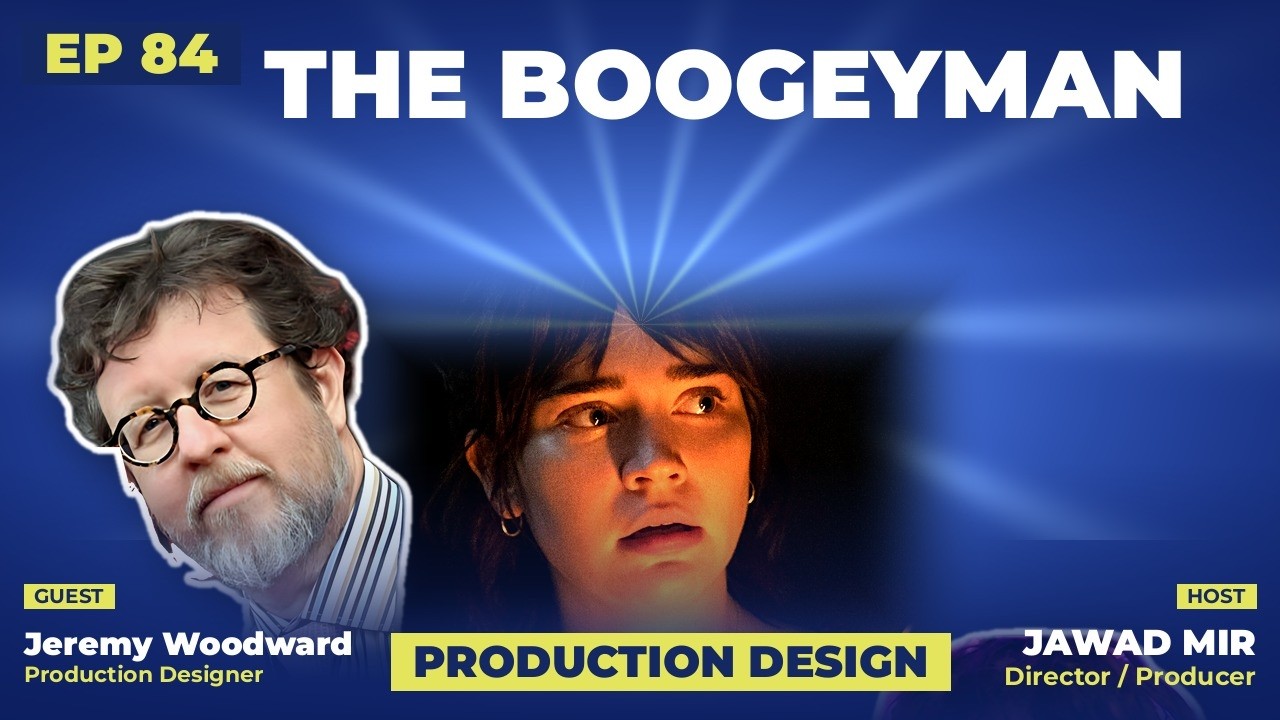
'The Boogeyman', Production Designer, Jeremy Woodward
Clips and Shorts from this episode
About this episode
Jeremy Woodward on Designing Stephen King's 'The Boogeyman' takes viewers behind the scenes of the art of production design in cinema. In this captivating episode, Jeremy Woodward, a seasoned production designer, shares his fascinating journey from theater set design to working on major films like Stephen King's 'The Boogeyman' and 'Knives Out.' Woodward discusses the unique challenges and creative processes involved in transforming Stephen King's chilling short story into a visually compelling film.
With insights into the world-building that brings these narratives to life, he highlights the collaboration between directors, cinematographers, and designers in crafting immersive cinematic experiences. Kingdom of Dreams is a podcast about cinema and the art of storytelling, where the series interviews people behind the scenes, including screenwriters, directors, animators, and producers. Tune in to explore the intricate world of storytelling and the creative minds that shape it.
#moviereview #creaturedesign #artdirection #horror #whatdoesaproductiondesignerdo
Full transcript
Automatically generated from the episode audio, so expect the odd misheard word or name. Speakers were labelled automatically. About 8,700 words. Tap a timestamp to play from that moment.
0:04Jeremy WoodwardI didn't, I didn't start in film. I, going backwards, like I transferred, I sort of moved laterally into film out of, I spent about 15 years doing theater set design, puppetry, building large and unusual objects, out of a studio. And I was living in Providence, Rhode Island at the time. And I sort of, I came to that as a sort of escape from an architecture profession because I'd just gotten, I went to RISD, Rhode Island School of Design in Providence, and had gotten an architecture degree. But it, but at the same time I was getting the degree, I also started working with this, giant massive puppet costumes, and had a rock and roll band, and sort of would do these like goofy, kind of like rock and roll mystery musicals, like a Scooby-Doo episode almost.
1:08Jawad MirRight.
1:09Jeremy WoodwardAnd you know, and by the time I got out of like... So that was like, that was really a parallel track. I started that right as soon as I got into school. So that was, the whole time I was doing architecture, I was also, you know, just doing these loud, smelly puppet rock and roll shows. And you know, prior to going to school, I'd actually worked for architects for a little bit when I was trying to figure out what to do, and knew, you know, coming out of school how little time even like a really successful partner, like in the firm that I'd been in up in Portland, Maine, actually got to design and do interesting stuff. And by that time I was just so spoiled rotten by, you know, just, performing and enjoying myself that I never went into architecture. And just, and just kept, you know, like e… and just sort of kept doing what I've eventually just started referring to as design for storytelling.
2:10Jeremy WoodwardYou know, design of form and spaces and puppets and props and stuff in the service of, you know, narrative story.
2:19Jawad MirRight. Great. Before I continue, I'm just hearing a lot of rustling when you move around. Is that the mic or?
2:25Jeremy WoodwardOh. Yeah, that's probably me bouncing the mic.
2:27Jawad MirOkay.
2:28Jeremy WoodwardLet me see if I can, just pull it off of my shirt, which maybe will help a little bit, and I can leave it alone.
2:36Jawad MirPerfect.
2:37Jeremy WoodwardIs that better?
2:37Jawad MirYeah. That sounds good.
2:39Jeremy WoodwardYeah.
2:39Jawad MirAwesome.
2:40Jeremy WoodwardOkay.
2:40Jawad MirWhat inspired you to get into architect? Like was it a certain catalyst, an event, or just being an inspiration through somebody else?
2:50Jeremy WoodwardMy people, on my dad's side are architects and builders. My father's an architect, my grandfather's an architect. It actually wasn't something I thought I wanted to do at all. I was, you know, when I, when I... My father was a, he was a registered architect, but he was a contractor…
3:14Jeremy Woodward... For most of my sort of teen years. And I sort of never thought I'd go into the building trade, and you know, originally went off to my first school, thinking I would concentrate on science writing. I was gonna be a science writer and sort of, you know, write explainers about, you know... I mean, climate hadn't really happened yet, but like at that time it was gonna, it was, it was chaos theory. In the late '80s, like chaos theory was everything that everybody was talking about.
3:45Jawad MirRight.
3:45Jeremy WoodwardYou know, and just like was explaining that in magazines and in books and stuff. And sort of just stumbled into an architecture studio course, I think my sophomore year. And, you know, had sort of been away from, you know, being a sort of conventional kid, like never really took studio art seriously, never took art that seriously. But then, you know, doing the studio class in school, it was, you know, really fell into that, really fell into the sort of analytics and poetics of architecture, creating space to occupy. And then, so then went from there and, you know, th… this was at Wesleyan University in Middletown, Connecticut.
4:30Jeremy WoodwardAnd they had, they had a pretty good little, architecture history program. So I took a course with, Professor Joe Siri there, and I was just like, "oh, I think this is probably it."
4:45Jawad MirYeah
4:45Jeremy Woodward... And so actually I dropped out of school, to figure that out, and that was a year I went back to, I went back up to Maine where I was from and, went to work for an architect for a year just to kind of like, you know, is this real? And just sort of worked as a cub architect in his office, like running prints and
5:03Jawad MirSure
5:03Jeremy Woodward... By that time I knew how to draw a little bit, so like I could do, you know, some little details and things like that. You know, and it was, it, I think it was as much the, excitement of sort of being a kid in an adult's world…
5:17Jeremy Woodward... You know, putting on a button-down shirt every day. And like, I was like, "Oh yes, this is like, da-ta-da. This is it." Like, "I'm gonna go in and I'm gonna go be an architect." So, you know, applied and got into schools after that. And I'm sure, you know, I'm sure if I had gone, you know, the other schools I was applying to, I'm sure if I'd, you know, gone to Cornell or Rice or, you know, something like that, or, I would have a perfectly respectable architecture career somewhere. But I made the terrible mistake of going to an art school, which was RISD
5:50Jeremy Woodward... Which had an architecture program.
5:54Jawad MirOh, right. Oh, wow.
5:56Jeremy WoodwardAnd, you know, which was a little...
6:01Jawad MirRight.
6:01Jeremy WoodwardYeah. So that's, I mean, that's, that was sort of, that's sort of the path that got there. Like I think if, I think if I look back… You know, even younger as a kid, sort of the things I interested in, it's really easy to see a sort of thread of sort of like design or creation in the service of storytelling. It w… it's like, I mean, you know, kids do all sorts of things. It's probably... I, you could, you know, probably pick up a thread and claim I was gonna be a brain surgeon from like 10 interesting anecdotes from when I was a child, but…
6:34Jawad MirYeah
6:34Jeremy Woodward... But like that seems to like be a through line that kind of was always present, that I was, you know, always sort of in the theater performing world. Good with my hands, able to draw, able to bake stuff, so that was, you know, that was always a thing I was doing, making this weird puppet costume or this weird, you know, thing, or this diorama, or, you know. And it wasn't, it wasn't for a long time until I sort of, just by a process of elimination or just sort of groping around in the dark sort of was like, "Oh yeah, this is kind of what I'm doing, isn't it?"
7:13Jawad MirYeah.
7:13Jeremy WoodwardAnd then, yeah.
7:15Jawad MirI've seen The Boogeyman, and I didn't know you had, worked on Knives Out, which is, another film that you have done. And now that you mention your connection with theater, it makes perfect sense because, I mean, obviously a lot of it has to do with the director and cinematographer, but at the same time, in both of those films, one thing that stood out is that, you know, i… in some films because of budget or just because of style or whatever, you don't see the entire 360, environment, you know…
7:48Jawad Mir... The room, the space that the characters are in. And, I don't, I don't have high good memory of Knives Out because it's been a while, but I remember there were a lot of aesthetics and obviously that house and everything was in there. But with Boogeyman, like, you know, even in the opening, you see that 360 shot of a, of a baby's room and you just know…
8:07Jawad Mir... Exactly where you are. So that explains it because in theater, I mean, that's what you have to do. Everything is right in front of the audience. There's no cuts and stuff, so it makes perfect sense now that you mention it.
8:21Jeremy WoodwardYeah, it's, it's interesting 'cause like in theater, which what you say is true, like it's all there and the interesting thing about theater is it's a, it's a continuous sort of analog experience that you're…
8:35Jeremy Woodward... Engineering that occurs between the audience and the... I, you know, I always, I always like to talk about the triangle between the audience, the text, and the actors. And my, you know, my little formula was that like, you know, that the sort of scenery and the sort of the physical world of the play that I was in charge of creating sort of is the intersection of those things. And you know, I was always interested in theater that was much less about the physical facts of the surroundings of the characters of the play than of the sort of, than sort of establishing a sort of premise and a relationship by which the audience and the characters were gonna sort of, do this story together by enacting it and by listening to it. So my, you know, my, you know, it... My world was very much in the sort of world of, black box theater.
9:37Jeremy Woodward... You know, nobly underfunded, stuff which you tend to like more than building the physical facts of the environment you sort of were building, you know, sort of like a series of physical possibilities that sort of like had a relationship to the play or, you know, sometimes there was a bigger sort of overarching theme. But it wasn't until, you know, working in film that, you know, I'm still trying to figure out why, but film has a really hard time with, you know, that sort of imaginative. Like you know that, there's so few examples of a film which take like an overtly theatrical, conceit and actually succeed. And like one sort of variety of that, like actually we're just seeing like right now that goes really well, is like sort of, like Wes Anderson's work with the fantastic f…
10:35Jeremy Woodward... With the, with the Henry Sugar pictures that just came out. And like those…
10:40Jawad MirYeah
10:40Jeremy Woodward... Have a fantastic sort of sliding, moving, skating, tracking to another set. You know, he's sort of been doing that the whole time, it's just he never, you know, the overt theatricality of it background. And I think like that works totally, like that works totally well. But at the same time, you're sort of, the sort of delight in that is going from one super like stylized but grounded and realistic environment to another. Whereas if you think of something like, what's that one Lars von Trier did that was like in this big black or... I think it was Dogtown, where it's this very like very different production. A giant black empty space with these wood framed structures representing the houses in this sort of remote, sort of mountain town as I recall it.
11:44Jeremy WoodwardAnd just nothing was, nothing was actual at all. You were in these like skeletal, not real, and there was like writing on the floor I believe telling you where you were and you know, I ate it up. I thought it was, I thought it was an amazing conceit and eventually you sort of settled into it and it worked, but film does not generally do that very well. So it was interesting. It was, it was a long time sort of exercising that sort of, you know, the world of the imaginative telling of the…... Play, and then sort of transitioning to some, you know, to the film world which is, tends to be a much more, physically grounded, like, actual, whether stylized or not, but like grounded and very presentational sort of, depiction of where you are. And of course, like of course I'm always, I always have my eye out for films that tweak that or mess with that, 'cause I think, I think, it's an endlessly entertaining, thing to do.
12:50Jeremy WoodwardEven something like, you know, like Scott Pilgrim ... Edgar Wright's Scott Pilgrim, which, you know, would stretch rooms or pull them out, or you like walk into weird places, or you're like, you're very, you're in a very weird place and you walk through a door and you're a very stylized place. Like, I love all that stuff. You know?
13:11Jawad MirYeah.
13:12Jeremy WoodwardIt's, it's important to note, I'll, I'll just say, like it's important to remind everyone that in Knives Out I was the art director, which is…
13:18Jawad MirOh, okay
13:18Jeremy Woodward... A very different job than the production designer.
13:20Jawad MirThat's right.
13:20Jeremy WoodwardThe production designer…
13:21Jawad MirThat's right
13:21Jeremy Woodward... Was David Crank. The, extremely accomplished and terrific guy. I was the art director which, for those who don't quite know what that's about, the, I, my description of the job is suffering bastard with a clipboard.
13:39Jawad MirYeah, that's…
13:40Jeremy WoodwardYou know, making sure it all gets done and gets done well and gets done…
13:43Jawad MirYeah
13:43Jeremy Woodward... To the, to the designer's liking and on time and on budget.
13:50Jawad MirWell, thank you for that clarification. One thing I find, I would love to know, I know in the world of, documentary filmmaking… ... 'cause that's, that's the world that I'm currently in. It's easy, I wouldn't say easy, it's easier to go from documentary to a narrative versus the other way around. Because with documentaries, most of them, even whether they're narrative documentaries or not, you are trying, you have an idea of the beginning and you know the ending that you wanna get to…
14:24Jawad Mir... But you don't, you don't have no idea what in the middle is, right? The rest of it, because you have to figure that out as you go along. And as you're shooting, there's like 10 different stories that are, arcs are coming in, and you're trying to figure that out. In the same way, do you think it's similar going from theater to film is a little bit easier than coming from film to theater, or not at all?
14:48Jeremy WoodwardThat's an interesting question. I think, it took a while before, it took a while before I sort of figured a bit of that out. Like, fortunately I sort of came in, like when I, when I sort of transferred over, I started working, you know, I sort of worked my way up through film, and so sort of got a long time to sort of get my feet and sort of like figure out how everything works. I worked as a set designer for a long time. Not a long time, but I worked as a set designer, worked as an art director before I started designing my own. But I think, I think it's just attune, I think it just, it's about being attuned to what each one does, what the strengths of each medium is…
15:37Jeremy Woodward... And how they're different. I… in terms of is it easier to go from one to another, I can't quite imagine going from film to theater, actually, because, if I were to be doing it, because I... Possibilities that one entertains in sort of conceiving the theatrical environment, are so, are kind of in a way so much wider and so much less, pinned to, you know, the actualities of where you are that, I think if I were to, you know, project going like this, like film training's very much about like map out like all the things you need in the film. Like go through the script, like what are all my locations? Like where do we have to go? And then you make this big list, and then it's like, it's all about like, you know, what's the, what's the arc through that series of locations? What's the,..
16:39Jeremy WoodwardAnd you sort of like, you know, I kinda feel like it's l… curating your locations is kind of like the way to sort of tell the story. Whereas, once you're in the theater world, you really only have one location, and you just sort of have to throw away the notion that you're actually gonna depict all of these things. So, like a… I think until, I don't know, I think, I think until you figure that out, you probably end up chasing a lot of, chasing a lot of, frenzy trying to nail all that down. But again, I don't know. Like, that's, that's an interesting, it's an interesting question. They're just, they're so different. It's like…
17:19Jeremy Woodward... You know, it's like the, it's like playing an acoustic guitar versus playing… ... In a rock band. Like… ... The sort of playing in, playing in film, the scale and the sort of the power available to you, it's like, you know, in a sense you can sort of point your finger and wave your pencil and like just really, just robust amounts of people and material come into play, and then the, you know, and you pack it all in and you film it, and it just has this magnificent sort of robust actuality to it that then, you know, is durable and lasts, and people can see it for a really long time. Whereas the sort of theatrical version of waving your finger is almost controlling less stuff, and it's just about, it's much more like magic with a handkerchief and a fan.
18:11Jawad MirYeah.
18:12Jeremy WoodwardAnd figuring out what the handkerchief and the fan was, and it's just sort of whittling down to like, what are, what are y… what are our companions to the storytelling as opposed to, You know, it's, it ends up a, I think it ends up a very different…
18:28Jawad MirYeah
18:28Jeremy Woodward... Very different, very different thing.
18:30Jawad MirDo you, like, if you were to choose, and I'm not trying to give you an option here… ... But just art directing versus production designer, which one do you enjoy more?
18:41Jeremy WoodwardOh, I mean, I certainly, am very pleased to be working as a production designer. Like, I mean, art direction is a, is a good job. I was, I was okay at it. I mean, production design is very much more about operating with the story, operating with the…
19:01Jeremy Woodward... Storytellers. Art direction, is you're, you're still, you're still engaged with all that stuff, and you have to be really sensitive to that stuff and know where it's all heading and what the, what the point of each location is, what the, what the intent is. But it is a managerial position more than it is a
19:23Jawad MirCreative
19:24Jeremy Woodward... It's a, it's an odd thing. It's a, it's an art manager though. ... It's not a,.. But, you know, like, so, I mean, they're both terrific. I'm, I'm happy to be working production design. I haven't, I haven't art directed in a while and that's okay.
19:39Jawad MirFair enough. Before I go to The Boogeyman, I just wanted to ask you one more question. What… whichever film set you have worked on, whether it's The Boogeyman or another one. And a… as creative individuals, you're always trying, there's always room for improvement, right? Like, you're like, you know, one day you would have an idea, you go to bed, you wake up, you know, another one, and it kinda keeps going. When, has there been ever a moment, and if there's a story behind it, you, I'd love to hear, where there's a take going on and, you know, your production design team has put this amazing set which is connecting to the arc and the story, and then in the middle of the take or in the middle of, you know, let's say after a lot of coverage, there's something that you feel that can be changed and that will serve better to the story. Have you ever sort of taken it up to the director halfway into the coverage that, you know, sh… "I think this is a great idea. Should we do this? What do you think?" Has that ever happened? If so, feel free to share the story of that.
20:40Jeremy WoodwardOoh. I mean, being on set during shooting is a constant process of…
20:48Jawad MirChange
20:49Jeremy Woodward... Of change, but of optimization. It's sort of like a, you know, you have a successive series of windows, and those windows, changes as time goes on. Like, by, so by the time,.. I'd say I think I'm, I'm fortunate enough that I haven't…
21:15Jeremy Woodward... Had to do any total fire drills to try to refashion something according to the moment. But what I find is when, by the time everybody's there, and we're actually shooting, the decisions are kind of, they're much more like sort of short knife decisions. Like, you know, try to, especially w… working with your onset dresser, just trying to, like, compose your frames. Make sure that you're, make sure that you're just supporting the moment, with sort of the tools you have available. So that ends up being, you know, much more your movables. Sometimes what's, what'll happen is you go in and, you know, you see the way a scene gets blocked, and you're sort of like, "Oh…"
22:13Jeremy Woodward... "like, kinda my favorite stuff, I thought they were gonna play this room this way." But I see it's kind of like, you know, like, what I wanna do in between the rehearsal when the cast is off to vanities and getting, you know, in costume and in makeup, like, you know, you grab your onset dresser and maybe you have the decorator around and some set dressers if you're really opening the set for the first time, and you're like, "Okay." Like, and the decorator's usually, like, right there with you. It's like, okay, like, for, like, this business that we're doing over here and shooting this way, like, I kinda want, like, let's get these things in there. Like, I discovered that when we shoot this way and this way, we're gonna see this color twice in a way that I don't wanna see, so let's, like, move things around. So that's, it becomes much more sort of tactical shot by shot optimizing, tweaking, pushing, just getting the frames correct and balanced, moving stuff around so that the actual motion of the camera. Like, most of what I'm responding to at that point, is, like, what's the, what's my, what's my camera doing?
23:17Jeremy WoodwardWhat's our eyeball doing? And, like, what's actually in, what's actually out? What's our movement through the space? Where do we s… where do we settle? Where do we land? And then you sort of go through all of your, the elements that you have available and just sort of, like, optimize everything to that precise thing. Because, like, you know, you don't always know exactly how the shot's blocked when you go in. You don't, you don't, you know. And sometimes they're making it up as they go. So…
23:44Jawad MirYeah
23:44Jeremy Woodward... You know, as much as you can you try to be on hand to make sure that, you know, a camera movement catches bits that you wanna be sure are in there, whether that's colors or, like, information because it's certain types of set dressing or it's this or that. Or it's just textures and you wanna make sure, like, you know, you're capturing the same feeling as you pull through. But that's sort of, like, most of what happens sort of on the day, I would say.
24:12Jawad MirYeah. Right. Okay, so moving on to The Boogeyman. The director who worked on it, Rob, from, at least from IMDb, I believe that was his first major Hollywood film in terms of the budget. Again, this is, I'm just quoting IMDb that his last…
24:33Jeremy WoodwardYeah
24:33Jawad Mir... His last film, I think…... Was around a budget of 100K, 150K, and this was more around 35 million, if that number is accurate. Working with a young director like that, what was your experience? Because, you know, sometimes lack of experience is great to a certain extent…
24:51Jawad Mir... Right? Because you're bringing your fresh approach, but at the same time, a set is very intimidating. And when you land on it the first time, even for someone like Spielberg, you know, he would say that the first day on the set, "I'm nervous as hell."
25:05Jawad MirBecause i… it's something y… you're starting again, and that kind of can play in your favor. How was working, like, how was working with Rob, like, you know, as m… as one of his first major feature films and sort of interacting with him with the production designer, aspect?
25:23Jeremy WoodwardRob was terrific. I actually, I got to spend a lot of time with him during pre-production… ... Just sort of going through... He was a great, like... You know, he hadn't played with toys that big before, but he was extremely confident in what he was trying to do and what he was trying to accomplish and the way he wanted to shoot the movie. And, I have to, you know, all credit to the guy 'cause he, you know, for an early director being in that position, he was able to just get more out of the studio, get more shots, get, you know, "I need these reshoots, we need to do this, I'd love to do this. If, while we're here, don't you think we just need to like squeeze the sponge a little more and get that?" Like, he was, he was fantastic about just knowing exactly what he was driving at, and pushing for it, and just, and, relying on his team.
26:35Jeremy WoodwardSo, and if, you know, if he was unfamiliar with something, like, he just, he didn't have any problem. He was just like, "Oh, I don't know," like, "What are you talking about?" Like, you know. "Sorry, I haven't done that before. I don't know what this is." So like, "What is that?" And then it, you know, he would, he would land on his feet as soon as you explained anything to him. And it, and it wasn't so much like that. I was, I did not feel as though I was working with somebody who was like kinda wide-eyed in that sense. Like, he was, he was a really, focused and capable individual. He was, he was great to work with. Like, we had a great time. Just like we, you know, we got along great, he was fun to talk to, talk about movies with. Just loved to just sit up and just talk about the show and just plan the show and think about the show. So, you know, I'd, I'd,.. You know, it would, it would be very, it would be very enjoyable to tell you I could, brought him under my wing and said, "Now, see, Rob." Gave him a season tour. But he, like, honestly, he didn't need any of that.
27:44Jeremy WoodwardHe was completely there on all cylinders.
27:47Jawad MirAwesome
27:48Jeremy Woodward... And yeah, so that was, that was a, that was a great pleasure. And honestly, I have found like, and maybe this is, you know, there's probably a selection to this because I've kind of found that of all of the early directors that I've worked with is, especially on a, on a smaller project where, you know, perhaps they wrote it, perhaps they've been sitting with it for like eight years, that by the time they get there, like they're, they've rehearsed this thing in their mind a lot. Like, they…
28:22Jeremy Woodward... Like, you know, they've been living with this project for a long time oftenly. And so I've, I've honestly never, I've never designed a show where I just feel like, oh, we're just like, you know, just hang on, this kid doesn't know what he's doing or anything like that.
28:36Jawad MirYeah.
28:36Jeremy WoodwardI've always, all of, all of my, all of my first-time directors have been focused. And I think it's probably that has more to do with like who does a studio... You know, 'cause studios aren't idiots. You know, and so like, it's like who do they trust to give the reins to? Who do they trust, you know…
28:56Jeremy Woodward... With a budgeting project? And so, like I would say that's the, that's the sort of selection process before I even meet these directors that goes on.
29:04Jawad MirGreat.
29:04Jeremy WoodwardThat, I would have to think whoever it is that had the 35 million, would've sniffed him out if they thought, you know, he couldn't handle himself or needed training wheels or something.
29:18Jawad MirI think a lot of it has to do with what one of the things that you said, and this has happened to a lot of first-time filmmakers where the studios kinda took control. Whether, you know, you hear these stories from movies like, what was that movie? Solo, where, Ron Howard kinda came on. And I truly believe because studios are investing so much money, it's not necessarily about the vision or the change, difference of vision. I think it's about confidence.
29:46Jawad MirIf the studio sees that this director, he or she does not, you know, display that kind of confidence in whatever the hell they believe in terms of the vision, they're gonna s… they're gonna naturally start making their calls because they've got money into it.
30:01Jawad MirAnd I think confidence goes, like you says, it literally starts and ends with confidence. If you have confidence, even if you're scared inside as hell, but you know, show that confidence, it makes a huge difference. I… and the team too, because you gotta carry the team from day one. The day that, the moment they get that sniff that you don't know what the hell you're doing, you're completely lost, it will just be like a downhill…
30:23Jawad Mir... Journey from there on. But yeah, for sure, confidence is a huge thing. Sorry, go on, what were you gonna say?
30:31Jeremy WoodwardOh, I just thi… like, and it even can be like there can be a moment where you don't know…
30:36Jawad MirThat's fine
30:37Jeremy WoodwardAnd that's, and that's fine. It's, but, like, it's sort of like how, like, how are you meeting that moment? Are you
30:45Jawad MirPressure or no pressure
30:46Jeremy Woodward... Are you just sort of stabbing at anything that seems, like, possible, or are you getting your team together and, like, talk something out…
30:52Jawad MirYeah
30:52Jeremy Woodward... And, like, figure out what the next move is?
30:56Jawad MirYeah.
30:58Jeremy WoodwardYou know, like, you know, what's the story is no plan survives first contact with the enemy, but
31:05Jawad MirYeah
31:05Jeremy Woodward... It's just about, like, you know, what are your, what are your personal resources, initiative, and ability to adapt and move forward? Like, are you that sort of person?
31:14Jawad MirYeah, no, just to clarify exactly, that's what I meant, is that there will be every day on the set something goes wrong, like more than…
31:21Jeremy WoodwardRight
31:21Jawad Mir... Dozen times. How you…
31:23Jeremy WoodwardRight
31:23Jawad Mir... Deal with it…
31:24Jeremy WoodwardYeah
31:24Jawad Mir... And instead of, like, giving in and just putting your hand over your head and just, you know, letting it get to you, I think that's... And that, if that happens all the time, that's where that pressure kicks…
31:35Jeremy WoodwardRight
31:36Jawad Mir... Ki… kicks in, and then you lose, you lose your steering wheel, basically. And it's hard. It's not easy, believe me. I, you know, directing… ... A film is not easy. It's difficult. Very difficult. But at the same time, if you know, like, I think one of the key things it said, if you have sort of visioned a story in your head over the last eight, nine years, that helps, too, as opposed to not knowing what you're trying to do, whi… which can, which can be the cause. But no, that's great to know. I mean, I thoroughly enjoyed The Boogeyman, and one of the things I've started doing is, after COVID, I've start, stopped looking at Rotten Tomatoes before I even watch the film because…... That sets a notion, right? Like, a pre-notion, am I gonna like this?
32:19Jeremy WoodwardRight.
32:19Jawad MirOh, yeah, this pro… film has this many problems. But, you know, it was, it was, it had little bit of things that I didn't, like, but overall, I mean, it kept me on the edge of my seat with the, you know, the camera movements, production designing, lighting, perform… and the story. Story was pretty good.
32:36Jeremy WoodwardYeah.
32:37Jawad MirSo it was, it was, i… you know, Stephen King, I mean, you know, he, to be able to do, tell a story that's written by Stephen King, is amazing, so I really enjoyed it. And my next question, Jeremy, is what was some of the biggest challenges that you guys faced as a team on a day of, kinda connecting to what we were just talking about, and how did you overcome it? Because that's, you know, shit does happen all the time.
33:04Jeremy WoodwardFor sure. I think, I think our biggest challenge is... God, it's kind of weird to say, but, I felt like that, I think we had such a good team that, it really was just sort of about executing the plan. I'm not sure this is a very, I'm not sure this is very good storytelling at this moment, but, like, our, it was a, it was a k… like, basically, like, it was, a lot of this film was really complex because you have, you know, you have these layers. You're gonna have a creature. You have, so you have a VFX department that's really involved in everything.
34:10Jeremy WoodwardThere was a lot of practical... Rob's a sort of old school horror guy, so, loved to see as much in camera as possible. There was, so there was a lot of stuff that was put on camera that wouldn't necessarily have been done on camera in other situations. Like, the VFX department was very happy to learn, this is, Paul and Zena Graff, who were the, were the VFX team, were very interested to learn that the art department really wanted to, produce this, those sort of viney, grown over, creepy mold situation. They were very happy to learn that our department actually wanted to have a, you know, a go with that and produce that practically and not just sort of rely on VFX to, like, sort of make that. And then the same with fire. In the final fire scenes, there's a lot of practical fire, in all those situations. We built a miniature house, and burned it for the final exterior shots.
35:22Jeremy WoodwardAnd so a lot of that ended up as a lot of meticulous planning about, like, you know, on the big fire shots, just all of the departments, like, big, long meetings of, like, how does, like, what are the storytelling beats? How does the shot go? Let's design the shot. Let's figure out where the fire goes. We're, let's figure out where the fire is. Let's figure out where the VFX team and where their kinda plan to work and where gonna, they're gonna plan to augment and where, you know, we're gonna, and they're gonna help out. We had that scene, that moment when they're escaping the burning building.
36:03Jeremy WoodwardYou know, we're, we're combining one burning set, blending that into another burning set. We sort of pull out through the front of the house. We look up. That's a stitch between an actual burning set and another burning set that we pasted together in post. And then you get the final look at the, at the entirety of the house that's burning, and that's sort of pasted into the location. So that, those were sort of, like, easily, like, the most complicated, situations where every department just had to organize around a common…... Thread and in a common understanding of what was gonna happen, and figure out how everybody was gonna to do that. And honestly, like, everybody was so good. Like Eli, the cinematographer, like, you know, a lot of that stuff just got built, like, really the old-fashioned way, just everybody standing in the room.
37:04Jawad MirYeah.
37:04Jeremy WoodwardAs soon as soon as the set was half built, you know, we just went into the living room, went into the, basement and just blocked it out. And special effects is there, VFX is there, the first AD's there, I'm there, and we're just like, and we're just building it, and Rob is just showing us, "Okay, here's the shot, here's what we need." And then everybody just sort of like working out, like, "What's your part? What's my part? How do we do this? How do we do that?" that, all of that communication was so robust and came early enough that it was really just a sort of a contil… continual process of tuning, as much as anything else. But, like, I mean, those were the sort of the big moments where…
37:46Jeremy Woodward... You know that every department's just got a lot going on.
37:52Jawad MirYeah.
37:52Jeremy WoodwardAnd it all just needs to get organized really well. The, those…
37:56Jawad MirNo
37:56Jeremy Woodward... Those were, those were our biggest moments, for sure.
37:59Jawad MirRight. No, thanks for sharing that. I, one of the comment that I wanted to make when I was watching it kinda reminded me a lot about another film, which is not really a horror. It's a thriller. It's one of my favorite shot, acted in a thriller concept. I don't know if you've seen, it's about a 20, 45-year-old movie, Robert Zemeckis, What Lies Beneath.
38:24Jeremy WoodwardI don't know it.
38:25Jawad MirWith…
38:26Jeremy WoodwardI'm not sure
38:26Jawad Mir... With Michelle Pfeiffer and Harrison Ford.
38:31Jeremy WoodwardOh, I'm not sure. You'll have to tell me about it.
38:34Jawad MirIt's basically the concept is that there is a ghost in the house, and the trailer which it pretty much gives it away, and it's supposedly a ghost of a woman that Harrison Ford's character had an affair with, and his wife is Michelle Pfeiffer, and that's the whole movie. And it, majority of it takes place inside a house.
38:53Jawad MirAnd you know, similar to The Boogeyman. So the es… it was obviously built for the film and the way the camera moves, and you know exactly where the des… the shot design is. ... And it reminded me of that in a very which way, the way, especially the opening shot, like in that room where the camera... 'Cause it keeps you on the edge of your seat, okay, what's coming up? What's gonna be revealed? And that's, that's one thing I thoroughly enjoyed. And that's a combination of direction, cinematography, production design, sound, everything.
39:23Jawad MirIt's like a team effort, right? So I just wanna make that point and, let you know that it really…
39:28Jeremy WoodwardThat's, that's great to hear. I mean, the house, the house was a, it was an enormous pleasure to work on that house with Rob and Eli. And sort of, you know, from the first part of it, the first parts of it being, you know, Rob just comes in with, dozens of really specific ideas of moments that he wants to create, you know, from the, you know, as specific as, like, when the cans of paint, you know, come under the, come under the floor. Like, he had five different really specific ideas about the way he wanted to see and what he wanted to see with it and the painting and the footprints and the, you know. And he could, and we just, I sort of would just sort of capture all of these moments that he was interested in, and then just sort of in the earliest stages, and then sort of design a house, with these sort of, like, little opportunities to, like, achieve all of these things that he was looking for.
40:29Jeremy WoodwardAnd then of, and then, like, you know, obviously, like, especially the second floor, like, you know, as I sort of design that and sort of engineer that to fit, I'm, I'm putting in other sort of possibilities where, you know, we use stack spaces and you can, you can look between from Sawyer through the hall into Sadie's room. You know, and then... And he, you know, gets excited about those and wants to shoot that. But, like, all of that, like, that was a... And Eli just was just such a, lit it so beautifully and shot it so beautifully and…
41:10Jawad MirYeah
41:10Jeremy Woodward... Just found all of, all of the frames. Every time he settles into a frame, it's, there's just, it's just beautifully composed. He found, just each painting. Like, and I wasn't, you know, I'm not, I'm not present tactically, like, moment by moment like that, so a lot of that is on him.
41:31Jeremy WoodwardWhere he just finds a frame where he's just composing with the paintings I have on the wall or the window openings or door openings, and just finds a really fantastic settled frame that you can play that moment. And he was, he was great for that. He was great for that. It was, it was so much fun to watch dailies and see what they'd come up with, see how they'd done it.
41:52Jawad MirRight. One thing I noticed, after the film was over, and it just didn't hit me until I Googled it, and this is obviously because the book was written way long ago. I think it was written a while ago. I found, I'm like, I've seen, there's some similarities of the story, especially towards the end, with something else that I've seen. And then I Googled it and it turned out there's a lot of conversation about the similarities with Stranger Things. I don't know if you've ever seen Stranger Things.
42:22Jeremy WoodwardSure.
42:23Jawad MirYeah. Did you, did you guys find that in the, like, that might come up? Because, I mean, the book, I think, was written a while ago, and maybe the Stranger Things got the inspiration from the book, right? So...
42:35Jeremy WoodwardWell, it's, the original Boogeyman was a short story that King wrote.
42:40Jawad MirYeah.
42:40Jeremy WoodwardIt's probably all of six pages long, and it all takes place in the dad's therapy office, essentially.
42:48Jawad MirRight
42:48Jeremy Woodward... Where, like, the entirety of the short story is sort of his meeting with Lester Billings. And it's actually very different because in the short story, Les… Lester Billings sort of, I forget if he's called that in the, in the story itself, but, you know, he comes in, he's talking to the therapist about his kids and the Boogeyman and blah. And then, in some sort of turn, I forget exactly how it happens, but the, it comes to pass that the Lester Billings character actually is the Boogeyman and, you know…
43:25Jeremy Woodward... Like, in the last moments he sort of reveals himself to be the Boogeyman and you know, like, the therapist is done for. So this, so this movie sort of like, spun like a much, you know, a much greater tale out of that initial premise.
43:43Jawad MirSure.
43:43Jeremy WoodwardBut yes, no, Stranger Things, like especially, I mean, I can't tell you,.. I know, I can tell you that Rob came in very certain of the way the creature, was going to be. And it's, and it's very like he... And he had to, he had to push for this because he knew he wanted it to be sort of quadrupedal and, you know, the sort of stringiness of it, and the way it moved and the weirdness of that mouth, was something that he, that he came in with. So I know those were issues, like, I can't, like, I mean, Paul and Zena Graff actually worked on, I think, season two or three of Stranger Things.
44:41Jeremy WoodwardSo they're actually part of that, but like, it was sort of on my mind, but it was never actually a thing we spoke of because I could,.. I was sort of trying to recognize the similarity, especially, like, in the sense of, like, the environment getting taken over by this sort of Boogeyman thing and sort of you could, you could sort of draw a parallel between that and sort of the upside down.
45:06Jeremy WoodwardIn which you would see spaces that you'd seen earlier, but they were sort of like, they were different and affected. I think a lot of... I was w… you know, I think we all recognized that and, you know, certainly our VFX team, like, as that was part of the experience, that would be part of conversations. "Well, you know, in this situation we did this. You know, we handled this in this way." But again, for me, a lot of... I was willing to let that sort of be in the room and sort of as a, as a reference. I don't think I ever referred to it specifically as…
45:44Jeremy Woodward... As like, "Oh, I'd like to pull this from Stranger Things." But, you know, again, I think the way to avoid specific to this story as possible, and to unpack it as much as possible, and to, like, really just dig into this, 'cause there's, there was really a very... The whole notion, the whole sense of this Boogeyman, the mold thing that comes in where it starts, like, the presence of the Boogeyman is just sort of expressed in a house as the Boogeyman starts to feed on the sadness of the people in the house, and that sort of, like, starts to bleed into the house and sort of mirror the sort of psychic devouring that the Boogeyman's kinda doing. 'Cause that's, like, that's kind of my conception of the Boogeyman, is that it was sort of like a saprophyte of grief. Like, it was a…
46:39Jeremy Woodward... It was a sort of fungus, but that fed on humans' grief. And that was the thing. Like, you know, like a saprophyte, a fungus feeds on dead material and the sort of Boogeyman feeds on this, like…
46:53Jawad MirYeah
46:53Jeremy Woodward... Hu… you know, suffering. And so, like, just really being specific about that and being specific about the way, that sort of unfolded and expanded into the house, and what its form was. You know, references like that with Stranger Things are really helpful because, like, you're sort of, you can see a lot of parallels and you sort of, it sort of puts stuff in your mind, but, like, then when you just sort of transfer that and really drill in and sort of take those experiences and those things and make them, and sort of make your own thing that's completely specific to the script you've got, like, it's kind of only helpful. It wasn't, it wasn't a thing…
47:33Jeremy Woodward... We were spooked about necessarily or, were nervous about.
47:40Jawad MirRight. Got it. No, that, thank you for that clarification. Again, that was just an observation, and it didn't hit me where the similarity was until I Googled it, and, you know, there's, there's a lot of stuff that in the world of storytelling overlaps, there's only so many stories you can tell. But, I truly enjoyed The Boogeyman and I was pleasantly surprised, I won't lie. I wasn't expecting going in much from it, like, when it came into the theater.
48:04Jawad MirAnd I never got to see it in the theater, and when it came out on demand, that's when I, when I saw it. So, you know, having said that, what's next for you that you are able to talk about, if there is a project that you're attached to right now?
48:18Jeremy WoodwardYou know, as you won't be surprised to hear, it's been a challenging year.
48:23Jawad MirYeah
48:23Jeremy Woodward... I was attached to a project, in February that, sort of an ensemble comedy, very funny. And then it sort of pushed because of an actor availability for a little while, and then, you know, we really had only gotten into it, I'd been in the office for a week when the, writers strike hit. And, you know, it wasn't a studio picture… Early on it was sort of independently financed even though it was a sort of a sizable budget, but the financiers got spooked and they sort of pulled the plug on that. They were like, "Well, okay, we're gonna go on hiatus until this settles out."
49:03Jeremy WoodwardSo, you know, that's still out there. Like, you know, it's a summer movie. It'll come back at some point. It'll be happy to, get back to that. You know, I'm talking to, a small, film that would shoot in New Orleans. That's a possibility. That's a, that's a sort of a little thing that they think they could, they could go ahead with, because it is a true indie. Maybe, you know, get to shoot it, with a ri… with a SAG waiver…
49:37Jeremy Woodward... If those are still coming out. Talking to,.. You know, at this point everybody's talking. Like, there's like phone calls. Everybody's sort of like, you know, "Let's get this thing shovel ready so when it all…"
49:48Jawad MirYeah
49:48Jeremy Woodward... You know, when it all gets settled out everybody can go. And I think it's, it's gonna be a very frustrating year coming up 'cause there's such a backlog of projects that got interrupted or delayed. You know, there's the, there's the, all the projects that would've been coming up anyway. It's gonna be an actor availability nightmare to try to…
50:10Jawad MirYeah
50:10Jeremy Woodward... Slot these actors into all these program… y… these projects that are gonna try to just go at the same time. But, you know, so like hopefully this stuff settles out and we can, you know, we can get back to work, and, it's just about…
50:24Jawad MirYeah
50:24Jeremy Woodward... Who gets, who gets out there first.
50:26Jawad MirI know, I was talking to somebody on the podcast, and I met him in person, and he was telling me that he's working on an independent film, he's a cinematographer, with a SAG waiver next month, with Samuel L. Jackson. So, you know, stuff like that is happening, but I do think, and this is probably me being just optimistic, what happened in the '90s with the rise of independent cinema and it just, you know, that 10, 12 year of time…
50:53Jawad MirLike, you know, some great films came out. I'm not talking about entertaining films, I'm talking about really great storytelling. And I f… I feel that this might…
51:04Jeremy WoodwardYeah
51:04Jawad Mir... Go into that where a lot of, you know, n… new talent will be discovered because of, like you said, backlog, because of the strike. So hopefully that positive comes out of it. I know it's hard. I get it. It's very difficult, but, you know, at least things are moving in the right direction.
51:22Jeremy WoodwardYeah. And I think it'll be okay. I mean, I hope you're right. I think, it would be fantastic if, this was able to somehow contribute to the creation of a, you know, films on the, you know, the sort of like 4 to 12, you know, million dollar films. If like, if this somehow like incubates a bunch of those and we get a bunch of like really new, interesting, you know, original, terrific stories, being told on film, I mean, that would be a great result
51:58Jawad MirYeah
51:58Jeremy Woodward... Of this little pause. I hope you're right.
52:01Jawad MirYeah. No, it would be. And listen, Jeremy, thank you so much for joining. I truly appreciate your time and…
52:08Jeremy WoodwardOh, sure
52:09Jawad Mir... Your candid conversation. It was a pleasure…
52:11Jeremy WoodwardNo, thanks
52:11Jawad Mir... Chatting with you.
52:11Jeremy WoodwardIt's nice to talk to you.
52:13Jawad MirI hope you enjoyed this episode. Thank you so much for watching and listening. Don't forget to subscribe, like, share, and comment, and do come back for another episode. Until then, have a great day.