
Episode 85 · April 17, 2024 · 1h 6m
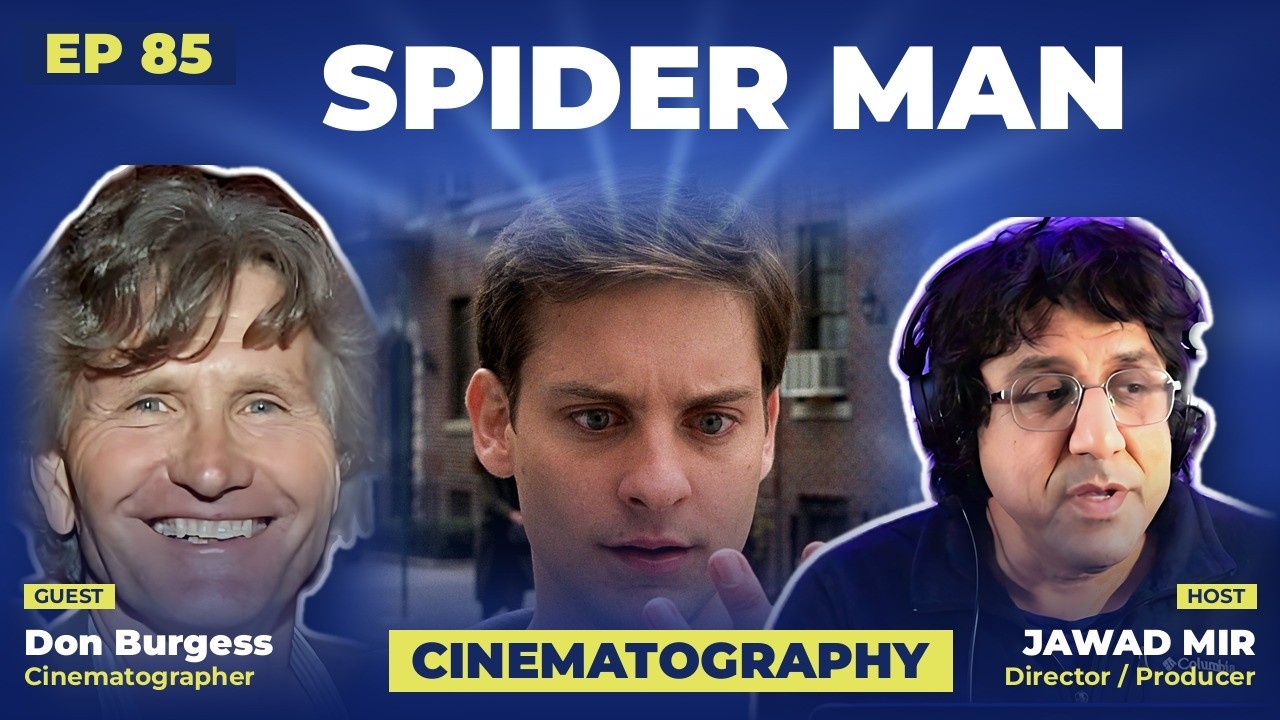
'Spider-Man', Cinematographer, Don Burgess
Clips and Shorts from this episode
About this episode
Behind Spider-Man's Lens: Don Burgess Reveals All, Join us as we dive into the cinematic universe of Sam Raimi's Spider-Man through the eyes of acclaimed cinematographer Don Burgess. In this insightful interview, Burgess shares behind-the-scenes stories and the creative process that brought the iconic superhero film to life.
From the challenges of crafting Spider-Man's groundbreaking visuals to the collaborative spirit with director Sam Raimi, Burgess offers a rare glimpse into the artistry and meticulous planning that made Spider-Man a timeless classic.
This episode is part of Kingdom of Dreams, a podcast about cinema and the art of storytelling, exploring the minds behind the movies. Don't miss this engaging conversation with a master behind the camera.
#donburgessinterview #cinematography #visualstorytelling #samraimidirector #spiderman
Full transcript
Automatically generated from the episode audio, so expect the odd misheard word or name. Speakers were labelled automatically. About 10,900 words. Tap a timestamp to play from that moment.
0:07Don BurgessGood. How are you today?
0:09Jawad MirI'm doing great. Thanks for joining in.
0:12Don BurgessGood.
0:14Jawad MirI was just talking to, John Bell, and I mentioned to him I'm talking to you, and he said maybe Don would remember me. He worked with you on Contact. He's, like, from the art department. He's done stuff for a lot of, different projects, but I just thought I should pass it on.
0:31Don BurgessYeah, absolutely. Yeah.
0:34Jawad MirGreat.
0:34Don BurgessAmazing art department.
0:36Jawad MirYeah, it was great. I like your hat.
0:41Don BurgessOh. Yeah.
0:44Jawad MirGood stuff. Thanks for taking the time to watch, the links that I sent you, really appreciate it. It meant a lot to me coming from you, so really thankful for that.
0:55Don BurgessYeah, absolutely. Very well done. Those are... I don't even know how you do those films. I mean, it's…... It's, the time commitment to stay with it like that and, kinda deal with just all the pain of what's going on out there, it's gotta be really tough.
1:16Jawad MirWell, thank you. It was tough, but at the same time, I always wonder about how things that you do the way you do them, so it makes two of us. You know, it's, it's, it's not an easy profession. And, you know, you guys obviously have taught a lot of us how to do things, so, but yeah, thank you so much, I appreciate it. Moving on to Spider-Man, I saw it today, this morning, super early in the morning…
1:43Don BurgessWow
1:43Jawad Mir... A… after a long time, and boy, what an incredible film it is. You know, I... Obviously, when it came out at the time, there wasn't... Aside from Tim Burton's Batman Returns, Batman, and the few other ones that followed up with George Clooney, there wasn't anything like Spider-Man ever made, and then a whole slew of superhero films have come out, obviously, since then. Spider-Man, for me, it was, it, the m… it wasn't even a superhero film, just like Nolan Batman films, because it was so humanized and it was so grounded, you know, with a boy and a girl, his best friend, his best friend's dad being the nemesis, and his uncle and aunt, and that's pretty much it. That was, those were the characters in the film. Your involvement in it, obviously, as a cinematographer, how did you come on board, having worked with Zemeckis and a bunch of other films there, in that e… time era?
2:41Don BurgessYou know, I guess because I'd had, experience, in the area of what needed to be done in this movie, I assume I was recommended to, Sam Raimi, by the producers and by the studio. I'm, I'm not exactly sure. But…
3:04Don Burgess... But, Ian Bryce, you know, I'm sure was probably the guy that put my name in front of Sam, be my guess. And I think that, you know, the studio felt comfortable with my background, and the experience that I had doing big visual effects oriented movies. And so, you know, they suggested that, Sam and I meet. And interestingly enough, when my agent said, "Listen, I want you to go meet Sam Raimi, and the project is Spider-Man," I wasn't that excited about it. I was excited to meet Sam, but I wasn't necessarily excited to do Spider-Man, being that it was a cartoon character and, that sort of thing. But anyway, I read the script, and I did like the script, and I did like that it was about something, and it was about this character that lives in a neighborhood, and his, the girlfriend next door, and the, you know, the web of the, you know, the best friend's father ended up, you know, being the enemy and all of that.
4:14Don BurgessThe script read really well. Now, you know, the script, a… as it turns out, was... There was a treatment by James Cameron first. And he went down the path of making the movie, and for whatever reason, he decided, to go a different direction. And then I'm not sure who brought in David Koepp, but David Koepp's got the top credit on the script itself. Alvin Sargent was involved, so a lot of big time writers, Scott Rosenberg. So there's, there was, you know, huge talent and a huge investment in that screenplay before we ever got started. So I go in and I meet Sam, and I sit down and I see the comic books on the coffee table while I'm waiting to meet him, and I pick 'em up and I start reading the coffee... You know, the comic books, and I see that a lot of what's in the script are coming out of these comic books, quite frankly.
5:14Jawad MirWow.
5:14Don BurgessAnd, then I go in to meet Sam and, you know, loved him, you know? Sam, was... You know, you could tell he was very passionate about making this movie and it really felt like he had a great take on the material, and he just instantly sold me on this idea of making a movie with him. So it was really that meeting that turned me around and, you know, by the time it was over, you know, I called my agent, I said, "Hey, listen, if they're interested, you know, I'm all in on this." And so it worked out and I ended up, you know, working with Sam on the movie.
5:48Jawad MirWhat was it during that meeting, maybe one or a couple of things that made you click with Sam? Not for... You know, forgetting the screenplay and everything and the story, but just there needs to be that connection that always defines the work and future. Was there anything in particular that attracted you to work with Sam?
6:09Don BurgessYou know, I, it doesn't take long to see that somebody's very passionate about the film that they wanna make. Clearly he was a qualified filmmaker already. Wasn't, wasn't like he was a guy who hadn't done much. You know, he…
6:23Jawad MirRight
6:24Don Burgess... Had done some, nothing of that large a scale, but he'd certainly made movies, and he'd certainly made interesting movies. And so then it just becomes, you know, do you guys connect at all in the meeting? And we did. You know, we connected. It wasn't a struggle to have a conversation with him. It was certainly, interesting. And, you know, you can just see it in their eyes. You know, this guy, this guy's gonna make a good movie here. You know, he…
6:53Don Burgess... Is into this, and this is not a paycheck. This is not, you know, whatever it might be. He doesn't get to make the movie he really wants to make, but they're gonna give him this one. You know, it's not it wasn't that, right?
7:04Don BurgessAnd so, you know, at the end of the day, you go with your gut and you, and you bet on the filmmaker. And so that was kind of it, you know? It's that thing that you're sitting down. You don't have much time in these meetings, you know? You know, a bad meeting'll go about 20 minutes, and a really good meeting'll go about an hour.
7:26Jawad MirRight.
7:27Don BurgessAnd after that hour, I think, you feel pretty confident that they're gonna call back.
7:34Jawad MirYeah. Right. No, that makes great sense. And, you know, you had worked with Zemeckis quite a bit up around until that time, and we, you and I talked about it many times about designing a shot, designing a scene, and all that stuff.
7:49Jawad MirAnd I found s… I found a lot of similarities in Spider-Man, in terms of the way your camera movement and, you know, especially, like, the crawl up the wall and a whole bunch of different things. How much... Not trying to draw comparisons, because every director's different, what kind of work you did in the pre-production stage with Sam in terms of figuring out the design of the shot?
8:16Don BurgessI th… I would say that w… we went through, a long design period on the film because everything was the first time the Spider-Man costume was gonna be designed, the first time the Green Goblin's costume was gonna be designed. The, you know, discovering the tone of the movie
8:47Don Burgess... You know. And a lot of it is, like, you're making this giant stew, in essence, and you're just pouring ingredients in, and you keep stirring. So you scout locations. You know, you work with the production designer. In this case, there was a… another designer who was specifically brought on just to do the Spider-Man costume and perhaps the Green Goblin.
9:10Don BurgessJim Acheson. And so, you know, you're kinda hanging back and asking a lot of questions at the beginning, and then you're also, pushing to test. I always push to test fabrics, hair color, reflective qualities of all the wardrobe. In this, in this movie, the red hair was a big deal, and so I tested it with film stocks, and we redid the hair several times to get the red color right. Same with the wardrobe, and if I'm not mistaken, I think we had the Spider-Man costume that worked on stage and at night, and we had the Spider-Man costume that worked outside during the day. So during the day, if we used the night one, then it would, it would not connect to the real world at all. It just looked like he was placed in there, you know? It just didn't fit.
10:08Don BurgessSo it was a little more muted and toned down to blend more into the real world. And then at night, you don't want it to fade away. You punch it up. And same with the, same with the hair, too. I believe we had wigs for her that did all those things. And so that's, that's my experience coming to the table, working with, you know, also with people that had a tremendous amount of experience, you know, designing and creating costumes and sets and all those sorts of things, especially with the Green Goblin. The Green Goblin was tougher than Spider-Man…
10:43Don Burgess... As I recall. Spider-Man outfit, when it came right down to it, was quite spectacular. But the Green Goblin went through a lot of, research and development. I, you know, we ended up turning down several of them, as I recall, before it came up with something that, what it became in the film.
11:06Jawad MirRight. And when you turned down the Green Goblin costume, like, is that, from your point of view, more to do with, like, how it will look in lighting and different setups and how it blends in? I… is that your sort of side of the work in your input?
11:19Don BurgessWell, I think what you do is you know, you see pictures of it, and I always push to shoot it on film in an, you know, in an active situation where you see the movement. And so I light it, you know, and I s… pick a particular lens, and I shoot it to the best of my ability to give it its best chance. And then once it's screened and looked at, then it's, you know, the committee. You know, it's, like, Sam asking everybody in the room what they think, and then ultimately, you know, w… when the studio got involved, I'm not exactly sure, but the producers Laura Ziskin, Ian Bryce, myself, production d… designer Neil Spisak, and Jim Acheson I'm sure was involved… And visual effects, you know, supervisor John Dykstra, would be involved also because he's gonna inherit the problems that exist in the reality of the costume.
12:24Don BurgessWhat you can and can't do in it, and he's gonna have to duplicate it and fix it later. So you try to solve as many of those problems up front. And I think with the Green Goblin it was, as it is with all of these costumes, is that, you know, the best tool the actor had is right here.
12:44Don BurgessAnd when you start putting these costumes on, they lose a lot of their ability to emote performance. And so you're trying to come up with a costume that, A, you know, the rest of the world doesn't know who it is when they're in the costume, and then B, they still have to act. They still gotta, you know, you still gotta get, you know, you gotta feel the emotion…
13:05Jawad MirYeah
13:05Don Burgess... Through it, right? So it's the, it's, so it's a very difficult thing to kinda come up with something that's gonna work in these, you know, with, in these scenarios. So, you know, you keep testing. And I, and I think it's, it's this, you know, it's an instant read of what the character is. Overall you've gotta sell that idea. And I think with the Green Goblin, it just had to, had to circle around and try things. And instantly you go, "Yeah, how's that working? Not for me." You know? And then it's like n… nobody in the room's happy. So then they go back to the drawing board and they keep creating until something makes sense. And then ultimately it's, you know, Sam's gotta make the call, at the end of the day. And, you know, all of the department heads that are involved will get involved in those conversations in a close, in the studio.
13:58Jawad MirRight. No, that makes, sense. And I, one of the things I was wondering about when I saw the film this morning, came out in 2002, I'm guessing in May, like Memorial Day weekend, around that time. And ... There was a big chunk of a sequence at Times Square in New York. I mean, majority of the film was in New York, but that, you know, the climatic, cl… climax. And about eight months before 9/11 that happened.
14:26Don BurgessRight.
14:27Jawad MirDo you, was it, was that sequence shot before 9/11 or after? And if after, how did that play into the mood of the crew and the cast and...
14:45Don BurgessWell, here's what I remember. I remember that we were in post-production and Sam had invited me to come in and see a cut of the film. And at that time when I went into the office, there were one-sheets up on the wall that, had the Twin Towers in the one-sheets. And I always try to get a one-sheet from the movies that I've worked on.
15:11Don BurgessAlthough not so much anymore 'cause I've kinda just run out of room and I don't have anywhere to put them, so. But I remember going, "Oh, I'd g… I would love one of those one-sheets." And they, "No problem, Don, we'll get one, we'll get one to you." And right after that it happened. And so all those posters got torn up and they disappeared. And there was also a teaser that involved the Twin Towers, and that disappeared and never saw daylight. And so they had to run from those images of the Twin Towers, as far as the n… you know, the iconic graphic imagery of New York City.
15:55Don BurgessNow, we didn't shoot very much in New York City. Maybe a couple of weeks. We shot the movie here in Los Angeles. We recreated a lot of it here. And that's the way movies were made back in that era. They, it was expensive to shoot in New York City. They could shoot much cheaper in Los Angeles. They didn't really wanna go on location in that, in those days 'cause they didn't wanna transport everybody and house everybody.
16:25Don BurgessSo you made the movie here. You figured out how to make the movie here. And so we s… we scouted a lot in New York City. We scouted tons of rooftops, tons of neighborhoods, you know, to find that perfect neighborhood where, you know, Peter Parker was going to live. And so we did a lot of that, and that helped Sam really in essence find his, find his kind of take on the movie and find that character and base everything around Peter Parker. And then, you know, we figured out what we could shoot there and what we really needed to shoot there, and sell the idea that we're in New York City, and then what we could bring back to Los Angeles and actually do here, but still feel like the movie's made in New York City…
17:21Don Burgess... Which I believe it does.
17:23Jawad MirOf course. It does. It does.
17:25Don BurgessYeah. Yeah, and the whole Times Square sequence, was something that I, struggled with to try to find that thread to keep it all connecting so that you really felt like you were there. And so I did a light study of, Times Square. And I found what I f… the most interesting time of the day was in the fall or the winter, right around 4:00, 4:30, where the, you know, the streets are like this. They're crossed, right? So some are going east-west and north-south. So the east-west streets have sun raking down them late in the day. And so I had that imagery to go with of the warm sunlight raking through those streets in contrast to the very cold sky-lit rest of the, of Times Square. So that's what I based the look of Times Square on. Even though we shot r… the set pieces were in Downey with…
18:28Don Burgess... You know, big high scaffolding and camera…
18:30Jawad MirRight
18:31Don Burgess... Things on the ground. And also, on stage, the actual balcony that collapses and she's hanging there and Green Goblin's flying by. So that was all on stage, those particular moments. But it was a combination of plates that were shot in the real Times Square, Downey, California, where they had a big enough space where we could, we could, you know, recreate set pieces and, do, you know, kind of medium wide shots, and then, on stage itself for the actual balcony and the collapse of it.
19:07Jawad MirRight. Got it. You know, i… i… in terms of the actual, on location, wherever you guys were, whether you guys were in a studio or a set piece in LA or partially New York, back in the day, yes, the effects were great, but a lot of the sequences, like where Spider-Man is like, you know, in those wide shots above the cars, swinging from building to building, and then the shots at night when he tries to save, Kirsten Dunst's character, in, from your standpoint, whether it was green screen or not, dealing with something like that in that era when I think Crouching Tiger and Hidden Dragon was the only film in Hollywood, at least, at that time, or one of the few that had the wiring and all that stuff sort of set up for the protagonist, how did you work with that? Was that something that you did for the first time in your career at that point, or you had done something similar?
20:11Don BurgessWe did extensive wirework on Back to the Future III too.
20:16Jawad MirOkay.
20:17Don BurgessThe whole Hollywood chase is…
20:19Jawad MirOkay, got it
20:20Don Burgess... Is, people on wires.
20:23Jawad MirOkay.
20:24Don BurgessSo what happened, the transition was from... And Right of Back to the Future II is when it happened, is that you used to, when you'd fly people prior to that, you would fly them on piano wire, we'll call it. A…
20:42Jawad MirOkay
20:42Don Burgess... A see-through wi… you know, plastic, in essence, wire, that you could, hide from the camera because there was no way to, you know, etch it out, you know, without great expense. So you were tr… you were always trying to shoot those shots with them on those types of wires, and the problem is they would break. And so, you know, you had to be you had to be very careful with it and you had to shoot at certain times of day when you couldn't see the wire and all that. So the, what happened on Back to the Future was it was the first time that we could go to a heavier gauge wire and fly people and then you could... I'm pretty sure it was the beginning of the digital era where we could digitally start erasing cables out of shots.
21:37Don BurgessIt's right about that time. So anything that was super dangerous, you know, you just paid the money t… to shoot it that way, as opposed to a lot of shots that we did in that chase that were safer and less speed, and if a wire broke, nobody was gonna die. C… then, you know, we shot them that way. And then y… you would shoot them in a way where you, the audience couldn't see the, you know, see the rig, shall we say. So the, so wirework has always been around. It's, it's just, it became easier to make the wires disappear in a... You know, I believe it all became a digital process at that time and not an optical pro… process of getting rid of the rigging.
22:26Jawad MirRight. But in terms of like, you know, Spider-Man going from wall to wall, in a small space as well, not necessarily between buildings because obviously that was, you know…
22:37Don BurgessRight
22:37Jawad Mir... Digital, just being in that environment, seeing him going from wire to wire and following that, regardless of the effects being digitally removed or not, that itself, at that pace, the way he was swinging, I mean, it's pretty crazy the way he moves. And I'm sure it was like s… a stuntman in there. That itself, the experience of filming that in the way you did it, was that something of a challenge or was it just another day at work?
23:10Don BurgessWell, I tell you, there was, there was, a lot of trial and error in pre-production figuring out how Spidey would actually move. So we would shoot with, the stunt coordinator, and his team s… the, all the things that were humanly possible from a rigging standpoint to get Spider-Man to crawl up the side of walls, to fly from building to building, and we could see what that looked like. At the end of the day, a lot of the decisions were made that we're gonna do this with a CG character for these particular shots and scenes because it's just not humanly possible to get…
24:00Don Burgess... The character to look Spidey enough, shall we say, in what we're doing. And so ultimately, I believe it was Sam's decision to lay down kinda ground rules of what we could do with Toby Maguire on wires and hanging places, what we could do with stunt people, which is usually like…... Flying in the window at, during the fire and landing in the…
24:31Don Burgess... Room and getting the baby out and all that sort of thing. That was done with stunt people and wires and the traditional kind of stunt rigging, which at the time was really the beginning of all the cables and winches, you know, that we would use for a lot of things. But then it became the way that we did, flying. So in other words, the first flying shots that I think I did was on a movie that hopefully you haven't seen called Sheena: Queen of the Jungle. And so…
25:07Jawad MirI have not. Now I will.
25:10Don BurgessGood. So I shot second unit on that in Africa, and we actually had to fly a stunt girl like Tarzan from tree to tree, and they were major wire rigs flying them, and they were quite good. And the team that did the wire work came out of England. Bob Weisanger, I believe was his name, and they, and they were the flying team, the best in the world, and they could literally just fl… fly, you know, as far as you wanted a person and land them onto the tree branch. And it was all done with counterweights, and it was all done with, you know, human, sandbags and things. And people, you know…
25:50Jawad MirWow
25:50Don Burgess... Jumping off one side and flying her across and then s… you know, setting her down on a mark. And it was,.. They worked and, you know, you're prob… you've... It's probably been going on in the circus since the beginning of time, but that's ultimately what all the flying work up to that point was done. Then eventually they got computerized winches, and that's how majority of the flying work is done still to this day with computerized winches, just like you see cameras flying around in stadiums when they're covering soccer and f… football…
26:22Don Burgess... And everything else.
26:22Jawad MirYep.
26:22Don BurgessRight? You see all those cameras flying around.
26:24Jawad MirYep, the wiring system attached to the…
26:27Don BurgessYep
26:27Jawad Mir... Floodlights and stuff. Yep.
26:28Don BurgessSo that all came out of, you know, the computerized winches and, so flying cameras and people. Now interestingly enough, every time we do this, a lot of times we still on the smaller kind of, you know, stunty oriented things where we've gotta fly people, even in these superhero movies, a guy does a kick, he jumps up in the air, kicks somebody, they're on a wire. Okay? 'Cause nobody can humanly jump up and kick anybody, and when they do, people go, "Well, that's, that's no big deal. We gotta make it bigger, and he's gotta kick them further," and all that sort of thing. So it becomes these…
27:00Jawad MirRight
27:00Don Burgess... This wire work to this day. Interestingly enough, a lot of times we still do it with two guys jumping off a ladder, hanging on the other side of the rope and picking the guy up and then landing him because they still... The hesitation of the winch is always a half a frame out, whether he's taking off or he's landing, and it'd be... It's still a lot of times it's like, "Can we go back? Get the guys to jump off the ladder 'cause we're not getting the shot." You know? We're not getting the timing, and it's feeling mechanical, and he's not really doing it, and we gotta get the, it all be in sync. You know? It's all gotta feel like the guy's really doing it. So it's kind of a, it's an interesting conundrum that still goes on to this day about how we do these things with wires.
27:46Jawad MirRight. Do you recall the most f… fun you had, working on a scene, whether it was from a lighting standpoint or performance or the camera movement? What was your favorite part from the production, a day or a scene?
28:09Don BurgessOf a, of my whole career?
28:12Jawad MirNo, Spider-Man. I'm talking Spider-Man.
28:14Don BurgessOh, Spider-Man. Okay, good.
28:15Jawad MirOh, I'm not gonna, I'm not gonna tell you about the career. That's a, that's... We're gonna be here forever then.
28:20Don BurgessI mean… Yeah, I've, had a few good days, in the last 40 plus years. On Spider-Man, I tell you what the shot that comes to mind, and I still kind of giggle and laugh about it, is the shot where he's madly in love, with the girl, and they're in school, and he's sitting at a table, and she's walking with a tray of food.
28:58Don BurgessAnd she slips on juice on the floor, I can't remember, something. She slips…
29:04Jawad MirYep
29:04Don Burgess... And he slips into Spidey sense and he slides out, you know, catches the girl, grabs the tray, and all the food lands on the tray, and then he's sitting there with the girl, and he, of course, he hands her the tray of food, right? So he, you know, he looks... He's trying to look suave and debonair and save the girl and lunch all at the same time. So we talked to death about how we were gonna do this shot through pre-production, and, you know, maybe we'll use digital food, and maybe we'll do this, and maybe do that. So now it's the day we gotta do the shot.
29:40Don BurgessAnd I'm thinking to myself, "I don't think we need to do any of that stuff. I think we can do it right here in camera." And I went to the effects guy. The on set guy was fantastic. And I said, "Listen, is there a way that we can get the food to stick to the tray?" And he's like, "Yeah." He goes, "Yeah, I'll put a, I'll put a magnet on the tray, and then we'll put, you know, little, you know, connecting pieces in all the different food items." And, you know, ba. He'll, he'll catch the food, and we'll have somebody up on a ladder dropping the food. I said, "Great. Sounds great." And so I said, "Let's, let's..." And that day we would have to do this when we shot a speed ramp with the camera. I said, "Let's start at 24 frames, and then as soon as that part of the action starts, let's under crank the camera and speed them up." So all this happens faster.
30:38Jawad MirYeah.
30:38Don BurgessAnd then when he catches the girls and settles down, let's ramp back to 24 frames for the dialogue. Okay, great. Let's do that. So that's something that we just figured out on the day for the shot. And so if you watch the shot, it's actually o… you know, that whole section of it is all in one. And every time we did it, I would just break out laughing, all of us. It was because it was so cute and so simple, yet it was effective and it worked. So it's, it's, it's always fun to kind of come up with these y… you know, in-camera ways to pull off shots. And in Spider-Man, we did it a bunch. I've, I've done it in several movies where I've have a prop built out of size and out of scale to make a shot work. And in that movie, Peter Parker, doesn't need his glasses anymore, right? He gets the shot, he gets the muscles. He's looking in the thing and he realizes he doesn't, he doesn't need his glasses to read.
31:40Don BurgessAnd so I had a large pair of glasses made. And so I'm standing next to the lens with the glasses, and he's looking at the mirror, and he's looking at the camera basically in the mirror, which makes it look like he's looking at itself. And then the two of us would just be in sync with the glasses, and I would match what Toby was doing in that over the lens with the glasses.
32:02Jawad MirOh, that's so cool.
32:02Don BurgessAnd so it's so funny. I do all these giant master, you know, crazy shots, but the ones that, you know, where you have a lot of fun, you know, is you pull off some way to do that in camera on the day. And…
32:17Jawad MirYeah
32:17Don Burgess... Everybody gets involved. And, you know, Sam was, Sam was always great about, you know, getting involved in it and wanting to do it, and getting actors to kind of like fall in line and do, make it more fun and put some humor in it and, you know, connect all the dots. So it becomes a real team effort, you know, with the cast and the director and the camera operator and the s… special effects man, and all these people who you get all together and you pull off a shot. It's fun, it's fun. That's when it's really a lot of fun.
32:49Jawad MirYeah. And i… a… and it's, it's, there's something about, like you just said, it's about doing a shot with limited resources, whether it's editing, directing. And when you get the result that you do, because now even to this day, when they show any clips from Spider-Man, like, you know, kinda like a story about, let's say, the evolution of filmmaking, that scene that you just talked about, I mean, it's literally like five or six shots, like the shot on the, of the liquid on the floor, she slips, cuts to him grabbing the back…
33:22Don BurgessRight
33:22Jawad Mir... Then the front, then boom. And it's so simple, but if you guys had done that from a CGI standpoint because it was such a personal moment, it probably would've, I think, ruined the entire relationship in the movie because it w… wouldn't be so real. So fantastic, you know, kudos to you to keeping it real and simple.
33:42Don BurgessYeah. You know, I worked with a second unit director for 10 years.
33:46Jawad MirWow.
33:46Don BurgessAnd he could do more with bailing wire and pliers than, to this day, than a lot of people need 12 people to do what Max Kleven used to do literally with... He came out of the stunt side of the business, then he became a stunt coordinator, then he became a second unit director. But he was, he was just this guy can build anything, and he had a very clever mind of solving problems. And he's how I met Bob Zemeckis because directors like Zemeckis would love to work with Max because he would come up with these ways, to create the illusion, in essence, of, you know, in his case, a lot of action-oriented shots. And, that part of my experience coming up through the ranks i… i… is, you know, I use it on every movie. That experience of not having $200 million to make a movie, you know, I made the, I made those low budget independent films, where a lot of the best creativity isn't necessarily on the screen.
34:48Jawad MirYeah.
34:48Don BurgessIt's, it's actually figuring out how to do it for $1.98.
34:52Jawad MirYeah
34:52Don Burgess... And even on Spider-Man, by the way, there were always budget problems with the film from day one. And so every time they would budget a sequence, they'd come back to us and say, "You know, you guys gotta take 3 million out of that sequence alone." And be like…... "Okay, scratch the head, sit down. Let's go through the storyboards again and figure it out." And so my contribution to that was because I had shot a lot of translites that you like, you know, you... If we built the translite for, you know, for 12 shots in the sequence, on the, especially on the rooftops of New York City, there's a scene between Toby and the Green Goblin on the, on the rooftops and…
35:41Don Burgess... And so I said, "Well, okay. So if we, to do a, to do a really good translite and light it, you know, for the sequence," and I'm just gonna throw out a number, I really don't remember, $100,000 let's say. And we got 12 shots. And so we spend the $100,000, we light it, and we make the audience believe that he's really on top of the rooftops. That's 12 visual effect shots that we can take out of that account that were budgeted at a million dollars.
36:15Jawad MirWow. Wow.
36:17Don BurgessAnd so those are the, those are the things that to this day, you're still making those types of decisions of what's the best way to shoot the sequence, h… how are we gonna make the audience believe this is really happening? And, you know, is there another way to do it?
36:35Jawad MirYeah.
36:35Don BurgessAnd w… we did that several times. We, when he's on the… Green Sparrow Bridge? Is that what that one is? Where the tram drops all that. So he lands on that bridge, and there's a shot that's ultimately him. They built, you know, the set piece of the girder that he lands on and maybe one or two more, and then behind that is a painted backing. Literally a painted backing.
37:03Jawad MirWow.
37:03Don BurgessAnd you cannot tell. And so that was…
37:06Jawad MirNo
37:06Don Burgess... Another visual effects shot gone. So, you know, you do the numbers and you do the math on what that's gonna cost, and then you try to still create the illusion, but keep it in the budget. You know, you still gotta... Every movie's got a budget, and every movie's got a, you know, everybody's g… g… You're gonna exceed it, and then you're gonna reel it back in and try to get to the number before you start shooting and come up, hopefully, with ways not to sell the movie short, but also make it for the price they need to make the movie for.
37:38Jawad MirYeah. No, that's so true. I, you know, you said, you made a comment about, doing something for buck 98 for the la… lack of better word.
37:46Don BurgessRight.
37:46Jawad MirI mean, you saw one of the films, Citizen Amorio, where the protagonist, Ahmed, is sitting in the tent and there's no electricity and he's singing a song, and how do you light that up? A phone with a water bottle, and boom, you've got your subject…
38:01Don BurgessRight
38:01Jawad Mir... Lit up. I mean, it was like a buck…
38:03Don BurgessRight
38:03Jawad Mir... Solution, right? It's, it's, it's so incredible. Those little things make such a big difference.
38:09Don BurgessYep. Yeah, I worked for a documentary filmmaker who did extreme documentaries. So he was... He went to the North Pole, he went to the South Pole. He would, you know... He was at the top of Everest. He was in Afghanistan during the Russian invasion. I mean, this guy…
38:24Jawad MirYeah
38:24Don Burgess... Did all that stuff. And so I learned a lot from him what you could do with one sun gun, you know. And a sun gun, you know, if you don't know the term, it's, it was this very small light that you could plug into a battery. So it's something you could carry with you, and if you know, you needed a little bit of light, you had something. But if you mounted it on the camera, then it looked like news footage.
38:44Jawad MirYeah. Yeah.
38:45Don BurgessYou could take that and you could backlight something. You could rake the light. You could do all these different things with one light so that you have an image. And, you know, so much of it is done that way today with people's iPhones and whatever, and, you know, they, it all looks and feels like what it should, you know. But back then, it was techniques we developed to, for survival, ultimately. And then, you know, you put your, you know, you try to, in your own way, do it in a tasteful way, but yet, you know, still give it kind of the look that it needs for the, for the scene. And
39:30Jawad MirYeah
39:30Don Burgess... I, we used to joke about the shower curtains that I had in my kit that went with me, 'cause they were literally shower curtains that I stole out of Motel 6. You know, I'd find a really good…... Looking piece of shower curtain. It diffused light really well, and it would disappear from the motel room.
39:49Jawad MirThat's awesome. That's awesome. You know, just kinda c… closing in on this, we talked about the fun stuff and all that. You kinda talked about the challenges, too. Was there a specific day or scene that was really challenging to film and it went maybe a little over than you had anticipated or it went more difficult than you had anticipated?
40:16Don BurgessOh, I think, I think you come across that... I mean, every day the schedule is difficult to accomplish… ... For a variety of reasons, and it's usually the ones you haven't thought of. And, you know, you've got a lot of, you know... Sam and I had a good relationship and, you know, I think that we always had a very good chance and a good game plan of getting the day's work done, but then the stunt doesn't work and the explosion goes off too early or the, you know, the flying rig isn't working. And so you've, now you've gotta improvise and try to do it in more cuts than you really wanted to do it. And then, and so, you know, ultimately it's, I try to offer up every, you know, kind of, "Well, we could try it this way," or, "We could do it that way," or, "C… we wanna try it like this." And then, and then ultimately, you know, Sam has gotta make a choice, either to do it or not do it, you know, and try to make his movie. And so there's a tremendous amount of pressure, especially on a movie that size…
41:25Don Burgess... To get the work done, 'cause those days are so expensive. And, you know, you know, some days you get the bear and some days the bear gets you know? And you always…... You know, you cut your losses, you know, you hit it hard the next day. And, you know, you gotta pick your battles, and sometimes it's not gonna be as great as you want it to be. And ultimately you know, you gotta look at yourself in the mirror and say, "I gotta do better tomorrow." and
41:59Jawad MirYeah
41:59Don Burgess... And that's it, you know. You shake hands, you go home, and you come back the next day. And, you know, I've always felt that it's important for me to come in with a very positive attitude so my crew sees that and keep my team, you know, up and focused and, you know, I find that we get a lot better work out of a crew, and out of me personally if you keep the mood right, you keep…
42:33Don Burgess... The atmosphere on the set positive. And, you know, when it gets silly, you know, you kinda s… step back and you let it calm down. And then you try to, you know, put your best foot forward and rally the troops and, you know, finish the day strong, come off with a positive note.
42:55Jawad MirYeah. And one thing you mentioned is so true that, you know, as a, as a leader of a department, i… in this case, you know, the camera, cinematography, it's so... No matter which department, it's so important as a leader for you to, I find, among everything else, be positive and all that, is if you start complaining about a littlest of thing on the set, then your whole crew will automatically start feeling the same and they will take it out on you, and then it just starts a ripple effect onto the movie. And that's such an important advice you gave is just to be positive, because it's top-down approach, right? Like, if you are not happy and even if…
43:34Jawad Mir... You are having a bad day, you just gotta put up a face, you know, just to keep rally the troops and just make sure everything is going on schedule.
43:42Don BurgessAbsolutely. I had a guy that worked for me for many years, Zoran Desilich, and we would have our headsets on and we'd always be talking to everybody and coordinating this and that. And then an AD came over and he said, "Well, you know, the director decided he wants to take the camera to the other side of the field and shoot back this way." And, it was like, "He wants to do what?" You know, it's like "Where is he?" You know? And my first assistant, Zoran, over the headsets, had this wonderful way of saying, "Don, perhaps you should explain very nicely that it would be a better idea to wait till lunch before we move the Musco light to the other side of the field." And so he would do it in a way that I would be laughing by the time I got…... To the director or producer or first AD, whoever I was gonna go give a piece of my mind to. And he would talk me down, basically.
44:35Don BurgessHe saved me numerous times…
44:37Jawad MirYeah.
44:38Don Burgess... From the ranting and raving that can take place, you know, when you get yourself in a bad place. And that's a helpful thing to, I don't know, count to 10 or whatever you need to do to, like, calm yourself down and not, you know, break loose. Because it's not, it's, it doesn't help the situation…
44:56Jawad MirNo
44:56Don Burgess... When you do. And it's not an environment that,... You know, you're trying to create a, you're, you're trying to create a creative environment.
45:07Jawad MirYeah, exactly.
45:07Don BurgessHowever you want to phrase it. That you want the actors and the director to have a place where they can make it happen. Because if they don't make it happen, it doesn't matter how good I do my job, right?
45:21Jawad MirYeah.
45:22Don BurgessSo y… you gotta, you gotta just keep that in mind, what you're there doing.
45:26Jawad MirYeah. Yeah. There is a, I recently saw a scene from... Did you ever watch Star Trek: The Next Generation? With
45:33Don BurgessNo, I didn't.
45:35Jawad MirOkay. So there it's all about chain of command and all that stuff. So, you know, one of the... There's a captain, there's a first officer, then there's a lieutenant, and then there's a junior lieutenant. So the commander and the f… first c… officer and captain are not on the ship. It's the number three and four that are now in charge, and they're friends, too. So the f… the junior, in front of the crew, questions the captain and says that, "You know, you're, you shouldn't do this," in a very negative way. And the captain just stays quiet and he says, "Can I see you in private?" And then he talks to him. He's like, "You cannot talk to in front of the crew like that. Like, you have to have that professionalism." And again, going back to what you said, you just have to kinda control your emotion. It's tough. It's not easy. Everybody goes through it.
46:19Don BurgessRight.
46:19Jawad MirBut you just gotta hold it together because it might affect the film at the end of the day.
46:24Don BurgessRight. Listen, some…
46:26Jawad MirYeah
46:26Don Burgess... Directors work in complete chaos, and they seem to thrive on it, and that's the…
46:31Jawad MirI guess
46:32Don Burgess... The creative zone
46:32Jawad Mir... Michael Bay is one of them.
46:35Don BurgessYeah. His name does come up in that conversation.
46:38Jawad MirIt's, it's,...
46:40Don BurgessBut I find that, you know, especially when you're doing action-oriented things, it's a dangerous environment, and I can't believe that it's…
46:46Jawad MirYeah
46:47Don Burgess... It doesn't create bigger problems and put people more in harm's way if everybody's on pins and needles and on edge. I want everybody thinking. I want everybody looking behind them to make sure that we're not creating a situation that we can't get ourselves out of and people are gonna…
47:02Jawad MirYeah
47:02Don Burgess... Get seriously hurt.
47:04Jawad MirBut it's also important not to take things personally, right? Because everybody kinda just is in that moment, and I think that's another thing. Like I said, like, people get angry. Pe… we all do. We're humans.
47:15Jawad MirBut you just can't take it personally, because you just gotta think of it, "Okay, this is for the better of the film." And then when the day is done, you're back to your senior or junior and just talking to them in a very friendly way, and that's it. Leave it at the set.
47:26Don BurgessLeave it at the set. Yep. Yep, absolutely.
47:30Jawad MirAnd lastly, Don, we kinda talked about this over email, about the strike. You know, what's, what do you think,... I mean, I just read this yesterday, that Netflix just hi… is looking for a position for an AI engineer of some sort with a 900K salary.
47:46Don BurgessRight.
47:46Jawad MirAnd other studios are doing that, too. Ho… wh… where do you see this going?
47:53Don BurgessWell, we've never had a situation where we have three big players in the industry that aren't really s… they're not studios, and this is like a sideline to them. And the amount of money that they're, to me, that they're investing seems enormous. But apparently to them it's not. It's, it's…
48:13Jawad MirPeanuts
48:13Don Burgess... Not really something that will hurt them one way or another if it doesn't work out, which is, you know. So it's a, it's a different entity and they've created a, in essence, a product that, yet to this day isn't the only... People are probably making money at streaming is Netflix. First one in the game, right? So they were the most prepared…
48:37Don Burgess... And ready to actually, you know, make that work. So that creates a big problem for labor, if that's the situation. Because it's not like the movie business that has had a model that has worked as far as How many movies they have to produce, what the movies are about, what are the markets after theatrical release that'll keep bringing money in so that you have this product that can keep producing. So the streaming model, which has never made any sense to a lot of us that have been in the movie business for a long time, it's like, well, how does this make money if somebody can turn around and watch all the episodes and they're done, there's nothing tomorrow at the price that they paid to actually produce that? I mean, how does that work? And so nobody could ever explain it to me. And I guess it's kind of like Uber and those companies that have never actually made any money, but they still have shown potential of growth that people will keep investing.
49:52Don BurgessAnd so the investment in streaming, I think, is drying up because the people that are investing aren't getting their money back out of it. So I think the model will, you know, eventually they'll figure out how that's going to work. And one of the things that I saw that was interesting that was the and I think this was from Bob Iger was that and I would have bet the farm that Disney would have been the one that made it because of their library. And they found that the depth of their library didn't really matter when it came to streaming. And that you thought, well, you know, there's a lot of people are going to create these streaming channels, but they all can't survive because nobody is going to buy 10 streaming channels at 10 bucks a pop or whatever it is. Right.
50:42Jawad MirExactly. Yeah.
50:44Don BurgessYou know, you're going to find the one that works for you and your family.
50:47Jawad MirYeah.
50:47Don BurgessAnd you thought that the depth of the library of, say, a Warner Brothers or a Disney that have, you know, movies from age one to, you know, 90, you thought they would have an advantage. And Iger says that, yeah, that didn't pan out. That's that's not what's happening. So he actually pulled product off of the, you know, the Disney Plus or whatever it is. He pulled product off and put it on the shelf and is going to take the tax write off on it, which from a financial standpoint makes more sense than the way things were working. So that's, you know, you know, how do you how do you make a deal with something where nobody really knows, you know, how to make it profitable? Number one issue. The other issue is. Of course, the issue with actors and extras. Now, I think back when we did 42 and by the way, as long as back as I can remember in the Back to Future movies, we were always scanning something and creating a library.
51:56Don BurgessAnd what they could reuse has become more efficient as the years have gone on because, you know, the technology has made it. So when we did 42, we would take all those beautifully dressed extras and period wardrobe and we may have 100 of them, maybe on some days more.
52:14Don BurgessAnd then they would go into a tent and they would get scanned and they'd come to us on the set and we'd place them all in there and we'd place all the great looking stuff close to camera. And then I think we would have after that, we ran out of people, you know, the size of the frame that you could really read them. That was the size of the frame. We couldn't go any wider, in essence. But then when it got further and further away, I think we even had blow up people that would kind of sit there, you know, and do that way up. But ultimately, they scanned all those people because in the movie, you've got scenes where baseball stadiums are full, you know, and this is back in the 40s. Right.
52:50Jawad MirYeah. Yeah.
52:51Don BurgessAnd they recreated those baseball stadiums and they recreated all those people. Well, that's all those extras that they scanned when we when they were working for us on that particular day. So how did how did that financially work out? What are those people signing back then? I have no idea.
53:07Don BurgessBut that they're definitely you can't see their likeness with their people and they're moving around and they feel like a real environment in the background. So it's a combination of real people in the foreground, some blow up people, some digital people behind them. And it's you know, it's it's probably those same people that just get repeated and placed in there, you know, in the background. When we did Forrest Gump around the Lincoln, you know, that's 100000 people. We had a thousand. We had a thousand dressed people that were recorded on every take. So then once we finished with Tom, they did, you know, the rest of the day, they would move the thousand people into the next space. Then they went all the way around. They shot that many shots of all those people listening to the soundtrack going, yeah, all at the same time. But it's the same people duplicated who came in for a day's work. So we've been doing that for a long time.
54:08Don BurgessBut people are terrified of it now that they're wanting to sign a contract saying you come in and work for us today on this show and then we're going to put you in the library. Well, a lot of those people don't even realize it, but they probably they've probably been in libraries as long as they've been working. It's just the technology has gotten that much better.
54:26Jawad MirYeah.
54:27Don BurgessWhen it comes to principal actors, I have no idea what the deals have been made with the big stars already because they've all been scanned for all these movies and what they can do to their performance and manipulate it. Things have been done. I won't mention who and when, but things have been done to a jazz performance.
54:51Jawad MirYeah.
54:51Don BurgessSo that's that's something that I'm sure is in the forefront of what the battle is about. And then of course the cost of living and what people need to survive on. And actors, majority of actors really struggle. They all have to be, you know, waiters and busboys and Uber drivers and whatever else that people do to support their habit of being an actor for a living. 'Cause there's only a handful of them that actually make a living from just acting.
55:22Jawad MirYeah.
55:23Don BurgessYou know? The super talented, the ones, you know, that have the right look and whatever it may be. But that's, that's a small group of people considering the size of that workforce. So the short answer is I think it's gonna take a while to sort out.
55:43Jawad MirI think so too, yeah. Yeah. And I'll just kinda mention one other thing. I mean, I... We were talking about Netflix and how they make money, and that's something that I always wonder too, like, how in the world are they making money? And, you know, at least, Amazon has a other part of the business, Apple has it…
56:00Don BurgessRight
56:00Jawad Mir... Then there's NBC and all that.
56:02Don BurgessRight.
56:03Jawad MirAnd their whole thing with algorithm, because when I, whenever I'm talking to them about pitching a project, it's like, you know, you'll send them a deck, and then they'll be, "Okay, we'll get back to you." And then few days later I'm, I'm sure it goes through some sort of algorithm, you know, system. It's like, "Okay, it's not this, it's not this. Okay, sorry." So that, I think, that to me is more scarier, aside from all the stuff that you mentioned, that itself, is that the idea of creativity is being judged by an algorithm, like, what's right. And I get it, like, there's, you know, if the, if the film, like,.. I don't know, there's a movie called Red with Gal Gatad, Gadot, and, Rock. I don't even know what it's called. M… Red Baby. And the, it succeeded, so now they have similar movies coming out like that because that's what the algorithm did.
56:53Don BurgessRight.
56:53Jawad MirDon't you, don't you think that itself is killing creativity? I mean, to me, that appears that way. Like, it's you're not taking interesting projects as opposed to just…
57:03Don BurgessSure
57:03Jawad Mir... Feeding people what they want.
57:05Don BurgessYes. And so I've got two answers to that, what you're saying. And the first one I'll say that i… the majority of the studio business has been that they don't know. And so they'll, they'll... Somebody'll lay down a mandate and saying, you know, 'cause of some hit movie that happened, that we need to make movies like that. Now, that's always been going on. Because there's, there's very few studios that would ever make Forrest Gump, even then. Never now.
57:47Don BurgessBut then they had, you know, the hottest box office star in the world and the, one of the most money-making directors of all time, you know, sitting there, and they wanted to make that movie. So in essence, they had to make that movie. But you know, the risk of that is there's nobody around that's, that really wants to do that unless it's a streaming deal where…
58:12Don Burgess... You know, sure, as long as you can make a, this amount of money, I've got a movie I can run on Sunday nights. So go ahead, you know? Take a shot at it. But, you know, major studios are making, for the most part, you know, Spider-Man 10 and whatever, and horror films, right? Horror films don't cost them any money to make, and, you know, there's a lot of profit in making a horror film. Now, how does Oppenheimer get made? And by the way, how did Barbie get made, right?
58:48Don BurgessSo there's still some people out there, taking risks. The algorithm is g… is gonna say absolutely don't make those movies. And your other question is does creativity die with AI, and the answer is yes. Because it's all... It doesn't have a conscious. It doesn't know right from wrong.
59:13Don BurgessRight? It's, it's baki… it's basically taking what exists and making, you know, dec… decisions based on what's already been done. So yeah, it all stops. It stops right there. And so, the movie here that I, that we just finished…
59:38Jawad MirYeah
59:38Don Burgess... I mean, hats off to Miramax for, you know, giving Bob the opportunity to make the movie. And I think it's all gonna pay off, 'cause I think it's absolutely amazing. So... And it's, it's n… nothing like it's ever been done. So those things are never gonna come out of an AI…
1:00:03Jawad MirRight
1:00:03Don Burgess... Situation. So yeah. So can it help? Yes. Is it already? Absolutely. W… We've been using things like this for quite a while. Is it gonna take jobs away? Sure, because i… i… it's, it's,.. It can consume a mass amount of what exists and then organize it and spit it back out to you. But not an original idea.
1:00:39Jawad MirYeah. It's…
1:00:39Don BurgessNot an idea that has right and wrong and the intent of why you're making it in the first place. So…
1:00:46Jawad MirYeah, it reminds me of, it reminds me of a, in my screenwriting class 20 years ago, there was a screenwriter that was invited and he said something that was the only thing I remember. He said stud… it's possibly true, very likely. Studios have to make bad films to make money so they can make great films And I don't know what the truth of that is to… today, but that's what he said. He belonged to, I think, At… Alliance Atlantis at the time. There was a studio, like a s…
1:01:19Jawad Mir... Independent company. But yeah, I mean, I hope things, end because it's gonna have a ripple effect, as COVID did, with lack of films and Netflix rising up again and content being created…
1:01:32Don BurgessRight
1:01:32Jawad Mir... In the next coming months and years. So I…
1:01:35Don BurgessYeah
1:01:35Jawad Mir... I really hope it does end, 'cause it's not good for anyone.
1:01:39Don BurgessNo, we seem to be, you know, shooting ourself in the foot at a moment where we're having one of the best bo… box office summers we've had.
1:01:45Jawad MirOh.
1:01:45Don BurgessAnd everybody showed up to see the movies.
1:01:49Jawad MirYeah
1:01:49Don Burgess... You know, and by the way, you know, I went and saw Oppenheimer, and I loved it. It's three hours long, and I g… I was like, "It's over?" You know, I mean, it was, a movie that, you know, that, checked all the boxes for me and kept me entertained, and felt, I felt like I learned things and was, you know, and enjoyed the performances in it, and all those things, you know. And a collective experience with an audience, watching a 65 millimeter print of a movie at the Village Theater in Westwood. You know, I've had a couple of experience of my own movies playing at that theater to a full house.
1:02:26Jawad MirYeah.
1:02:27Don BurgessIt's fantastic. It's fantastic. You know, it's what we all fell in love with. It's the reason you go into a dark room…
1:02:33Jawad MirYeah
1:02:33Don Burgess... And when the sc… screen comes alive, it just takes you away, takes you into this world that the movie's about. And that still exists and always will, and it's great to remind everybody that if you make a good movie…
1:02:48Jawad MirYep
1:02:49Don Burgess... The people will show up to watch it.
1:02:52Jawad MirThat is true. I am gonna see Oppenheimer next week 'cause of the IMAX tickets were all sold out. I did see Barbie, and it's something that I did not think I was going to like. I'll be very honest. It, not because it's a, you know, a girly movie or anything, but it was just done so well. And I don't know if you have seen it, but I…
1:03:11Don BurgessNo, I haven't, I haven't seen it yet
1:03:12Jawad Mir... I…
1:03:12Don BurgessI hadn't planned on seeing it until…
1:03:14Jawad MirYou should.
1:03:15Don BurgessNo, until literally till, you know, last weekend. It's, you had, you had to pay attention to it. And then of course, you know, people are coming out and saying, "Hey, you know, there's, there's a lot going on there." And it's like, wow. And by the way, it was a movie that the woman that used to run Sony, she eventually became an independent producer, and she had that pro… She had it for, like, five or six years and never got it made. And then she lost the rights to it or gave up, perhaps. And then this happened with, you know, the Margot Robbie version of, with, you know, Greta Gerwig and all that. So…
1:03:57Jawad MirYeah, it's a great movie
1:03:57Don Burgess... It's not a movie that, you know... And by the way, Forrest Gump kinda went down that same path, too. There were other people that were gonna make that movie. But it, eventually, fortunately, it ended up in the right two hands, you know. Well, three. Eric Roth wrote the screenplay that got Bob Zemeckis and Tom Hanks interested in making the movie. And up to that point…
1:04:18Jawad MirI would say f… I would say four, including you.
1:04:21Don BurgessWell, listen, I'm very proud of being a part of that. No doubt about it.
1:04:26Jawad MirYeah. No, do check out Barbie. I went to see it with my wife. It was like a pink room.
1:04:33Don BurgessYep. It's very good.
1:04:33Jawad MirAnd I think there, I think there were, like, 10 guys, and everybody else was just, like... And it was good. It was good. I really enjoyed it. And it had a great message, great acting, great script, great story. It was just really well done.
1:04:46Don BurgessI bet. I never would have thought it. I was like, "You're gonna make a Barbie movie? Oh, Jesus."
1:04:50Jawad MirI know. I... And the trailer doesn't give anything away. That's the beauty of it. It's a completely…
1:04:55Don BurgessYeah
1:04:55Jawad Mir... Different movie, what you see in the trailer.
1:04:57Don BurgessYeah. Yeah.
1:04:59Jawad MirGreat.
1:04:59Don BurgessI'm gonna see it.
1:05:00Jawad MirAwesome.
1:05:01Don BurgessOkay.
1:05:02Jawad MirPerfect. Thank you so much, Don, as always.
1:05:05Don BurgessYep.
1:05:05Jawad MirThis was phenomenal. I appreciate your time.
1:05:08Don BurgessYou bet
1:05:08Jawad Mir... You know, I'm looking forward to hear, and, maybe we can chat again in the near future.
1:05:14Don BurgessYou bet. All right. Take care. Goodbye.
1:05:16Jawad MirTake care. Like, let's take…
1:05:18Don BurgessBye-bye.
1:05:18Jawad MirI hope you enjoyed this episode. Thank you so much for watching and listening. Don't forget to subscribe, like, share, and comment, and do come back for another episode. Until then, have a great day.